
Key Takeaways
- Whether you can put non stick pans in the oven depends entirely on two things: the coating type and the handle material. There is no single yes or no answer.
- The general safe zone for most non-stick pans is 350°F to 500°F (175°C to 260°C). Going above that with a PTFE/Teflon-coated pan risks fume release.
- The handle is the most overlooked failure point. A fully metal pan body with a plastic handle is still not oven-safe. Full stop.
- PTFE coatings begin releasing toxic fumes above 570°F (300°C) and break down significantly above 662°F (350°C). Ceramic non-stick is more forgiving, but not unlimited.
- Never put any non-stick pan under the broiler. Broiler elements can push surface temperatures well past 500°F within minutes, with no warning.
Can You Put Non-Stick Pans in the Oven?

Some non-stick pans are oven-safe, but not all of them and the coating is only half the story. Whether your pan can go in the oven depends on three things. They are as followed, the type of non-stick coating, the handle material, and the maximum temperature rating set by the manufacturer.
The reason this question is harder than it looks is that “non-stick” describes a cooking surface, not a single material. A PTFE-coated aluminum pan with a silicone handle behaves completely differently in the oven than a ceramic-coated stainless steel pan with a bare metal handle. Both are technically non-stick pans. Only one of them can handle high oven heat reliably.
Why Pan Type and Handle Material Matter For Oven Use.
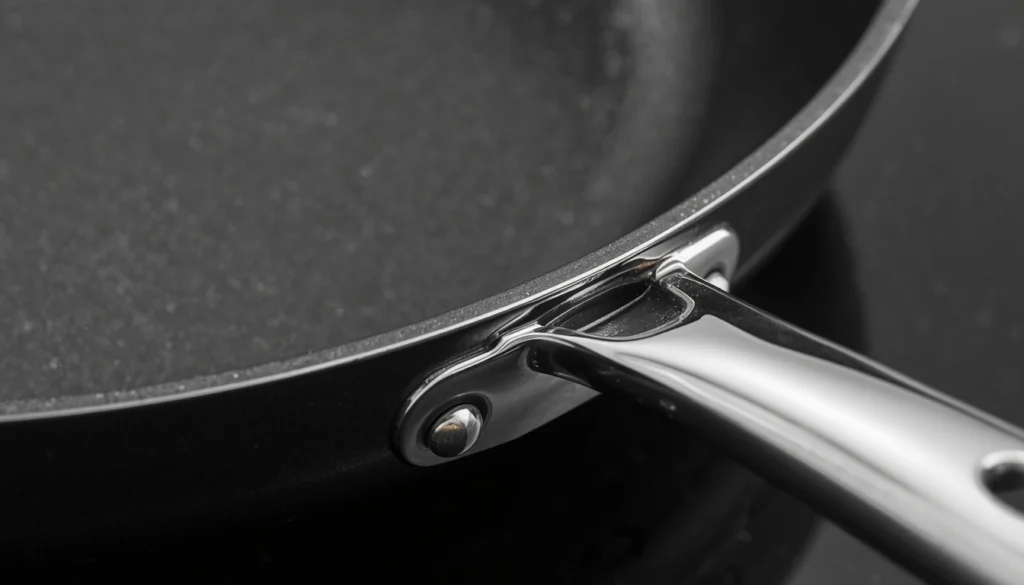
Here is the rule I wish someone had told me early: always check the handle before you check the coating.
Most home cooks flip the pan over, look for an oven-safe symbol on the base, and assume they’re good to go. What they miss is that the handle. Especially where it meets the pan body, can contain rubber gaskets, plastic rivets, or composite materials. These degrade or melt at temperatures well below what the pan itself can handle.
According to Food Network Kitchen, the handle of any oven-safe pan should be made of metal (stainless steel or aluminum) or silicone-coated metal. Handles made of plain plastic or wood should never go in the oven, regardless of what the rest of the pan is made from.
The coating matters for a different reason: it determines your temperature ceiling. Go over it and you are not just damaging the pan. With PTFE-based coatings, you risk releasing chemical fumes into your kitchen.
Oven Safe Temperature Limits by Pan Type
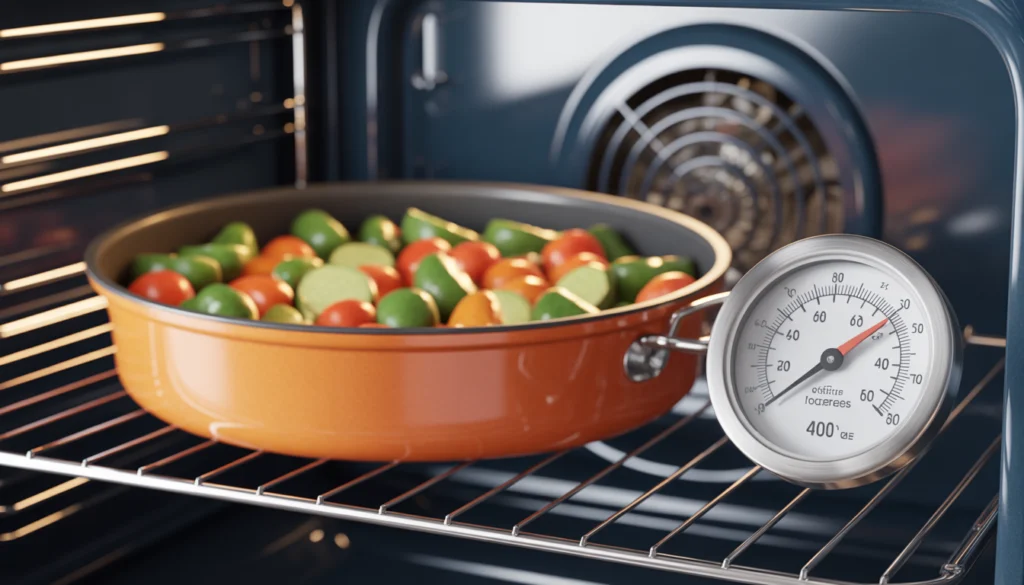
The single most important reference in this post. Bookmark or screenshot this table before you open your oven.
| Pan Type | Max Oven Temp | Broiler Safe? | Key Risk | Notes |
|---|---|---|---|---|
| PTFE / Teflon Non-Stick | 350°F – 500°F (175°C – 260°C) | No | Toxic fume release above 500°F | Depends heavily on handle; check manufacturer |
| Ceramic Non-Stick | 450°F – 600°F (230°C – 315°C) | No | Coating degrades with repeated high-heat cycles | Brand varies significantly |
| Stainless Steel | 600°F – 800°F+ (315°C – 425°C+) | Often yes | Handle material is the only real limit | All-metal builds are the safest |
| Cast Iron | 500°F – 700°F+ (260°C – 370°C+) | Yes (uncoated) | Enameled cast iron has lower limits | One of the best oven-to-stovetop options |
| Titanium-Infused Non-Stick | 350°F – 500°F (175°C – 260°C) | No | Same PTFE limits apply if coating is PTFE-based | All-metal titanium builds are a different story |
Teflon / PTFE Non-Stick Pans
PTFE non-stick pans are oven-safe up to approximately 500°F (260°C). But that ceiling should be treated as a hard limit, not a guideline. According to Farberware / NSF Nonstick Safety FAQ, the coating does not begin to deteriorate in performance or appearance until it reaches 500°F. Also it does not show significant decomposition until temperatures exceed 600°F (316°C).
The practical problem is that oven temperatures are not perfectly precise. Tasting Table notes that ovens can run up to 30°F hotter than the set temperature. That means setting your oven to 475°F could actually expose the pan to 500°F or above. For PTFE pans, the smarter ceiling is 450°F, which gives you a buffer.
Any Teflon pan made after 2013 is PFOA-free, so the older PFOA-linked health concerns no longer apply to current cookware. If you are still using a non-stick pan from before 2013, replace it.
Ceramic Non-Stick Pans
Ceramic non-stick pans are generally oven-safe. Most can handle temperatures up to 450°F to 600°F. But the exact limit varies by brand and construction. According to GreenPan, some ceramic non-stick cookware is engineered to go up to 600°F without a lid. Remember though the silicone-wrapped handles on the same pan may reduce that ceiling.
The bigger concern with ceramic is long-term durability rather than acute safety. Ceramic coatings do not release toxic fumes the way PTFE does, which makes them more forgiving if you accidentally run hot. However, repeated high-heat cycles degrade the non-stick surface faster than moderate-temperature use does. If you are regularly finishing dishes in a 500°F+ oven with a ceramic pan, expect the coating to lose effectiveness sooner than the manufacturer’s stated lifespan.
Ceramic is also more susceptible to thermal shock. Never pull a cold ceramic pan straight from the refrigerator into a hot oven. Always bring it up to temperature gradually.
Learn more on how ceramic non-stick compares to PTFE for everyday cooking.
Stainless Steel Pans
Stainless steel pans are among the most oven-safe options available. Their all-metal builds tolerate temperatures up to 800°F or above. According to Made In Cookware, stainless clad frying pans can handle up to 800°F. They are suitable for high-heat finishing, broiling, and prolonged oven use.
The only limiting factor with stainless is, again, the handle. A fully clad stainless steel pan with bare metal handles has almost no practical temperature ceiling for home oven use. Add rubber gaskets or a silicone grip sleeve and you need to treat it more carefully.
Stainless steel does not have non-stick properties on its own. So if you are using it in the oven for proteins or eggs, you will need adequate fat and the right preheat technique to prevent sticking.
Here is when stainless steel is the better long-term investment over non-stick.
Cast Iron Pans
Cast iron is the most naturally oven-tolerant pan material a home cook can own. It handles temperatures from 500°F to well above 700°F with no coating concerns whatsoever. Because it is not coated with any synthetic polymer, there are no fume risks and no temperature ceiling in any range a home oven can produce.
According to Made In Cookware, cast iron skillets are oven-safe to at least 600°F, and bare (unseasoned) cast iron handles even higher. This makes cast iron the go-to material for recipes that need searing on the stovetop and finishing in a hot oven. This includes thick-cut steaks, cornbread, frittatas, and roasted chicken all benefit from this technique.
Enameled cast iron (like Le Creuset or Lodge enameled pieces) has somewhat lower limits. It’s due to the enamel coating can crack under extreme or sudden temperature changes. Check the manufacturer’s guidance, but most enameled cast iron is safe to around 500°F.
Check out how to season and maintain a cast iron pan so it lasts decades.
Titanium and Titanium-Infused Pans
This category requires a critical distinction that most buyers miss. All-metal titanium cookware and titanium-infused non-stick coatings are not the same thing. Also their oven safety profiles are completely different.
All-metal titanium pans (rare, expensive, and used mostly in professional or outdoor settings) can handle extreme temperatures without any of the coating concerns below. Titanium-infused non-stick pans, which are far more common in retail, use titanium particles mixed into or layered under a PTFE coating to improve durability. The titanium does not change the PTFE temperature ceiling. The same 350°F to 500°F limit applies.
See what titanium-infused really means and whether it’s worth the price.
Handle and Lid Safety For Oven Use
I will say this plainly: the handle is where most oven mishaps happen, not the coating. A pan body made of stainless steel or cast iron is essentially indestructible in a home oven. A phenolic resin handle, a plastic-encased rivet, or a rubber gasket is not.
Plastic and Silicone Handles — What Are the Real Limits?
The hierarchy is straightforward:
- Bare stainless steel or cast iron handles: No meaningful oven limit for home use. These are what you want for serious oven cooking.
- Silicone-coated metal handles: Oven-safe to 350°F to 400°F. [Source: Circulon] confirms silicone handles on their pans max out at 400°F. Above that, silicone softens and can transfer heat in ways that make the handle dangerous to grip.
- Plastic or phenolic resin handles: Not oven-safe at any temperature. Even brief exposure to oven heat can warp, melt, or off-gas from plastic components.
- Wood handles: Also not oven-safe. Wood chars, cracks, and can catch fire at sustained oven temperatures.
The connector point between the handle and the pan body is worth inspecting too. Some otherwise metal-handled pans use rubber or plastic gaskets at the rivet points, which creates the same problem.
Glass Lids — A Hard No for High Heat
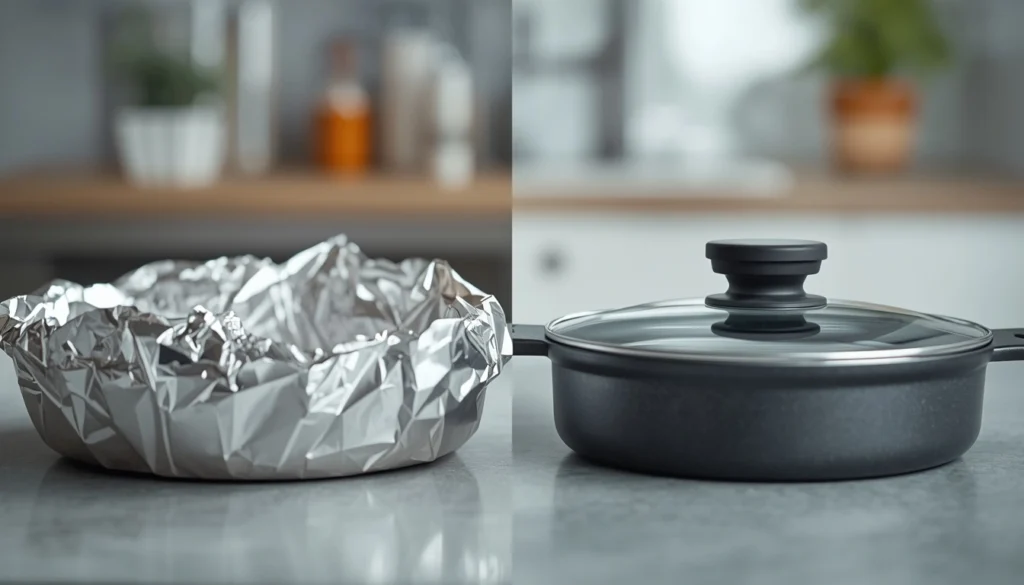
Most glass lids are rated to around 425°F, and that is their absolute ceiling. Glass lids consistently max out lower than the pan itself. This means a pan rated to 500°F becomes a 425°F pan the moment you put its lid on.
More importantly: never put a glass lid under the broiler. Broiler heat is radiant and can create intense localized hot spots on glass surfaces that lead to shattering. If a recipe calls for covering a dish in the oven, use aluminum foil as a substitute for any lid you are not 100% certain is broiler-rated.
What Happens If You Overheat a Non-Stick Pan in the Oven?
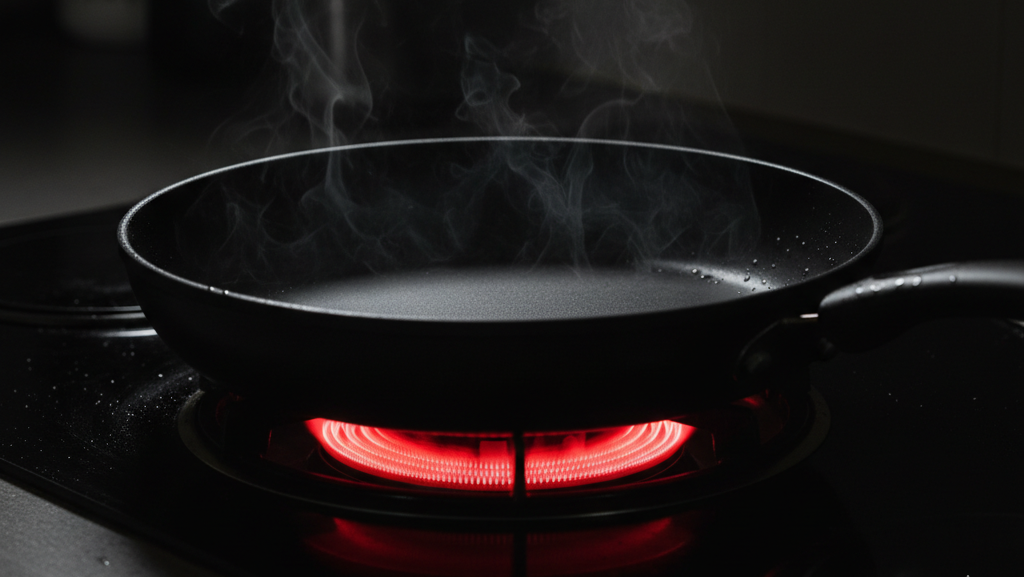
PTFE Breakdown Temperatures and Health Risks
Here is the progression, based on Healthline and Misen:
- Above 500°F (260°C): The coating may begin to deteriorate and discolor. Performance suffers.
- Above 570°F (300°C): PTFE begins releasing chemical fumes. These can cause polymer fume fever (sometimes called “Teflon flu”). It’s a temporary condition with flu-like symptoms including fever, chills, and body aches lasting up to 48 hours.
- Above 662°F (350°C): PTFE degrades fully, releasing fine particles and gaseous compounds that can cause lung damage with repeated exposure.
Extreme cases documented in research involved temperatures above 730°F (390°C). It’s sustained for four or more hours well outside any normal cooking scenario. But the 570°F fume threshold is absolutely reachable in a malfunctioning oven or under a broiler. This is exactly why both situations need to be avoided with any coated non-stick pan.
One important note if you keep birds: birds are acutely sensitive to PTFE fumes at any level of exposure. Even mild overheating of a PTFE pan has been documented as fatal to pet birds. Keep birds out of kitchens where PTFE cookware is being used.
How to Tell If a Pan Coating Has Been Damaged
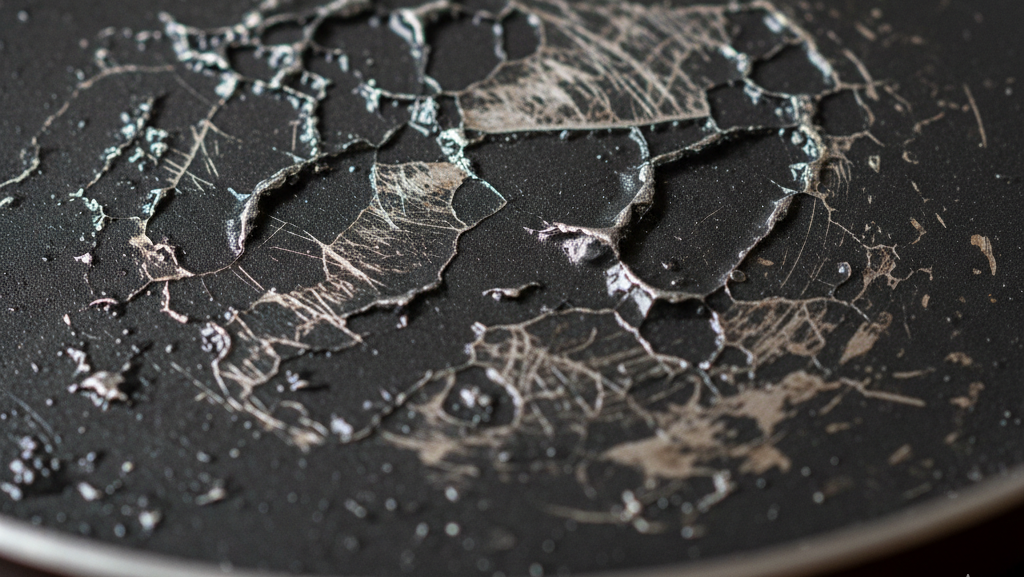
The visual signs are usually obvious if you know what to look for:
- Peeling or flaking of the coating surface (the most serious sign)
- Discoloration — dark spots or a bronze/brown tint where the coating used to be smooth and dark grey or black
- Bubbling or blistering of the surface
- Food suddenly sticking in a pan that used to release cleanly, even with oil
If you see any of these, the pan should be retired. A damaged coating is not salvageable with re-seasoning or any home treatment. When the coating is compromised, the pan needs to go.
Here is when to replace a non-stick pan and what to look for in the next one.
How to Check If Your Pan Is Oven-Safe
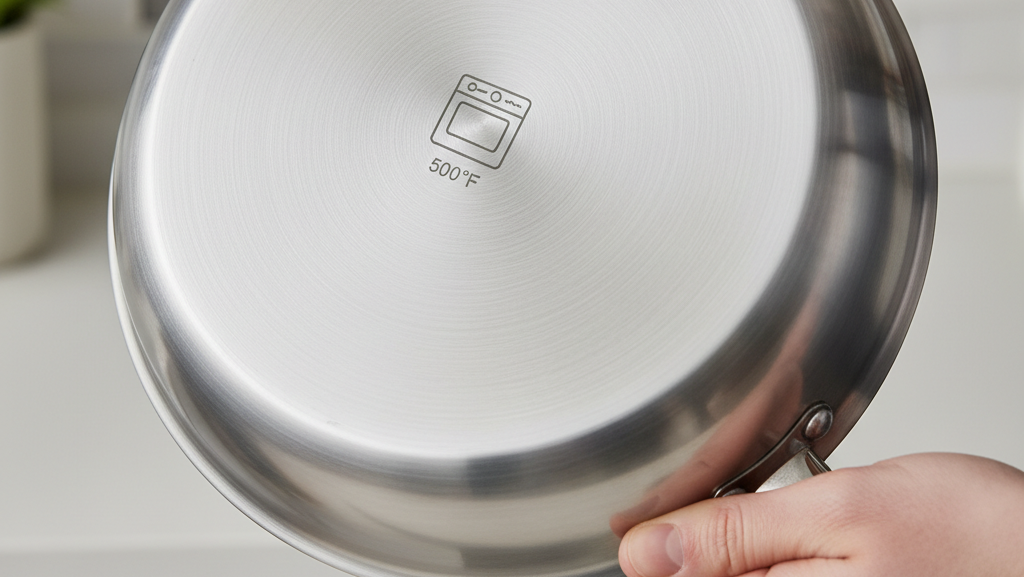
Where to Find the Oven-Safe Symbol
Flip the pan over. Most manufacturers stamp or emboss an oven-safe indicator on the base. It looks like an oven icon (a square outline with heat lines inside). Some pans also include a temperature number alongside this symbol. That is the max rating, not a recommended cooking temperature.
If there is no symbol on the base, check:
- The original packaging or product insert
- The manufacturer’s product page for that specific model (search the model number, not just the brand name)
- The brand’s customer support page
What to Do If There’s No Marking
If you cannot find a clear oven-safe rating: assume the pan is stovetop only. This is the correct thing to do. An unmarked pan is not an “unknown” pan. It is a pan the manufacturer did not certify for oven use, and that distinction matters.
If the recipe you are making requires oven finishing and your current pan is not rated for it. The smarter move is to transfer the food to a baking dish or switch to a confirmed oven-safe cast iron or stainless steel pan rather than guess.
When it comes to storing my oven pans. I place them in front of all my other pans in the cupboard one inside the other if possible. I even seperate those with silicone or plastic handles from those without. I put them infront because these pans can take a beating. With these pans, there is not too much to think about when I start cooking. I dont have to think about handles or coatings. Everytime I stretch for a pan behind my oven safe pans, my first instinct to check the make and quality. It doesn’t matter what recipie is about to be cooked, there is no way I’m damaging my pans.
FAQ
Can you put a non-stick pan under the broiler?
No. The broiler is a hard no for any pan with a non-stick coating, whether PTFE or ceramic. Broiler elements can push nearby surface temperatures well past 500°F in minutes. That exceeds the safe limit of every coated non-stick pan on the market. Use a cast iron or bare stainless steel pan for broiling instead.
Can you put a Teflon pan in the oven at 400°F?
Yes, provided the pan has an all-metal handle and the manufacturer confirms it is oven-safe. Most PTFE non-stick pans rated for oven use can handle 400°F safely. Just account for potential oven temperature variance and ensure no plastic or rubber components are on the pan.
Does putting a non-stick pan in the oven ruin it?
Not if you stay within the rated temperature and handle-safe limits. Repeated exposure to the upper end of the temperature range will shorten the coating’s lifespan. But occasional oven use within the stated limits should not cause immediate damage.
Can a scratched non-stick pan go in the oven?
If the scratches are surface-level and the coating is not peeling or flaking, it can technically go in the oven. But the damaged coating is more vulnerable to further degradation at elevated temperatures. A pan with visible peeling should not go in the oven (or be used at all, for that matter).
Are non-stick pans oven-safe without the lid?
The pan itself and the lid have separate temperature ratings. Many pans are oven-safe to 500°F. However the glass lid that came with the same pan may only be rated to 425°F. Always check the lid separately, and when in doubt, cover with foil instead.
How long can you leave a non-stick pan in the oven?
Duration matters less than temperature. Keeping a PTFE pan at 375°F for 90 minutes is fine. Keeping it at 500°F for 20 minutes is more concerning because it sits at the degradation threshold. Keep temperatures moderate and the time limit becomes less of a factor.
Conclusion
The decision comes down to three checkpoints, in this order:
- Handle material: Is it bare metal? You’re likely in good shape. Plastic, rubber, or wood? Stop there, it doesn’t go in the oven.
- Coating type: PTFE means a hard ceiling of 450°F to 500°F (and never the broiler). Ceramic gives you slightly more room but is not unlimited. Cast iron and all-metal stainless have no practical ceiling in a home oven.
- Manufacturer’s stated limit: This is the number that overrides everything else. Find it for your specific pan, not just the brand or material category.
Apply those three checks and you will never ruin a pan (or a dinner) by guessing.
If you are cooking recipes that regularly move from stovetop to oven, the most practical long-term investment is a 10-inch or 12-inch cast iron skillet and a fully clad stainless steel sauté pan, both with bare metal handles. Keep the non-stick for eggs and pancakes on the stovetop where it belongs, and use the right tool when the oven is involved.
Here is our picks for the best oven-safe pans at every price point.