
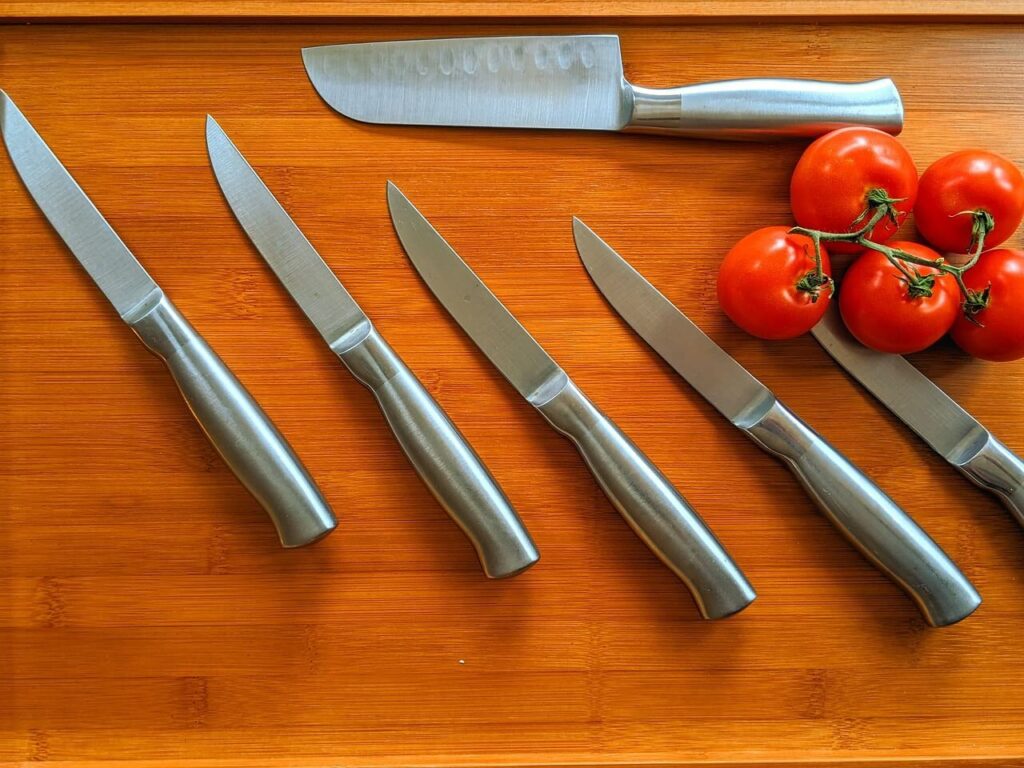
Yes Stainless still knives are good. Here is why. Stainless steel knives are cutlery tools forged from an alloy containing iron, carbon and a minimum of 10.5% chromium by mass. This specific chemical composition generates a passive layer of chromium oxide ($Cr_2O_3$) on the surface. This provides the blade with high resistance to oxidation and corrosion. At the same it maintains structural durability.
It’s unlike standard carbon steel. Stainless steel utilizes this self-repairing passive film. This film prevents rust when exposed to moisture, acidic foods or humidity. Check out what materials make kitchen knives to help select the right tool for specific culinary tasks.
Key Takeaways
- Chromium Content: Alloys must contain at least 10.5% chromium to prevent oxidation.
- Martensitic Steel: The ideal crystal structure for cutlery, offering hardenability and strength.
- High-Carbon Alloys: Steels like VG-10 provide superior edge retention compared to softer variants.
- Construction: Full-tang, forged blades offer better balance and durability than stamped options.
- Maintenance: Hand washing and immediate drying are critical to prevent chloride pitting.
- Edge Care: Regular honing realigns the burr, extending the time between abrasive sharpenings.
The Metallurgy of Stainless Steel

The performance of a stainless steel knife is dictated by its elemental composition. The base element is iron, but the addition of specific alloying agents alters the microstructure of the metal.
- Chromium is the defining element. When oxygen contacts the steel, chromium reacts to form a microscopic, invisible shield. If the blade is scratched, this layer reforms instantaneously in the presence of oxygen, a process known as passivation.
- Carbon is essential for hardness. While chromium provides rust resistance, carbon allows the steel to be hardened through heat treatment. A higher carbon content typically results in better edge retention and higher ratings on the Rockwell C Hardness scale (HRC).
Other elements like Molybdenum and Vanadium are often added to high-end alloys. These additions increase toughness, wear resistance and the steel’s ability to hold a sharp edge against abrasive cutting surfaces.
Classifications of Stainless Steel
Not all stainless steel is suitable for cutlery. The crystal structure of the alloy determines its application.
Martensitic Stainless Steel
This is the primary choice for knife manufacturing. It contains higher carbon levels and can be hardened and tempered effectively. Martensitic steel is magnetic and provides the balance of hardness and ductility required for a cutting edge. Common grades include 440C and 420HC.
Ferritic Stainless Steel
Ferritic steel contains chromium but low amounts of carbon. It is magnetic and resists corrosion well but cannot be hardened significantly by heat treatment. These alloys are often found in cheaper, stamped knife blades that lose their edge quickly.
Austenitic Stainless Steel
High in nickel and chromium. Austenitic steel is non-magnetic and offers superior corrosion resistance. But, it is too soft to hold a cutting edge. This type is typically reserved for flatware (forks and spoons) rather than functional blades.
High-Carbon Stainless Steel
High-carbon stainless steel bridges the gap between traditional carbon steel and standard stainless.
To qualify, the alloy typically requires a carbon content above 0.5% and chromium content above 13%. This combination allows the blade to achieve high Rockwell hardness (often 56–60 HRC) while retaining corrosion resistance.
Specific formulations have become industry benchmarks. For example, VG10 steel knives are highly regarded for their ability to take a razor-sharp edge while resisting rust. It represents the gold standard in Japanese stainless metallurgy.
Stainless Steel vs. Carbon Steel
The choice between stainless and carbon steel relies on the trade-off between maintenance and the most sharpness.
Corrosion Resistance
Stainless steel is superior in wet environments. Carbon steel lacks chromium and acts reactively, forming a patina (oxidation layer) over time. Without strict oiling and drying, carbon steel will rust red, whereas stainless steel remains neutral.
Maintenance Requirements
Stainless steel is forgiving. But those accustomed to the care for carbon steel knives often prefer the latter for its ease of sharpening and ability to take a finer edge. Stainless steel requires less daily attention. But can be more difficult to sharpen once dull due to the presence of hard carbide formations.
Toughness
Stainless steel generally possesses higher toughness. This means it is less likely to chip or shatter under impact compared to the harder, more brittle high-carbon steels.
Selection Criteria for Stainless Knives
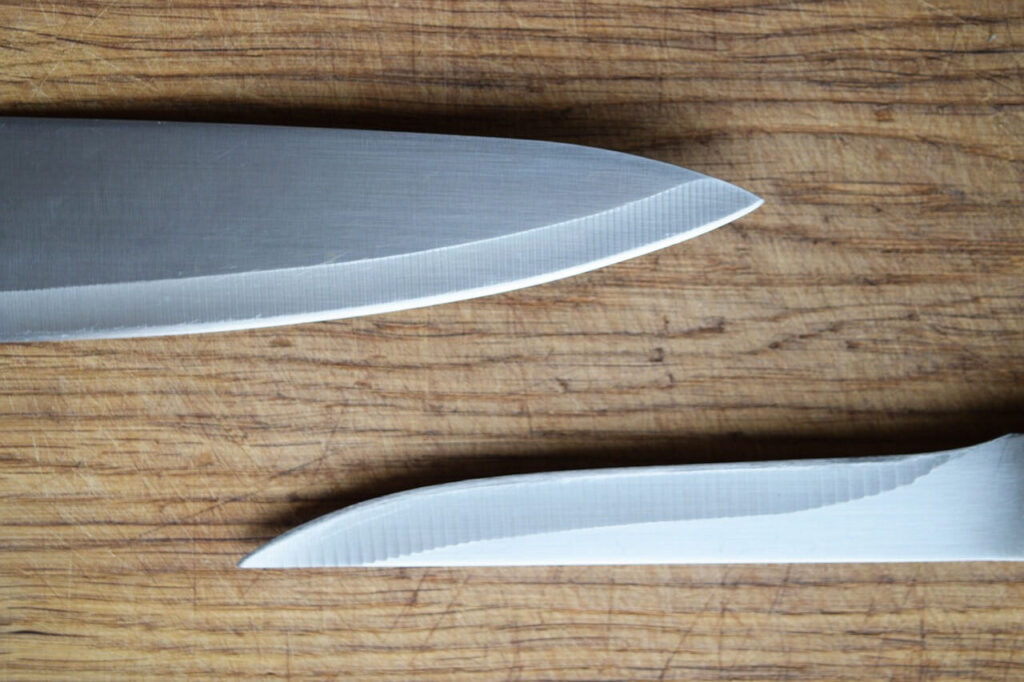
When selecting a stainless steel knife, check the manufacturing method and physical construction.
Forged vs. Stamped
The debate between forged vs. stamped kitchen knives centers on weight, balance, and production cost. Forged knives are created from a single bar of steel. Thye often feature a bolster (thick junction between handle and blade), offering superior balance. Stamped knives are cut from a sheet of steel; while lighter, they generally lack the structural integrity of forged blades.
Tang Construction
A “full tang” indicates the steel runs the entire length of the handle. This provides the most strength and counterbalance to the blade. Partial or “rat-tail” tangs are prone to snapping at the handle junction during heavy tasks.
Handle Materials
Comfort and hygiene are critical. Durability also depends on the types of knife handle materials used. They range from synthetic polymers like Polyoxymethylene (POM) to stabilized woods that resist moisture absorption.
Maintenance and Restoration

Despite the name, stainless steel is “stain-less,” not “stain-proof.” Pitting corrosion can occur if the passive layer is weakened. Due to prolonged exposure to saline solutions or chlorides.
Cleaning and Storage
Hand washing with mild detergent and immediate drying prevents water spots and chloride pitting. Dishwashers should be avoided, as high heat and abrasive detergents can damage the handle and dull the edge.
Furthermore, knowing how should knives be stored in the kitchen is important. Using a wooden block, magnetic strip, or sheath prevents the edge from striking other metal objects.
Rust Removal
If surface rust appears, it can be removed without damaging the steel.
- Baking Soda Paste: A mixture of sodium bicarbonate and water creates a mild alkaline abrasive. Scrub gently with the grain of the steel.
- White Vinegar: Soaking the blade in acetic acid for 5–10 minutes dissolves iron oxide. Rinse thoroughly to neutralize the acid.
Sharpening vs. Honing
Honing with a steel rod realigns the microscopic teeth of the edge (the burr) and should be done frequently. But, honing does not sharpen. Restoring a truly dull blade involves learning what are steps for sharpening a knife with a whetstone to remove metal and create a new bevel angle.
Frequently Asked Questions
What defines a knife as “stainless steel”?
A steel alloy must contain a minimum of 10.5% chromium by mass to be classified as stainless. This element reacts with oxygen to form a passive chromium oxide layer. It shields the underlying iron from rust and environmental corrosion.
Can stainless steel knives ever rust?
Yes. While highly resistant, they are not immune to oxidation. Prolonged exposure to saline solutions, acidic foods (like lemons or tomatoes), or harsh dishwashing detergents can break down the passive layer. It leads to pitting corrosion or surface rust.
Is high-carbon stainless steel better than standard stainless?
Generally, yes. High-carbon stainless steel (containing >0.5% carbon) offers a superior balance of performance. It provides the hardness required for excellent edge retention. At the same time it maintains the corrosion resistance found in softer, standard stainless alloys.
How often should I sharpen my stainless steel knife?
Sharpening should be done once or twice a year for home cooks. Honing means realigning the edge with a steel rod. Performed before or after every significant use. This will help to maintain cutting performance between sharpenings.
What is the difference between forged and stamped stainless knives?
Forged knives are made from a single bar of heated steel. It typically feature a bolster and full tang, offering better weight and balance. Stamped knives are punched from a steel sheet. The result is a lighter, more flexible, and generally less expensive tool.
Conclusion
Stainless steel knives represent a triumph of modern metallurgy. They are a balance of durability with practical maintenance. By alloying iron with chromium and carbon, manufacturers create great tools. They withstand the corrosive environment of a kitchen while maintaining a functional edge.
Proper care means hand washing, immediate drying, and regular honing. This ensures these tools remain effective for decades. The right stainless steel knife serves as a dependable extension of the chef’s hand. It’s capable of tackling precise cuts and heavy-duty tasks alike without the fear of oxidation or structural failure.
External Sources
https://www.opinel-usa.com/blogs/news/stainless-steel-vs-carbon-steel-knives