
Key Takeaways
- Sudden sticking usually comes from invisible residue, light scratches, or too much heat, not from bad technique.
- Skip aerosol cooking spray. A little oil or butter does the job without the buildup.
- Cook on low to medium heat, never heat an empty pan, and use wood, silicone, or nylon utensils.
- Let the pan cool, hand wash it, and keep stacked pans from rubbing together.
- Replace the pan when the coating is deeply scratched, flaking, or warped, or when food sticks even after a proper clean.
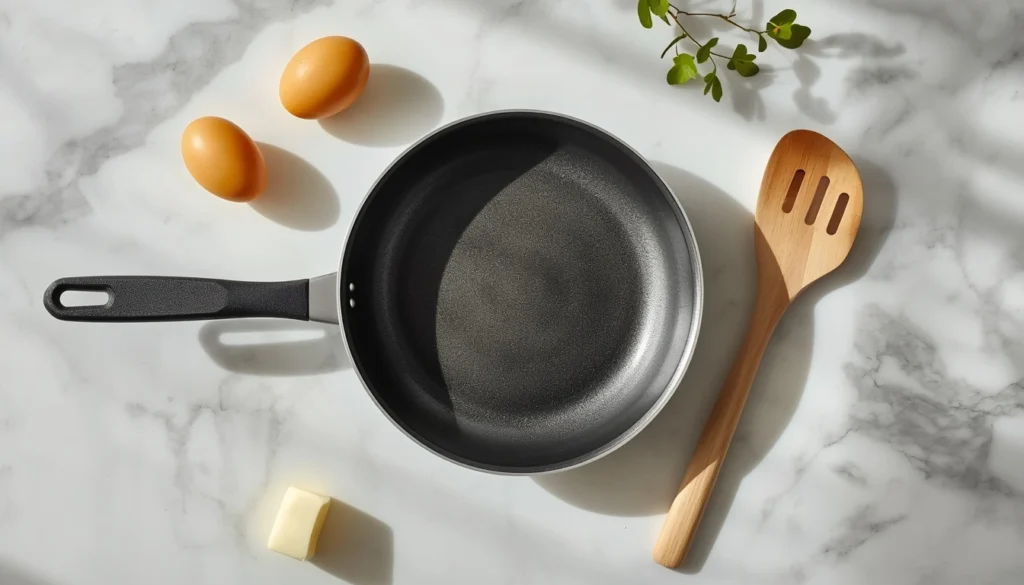
A nonstick pan sticks for a reason, and you can usually find it. If you’re trying to work out how to keep a nonstick pan from sticking, start with what the pan has been through lately, not with your technique.
I remember the first time scrambled eggs stuck to my nonstick frying pan. My first thought was that eggs had never stuck to this pan before, which was the main reason I liked it. Then I wondered if I hadn’t let it heat long enough, but I’d never waited that long when frying eggs in it, and they never stuck.
The next day I heated the pan properly, added a little oil, waited for the oil to heat, and then added the eggs. Same result. After washing the pan, I looked closely at the surface and saw light scratches. Someone had once told me a damaged surface could cause exactly this, and here’s what I learned from it.
Why Is My Nonstick Pan Sticking All of a Sudden?
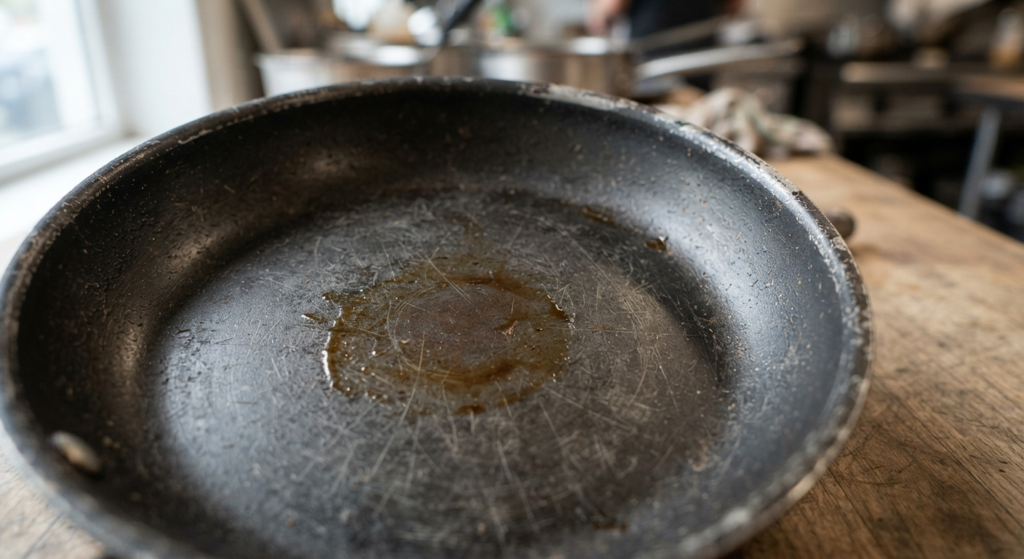
Sudden sticking usually comes from residue buildup, scratches, or overheating, not from a technique problem. Here’s what to check:
| Cause | What to look for | What to do |
|---|---|---|
| Residue buildup | A tacky feel after washing, especially if you use spray | Stop using spray and clean the surface gently |
| Scratches | Fine lines from utensils or from another pan stacked on top | Switch utensils, and replace the pan if the scratches are deep |
| Overheating | The pan was heated empty or kept on high heat | Lower the heat, and replace the pan if the coating is damaged |
| Worn coating | Sticking after a proper clean, on a pan that’s several years old | Replace the pan |
Sticking doesn’t always mean the coating is finished. Made In makes the point that it isn’t always a sign of a worn coating, so it’s worth running through the list above before you throw the pan out.
Does Cooking Spray Keep a Nonstick Pan From Sticking?
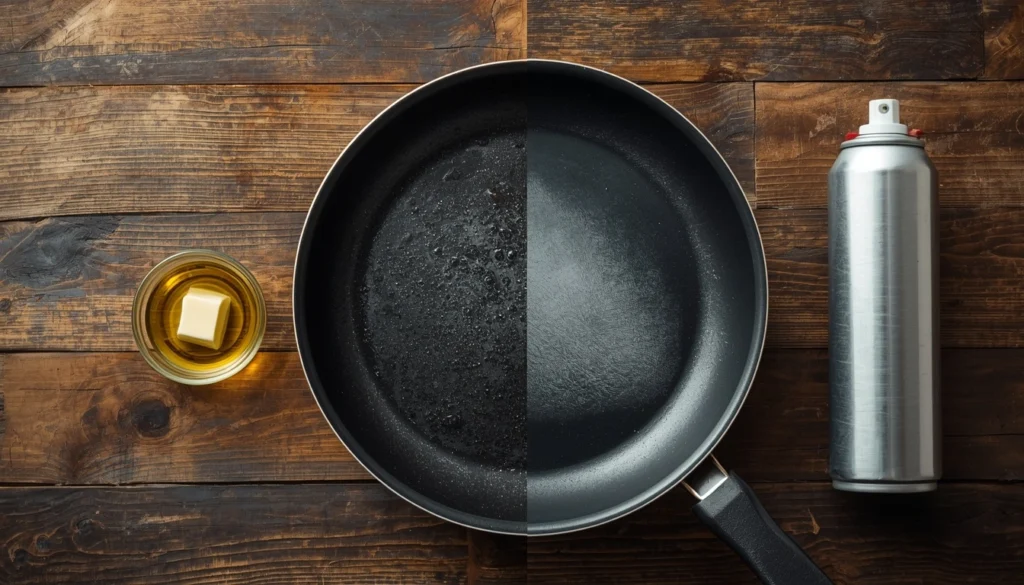
No, aerosol cooking spray tends to do the opposite over time. Sprays can leave a film on the surface that soap and water don’t fully remove. Over time that buildup reduces the pan’s performance, and food starts to stick.
A small amount of oil or butter added to the pan does the same job without the residue. If you already have buildup, resist the urge to scrub hard with abrasive pads, since that can scratch the surface. You can read how to restore the coating on pans that have started to stick.
Ceramic nonstick follows the same rule. Ceramic pans are more sensitive to heat and residue than PTFE-coated pans, so spray and high heat catch them out even faster.
What Heat Keeps a Nonstick Pan From Sticking?
Low to medium heat works best, and you should never heat an empty nonstick pan. Nonstick pans are often thin, so they heat up quickly, and an empty pan has nothing to absorb that heat. The German Federal Institute for Risk Assessment (BfR) also points out that heating happens especially fast on gas and induction.
The BfR advises against overheating coated pans when they’re empty. It says that above 360 °C (680 °F), a PTFE coating can release gases that may be hazardous to health. A pan with food in it stays much cooler, so add your oil or butter first and heat gently.
In my case, heat wasn’t the problem. I’d heated the pan and the oil properly and the eggs still stuck, which pointed me toward the surface instead. If you want the full picture, read how heat affects nonstick performance.
What a Few Light Scratches Taught Me About My Nonstick Pan
The scratches on my pan were light, and I’d only used a metal spoon, very lightly. I didn’t think the surface could be damaged that easily. But even micro scratches can cause sticking, and Chowhound adds that even with good care, most coatings last only about two to three years.
In my experience, metal utensils are the most common way people scratch their nonstick pans. That’s why the right utensils matter more than most people expect. Excessive heat and careless storage can damage the coating too.
I also read that a scratched surface can be a concern depending on what the coating is made of. The research on that is mixed, and I cover both views below.
How to Keep a Nonstick Pan From Sticking Every Day
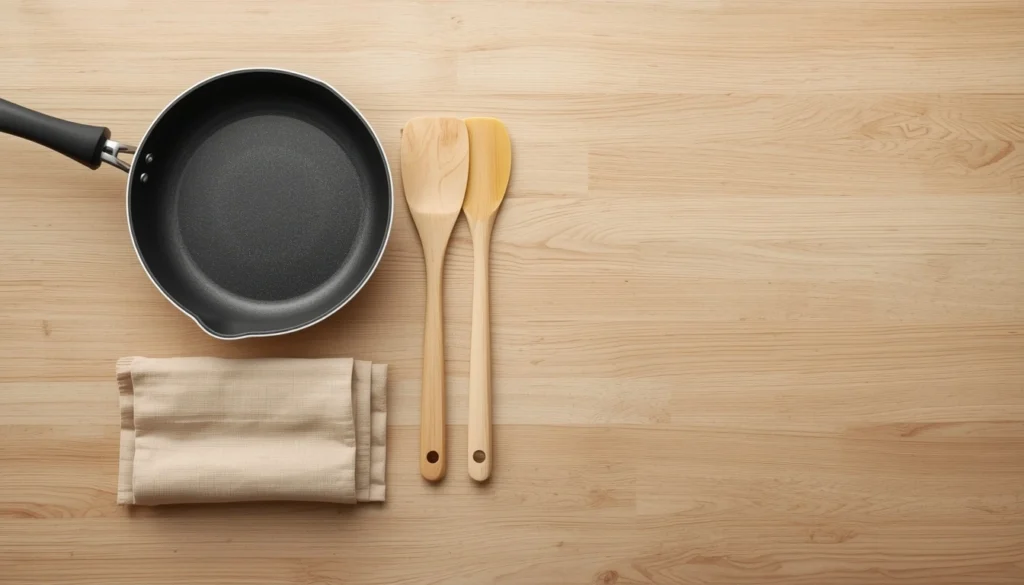
These are the habits I changed after my egg problem. Here’s what to do each time you cook:
- Use wood, silicone, or nylon utensils. Metal is the easy way to scratch the coating.
- Cook on low to medium heat. Add the oil or butter before you heat the pan.
- Skip aerosol spray. Use a little oil or butter instead.
- Let the pan cool before washing. Running cold water over a hot pan can cause thermal shock, which can warp the pan.
- Hand wash with warm water, mild soap, and a soft sponge. Dishwasher heat and detergent are harder on the coating than a sponge is.
- Store the pans without stacking them. If you have to stack, put a soft cloth or paper towel between them.
For a fuller routine, see how to clean and maintain nonstick pans.
When Is It Time to Replace a Nonstick Pan?
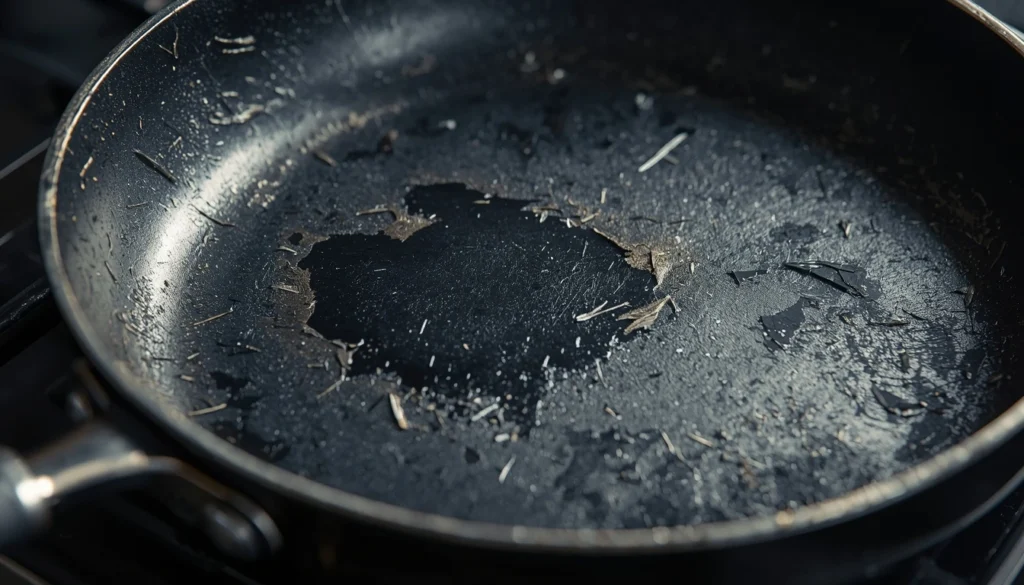
Replace the pan when the coating is deeply scratched, flaking, or warped, or when food keeps sticking after a proper clean. A lightly scratched pan may still be usable, but you’ll see more sticking, especially if it’s deeply scratched. How you treat the pan decides how long it lasts.
There’s also the question of whether a scratched coating is safe, and the answer depends on who you ask. The BfR says tiny particles from scratched PTFE coatings aren’t expected to harm health. The Singapore Food Agency advises against using a pan with a damaged coating, saying it can contaminate food with PFAS and micro- and nanoplastics. With no clear agreement, my advice is practical: once the coating is flaking or deeply scratched, retire the pan.
Even a well-kept pan will wear out eventually. That two to three year window is worth keeping in mind when you’re deciding how much to spend on one.
The real takeaway: use the right utensils, keep the heat low to medium, skip the spray, wash by hand, and store the pan carefully. Do that and your nonstick pan will last as long as it can, but every nonstick coating wears down in the end.
FAQs About Food Sticking To Nonstick Pans
Why Is My Nonstick Pan Sticking Even Though I Use Oil?
Oil can’t make up for a damaged or dirty surface. The usual causes are residue left by aerosol spray, light scratches, overheating, or a coating that has simply worn out. In my case it was scratches, even though I’d only used a metal spoon very lightly.
Can I Fix a Nonstick Pan That Has Started Sticking?
Sometimes, depending on the cause. Light residue can often be cleaned off gently without abrasive pads, but scratches and a worn coating can’t be repaired. If the pan still sticks after a proper clean, replacing it is usually the practical answer.
Is Oil or Butter Better in a Nonstick Pan?
Either works in a small amount. What matters more is skipping aerosol spray, since it can leave a film that builds up and causes sticking. Add the oil or butter before you heat the pan, and keep the heat low to medium.
Can I Use Metal Utensils on a Nonstick Pan?
It’s best to avoid them. Metal is one of the most common ways people scratch a nonstick surface, and even light scratches can cause sticking. Wood, silicone, or nylon utensils are the safer choice. If your pan’s maker says it’s rated for metal utensils, follow their instructions.
Can I Put a Nonstick Pan in the Dishwasher?
Hand washing is the safer choice. Dishwasher heat and detergent are harder on the coating than a soft sponge and mild soap. If the label says the pan is dishwasher safe, check the manufacturer’s care instructions before you decide.
How Long Does a Nonstick Pan Last?
Most nonstick coatings last about two to three years, according to Chowhound. How long yours lasts comes down to how you use it: the utensils, the heat, the cleaning, and how you store it. Good care helps, but every coating wears down eventually.
Is It Safe to Use a Scratched Nonstick Pan?
Experts don’t agree on this one. Germany’s BfR says particles from scratched PTFE coatings aren’t expected to harm health, while the Singapore Food Agency advises against using a damaged pan. My practical advice is to retire the pan once the coating is flaking or deeply scratched. If you have specific health concerns, ask your doctor.