

If you are wondering how to prevent scratches on induction glass tops, the secret is simple and requires only a few habit changes. Always lift your pots instead of sliding them across your induction glass top. Clean up spills immediately, and only use smooth-bottomed cookware to protect your brand-new induction glass. A clean, debris-free cooking surface stops hard crystals like salt from grinding into the flat glass.
I have ruined a cooktop in the past by dragging a cast iron skillet across spilled sugar. That mistake taught me exactly what not to do when cooking. I will share my best tips to keep your beautiful appliance looking fresh. By the end, you will know exactly how to prevent scratches on induction glass tops every time you cook.
Key Takeaways
- Lift, don’t slide: Always lift your cookware instead of dragging it to avoid grinding hidden debris into the glass.
- Clean spills instantly: Wipe up abrasive salt and melted sugar immediately to prevent permanent pitting and deep stains.
- Check your cookware: Use only flat, smooth-bottomed pots (like stainless steel) to minimize friction.
- Use safe cleaners: Stick to soft microfiber cloths, gentle liquid glass cleaners, and white vinegar.
- Consider a mat: Use induction protection mats (on true magnetic induction stoves only) for a guaranteed protective layer.
What Makes Induction and Glass Cooktops Easy to Damage?
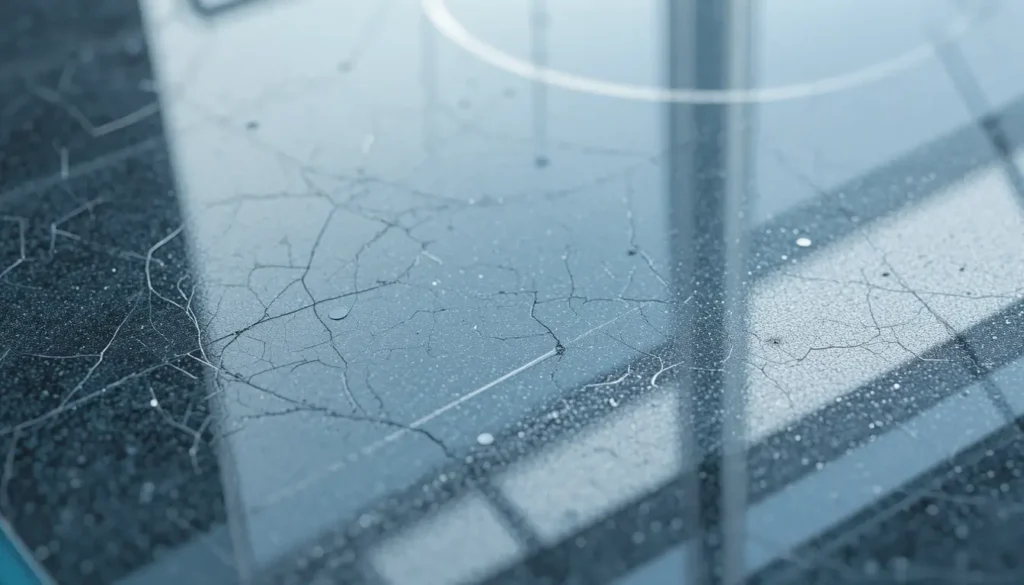
Most modern smooth-top stoves are not made of standard window glass. They are made from a glass-ceramic blend. Brands like Schott Ceran and EuroKera engineer this glass-ceramic material to handle extreme temperature changes.
Even though this material is tough against heat, it is surprisingly easy to scratch. The top layer has a smooth, glossy finish that shows every tiny flaw and visible scratch. Modern induction cooktops feel even more delicate. It’s because the heat comes directly from an electromagnetic field beneath the glass.
Normal, everyday cooking habits slowly wear down this finish over time. Many people think “durable” means scratch-proof, but that is simply not true. While your glass top will not easily melt or snap, its surface is softer than the metals, salts, and hard plastics we use every day.
What Actually Damages a Glass or Induction Cooktop?
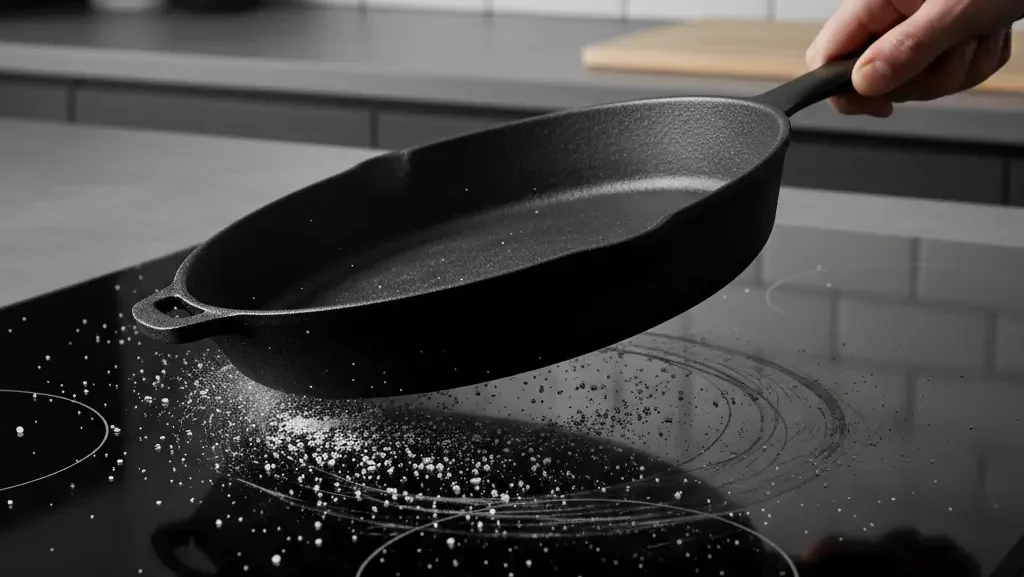
Scratches rarely happen from just resting a pan on the stove. The real damage to the flat glass surface comes from friction. When you drag a heavy pot over trapped dirt, it acts like sandpaper on the glass-ceramic surface. This is the leading cause of induction cooktop scratches in most homes.
Sugar and salt are your cooktop’s worst enemies. Salt crystals are jagged, highly abrasive, and easily hidden. If a grain of salt gets under your frying pan, it will carve a permanent line into the glass. Sugar is even worse because it melts at high heat, bonds to the surface, and causes permanent pitting when it cools.
Cracks are another major fear for homeowners and are different from regular scratches. They usually happen from two things: heavy impact or thermal shock. Thermal shock occurs when you place a freezing cold pot on a blazing hot burner, causing the glass to expand and snap.
Common Cooktop Damage Types
| Damage Type | Primary Cause | Can It Be Fixed? |
|---|---|---|
| Micro-Scratches | Sliding rough pots, trapped salt | Yes, buffed out with polish |
| Deep Scratches | Dropping sharp tools, dragging cast iron | No, permanent mark |
| Pitting | Melted sugar left to cool | No, damages the glass core |
| Cracks | Dropping heavy pots, thermal shock | No, requires replacement |
Daily Habits That Keep Your Cooktop Looking New
The easiest way to learn how to prevent scratches on induction glass tops is to change your daily habits in the kitchen. First, always follow the “wipe immediately” rule to prevent tough stains. When water boils over or grease splatters, wipe it up with a damp cloth as soon as the shiny surface is cool enough to touch safely.
Never slide your cookware from one burner to another on an induction cooktop. You must always lift the pot straight up and set it back down gently. This single habit stops 90% of all deep scratches from ruining your stove.
Check the bottom of your pans before every use. Sometimes, grease or burnt food gets stuck to the bottom of a frying pan in the cupboard. If you place that dirty pan on your clean stove, it transfers the mess and creates friction.
Always keep the surface clean before turning on the heat. Heating up leftover food stains bakes them right into the glass. Small, consistent cleaning routines prevent permanent marks from ever forming on the flat glass.
How to Clean a Glass or Induction Cooktop Without Causing Damage
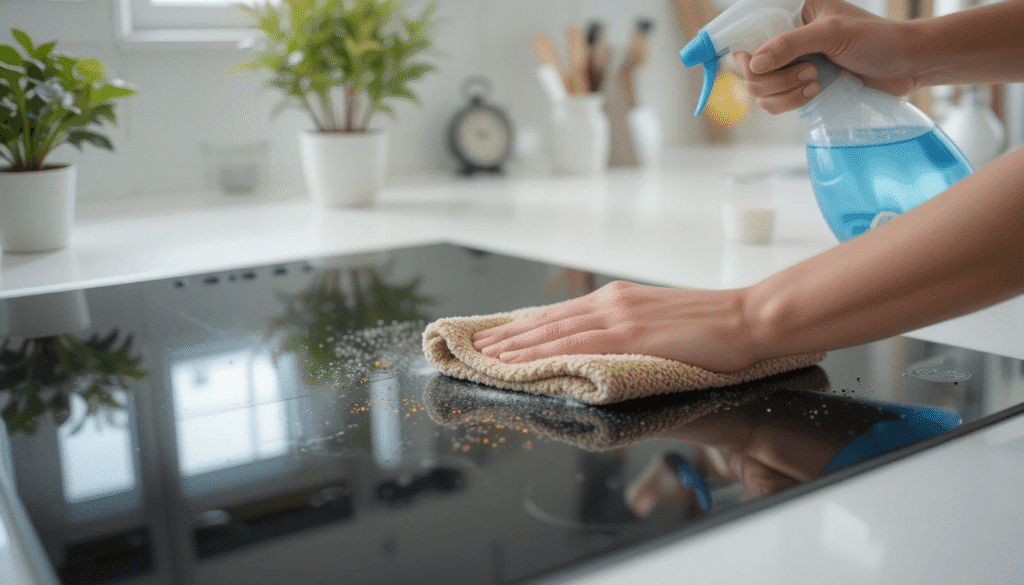
To handle cleaning safely, you need the right cleaning materials. I always use soft microfiber cloths or non-abrasive sponges. Never use steel wool, the rough green side of a sponge, or any abrasive cleaning materials.
For daily cleaning, a specialized glass cleaner for cooktops or simple white vinegar and water are completely safe. Vinegar cuts through light grease and leaves a streak-free shine on the glass-ceramic. You can also use a few drops of mild dish soap for dinner spills.
My daily routine takes less than two minutes. I spray the cool cooktop with my preferred glass cleaner, wipe it down with a damp microfiber cloth, and dry it with a clean towel. Drying it thoroughly prevents hard water stains from forming on the induction glass top.
How to Remove Burnt-On Residue, Grease, and Stains
Sometimes, food burns completely onto the flat glass surface. When this happens, you need a specialized tool: a cooktop razor scraper. Hold the scraper flat at a 45-degree angle to safely shave off burnt food without digging into the glass.
Melted sugar or plastic requires an urgent fix to prevent a visible scratch or pit. If you spill sugar on a hot burner, you must carefully use your scraper to lift it off while it is still warm. If it cools and hardens, it can actually pull pieces of glass out of the cooktop when you try to chip it away.
Cloudy spots or rainbow-colored stains are usually caused by hard water or oil residue. A paste made of baking soda and water works wonders to restore the shiny surface. Apply the paste, let it sit for 15 minutes, and gently wipe it away with a soft cloth.
Never use harsh chemicals like bleach or ammonia when tough stains will not come off. These chemicals strip the glossy finish and ruin the glass-ceramic. If you are struggling with stubborn spots, learn more about handling burnt messes in the kitchen.
Weekly and Monthly Maintenance for Long-Term Protection
To truly protect induction cooktops from damage, you need a weekly deep cleaning routine. Once a week, I apply a commercial ceramic cooktop polish like Cerama Bryte or Weiman. These polishes leave a clear protective layer that helps pans glide smoothly over the glass.
Polishing restores the factory shine and fills in small scratches before they grow deeper. You use a specialized cleaning pad to rub the polish into the surface using small circles. Then, you buff it out with a dry paper towel to reveal a beautiful, clean finish.
Take a moment once a month to inspect the glass under bright light. Look for early signs of wear or small scratches around the edges of the burners. Catching these rough spots early reminds you to be more gentle with your pots.
What Cookware Is Safe (and Unsafe) for Glass Cooktops?
Your choice of pots and pans directly impacts the life of your appliance. The safest materials are stainless steel and heavy aluminum with magnetic bases for induction. They have smooth, flat bottoms that distribute heat evenly without scratching the glass-ceramic surface.
Is cast iron safe to use? The short answer is yes, but it is highly risky. Cast iron is heavy and often has a rough texture that easily gouges a glass top. If you love cast iron, consider buying an enameled cast iron pan, which features a smooth, painted bottom.
Having a perfectly flat bottom matters more than the material itself. A warped pan will rock back and forth, scratching the flat glass and heating your food unevenly. Always test your pans by placing a ruler across the bottom to check for gaps.
Cheap cookware is more likely to warp and scratch your induction cooktop. Investing in quality, smooth-bottomed pots is the best way to prevent long-term damage. Read our full review of the best pots for smooth top stoves to see top-rated options.
Should You Use a Cooktop Protector Mat?

Induction protection mats are thin layers of heat-resistant material that sit between your stove and your pots. They are a brilliant tool for anyone learning how to prevent scratches on induction glass tops. However, there is a massive catch: they are only safe for true magnetic induction cooktops.
Because induction uses magnetic fields to heat the pan directly, the glass itself does not get extremely hot. This means you can safely cook with a silicone baking mat or a fiberglass protector directly under your pan. The mat takes all the friction, acting as a protective layer to keep your glass completely scratch-free.
If you have an electric radiant glass cooktop, do not use a mat while cooking. Radiant heat comes from glowing red coils under the glass and will instantly melt silicone or fiberglass. Always check your exact stove type before buying induction protection mats.
The biggest pro of a mat is total defense against induction cooktop scratches. The main con is that thick mats can slightly reduce the magnetic connection between the stove and the pan. Fiberglass mats are generally thinner and better for cooking than thick silicone versions.
How to Prevent Scratches, Cracks, and Heat Damage
Thermal shock is the number one cause of shattered cooktops. Never take a cold pot of soup from the refrigerator and place it directly on a pre-heated glass surface. Always let your cookware reach room temperature first.
Handling heavy cookware requires extra focus and care. When you bring a heavy pot of boiling pasta to the sink, lift it firmly with both hands. Never tilt the pot or drag the heavy edge across the flat glass surface.
The edges and corners of your stove are the most vulnerable parts. Dropping a spice jar on the corner can easily chip the delicate glass-ceramic material. Keep heavy items stored away from the space directly above the induction cooktop.
During busy holiday cooking sessions, it is easy to get sloppy and forget the rules. Slow down and clear away empty pots immediately to keep the area safe. A cluttered stovetop increases the chances of bumping and scratching pans together.
How to Protect Your Cooktop When It’s Not in Use
Your stove needs protection even when the induction burners are completely off. Many people use specialized cooktop covers to protect the shiny surface. These are large, heat-resistant boards or thick silicone mats that lay over the entire appliance.
Covers allow you to safely use your stove as extra counter space. This is a game-changer for small kitchens where every inch matters. You can chop vegetables or rest grocery bags without worrying about leaving small scratches on the glass below.
Preventing accidental damage means paying attention to what is above your head. Do not store heavy glass jars, thick ceramic mugs, or metal tools in the cabinets directly above your stove. If a heavy object slips from your hand, it will crack the appliance upon impact.
If you have cats that jump on counters, a thick cover keeps their claws off the flat glass. It also stops curious toddlers from playing with the sensitive touch controls. For more tips on organizing safely, see our guide to kitchen safety for families.
What to Do If Your Cooktop Is Scratched, Cracked, or Stained
If damage happens, do not panic. Tiny induction cooktop scratches can often be minimized with a little effort. You can use a dedicated scratch-repair polish or make a soft paste from baking soda to buff the edges of the visible scratch, making it blend in.
Deep scratches cannot be removed entirely because the glass is permanently missing. However, keeping the area very clean prevents grease and dirt from getting trapped inside. Regularly cleaning the visible scratch keeps it from looking dark and obvious.
Cracks are a completely different story and need immediate attention. A cracked cooktop is a severe electrical and fire hazard. If liquids boil over and seep into the crack, they can reach the electrical wiring below. You must stop using the induction glass top immediately.
Fixing a crack always requires a total replacement of the glass-ceramic material. Depending on the brand, replacing the glass top can cost nearly as much as buying a new stove.
Common Mistakes That Ruin Glass and Induction Cooktops
One of the biggest mistakes is using abrasive cleaning materials. Magic Erasers, hard scouring powders, and steel wool will quickly dull the beautiful factory shine. Stick to soft cloths, a gentle glass cleaner, and liquid solutions.
Sliding cookware is the most common bad habit that ruins a brand-new induction glass surface. People naturally shake their frying pans back and forth to stir food. You must remember to lift the pan slightly if you want to shake your ingredients safely.
Ignoring small debris is a fast track to permanent surface damage. A single crumb of hardened bread or a stray piece of rock salt will gouge the glass. Always wipe the surface down before you start cooking.
Finally, letting spills sit too long makes routine cleaning much harder. Acidic spills like tomato sauce or lemon juice can cause dull stains if left overnight. Wipe them up the moment they cool down to protect the glass-ceramic finish.
FAQs About Cooktop Protection
How do you stop a glass cooktop from scratching?
Keep the flat glass completely clean of salt and sugar, never drag pots, and ensure the bottoms of your pans are perfectly smooth. Learning how to prevent scratches on induction glass tops is all about lifting your cookware.
Can you use cast iron safely on induction?
Yes, but you must lift it carefully and never slide it across the glass top. Enameled cast iron is a much safer choice than raw, rough cast iron because the painted bottom reduces friction.
Is it okay to use a mat while cooking?
Yes, but only on magnetic induction cooktops. Using induction protection mats on an electric radiant cooktop will melt the mat and ruin your shiny surface.
What’s the safest way to clean daily?
Spray the cool surface with a mixture of water and white vinegar, or a dedicated glass cleaner. Wipe it away with a soft microfiber cloth and buff it dry to prevent hard water stains.
How long should a glass cooktop last?
With proper care, gentle cleaning materials, and maintenance. The glass-ceramic surface can easily last 10 to 15 years without cracking or showing severe scratches.
Conclusion
Keeping your smooth-top stove pristine does not have to be a stressful chore. By changing a few daily habits, like lifting your heavy pots instead of sliding them and wiping up abrasive salt or sugar immediately. You can protect that beautiful glossy finish for years to come. Remember that a little preventative care goes a long way.
Check the bottoms of your pans for trapped debris and sticking to gentle, non-abrasive cleaning materials. This will save you from staring at a permanent, visible scratch.
If you take the time to put in place these easy steps, your appliance will stay looking factory-fresh. I hope this guide has given you the confidence and knowledge to safely cook all your favorite meals without fear of damaging your flat glass surface.