

A cleaver knife is a large, heavy, rectangular-bladed kitchen tool. It’s designed for chopping through bone, thick cuts of meat, and dense vegetables. If you’ve ever wondered what is a cleaver knife, the simple answer is this: it’s the powerhouse of the kitchen knife world.
Unlike other blades that rely on sharpness and finesse, the cleaver relies on weight, momentum, and brute force. It’s one of the most recognizable tools in both home and professional kitchens worldwide.
Key Takeaways
- A cleaver knife is a heavy, rectangular kitchen knife designed for chopping through bone, thick meats, and dense vegetables.
- It relies on weight and downward chopping force rather than slicing or rocking motions like a chef’s knife.
- There are several types of cleavers, including meat cleavers, Chinese cleavers, Japanese cleavers, Serbian cleavers, and bone cleavers.
- Cleavers can also smash garlic, transfer chopped food, and tenderize meat using the blade or spine.
- Blade materials such as carbon steel, stainless steel, and high-carbon stainless steel affect sharpness, durability, and maintenance.
A Brief History of the Cleaver Knife
The cleaver has been used in food preparation for thousands of years. Early humans used crude tools made from stone and bone for butchering animals. Cleaver-shaped tools have linked to the Acheulean tool tradition dating back over a million years.
Ancient Chinese cooking traditions used cleavers as an all-purpose knife for chopping, slicing, scooping, and even smashing garlic. In European butcher traditions, the cleaver became essential. It was great for breaking down large cuts of meat before refrigeration made bulk purchasing common.
The design of cleavers has roots across many cultures. Serbian cleaver knives have a long history in Eastern European butchery. They are often heavier and more rustic in build than their Asian counterparts. Japanese cleaver knives, share a similar rectangular blade profile. It is thinnerwith harder steel and exceptional edge geometry.
Today, the cleaver remains a staple tool in professional butcher shops, Chinese restaurants, and in home kitchens. Its design has barely changed over centuries because it simply works.
What Makes a Cleaver Knife Different from Other Kitchen Knives?

Cleavers are one of the many types of kitchen knives, each designed for specific food preparation tasks. But the cleaver stands apart in a few key ways.
| Feature | Cleaver Knife | Chef’s Knife |
|---|---|---|
| Blade Shape | Wide, rectangular | Curved, tapered |
| Weight | Heavy (8–16 oz) | Light-medium (6–10 oz) |
| Primary Action | Downward chopping | Rocking/slicing |
| Best For | Bone, dense meat, hard veg | General prep work |
| Edge Angle | 25–35° | 15–20° |
Unlike a chef’s knife, which is designed for slicing and rocking cuts, cleavers rely on weight and downward chopping power. A chef’s knife is the ultimate multitasker. A cleaver is the ultimate heavy hitter. Both are essential tools in the kitchen, but neither can fully replace the other.
The wide, flat blade of a cleaver also doubles as a bench scraper. You can use the flat side to scoop chopped items off your cutting board and transfer them directly into your pan. This is one of those practical advantages that similar-looking knives, like a nakiri knife or a Chinese chef’s knife also offer. Yet none match the cleaver’s raw power.
Western knives and western kitchen knives generally focus on a curved belly for rocking cuts. Asian kitchen knives, by contrast, favor a straighter edge for up-and-down chopping motion. The cleaver sits in that latter tradition, using a straight-edged blade and shear force to power through ingredients.
The Anatomy of a Cleaver Knife
Understanding what makes a cleaver work helps you use it better and choose the right one. Here are the key parts:
- Blade — Wide, rectangular, typically 6–9 inches long
- Spine — The thick, unsharpened top edge that adds weight
- Belly — The flat cutting edge designed for straight chopping
- Heel — The rear of the blade, useful for tough chopping tasks
- Bolster — The thick junction between blade and handle for balance
- Handle — Often made from wood, pakkawood, or polymer for grip
- Hole in blade — A traditional design feature for hanging storage and reducing suction when cutting
The spine thickness is one of the most important aspects of blade construction. A thick blade 3–5mm at the spine, gives the knife its momentum-generating weight. Thinner blades cut cleaner but can’t handle bone without chipping. Blade thickness affects what tasks you can safely perform. So matching the right blade to the right job matters enormously.
The tall blade of a cleaver is also a functional feature. A taller blade gives you more knuckle clearance on the cutting board. This is useful during rapid up-and-down chopping motion on dense foods like thick squash or pork shoulder.
This is something I learned using a cleaver with a blade that is not tall. My knuckles kept hitting the cutting board every time i chopped. I injured my hand thereby making chopping uncomfortable and painful.
Types of Cleaver Knives Explained

Not all cleavers are the same. Knowing the differences helps you pick the right blade for the job.
Meat Cleaver
This is the classic cleaver most people picture. A good meat cleaver has a thick, heavy blade built for chopping through bone and large cuts of meat. Butchers use this daily. A heavy meat cleaver typically weighs 12–16 ounces with a blade thickness of 4–5mm at the spine.
A 6-inch meat cleaver is a popular size for home use, offering enough weight without being unwieldy. For professionals, a 7-inch restaurant cleaver provides extra reach and authority on the cutting board.
Chinese Cleaver (Vegetable Cleaver or Cai Dao)
The Chinese cleaver is sometimes called a Chinese-style cleaver or Chinese chef’s knife . It is a thinner, lighter cleaver that looks like a meat cleaver. It is designed for slicing, dicing, and chopping vegetables and boneless meats. It’s an incredibly versatile tool used in Chinese cooking for almost every task.
A 6-inch cleaver in the Chinese style is the preferred everyday size for most home cooks exploring Asian kitchen knives. Many professional Chinese chefs use only this knife throughout the entire cooking process.
Japanese Cleaver Knife
The Japanese cleaver knife reflects the high-end cutlery edge that Japanese cutlery is globally known for. These blades are typically thinner, harder, and sharpened to a more acute angle than western-style cleavers. They’re not built for bone work. They shine at push-cut slicing motion on boned meats, fish, and prepared ingredients.
Brands like Kaiyo produce cleaver-style blades are great for home cooks who want performance and elegance in one tool. They bring Japanese precision into a new cutlery level.
Serbian Cleaver Knife
The Serbian cleaver knife is a heavy-duty cleaver with a distinct curved blade profile and a robust wooden handle. It’s sometimes described as a rectangular-bladed tomahawk. This is due to its aggressive appearance and blade forward weight distribution. It’s a prominent cleaver in the outdoor cooking and BBQ community. Popular for breaking down bone-in poultry, pork bones, and tough-to-break bones at camp or in the backyard.
Bone Cleaver
This is the heaviest cleaver in the group. A bone cleaver is sometimes called a butcher cleaver or ox-cleaver in traditional butchery contexts. It is designed to split large bones, joints, and frozen meat. These massive cleavers and hefty cleavers are used mostly in professional butcher shops and are not common in home kitchens. Contemporary butchers rely on these alongside a bone saw for the most demanding breaking tasks.
| Cleaver Type | Weight | Blade Thickness | Best Use |
|---|---|---|---|
| Meat Cleaver | 12–16 oz | 4–5mm | Bone and meat |
| Chinese Cleaver | 6–10 oz | 2–3mm | Vegetables and thin cuts |
| Bone Cleaver | 16–24 oz | 5–7mm | Splitting large bones |
What Is a Cleaver Knife Used For?
This is the heart of the question. The uses of a cleaver knife are broader than most people realize. Here’s a breakdown:
1. Chopping Through Bone
This is the cleaver’s signature job. Whether you’re breaking down a whole chicken, splitting pork ribs, or portioning lamb shanks, the cleaver handles it cleanly. The downward force generated by its weight cracks through chicken bones, soft bones, and thick bones without requiring excessive effort. Thin bones and thinner bones on poultry and ribs are no challenge at all with the right heavy blade.
2. Butchering Large Cuts of Meat
Home cooks who buy whole cuts of meat to save money rely on cleavers. A bone-in pork shoulder or bone-in chicken breast that arrives from the butcher whole can be portioned quickly and efficiently. Buying a whole brisket or pork shoulder and portioning it yourself can save 30–50% compared to pre-cut retail prices. A cleaver makes that process practical and safe.
3. Chopping Dense Vegetables
There are hard vegetables like butternut squash, pumpkin, celery root, and large sweet potatoes. These can be dangerous to cut with a thin blade that might slip. The cleaver’s weight drives straight through hard vegetables without the blade skating off the surface. This is where a Chinese-style cleaver truly shines, offering a thinner blade for cleaner cuts on produce.
4. Smashing Garlic and Garlic Bulbs
The flat side of the cleaver blade is perfect for smashing garlic cloves and garlic bulbs. One firm press and the skin slides right off. This is a classic Chinese cooking technique that speeds up food preparation significantly. It works equally well for smashing lemongrass, ginger, and onions before mincing.
5. Transferring Chopped Items
The wide rectangular blade acts like a built-in bench scraper. After you chop onions, dice hard vegetables, or slice thick meat, you can scoop everything up with the blade and move it directly into a bowl or pan. This is one of the underrated time-savers in kitchen prep.
6. Tenderizing Meat
The spine of the cleaver can be used to pound and tenderize meat — a useful alternative when you don’t have a dedicated meat tenderizer on hand. It’s not as precise, but it works well enough for quick tasks like preparing thin cutlets or flattening chicken skin side down before cooking.
7. Hand-Grinding Meat
Some cooks use the flat side of a cleaver to hand-grind meat by repeatedly chopping and folding the flesh. This technique produces a hand-ground texture that retains more moisture than machine grinding. It takes patience, but the results on dishes like hand-chopped pork dumplings are noticeably different.
Cleaver Knife Blade Materials
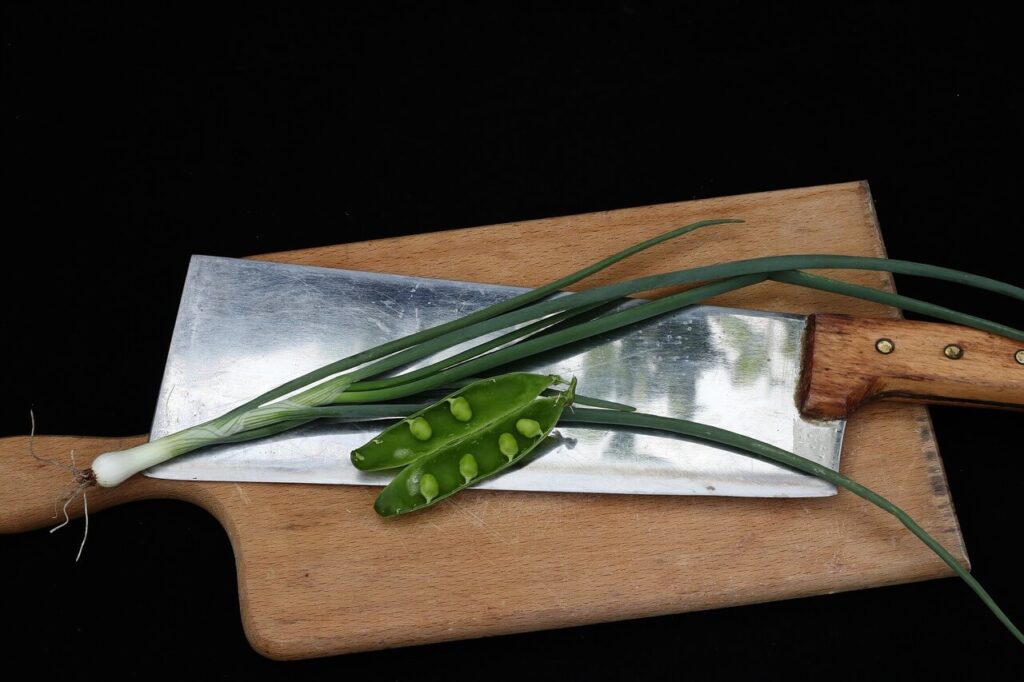
Choosing the right material affects how your cleaver performs, how long it lasts, and how much maintenance it needs. This is closely tied to understanding knife blade materials in general.
Carbon Steel Cleavers
Many traditional cleavers are made from carbon steel, which holds a sharper edge but requires more maintenance. Carbon steel is the preferred material in restaurant kitchens because of its superior sharpness. But, it will rust and discolor if not dried and lightly oiled after each use. A double-edge razor blade level of sharpness is achievable on a well-maintained carbon steel cleaver.
Stainless Steel Cleavers
Stainless steel kitchen knives are the most common choice for home cooks. They resist rust and staining, need less maintenance, and are widely available. The trade-off is that stainless steel doesn’t hold a razor blade-sharp edge as long as carbon steel. For cooks who want a budget-friendly cleaver with minimal upkeep, stainless is the right choice.
High-Carbon Stainless Steel Cleavers
This is a best-of-both-worlds material. It combines the sharpness of carbon steel with the corrosion resistance of stainless steel. Most premium cleaver brands use high-carbon stainless steel blends. This material handles the rigors of heavy butchering while staying resistant to staining in a busy kitchen.
| Material | Edge Sharpness | Rust Resistance | Maintenance Level |
|---|---|---|---|
| Carbon Steel | Excellent | Low | High |
| Stainless Steel | Good | Excellent | Low |
| High-Carbon Stainless | Very Good | Good | Moderate |
Top Cleaver Knife Brands Worth Knowing
These are the most respected brands producing current cleavers that earn consistent praise from both home cooks and professionals:
- Wüsthof (Germany) — Known for precise forging and well-balanced cleavers with excellent blade construction
- Victorinox (Switzerland) — An excellent budget-friendly cleaver option that delivers professional-grade performance
- CCK (Chan Chi Kee) (Hong Kong) — The gold standard for Chinese cleavers used by professional chefs. Their traditional series cleaver is a favorite cleaver among Chinese cooking enthusiasts
- Lamson (USA) — The Lamson meat cleaver is a prominent cleaver in the American market. Lamson meat products are known for solid build quality and durable blades
- Global (Japan) — The Global meat cleaver brings Japanese cutlery precision to a heavy-duty format. A strong choice for cooks who want middle weight cleavers with excellent balance
- Kaiyo (Japan) — The Kaiyo cleaver represents a new cutlery level. It blends Japanese blade hardness with a more accessible western-friendly handle
- Hakai — The Hakai chef cleaver is growing in popularity as a blade restaurant cleaver option. It is designed for speed and durability in high-volume kitchen environments
- Dexter-Russell (USA) — Popular in American butcher shops. Their products are among the most trusted butcher cleavers in commercial kitchens
- Dalstrong (Canada) — Modern, visually striking blade looks with solid performance across their full cleaver lineup
Each brand brings a different balance of weight, material, and handle design. Trying one in-person before buying is always recommended if possible.
How to Use a Cleaver Knife Properly
Practicing safe knife handling is essential when using heavier blades like cleavers. The weight of a cleaver makes improper technique more dangerous than with lighter knives like petty knives or slicing knives.
The Correct Grip
Hold the handle firmly with your dominant hand. Wrap all four fingers around the handle. If it’s a wooden handle or a polymer, grip with your thumb pressed against the side of the blade near the bolster. This grip gives you control and reduces hand fatigue during extended food preparation sessions.
The Proper Chopping Motion
- Raise the cleaver straight up, not at an angle
- Drive it straight down with controlled force using an up-and-down chopping motion
- Let the weight of the blade do the work — don’t force it
- Never twist the blade while it’s embedded in food or bone
- For boned meats and thin slicing, use a push-cut slicing motion instead of full downward chops
The “Claw” Grip for Your Off Hand
When holding food in place, curl your fingertips inward so your knuckles guide the blade. This is called the claw grip and it protects your fingertips from slipping into the blade’s path. It applies to all cutlery, but it’s especially critical with a heavy meat cleaver where control is everything.
⚠️ Safety Tip: Never try to catch a falling cleaver. Step back and let it drop. The weight of a hefty cleaver makes catching it instinctively one of the most common causes of severe kitchen injuries.
The Best Cutting Boards for Cleaver Knives
Your cutting board matters as much as your knife. Using the best wood for cutting boards helps protect both your cleaver edge and your countertop. Here’s what to consider:
Wood Cutting Boards
End-grain wood boards, made from maple, walnut, or teak — are the best choice for cleaver use. The end-grain surface absorbs the impact of heavy chops, which protects the blade edge and reduces noise. These boards also self-heal minor cuts from repeated chopping. They are the most durable cutting surface for bone-in pieces and thick bones.
Plastic vs. Wood Cutting Boards
When comparing plastic vs. wood cutting boards, plastic boards are easier to sanitize but are not ideal for heavy cleaver work. Repeated hard chopping will gouge plastic surfaces, creating grooves where bacteria can hide. A flat metal blade driving through thick pieces of bone-in chicken or pork will destroy a cheap plastic board in weeks.
| Board Type | Blade Protection | Hygiene | Durability Under Cleaver |
|---|---|---|---|
| End-grain Wood | Excellent | Good (oil regularly) | Excellent |
| Edge-grain Wood | Good | Good | Good |
| Plastic | Poor | Excellent | Poor |
| Bamboo | Fair | Good | Fair |
Cutting Board Safety
Following proper cutting board safety and hygiene is especially important when working with raw meat and bone. Always use separate boards for raw meat and produce. Wash and sanitize your board after each use with raw protein to keep your food preparation environment safe.
How Cleavers Compare to Other Specialty Knives
The cleaver occupies a unique position among kitchen knives. Understanding where it fits helps you build a smarter, more complete knife collection.
Cleaver vs. Butcher Knife
A butcher knife has a curved, pointed blade used for trimming fat and slicing boneless meats. Butcher knives are also called butcher knives or boning knives in some contexts, though they serve distinct purposes. A cleaver is designed to chop through bone. They are not interchangeable, and professional butchers typically keep both tools on hand.
Cleaver vs. Nakiri Knife
The nakiri knife is a Japanese vegetable knife with a rectangular blade profile that looks like a Chinese cleaver. But, it has a much thinner blade, a lighter weight, and is designed only for vegetables. It cannot handle bone-in chicken breast or tough-to-break bones without risking blade damage. A nakiri is a general-purpose knife for produce. A Chinese cleaver is the heavier, more versatile all-purpose knife for both meat and vegetables.
Cleaver vs. Chef’s Knives
Chef’s knives including western-style knife designs and Chinese chef’s knives are the main knife in most kitchens. They handle slicing, dicing, mincing, and most general-purpose kitchen knife tasks. But they are not built for bone work. The cleaver fills that gap as the one tool that chef’s knives cannot replace.
Cleaver vs. Specialty Slicing Knives
Specialty blades like sushi knives and carving knives are for precise slicing rather than heavy chopping. A sushi knife (Yanagiba) uses a long blade with a single bevel for pulling cuts through raw fish. A carving knife uses a long, narrow blade for slicing cooked roasts into thin, even pieces. These are thin slicing blades, the opposite of a thick blade built for impact.
| Knife Type | Primary Use | Blade Style | Weight |
|---|---|---|---|
| Cleaver | Chopping bone & meat | Wide, rectangular | Heavy |
| Chef’s Knife | General prep | Curved, tapered | Medium |
| Japanese Kitchen Knife | Precision cutting | Thin, hard steel | Light-medium |
| Carving Knife | Slicing roasts | Long, narrow | Light |
| Sushi Knife (Yanagiba) | Raw fish slicing | Single-bevel, long | Light |
| Nakiri | Vegetable prep | Thin, rectangular | Light |
| Boning Knife | Deboning meat | Narrow, flexible | Light |
Cleaver Maintenance and Sharpening
A dull cleaver is a dangerous cleaver. Regular maintenance, including sharpening kitchen knives, keeps a cleaver performing efficiently and safely. This applies to all cleavers, from a budget-friendly cleaver to a high-end cutlery piece.
How to Sharpen a Cleaver
Cleavers need a different sharpening approach than thinner blades like petty knives or slicing knives. It’s because of the thicker blade and wider surface area,:
- Use a whetstone with 1000/3000 grit for regular sharpening
- Hold the blade at a 25–30° angle to the stone
- Use long, sweeping strokes from heel to tip — the long blade requires full strokes
- Sharpen both sides evenly — 10 strokes per side is a good starting point
- Finish on a 6000-grit stone or leather strop for a polished, sharp blade
Honing vs. Sharpening
Honing realigns the blade edge without removing metal. Use a honing rod before each use on your cleaver, just as you would with chef’s knives. Sharpening removes metal to create a new edge, do this every 3–6 months depending on frequency of use. A well-balanced cleaver that’s properly maintained will hold its edge much longer than one that’s neglected.
Cleaver Storage Tips
- Never store loose in a drawer — the sharp blade will dull against other tools and pose a safety risk
- Use a magnetic knife strip mounted on the wall for easy access
- Use a blade guard or knife roll if you must store in a drawer
- Always hand-wash and dry immediately — never leave stainless or carbon steel wet in a dish rack
- Avoid the dishwasher entirely — heat and detergent damage wooden handles and dull blade edges
Common Cleaver Knife Mistakes to Avoid
Many cooks ignore the signs it’s time to replace a chef’s knife, and the same warning signs apply to cleavers. Watch out for these red flags and mistakes:
Common mistakes:
- Twisting the blade in bone. This chips or cracks the blade edge
- Using the blade to pry apart thick pieces. Cleavers are not pry bars
- Chopping on glass, stone, or ceramic surfaces. Destroys the blade edge instantly
- Washing in the dishwasher. Heat and detergent damage handles and blades
- Ignoring rust spots on carbon steel. Early rust spreads fast if untreated
Signs your cleaver needs replacing:
- The blade has cracks or chips that sharpening won’t fix
- The wooden handle or polymer handle is loose or cracked, creating a safety risk
- The flat metal blade has significant bowing or warping
- The steel has deep rust pitting below the surface
Who Should Own a Cleaver Knife?
You don’t need to be a professional butcher to enjoy owning one. Here’s who gains the most from adding a cleaver to their kitchen tools:
- Home cooks who buy whole chickens and break them down themselves, saving money on bone-in pieces
- Meal preppers working with large quantities of hard vegetables and thick squash
- BBQ enthusiasts portioning ribs, brisket, or bone-in pork shoulder
- Anyone cooking Asian cuisines — Chinese, Vietnamese, Thai, and Korean cooking all rely heavily on cleavers
- Budget-conscious shoppers who buy large cuts of meat in bulk and portion at home
- Outdoor cooks who want a Serbian cleaver knife or heavy-duty cleaver for campfire cooking
Even if you only use a cleaver once a week, having the right tool for the job makes prep safer, faster, and more enjoyable.
Frequently Asked Questions
What is the difference between a cleaver and a butcher knife?
A butcher knife has a curved, pointed blade and is used for trimming fat and slicing boneless meats. A cleaver has a wide, rectangular blade designed to chop through bone and dense tissue using shear force. They serve different purposes and are not interchangeable.
Can I use a cleaver knife as my only kitchen knife?
Chinese chefs do exactly this with a Chinese cleaver (Cai Dao). It handles slicing, dicing, mincing, and scooping, making it a true all-purpose knife. Western-style meat cleavers and heavy meat cleavers are too heavy and thick. Not great for delicate tasks like mincing herbs or thin slicing blade work on fish.
What is the best knife for vegetables if not a cleaver?
For vegetables, the best knife for vegetables depends on the size and density. A Chinese cleaver works beautifully for large, hard vegetables. A nakiri knife or a standard chef’s knife is better for everyday smaller vegetable prep. For raw fish and precision slicing, specialty slicing knives are the right choice.
What kitchen knife materials should I look for in a cleaver?
Look for high-carbon stainless steel for the best balance of sharpness, durability, and low maintenance. If you’re willing to do more upkeep, carbon steel delivers a near razor blade level of sharpness. Learn more in our guide on kitchen knife materials.
How heavy should a cleaver knife be?
For home use, a cleaver between 8–12 ounces offers a good balance of power and control. Professional butchers often prefer 12–16 ounces for heavy bone work. Anything over 16 ounces is reserved for commercial butchering or heavy bone saw-style splitting tasks.
What’s the difference between a 6-inch cleaver and a 7-inch restaurant cleaver?
A 6-inch meat cleaver is ideal for home kitchens. It’s nimble enough for bone-in chicken breast and thick vegetables without being cumbersome. A 7-inch restaurant cleaver provides more surface area and momentum for high-volume commercial kitchens. There speed and power matter more than precision.
Final Thoughts on the Cleaver Knife
The cleaver knife is one of the oldest, most functional, and most underestimated tools in the kitchen. If you’re breaking down bone-in poultry, chopping through thick squash, smashing garlic bulbs, or hand-grinding meat the traditional way. A good cleaver makes the job faster, safer, and more satisfying.
Pair it with the right wood cutting board, keep it sharp with regular knife sharpening techniques, store it properly. You may gravitate toward a favorite cleaver like a traditional CCK Chinese cleaver, a modern Kaiyo cleaver. A reliable Lamson meat cleaver, or a rugged Serbian cleaver knife. The right cleaver transforms your cooking. The cleaver isn’t flashy. It’s functional, timeless, and deeply practical. That’s exactly why professional kitchens around the world have never stopped reaching for it.
External Sources:
https://en.wikipedia.org/wiki/Cleaver
https://www.chuboknives.com/blogs/news/what-is-a-cleaver
https://www.offgridknives.com/blog/what-is-a-cleaver-knife-and-what-is-it-used-for