
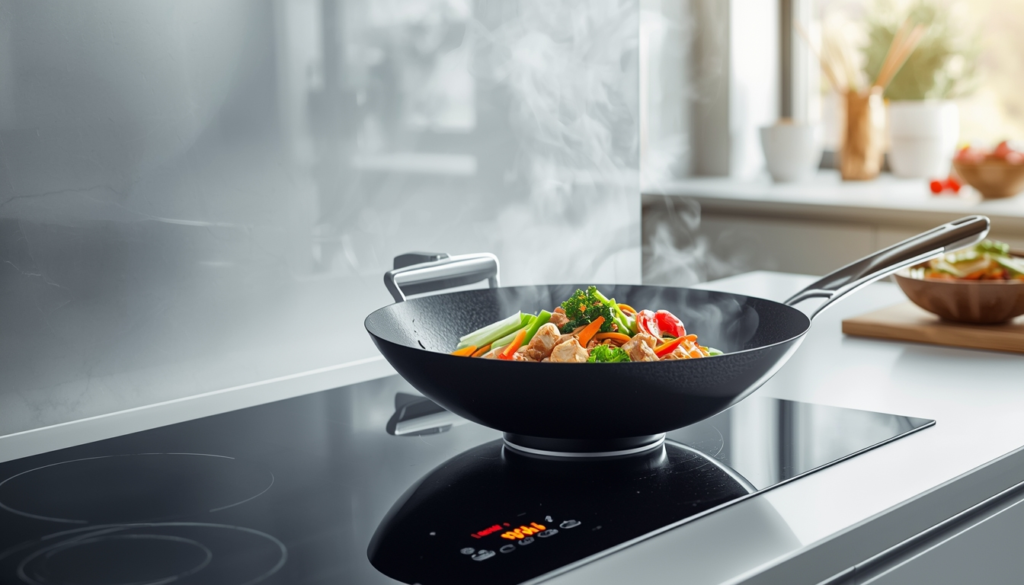
The best best induction wok for Stir-Frying is a flat-bottom carbon steel wok. It is your best bet for home cooking on an induction cooktop. It heats up fast, and responds well to temperature changes. This style of wok gets you closer to that restaurant-quality stir-fry than almost any other option.
I’ve cooked hundreds of stir-fries, deep-fried, everything from tofu to chicken. I’ve also tested more pots and pans than I can count, and this guide will help you skip the guesswork.
Key Takeaways
- Flat-bottom carbon steel woks are the best choice for induction cooking
- Induction requires magnetic cookware. Always test with a magnet
- 12–14 inch woks offer the best balance for most home cooks
- Carbon steel delivers the best heat control and wok performance
- Preheating the wok properly is essential for good stir-frying results
- Induction limits sidewall heat, so keep food moving constantly
- Avoid overcrowding to prevent steaming instead of frying
- High smoke point oils (like avocado or peanut) are crucial
- Nonstick is easier, but can’t handle true high-heat cooking
Can You Use a Wok on an Induction Cooktop?
Yes, but not every wok will work. Induction cooktops use electromagnetic induction coils hidden under a flat glass surface. These induction coils create a magnetic field that heats only magnetic cookware. If your wok isn’t magnetic, it won’t heat up.
Why Some Woks Don’t Work on Induction
Traditional woks are made from non-magnetic materials like aluminum or pure copper. When you place one on a full induction cooktop, nothing happens. The induction burner stays cold, and your stir-fry never gets started.
What Makes a Wok Induction-Compatible (Quick Checklist)
Here’s a fast checklist before you buy:
- ✅ Flat bottom (round-bottom woks won’t sit properly on a flat cooktop)
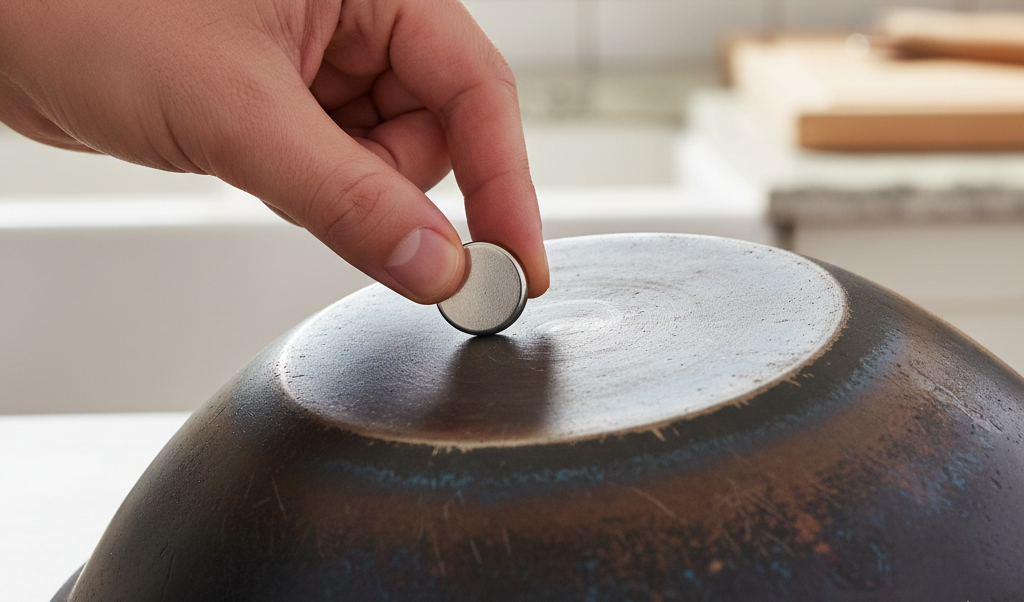
- ✅ Magnetic base, hold a fridge magnet to the bottom; it should stick
- ✅ Carbon steel, stainless steel, or cast iron construction
- ✅ No aluminum core touching the cooktop surface
- ✅ Diameter between 12–14 inches for most home induction ranges
The Biggest Limitation of Using a Wok on Induction
The biggest challenge is heat distribution. Gas stoves wrap flame around the curved wok bowl. This gives you that high-heat, all-around cooking surface that creates wok hei. Wok hei is the smoky, slightly charred flavor you get at Chinese restaurants. Induction which relies on a flat coil can only heat the flat base directly.
Is It Worth Using a Wok on Induction vs Other Pans?
Absolutely yes. Even with this limitation, a good wok on an induction stove still outperforms a regular frying pan for stir-frying. The sloped sides, large cooking surface, and fast heat response make tossing ingredients easier. It reduces overcrowding, and makes fast-moving stir-fry cooking far more practical.
What to Look for in an Induction-Compatible Wok
Buying the wrong wok is frustrating. Here’s exactly what matters.
Must-Have Feature: Flat Bottom Design
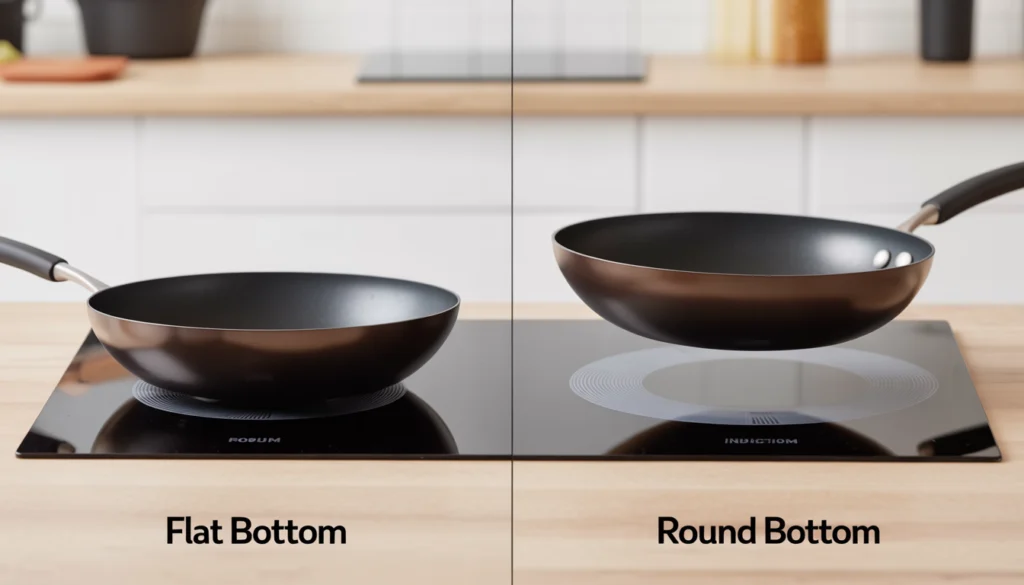
A flat-bottom wok is non-negotiable for induction stovetops. Round-bottom woks are designed for wok burners or high-BTU backyard burners where the flame curves around the wok bowl. On a flat cooktop, a round-bottom wok sits at an angle, gives you uneven cooking, and can be dangerous to use.
A flat cooking surface of at least 5–6 inches ensures stable contact with the induction burner and consistent heat transfer.
Why Magnetic Materials Matter
Induction coils work by generating a magnetic field. The wok’s base must be ferromagnetic, meaning it’s attracted to magnets. Carbon steel, cast iron, and some stainless steels are ferromagnetic. Aluminum and copper are not.
A simple test: press a fridge magnet to the bottom of your wok. If it sticks firmly, the wok is induction-ready.
Ideal Size for Different Households
| Household Size | Recommended Wok Diameter |
|---|---|
| 1–2 people | 10–12 inches |
| 3–4 people | 12–14 inches |
| 5+ people / batch-cooking | 14–16 inches |
For most home cooks, a 12–14 inch wok hits the sweet spot. It’s big enough for a proper vegetable stir-fry without being too heavy to maneuver.
Weight: How Heavy Is Too Heavy?
A wok that’s too heavy makes traditional wok tossing nearly impossible. Carbon steel woks typically weigh between 2–4 lbs, which is manageable for most people. Cast-iron woks can weigh 6–10 lbs, making vigorous stirring and tossing very tiring.
If you’re a beginner or have wrist issues, stick to a lighter carbon steel or nonstick wok.
Handle Styles (Single vs Helper Handle)
- Long single handle: Great for wok tossing and one-handed maneuvering
- Helper handle: A smaller loop handle on the opposite side, useful for two-person cooking or moving a heavy wok safely
- Two loop handles: Better for hot-pot style cooking or steaming — less ideal for stir-frying
For stir-frying, a long single handle gives you the best control.
Do You Really Need a Lid or Accessories?
A wok lid is useful but not essential for stir-frying. You’ll need one if you plan to steam, braise, or cook fried rice with a covered simmer. A wok spatula (also called a wok chuan) is more important. The flat, angled design works better than a standard cooking utensil for scooping and tossing in the wok bowl.
Which Wok Material Is Best for Induction Cooking?
This is the question most home cooks get wrong. Let’s compare every option clearly.
Carbon Steel: Best Performance (and Why)
Carbon steel is the top choice for wok cooking, and wok-cooking experts agree. It heats quickly, responds fast to temperature changes, and gets incredibly hot. Over time, a well-seasoned carbon steel wok becomes nonstick. It happens through a process called polymerization. It’s where layers of cooking oil bake into the surface.
A hand-hammered wok made from carbon steel is even better. The hammered texture creates more surface area, improves heat distribution, and holds seasoning better. Brands like Yosukata and Craft Wok are well-regarded for quality carbon steel woks.
Best for: Serious home cooks, high-heat cooking, anyone who wants a dependable wok that lasts decades.
Stainless Steel: Durability vs Cooking Control
Stainless steel woks are tough, rust-proof, and dishwasher-safe. They’re great for busy home cooks who want low-maintenance cookware. But, stainless steel is not as heat-responsive as carbon steel and food tends to stick more unless you use plenty of cooking oil.
Best for: Low-maintenance cooking, acidic sauces, homes where the wok gets used occasionally.
Nonstick: Convenience vs Heat Limitations
Nonstick woks are the most beginner-friendly option. They require very little oil and are the easiest to clean. The big downside is that nonstick coatings can’t handle high heat. Most nonstick woks have an oven-safe limit of around 400–500°F, which is too low to achieve real wok hei or proper stir-frying temperatures.
Best for: Beginners, quick weeknight cooking, stir-fried vegetables and eggs.
Cast Iron: Heat Retention vs Usability
Cast iron woks (and cast-iron cookware in general) hold heat extremely well. Once hot, they stay hot — great for things like stir-fry beef or batch-cooking. The downside is weight. A cast iron pan or wok can feel like lifting a small boulder when it’s full of food.
Cast-iron woks are also slower to heat up and cool down. This feature makes precise temperature control harder during a fast-moving stir-fry.
Best for: Slow-cooked dishes, users who rank heat retention over agility.
Hybrid Woks: Are They Worth the Price?
Hybrid woks combine materials, like a carbon steel body with a stainless steel base or a nonstick interior. They aim to offer the best of both worlds but often fall short. The seams between materials can affect cooking performance and long-term durability. Unless a specific model gets strong reviews, I’d skip these.
Quick Comparison Table: Pros and Cons of Each Material
| Material | Heat-Up Speed | Wok Hei Potential | Weight | Maintenance | Best For |
|---|---|---|---|---|---|
| Carbon Steel | ⚡ Very Fast | ⭐⭐⭐⭐⭐ | Light | Medium (season regularly) | All wok cooking |
| Stainless Steel | Medium | ⭐⭐⭐ | Medium | Low | Everyday cooking |
| Nonstick | Medium | ⭐ | Light | Very Low | Beginners, low heat |
| Cast Iron | Slow | ⭐⭐⭐ | Very Heavy | Low-Medium | Searing, braising |
| Hybrid | Medium | ⭐⭐ | Medium | Low | Occasional use |
Flat Bottom vs Round Bottom Woks
This is one of the most common confusion points. Let’s clear it up once and for all.
Why Flat-Bottom Woks Are Required for Induction
An induction burner transfers energy through direct contact between the wok and the flat glass surface. A round-bottom wok makes only a tiny point of contact, or tips to one side entirely. This leads to uneven cooking, wasted energy, and a precarious stir-frying situation that’s also a safety hazard.
A flat-bottom wok sits flush on the cooktop. The induction coil heats the entire flat base evenly, which is as close to ideal as you’ll get on a flat surface.
Can You Use a Round-Bottom Wok with an Adapter?
Some cooks try using a wok ring or wok-ring setup to stabilize a round-bottom wok on an induction stove. In practice, this doesn’t work well. The wok ring lifts the wok away from the cooktop surface, breaking the magnetic contact needed for induction. The result: little to no heat. Skip the wok ring for induction use.
Performance Differences in Real Cooking
In real stir-frying tests, flat-bottom woks consistently outperform adapted round-bottom woks on induction. A flat-bottom wok delivers faster preheat times, more consistent temperatures across the cooking surface and better stir-frying results.
A round-bottom wok shines on an outdoor wok burner or high-BTU backyard burner. But it’s not the right tool for induction which relies on surface contact.
Stability and Safety Considerations
A round-bottom wok on a flat cooktop is genuinely dangerous. Hot cooking oil plus a wobbly wok is a recipe for spills and burns. Always use a flat-bottom wok on induction stovetops for safe, stable wok cooking.
Best Induction Woks by Category
Here are my top picks after extensive research and everyday cooking trials. These woks are all flat-bottom, and induction-compatible. They’re rated by home cooks and professional cooking experience alike.
Best Induction Wok
Yosukata Carbon Steel Wok (14-inch, Flat Bottom)
The Yosukata wok is a hand-hammered carbon steel wok built for serious wok cooking. It heats up fast, holds seasoning well, and is sturdy enough for vigorous stirring and tossing. This wok delivers real high-heat performance on a full induction range. It comes pre-seasoned. Although most wok-cooking experts recommend doing your own seasoning burn-in before the first fry.
Carbon Steel Wok for Serious Cooking
Craft Wok Traditional Hand Hammered Carbon Steel Wok
Craft Wok makes one of the best traditionally-styled woks available for home use. It’s a non-coated wok, which means nothing stands between your food and the iron wok surface. Over time, this wok builds a beautiful natural nonstick layer. The rectangular wok spatula included in some versions is a nice bonus for beginners.
Best Beginner-Friendly Wok
Joyce Chen Classic Series Carbon Steel Wok (14-inch)
Joyce Chen is one of the most trusted names in wok cookware. Her Classic Series carbon steel wok has some heplful features. They have a long wooden handle for comfortable grip during stir-frying, a helper handle for easy transport, and a flat bottom for stable induction use. It’s a great first wok for anyone new to wok cooking.
Budget Option
Taylor & Ng Carbon Steel Wok (14-inch)
For home cooks on a budget, this wok offers solid carbon steel performance at a lower price point. It’s a dependable wok for daily stir-fries, fried rice, and simple noodle dishes. It requires seasoning, but once seasoned it’s a reliable cooking vessel.
Best Premium / Professional-Grade Wok
Made In Carbon Steel Wok
Made In produces high-quality cookware that punches above its weight. Their carbon steel wok is a multi-cooking wonder. Great for stir-frying, deep-frying, and steaming. The balance between handle length, wok weight, and cooking surface feels great. It feel like professional cook-grade equipment. It’s a splurge, but worth it for serious home cooks.
Nonstick Wok for Easy Cleanup
T-fal Specialty Nonstick Wok (14-inch)
If easy cleanup is your top priority, this nonstick wok is hard to beat. It’s lightweight, and heats evenly on an induction burner. The nonstick surface makes stir-fried dishes like garlic fried rice and vegetable stir-fry seem effortless. Remember: keep heat below medium-high to protect the coating.
How to Choose Between These Picks (Quick Decision Guide)
| Your Situation | Best Pick |
|---|---|
| New to wok cooking | Joyce Chen Classic |
| Budget-conscious | Taylor & Ng |
| Serious home cook | Yosukata or Craft Wok |
| Hate cleaning | T-fal Nonstick |
| Want the best money can buy | Made In Carbon Steel |
How Well Do Woks Work on Induction Cooktops?
Let’s be honest about what you can and can’t expect.
Heat Distribution Differences vs Gas Stoves
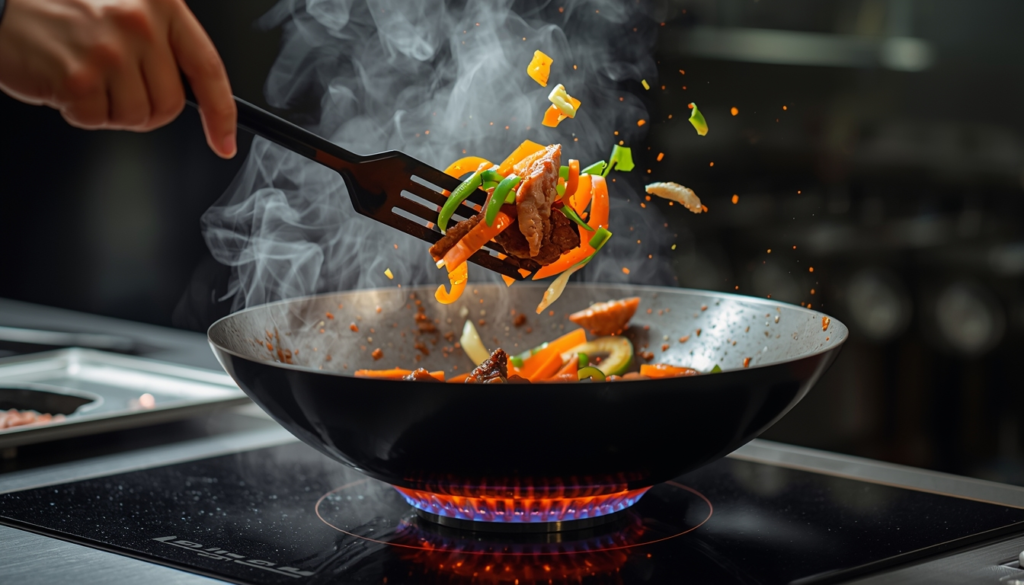
A gas stove with high-BTU burners surrounds the entire wok bowl with flame. This creates wok-encompassing heat — every surface of the wok gets hot, including the curved sides. On an induction cooktop, only the flat base connects with the induction coil, so heat must travel up the sides of the wok on its own.
The result: the cooking surface at the base gets very hot, but the upper sides stay cooler. This means you’ll need to keep ingredients moving toward the hot center during a fast-moving stir-fry.
Can You Achieve Wok Hei on Induction?
Wok hei is that smoky, slightly charred breath of a wok that you taste at great Chinese restaurants. It is hard to replicate on induction. High-output wok burners at restaurants run at 100,000+ BTU. Most home induction burners top out at 3,000–4,000 watts (roughly 10,000–14,000 BTU equivalent).
That said, you can get closer to wok hei by preheating your carbon steel wok for several minutes before adding oil. Also cook in small batches to avoid overcrowding. The last thing is working over the greatest cooking temperature your induction stove allows.
Common Cooking Limitations and Workarounds
| Limitation | Workaround |
|---|---|
| Lower max heat | Preheat longer; use thinner carbon steel |
| No flame for side heating | Keep food moving constantly |
| Can’t toss over open flame | Use a wide induction cooktop model |
| Round-bottom woks don’t work | Use flat-bottom wok only |
Best Cooking Techniques for Induction Stir-Frying
- Preheat dry for 3–5 minutes before adding oil
- Cook in batches, don’t overcrowd the wok
- Use high smoke point oils like avocado, peanut, or refined coconut oil
- Keep ingredients moving with your wok spatula or cooking chopsticks
- Add soy sauce and other sauces along the hot edge of the wok, not directly into the food pile
How to Use a Wok on an Induction Cooktop (Step-by-Step)
Great wok cooking isn’t just about equipment. Technique matters just as much.
Preheating Correctly (Crucial Step Most People Miss)
This is the single most important step for successful wok cooking on induction. Place your dry wok on the induction burner and turn it to medium-high or high. Let it heat for 3–5 minutes before adding anything. The wok should be hot enough that a drop of water vaporizes instantly when flicked in.
Skipping this step is the #1 reason home cooks end up with steamed, soggy stir-fry food instead of briskly wok-fried results.
Oil Selection and Smoke Points
The oil you use matters a lot in high-heat cooking. Here’s a quick reference:
| Cooking Oil | Smoke Point | Good for Wok? |
|---|---|---|
| Avocado oil | 520°F | ✅ Excellent |
| Refined peanut oil | 450°F | ✅ Excellent |
| Refined coconut oil | 450°F | ✅ Good |
| Vegetable oil | 400°F | ✅ Good |
| Extra-virgin olive oil | 375°F | ❌ Too low |
| Butter | 302°F | ❌ Too low |
Always add oil to a hot pan, never to a cold wok. Swirl the oil to coat the cooking surface before adding ingredients.
Proper Stir-Frying Technique on Flat Heat
Since induction heats only the flat base, you need to keep ingredients at the center of the wok bowl as much as possible. Use a wok chuan (wok spatula) to scoop, flip, and toss food constantly. For lighter ingredients like stir-frying greens or stir-frying bok choy, you can do a quick toss every few seconds.
For heavier ingredients like stir-fry beef or cooked rice, press the food flat against the hot base briefly to get color and crust before tossing.
Avoiding Overcrowding
Overcrowding is the #1 enemy of good stir-frying. When you add too much food at once, the wok temperature drops sharply. Instead of frying, your food steams in its own moisture. This gives you pale, soft results. The opposite of a restaurant-quality stir-fry.
Cook proteins and vegetables in separate batches, then combine at the end. This is how professional cook-level stir-fried dishes are made.
Managing Temperature Changes
Induction burners respond to temperature changes quickly. Way faster than traditional electric cooktops. Use this to your advantage. When adding cold ingredients, briefly turn up the heat. When adding delicate items like eggs or leafy greens, turn it down. This heat-responsive pan behavior is one of the hidden advantages of cooking on induction versus gas.
How to Season and Maintain a Carbon Steel Wok
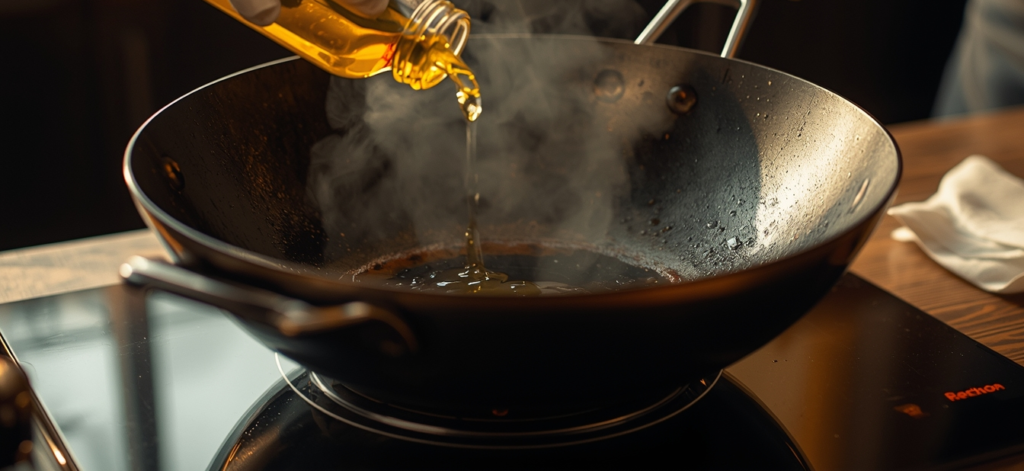
A well-seasoned carbon steel wok is one of the best cooking vessels you’ll ever own. Here’s how to care for it.
Step-by-Step Seasoning Guide
First-time seasoning:
- Wash the new wok with hot soapy water to remove factory coating
- Dry completely with a towel, then place on induction burner over medium-high heat for stovetop drying
- Once fully dry, add 1 tablespoon of high smoke point oil
- Use a paper towel (with oven mitts) to rub the oil all over the inside surface
- Heat until the oil just begins to smoke, then wipe off excess
- Repeat the oil-and-heat cycle 3–4 times
- Let cool before storing
Your wok should develop a dark, slightly matte patina. This is your seasoning layer, protect it.
Best Oils for Seasoning
The best oils for seasoning a wok are ones with high smoke points and high polyunsaturated fat content. Flaxseed oil, grapeseed oil, and refined avocado oil are all excellent choices. Avoid extra-virgin olive oil or butter. They don’t bond to the iron wok surface as effectively.
How Often to Re-Season
A pre-seasoned wok that’s used regularly rarely needs a full re-season. Just cook with it and use oil. If you notice rust spots or a patchy surface, do a quick 1–2 cycle re-seasoning. A scrubbed wok (one that’s been scoured) will need a full re-seasoning from scratch.
Daily Cleaning Routine
- Rinse with hot water only while still warm
- Use a bamboo brush or chain mail scrubber, never steel wool
- Dry immediately on the stovetop over low heat
- Rub a tiny amount of oil on the surface with a paper towel
- Store in a dry place
What to Avoid (Soap Myths, Rust Issues, etc.)
The old rule “never use soap on a wok” is mostly true but slightly overblown. A tiny drop of mild dish soap occasionally won’t ruin the seasoning. What will damage your wok is soaking it in water, using a metal scrubber, or leaving it wet. Rust forms quickly on a non-coated wok left damp.
If you see rust, don’t panic. Scrub it off with coarse salt and oil, rinse, dry, and re-season.
What Can You Cook in a Wok on Induction?
A good wok is a true multi-cooking wonder. It is far beyond just stir-fries.
Stir-Frying Vegetables and Proteins
This is the wok’s natural home. A fast-moving stir-fry of bok choy, broccoli, snap peas, or bell peppers takes under 5 minutes. Stir-fry beef with oyster sauce, stir-fried greens with garlic and soy sauce, or a simple vegetable stir-fry with tofu. All perfect for a flat-bottom induction wok.
Cooking Fried Rice and Noodles
Garlic fried rice, egg fried rice, or browned rice with vegetables, all come together beautifully in a hot wok. The key is using day-old cooked rice (cold and dry) and a screaming hot wok. Fresh rice is too wet and turns mushy. Noodle dishes like lo mein, pad Thai, or yakisoba are also excellent wok cooking applications.
Deep Frying Safely
A wok is actually a fantastic vessel for deep-frying. The sloped sides mean you need less cooking oil than a flat-bottomed pot, and the wide opening gives you easy access. Use a deep-fry thermometer to check oil temperature, and never fill the wok more than halfway with oil.
Steaming with a Wok Setup
Place a bamboo steamer or metal steaming rack inside your wok with 1–2 inches of boiling water below. Cover with a wok lid and you’ve got an efficient steamer for dumplings, fish, or vegetables. This is traditional wok cooking at its most versatile.
One-Pan Meals and Sauces
A wok is perfect for one-pan meals, sauté aromatics, brown protein, add vegetables, finish with a sauce. Sheet pan chicken has nothing on a good wok meal for speed and flavor. Braised sauces, stews, and even hot-pot style dishes all work well in a large wok with a lid.
Common Mistakes When Using a Wok on Induction
Avoid these errors and your stir-frying will improve immediately.
Using the Wrong Type of Wok
A round-bottom wok on a flat induction cooktop doesn’t just underperform. It’s unstable and dangerous. A too-short wok handle makes maneuvering difficult. Always use a flat-bottom, magnetically compatible wok with a handle long enough for comfortable stir-frying.
Not Preheating Long Enough
This is the most common wok mistake. A cold wok means food sticks, steams instead of fries, and never develops that satisfying sear. Preheat your wok dry for at least 3–5 minutes before adding oil. The wok should be visibly hot. You may even see slight color changes in carbon steel as it heats.
Overcrowding Ingredients
I mentioned this earlier but it’s worth repeating. Too many ingredients drop the wok temperature and cause steaming, not frying. Work in small batches, especially when cooking proteins. This single habit is what separates great stir-fries from mediocre ones.
Using Low-Smoke-Point Oils
Pouring olive oil into a screaming hot wok creates acrid smoke and imparts bitter flavor to your food. Stick to high smoke point oils like peanut, avocado, or refined vegetable oil for all high-heat cooking tasks.
Expecting Restaurant-Level Heat Output
Home induction burners simply don’t reach the BTU output of commercial wok burners. Even a wide induction cooktop or portable induction cooktop maxes out well below what a restaurant wok station produces. Set realistic expectations and focus on technique — you can make excellent stir-fry food at home, even if it’s not identical to takeout.
FAQs About Induction Woks
Can You Use a Regular Wok on Induction?
Only if it has a magnetic flat bottom. Test with a magnet. If it sticks strongly, your wok is induction-compatible. Most traditional woks with round bottoms or aluminum construction will not work on an induction stove.
What Size Wok Is Best for Home Cooking?
For most home cooks, 12–14 inches is ideal. A 14-inch wok gives you enough room for big-batch stir-fries and two-person cooking. You can stir fry without the wok feeling too heavy or taking up too much stovetop space.
Is Carbon Steel Better Than Nonstick?
For wok cooking, yes. Carbon steel is better long-term. Carbon steel can handle much higher heat, builds a natural nonstick surface over time, and lasts decades. Nonstick woks degrade at high heat and need replacing every few years. For a first wok or beginner setup, nonstick is fine. For serious home cooking, go carbon steel.
Can You Use a Wok on Other Cooktops Too?
Yes! A flat-bottom carbon steel wok works on gas, electric, induction, and even outdoor wok burners. It’s extremely versatile cookware. If you ever switch from an induction stove to a gas cooking range, your wok comes with you. You can even use it on a portable induction stovetop for wok cooking outdoors.
Do You Need Special Utensils for a Wok?
A wok chuan (wok spatula) is strongly recommended. Its flat angled blade is designed to scoop and flip efficiently inside a curved wok bowl. Cooking chopsticks are also useful for flipping and tasting. Avoid plastic utensils in a hot wok — use metal cooking utensils or wooden tools rated for high heat.
What Oil Is Best for Stir-Frying?
Refined peanut oil is the traditional choice for stir-frying in Chinese cooking. Avocado oil is an excellent modern alternative with an even higher smoke point. Both handle high-heat cooking without breaking down or smoking excessively.
Final Buying Guide: How to Choose the Right Induction Wok for You
Best Choice for Beginners
Go with the Joyce Chen Classic Carbon Steel Wok or any quality pre-seasoned wok with a flat bottom and a long handle. Look for a 12–14 inch size with a helper handle for extra safety. Pre-seasoned woks give beginners a head start, though you’ll still want to do your own seasoning burn-in.
Choice for Serious Home Cooks
The Yosukata or Craft Wok hand-hammered carbon steel options are excellent. These woks reward experience and give you genuine high-heat performance. Pair with a good wok spatula and cooking chopsticks, and you’ll be making proper stir-fried dishes that friends and family will rave about.
Best Choice for Small Kitchens
A 12-inch flat-bottom carbon steel wok takes up minimal stovetop space and is light enough to store on a hook or in a cabinet. If counter space is tight, avoid woks over 14 inches. They overhang burners and become awkward on a compact induction range.
Choice for Easy Maintenance
Choose a nonstick wok or a stainless steel wok if you dislike seasoning and regular oiling. These are the most beginner-friendly options for low-effort home cooking. Just keep the heat moderate on nonstick to protect the coating.
Quick Checklist Before You Buy
Before purchasing any induction wok, run through this quick list:
- [ ] Is the bottom flat? (Not round)
- [ ] Does a magnet stick strongly to the base?
- [ ] Is it 12–14 inches for most household sizes?
- [ ] Is it carbon steel, stainless, or cast iron?
- [ ] Does it have a comfortable long handle?
- [ ] Is it under 4 lbs for easy stir-frying?
- [ ] Does it come with or is it compatible with a wok lid?
If you check all those boxes, you’ve found a solid induction wok that will last you years of great home-cooking adventures.
External Sources:
https://www.seriouseats.com/best-woks-5218113
https://eleanorhoh.com/tag/best-wok-for-induction
Disclaimer: Product recommendations are based on research, user reviews, and hands-on cooking experience. MyKitchenHints may earn a commission from qualifying purchases through affiliate links at no extra cost to you.