
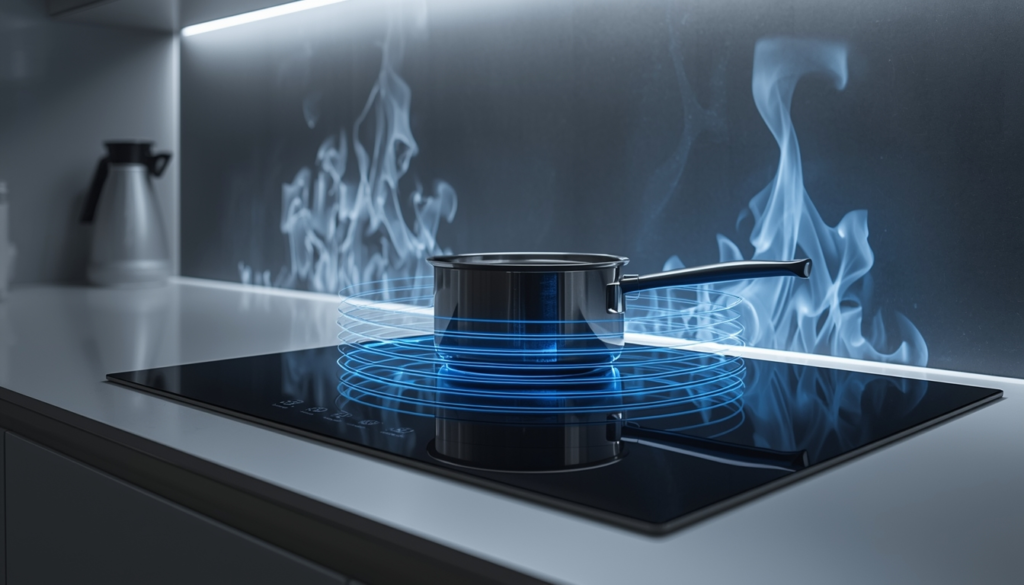
Ever wondered what is the energy efficiency of induction cookware. Induction cooking is the most energy-efficient cooking method available for home cooks today. It converts up to 90% of energy directly into heat. That’s a massive jump compared to gas stoves (about 40%) and electric coil cooktops (around 74%).
I’ll show exactly how induction technology works, why it saves you money, and how to get the most out of your induction cooktop.
Key Takeaways
- Induction cooking is the most energy-efficient method, transferring up to 90% of energy to food.
- It wastes less heat compared to gas and electric cooktops.
- Faster cooking times reduce energy use.
- Proper cookware and usage habits significantly impact efficiency.
- Induction can lower electricity costs over time despite higher upfront costs.
- It’s also safer and more environmentally friendly due to reduced emissions.
What Is Induction Cooking and How Does It Work?
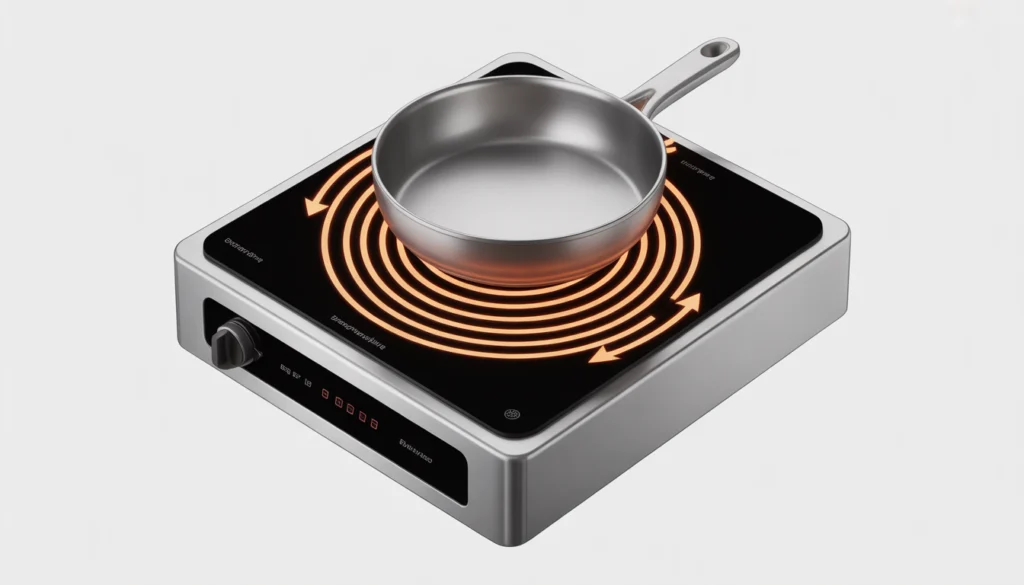
Induction cooking is a type of electric cooking that uses electromagnetic fields to heat cookware directly. Instead of heating a burner or coil that then heats the pot. The induction cooktop sends an electric current through a copper coil beneath the glass cooktop surface. That current creates a magnetic field that transfers energy straight into your magnetic cookware.
This is completely different from gas cooking or resistance heating used in electric stoves. With a gas stove, a flame heats the air around the pot. On electric smoothtop stoves, heating elements glow red and slowly transfer heat upward. With induction, the heat is generated inside the pot itself. It is why it’s so remarkably fast and efficient.
What defines induction cookware vs traditional cookware
Induction-friendly cookware must be made from a ferromagnetic material. This means it contains iron that responds to a magnetic field. Cast iron, stainless steel with a magnetic base, and carbon steel all work well. Aluminum, copper, and glass cookware won’t work unless they have a magnetic layer bonded to the bottom.
A quick test: hold a magnet to the bottom of your pot. If it sticks firmly, you have compatible cookware. If it falls off, it won’t work on your induction cooktop.
How electromagnetic energy heats cookware directly
When you turn on an induction burner, electricity flows through a copper coil beneath the ceramic surface. This generates a rapidly alternating magnetic field. When your magnetic cookware sits on the cooking surface. The magnetic field induces an electric current inside the pot’s metal base. That current creates resistance in the metal, which generates heat right where you need it.
The cooktop surface itself barely gets warm. Only the area under your pot heats up, and only while the pot is sitting on it. Once you lift the pan, heating stops immediately.
The role of magnetic materials in energy transfer
Magnetic materials are the backbone of induction heating. The tighter the magnetic particles are packed in the base of your cookware, the more efficient the energy transfer. This is why cast iron and tri-ply stainless steel are top choices for induction cooking. A thicker, flatter base also maximizes the magnetic contact area. Thereby improving the per-unit efficiency of every cooking session.
Why induction differs from gas and electric cooking methods
Gas cooktops burn natural gas or propane to produce an open flame. A large part of that heat escapes into the kitchen air. This also means your HVAC equipment has to work harder to cool your home.
Electric coil cooktops use resistance heating elements that glow and radiate heat upward. This type loses a fair amount to the surrounding air. Induction cooking appliances skip both of those wasteful steps, sending energy directly to the food.
What Does Energy Efficiency Mean in Cooking Appliances?
Energy efficiency in cooking means how much of the energy you pay for actually ends up heating your food. The rest is wasted — lost to the air, the cooktop surface, or escaped as steam and radiation.
Definition of energy efficiency in cooking
In simple terms, efficiency is a ratio. If you put in 1,000 watts of electricity and 900 watts goes into heating your soup, you have 90% efficiency. The U.S. Department of Energy (DOE) uses this kind of energy measurement when setting DOE appliance standards for residential cooking equipment.
How energy input vs useful heat output is calculated
Energy efficiency is measured in labs by heating a known amount of water and measuring how many BTUs or watts it took to raise the temperature by a set amount. The Department of Energy uses standardized testing protocols so consumers can compare appliances fairly. These results are often published on energy labels and in appliance guides.
Typical efficiency ranges for kitchen appliances
Here’s a quick look at how different cooking methods compare:
| Cooking Method | Approximate Efficiency |
|---|---|
| Induction Cooktop | 85–90% |
| Electric Smoothtop (Radiant) | 74–80% |
| Electric Coil Cooktops | 65–74% |
| Gas Cooktops | 32–40% |
| Convection Ovens (Electric) | 70–75% |
Source: U.S. Department of Energy estimates
Why efficiency matters for cost and sustainability
Higher efficiency means lower energy consumption. It means lower electricity bills and a smaller carbon footprint. For avid cooks who spend significant time at the stove, even a 10–15% efficiency improvement can add up to real annual energy savings.
The DOE notes that efficient induction stoves can be up to 10 percent more energy-efficient than conventional electric smoothtop stoves. They are more efficient than combustion appliances like gas stoves.
How Energy Efficient Is Induction Cookware Compared to Other Methods?
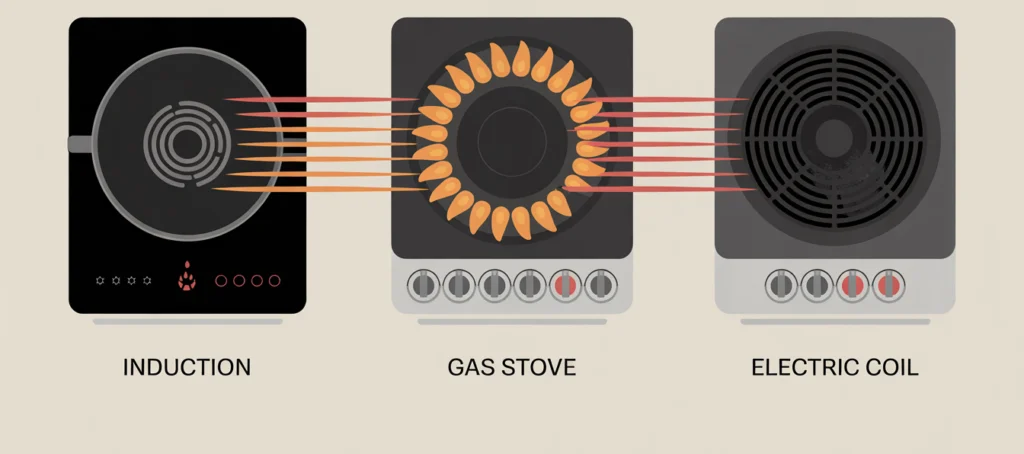
This is the core question, and the numbers are eye-opening. Induction cooking leads in head-to-head efficiency comparisons against every other common cooking method.
Induction vs gas efficiency breakdown
Gas stoves lose most of their energy to the surrounding air. Only about 32–40% of the energy from burning gas reaches your food. The rest heats your kitchen, which then requires more energy from your HVAC system to cool it back down. Induction cooking flips that equation entirely, delivering 85–90% of energy directly to the cookware.
If you cook for one hour a day, a gas stove might waste 60 cents of every dollar you spend on energy. An induction cooktop wastes about 10–15 cents of every dollar. Over a year, that’s a significant difference.
Induction vs electric coil and radiant cooktops
Electric coil cooktops use resistance heating. These are coils that glow red and transfer heat upward by direct contact and radiation. They score between 65–74% efficiency. Electric smoothtop stoves (radiant or halogen) do slightly better at 74–80%, but induction still wins by a clear margin. The key difference is that electric cooktops heat a surface that then heats your pot, while induction heating skips the middleman.
Percentage of energy transferred to food (real numbers)
To put this in concrete terms:
- Induction: ~90% of energy becomes heat in the food
- Electric smoothtop: ~74% of energy becomes heat in the food
- Electric coil: ~70% of energy becomes heat in the food
- Gas: ~40% of energy becomes heat in the food
These aren’t just manufacturer claims. They reflect real-world testing by the U.S. Department of Energy and independent energy researchers. The difference between gas and induction is not minor, it’s more than double the efficiency.
Heat loss differences across cooking methods
Gas stoves lose heat through open-flame combustion. Heat from this radiates in all directions. Electric models lose heat through the cooktop surface, which stays hot long after the burner is turned off. Induction loses minimal heat because the entire cooktop surface stays cool except directly under the pan. No radiant heat escaping into the kitchen air.
Speed of heating and its impact on efficiency
Faster cooking means less total energy used. An induction burner can boil water roughly 50% faster than a gas burner. Less time cooking = fewer watts consumed = lower energy costs. Chef Reina, a professional home cooking educator, often demonstrates this in her innovative cooking demonstrations. She shows that a pot of water that takes 8–9 minutes on gas takes just 4–5 minutes on a new induction cooktop.
Why Induction Cooking Is More Energy Efficient
The efficiency advantage of induction isn’t magic. It comes from some very practical physics. Here’s exactly why the numbers look the way they do.
Direct heat transfer vs ambient heat loss
Every other cooking method heats something between the energy source and your food. Gas stoves heat air and then your pot. Electric stoves heat coils or glass surfaces and then your pot. Induction heats the pot directly, cutting out every middleman. Less distance for energy to travel = less energy lost.
Reduced preheating requirements
Induction offers instant temperature control. The heat ramps up in seconds. You don’t need to preheat the cooking surface the way you would with electric stovetop models or traditional gas stoves. This alone saves several minutes of energy use per cooking session.
Faster cooking times and lower energy use
Because the heat is so concentrated and direct, cook times drop significantly across almost all cooking tasks. Sautéing, boiling, simmering, all happen faster on induction. This speed advantage contributes to the annual energy consumption difference between induction and conventional stoves.
Precision temperature control minimizing waste
Precise temperature control means you’re not accidentally using high heat when medium will do. Induction cooktops respond to temperature adjustments almost instantly. It’s unlike gas stove use, where the flame takes a moment to adjust, or electric coil cooktops, which stay hot long after you lower the setting. Less overshoot = less wasted energy.
Minimal residual heat after cooking
When you turn off an induction burner, heating stops immediately. The glass cooktop surface only retains a small amount of residual warmth from the hot pan sitting on it. Compare that to electric coils or radiant elements. They stay dangerously hot for minutes — wasting energy as they slowly cool down.
Factors That Affect the Energy Efficiency of Induction Cookware
Even with such impressive baseline efficiency, real-world results vary. Here are the most important factors that affect how efficient your induction cooking actually is.
Cookware material and magnetic compatibility
Not all magnetic cookware performs equally. Cast iron is highly efficient because of its dense magnetic properties and excellent heat retention. Cheap magnetic cookware with thin, uneven bases can reduce efficiency. It is because the magnetic contact is inconsistent. The quality of your induction-friendly cookware directly affects energy transfer.
Cookware size vs burner size alignment
This is one of the most overlooked efficiency factors. If your pan is smaller than the induction burner, some of the magnetic field goes to waste, heating nothing. Always match your pan size to the burner size as closely as possible. Most four-burner induction cooktops and even 30-inch induction cooktops include different-sized zones for exactly this reason.
Flat-bottom vs warped cookware impact
A flat-bottom pan sits flush against the glass cooktop surface, maximizing the magnetic contact area. A warped bottom creates air gaps, reducing the efficiency of energy transfer. Over time, even good pans can warp from thermal stress. If you notice your induction cooktop doesn’t seem as efficient, check your pan’s bottom for warping.
Power settings and cooking habits
Your cooking habits have a direct impact on energy use. Running an induction cooktop at full power when you only need medium heat wastes electricity. Learning to use lower power settings for simmering. Reserve high heat for boiling water or searing dramatically improves efficiency. Using a lid to trap heat is one of the simplest ways to cut energy use immediately.
Quality of induction cooktop technology
Not all induction cooking appliances are created equal. Higher-quality units, particularly those meeting DOE appliance standards, have better inverter technology. This inverter technology converts electricity to magnetic fields more efficiently. A budget single-burner induction appliance may perform worse than a premium residential induction cooktop from a reputable brand.
Does Induction Cooking Save Money on Electricity Bills?
This is where it gets real. The energy efficiency of induction cooking translates directly into lower energy costs. Although how much you save depends on your current setup and local electricity rates.
Energy savings compared to gas and electric
Switching from a gas stove to an induction cooktop can cut your cooking energy costs by more than half. Although it depends on local gas and electricity prices. Switching from electric coil cooktops saves less, maybe 15–25% , but still adds up. The DOE estimates that induction cooking can deliver alot of energy savings for most households.
Cost per meal comparison
Let’s break it down simply. Assume you cook one meal per day for 30 minutes:
| Cooking Method | Daily Energy Use (est.) | Monthly Cost (at $0.15/kWh) |
|---|---|---|
| Induction | ~0.5 kWh | ~$2.25 |
| Electric smoothtop | ~0.65 kWh | ~$2.93 |
| Electric coil | ~0.75 kWh | ~$3.38 |
| Gas stove (converted) | ~0.9 kWh equivalent | ~$4.05+ |
These are rough estimates for illustration. Actual energy costs vary by usage and region.
Long-term savings vs upfront investment
A quality induction cooktop costs more upfront than a basic electric or gas stove. A mid-range four-burner induction range starts around $700–$1,200, while an entry-level gas cooktop may cost $400–$600. However, the energy cost savings over 5–10 years often offset the higher buying price, especially for home cooks who cook daily.
Regional electricity cost considerations
In areas where electricity is cheap and gas is expensive, or where clean energy is a priority, induction delivers even stronger value. In regions where gas is heavily subsidized, the financial case for switching is a bit less clear-cut. Check your local utility rates and use the U.S. Department of Energy’s online energy calculators for a personalized estimate.
Real-life usage scenarios and savings estimates
A family cooking three meals a day could save $150–$400 per year by switching from gas cooking to induction. It does depend on their cooking habits and local energy prices. For professional home cooking enthusiasts who cook elaborate meals daily, the savings can be even higher. The more you cook, the faster your induction upgrade pays for itself.
Environmental Impact of Induction Cooking
Beyond your wallet, induction cooking has meaningful environmental advantages. Especially as the electric grid gets cleaner.
Reduced energy waste and carbon footprint
Because induction cooking appliances waste so little energy. They naturally produce a smaller carbon footprint per meal cooked. Less electricity needed = less energy generation required = fewer greenhouse gas emissions at the power plant level. Greenhouse gas reduction is a growing reason why cities and states are encouraging the switch away from combustion appliances.
Comparison with fossil fuel-based cooking (gas)
Gas stoves burn methane, a potent greenhouse gas. Even beyond the combustion emissions, gas stove use produces methane leakage from pipes and connections even when not in use. Studies have found that gas cooking contributes more to household carbon emissions than most people realize. Replacing a gas stove with an efficient induction range eliminates those emissions entirely.
Impact when paired with renewable energy
When your electricity comes from solar, wind, or other clean energy sources, induction cooking becomes carbon-free. This is one reason induction are central to many home electrification programs. Pairing a new induction cooktop with rooftop solar creates a clean, low-cost cooking experience.
Indoor air quality benefits (no combustion)
Gas stoves release nitrogen dioxide, carbon monoxide, and particulate matter into your kitchen air during cooking. These pollutants are linked to respiratory problems, especially for children. Induction cooking produces zero combustion byproducts. If combined with an exhaust fan over your cooktop. Induction cooking delivers better indoor air quality than any gas cooking setup.
Common Myths About Induction Efficiency
There’s a lot of misinformation floating around about induction cooking. Let me clear up the most common myths.
“Induction uses more electricity than gas”
This myth comes from comparing electricity costs to gas costs without accounting for efficiency differences. Yes, electricity costs more per unit than gas in many regions. But because induction is more than twice as efficient as a gas stove, you need far less of it.
When you factor in actual energy consumption, induction cooking typically costs the same or less to run than gas in most U.S. markets.
“Induction loses efficiency with certain cookware”
This is partially true. Incompatible cookware won’t work at all, and poor-quality magnetic cookware reduces efficiency. But with proper induction-friendly cookware, you achieve 85–90% efficiency regardless of material. Cast iron, carbon steel, and quality stainless steel all perform excellently on induction.
“It’s only efficient at high heat”
Induction is efficient at every power level because the magnetic field adjusts proportionally to your setting. Whether you’re gently simmering a sauce or searing a steak at maximum power, the energy transfer efficiency stays high. This is actually one of induction’s biggest advantages over slow-heating electric models.
“All cookware performs equally”
This is simply not true. Flat-bottomed, thick-based, high-quality magnetic cookware performs measurably better than thin or warped pans. The right cookware makes a real difference in how efficiently your induction cooktop operates. Invest in quality induction-compatible cookware. It is one of the best things you can do to maximize your cooktop’s energy performance.
Best Practices to Maximize Induction Cooking Efficiency
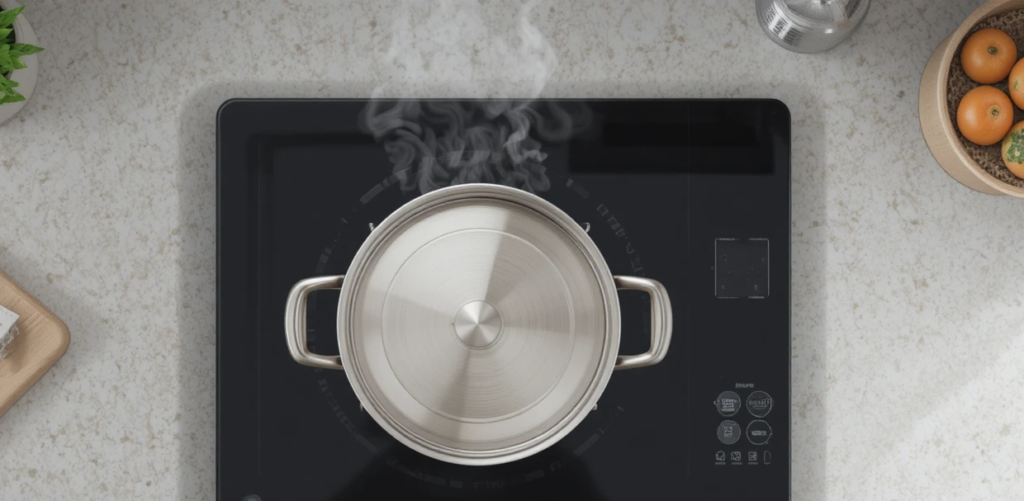
Ready to get the most out of your induction range? These are the habits that make the biggest difference.
Choosing the right induction-compatible cookware
Look for cookware with:
- A thick, flat magnetic base (at least 3mm)
- Materials like cast iron, carbon steel, or tri-ply stainless
- The induction-compatible symbol on the packaging (looks like a coil)
Avoid thin, cheap magnetic pans. They transfer heat unevenly and waste energy.
Matching pan size to burner
Always use a pan that matches or slightly exceeds the size of your induction burner. Using a tiny pan on a large burner wastes energy. Most modern induction cooktops, including 30-inch induction cooktops automatically detect pan size and adjust the magnetic field. But it’s still best practice to match sizes manually when possible.
Using lids to keep heat
A lid keeps steam and heat inside the pot, dramatically reducing the energy needed to maintain temperature. This is one of the simplest and most impactful habits you can adopt. Cooking pasta? Bring it to a boil with the lid on, then reduce heat to maintain the simmer.
Avoiding unnecessary preheating
Unlike traditional gas stoves or electric ovens, induction reaches cooking temperature almost instantly. There is no need to preheat an induction burner the way you would a cast iron skillet on a gas cooktop. Start cooking as soon as you turn it on and save those extra minutes of energy use.
Optimizing power levels for different foods
- Boiling water: High power
- Sautéing vegetables: Medium-high
- Simmering soups or sauces: Low to medium-low
- Melting chocolate or butter: Power level 1–2
Learning your cooktop’s power levels will lower your annual energy consumption over time.
Are There Any Downsides to Induction Efficiency?
I always want to give you a balanced view. Induction is excellent, but it’s not perfect.
Initial cost of induction cooktops
A quality induction cooktop or induction range costs more upfront than most electric or gas alternatives. A portable cooktop starts around $50–$80, which is a low-cost way to test induction before committing. A full residential induction range may run $1,000–$3,000 for premium models.
Cookware compatibility limitations
If you have an existing set of aluminum, copper, or non-magnetic stainless steel cookware, you’ll need to replace or supplement it. This adds cost to your induction upgrade. However, cast iron and carbon steel, work wonderfully on induction. They are often more affordable than premium non-stick or copper sets.
Power dependency vs gas reliability
Gas stoves work without electricity. If your power goes out, your induction cooktop is down. For home cooks in areas with frequent power outages, this is worth considering. A portable single-burner induction appliance paired with a backup camp stove can be a reasonable compromise.
Learning curve for new users
Induction cooking heats faster. It responds differently than gas stove use or electric stovetop cooking. Food can burn more quickly if you’re not used to the lightning-fast heating speed. Most new users adapt within a week or two of regular cooking, but the adjustment is real. Chef Reina recommends starting with lower power settings until you get familiar with your new induction range.
Is Induction Cooking the Most Energy Efficient Option ?
After everything we’ve covered, the answer is a clear yes, for the vast majority of home cooks and cooking situations.
Summary of efficiency comparisons
| Method | Efficiency | Speed | Control | Cost to Run |
|---|---|---|---|---|
| Induction | 85–90% | Fastest | Best | Lowest–Low |
| Radiant Electric | 74–80% | Medium | Good | Low–Medium |
| Electric Coil | 65–74% | Slow | Fair | Medium |
| Gas | 32–40% | Medium | Good | Medium–High |
Induction wins in efficiency, speed, and precise temperature control. It ties or leads on cost to run depending on your local energy prices.
When induction is the best choice
Induction is the clear winner for:
- Home cooks focused on energy savings and lower utility bills
- Families concerned about indoor air quality
- Anyone switching away from combustion appliances for environmental reasons
- Professional home cooking enthusiasts who cook daily
- Anyone building a new kitchen around sustainable cooking technologies
Situations where other methods may be preferable
Gas may still make sense if:
- You do a lot of wok cooking that requires a round-bottomed wok and high, open flame
- Your electricity costs are unusually high and gas is subsidized in your region
- Reliability during power outages is a critical concern
Electric ovens and convection ovens still have their place for baking. Induction doesn’t replace your oven, just your stovetop.
FAQs About Induction Cookware Energy Efficiency
What percentage of energy does induction cooking use efficiently?
Induction cooktops convert approximately 85–90% of electrical energy into heat inside the cookware. This is much higher than electric coil cooktops (65–74%) and gas cooktops (32–40%).
Does induction waste less heat than gas?
Yes, alot less. Gas stoves lose more than 60% of their energy to ambient heat in the kitchen. Induction loses only 10–15%. The cooktop surface stays cool, no heat radiates into the kitchen air, and heating stops the moment you remove the pan.
Is induction cheaper to run daily?
For most households, yes. While electricity costs more per unit than gas in many regions, induction’s higher efficiency means you use far less of it per meal cooked. Most households see lower cooking energy costs after switching to induction. Especially when replacing an older gas stove.
Does pan quality affect efficiency?
Absolutely. Thick, flat-bottomed, high-quality magnetic cookware delivers better energy transfer than thin, cheap, or warped pans. The best induction-compatible cookware are cast iron, carbon steel, and tri-ply stainless. They maximize the magnetic contact area and gives you the best improved efficiency performance.
Can induction cooking reduce cooking time significantly?
Yes. Induction boils water about 50% faster than gas and significantly faster than electric coil cooktops. This speed advantage doesn’t just save time. It directly reduces energy consumption per meal because the cooktop runs for a shorter total duration. For avid cooks preparing many meals daily, this speed adds up to large energy savings over the course of a year.
Final verdict based on use case
For most households, upgrading to an efficient induction stove is one of the smartest appliance investments you can make. It has a great combination of remarkable energy efficiency, improved efficiency performance, better indoor air quality and precise temperature control. Thereby making induction the top choice for modern home cooking. The upfront cost is real, but the long-term energy cost savings and environmental benefits are hard to beat.
Interested in learning more about efficient kitchen appliances? Check out our guides on choosing the best cookware for your cooktop, gas vs induction, and the best induction-compatible cookware sets.