
Looking for the best Dutch ovens for induction cooktops, you’re in the right place. Not every Dutch oven works on an induction stove, and choosing the wrong one means wasted money and frustrating cooking. I’ve broken down everything you need to know. You will learn about materials and sizing to top-rated picks. All this so you can cook with confidence on your induction cooktop.
Key Takeaways
- The best Dutch ovens for induction cooktops are made from enameled cast iron or magnetic stainless steel.
- Always confirm induction compatibility with the magnet test or manufacturer label.
- Le Creuset and Staub lead for premium quality; Lodge is the best value.
- A 5.5-quart round Dutch oven is the most versatile size for most home cooks.
- Match your pot size to your induction burner size for consistent heating.
- Always lift, never slide our Dutch oven across a glass-top stove.
- Proper preheating and avoiding max heat protect your enamel and your cooktop.
Dutch oven induction cooktop guide
Explore compatibility, compare top picks, and find your perfect size.
Filter by material
| Material | Induction safe | Heat retention | Dishwasher safe | Best for |
|---|
Your cooking situation
Heat retention score by material (out of 100)
Price vs. lifespan
What Is a Dutch Oven and Can It Be Used on Induction Cooktops?
What Defines a Dutch Oven
A Dutch oven is a thick-walled, heavy cooking pot with a tight-fitting lid. It’s used for slow cooking, braising, bread baking, soups, stews, and even deep-frying. Most Dutch ovens come in enameled cast iron, raw cast iron, or stainless steel. They work well on a stovetop, in the oven, and also when compatible is needed on an induction cooktop.
The classic round Dutch oven is the most popular style. But you’ll also find oval Dutch ovens, wide Dutch ovens, and even miniature Dutch oven versions for small portions. Traditional Dutch ovens have been used in kitchens for centuries, long before induction heating was even a thought.
Do All Dutch Ovens Work on Induction Cooktops?
Well no, not all Dutch ovens are induction-safe. An induction burner uses electromagnetic fields to generate heat directly in the pot, not on the cooktop surface itself. For this to work, the cookware must contain magnetic material in its base.
Cast-iron Dutch ovens are naturally magnetic and almost always induction-compatible. Some stainless-steel Dutch ovens work too, but only if they have a magnetic steel layer in the base. Aluminum Dutch ovens and ceramic Dutch ovens, by themselves, are not induction-safe unless they have a bonded magnetic base.
Why Some Dutch Ovens Fail on Induction
The #1 reason a Dutch oven won’t heat on an induction cooktop is a non-magnetic base. Pure aluminum, copper, and non-magnetic stainless steel will not work. Even some high-end pots fail the test.
Another issue is a warped or uneven base. Induction stoves need solid contact between the pot and the glass-top stove surface. A warped bottom causes uneven cooking and food that burns on one side while staying raw on the other.
Quick Compatibility Checklist
| Feature | Induction Compatible? |
|---|---|
| Raw cast iron base | ✅ Yes |
| Enameled cast iron | ✅ Yes |
| Magnetic stainless steel | ✅ Yes |
| Pure aluminum | ❌ No |
| Copper base only | ❌ No |
| Ceramic oven (no magnetic layer) | ❌ No |
| Flat, even base | ✅ Required |
| Warped base | ❌ Will cause issues |
What Happens If You Use a Non-Compatible Pot
If you place a non-magnetic pot on an induction burner, nothing happens. The cooktop simply won’t recognize the cookware and won’t activate. You won’t damage the pot or the stove, it just won’t heat up.
Some induction stoves will flash an error code or beep to let you know. This is actually a safety feature. But it means your beautiful ceramic Dutch oven from grandma stays off the induction cooktop.
How to Tell If a Dutch Oven Is Induction Compatible
The Magnet Test (Step-by-Step)
The easiest way to check compatibility is the magnet test. Here’s how to do it:
- Grab a standard refrigerator magnet or any small magnet.
- Hold it against the bottom of your Dutch oven.
- If it sticks firmly, the pot is induction-compatible.
- If it barely sticks or falls off, it won’t work reliably.
This is called the just-cook-with-it method that home cooks and test kitchen professionals use every day. It works 99% of the time.
Manufacturer Labels and Symbols to Look For
Most induction-safe cookware pieces have a symbol on the packaging or the base of the pot. Look for:
- A coil symbol that looks like a spring or zigzag line
- The words “induction compatible” or “induction-safe”
- The phrase “suitable for all hob types”
Brands like Le Creuset, Staub, and Lodge label their induction-safe options. If you’re buying a budget Dutch oven or a lesser-known brand, always double-check the product listing for these symbols.
Checking the Base Construction
Flip the pot upside down and look at the base. A good induction-compatible Dutch oven will have a flat, thick, and even base. Enameled cast-iron cookware usually has a smooth enamel finish on the outside, including the base.
Raw cast iron shows a rough, slightly textured finish. Both work well. What you want to avoid is a base that feels uneven, thin, or shows visible warping.
Why Flat Bottoms Matter for Induction Efficiency
Induction heating works by transferring energy through direct contact. The more surface area touching the glass stovetop, the more efficient the heating. A flat-bottomed Dutch oven heats faster, more evenly, and uses less energy.
This is why oval Dutch ovens can sometimes be tricky on induction stoves. The oval shape may extend beyond the round induction burner, leaving the ends of the pot slightly cooler than the center. Round Dutch ovens are usually a better match for round induction burners.
Can Warped or Uneven Bases Affect Performance?
Absolutely. A warped base creates air gaps between the pot and the induction surface. This leads to uneven cooking and food that scorches in the center but stays cool at the edges. It can also cause the cooktop to cycle on and off repeatedly, which you’ll hear as a clicking noise.
If your Dutch oven develops a warp over time, it’s time to replace it. No amount of seasoning or cleaning will fix a warped base on an induction stove.
Best Materials for Induction-Compatible Dutch Ovens
Why Cast Iron Is the Gold Standard for Induction
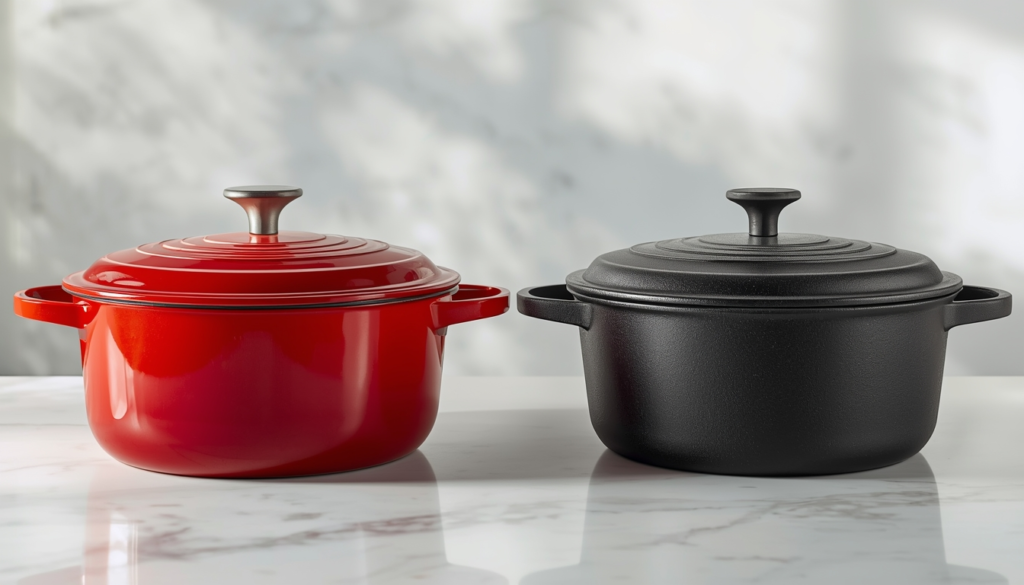
Cast iron is the king of induction-compatible cookware. It’s magnetic, holds heat like nothing else, and only gets better with age. A good cast-iron Dutch oven will outlast your stovetop, your countertop, and quite possibly you.
Cast iron has incredible heat retention. This retention makes it perfect for slow-cooked stews, pot roast, bread baking, and deep-frying. Once it’s up to temperature, it stays there. Even if you briefly lift the lid. That’s why home cooks and professional chefs alike consider it heirloom-quality cookware.
Enameled Cast Iron vs. Raw Cast Iron
Both types are induction-safe. But they behave differently in the kitchen.
| Feature | Enameled Cast Iron | Raw Cast Iron |
|---|---|---|
| Induction Safe | ✅ Yes | ✅ Yes |
| Rust Resistant | ✅ Yes | ❌ Needs seasoning |
| Non-stick (when seasoned) | Partial | ✅ Yes (with care) |
| Easy to Clean | ✅ Yes | Moderate |
| Dishwasher Safe | ❌ No | ❌ No |
| Price Range | $50–$400+ | $30–$150 |
| Best For | Soups, stews, bread | Searing, frying, outdoor |
Enameled cast-iron cookware like Le Creuset Dutch ovens and Staub Dutch ovens are safe for induction cooktops. They also don’t need seasoning. The enamel coating protects the iron underneath and makes cleanup easy. Raw cast iron requires regular seasoning to prevent rust but builds excellent heat retention over time.
Stainless Steel Dutch Ovens: Do They Perform as Well?
Stainless-steel Dutch ovens can work on induction. But only if they contain a magnetic steel layer. Many mid-range and higher-end Dutch ovens use a tri-ply or multi-layer construction. This contruction bonds stainless steel with an aluminum core for better conductivity.
Stainless steel is a decent heat conductor when layered properly. But it doesn’t hold heat as long as cast iron. For long cooks like braising or pot pies, cast iron is still the better choice. For lighter cooking tasks and daily cooking rotation, a stainless-steel Dutch oven can be a worthy pick.
Aluminum Dutch Ovens: When They Work and When They Don’t
Pure aluminum Dutch ovens are not induction-compatible. Aluminum is a great heat conductor, but it’s not magnetic. However, some manufacturers have worked aronud this. They bond an aluminum core between two layers of magnetic stainless steel to create an induction-safe design.
An aluminum Dutch oven with a bonded magnetic base works fine on induction. But without that magnetic layer, it’s dead on contact. Always verify with the magnet test or manufacturer specs before buying.
Heat Retention vs. Heat Responsiveness
These are two very different things, and understanding them helps you choose the right Dutch oven.
- Heat retention = how long the pot holds heat after you turn off the burner. Cast iron wins here by a wide margin.
- Heat responsiveness = how quickly the pot reacts when you change the heat setting. Stainless steel and aluminum respond faster.
For slow cooking, braising, and bread baking, you want excellent heat retention. For searing meatballs or making a quick sauce, you want a pot that responds fast. Most home cooks are best served by a cast-iron Dutch oven that offers both decent retention and good performance on induction.
How to Choose the Best Dutch Oven for an Induction Cooktop
Choosing the Right Size for Your Cooking Needs
Dutch oven size is measured in quarts. Here’s a quick reference:
| Size | Best For |
|---|---|
| 4-quart Dutch oven | 1–2 people, small soups, sauces |
| 5.5-quart Dutch oven | 2–4 people, everyday cooking |
| 6-quart Dutch oven | 4–6 people, batch cooking |
| 6.5-quart Dutch oven | Family meals, large stews |
| 7-quart Dutch oven | Large families, entertaining |
The 5.5-quart Dutch oven is the most versatile size for most home cooks. It’s large enough for a full pot roast or a big pot of soup, but small enough to handle without a workout. The 6-quart Dutch oven is a close runner-up for families.
Weight vs. Usability: How Heavy Is Too Heavy?
Cast-iron Dutch ovens are heavy. A 5.5-quart enameled cast-iron Dutch oven can weigh 11–14 pounds empty. Add food and liquid, and you’re lifting 20+ pounds off the stovetop.
If you have wrist issues or prefer lighter cookware. Consider a stainless-steel or enameled carbon-steel Dutch oven. These are significantly lighter while still being induction-compatible. A lightweight Dutch oven alternative can make daily cooking much more comfortable. Especially in small kitchens.
Lid Design and Moisture Circulation Benefits
A well-fitted lid is essential for a Dutch oven. Good lids trap steam and cycle it back into your food, keeping everything moist and tender during long cooks. Some Dutch ovens feature self-basting lids with interior spikes or ridges that drip condensed steam evenly over the food.
A stainless-steel knob on the lid is oven-safe to high temperatures. Some older or budget models use a plastic knob that melts above 375°F, always check the max heat rating. A metal knob or wide knob is always the safer choice for high-heat oven use.
Handle Comfort and Safety on Induction Stoves
Handles on a Dutch oven get hot. You will notice this after time in the oven or on a high-heat induction burner. Look for large loop handles that give you a secure grip with an oven mitt. Narrow or shallow handles are harder to grip safely.
On an induction cooktop, the sides of the pot don’t heat up the same way they do on a gas stove, but the handles and lid still get very warm. Always use oven mitts when moving a Dutch oven off the burner.
Oven-Safe Limits and Versatility
One of the great things about Dutch ovens is their versatility. A good induction-compatible Dutch oven can go from stovetop to oven without switching pans. Most enameled cast-iron Dutch ovens are oven-safe up to 450°F–500°F.
Check the lid knob rating. Some lids are only rated to 375°F. If you plan to do a lot of high-heat bread baking, look for a model rated to at least 500°F across both the pot and lid.
Color and Enamel Durability
Colorful Dutch ovens have become a statement piece in many kitchens. Le Creuset is famous for its wide range of bold colors that brighten up French country kitchens and modern spaces alike. But color is more than aesthetics, the interior cooking surface matters most.
Light-colored enamel interiors show staining over time but let you see browning clearly. Dark interiors from brands like Staub hide stains but make it harder to track your browning. Both perform well. Chipping in the enamel is a concern. Look for brands with thick, durable enamel and a solid warranty.
Matching Dutch Oven Size to Induction Burner Size
Induction burners work best when the pot is the same size or slightly larger than the heating element. A pot that’s much larger than the burner will heat unevenly in the center. A pot much smaller than the burner wastes energy.
Most induction cooktops have burners ranging from 6 to 10 inches in diameter. A round Dutch oven between 10 and 11 inches in base diameter matches most standard induction burners perfectly.
Best Dutch Ovens for Induction Cooktops
These are my top-rated Dutch ovens for induction cooking. They’re chosen based on heat performance, durability, value, and real-world kitchen use.
Best : Le Creuset Signature Enameled Cast Iron Dutch Oven (5.5 Qt)
Le Creuset Dutch ovens are safe for induction cooktops and have been the benchmark of enameled cast-iron cookware for over 100 years. The Le Creuset 5.5-quart Dutch oven is the one most test kitchen pros reach for when they need consistent heating and reliable performance.
Key Features:
- Enameled cast-iron Dutch oven construction
- Works on induction, gas stove, electric cooktops, and in the oven
- Oven-safe to 500°F
- Self-basting lid with tight seal
- Wide range of colors
- Made in France at their original manufacturing facility
Pros:
- Incredible heat retention
- Exceptional craftsmanship
- Chip-resistant enamel
- Lifetime warranty
Cons:
- Premium price ($300–$400+)
- Heavy (around 12 lbs empty)
Ideal Use Case: Home cooks who want heirloom-quality cookware. The kind that performs great on an induction stove every single day.
Best Budget Dutch Oven: Lodge Enameled Cast Iron Dutch Oven (6 Qt)
Lodge cookware is traditional Lodge cookware that has been made in America for over 125 years. Their enameled cast-iron Dutch oven delivers excellent heat retention at a fraction of the Le Creuset price.
Key Features:
- Enameled cast-iron construction
- Induction-safe
- Oven-safe to 500°F
- 6-quart capacity
- Made at Lodge’s original manufacturing facility in Tennessee
Pros:
- Great value (under $100)
- Durable enamel
- Works on all cooktops
- Widely available
Cons:
- Slightly heavier enamel finish
- Color options are more limited
Ideal Use Case: Budget-conscious home cooks who want a great Dutch oven without spending a fortune.
Best Premium Dutch Oven: Staub Round Cocotte (5.5 Qt)
Staub Dutch ovens are a beloved French cookware brand known for their beautiful matte enamel and self-basting lid design. The interior cooking surface is a dark matte enamel that’s been roughened slightly for better browning. It is ideal for searing before a long braise.
Key Features:
- Enameled cast-iron construction
- Induction-safe
- Self-basting spike lid
- Dark interior enamel for better browning
- Made in France
Pros:
- Superior moisture retention
- Excellent for braising and slow cooking
- Beautiful design that fits French country kitchens
- Oven-safe to 500°F+
Cons:
- Similar price to Le Creuset ($350–$400+)
- Dark interior can make it harder to see fond
Ideal Use Case: The serious home chef who wants a beautiful Dutch oven with performance that rivals professional kitchens.
Best Lightweight Alternative: Misen Dutch Oven (5.5 Qt)
The Misen Dutch oven is a DTC cookware brand known for offering high-quality kitchen gear at mid-range prices. Their Dutch oven uses enameled cast iron with a slightly lighter construction than Le Creuset.
Key Features:
- Enameled cast iron
- Induction-safe
- 5.5-quart capacity
- Clean, modern design
Pros:
- More affordable than Le Creuset
- Good heat retention
- Stylish for modern kitchens
- Solid warranty
Cons:
- Fewer color options
- Less brand history than heritage-brand Dutch ovens
Ideal Use Case: Home cooks who want the performance of premium cookware without the premium price tag.
Best for Bread Baking: Lodge Pre-Seasoned Cast Iron Dutch Oven (5 Qt)
If you’re a bread-baking type, raw cast iron is your best friend. The Lodge pre-seasoned cast iron Dutch oven creates the perfect hot pot environment for artisan bread. The heavy lid traps steam in the first phase of baking, creating a burnished crust that rivals a professional oven.
Key Features:
- Raw cast-iron construction
- Induction-safe
- Pre-seasoned at the factory
- No enamel, true iron cooking
Pros:
- Incredible heat retention for bread baking
- Gets better with every use
- Affordable
- Extremely durable
Cons:
- Requires seasoning maintenance
- Not dishwasher-safe
- No color options
Ideal Use Case: Home bakers who want that perfect burnished crust on sourdough, boules, and rustic loaves.
Best for Large Families: Cuisinart Chef’s Classic Enameled Cast Iron (7 Qt)
The Cuisinart Chef’s Classic 7-quart Dutch oven is a big pot. It handles large stews, batch cooking, and family-sized pot roast without breaking the bank.
Key Features:
- 7-quart capacity
- Enameled cast iron
- Induction-safe
- Oven-safe to 500°F
Pros:
- Great capacity for large families
- Affordable for the size
- Good heat retention
- Wide, spacious cooking area
Cons:
- Very heavy when full
- Fewer color options
Ideal Use Case: Families of 6+ or anyone who loves batch cooking and meal prepping.
Best Beginner-Friendly Option: Zulay Dutch Oven (4.5 Qt)
The Zulay Kitchen brand offers a beginner-friendly Dutch oven at an accessible price. The Zulay Kitchen model is a solid entry-level enameled cast-iron Dutch oven. It works on induction stoves without the intimidating cost.
Key Features:
- Enameled cast iron
- Induction-safe
- 4.5-quart capacity
- Lightweight for cast iron
Pros:
- Very affordable
- Easy to clean
- Great for small kitchens
- Good starter cookware
Cons:
- Less heat retention than premium models
- Thinner enamel coating
- Shorter warranty
Ideal Use Case: First-time Dutch oven owners who want to test the waters before investing in a higher-end Dutch oven.
Are Expensive Dutch Ovens Worth It for Induction Cooking?
What You Actually Pay for (Brand vs. Performance)
With expensive Dutch ovens like Le Creuset and Staub, remember this. You’re paying for craftsmanship, enamel quality, and consistency. Every pot is inspected and hand-finished. The enamel is thicker and more chip-resistant than cheaper alternatives.
That said, a mid-range Dutch oven like Lodge or Misen can cook a stew just as well. The gap shows up in long-term durability and enamel performance, not in the first few months of use.
Heat Distribution Differences Across Price Ranges
Higher-end Dutch ovens tend to have thicker walls and bases. This means more consistent heating across the entire cooking surface. Budget Dutch ovens may have thinner walls, which can lead to uneven cooking and hot spots near the center.
On an induction cooktop, consistent heating matters more than on a gas stove. Since the heat comes from a defined circular element, a pot with excellent heat distribution spreads that energy more evenly to the edges.
Durability and Lifespan Comparison
A well-maintained Le Creuset or Staub Dutch oven can last 50+ years. There are people using their grandmother’s Le Creuset from the 1970s. That kind of heirloom-quality cookware justifies the price when spread over decades of use.
Budget Dutch ovens last 5–15 years with careful use. They’re a great starting point but will need replacing eventually. An important sign is if the enamel chips.
Do Cheaper Dutch Ovens Perform Just as Well on Induction?
For everyday cooking, yes. A budget Dutch oven performs respectably on induction. The heat retention won’t be quite as incredible, but your soups and stews will still taste great. The difference becomes more noticeable during long cooks and high-heat tasks. Two examples are deep-frying or searing.
When It Makes Sense to Invest in a Premium Option
Invest in a premium Dutch oven if:
- You cook in it 3–5 times per week
- You plan to pass it down to your kids
- You want a beautiful Dutch oven that’s also a kitchen showpiece
- You do a lot of bread baking, braising, or deep-frying
Stick with a budget Dutch oven if:
- You’re just getting started with Dutch oven cooking
- You cook occasionally
- You want to try induction cooking before committing to expensive cookware
Will a Dutch Oven Scratch or Damage an Induction Cooktop?
Why Heavy Cookware Can Scratch Glass Surfaces
Induction cooktops have a glass-ceramic surface that looks sleek but can scratch. Cast-iron Dutch ovens are heavy, and sliding them across the surface is the fastest way to cause damage. Even small pieces of grit under the base can scratch the glass stovetop.
The good news is that induction cooktops are designed to handle heavy cookware. The risk is in how you move the pot, not the pot itself.
Safe Handling: Lifting vs. Sliding
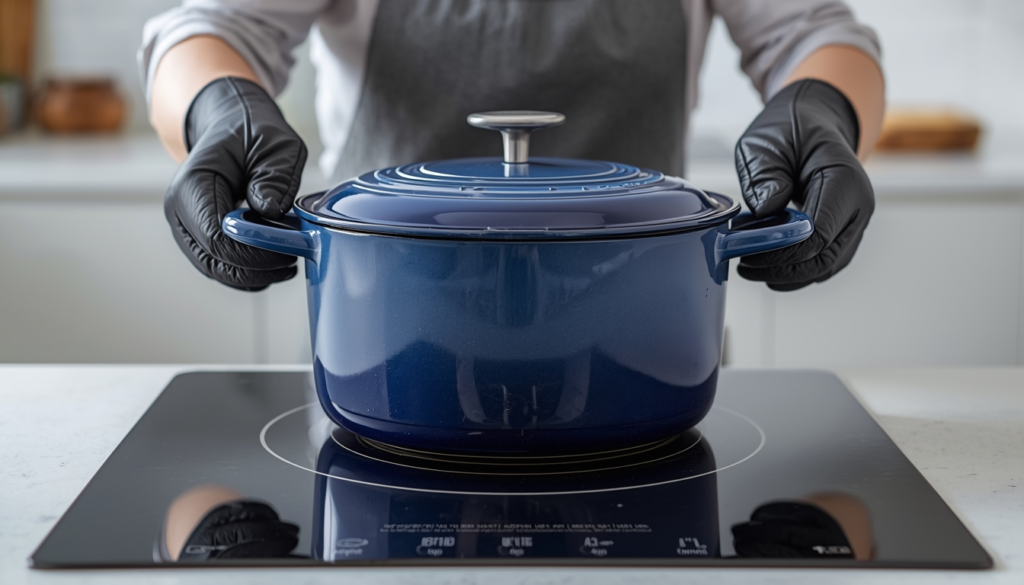
Always lift your Dutch oven, never slide it. This is the single most important habit for protecting your induction cooktop. Even a beautiful Dutch oven with a smooth enamel base can scratch if slid across the surface.
Use two hands and proper oven mitts when moving a loaded Dutch oven. The pot is heavy, and a secure grip protects both you and your glass-top stove.
Are Enameled Bases Safer Than Raw Cast Iron?
Yes. The smooth enamel base on an enameled cast-iron Dutch oven is gentler on glass cooktop surfaces than the rougher texture of raw cast iron. If you’re concerned about scratching, enameled is the safer bet.
Raw cast iron has a slightly rough texture on the base that can act like sandpaper if slid across the glass. It won’t cause damage if you lift carefully, but it requires more attention.
Protective Tips
- Use a silicone mat or cooktop protector between the pot and the surface during long cooks
- Clean the base of your Dutch oven before each use to remove grit
- Wipe your induction cooktop surface regularly
- Never drag, always lift
Signs Your Cooktop Is at Risk
Look for these warning signs:
- Fine scratches appearing on the glass surface
- Visible grit or residue under the pot after cooking
- Clicking or grinding sounds when placing the pot down
- A rough texture developing on the pot’s base
How to Use a Dutch Oven on an Induction Cooktop (Step-by-Step)
Proper Preheating Techniques
Induction heating is faster than a gas stove or electric cooktops. Never blast a cold Dutch oven on high heat. Cast iron especially can crack or warp if heated too quickly from cold.
Start on medium-low heat for 2–3 minutes, then gradually increase to your target temperature. This prevents thermal shock and extends the life of your enamel coating.
Ideal Heat Settings for Induction Cooking
Here’s a general guide for induction heat settings with a Dutch oven:
| Task | Recommended Setting |
|---|---|
| Warming soups | Low (1–3) |
| Simmering stews | Medium-low (3–4) |
| Sautéing vegetables | Medium (4–5) |
| Browning and searing | Medium-high (6–7) |
| Bringing to a rolling boil | High (8–9) |
| Deep-frying | Medium-high (6–7) |
Note: Induction is more powerful than most people expect. You’ll likely use lower settings than you would on a gas stove.
Avoiding Overheating and Enamel Damage
The biggest mistake people make with enameled cast-iron cookware on induction is using max heat. High heat can cause:
- Enamel chipping or cracking
- Food burning too quickly
- Thermal shock to the base
- Discoloration of the enamel interior
Never put an empty Dutch oven on high heat. Always add some oil, liquid, or food before cranking up the temperature.
Cooking Adjustments vs. Gas or Electric Stoves
Induction heats faster and more efficiently than a gas stove or electric cooktops. You’ll need to:
- Lower your heat settings compared to what you’re used to
- Preheat for less time
- Reduce liquid slightly in recipes, less evaporation happens on induction
- Watch your food more closely in the first few uses
Using a Dutch Oven for Simmering, Frying, and Baking
A Dutch oven on induction can handle almost everything:
- Simmering: Perfect on medium-low. The heat retention of cast iron keeps things at a gentle simmer without babysitting.
- Frying: Heat oil slowly to your target temp. Use a thermometer. Induction makes it easy to hold a consistent frying temperature.
- Baking: Preheat in the oven, not on the induction burner, when baking bread.
- Braising: Start on the induction stove for searing, then transfer to the oven with the lid on. One pot, two cooking methods.
Common Problems and Fixes When Using Dutch Ovens on Induction
Induction Cooktop Not Detecting the Dutch Oven
Problem: You put your Dutch oven on the burner and nothing happens.
Fix: Try the magnet test first. If the magnet sticks, check that the pot is centered on the burner. Some induction stoves need at least 70% coverage of the heating element. Also check that the induction zone is activated and not locked.
Uneven Heating or Hot Spots
Problem: Food burns in the center but is barely warm at the edges.
Fix: The pot base may be slightly warped, or the pot is larger than the burner. Try a smaller burner setting or a different burner. Stir more frequently during cooking. If the problem persists, the pot may need to be replaced.
Clicking or Buzzing Noises Explained
Problem: Your induction cooktop makes a clicking or buzzing sound.
Fix: This is completely normal. Induction stoves cycle their heating element on and off to regulate temperature. Cast iron and some stainless steel pots can amplify this sound. It’s not a sign of damage, just physics at work.
Food Burning Too Quickly
Problem: Dishes that used to turn out fine now scorch on the bottom.
Fix: Lower your heat setting. Induction is more powerful than gas or electric. Start at a lower setting than usual and adjust up. Make sure you’re preheating gradually and not dry-heating the pot.
Dutch Oven Sliding or Instability Issues
Problem: The pot shifts or feels unstable on the induction surface.
Fix: Make sure the cooktop surface is clean and dry. A wet surface can cause sliding. Also check that your pot has a flat base. Round-bottomed or irregular bases won’t sit stable on a flat glass-top stove.
What Size Dutch Oven Works Best on Induction Cooktops?
Most Versatile Size for Everyday Cooking
The 5.5-quart Dutch oven is the answer most test kitchen pros give when asked. It’s deep enough for a full chicken braise, wide enough to sear a large piece of meat, and small enough to fit on any standard induction burner.
For a well-equipped cooking space, a 5.5 or 6-quart round Dutch oven covers 90% of everyday cooking needs.
Small vs. Large Dutch Ovens: Pros and Cons
| Size | Pros | Cons |
|---|---|---|
| 4-quart | Lighter, heats faster | Too small for large meals |
| 5.5-quart | Versatile, ideal for most | May not fit large roasts |
| 6-quart | Great for families | Heavier, harder to handle |
| 7-quart | Perfect for batch cooking | Very heavy, needs large burner |
Matching Pot Size to Burner Diameter
A good rule of thumb: your Dutch oven base should not exceed the burner diameter by more than 1–2 inches. Most 10-inch round Dutch ovens sit perfectly on a 9–10 inch induction burner.
An oversized pot hanging far beyond the burner will have cold spots at the edges. This is important with cast-iron Dutch ovens. These rely on even heat from the base to distribute warmth through the thick walls.
Cooking for One vs. Family vs. Batch Cooking
- Cooking for one: A 4-quart Dutch oven or even a little Dutch oven (2–3 quart) is plenty.
- Couples and small households: 5.5-quart is ideal.
- Families of 4–6: Go with a 6 or 6.5-quart.
- Batch cooking or entertaining: A 7-quart Dutch oven gives you the spacious cooking area you need.
Why Oversized Pots Can Reduce Efficiency
A Dutch oven that’s much too large for your burner wastes energy. The induction heating element only heats the area it covers. The overhanging edges of the pot heat by conduction from the rest of the base, which is slower and less efficient.
On a gas stove, flames spread outward and heat the entire base evenly. On induction, the heat is precisely targeted. Matching your pot size to your burner size maximizes efficiency and ensures consistent heating.
What Can You Cook in a Dutch Oven on Induction?
Soups, Stews, and Slow Cooking
A Dutch oven on induction is practically made for soups, stews, and slow cooking. The wonderful heat retention of cast iron keeps things simmering gently for hours without scorching. Think French onion soup, beef bourguignon, chili, and hearty minestrone.
The tight-fitting lid traps moisture and flavor. Long cooks develop deep, complex tastes that you just can’t get from a quick sauté pan meal.
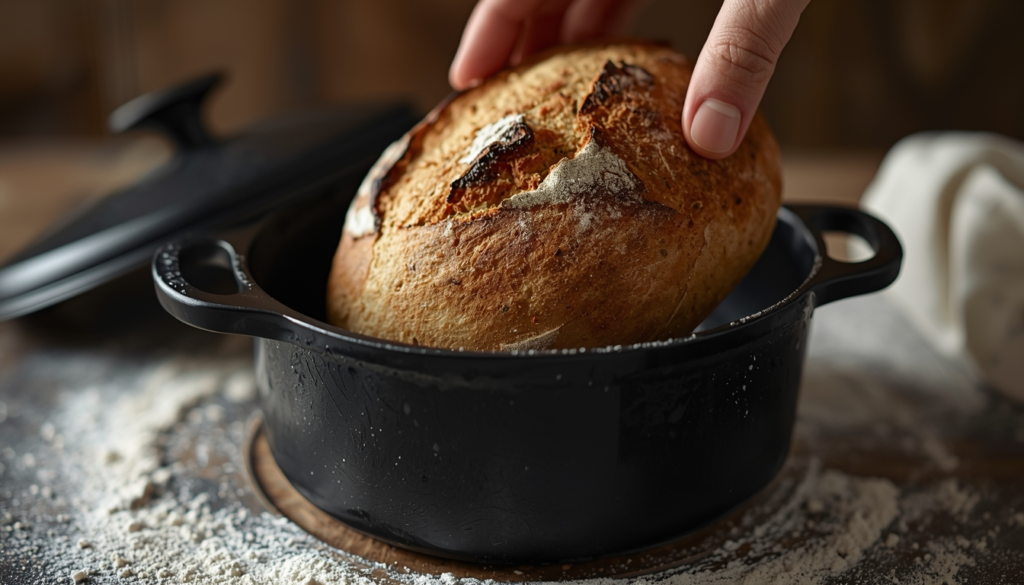
Bread Baking on Induction
Bread baking in a Dutch oven creates a mini steam chamber that mimics a professional bread oven.
The trick: preheat your Dutch oven in the oven (not on the induction burner). Heat it up to 450–500°F. Drop in your shaped dough, cover with the lid, and bake for 20 minutes with steam. Then remove the lid for a golden crust.
The result is a bakery-quality loaf with an incredible burnished crust and chewy interior. This method works for sourdough, no-knead bread, and bread puddings that start on the stovetop.
Frying and Searing Performance
A Dutch oven is a natural deep fryer. Its tall sides prevent oil splatter, and the thick cast-iron walls hold temperature steady during frying. It is far better than a thin-sided pan. On induction, you can dial in the exact temperature needed for deep-frying without guesswork.
If you want to sear meatballs, chicken thighs, or a big roast before braising. A Dutch oven on medium-high induction heat delivers a deep, even crust that builds flavor. Deglaze with wine or stock after searing, and you’ve got a rich pan sauce in the same pot.
One-Pot Meals and Batch Cooking
One of the greatest advantages of a Dutch oven on induction is the one-pot meal. Brown your meat, sauté your aromatics, add liquid, and simmer. You can do this all in the same pot on the same burner. Or move from stovetop to oven seamlessly.
Batch cooking becomes effortless. Make a big pot of chili, bolognese, or chicken soup and freeze portions for the week. The large capacity and induction efficiency make the process faster than you’d expect.
Unexpected Uses
Dutch ovens aren’t just for stews and bread. Here are some lesser-known uses:
- Casserole dishes: A Dutch oven doubles as one of the best induction-safe casserole dishes for lasagna, mac and cheese, or baked pasta.
- Fondue pot: Low heat on induction is perfect for chocolate or cheese fondue.
- Popcorn: A Dutch oven on medium-high induction heat makes perfect stovetop popcorn.
- Desserts: Cobblers, crisps, and bread puddings bake beautifully in a Dutch oven.
- Rice: The thick walls and tight lid cook rice more evenly than a thin saucepan.
- Pot pies: Start the filling on the induction burner, add pastry, and finish in the oven.
How to Clean and Maintain a Dutch Oven for Induction Use
Daily Cleaning Best Practices
For enameled cast-iron cookware, hand washing is always best. Use warm soapy water and a soft sponge. Never use metal scrubbers. They scratch the enamel. Avoid the dishwasher even if the label says dishwasher-safe. The high heat and harsh detergent shorten the enamel’s lifespan significantly.
For raw cast-iron Dutch ovens, wash with hot water and a stiff brush. Use minimal or no becuse it strips the seasoning. Dry immediately and completely to prevent rust.
Removing Burnt Food Safely
Stubborn burnt food happens to every home cook. Here’s how to deal with it:
- Fill the pot with water and bring it to a rolling boil on the induction cooktop.
- Use a wooden spoon or metal spoon (carefully) to loosen the burnt bits.
- Drain and let it cool slightly.
- Wash with a soft sponge and mild dish soap.
Never use a metal spoon aggressively on enamel. Do this, you risk chipping. For stubborn stains, let the pot soak overnight in soapy water.
Maintaining Enamel Coating
The enamel coating is the heart of an enameled cast-iron Dutch oven. To keep it in great shape:
- Avoid thermal shock, don’t put a hot pot in cold water or vice versa.
- Use silicone or wooden utensils to avoid scratching the interior cooking surface.
- Don’t use cooking sprays, they leave a sticky residue that’s hard to remove.
- Store with a folded paper towel inside to absorb moisture.
Preventing Rust in Raw Cast Iron
Raw cast iron requires seasoning to stay rust-free. After washing, dry the pot completely on the stovetop over low heat. While still warm, rub a thin layer of neutral oil (like vegetable or flaxseed oil) over the entire surface. Let it cool and store in a dry place.
If rust spots appear, scrub with a metal scrubber, rinse, dry, and re-season. Raw cast iron is incredibly forgiving. You can always restore it.
Long-Term Storage Tips
- Store Dutch ovens without the lid locked on tightly. So leave a small gap for air circulation.
- Keep in a dry cabinet away from moisture.
- Stack by placing a folded cloth or paper towel between stacked pots prevents chipping.
- For raw cast iron, a light coat of oil before storage prevents rust.
FAQs About Dutch Ovens and Induction Cooktops
Can You Use Cast Iron on All Induction Cooktops?
Yes, cast iron is compatible with virtually all induction cooktops. Both raw and enameled cast-iron cookware will work. Cast iron is magnetic by nature, which is exactly what induction stoves need to generate heat. Just make sure the base is flat and free of damage.
Do Dutch Ovens Heat Faster on Induction?
Yes. Compared to a gas stove or electric cooktops, induction heats Dutch ovens faster. It’s because the energy transfers directly into the pot rather than heating surrounding air. However, cast iron takes longer to fully heat than thinner pots. Give your Dutch oven a few minutes to reach an even temperature before adding food.
Is Enameled Cast Iron Induction Safe?
Absolutely. Enameled cast iron is induction safe. The enamel coating is fused to the iron, which remains magnetic underneath. Le Creuset Dutch ovens, Staub Dutch ovens, Lodge enameled, and most other heritage.brand Dutch ovens are induction-compatible.
Do You Need a Diffuser Plate?
No. A diffuser plate is not needed with cast-iron Dutch ovens on induction. Diffusers are used for cookware that isn’t induction-safe (like aluminum or copper pots). But they reduce induction efficiency. If your Dutch oven is magnetic, skip the diffuser.
Can a Dutch Oven Crack on Induction?
It’s rare, but thermal shock can crack enamel or even the cast iron itself. Never heat an empty Dutch oven on high heat, and never plunge a hot pot into cold water. Gradual heating and cooling protect your cookware from cracking.
Why Does My Induction Stove Make Noise with Cast Iron?
The clicking and buzzing from an induction stove is normal and harmless. It’s the sound of the induction heating element cycling on and off to maintain temperature. Cast iron amplifies this sound slightly because of its density. It’s not a sign of damage to the pot or the cooktop.
Choosing the Right Dutch Oven for Your Needs
Quick Decision Checklist
Before you buy, run through this checklist:
- [ ] Does it pass the magnet test?
- [ ] Does it have a flat base?
- [ ] Is the size right for my household?
- [ ] Does it fit my induction burner diameter?
- [ ] Is the lid knob oven-safe to the temperature I need?
- [ ] Does the weight feel manageable for me?
- [ ] Is the enamel thick and chip-resistant?
Best Option by Budget
| Budget | Top Pick |
|---|---|
| Under $60 | Lodge Pre-Seasoned Cast Iron Dutch Oven |
| $60–$120 | Lodge Enameled Cast Iron Dutch Oven |
| $120–$200 | Misen Dutch Oven |
| $200–$300 | Cuisinart Chef’s Classic Enameled |
| $300+ | Le Creuset or Staub Dutch Oven |
Best Option by Cooking Style
| Cooking Style | Best Pick |
|---|---|
| Bread baking | Lodge Raw Cast Iron |
| Slow cooking / braising | Le Creuset or Staub |
| Everyday family cooking | Lodge Enameled 6 Qt |
| Frying and searing | Staub Round Cocotte |
| Beginner home cook | Zulay Kitchen Dutch Oven |
| Large batch cooking | Cuisinart 7 Qt |
Mistakes to Avoid Before Buying
- Buying a non-magnetic Dutch oven — always do the magnet test or verify online.
- Choosing the wrong size — a Dutch oven that’s too large for your burner heats unevenly.
- Ignoring lid knob ratings — a plastic knob will melt in the oven.
- Buying too heavy — if you can’t comfortably lift it, you won’t use it.
- Skipping the enamel check — thin enamel chips quickly and ruins food.
Conclusion
A great Dutch oven on an induction cooktop is one of the most powerful combinations in a home kitchen. You can simmer a Sunday stew, bake sourdough, or frying chicken. The right pot makes every cook easier, tastier, and more enjoyable. Buy wisely, cook confidently, and your Dutch oven will serve you for decades.