
Key Takeaways
- Most “titanium cookware” on the market is not pure titanium. It’s titanium-coated or titanium-infused, which changes every conversation about durability and performance.
- Titanium’s biggest cooking flaw is poor heat distribution. This makes it a frustrating choice for everyday home cooking.
- Titanium cookware is genuinely excellent for one use case: ultralight outdoor and camping cooking.
- For a home kitchen, you almost certainly get better performance from cast iron, stainless steel, or carbon steel at a lower price.
- Alkaline cleaners, metal utensils on coated pans, and abrasive scrubbing are the fastest ways to damage titanium cookware.
Introduction
Titanium sounds like the ultimate cooking material. It’s the stuff of aerospace engineering, military hardware, and surgical implants. So when cookware brands slap “titanium” on their packaging, your brain fills in the rest. You think it’s indestructible, high-performance, worth every penny.
Here’s the honest version. Titanium cookware is one of the most misunderstood product categories in the kitchen industry. Most of it isn’t actually titanium. The part that is titanium doesn’t do what people expect. Also the marketing fills in the gaps with impressive sounding language that rarely holds up in real cooking conditions.
I’m not saying titanium cookware is bad. I’m saying most people buy it for the wrong reasons, and this post exists to make sure you’re not one of them.
What Even Is Titanium Cookware?
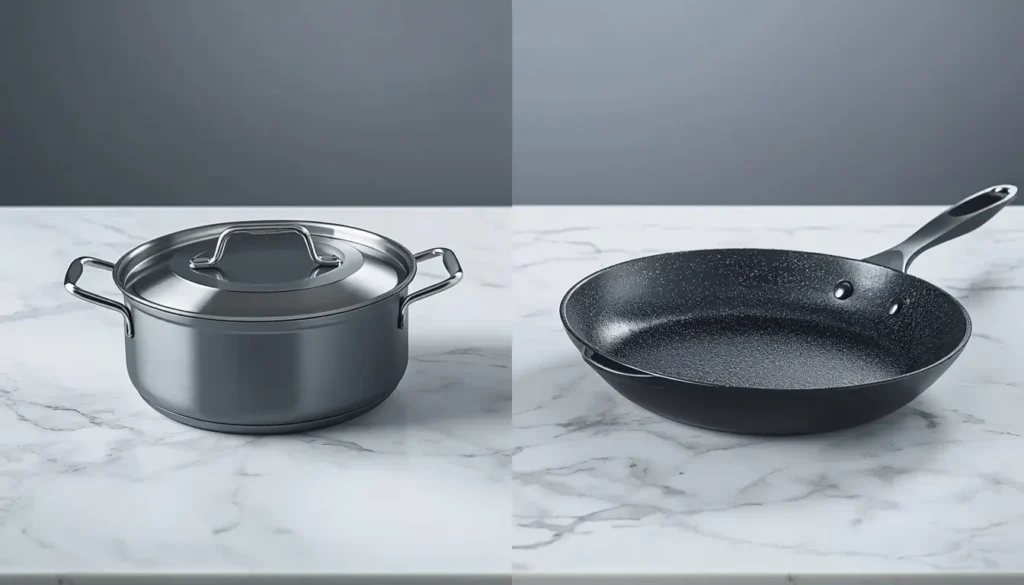
Most titanium cookware is not made of titanium. It’s aluminum or stainless steel with a titanium-reinforced non-stick coating applied to the surface. Pure titanium cookware exists, but it represents a small fraction of what’s sold under the “titanium” label.
This distinction matters because the disadvantages of each type are completely different.
Pure titanium cookware (brands like Toaks, MSR, and Snow Peak):
These are lightweight, reactive-metal-free pans built for backpacking and outdoor use. They’re made from Grade 1 or Grade 2 commercial pure titanium and are impressive in weight-to-durability ratio.
Titanium-coated or titanium-infused cookware (most supermarket and mid-range brands):
These are aluminum pans with a non-stick coating that contains titanium particles. The titanium component is meant to harden the coating and make it more scratch-resistant than standard PTFE (Teflon) coatings. Think brands like GreenPan’s titanium lines, Gotham Steel, or Cuisinart’s TitaniumPRO series.
Read this article on what is titanium cookware made of.
Understanding which type you’re looking at changes the disadvantages you should care about. I’ll cover both throughout this post, but I’ll flag which type each issue applies to.
The Core Disadvantages of Titanium Cookware
Titanium cookware’s core disadvantages include poor heat distribution, high cost relative to performance, non-stick coating degradation, limited induction compatibility, and poor searing performance. Here’s each one in detail.
Poor Heat Distribution (The Biggest Problem)
This is the one that surprises people most. Titanium is a poor thermal conductor. According to Engineering Toolbox, titanium has a thermal conductivity of approximately 21.9 W/(m·K), compared to aluminum at 205 W/(m·K) and copper at 401 W/(m·K). That’s roughly 9 times less conductive than aluminum and nearly 18 times less conductive than copper.
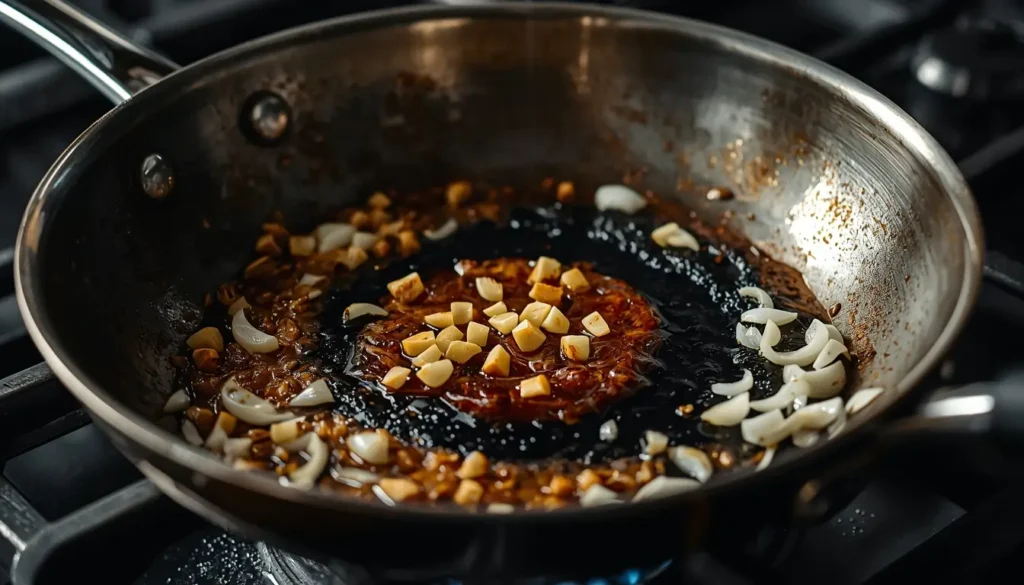
What does that mean in practice? Hot spots. If you’re cooking scrambled eggs or a delicate sauce in pure titanium, the area directly over the flame gets much hotter than the edges. Food burns in the center before the outer areas are even close to temperature.
The first time I went through titanium hots was rushing to make a simple tomato sauce. In my rush i grabed the neariest pan which was titanium, and procceded to sautee some onions and galic on hight heat. After turning my back on the pan for about 20 seconds. I turned to the pan and saw my gaerlic burning on one side of the pan while the onions were undercooked on the other side.
This is why experienced backpackers who use titanium pots will tell you: boil water in it, don’t sauté in it. For outdoor cooking where you’re boiling or rehydrating food, poor heat distribution doesn’t matter much. In a home kitchen where you’re actually cooking, it’s a real problem.
Titanium-coated aluminum pans sidestep this issue because the aluminum base handles heat distribution. The titanium is only in the coating. But then you’re really buying an aluminum pan, not a titanium pan.
Titanium has a thermal conductivity of 21.9 W/(m·K), nearly 9x lower than aluminum. That makes it one of the worst common metals for even heat distribution. It is the single most important factor in everyday cooking performance.
High Cost Relative to Performance
Titanium cookware commands a significant price premium that is rarely justified by cooking performance. A quality pure titanium backpacking pot from Snow Peak runs $50-$120 for a single piece. Titanium-coated cookware sets from mainstream brands run $80-$300.
For that same money, you could buy a 12-inch carbon steel pan from Matfer Bourgeat ($50-$70). Professional kitchens use this pan daily, or a Lodge cast iron skillet ($30-$50) that will outlast you. Both distribute heat more evenly, sear better, and develop naturally non-stick surfaces with use.
The value proposition for titanium only makes sense in one scenario. For example outdoor and ultralight backpacking, where weight is a literal financial calculation. At roughly 4.5 grams per cubic centimeter density, titanium offers an unbeatable strength-to-weight ratio for that use case. [Source: MatWeb Material Property Data]
Non-Stick Coatings Still Wear Out
If you buy a titanium-infused non-stick pan because you think “titanium” means the coating is indestructible. This is the part that will disappoint you.
The titanium particles in the coating increase scratch resistance. But the PTFE or ceramic matrix surrounding those particles still degrades with heat and use. According to https://www.sciencedirect.com, PTFE begins to deteriorate at temperatures above 260°C (500°F). It can release potentially harmful compounds above 300°C (570°F). Titanium particles in the coating don’t change that threshold.
Most “titanium” non-stick pans will need replacing in 3-5 years with normal use, the same as any other coated pan. The titanium reinforcement helps with metal utensil scratches. But it doesn’t change the fundamental chemistry of the coating underneath.
Check out this non stick cookware guide.
Limited Induction Compatibility
Pure titanium is not magnetic, which means it won’t work on induction cooktops. Induction cooking requires a ferromagnetic material (iron or certain types of steel) to interact with the magnetic field the cooktop generates.
Some manufacturers bond a magnetic steel disc to the bottom of titanium pans to solve this. That works, but it’s worth asking: at that point, what exactly is the titanium contributing? You’re paying for titanium construction and getting induction compatibility from a steel plate.
Titanium-coated aluminum pans face the same issue, since aluminum is also non-magnetic. If you cook on induction, verify specifically that any titanium pan you’re considering has been designed for it.
Poor Browning and Searing Performance
This one follows directly from the heat distribution problem. Good searing requires a pan that holds heat evenly, recovers temperature quickly after cold food is added, and develops a consistent Maillard reaction across the surface. Titanium doesn’t check any of those boxes reliably.
Cast iron and carbon steel win here. It’s because they hold heat well (high thermal mass) and develop a seasoned surface that promotes browning without sticking. Titanium, especially in pure form, delivers uneven heat and offers no seasoning capability.
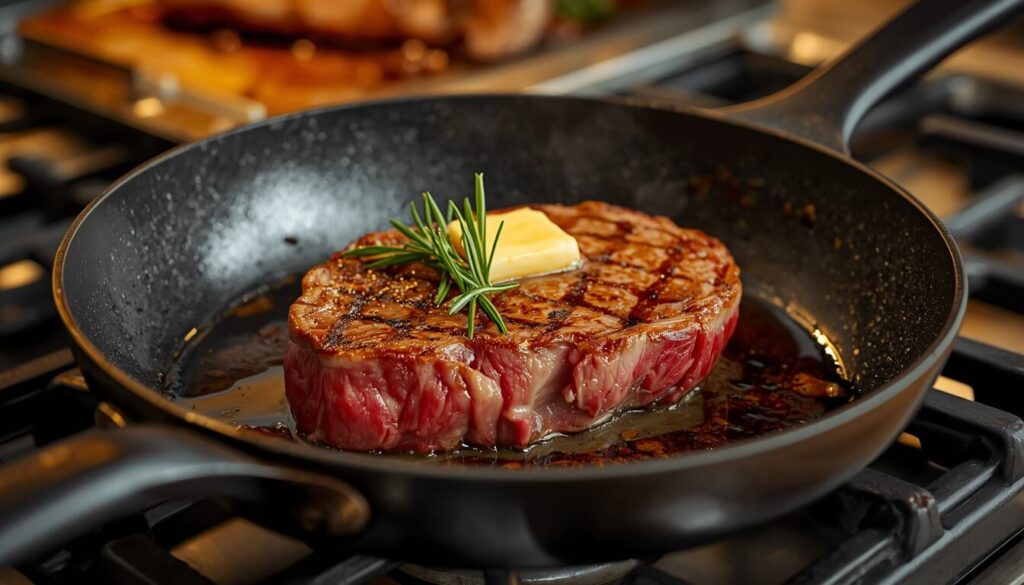
I tried to sear a steak in a titanium pan out off curiousity. I ended up with uneven sealing. The titanium pan was just not giving me that even crust on the meat i had come accustom to from cast iron and corbon steel. You really see the diiference when you measure the time it takes to get an even searing on cast iron or carbon steel. With same time searing in a titanium pan, the result is an even sear.
The Lightweight Feel Problem
This is more subjective, but worth naming: many home cooks find pure titanium pans too light. A 10-inch pure titanium pan might weigh 200-300 grams. A cast iron pan of the same size weighs 2-3 kg.
That lightness, which is a feature outdoors, translates to a perceived cheapness in the kitchen. The pan slides when you move food around. It doesn’t feel anchored on the burner. Some cooks find this genuinely disorienting, especially if they’re used to heavier cookware. [Source: Cook’s Illustrated, cookware weight and perceived quality research]
What Is the “Enemy” of Titanium? What Can Damage or Destroy It
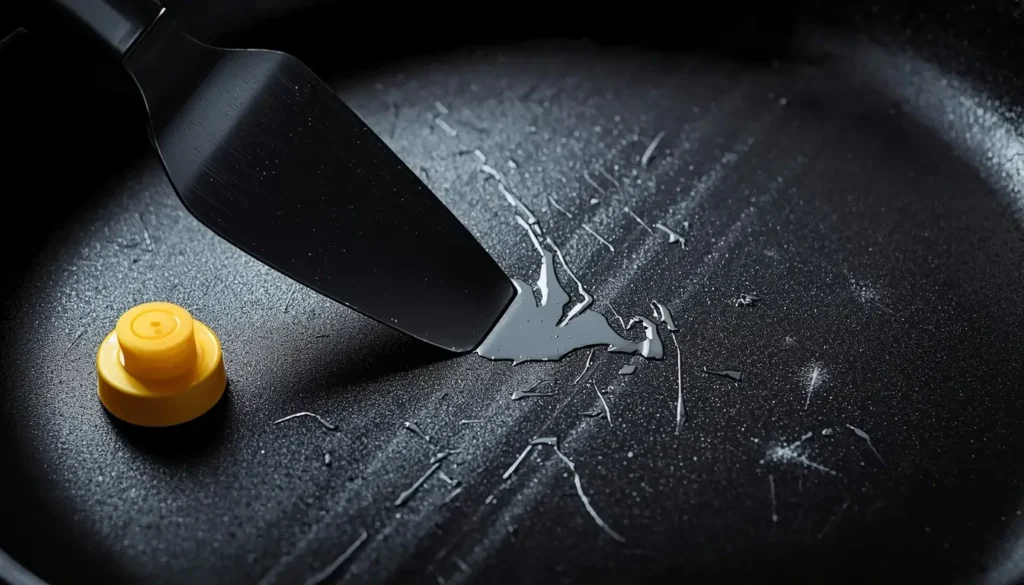
In a kitchen context, the biggest enemies of titanium cookware are alkaline cleaners, metal utensils on coated surfaces, and abrasive scrubbing pads. Here’s what damages each type.
For Titanium-Coated Pans
Alkaline cleaners are the biggest threat. Dishwasher detergents are highly alkaline (pH 10-13) and will strip non-stick coatings far faster than hand washing. Even if the manufacturer says “dishwasher safe,” avoiding the dishwasher extends coating life. Lear more at Consumer Reports, non-stick cookware care testing.
Metal utensils scratch the coating even when brands claim titanium reinforcement makes it “metal utensil safe.” The titanium particles raise the scratch resistance threshold but don’t drop it entirely. Use silicone or wood.
High heat is the silent killer. Non-stick coatings, titanium-infused or not, break down faster when exposed to high heat repeatedly. Never preheat an empty non-stick pan.
For Pure Titanium Cookware
Pure titanium is significantly more resilient. It doesn’t rust, doesn’t react with most acids or bases, and handles physical impact well. However:
Chlorine compounds attack titanium at the molecular level. ASTM International, titanium corrosion resistance data shows this. In very concentrated forms (not typical kitchen concentrations), chlorine-based cleaners can cause pitting and surface degradation over time. For everyday use, this is a low risk, but avoid soaking titanium in bleach-based cleaners.
Sustained very high temperatures (above 600°C/1100°F) can cause titanium to oxidize and discolor. This won’t happen on a home stovetop but can happen with torch cooking or extreme camping cooking methods.
Abrasive scrubbers scratch the surface and dull the finish. Although this is cosmetic rather than functional for pure titanium.
What Can “Defeat” Titanium?
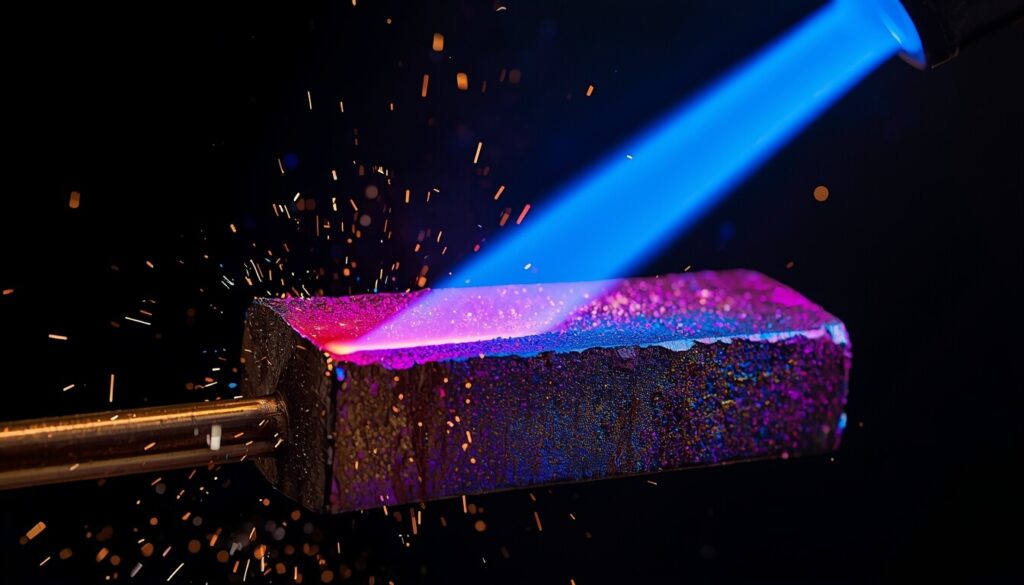
If you’re searching for what can penetrate or destroy titanium in an engineering or material science context. Titanium’s primary vulnerabilities are hydrogen embrittlement, stress corrosion cracking in specific halide environments, and oxidation at very high temperatures (above 600°C). Read more at ASM International, Titanium and Titanium Alloys handbook.
These are industrial concerns, not kitchen concerns. In a home cooking environment, none of these failure modes apply. The relevant “enemies” stay: alkaline chemicals, abrasion, and metal-on-coating contact.
When Titanium Cookware Is Actually Worth It
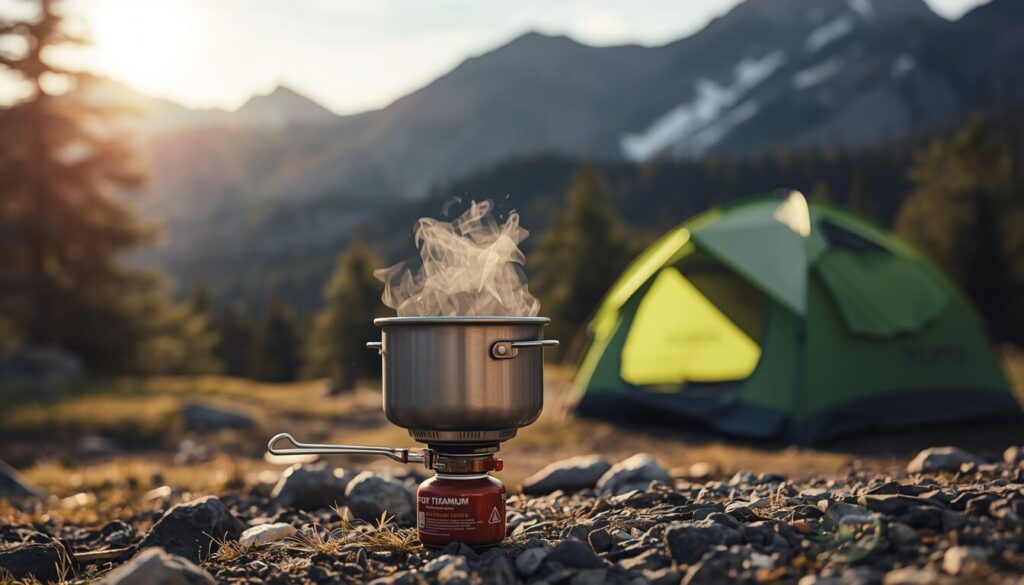
Titanium cookware is genuinely the best option for ultralight backpacking and outdoor cooking. Full stop. If you’re counting grams in a pack and need cookware that survives rough handling, resists corrosion in wet environments, and performs well at altitudes. Nothing beats it.
According to Backpacker Magazine gear reviews, titanium cookware weighs approximately 30-50% less than comparable aluminum options. It also lasts longer under field conditions.
It’s also a reasonable choice for anyone with documented metal sensitivities. These people need cookware that doesn’t leach nickel (stainless steel contains nickel) or need seasoning (cast iron, carbon steel). Pure titanium is biologically inert and one of the most biocompatible metals available. Read more at Journal of Long-Term Effects of Medical Implants.
For the home kitchen: it’s hard to make a strong case. The performance ceiling is lower than cast iron, carbon steel, or quality stainless clad cookware. The price premium over those options isn’t justified by cooking results.
Better Alternatives Depending on Your Priority
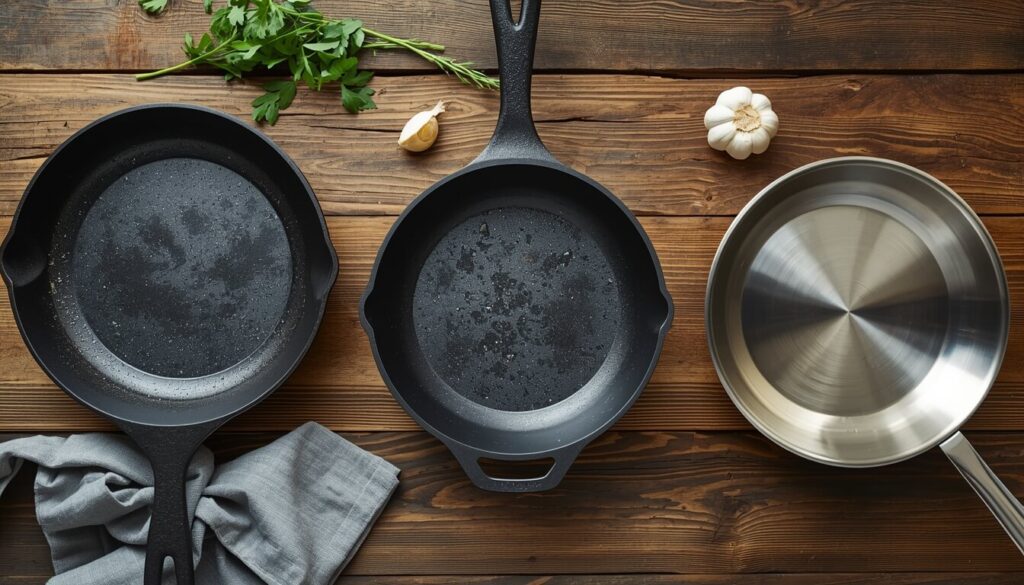
| Cookware Type | Heat Distribution | Durability | Price Range | Non-Stick? | Best For |
|---|---|---|---|---|---|
| Pure Titanium | Poor | Excellent | $50-$150/piece | No | Camping, ultralight outdoor |
| Titanium-Coated (Al) | Good (Al base) | Moderate (coating) | $30-$120/piece | Yes (PTFE/ceramic) | Everyday non-stick needs |
| Cast Iron | Moderate (slow even) | Exceptional | $25-$80/piece | Seasoned | Searing, oven cooking, longevity |
| Carbon Steel | Good | Excellent | $40-$100/piece | Seasoned | All-purpose, professional use |
| Stainless Clad | Excellent (Al/Cu core) | Very good | $80-$200/piece | No | Browning, sauces, versatility |
| Ceramic Non-Stick | Good | Moderate | $30-$100/piece | Yes (ceramic) | Low-heat, egg cooking |
Checkout this article on the best cookware materials compared.
The pattern is consistent: for home cooking, carbon steel or cast iron delivers better performance at lower or equal cost. For camping, pure titanium wins on weight alone.
The Bottom Line
Titanium cookware is a victim of its own mystique. The word “titanium” carries so much weight that brands have leveraged it for decades. They did it to charge premium prices for products that don’t always earn that premium.
My honest take: buy titanium cookware if and only if weight matters to your use case. That means backpacking, camping, and ultralight travel cooking. In those contexts, it genuinely delivers in ways nothing else does.
For a home kitchen, spend the same money on a carbon steel pan and a quality stainless clad saucepan. You’ll cook better food with less frustration for years longer. The titanium marketing won’t help your eggs.
FAQ
What are the main disadvantages of titanium cookware?
The main disadvantages are poor heat distribution (titanium conducts heat 9x less efficiently than aluminum). There’s high cost relative to cooking performance, limited induction compatibility for pure titanium, and non-stick coating degradation for titanium-coated pans. It performs best outdoors, not in a home kitchen.
What is the enemy of titanium cookware?
For titanium-coated pans: alkaline dishwasher detergents, metal utensils, and high heat degrade the non-stick coating.
With pure titanium: concentrated chlorine compounds and abrasive scrubbers can damage the surface. Although pure titanium is generally very corrosion-resistant.
What can destroy titanium?
In industrial contexts, titanium is vulnerable. It can be due to hydrogen embrittlement, stress corrosion cracking in halide-rich environments, and oxidation above 600°C. In a kitchen context, the coating (not the titanium itself) is what degrades, from alkaline cleaners, overheating, and abrasion.
What is titanium weak against?
Titanium is weak against thermal conductivity demands: it transfers heat poorly and unevenly. It’s also weak against strong oxidizing acids at high concentrations and certain halide compounds in industrial settings. In the kitchen, the main weakness is even heat distribution.
Can titanium cookware be used on induction cooktops?
Pure titanium is not magnetic and won’t work on induction cooktops unless a magnetic steel base is bonded to the bottom. Always verify induction compatibility on the specific product, not the material category.
Is titanium cookware worth the price?
For outdoor and camping use: yes. For home kitchen use: almost certainly not. You get better cooking performance from cast iron, carbon steel, or stainless clad cookware at equal or lower cost.
Conclusion
Titanium cookware is brilliant engineering applied to the wrong problem for most people. The material excels where weight is the priority: on a trail, at altitude, miles from a car. In a home kitchen, it loses to cheaper, heavier, better-conducting alternatives almost every time.
If you’re a home cook, skip it. A carbon steel pan or a cast iron skillet will outperform any titanium pan at half the price, and you’ll still be using it in 20 years.
If you’re a backpacker or outdoor cook, buy it without hesitation. Nothing beats the weight-to-durability ratio in the field.
The “titanium” label sells pans. Your cooking results will tell you the truth.