
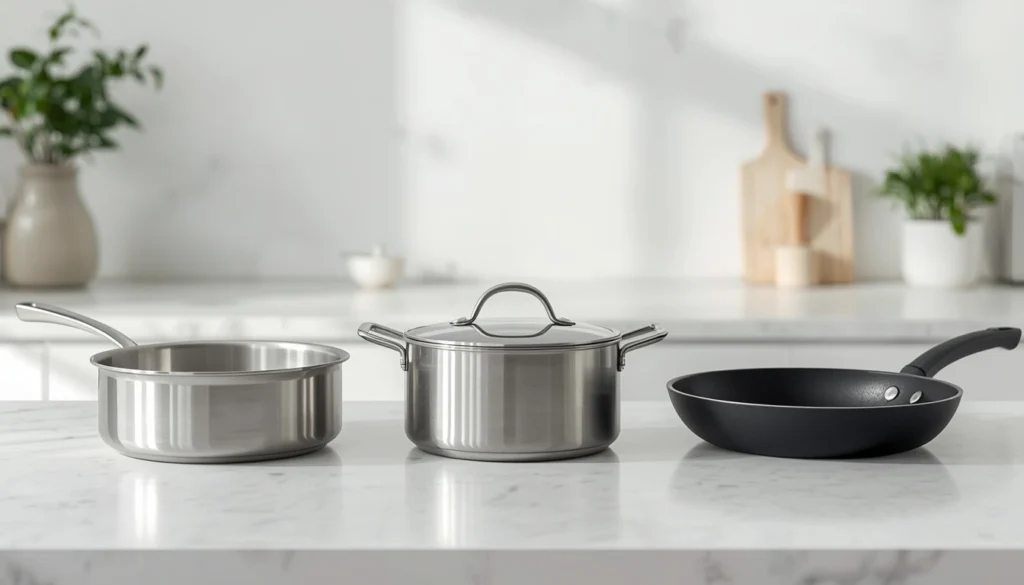
The cookware industry uses the word “titanium” as a marketing buzzword to describe three different products. You must identify whether you are buying pure camping titanium, titanium clad stainless steel, or titanium-reinforced nonstick before spending your money.
Finding the best titanium cookware brands requires cutting through a massive amount of marketing noise. I have spent years testing kitchen equipment. I can tell you exactly which brands deliver lifetime value and which ones are slapping a fancy label on a cheap nonstick pan.
Let me walk you through the top manufacturers, the reality of cooking with titanium, and how to choose the exact right pan for your stove.
Key Takeaways
- “Titanium cookware” can mean pure titanium, titanium-clad, or titanium-reinforced nonstick, know the difference.
- Pure titanium is ultra-light but has poor heat distribution; best for camping.
- Titanium-clad cookware offers the best performance, durability, and long-term value.
- Titanium-reinforced nonstick is affordable but wears out in 1–3 years.
- Titanium itself is non-toxic and non-reactive, ideal for acidic foods.
- Many “titanium” nonstick pans still contain PTFE, check labels carefully.
- Match cookware type to your cooking style and stovetop compatibility.
Fundamentals of Titanium Cookware
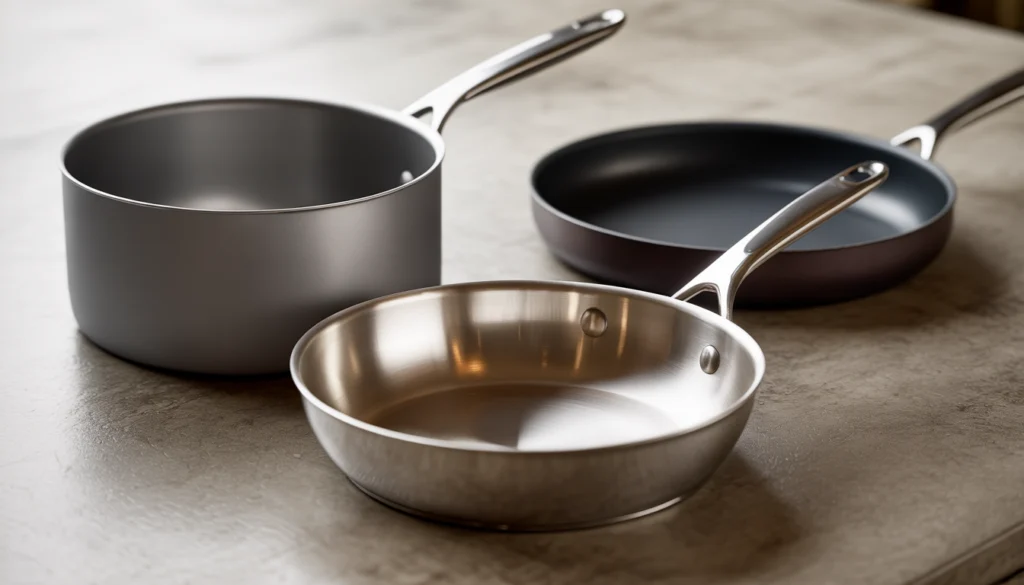
Titanium cookware refers to pots and pans made of titanium, wrapped in a titanium alloy, or coated with a nonstick surface reinforced by titanium particles. The purpose of adding titanium is to increase durability, reduce weight, or prevent chemical leaching.
What is Titanium Cookware?
Pure titanium is a highly inert, extremely lightweight transition metal. When manufacturers build cookware out of it, they are trying to solve the problem of heavy, rust-prone cast iron or reactive aluminum.
I recall the first time i picked up a titanium. My first thought was how light it was. From the look of it I expected it to weigh like aluminium but it’s lighter than that. When you compare it to cast iron skillet’s weight, the gap is huge. The cast iron skillet feels like an exercise weight. But with the titanium pan you will not worry if your grandma tries to lift it.
The Heat Conductivity Myth
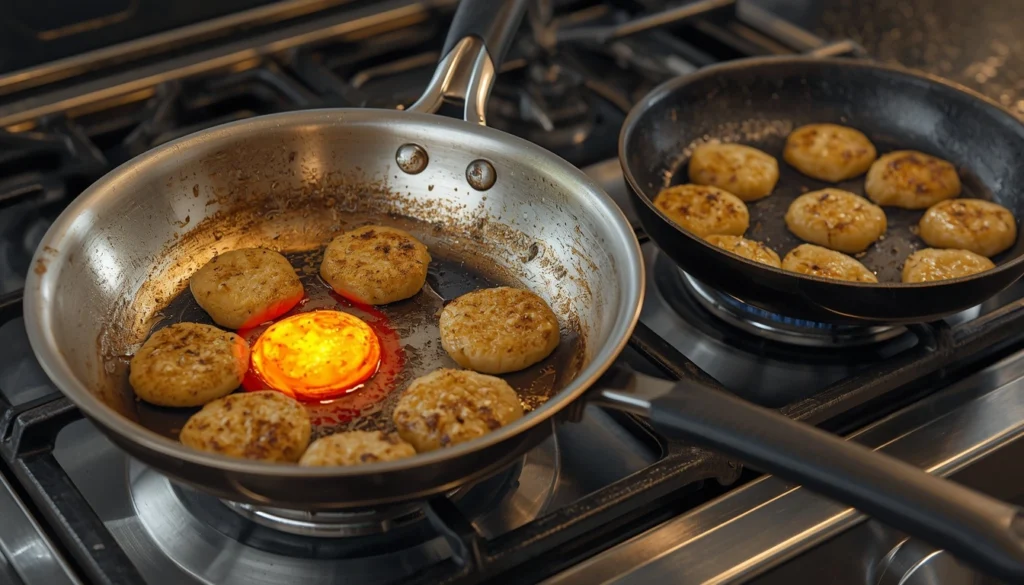
You will often read that titanium has excellent heat conductivity. This is completely false. According to Engineering Toolbox, pure titanium has a thermal conductivity rating of just 21.9 W/(m·K). For context, aluminum sits at a massive 237 W/(m·K), and copper reaches 401 W/(m·K).
This means a pure titanium pan will create aggressive hot spots over your burner. It does not distribute heat evenly. To fix this, high-end brands bind titanium to an aluminum core. This gives you the rapid heat distribution of aluminum with the indestructible, non-toxic surface of titanium.
Common Applications
Because of these thermal properties, you will see titanium used in two very distinct environments. Home chefs use titanium-clad cookware for high-heat searing and deglazing. Backpackers and campers use pure titanium cookware. It’s because dropping 15 ounces from their backpack weight is more important than getting a even sear on a steak.
Categorization of Titanium Cookware Types
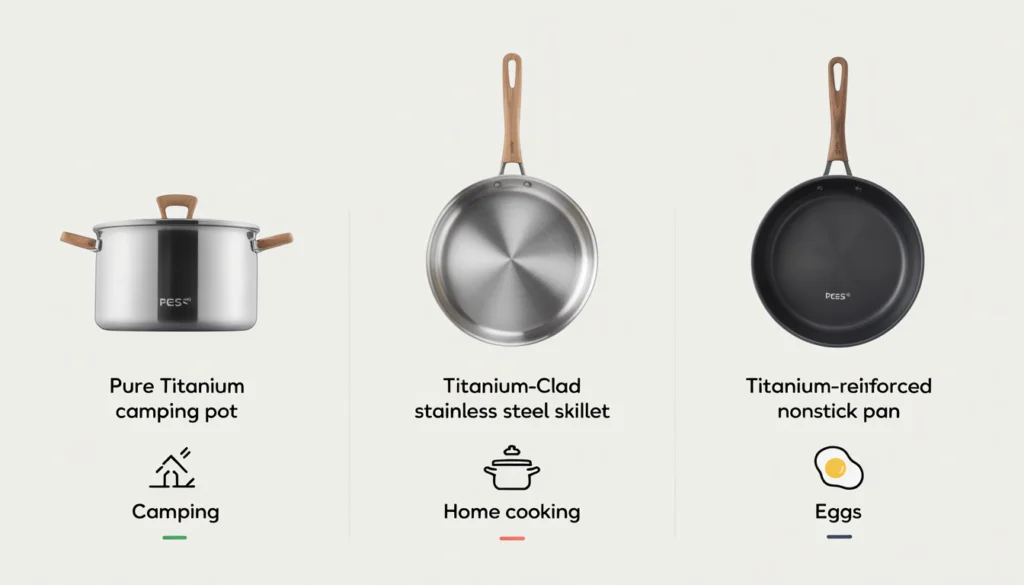
There are three distinct categories of titanium cookware on the market today. Knowing the difference is the only way to ensure you buy a pan that fits your cooking style.
| Cookware Type | Construction Method | Best Use Case | Average Price Range |
|---|---|---|---|
| Pure Titanium | 100% titanium metal stamped into shape | Backpacking, camping, boiling water | $40 – $100 |
| Titanium-Clad / Alloy | Stainless steel bonded with titanium layers | Professional kitchens, daily home cooking | $150 – $400 |
| Titanium-Reinforced | Aluminum pan with PTFE coating mixed with titanium dust | Eggs, delicate fish, low-fat cooking | $30 – $80 |
Pure Titanium Cookware
Pure titanium pots are ultra-lightweight and practically indestructible. They are terrible for frying eggs or searing chicken because food sticks to them aggressively. They are built almost only for boiling water over a campfire or camp stove.
Titanium Clad Stainless Steel
This is the premium tier of home kitchen cookware. Manufacturers take standard 18/10 stainless steel and infuse it with titanium or bond thousands of microscopic titanium layers to the surface. This creates a cooking surface that is up to 400% harder than typical stainless steel [Source: Hestan Culinary]. If you want restaurant-quality performance, you want titanium-clad pans.
Titanium Reinforced Nonstick
These are budget-friendly aluminum pans. The manufacturer sprays a standard nonstick coating (usually PTFE) onto the aluminum and mixes titanium dust into that coating. The titanium makes the nonstick layer slightly more scratch-resistant. These are not true titanium pans. They are nonstick pans with a marketing upgrade.
For more context on how these coatings compare to other options. Check out our this Comprehensive Guide to Safe Cookware Materials].
Leading Titanium Cookware Brands Reviewed
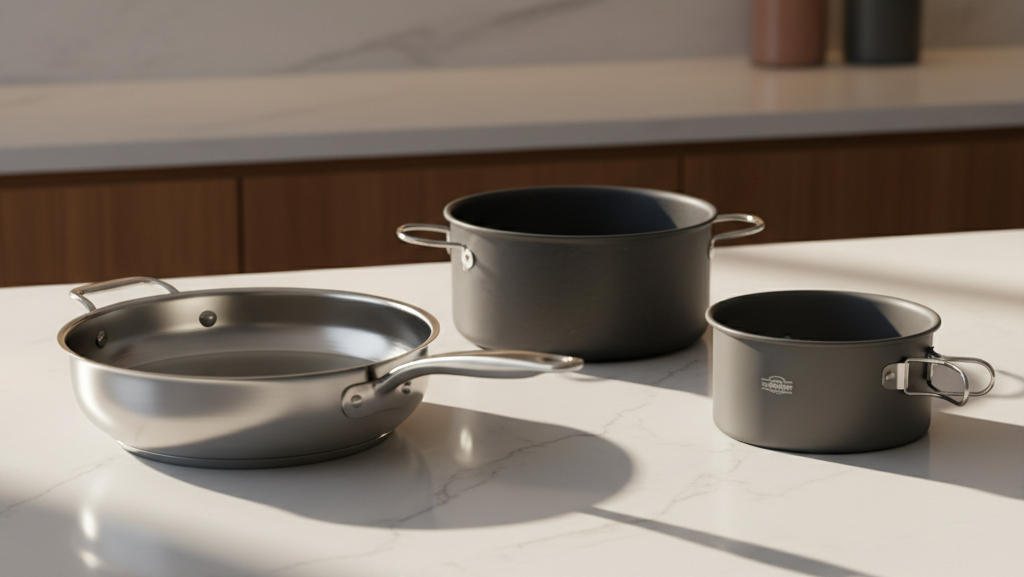
What is the best titanium cookware brand? The best titanium cookware brand for home kitchens is Hestan. It’s due to their patented NanoBond technology. So while Snow Peak is the absolute best pure titanium brand for outdoor use.
Hestan (Best Premium Titanium Clad)
Hestan makes the best titanium cookware on the market for serious home cooks. They do not use pure titanium. Instead, they use a process called NanoBond. They bond thousands of titanium nano-layers directly to a stainless steel surface.
This creates a pan that is completely scratch-resistant. You can use metal whisks and spatulas without leaving a single mark. I love Hestan pans because they can withstand heat up to 1,050 degrees Fahrenheit (565 degrees Celsius) says Hestan Culinary]. They heat up 20% faster than traditional stainless steel and clean up with zero effort. The only downside is the price. A single skillet will cost you over $200.
Heritage Steel (Best Titanium Alloy Stainless Steel)
Who makes the best titanium cookware built in the USA? Heritage Steel takes that title. Rather than coating the outside of the pan, they use an alloy called 316Ti. This is a premium marine-grade stainless steel stabilized with titanium and molybdenum.
This specific alloy makes the pan 5 to 10 times more resistant to salt and acid corrosion. Especially compared to standard 304 stainless steel as mentioned by Specialty Steel Industry of North America. I recommend Heritage Steel for people who cook a lot of highly acidic foods like tomato sauces or citrus reductions. Your food will never pick up a metallic taste.
Snow Peak (Best Pure Titanium Brand)
Snow Peak is the undisputed king of outdoor titanium cookware. They manufacture their pots and mugs in Japan using pure titanium.
Their Trek 700 titanium pot weighs 4.8 ounces (136 grams) according Snow Peak. If you are a backpacker trying to shave every possible gram off your base weight, Snow Peak is your brand. Do not buy Snow Peak for your home kitchen. The thin, pure titanium walls will scorch your food on a standard gas or induction stove.
T-fal (Best Budget Titanium-Reinforced Nonstick)
If you want a cheap pan to cook eggs in the morning, T-fal (also branded as Tefal) is the best budget option. T-fal uses a hard titanium-reinforced PTFE nonstick coating.
I want to be honest here. The titanium in this pan slightly prolongs the life of the nonstick coating. Consumer Reports data shows the average lifespan of any nonstick pan is only 1 to 3 years before the coating degrades. T-fal pans are great for the price, but you will need to replace them eventually.
Saflon (Best Titanium Coated Forged Aluminum)
Saflon operates in the middle ground between cheap nonstick and premium clad cookware. They use a 4-millimeter thick forged aluminum base and coat it with a PFOA-free titanium nonstick surface. The thicker aluminum base prevents the warping issues you see in cheaper brands like T-fal.
Value Assessment: Are the Titanium Pans Worth It?
Titanium pans are worth the investment if you buy titanium-clad or 316Ti alloy cookware. Because they offer a 50-year lifespan that eliminates the need for replacement. Titanium-reinforced nonstick pans offer lower value because they still need replacement every few years.
Lifespan and Durability Expectations
When you buy a Hestan or Heritage Steel pan, you are buying a generational tool. The titanium bonding prevents the pitting and micro-scratches. These will over time destroy traditional stainless steel. You spend $200 once.
If you buy a $40 titanium-reinforced nonstick pan, you will replace it five times over a decade. You end up spending the same $200 but you generate more landfill waste.
Performance vs. Initial Cost Investment
The performance gap between a pure stainless steel pan and a titanium-clad pan is noticeable. Foods release easier from polished titanium. You spend less time scrubbing. If you cook at home more than four nights a week, the time saved during cleanup easily justifies the higher initial cost.
Health, Safety and Toxicity of Titanium
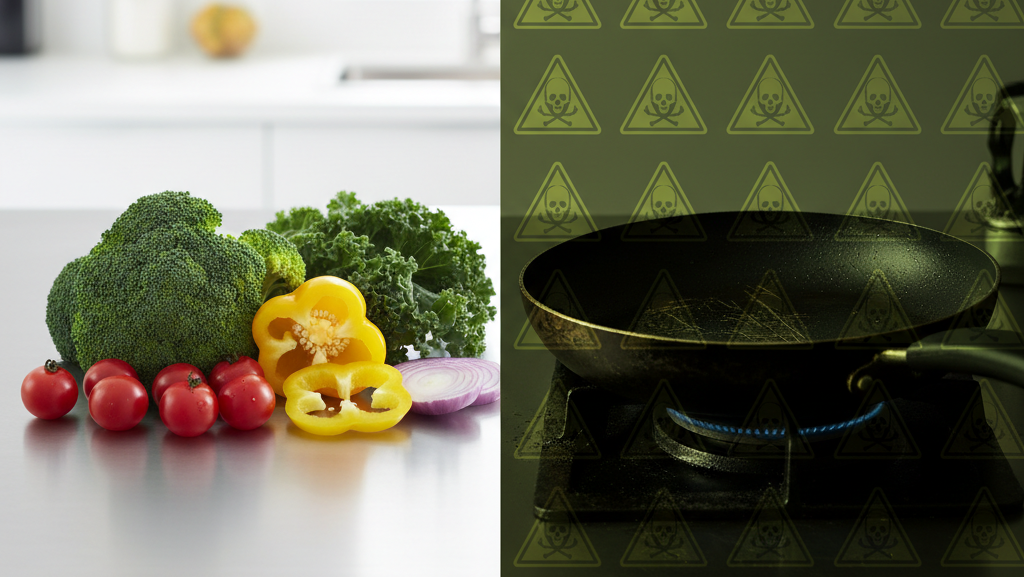
Pure titanium and titanium-clad cookware are completely non-toxic and biocompatible. This means they will never leach chemicals or heavy metals into your food regardless of cooking temperature.
Biocompatibility: Is Titanium Truly Non Toxic?
Medical professionals use titanium for joint replacements and dental implants. It’s because the human body does not react to it. It is biologically inert. When you cook on a pure titanium or titanium-clad surface, zero heavy metals transfer into your meal. This makes it significantly safer than unlined copper or damaged Teflon.
Reactivity with Acidic Foods
Standard cast iron and carbon steel react aggressively to acidic foods. If you simmer a tomato sauce in cast iron for an hour, the sauce will strip the seasoning and taste like a rusty penny.
Titanium does not react to acid. You can simmer lemons, vinegars, and tomatoes for hours. The flavor of your food remains incredibly pure.
Navigating “Titanium Coated” Pans and “Forever Chemicals”
This is the most critical safety issue in the cookware industry right now. A label that says “Titanium Nonstick” does not mean the pan is free of PTFE (the chemical in Teflon).
Recent testing by Ecology Center showed that 79% of nonstick pans still use some form of PTFE. Brands mix titanium dust into the PTFE to make it stronger. If you overheat these pans past 500 degrees Fahrenheit (260 degrees Celsius), the PTFE breaks down and releases toxic fumes. If you want truly non-toxic cookware, you must buy pure titanium or titanium-clad stainless steel. Avoid anything labeled “nonstick.”
To understand more about identifying safe coatings, read our Deep Dive on Cookware Coatings.
Buyer’s Guide for Titanium Cookware
Choosing the best titanium pan requires you to do this. Match the specific titanium construction type to your daily cooking habits and stove type.
Assessing Your Cooking Style
Be honest about how you cook. If you want to sear ribeye steaks at high heat and scrape the bottom of the pan with a metal spatula to make a pan sauce. Then you must buy titanium-clad cookware (like Hestan).
If you just want an easy way to flip omelets on Sunday mornings without using butter, buy a titanium-reinforced nonstick pan (like T-fal). Just accept that you will throw it away in two years.
Stovetop Compatibility
You must check your stovetop before buying. Pure titanium pots (like Snow Peak) will not work on induction stoves. Titanium is not magnetic.
If you have an induction stove, you must buy titanium-clad cookware that features a magnetic stainless steel exterior base. Always check the manufacturer specifications for the induction-compatible symbol.
Weight Considerations and Ergonomics
Pure titanium is a lifesaver for people with wrist mobility issues. A traditional 12-inch cast iron skillet weighs around 8 pounds (3.6 kilograms). A high-quality 12-inch titanium-clad skillet weighs closer to 3 pounds (1.3 kilograms). This makes tossing vegetables and pouring sauces significantly easier.
Care and Maintenance Guidelines
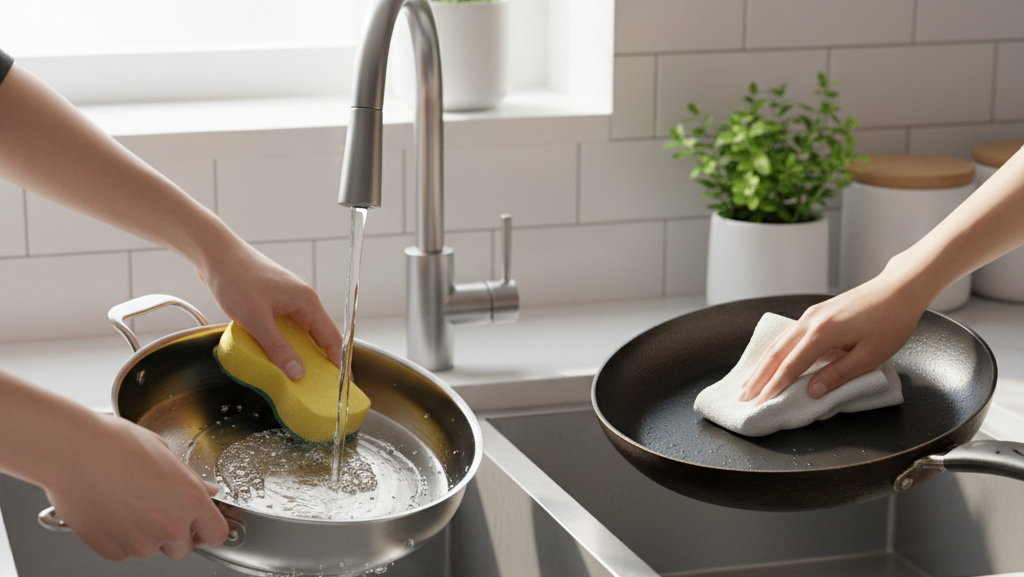
Maintaining titanium cookware requires matching your cleaning method to the pan’s specific construction. Abrasive cleaners will damage nonstick titanium coatings but are safe for pure titanium.
Cleaning Protocols for Pure vs. Coated Titanium
If you own a titanium-clad pan like Hestan, maintenance is a breeze. Wash it with hot soapy water. If you get burnt-on grease, you can aggressively scrub it with a scouring pad or a specialized stainless steel cleaner.
If you own a titanium-reinforced nonstick pan, never use abrasive sponges. Wash it gently by hand with a soft cloth. Putting these pans in the dishwasher exposes the coating to harsh alkaline detergents. These detergents will strip the nonstick surface within months.
Utensil Compatibility
Can you use metal spatulas on titanium pans? Yes, if you are using pure titanium or titanium-clad pans. The metal surface is hard enough to resist gouging.
No, you cannot use metal utensils on titanium-reinforced nonstick pans. The underlying PTFE coating is soft. A metal fork will scratch right through the titanium dust and ruin the pan. Stick to silicone or wooden utensils.
Restoring Discolored Titanium
Pure titanium and titanium-clad pans will often develop a blue or rainbow-colored tint after exposure to high heat. This is known as heat tint. It is a natural oxidation process and does not affect the safety or performance of the pan. You can easily remove this rainbow discoloration by rubbing the pan with white vinegar or a paste made of baking soda and water.
Frequently Asked Questions (FAQs)
What is the best brand of titanium cookware?
The best brand of titanium cookware for home kitchens is Hestan. They use a patented NanoBond technology that binds microscopic layers of titanium to stainless steel. This creates a durable, scratch-resistant surface that provides superior heat conduction for daily cooking.
Who makes the best titanium cookware?
Hestan and Heritage Steel make the best titanium-alloy cookware for indoor kitchen use. For outdoor enthusiasts and backpackers, Snow Peak makes the best pure titanium cookware. They boast ultra-lightweight and durable stamped construction.
Are the titanium pans worth it?
Titanium pans are worth it if you buy titanium-clad stainless steel models. It is true they need a high upfront investment. But their 50-year lifespan, high heat tolerance, and zero-chemical reactivity offer a massive return on investment. Budget titanium nonstick pans offer poor long-term value.
Does food stick to titanium pans?
Food will stick to pure titanium and titanium-clad pans if you do not preheat them properly. You must heat the pan, add your cooking oil, and let the oil get hot before adding food. Food will not stick to titanium-reinforced nonstick pans, but that nonstick property degrades over time.
Is titanium better than ceramic cookware?
Titanium-clad cookware is better than ceramic cookware on longevity. Ceramic nonstick pans lose their slick surface in less than a year of daily use.. Titanium-clad pans maintain their exact performance level for decades. Although they need slightly more cooking oil than brand-new ceramic pans.
Conclusion
Choosing the best titanium cookware brands comes down to understanding what “titanium” really means. Pure titanium is perfect for lightweight outdoor use, but not for serious cooking. Titanium-reinforced nonstick offers convenience at a low price, but it sacrifices longevity. The real winner for most home cooks is titanium-clad cookware. It combines durability, safety, and excellent cooking performance.
If you want a pan that lasts decades, handles high heat, and stays non-reactive with all foods. Then investing in titanium-clad stainless steel is the smartest move. Focus less on marketing claims and more on construction type. When you do, you’ll end up with cookware that fits your needs and delivers long-term value.