
Key Takeaways
- Most “titanium pans” are not pure titanium. They are aluminum pans with a titanium-reinforced non-stick coating. How you treat that coating determines how well the pan performs.
- The number one cause of sticking is putting food in a pan that is not hot enough. This causes proteins to bond directly to the metal surface.
- You can fix most sticking problems by preheating your pan. Use the right amount of oil, and seasoning the surface before the first use.
- Cleaning habits matter as much as cooking habits. Dishwashers, metal utensils and abrasive scrubbers all degrade the coating faster than normal wear.
- If your pan keeps sticking even after trying these fixes, the coating may be worn out and it is time to replace it.
Introduction
About 70% of cookware complaints center on the issue of food sticking. If you bought a titanium pan expecting a slippery, effortless cooking experience. Sticking can feel like a real letdown.
The good news is that in most cases, the pan is not broken. You are just using it in a way that works against its design. Titanium pans have specific quirks around heat management, oil use, and seasoning that are different from standard non-stick pans. Once you understand those quirks, the sticking problem usually goes away.
In this post, you will learn exactly why food sticks to titanium pans. Also how to make yours non-stick again and how to avoid the common mistakes that cause ongoing problems.
Why Is Food Sticking to My Titanium Pan?
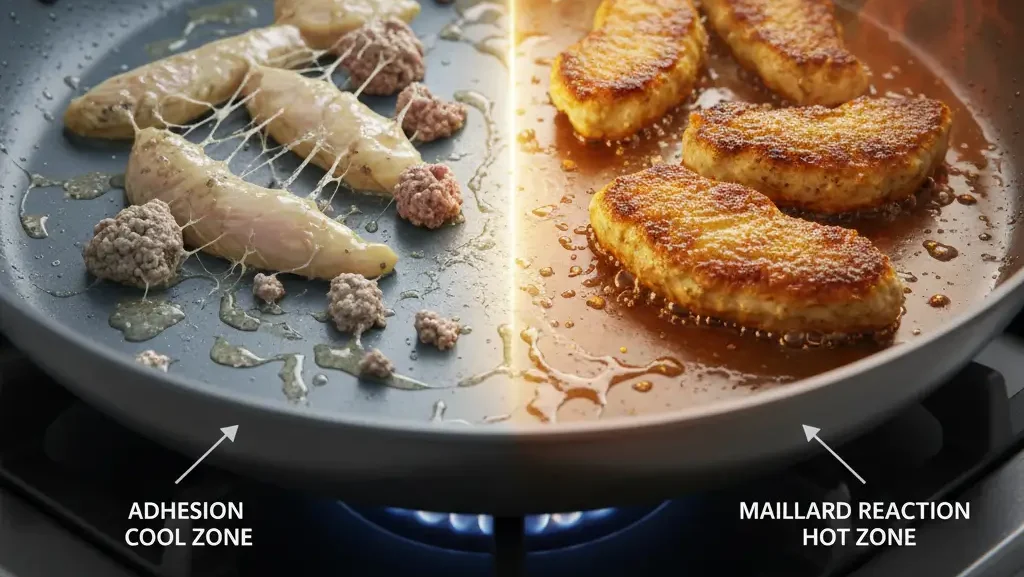
Food sticks to a titanium pan mainly because of two things: improper heat and protein bonding. When the pan is not at the right temperature before you add food. The proteins in your food bond to the metal surface before they have a chance to cook and release naturally.
Here is what actually happens at the surface level. All metal pans, including titanium-coated ones, have tiny pores and grooves in the surface. When you add cold food to a cool pan, those pores grip the food. As the temperature climbs, the food cooks into those pores before the surface gets hot enough to create a natural release. The result: your scrambled eggs or chicken breast tears apart when you try to move it. Learn more at cookcleanrepeat.com
The “Titanium Pan” Naming Problem
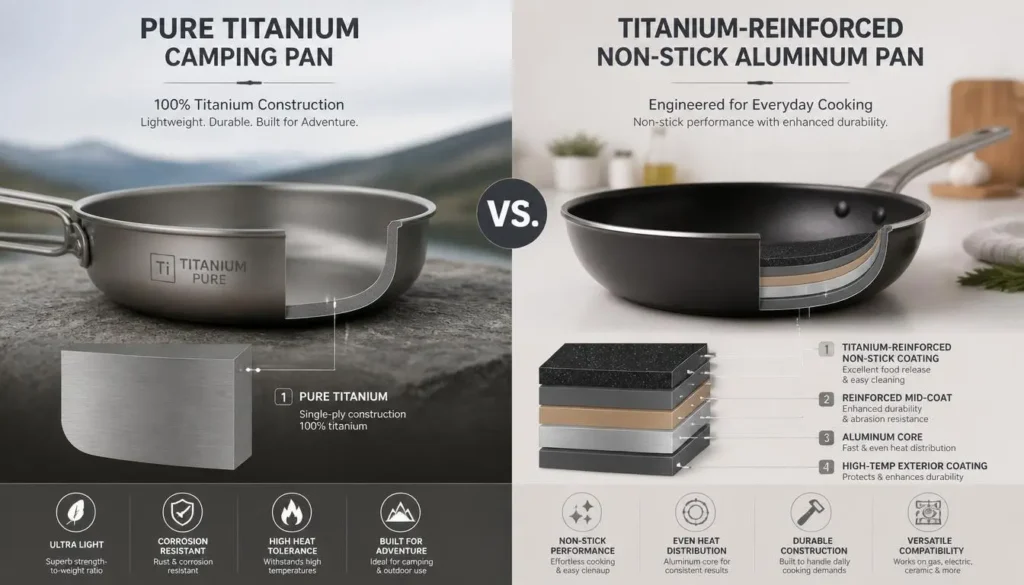
Before looking into fixes, it helps to understand what you actually own. Most pans sold as “titanium” are not made of solid titanium. They are aluminum pans with a non-stick coating that has been reinforced with titanium particles. Brands use this titanium reinforcement to make the coating harder and more scratch-resistant than standard PTFE, (the coating used in traditional Teflon pans).
Pure titanium pans do exist, but they are rare, very expensive, and mostly used in camping or outdoor cooking. If you bought your pan at a regular kitchen store or online, you almost certainly have a titanium-reinforced non-stick pan, not a pure titanium one.
Why does this matter? Because titanium-reinforced non-stick coatings still need proper care and technique. The titanium particles make the coating tougher, but they do not make it magic. You can learn more about what these pans are actually made of in this complete guide to titanium cookware.
The Real Culprit: Heat and Protein Bonding
The science of sticking comes down to something called the Leidenfrost effect and protein denaturation. In plain terms: food proteins (eggs, meat, fish) are sticky when raw. When they hit a properly heated surface, they cook quickly on the outside and form a crust that naturally releases from the pan. When the surface is too cool, the proteins cook slowly, sink into the pan’s surface, and stick.
According to research published in the Journal of Food Engineering. Surface temperature differences of as little as 20 to 30 degrees can be enough to cause food adhesion on metal cookware. This is why getting the temperature right is not optional. It is the whole game.
How to Make a Titanium Pan Non-Stick
You can make a titanium pan perform like non-stick cookware by first preheating it properly. Second using the right oil at the right temperature, and third seasoning the surface before first use. These three steps fix the problem for most people.
The Preheat Test You Should Always Use
The single most important step is preheating your pan before adding any oil or food. Here is a simple test that works every time:
- Place your empty titanium pan on the stove over medium heat.
- Wait 2 to 3 minutes.
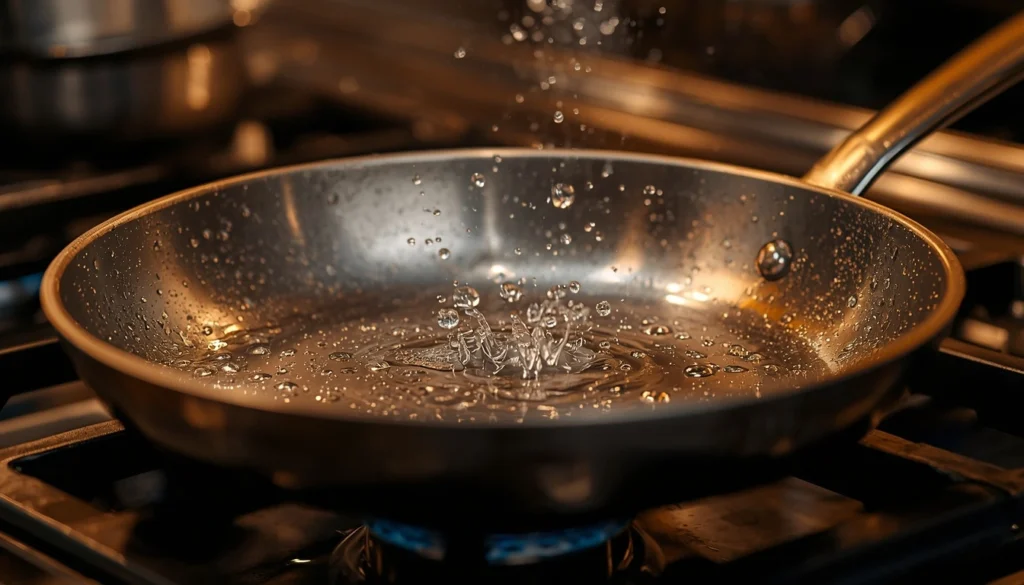
- Flick a few drops of water into the pan.
- If the water sizzles and evaporates immediately, the pan is not hot enough yet.
- If the water forms small, round beads that roll and dance around the surface, the pan is ready.
This is called the mercury ball test (or Leidenfrost test). The dancing water droplets tell you the pan has reached a temperature where food will sear rather than stick. [See more at rouxbe.com]
The mercury ball test is the simplest way to know your pan is ready. No thermometer needed. If the water dances, it’s time to cook.
Add your oil only after the pan passes this test, not before. Then let the oil heat for another 30 seconds before adding your food.
How to Season a Titanium Pan
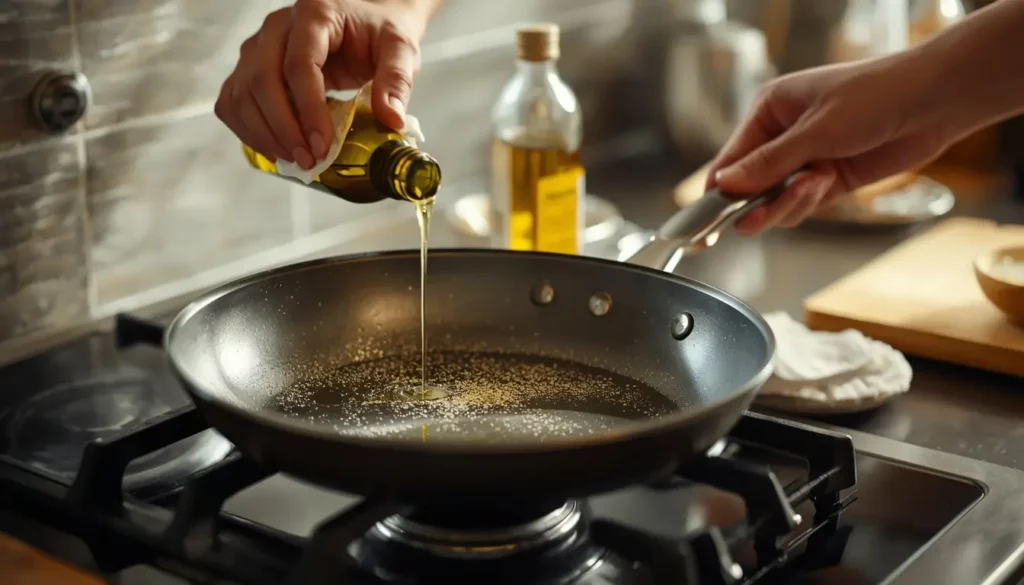
Seasoning is a process of baking a thin layer of oil into the pan’s surface to fill in microscopic pores and create a natural non-stick barrier. Even titanium-reinforced pans benefit from this step, especially when they are brand new.
Here is how to season a titanium pan:
- Wash the pan with warm soapy water and dry it completely.
- Place the pan on the stove over low heat for 1 to 2 minutes to make sure all moisture is gone.
- Add about one teaspoon of a high smoke-point oil (flaxseed, grapeseed, or avocado oil work best).
- Use a paper towel to rub the oil all over the inside surface in a thin, even layer.
- Heat the pan over medium heat until the oil just begins to smoke lightly, about 2 to 3 minutes.
- Let it cool completely, then wipe out any excess oil with a clean paper towel.
Repeat this process 2 to 3 times before cooking in a new pan for the best results. [Learn more at misen.com ]
Oil Selection and Temperature Matching
Not all oils work equally well in a titanium pan. The key factor is smoke point. When oil reaches its smoke point, it breaks down, burns, and leaves a sticky residue on the pan’s surface. That residue builds up over time and becomes one of the main reasons pans start to stick.
| Oil | Smoke Point | Best For |
|---|---|---|
| Avocado oil | 520°F (271°C) | High-heat searing |
| Grapeseed oil | 420°F (216°C) | General cooking |
| Canola oil | 400°F (204°C) | Everyday frying |
| Extra virgin olive oil | 375°F (190°C) | Low to medium heat only |
| Butter | 302°F (150°C) | Low heat; finishing only |
Butter is a common culprit for sticking because most people use it at too high a temperature. If you love cooking with butter, add a small amount of oil first, let the pan heat, then add the butter at the very end or use it only for low-heat dishes. [Learn more at Serious Eats]
Understanding how heat affects your pan’s non-stick performance goes deeper than most people realize. This article on how heat affects nonstick performance breaks it down in more detail.
Why Does My Titanium Frying Pan Keep Sticking?
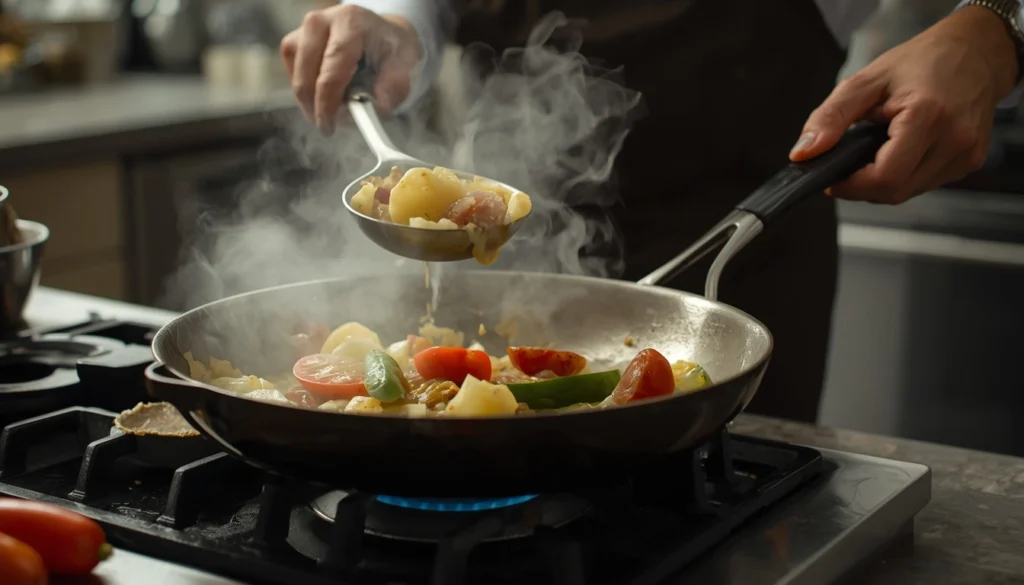
If your titanium pan keeps sticking even after you have tried the preheat test and used the right oil. The problem is usually one of three things: a technique mistake, a damaged coating, or a buildup from cleaning. Here is how to tell which one applies to you.
Common Mistakes That Cause Sticking
These are the most frequent cooking errors that cause sticking even in well-maintained pans:
Moving food too early.
This is probably the most common mistake. When you add food to a hot pan, it will initially stick slightly as it starts cooking. If you wait and resist the urge to move it, it will naturally release once a crust forms. Most proteins need 2 to 4 minutes of undisturbed contact time before they are ready to flip. Pulling at them too soon tears the crust and leaves pieces behind.
Cooking food straight from the fridge.
Cold food drops the pan temperature rapidly. When a piece of cold chicken hits a hot pan, the surface temperature can drop by 50°F or more in seconds. This puts you right back in the sticking zone. Let your proteins sit at room temperature for 15 to 20 minutes before cooking.
Overcrowding the pan.
Too much food in the pan traps steam, which lowers the surface temperature and prevents proper browning. Cook in batches if needed.
Though it sounds easy, but I sometimes still have trouble making pans nonstick when frying eggs for service. The mistake is usually mine as I am always rushing to get orders out in a certain amount of time. I always get the pan hot enough before putting the oil. The problem is caused by not waiting for the oil to reach the temperature of the pan before adding my eggs. This will always cause your eggs to stick, if you are not using a pan with a non stick coating. For oil to reach the temperature of the pan only takes about 10 to 20 seconds depending on the type of pan. A little patience can go a long way.
Is Your Pan’s Coating Worn Out?
Titanium-reinforced non-stick coatings do not last forever. According to Consumer Reports, most quality non-stick pans start showing performance decline after 3 to 5 years of regular use, depending on how they are treated. [Source: Consumer Reports]
Signs your coating may be done:
- Food sticks consistently even with proper technique and enough oil
- You can see visible scratches, chips, or flaking on the cooking surface
- The surface looks dull, discolored, or uneven in patches
- Oil pools in scratched areas rather than spreading evenly
If your pan shows these signs, no amount of oil or technique adjustment will fully fix it. The coating is physically degraded. A pan that is chipping or flaking needs to be replaced, not just for performance, but for safety. You can learn more about when it is time to let go in this guide on are scratched non-stick pans safe to use.
Cleaning Habits That Damage the Surface
How you clean your titanium pan after cooking has a huge impact on how long it stays non-stick. These three habits are the most damaging:
Dishwashers. Even if your pan is labeled dishwasher-safe. The harsh detergents and high heat used in dishwashers break down non-stick coatings faster than hand washing. Consumer Reports found that dishwasher use can reduce the lifespan of a non-stick coating by up to 50% compared to hand washing. Hand wash with warm water, mild dish soap, and a soft sponge every time.
Metal utensils. Metal spatulas, spoons, and tongs scratch the surface and cut through the coating. Stick to silicone, wood, or nylon utensils. This is especially important with titanium-reinforced pans. It’s because the titanium particles are in the coating, not the pan body itself.
Abrasive scrubbers. Steel wool, rough sponges, and harsh scrub pads physically sand away the surface. Use a soft cloth or a non-scratch sponge only.
For a full breakdown of what to avoid, this article on how to extend the life of your non-stick pans covers every key point.
I made some of these mistakes when i started using non stick pans at home. My first mistake was using a metal spatula to flip my omlet, then washing the pan with a scrub pad. Doing one of these alone will scatch your pan although you may not notice it imediately. It was after about two weeks of use, I started noticing some fine white scatch lines on my pan surface. That’s when i notice how fragile non stick surfaces were. With little research and some trail and error I learnt how to treat and properly use my pans with non stick coatings.
FAQs About Titanium Pan Sticking
Can you use metal utensils on a titanium pan?
No, not safely. Even though titanium-reinforced coatings are harder than standard non-stick coatings, metal utensils will still scratch and damage the surface over time. Use silicone, wood, or nylon tools to protect the coating.
What oil is best for a titanium frying pan?
Oils with high smoke points work best. Avocado oil (smoke point 520°F), grapeseed oil (420°F), and canola oil (400°F) are all good choices for everyday cooking. Avoid using butter alone at high heat, as it burns and leaves a sticky residue.
How do you clean a titanium pan without damaging it?
Hand wash with warm water and a mild dish soap using a soft, non-scratch sponge. Avoid the dishwasher, metal scrubbers, and abrasive cleaners. For stubborn residue, soak the pan in warm soapy water for 10 to 15 minutes before gently scrubbing.
Is it safe to cook with a scratched titanium pan?
Light surface scratches are generally not a major health risk since titanium itself is non-toxic. However, if the coating is visibly chipping or flaking into your food, it is best to replace the pan. Degraded coatings also perform poorly and will keep sticking no matter what you do.
Why does my new titanium pan stick?
New pans often stick because they have not been seasoned and the cook has not yet learned the correct preheat temperature. Season the pan 2 to 3 times before first use (see the seasoning steps above), and always preheat before adding oil or food.
Conclusion
Food sticking to your titanium pan almost always comes down to one of a few fixable problems. They are not preheating enough, using the wrong oil, cooking cold food, or wearing down the coating through rough cleaning habits.
Start with the mercury ball preheat test every time you cook. Season your pan before first use. Match your oil to your cooking temperature. And treat the surface gently when cleaning. Those four habits will solve most sticking problems immediately.
If the sticking continues after you have addressed all these, check your coating. A pan that is visibly scratched, chipped, or discolored has likely reached the end of its life. Replacing it is the right call, and your cooking will immediately improve.
For a broader look at choosing and caring for your cookware, check out this guide on cookware care and maintenance and our complete non-stick cookware guide.