
Key Takeaways
- Most professional chefs do not use pure titanium pans. The dominant materials in professional kitchens are stainless steel, carbon steel, copper, and cast iron.
- “Titanium cookware” is often misleading. Most products labeled titanium are aluminum or stainless steel pans with a titanium-reinforced nonstick coating. They are not solid titanium construction.
- Pure titanium has a thermal conductivity of just 17 W/mK, compared to aluminum at 237 W/mK and copper at 401 W/mK. This makes it a poor heat conductor for precision cooking.
- Some chefs do appreciate titanium-coated pans for their non-reactive surface, durability, and chemical-free cooking. But they are a specialty tool rather than a kitchen staple.
- Bobby Flay’s go-to cookware is stainless steel. Specifically Sardel’s Italian stainless steel sets, alongside his GreenPan line of ceramic nonstick, carbon steel and enameled cast iron.
Introduction
Copper conducts heat roughly 24 times better than titanium. That fact explains why you will not find a row of titanium pans hanging above the line in a Michelin-starred restaurant kitchen.
Titanium cookware has been aggressively marketed over the past decade. The branding is impressive: lightweight, indestructible, non-toxic, and used by chefs. Some of that is true. But the full picture is more nuanced, and if you are trying to cook like a professional, understanding the difference matters.
In this post, I break down whether professional chefs actually use titanium pans. I look at what they think of them, and what materials actually dominate professional kitchens. We’ll end with what specific pans celebrity chef Bobby Flay reaches for both on and off camera.
Do Professional Chefs Actually Use Titanium Pans?
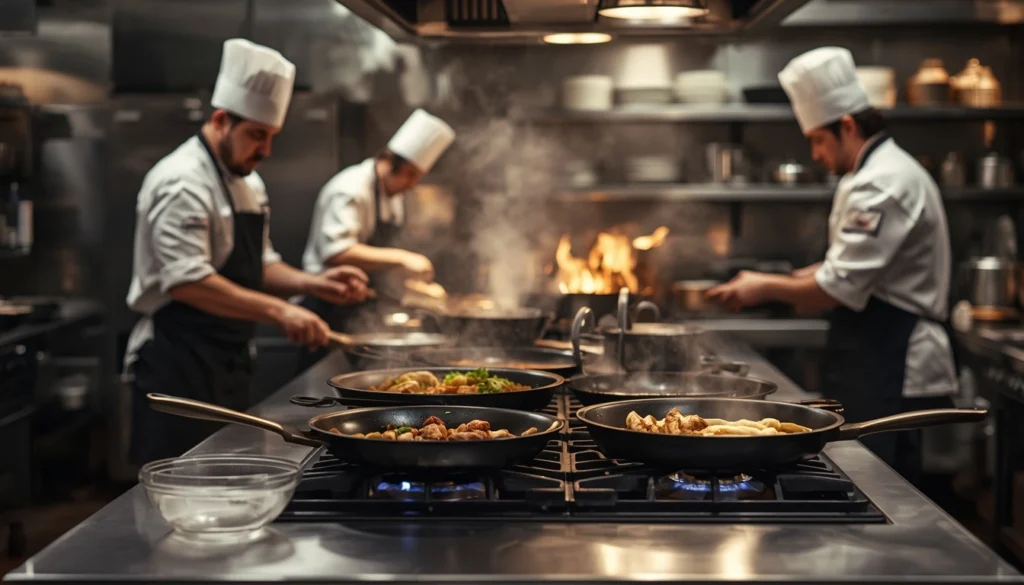
The short answer is no, not in any meaningful or widespread way. Pure titanium pans are almost entirely absent from professional restaurant kitchens. The materials you will consistently find on the line are stainless steel, carbon steel, copper, and cast iron. Titanium, in its truest form, is a camping material.
That said, the question gets complicated fast because of how the word “titanium” gets used in cookware marketing.
The “Titanium” Label and What It Often Means
When you see a pan marketed as “titanium,” it almost never means the pan is made from solid titanium. According to The Rational Kitchen, pure titanium has a thermal conductivity of only 17 W/mK, a value nearly identical to stainless steel at 15 W/mK. For comparison, aluminum hits 237 W/mK and copper reaches 401 W/mK. A solid titanium pan heats slowly, unevenly, and creates dangerous hot spots that no professional cook wants.
What most “titanium cookware” actually refers to is this. An aluminum or stainless steel pan with a titanium-infused or titanium-reinforced nonstick coating on the cooking surface. The titanium element is a marketing term for a harder, more scratch-resistant ceramic-style coating. The base material doing the actual cooking is aluminum or multi-ply stainless steel.
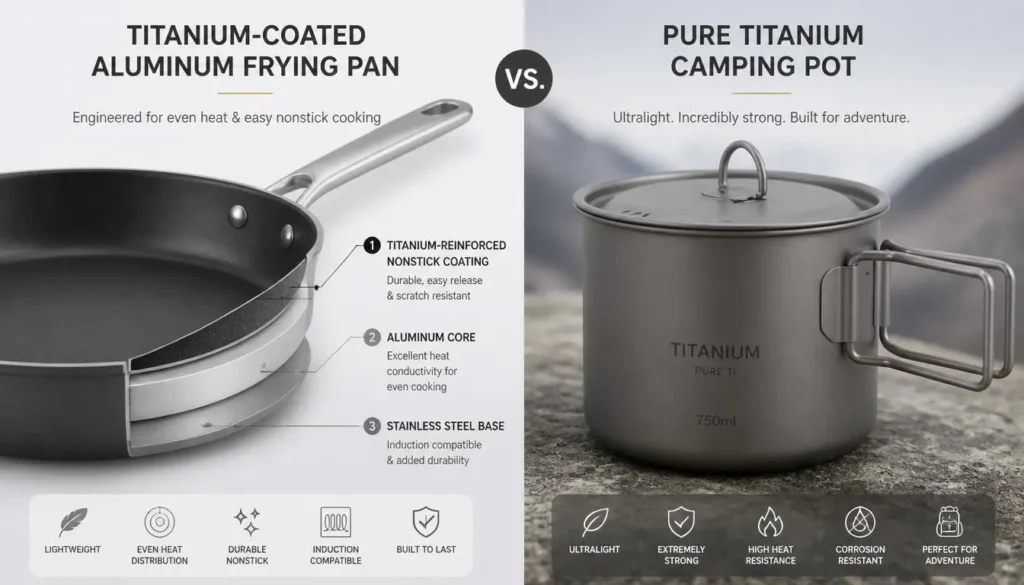
This distinction is not a minor technicality. It changes the entire performance profile of the pan.
Where Pure Titanium Actually Shows Up
Pure titanium cookware genuinely excels in one specific context: outdoor and backpacking cooking. Titanium has an extreme strength-to-weight ratio and corrosion resistance. This make it ideal for a pot that gets stuffed in a pack and boiled over a camp stove. In that environment, you do not need even heat distribution. You need something lightweight that will not rust.
In home and professional kitchens, pure titanium is impractical for the reasons above. As HonTitan explains, the hot spot problem is real: heat the pan on one side and the other side stays relatively cool. For a camp stove boiling water, that barely matters. For searing a protein to an even crust or building a sauce that cannot scorch, it is a serious liability.
The “titanium pan” you see advertised online is almost certainly an aluminum pan with a titanium nonstick coating. The actual titanium content is in the surface layer, not the body. This matters because the base material determines heat performance, not the coating.
Do Chefs Like Titanium Pans?
Professional chefs have a mixed but mostly indifferent relationship with titanium cookware. Those who do use it tend to use titanium-coated pans (not pure titanium) for specific tasks, and they appreciate certain properties. But for most line work, titanium simply does not make the shortlist.
What Chefs Genuinely Appreciate About Titanium
When chefs do reach for titanium-coated cookware, a few specific qualities come up consistently.
Non-reactivity is the most cited benefit. According to ChopChop USA, titanium remains chemically inert when exposed to acidic, alkaline, or salty ingredients. It will not react with tomatoes, citrus, wine, or seafood, even during extended simmering. This makes it genuinely useful for chefs who prepare a lot of acidic sauces and want to avoid metallic aftertastes.
No degrading coatings is the second selling point. Unlike PTFE-based nonstick pans, titanium-reinforced surfaces do not peel, flake, or release fumes under high heat. For health-conscious kitchens or chefs who need to move a pan from a saute to a hot oven. You can do this without worrying about coating breakdown, that is a real advantage. You can read more about the safety profile of titanium cookware in our complete guide to whether titanium cookware is safe.
Lightweight and durable rounds out the appeal. A titanium-coated aluminum pan gives you a non-reactive, hard surface in a body that weighs less than stainless or cast iron. For a chef who is on their feet for 14 hours, pan weight is not trivial.
The Heat Distribution Problem That Holds Titanium Back
Here is where titanium, even in its coated form, runs into the limits of professional expectations.
According to research compiled by TrueGeometry. Copper conducts heat 18 to 24 times better than titanium, and aluminum conducts heat 12 to 14 times better. Even when the base of a “titanium” pan is aluminum. The titanium coating layer adds surface hardness without improving heat transfer.
Most professional cooking tasks demand precise, even heat. Searing a steak requires a surface that holds temperature evenly when cold protein hits the pan. Building a pan sauce requires controlled, responsive heat that adjusts quickly. Hot spots punish both of these tasks. Multi-ply stainless steel, carbon steel and copper are engineered around solving this problem. Pure titanium, and to a lesser extent titanium-coated pans, are not.
This is the core reason titanium remains a niche choice rather than a staple. The properties chefs love, like non-reactivity and durability, are real. But they come attached to heat performance limitations that stainless steel and carbon steel simply do not have. If you are weighing whether the tradeoff is worth it, our breakdown of whether titanium cookware is worth the investment goes deeper on this.
What Type of Pans Do Most Professional Chefs Use?
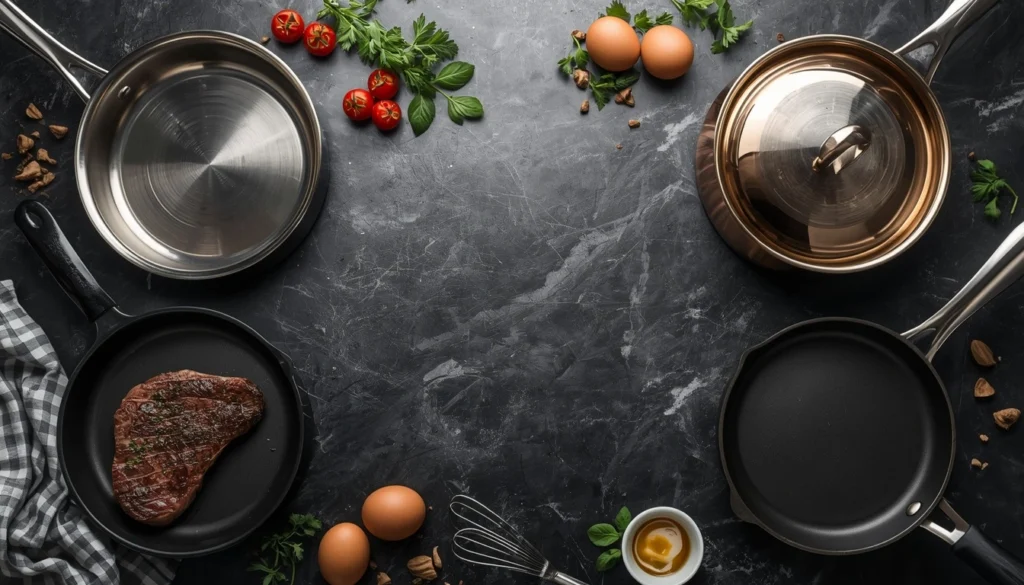
Professional chefs rely on a core set of four materials: stainless steel, carbon steel, cast iron, and copper. Each occupies a specific role in the kitchen based on heat behavior, durability, and what it does to food. No single material does everything, which is why professional kitchens always have many pan types on hand.
| Material | Heat Conductivity | Best Use | Why Chefs Use It |
|---|---|---|---|
| Stainless Steel (multi-ply) | Good (boosted by aluminum/copper core) | All-purpose, sauces, browning | Durable, non-reactive, versatile |
| Carbon Steel | Excellent | Searing, crepes, eggs, high heat | Lightweight, builds natural nonstick patina |
| Copper | Best of all metals | Delicate sauces, precise temperature control | Unmatched responsiveness |
| Cast Iron | Excellent heat retention | Braising, oven cooking, cornbread | Superior heat retention, lasts forever |
| Nonstick (PTFE/ceramic) | Depends on base | Eggs, fish, pancakes | Easy release, low fat cooking |
Stainless Steel: The Workhorse of Professional Kitchens
Stainless steel is the backbone of virtually every professional kitchen. According to Chef’s Resource, stainless steel pans are the backbone of any professional kitchen. They havemany lasting decades under heavy use.
The key is construction quality. Professional-grade stainless steel is multi-ply. It means it sandwiches a core of aluminum or copper between outer layers of stainless steel. This compensates for stainless steel’s otherwise mediocre raw heat conductivity. It delivers the even heat distribution that professional cooking demands. According to Sur La Table, chefs gravitate toward 18/10 stainless steel (18% chromium, 10% nickel). It resists rust and corrosion while keeping the cooking surface non-reactive.
The other major advantage is versatility. Stainless steel handles acidic foods without reacting. It tolerates metal utensils, moves from stovetop to oven without issue. Lastly it survives the kind of rough handling that happens on a busy restaurant line. Our guide to why professional chefs prefer stainless steel covers this in more depth.
Carbon Steel: The High-Heat Specialist
If stainless steel is the workhorse, carbon steel is the thoroughbred. It is lighter than cast iron, heats faster than stainless steel, and builds a natural nonstick patina over time that actually improves with use.
According to de Buyer, chef Chris Scott of the Institute of Culinary Education says carbon steel is “great for getting a hard sear on meats and fish.” Michelin-starred restaurants like Alinea and Le Bernardin use carbon steel pans. It’s because they can take high heat and respond instantly to temperature changes. For crepes, omelets, pan-fried fish, and any task that needs a seasoned, nonstick surface at high heat. Carbon steel is often the professional’s first choice. For a full breakdown of carbon steel’s strengths and ideal use cases, see our carbon steel cookware guide.
Copper, Cast Iron, and Nonstick: The Specialists
Copper is used, primarily for temperature-sensitive tasks like delicate sauces, caramel, and custards. TheFlavorExperts notes that copper offers the best heat conductivity of any cookware material. It is ideal for dishes where subtle temperature changes matter. The tradeoff is cost and maintenance. It is expensive, reactive with acidic foods (which is why it is usually lined with tin or stainless steel), and requires regular polishing.
Cast iron is used mainly for braising, oven cooking, and any task where consistent, sustained heat retention matters more than responsiveness. It heats slowly and holds temperature very well. That makes it perfect for cornbread, frittatas, and anything going from stovetop to oven.
Nonstick pans are not absent from professional kitchens. Gordon Ramsay, for example, uses high-quality PFOA-free nonstick pans with a heavy base. They’re great for eggs, fish, and other delicate proteins. The professional approach is to use nonstick for specific tasks, not as a catch-all solution.
I mostly use Stainless steel at work. It is my go to material in the kitchen because of the many ways i can use it with out worry. I use copper for delicate sauces which can break, or where I need fast temperature ajustments. Cast iron I like for searing, its nonstick feature and oven durability. It’s heavy but reasurring when you get comfortable with this pan. Non stick i mainly use for creeps, eggs, fish, pancakes etc. It’s mainly for foods that break apart easily, especially when exposed to heat.
What Kind of Pan Does Bobby Flay Use?
Bobby Flay’s personal cookware preference is stainless steel. Specifically the Italian-made Sardel stainless steel line. He has spoken about this publicly, sharing on Instagram: “Many of you know about my love affair with Italia so you won’t be surprised to hear I’m loving @sardel cookware. They partner with small family businesses in Italy to develop products. I have the full stainless steel set and love it.” [Read more at: Mashed]
This is telling. Bobby Flay is one of the most recognizable chefs in the world, with decades of professional experience and access to any cookware he chooses. He reached for a full stainless steel set, not titanium.
Bobby Flay’s Official Cookware Line
In a separate capacity, Flay has partnered with GreenPan to create a consumer cookware collection. According to Food Network, the Bobby Flay by GreenPan collection spans professional stainless steel, ceramic nonstick, carbon steel and enameled cast iron. Flay said he worked with GreenPan to create a line “packed with all the must-haves that I expect when cooking.”
Notice what is absent: titanium. His line includes the four core materials that professional kitchens actually rely on. The ceramic nonstick pieces feature GreenPan’s diamond-infused coating, which is free of PFAS, PFOA, lead, and cadmium. Also the stainless steel pieces use tri-ply construction with an aluminum core for even heating.
For a broader comparison of how titanium stacks up against the stainless steel Flay prefers. This side-by-side guide on whether titanium or stainless steel is better for cookware breaks down each material across heat performance, durability and maintenance.
FAQ
Is titanium cookware used in restaurant kitchens?
Rarely, and almost never in the form of pure titanium. You may find titanium-coated nonstick pans in some restaurant kitchens for specific tasks like eggs or delicate fish. But the dominant materials across professional kitchens remain stainless steel, carbon steel, copper and cast iron.
What is the difference between titanium cookware and titanium-coated cookware?
Pure titanium cookware is made entirely from the metal. This makes it very lightweight but a poor heat conductor, mainly used for outdoor cooking. Titanium-coated cookware is aluminum or stainless steel with a titanium-reinforced nonstick surface layer. The coating is harder and more durable than standard nonstick. The heat performance comes from the aluminum or steel base, not the titanium.
Why do professional chefs prefer stainless steel over titanium?
Multi-ply stainless steel offers even heat distribution, high durability, and non-reactivity with acidic foods. Also compatibility with all cooking techniques and utensils. Titanium in its pure form creates hot spots due to poor thermal conductivity. Stainless steel with a bonded aluminum or copper core solves the heat distribution problem while maintaining the surface properties chefs need.
Does titanium cookware scratch easily?
No, titanium-reinforced surfaces are harder and more scratch-resistant than standard PTFE nonstick coatings. This is one of the genuine advantages of titanium-coated pans. You can use metal utensils without the same risk of surface damage that would ruin a traditional nonstick pan.
What pans does Gordon Ramsay use?
Gordon Ramsay uses a mix of HexClad hybrid cookware (his official partnership). It has high-quality PFOA-free nonstick pans for eggs and delicate proteins and stainless steel for general cooking. Like Flay, titanium does not feature in his primary kit.
Is titanium cookware worth buying for a home cook?
It depends on what you mean by “titanium cookware.” Titanium-coated nonstick pans from reputable brands can be a solid choice for low-to-medium heat cooking. This is where you want a durable, non-toxic surface. Pure titanium pans are best left to camping. If your priority is professional-style cooking performance. Invest in multi-ply stainless steel or carbon steel instead.
Conclusion
The short version: professional chefs do not cook with titanium pans in any meaningful way. The material that dominates professional kitchens is as follows. Multi-ply stainless steel, then carbon steel for high-heat work, copper for precision sauce work and cast iron for braising and oven cooking. Bobby Flay’s personal choice, a full Sardel stainless steel set, reflects exactly that hierarchy.
Titanium-coated pans have genuine merits. They are non-reactive, durable, and free of the chemical concerns that come with older PTFE coatings. If you are shopping for a healthy, hard-wearing nonstick pan for everyday use, a good titanium-coated option is a reasonable choice.
But if you are trying to cook the way professionals cook, the path runs through stainless steel and carbon steel. Those are the materials built around heat performance, and heat performance is the whole game.
Your next step: if you are building or upgrading your cookware collection with a more professional approach. Start with our guide to the best cookware for professional chefs to find the right combination of materials for how you actually cook.