
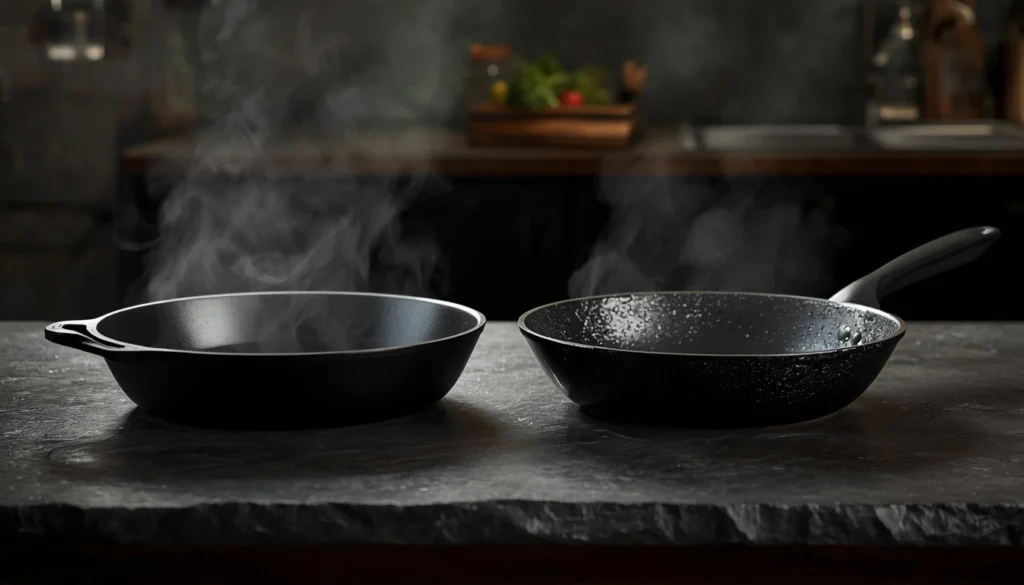
Key Takeaways
- Pick cast iron if you want a pan that holds heat for searing, baking, and stove-to-oven cooking. Pick carbon steel if you want something lighter that reacts faster.
- A 12-inch cast iron skillet weighs about 8 pounds. A carbon steel pan of the same size weighs about 4 pounds.
- Neither pan is nonstick on its own. Seasoning helps both resist sticking, and both need hand washing and quick drying.
- Both can go in the oven. Neither belongs in the dishwasher.
- Both are iron-based and can add iron to food, especially with acidic, moist, long-cooked dishes.
If you’re weighing cast iron vs carbon steel, here’s the short answer: cast iron holds heat longer, and carbon steel is lighter and reacts faster. Both are iron-based pans that need seasoning, and they can often do the same jobs. The real difference is how each one feels and behaves on your stove.
So here’s how to think it through. Pick cast iron if you want steady heat and don’t mind the weight. Pick carbon steel if you want a pan you can lift, toss, and adjust quickly.
Cast Iron vs Carbon Steel at a Glance
| Cast Iron | Carbon Steel | |
|---|---|---|
| Weight (12-inch skillet) | About 8 pounds | About 4 pounds |
| Heat-up speed | Slower | Faster |
| Heat retention | Holds heat longer | Cools down faster |
| Nonstick | Needs seasoning | Needs seasoning |
| Oven | Yes | Yes |
| Dishwasher | No | No |
| Iron transfer to food | Can add iron | Can add iron (less studied) |
What Is the Difference Between Cast Iron and Carbon Steel?
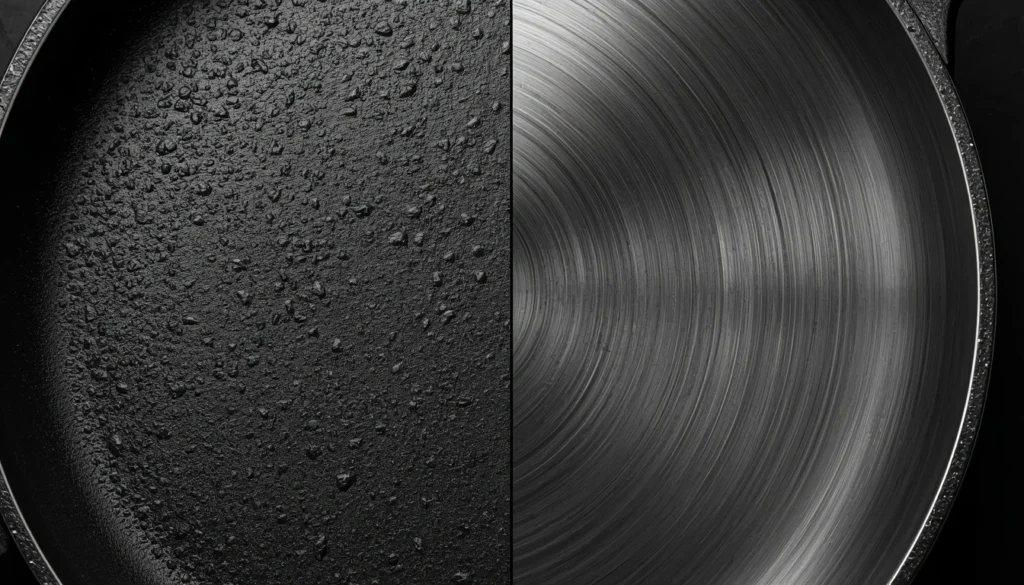
Cast iron and carbon steel are both iron-and-carbon metals, but cast iron has more carbon and is usually thicker and heavier. That extra carbon and thickness is why cast iron is slow to heat and slow to cool. Carbon steel has less carbon and is thinner, so it heats fast and cools fast.
The two are close cousins, and they share some weak points. Both can rust and corrode if they stay wet, and both depend on a seasoned surface.
Does It Really Matter Which One You Cook In?
It matters, mainly because the two pans handle differently, even though they can often be used interchangeably. For many everyday jobs, either pan will get the work done.
The differences show up in weight, how fast the pan responds, and how much care it needs. For most home cooks, those three things decide which pan ends up on the stove most often.
Cast Iron vs Carbon Steel: Which Heats Faster?
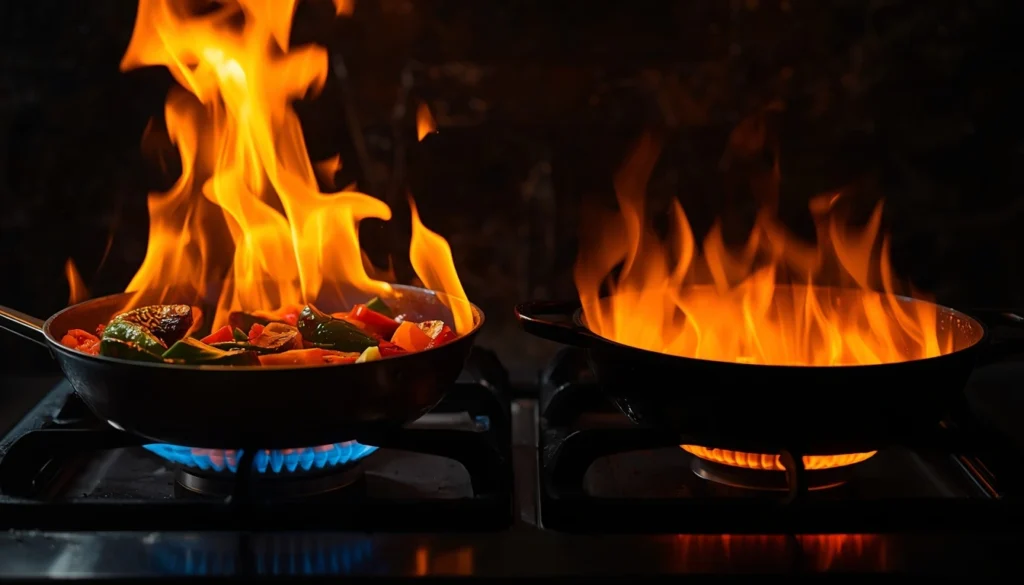
Carbon steel heats up faster and cools down faster, while cast iron heats slowly and holds heat longer. Part of the reason is thickness: carbon steel pans are thinner and lighter, so they react quickly when you turn the burner up or down. Cast iron’s mass keeps it hot, which suits pan-roasting, stove-to-oven cooking, and reverse searing. Carbon steel suits quick, high-heat cooking.
So does one cook food faster? Carbon steel gets to temperature sooner, so you can start cooking sooner. The speed difference is mostly about preheating and how quickly the pan reacts, not a different cooking time.
One caution: cast iron is heavy, but it isn’t a great heat spreader. A common misconception is that heavy cookware always distributes heat evenly. In reality, poor thermal conductivity causes severe hotspots regardless of cookware weight or mass. Preheat patiently, and expect one day to one week to adjust your preheating habits if you’re switching between materials.
If you’re considering carbon steel, our carbon steel cookware guide covers best uses and brands.
How Much Heavier Is Cast Iron Than Carbon Steel?
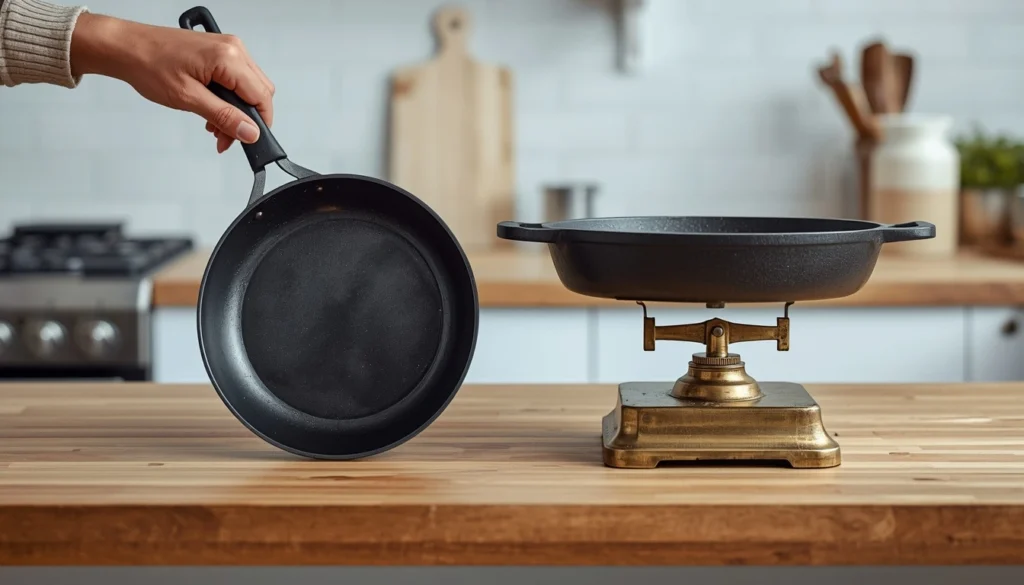
A 12-inch cast iron skillet weighs about 8 pounds, roughly double a carbon steel pan of the same size at about 4 pounds. Exact numbers vary by brand and size, and skillet weights for cast iron range from about 4 to 12 pounds.
That weight has an upside. Thick cast iron walls limit how much the pan’s temperature drops when cold food hits it, which helps with searing. Carbon steel holds heat well too, but it cools faster because it’s thinner.
The downside is handling. A heavy skillet is harder to flip, toss, and lift when it’s full.
Are Cast Iron and Carbon Steel Nonstick?
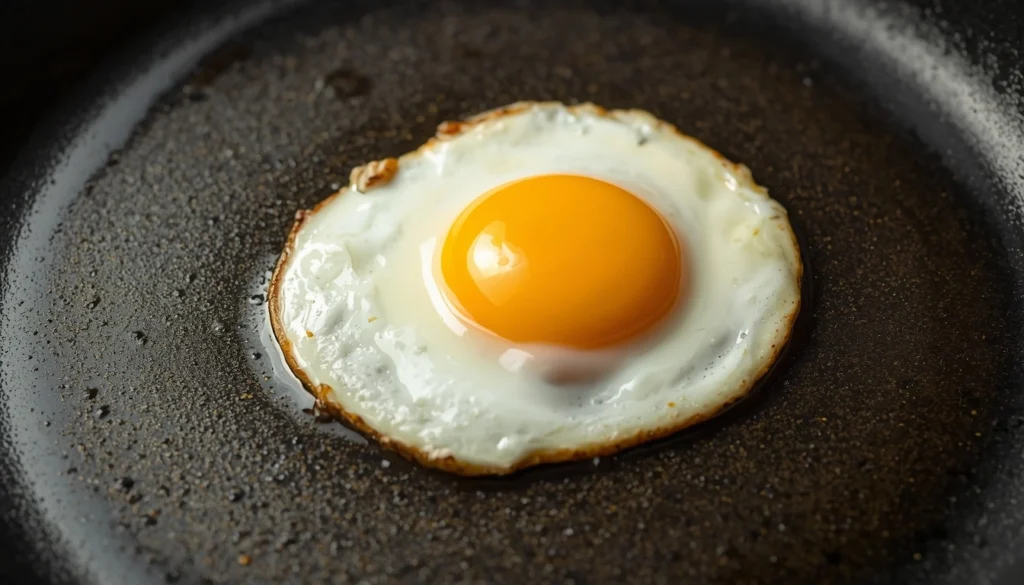
Neither pan is nonstick on its own, but seasoning helps both resist sticking. Seasoning is a thin coating of polymerized fat that also protects the pan from rust. A new, unseasoned pan of either type will tend to stick.
Even a well-seasoned pan isn’t a promise that food will slide off. Preheating, enough fat, and patience still do much of the work. Harsh soaps and abrasive pads can strip seasoning, so go gently.
Here’s how to season cast iron properly.
Do Cast Iron and Carbon Steel Leach Iron Into Food?
Yes, both pans are made mostly of iron, and cooking in iron cookware can add iron to your food. A 1986 study that cooked 20 foods in iron and non-iron utensils found most foods contained significantly more iron after cooking in iron. Acidity, moisture, and cooking time all affected the amount, so a long-simmered acidic dish tends to pick up more than a quick sear.
We cover cast iron and acidic foods in more detail separately.
For context, the NIH sets the upper intake limit for adults at 45 mg a day from all sources, including food, drinks, and supplements. People with hemochromatosis, a condition that causes iron to build up. They should ask their doctor about iron intake before relying on iron cookware. If iron levels are a concern for you, a doctor can give advice that fits your situation.
Most of the research looked at cast iron. One research summary notes that no dedicated leaching study on carbon steel appears to exist. So the carbon steel picture is less certain. Because both pans are mostly iron, the same factors likely apply, and a well-seasoned surface may help limit transfer.
Can Cast Iron and Carbon Steel Go in the Oven or Dishwasher?
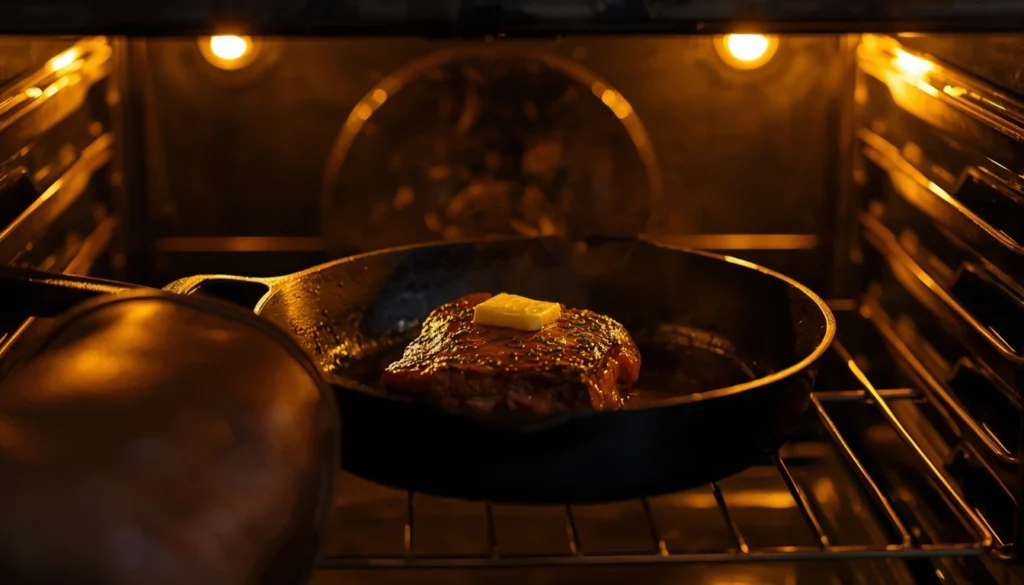
Both pans can go in the oven, but neither should go in the dishwasher. Both can move from stovetop to oven, which makes them useful for searing a steak and then finishing it in the heat.
Skip the dishwasher. Harsh detergent can strip seasoning, and a pan left wet can rust. Hand wash, dry right away, and rub on a light coat of oil.
How Do You Care for Cast Iron and Carbon Steel?
Care for both pans comes down to four habits:
- Wash by hand. Use a gentle brush or sponge and a little mild soap. Skip abrasive pads.
- Dry right away. A pan left wet can rust.
- Oil lightly. A thin layer after drying helps maintain the seasoning.
- Go easy with metal utensils. They can scratch the seasoning on carbon steel.
Carbon steel can rust and corrode just like cast iron, so don’t skip the drying step on either one. For more on cast iron specifically, see how to clean cast iron and maintain it.
Cast Iron vs Carbon Steel: Which Should You Pick?
For most home cooks, the choice comes down to weight and heat behavior. Here’s the quick rule.
Pick cast iron if you:
- Want a pan that holds heat for searing and stove-to-oven cooking
- Bake dishes like cornbread, pizza, or pies in a skillet
- Don’t mind a heavy pan
Pick carbon steel if you:
- Want a lighter pan that’s easier to lift, flip, and toss
- Cook quick, high-heat dishes like stir-fries and sauteing
- Like a pan that responds quickly when you change the heat
That said, the better pan is the one that fits the cook and the task, not the one with the louder marketing. We judge cookware by ergonomics, thermal behavior, how reactive the material is, and whether the maintenance is realistic for the person using it.
If you cook on induction, our guide to the best cast iron cookware for induction cooktops covers what to check before you buy.
FAQs: Cast Iron vs Carbon Steel
Does It Really Matter Whether You Cook in Cast Iron or Carbon Steel?
It matters mainly for how the pan handles, not for whether it can do the job. Both can often be used for the same dishes, but cast iron is heavier and holds heat longer, while carbon steel is lighter and reacts faster. For most home cooks, weight and heat response should decide it.
Does Food Cook Faster in Cast Iron or Carbon Steel?
Carbon steel gets hot faster, so you can start cooking sooner. Once both pans are at temperature, the difference is mostly about how quickly the pan reacts when you change the heat. Cast iron takes longer to heat, but it holds that heat well.
Do Cast Iron and Carbon Steel Leach Harmful Materials?
Both pans are mostly iron, and iron is the main thing that transfers from the pan into food. The amount depends on how acidic and moist the food is and how long it cooks. If you have a condition that affects iron levels, such as hemochromatosis, ask your doctor before relying on iron cookware. We cover cast iron and acidic foods separately.
How Much Heavier Is Cast Iron Than Carbon Steel?
A 12-inch cast iron skillet weighs about 8 pounds, roughly double a carbon steel pan of the same size at about 4 pounds. Exact weights vary by brand and size. Carbon steel is easier to lift, flip, and toss.
Are Cast Iron and Carbon Steel Pans Nonstick?
Neither pan is nonstick on its own, but seasoning helps both resist sticking. Even a well-seasoned pan still needs preheating and enough fat. Here’s how to season cast iron properly.
Can Cast Iron and Carbon Steel Go in the Oven?
Yes, both can go from the stovetop to the oven. That makes either pan useful for searing a steak and finishing it in the oven.
Are Cast Iron and Carbon Steel Dishwasher Safe?
No, neither should go in the dishwasher. Harsh detergent can strip the seasoning, and a pan left wet can rust. Hand wash, dry right away, and rub on a light coat of oil.
Do Cast Iron and Carbon Steel Pans Rust?
They can, because both are iron-based. Carbon steel can rust and corrode just like cast iron, so dry either pan right after washing and oil it lightly. Good seasoning and quick drying are the best protection.
The real takeaway: pick cast iron for steady, heavy-duty heat, and carbon steel for light, quick response.