
Key Takeaways:
- Most cast iron works on induction because it’s magnetic. That includes enameled pieces.
- The base matters most. Look for a flat, smooth base, and match the pan to your burner size.
- Cast iron can scratch glass if the base is rough or you drag it, so lift it and set it down.
- Preheat slowly on low heat. Weight alone doesn’t guarantee even heat.
- Bare or enameled is a care choice, not a compatibility issue.
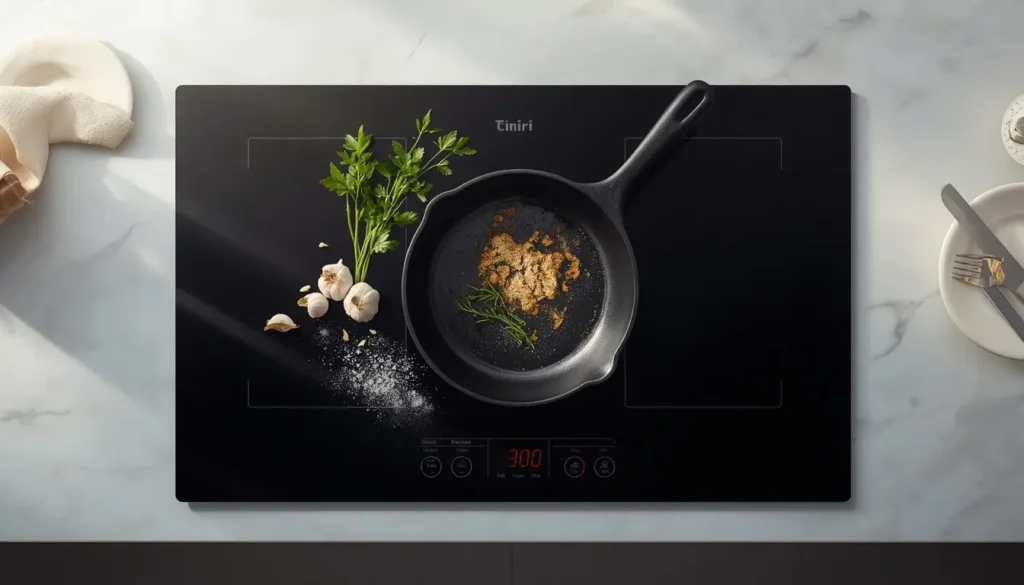
If you’re shopping for the best cast iron cookware for induction cooktops, the short answer is that most cast iron works, as long as the base is flat and smooth. Induction heats the pan itself instead of the burner, and cast iron is magnetic, so it’s a natural match. Induction also moves energy into the pan at about 85% efficiency. That is roughly three times more efficient than gas.
I learned the importance of a flat base by accident. When I was new to induction, stainless steel was my go-to, and cast iron never crossed my mind. Then the pans available to me turned out to be slightly bent and wouldn’t sit flat on the cooktop. I was frying dumplings and needed the oil at an even temperature across the whole pan, so I told my supervisor. He suggested cast iron.
It worked, and the results were great. Here’s what to check before you buy. If you already own a pan and just need technique, the cast iron how-to covers that.
Does Cast Iron Work on Induction Cooktops?
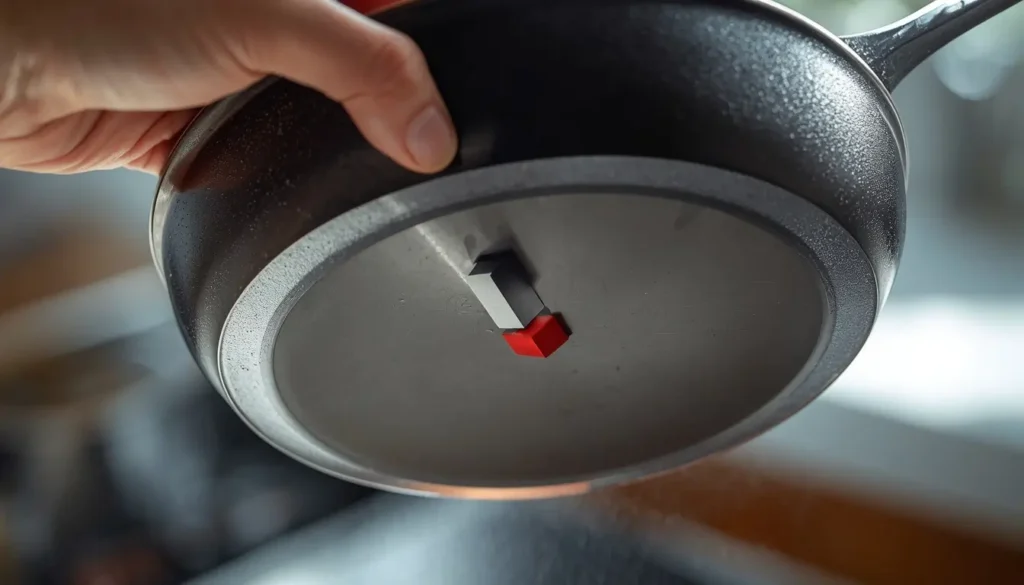
Yes, cast iron works on induction cooktops because it’s ferromagnetic. This means the cooktop’s magnetic field can heat the pan directly. That includes both bare and enameled pieces.
The catch is that the cooktop has to recognize the pan and some cookware has only part of its base made of magnetic material. So when the base is mostly non-magnetic, the cooktop might not switch on at all. A quick test is to hold a magnet to the bottom. If it clings firmly, the pan should work. If you’re future-proofing a purchase for a later move to induction, run that check now.
Cast iron passes this test easily. The bigger question is the shape and finish of the base. Appliance makers such as KitchenAid note that ideal induction cookware has a flat bottom and medium-to-heavy thickness.
What Should You Look for in Cast Iron Cookware for Induction Cooktops?
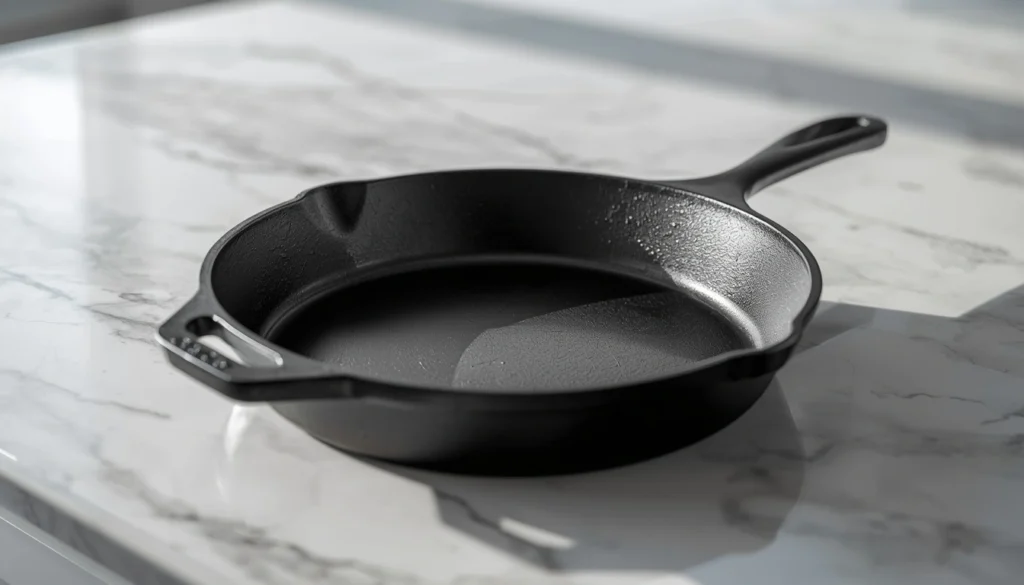
Look for a flat, smooth base, a pan size that matches your burner, and a weight you can lift comfortably. For most home cooks, those three checks matter more than brand or price. The right pan comes down to your cooktop, your cooking, and what you can handle with food in it.
A Flat, Smooth Base
The base is the first thing to check, and my own experience backs that up. The bent pans I started with didn’t sit flat, and I knew that would be an issue for even heating.
Set the pan on a flat counter and see whether it rocks. Run your hand across the bottom and feel for rough or pitted spots. Appliancemakers warn that rough finishes may scratch the cooktop. Some makers say a pan doesn’t need full contact with the burner to heat. But a pan that rocks is still a poor starting point for even heating.
Pan Size vs. Burner Size
Pick a pan whose base is close to the width of the burner. If the pan is too small, some induction cooktops won’t recognize it and won’t heat. If it’s much bigger, the center runs hotter than the edges. A big skillet on a small burner runs hot in the center and cooler at the edges.
Weight
A standard 12-inch cast iron skillet weighs about 8 pounds, compared with about 4.7 pounds for a 12-inch stainless fry pan. I worried about the weight when I made the switch, but it was fine for everyday frying.
Weight is worth checking if you flip, toss, or move pans a lot. A pan you can lift comfortably is also a pan you’re less likely to drag across the glass.
What weight doesn’t buy you is even heat. Heavy cookware doesn’t always distribute heat evenly. Poor thermal conductivity causes severe hotspots regardless of cookware weight. How you preheat matters, and that’s covered below.
Is Enameled Cast Iron Better for Induction?
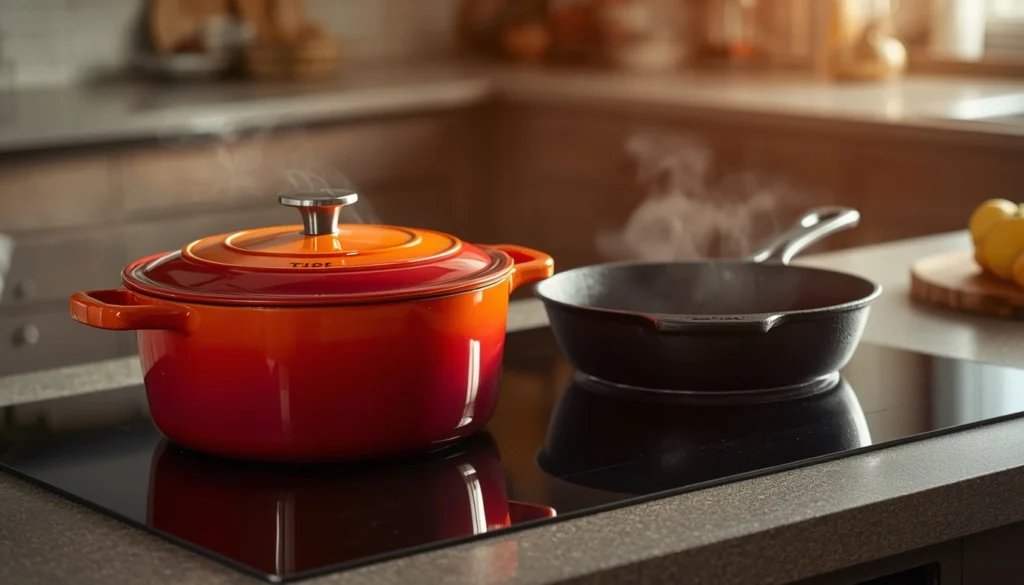
Enameled cast iron is just as compatible with induction as bare cast iron, because the iron underneath is what the cooktop heats. The enamel coating doesn’t block that.
The real trade-off is care. Bare cast iron needs seasoning. Enameled pieces don’t, though the coating can chip if you knock it. Either way, check the base before you buy. If you’re deciding between the two, there’s a full side-by-side comparison of enameled cast iron and bare iron on its own page. The short version for induction is that an enameled piece is still cast iron through and through, and just as magnetic.
Best Cast Iron Cookware for Induction Cooktops by Type
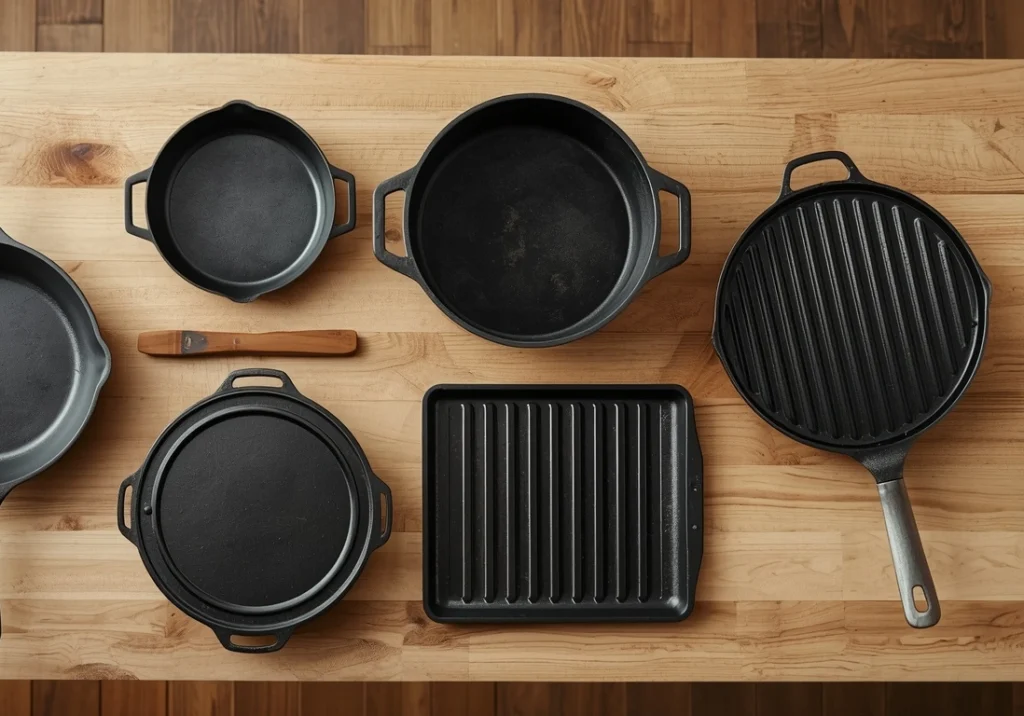
No single pan wins for everyone, so match the type to how you cook. Individual specialty pieces typically run $40 to $150, so it pays to get the base right the first time. For brand comparisons, see cast iron brands.
Skillets
For most home cooks, a 10-inch or 12-inch skillet is the everyday workhorse. Let your burner decide the size. Smaller burners usually suit a 10-inch pan better, and a 12-inch pan wants a larger burner or rotating the pan a little during preheating.
A skillet is where the flatness of the base matters most. This is because frying depends on oil that’s at the same temperature across the whole surface. That’s exactly what the bent pans couldn’t give me.
Dutch Ovens
Dutch ovens are heavy, and the base still needs to be flat and smooth. Many are enameled, making them a common pick on induction. For specific recommendations, see our guide to induction Dutch ovens.
Griddles and Grill Pans
Check the width first. If the pan is much wider than the burner under it, expect hotter centers and cooler edges, the same issue as an oversized skillet. For ridged grill pans, also check the underside. The cooking surface can be ridged, but the base should still be flat and smooth.
Will Cast Iron Scratch Your Induction Cooktop?
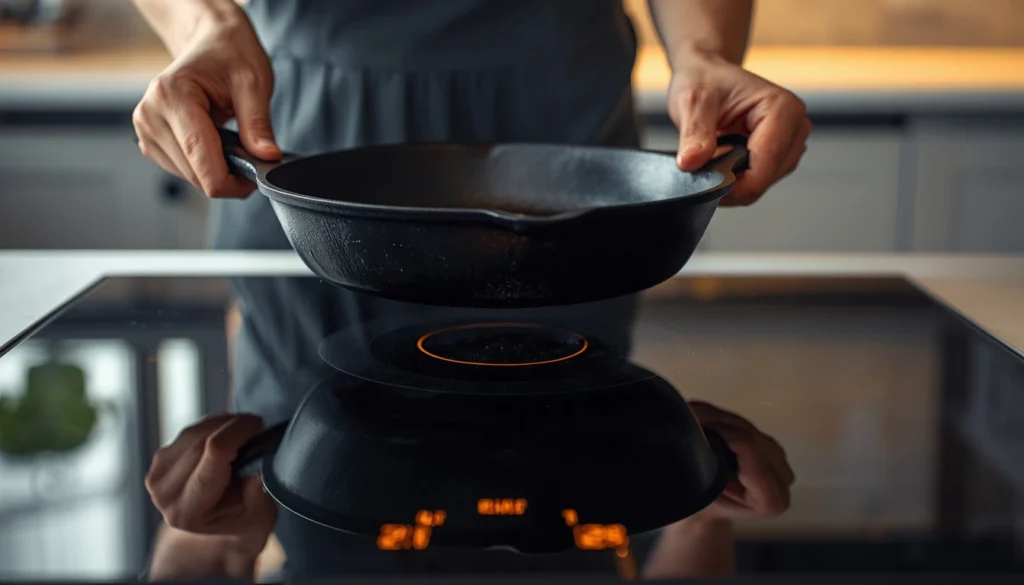
It can, mainly if the base is rough, dirty, or dragged across the glass. Cast iron is heavy, and Tom’s Guide warns that the weight raises the chance of deep scratches when a pan is dragged. Baked-on residue on the base makes scratching easier. So wipe the bottom clean before it goes on the cooktop.
I was wary of scratching the glass, so I never pushed or dragged the pan while it was on the cooktop. If I wanted to move it, I lifted it and set it down. Some makers say their bases are cast smooth and shouldn’t scratch. But a rough, dirty, or dragged pan is a different story.
For extra protection, some cooks add a silicone handle cover or a protective mat made for induction. Check your cooktop’s manual first. Mats made for induction aren’t always safe on standard electric glass tops. For more, see how to prevent scratches on induction glass.
How Do You Avoid Hot Spots With Cast Iron on Induction?
Preheat slowly on low heat, use a burner that matches the pan, and rotate the pan during preheating if it overhangs. Induction heats fast, but a thick cast iron base needs time to spread that heat across the whole pan. Lodge recommends preheating slowly with oil instead of starting on high.
For me, the one adjustment was patience. It took a little longer to reach my target temperature, and after that the pan held an even temperature for frying.
If your pan is bigger than the burner, rotate it every minute or two during preheating so the outer metal gets a turn. Most cooks need somewhere between one day and one week to adjust their preheating habits. And let a hot pan cool before it meets water, since a screaming-hot skillet dunked in cold water can warp or crack.
Quick Buying Checklist
Here’s what to check before you buy:
| What to Check | What to Look For |
|---|---|
| Magnetic base | A magnet that clings firmly to the bottom |
| Base shape | Flat, doesn’t rock on a counter |
| Surface | Smooth, with no rough or pitted spots |
| Size | Base close to the width of your burner |
| Weight | A pan you can lift comfortably with food in it |
| Type | Bare (needs seasoning) or enameled (no seasoning, handle the coating with care) |
| Budget | Individual specialty pieces typically $40 to $150 |
FAQs Best Cast Iron Cookware for Induction Cooktops
Can You Use Cast Iron on an Induction Cooktop?
Yes, cast iron works on induction cooktops because it’s magnetic, so the cooktop can heat the pan directly. The thing to check is the base. A flat, smooth bottom gives you the best contact and the lowest risk of scratching the glass. If you want help with technique, see our guide to cast iron on induction.
Do You Need Special Cast Iron for Induction?
No, you don’t need a special “induction” cast iron pan. Any cast iron with a magnetic base will work. What matters is the shape and finish of the bottom, plus a pan size that suits your burner. A quick test is to hold a magnet to the base. If it clings firmly, the pan should heat.
Is Enameled Cast Iron Good for Induction Cooktops?
Yes, enameled cast iron works on induction because the iron underneath is what heats. The enamel doesn’t block it. The trade-off is care: enameled pieces don’t need seasoning, but the coating can chip if you knock it. Either way, check the base before you buy.
Will a Cast Iron Pan Scratch an Induction Cooktop?
It can, especially if the base is rough or dirty, or if you drag the pan across the glass. Cast iron is heavy, so lift it and set it down instead of sliding it. Wipe the base clean before each use. For more, see how to prevent scratches.
Why Is My Cast Iron Heating Unevenly on Induction?
The most common causes are preheating too fast, a pan that’s much bigger than the burner, or a base that doesn’t sit flat. Start on low heat and give the pan time to spread the heat. If the pan overhangs the burner, rotate it every minute or two while it preheats. Heavy cookware doesn’t automatically heat evenly, so the preheat habit matters as much as the pan.
The Takeaway Before You Buy
For most home cooks, the best cast iron cookware for induction cooktops is a pan with a flat, smooth base that fits your burner and weighs what you can comfortably lift. Bare or enameled is a care preference, not a compatibility issue. Get one pan, learn how it heats, and add pieces from there.