
Key Takeaways
- Cooking a steak in a cast iron skillet is simple when you preheat the pan, dry the steak, and season with salt and pepper.
- Sear each side for 2 to 4 minutes, then use a thermometer to hit the doneness you want.
- Searing builds crust and flavor. Juiciness comes from not overcooking the steak and from letting it rest.
- Final temperatures run from 120-130°F for rare to 155°F and up for well done. The USDA minimum for beef steaks is 145°F with a 3-minute rest.
- Clean the skillet while it’s warm, dry it fully, and add a thin coat of oil.
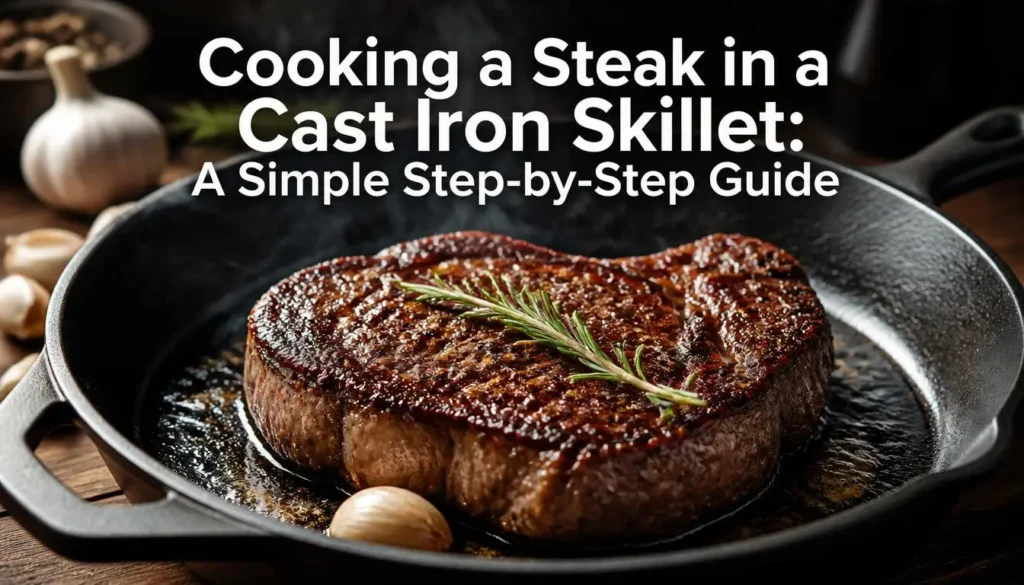
Cooking a steak in a cast iron skillet is easier than most people think. Steak cooks quickly, it needs very little seasoning, and cast iron holds heat well. The only real worry is technique, and that comes down to a hot pan, a dry steak, and knowing how done you want it.
I’ve cooked professionally for more than 20 years, and my view hasn’t changed: steak is one of the easiest meats to cook. Once you know your skillet, the rest is simple.
Is Cooking a Steak in a Cast Iron Skillet Hard?
No. Cooking a steak in a cast iron skillet is one of the simpler jobs you can do on a stove, as long as you know how your pan behaves.
Steak cooks fast, and the seasoning couldn’t be easier. That leaves technique as the only real worry. If you know how to use a cast iron skillet, steak is straightforward, because the pan does much of the work by holding heat.
That said, a few details separate a deep brown steak from a gray, stuck-on one. Pan temperature, a dry surface, and a thermometer matter most.
What You Need Before You Start
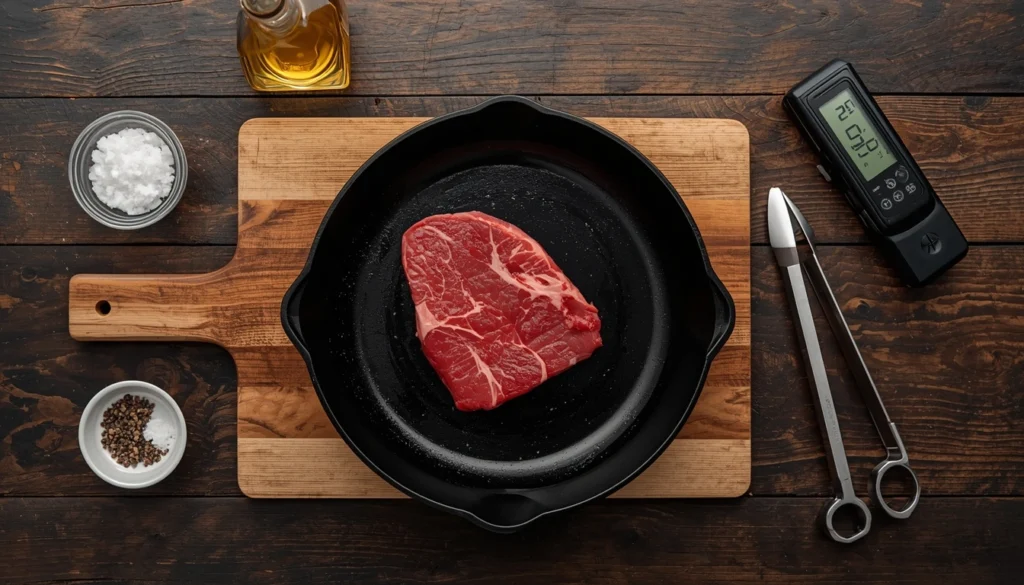
You don’t need much equipment. Here’s what to have ready:
- A 10-inch or 12-inch skillet. A 10-inch suits one or two smaller steaks. A 12-inch gives two large steaks room, and it’s the size I’d pick for most home cooks. If you haven’t built up the surface yet, our cast iron seasoning guide covers it.
- A steak 1 to 1.5 inches thick. Ribeye, New York strip, and sirloin all work well.
- Coarse salt and black pepper.
- A high-smoke-point oil. Avocado oil, grapeseed oil, and ghee are good choices.
- Tongs and an instant-read thermometer.
How Should You Season Steak for Cast Iron?
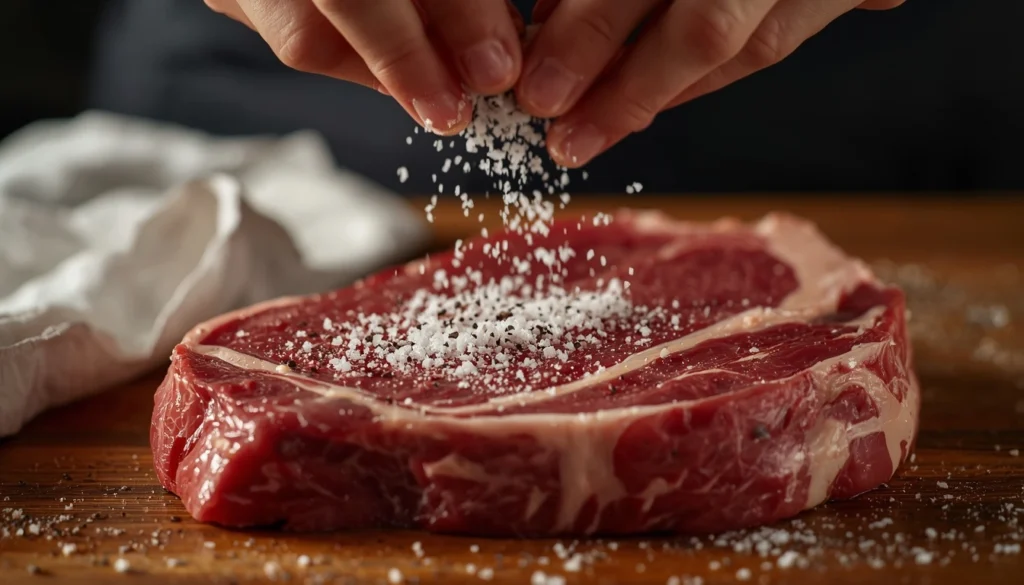
Season steak with coarse salt and black pepper on both sides. Nothing else is needed.
In my experience, salt and pepper before cooking is the simplest seasoning. Cooking it in a skillet also imparts flavor, due to the Maillard reaction. This the deep browning of the crust and savory taste that comes from cooking it in a hot cast iron skillet. It’s enough flavor for most steaks. Any added flavouring is usually after the steak is cooked. Some may want a steak sauce, wheather it was made from scratch or a bottled brand.
The timing matters more than most people expect. Salt at least 40 minutes before cooking, or salt right before the steak goes in the pan. Salting 5 to 30 minutes ahead is the worst window.
Whichever you choose, pat the steak dry right before it hits the pan. A dry surface browns faster. Serious Eats’ testing on salt timing backs this up.
How Hot Should the Skillet Be for Steak?
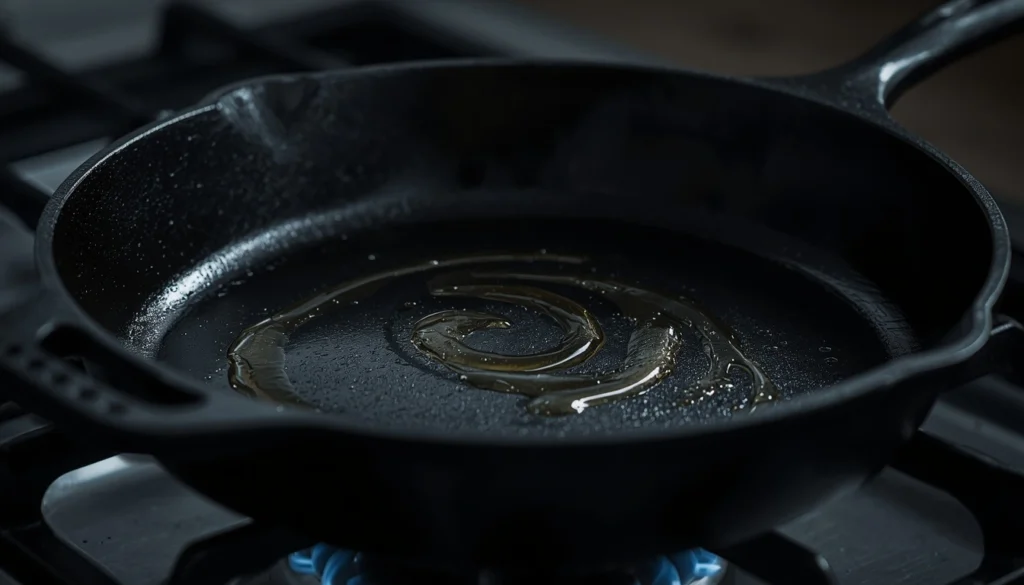
Preheat the skillet empty over medium-high heat for 5 to 10 minutes, until a drop of water sizzles and disappears right away.
Cast iron is slow to heat, but it holds that heat once it gets there. That’s why a cold steak doesn’t drop the pan’s temperature as much as it would in a thin pan. If you want the science behind how pans move heat, our guide to heat conductivity explains it. Add about 1 tablespoon of oil just before the steak goes in, and swirl it to coat the pan.
A well-seasoned, properly preheated skillet releases steak much more easily. It won’t act like a nonstick pan, though, and a cold pan or a wet steak will still stick. The seasoning builds with use, and Lodge says one of the easiest ways to care for cast iron is to use it often.
Heat is the part people underestimate. One service comes to mind. Orders for jerked Cornish hens were backing up on a commercial grill because the grill was under-heating. Without enough surface heat, the skin stuck and the birds tore apart when we turned them. Setting a heavy skillet over the hens concentrated the heat, and the skin browned without sticking. A steak behaves the same way. If the surface isn’t hot enough, it grabs the pan instead of releasing.
Step-by-Step: Cooking a Steak in a Cast Iron Skillet
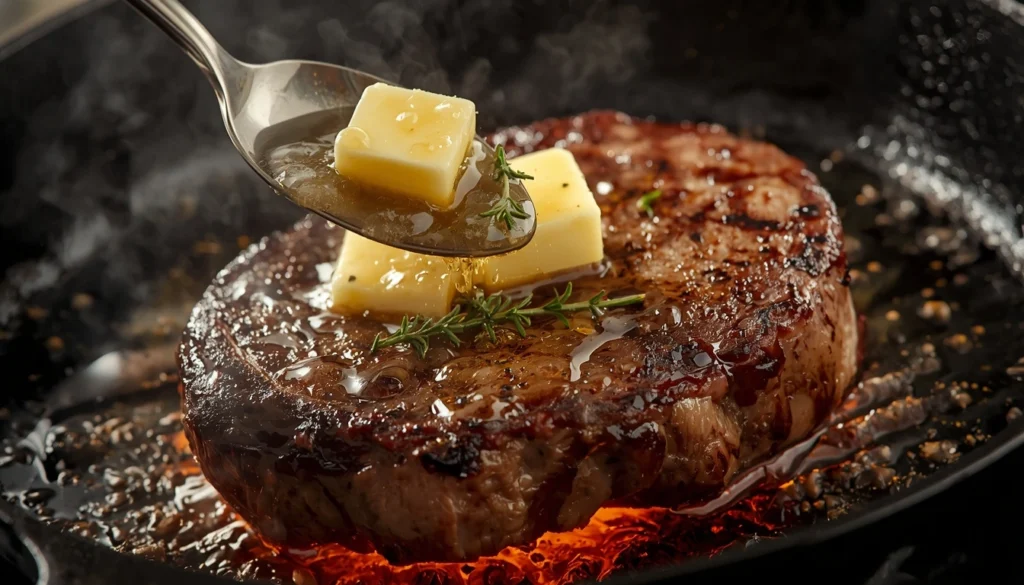
Here’s the full method from fridge to plate:
- Take the steak out of the fridge 30 to 60 minutes before cooking.
- Pat it dry with paper towels, then season both sides with coarse salt and black pepper if you haven’t already.
- Preheat the skillet over medium-high heat for 5 to 10 minutes.
- Add about 1 tablespoon of oil and swirl to coat.
- Lay the steak in the pan, away from you. You should hear a loud sizzle. Press down gently so the whole surface touches the iron.
- Leave it alone for 2 to 4 minutes. Moving it early breaks up the crust.
- Flip and sear the other side for 2 to 4 minutes. Searing both sides is what gives the steak its appetizing color.
- Baste if you like. Lower the heat, add a pat of butter, a crushed garlic clove, and a sprig of thyme, and spoon the butter over the steak.
- Check the temperature. For thicker steaks, move the skillet to a preheated oven to finish.
- Pull the steak a few degrees early and let it rest.
Does Searing Seal in the Juices?
No. Searing builds crust and flavor, but it doesn’t seal juices inside the steak.
The deep brown crust and savory taste come from the Maillard reaction. That’s reason enough to sear, and cast iron does it well because it stays hot when the steak lands.
Many cooks learn that searing locks juices in, but tests don’t support it. The Cook’s Illustrated tests found that a steak weighs about the same whether you sear it first or warm it gently and sear it at the end.
So what keeps a cast iron steak juicy? A very hot pan builds the crust quickly, so the inside doesn’t have to cook long. Add a thermometer and a short rest, and you get a juicy steak without relying on a myth.
How Do You Choose Your Steak Doneness?
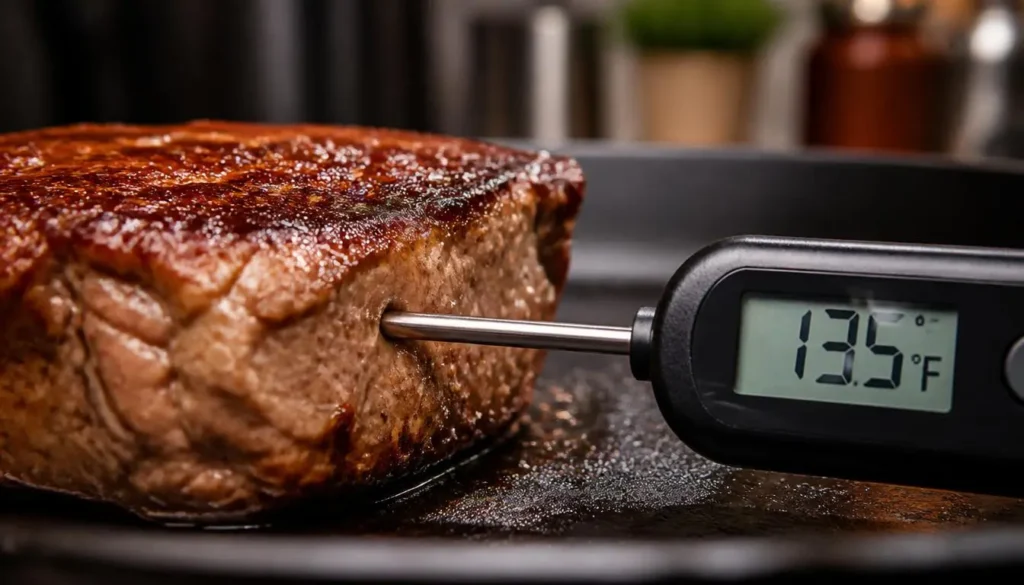
Choose your doneness by internal temperature, not by color. The only real decision is rare, medium, medium to well, or well done.
| Doneness | Final Temperature |
|---|---|
| Rare | 120-130°F |
| Medium Rare | 130-135°F |
| Medium | 135-140°F |
| Medium Well | 145-155°F |
| Well Done | 155°F and up |
Pull the steak a few degrees early, because it keeps cooking while it rests. The temperatures above are final temperatures from this ThermoWorks chart.
For food safety, the USDA’s minimum for beef steaks is 145°F, followed by a rest of at least 3 minutes. Many cooks choose a lower doneness, and that’s a personal call. If you want to follow the least exactly, measure with a thermometer and use the USDA guidance.
How Long Should You Rest Steak?
Rest steak for at least 3 minutes, and 5 to 10 minutes gives better results for most steaks.
Move the steak to a board or plate and leave it uncovered or loosely tented. If you cut right away, juice runs out onto the board instead of staying in the meat.
Slice on a board that’s easy on your knife. Wood, composite, and plastic all work for everyday use. I recommend a separate color-coded board for raw meat, so the board you slice cooked steak on never held the raw steak. Our guide to cutting board material compares the options.
How Do You Clean a Cast Iron Skillet After Steak?
Clean the skillet while it’s still warm, using hot water and a brush or chainmail scrubber.
Scrape off stuck bits first. A small amount of dish soap is fine on a well-established skillet. Then dry it completely, set it on low heat for a few minutes to drive off moisture, and wipe on a thin layer of oil. Keeping it dry and lightly oiled helps prevent rust. For the full routine, see how to clean and maintain cast iron.
Common Steak Mistakes in Cast Iron
Most problems come from the same few habits:
- Cooking a wet steak. Surface moisture turns to steam and gives you a pale crust. Pat it dry.
- Starting with a cold pan. The steak sticks and turns gray before it browns.
- Crowding the skillet. Too many steaks lower the pan’s temperature. A 12-inch skillet handles two large steaks comfortably.
- Moving the steak too soon. Give each side 2 to 4 minutes before you flip.
- Guessing doneness. A thermometer is more reliable than cutting into the steak.
- Slicing right away. A short rest keeps more juice in the meat.
FAQS Cooking a Steak in a Cast Iron Skillet
How Long Do You Cook a Steak in a Cast Iron Skillet?
Sear each side for 2 to 4 minutes over medium-high heat, then check the internal temperature. A 1-inch steak often reaches medium rare in that time, while a thicker steak may need a few more minutes or a short finish in the oven. A thermometer is more reliable than the clock, so use the doneness table above as your guide.
Do You Need Oil to Cook Steak in Cast Iron?
Yes, add about 1 tablespoon of a high-smoke-point oil to the hot pan just before the steak goes in. Avocado oil, grapeseed oil, and ghee all handle the heat well. The oil helps the steak make full contact with the pan and release more easily.
Why Does My Steak Stick to the Cast Iron Skillet?
Steak usually sticks because the pan wasn’t hot enough or the steak was wet. Preheat the skillet for 5 to 10 minutes, pat the steak dry, and leave it alone for the first 2 to 4 minutes. A steak that’s ready to flip will release from the pan on its own.
Should You Let Steak Come to Room Temperature First?
Take the steak out of the fridge 30 to 60 minutes before cooking. This takes the chill off so the steak cooks a bit more evenly. Pat it dry before it goes in the pan, since surface moisture works against the crust.
What Is the Best Cut of Steak for Cast Iron?
Ribeye, New York strip, and sirloin are good choices for most home cooks. Look for a steak about 1 to 1.5 inches thick. Thinner steaks overcook before they brown well, so a thicker cut gives you more room to build a crust.
Can You Use Soap to Clean a Cast Iron Skillet After Cooking Steak?
A small amount of dish soap is fine on a well-established skillet. Clean it while it’s still warm, dry it completely, and wipe on a thin coat of oil. Our guide to clean and maintain cast iron covers the full routine.
Should You Cover Steak While It Rests?
If you cover it, tent it loosely. Leave the steak uncovered or loosely tented for 5 to 10 minutes. Sealing it tightly can steam the crust and soften it.
The Real Takeaway
For most home cooks, cooking a steak in a cast iron skillet comes down to a short list. It is as follows:
Season with salt and pepper, preheat the pan well, sear both sides, check the temperature, and rest the steak. Pick your doneness and let the skillet do the work.
If you’re still choosing a pan, start with our best searing skillets guide.
Step 5 Review
| Check | Result |
|---|---|
| TL;DR at top, 3 to 5 bullets | Pass (5) |
| Factual claims backed by approved sources | Pass |
| Citations are inline markdown links with 1-3 word anchors, no reference list | Pass |
| Internal links in the same format | Pass (5) |
| Personal experience from Experience Notes | Pass: your steak opinions, the 20+ years, the color-coded board advice, and the Cornish hen story |
| Business facts match Service Details | N/A, none used |
| Banned words, competitors, regulated claims | Pass: no em dashes, no “indestructible,” no “never rust,” and no unconditional nonstick claim |
| 60 to 70% of H2s are capsules | Pass (7 of 11, 64%) |
| Keyword in title, first paragraph, and two H2s | Pass |
| Voice matches your tone | Pass |
| Helps someone with this problem | Pass |