
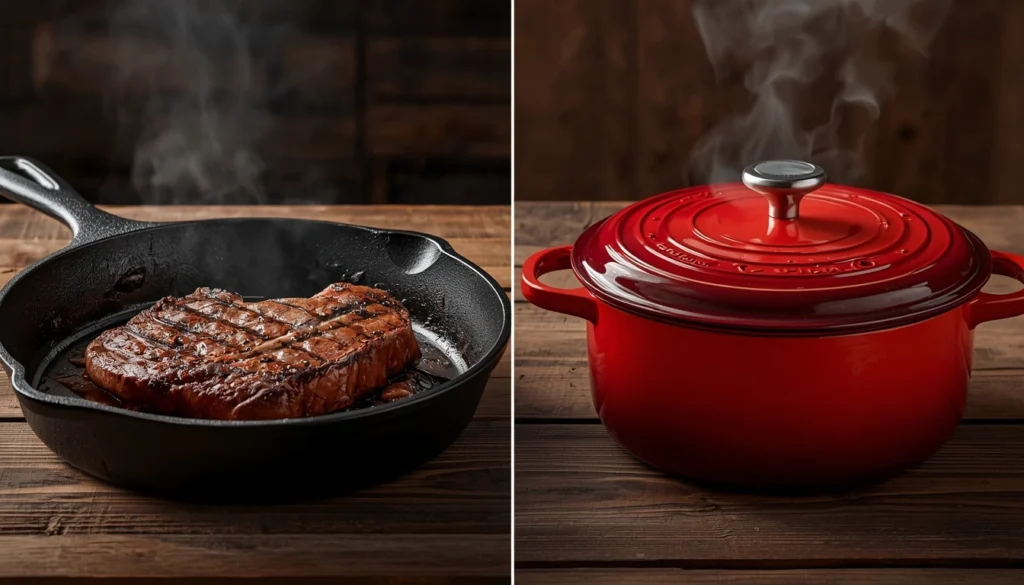
Walking through the cookware aisle can feel overwhelming. You see rugged, black cast iron skillets that look timeless. Then you see a rainbow of glossy, elegant enameled cast iron pieces that offer polished elegance right from the box. This brings up a critical question for every cook: which is better, cast iron or enameled cast iron?
The truth is, there isn’t one best answer, but there is a best choice for you. This decision impacts your cooking, your cleaning, and even the flavor of your food. In this guide, we’ll break down the cast iron versus enameled debate. We’ll explore each type so you can confidently choose the perfect cast iron cookware for your kitchen.
Key Takeaways
- No Universal Winner: Both cast iron and enameled cast iron excel in different areas
- Traditional Cast Iron: More affordable, naturally non-stick when seasoned, requires maintenance, best for high-heat cooking
- Enameled Cast Iron: Low maintenance, perfect for acidic foods, easier for beginners, higher price point
- Durability: Raw cast iron lasts generations; enamel can chip but still performs well
- Best Approach: Consider owning both types for different cooking needs
- Choose Based On: Your cooking style, maintenance willingness, budget, and food preferences
Understanding Cast Iron and Enameled Cast Iron Cookware
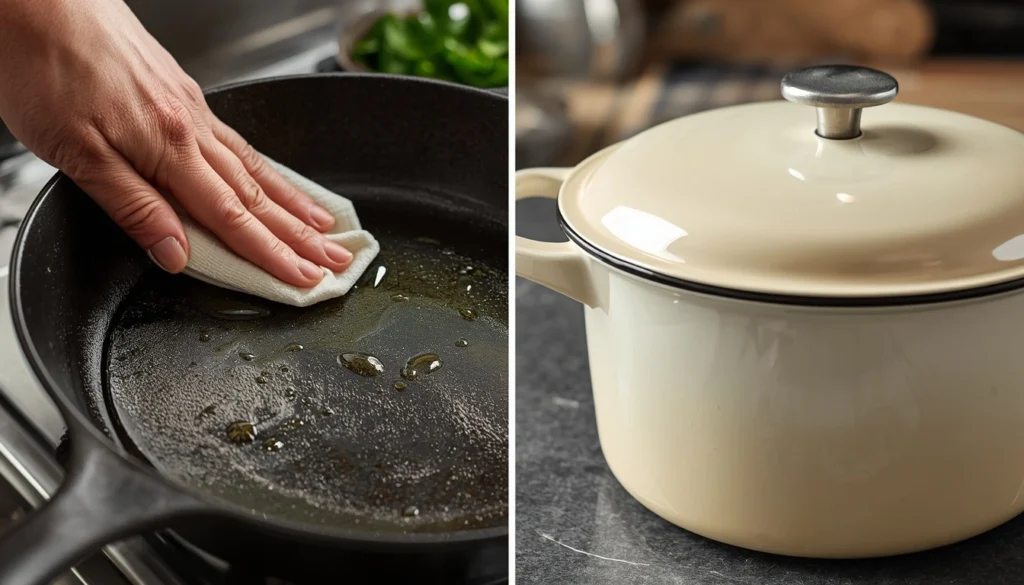
Before we compare them, let’s understand what each cookware is. They share a core of heavy, heat-retaining iron, but their surfaces are worlds apart. This basic difference defines their use in the kitchen.
What is Traditional Cast Iron?
A traditional cast iron pan is a simple piece of kitchen history. It’s made by pouring molten iron into a sand mold, creating a single, solid piece of metal. This process is how a cast iron skillet is cast, a cornerstone of any cast iron cookware collection.
The magic of this iron skillet comes from its seasoning. This is a layer of baked-on oil that protects the iron and creates a natural, easy-release finish. The heritage of classic cast iron stretches back centuries. There are many benefits of cooking with cast iron. It is a true kitchen workhorse. Many cooks love their old cast iron just as much as a new pan.
What is Enameled Cast Iron?
Enameled cast iron starts with the same raw iron body. But it’s coated with a layer of enamel, which is powdered glass fused to the surface at high heat. This enameling process creates a smooth, non-porous, and vibrant vitreous enamel coating. Proper enamel coated cookware care ensures it lasts for years.
This enamel barrier protects the iron underneath from rust and from reacting with food. Famous brands like Le Creuset and Staub have made these pieces iconic. They offer the heat benefits of a cast iron pot without the need for seasoning.
Key Differences Between Cast Iron and Enameled Cast Iron
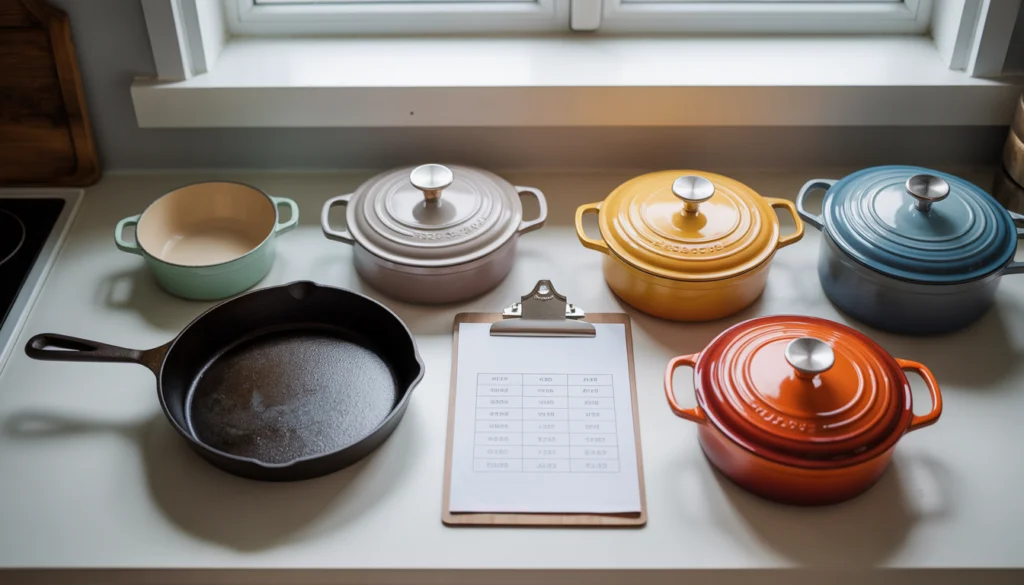
While they share a heart of iron, we know their core is the same, both have key differences. Understanding these is the first step in deciding which cast iron pan you should buy.
| Feature | Traditional Cast Iron | Enameled Cast Iron |
|---|---|---|
| Surface | Porous cast iron surface with a baked-on oil layer. | Smooth, non-porous glass (enamel) coating. |
| Maintenance | Requires regular seasoning; must be kept dry to prevent rust. | No seasoning needed; easy to wash with soap. |
| Reactivity | Reacts with acidic ingredients (tomatoes, wine). | Non-reactive; safe for all ingredients. |
| Appearance | Typically matte or satin black style. | Available in a wide variety of bright colors. |
| Price Point | Very affordable ($20-$60 for a skillet). | More expensive investment ($50-$400+). |
Cast Iron vs Enameled Cast Iron
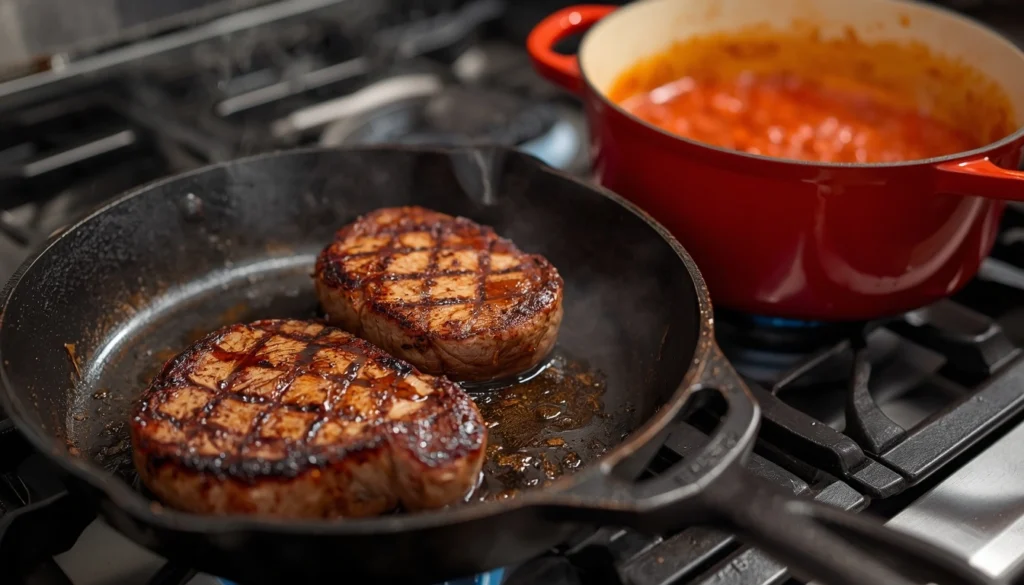
How do these differences feel on the stovetop? Let’s look at their performance in heat, versatility, and non-stick capabilities.
Heat Retention and Distribution
Both regular cast iron and its enameled brethren are champions of heat retention. Once hot, they stay hot. This makes them ideal for tasks that need steady, even heat, because the heavy iron heats so well.
Both provide excellent heat distribution, preventing hot spots. But, pure cast iron is often favored as one of the best materials for high-heat cooking. It’s my go-to for searing a steak, where intense heat won’t harm its surface.
Cooking Versatility
Here, the choice gets more specific. Your cooking style will influence which one is better for you. With some foods, enameled cast iron will be a little more versatile.
- Searing Meat: For a perfect crust, traditional cast iron is the winner. Its surface creates an unmatched sear, making it the best pan for searing meat.
- Acidic Foods: This is where an enameled pan shines. The non-reactive enamel coating means you can simmer tomato sauces or braise with wine without worry. Using unfinished cast iron for this can lead to a metallic taste.
- Baking: For cornbread, the crust from a cast iron skillet is legendary. The seasoned surface gives a unique flavor and texture.
Non-Stick Properties
Many people seek out cast iron for its non-stick qualities. A well-seasoned cast iron skillet develops a slick surface that can rival modern coatings. With time, you can fry an egg with very little oil.
Enameled cast iron is stick-resistant. Food releases well from the enamel surface, but it doesn’t build up the same patina. You will generally need a bit more oil compared to a perfect iron skillet.
Maintenance and Care: Cast iron & Enameled Cast Iron
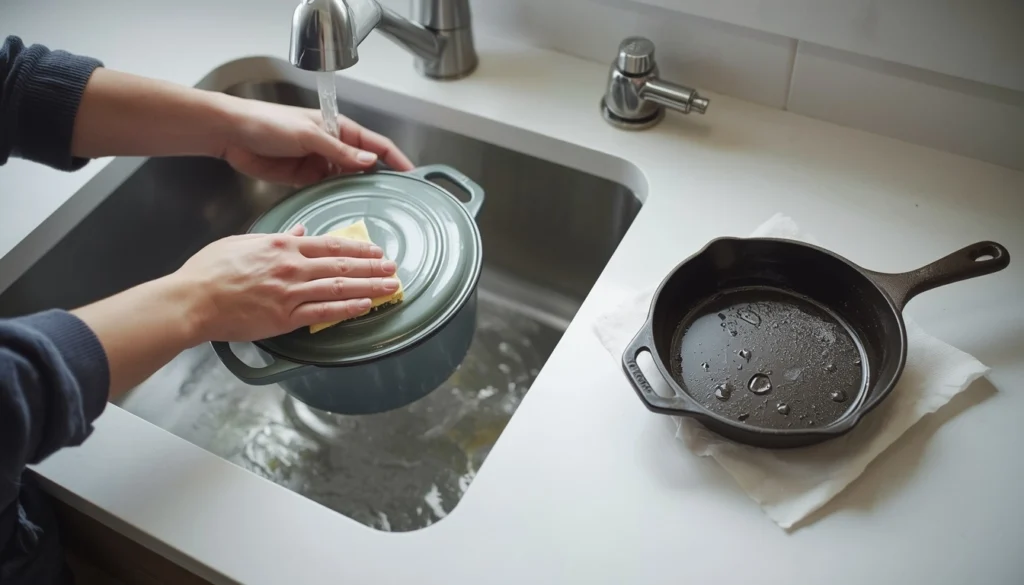
This is a huge factor in the “which is better, cast iron or enameled cast iron?” debate. Your willingness to do a little cookware care and maintenance will point you to your perfect pan.
Cleaning Traditional Cast Iron
Caring for standard cast iron is a ritual. You want to clean the pan while protecting its seasoning.
- Scrape and Rinse: Scrape out any food bits and rinse with hot water.
- The Soap Debate: A small amount of mild dish soap is fine for a well-seasoned pan. Many wonder can you use soap on cast iron, and the answer is yes, sparingly. Avoid harsh scrubbing with steel wool, which can damage the surface.
- Dry Immediately: This is the most critical step. Dry your cast iron pan thoroughly on a low burner to evaporate all moisture and prevent rust.
- Apply Oil: Wipe a thin layer of cooking oil onto the cast iron surface. This maintains the seasoning.
Cleaning Enameled Cast Iron
If that sounds like too much work, you’ll love enameled cookware. Its maintenance is far simpler.
You can wash enameled pans with soap and water like any other dish. For stubborn food, you can soak the pan or use a baking soda paste. The enamel finish is durable and easy to clean.
Seasoning Requirements
Uncoated cast iron requires an ongoing commitment to seasoning. Knowing how to season a cast iron pan properly is key. Each use strengthens its non-stick surface. A cast iron collection often includes pans of different ages and seasoning levels.
Enameled versions require absolutely no seasoning. The enamel coating—do not try to season it—is ready to use right out of the box. This is a huge advantage for beginners.
Durability and Longevity
With care, a cast iron pot is nearly indestructible. You can even learn how to remove rust from cast iron pans and restore them. Many families use a decades-old cast iron pan passed down through generations.
The enameled cousin is also durable, but the enamel can chip or crack if dropped. While small chips on the rim are cosmetic, a chip on the cooking surface is a bigger issue.
Pros and Cons: Cast iron vs Enameled cast iron
Let’s summarize everything into a clear list of pros and cons.
Traditional Cast Iron Advantages
- Naturally Non-Stick: A well-seasoned surface is slick.
- Extremely Durable: A “buy it for life” piece.
- Metal Utensil Safe: Use a metal spatula without fear.
- Affordable: A high-quality skillet from Lodge is a fantastic value.
- High Heat Champion: Perfect for searing.
- Improves With Age: The more you use it, the better it gets.
Traditional Cast Iron Disadvantages
- High Maintenance: Requires a consistent seasoning routine.
- Reactive to Acid: Not ideal for simmering tomato sauces.
- Heavy: Can be difficult to lift.
- Prone to Rust: Will rust if not cared for properly.
- Learning Curve: Takes time to master.
Enameled Cast Iron Advantages
- Low Maintenance: No seasoning required, easy to clean.
- Non-Reactive: Perfectly safe for cooking with acidic ingredients.
- Aesthetically Pleasing: Beautiful colors look great from stove to table.
- No Metallic Taste: The enamel prevents flavor transfer.
- Beginner-Friendly: Ready to use out of the box.
Enameled Cast Iron Disadvantages
- Expensive: A bigger investment than bare cast iron.
- Can Chip or Crack: The enamel coating is tough but not invincible.
- Less Non-Stick: Doesn’t develop the same slickness as seasoned cast iron.
- Avoid Metal Utensils: They can scratch or chip the enamel.
- Not for Extreme Heat: Generally not for campfires or broilers.
Interactive Cast Iron Comparison Tool
Select your cooking priority to see which type performs better
Traditional Cast Iron
$15 – $50Enameled Cast Iron
$50 – $400+Recommendation for Your Needs
Price Comparison: Which is Better Value?
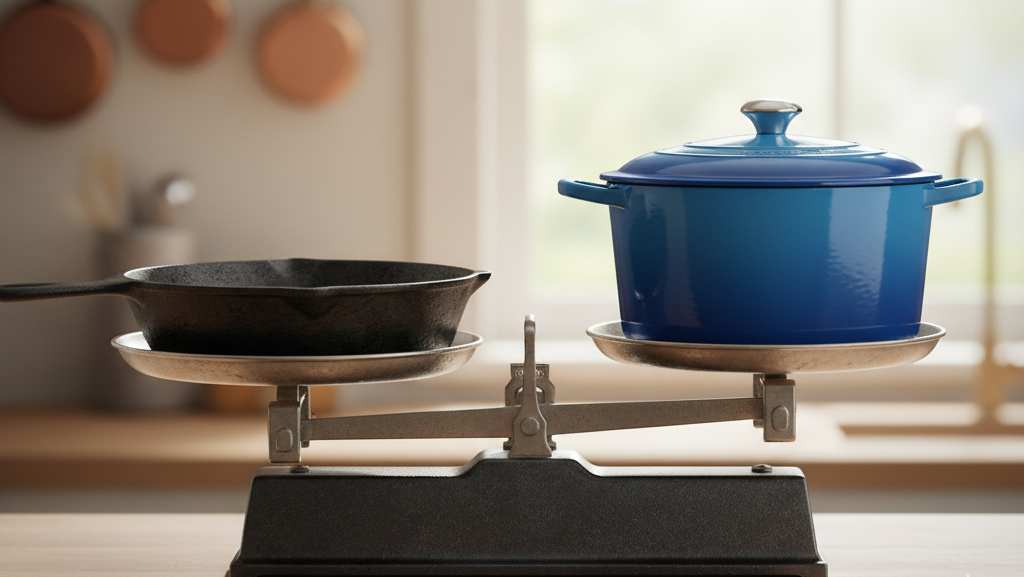
Value is more than the price tag. It’s about how long the pan lasts and how often you use it.
Cost of Traditional Cast Iron
You can buy a brand new 10-inch iron pan for $20 to $40. This makes it an excellent choice for budget-friendly cookware. Considering this cast iron can last for 100+ years, the value is unmatched.
Cost of Enameled Cast Iron
An enameled skillet or Dutch oven is a bigger investment. A good enameled Dutch oven can range from $60 to over $400. The complex enameling process adds to the cost.
Which Offers Better Return on Investment?
For pure longevity, classic cast iron offers a better ROI. However, if the maintenance means you won’t use it, the convenience of an enameled piece provides better value for your lifestyle. Many consider it a better investment than comparing cast iron vs. stainless steel.
Which is Better for Different Cooking Needs?
The best way to answer “which is better, cast iron or enameled cast iron?” is to match the pan to the task.
| Cooking Technique | The Winner Is… | Why It Wins |
|---|---|---|
| Searing Steaks | Traditional Cast Iron | Gets incredibly hot and creates a deep, even crust. |
| Slow Braising/Stews | Enameled Cast Iron | The non-reactive surface is perfect for long simmers with wine or tomatoes. |
| Baking Cornbread | Traditional Cast Iron | Creates a legendary crispy crust that can’t be replicated in other pans. |
| Simmering Sauces | Enameled Cast Iron | No risk of metallic taste or damage from acidic ingredients. |
| Deep Frying | Tie | Both iron pans offer excellent heat retention for stable oil temperature. |
Best for Beginners
For a new cook, enameled cast iron is often the better choice. It’s more forgiving and easy to clean. An enameled Dutch oven is a simple, one-pan solution for many recipes, making it a great piece of cookware for beginners.
Best for Experienced Cooks
Experienced cooks will appreciate both. Many have a collection that includes a cast iron skillet for searing and an enameled cast iron pot for braising.
Health and Safety Considerations
When it comes to your kitchen, safety is key. Let’s look at how both types of iron-containing cookware stack up.
Iron Leaching Benefits
Cooking in a traditional cast iron pan can leach small amounts of iron into your food. This can help enhance iron absorption and boost your dietary iron intake. For people with low iron levels, this can be a helpful benefit.
The enamel coating on its counterpart prevents this. The sealed surface means no significant amount of iron is transferred.
Chemical Safety
Both are great choices for cooks avoiding chemical coatings. They are free of PFOA and PTFE. The only minor concern is a badly chipped enamel surface where exposed iron could be an issue, though it’s mainly a durability concern.
Reactivity with Foods
As mentioned, bare cast iron is reactive. Cooking a long-simmering sauce can result in iron reacting with the food. The non-reactive enamel coating is why enameled cast iron is superior for any dish with high-acid ingredients. Some find that cookware materials affect food taste.
Final Verdict
So, which is better, cast iron or enameled cast iron? The final verdict comes down to you. Here’s a simple guide to help you choose.
Choose Traditional Cast Iron If…
- You love a perfect, high-heat sear on your steaks.
- Your budget is a primary concern, and you want incredible value.
- You enjoy the ritual of maintaining your cast iron collection.
- You want a pan that is nearly indestructible.
- You primarily cook non-acidic foods.
Choose Enameled Cast Iron If…
- You focus on low maintenance and easy cleanup.
- You frequently cook with acidic dishes like tomato sauce.
- Kitchen aesthetics are important to you.
- You’re a beginner cook who wants a forgiving pan.
- You want one versatile cast iron pot for everything.
Why Not Both?
The ultimate solution is learning how to build a versatile cookware collection. The perfect start is a 10 or 12-inch traditional cast iron skillet for searing and a 5 to 7-quart enameled cast iron Dutch oven for soups and braises. This gives you the best of both worlds.
FAQs About Cast Iron & Enameled Cast iron
Can you use metal utensils on enameled cast iron?
It is not recommended. Metal utensils can scratch or chip the enamel surface over time. It’s best to use wood, silicone, or nylon tools to protect your pan.
Is cast iron better than enameled cast iron for searing?
Yes, traditional cast iron is superior for searing. It can safely handle higher temperatures, and its seasoned surface creates a uniquely deep and even crust on meat.
Does enameled cast iron need to be seasoned?
No, it does not. The enamel coating is a non-porous, sealed surface that is ready to use immediately.
Which is heavier, cast iron or enameled cast iron?
They are both very heavy. An enameled piece may be slightly heavier than a bare cast iron piece of the same size, but the difference is small.
Can cast iron go in the dishwasher?
Traditional cast iron should NEVER go in the dishwasher. It will strip the seasoning and cause rust. Enameled cast iron is often labeled dishwasher-safe. But hand-washing is recommended to protect the enamel finish.
Is enameled cast iron worth the extra cost?
For many, yes. Do you value convenience, easy cleanup, and versatility? The higher price is a worthwhile investment in a low-maintenance kitchen workhorse.
How long does enameled cast iron last compared to regular cast iron?
With care, both can last a lifetime. But traditional cast iron has the edge in ultimate longevity, as it’s almost impossible to ruin permanently.
Can you fix chipped enamel on cast iron?
It is very difficult to safely repair chipped enamel on the interior cooking surface. It’s often safer to replace a pan with a badly chipped interior.
Expert Recommendations and Final Thoughts
Ready to buy? Here are some top picks.
Top Traditional Cast Iron Picks
- Best Skillet: Lodge 12-Inch Cast Iron Skillet – It’s the king of value.
- Best Budget Option: Any of the iron skillets from Lodge.
- Best Specialty Piece: A cast iron griddle for pancakes.
Top Enameled Cast Iron Picks
- Best Dutch Oven (Premium): Le Creuset 5.5-Quart Round Dutch Oven – An iconic investment. There are many fantastic Dutch ovens uses and brands to consider.
- Best Value Brand: Lodge makes excellent, affordable enameled cookware.
- Best Premium Investment (Alternative): Staub is another top-tier brand.
In the end, choosing versus cast iron or its enameled cousin is about your needs. Neither is universally “better,” but one will be a better fit for your kitchen. Start with one piece that excites you, and enjoy the delicious food you’ll make for years to come.