
The Environmental Benefits of Ceramic Cookware are changing how eco-conscious cooks view their kitchens. If you are wondering if these pans are truly better, the short answer is yes. Unlike traditional non-stick pans that rely on synthetic chemicals. Ceramic cookware uses minerals to reduce carbon emissions.
I will walk you through why making the switch is impactful for a sustainable home.
Key Takeaways
- Ceramic cookware contains no toxic PFAS chemicals that harm ecosystems and water supplies
- Manufacturing ceramic coating produces 50-70% fewer carbon emissions than traditional non-stick alternatives
- Ceramic pots and pans are free from heavy metals that leach into soil during disposal
- Longer lifespan of quality ceramic cookware reduces landfill waste significantly
- Natural, sand-based materials make ceramic a renewable cookware choice
Understanding Ceramic Cookware and Its Environmental Impact
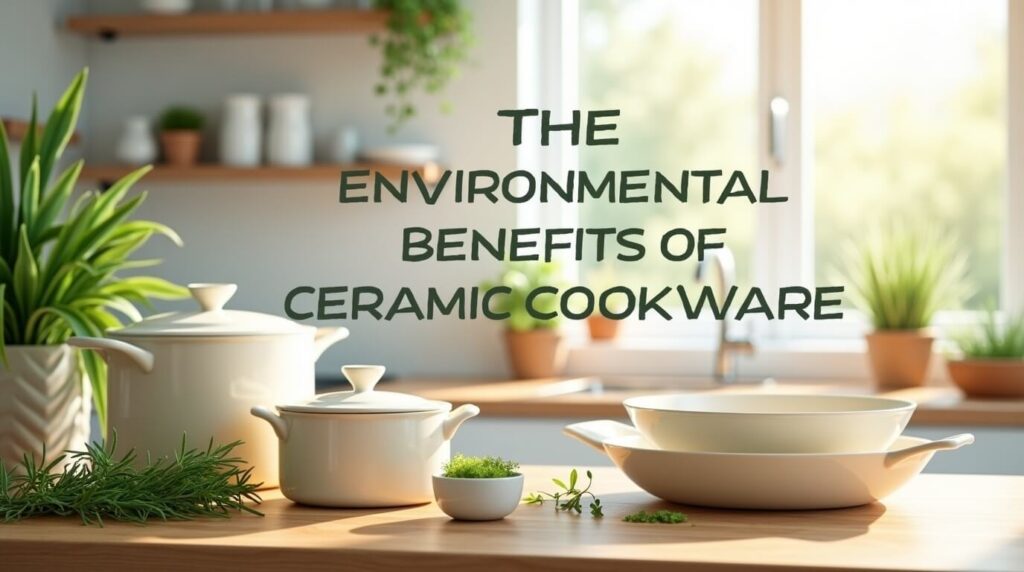
To understand the benefits, we must look at what this cookware actually is. Genuine ceramic cookware usually falls into two categories: pure ceramic or metal cookware with a sol-gel coating.
What Makes Ceramic Cookware Different?
Modern ceramic non-stick pans use a coating derived principally from silica, which is essentially sand. This is vastly different from traditional non-stick surfaces made from synthetic polymers. Seeing how sustainable cookware materials explained the composition helps clarify the difference.
The manufacturing process converts an inorganic solution into a solid gel. This gel creates a smooth, glass-like surface. Because the primary raw materials are oxygen and silicon, the sourcing impact is low.
It requires far less environmentally taxing mining than rare petrochemicals. This makes ceramic production technology a cleaner alternative for the industry.
Why Cookware Choices Matter for the Environment
We often ignore the lifecycle of our kitchen tools. Every year, millions of pans end up in landfills because their synthetic coatings chip and flake.
The lifecycle impact of these products is massive. It is not just about waste; it is about the manufacturing emissions and chemicals released during cooking. According to the Environmental Protection Agency (EPA).
Certain chemicals used in traditional production can persist indefinitely. By choosing eco-friendly ceramic cookware, you reduce the demand for these pollutants.
The Top Environmental Benefits of Ceramic Cookware
Let’s dive deep into the specific reasons why ceramic cookware is good for the planet.
1. PFAS-Free and Chemical-Safe Manufacturing
The most significant environmental advantage is what ceramic products do not contain. Many homeowners ask, is ceramic cookware safe for their families? The answer lies in the absence of toxins.
What are PFAS “forever chemicals”? PFAS are man-made chemicals used to make things water and resistant to grease. They are nicknamed “forever chemicals” because they do not break down. Traditional PTFE pans have historically been linked to these substances.
Ceramic cookware’s chemical-free advantage Pure ceramic pots and pans are free from harmful chemicals by nature. They are manufactured without PFOA or PTFE. If a ceramic pan degrades, it does not leach synthetic chemicals into the soil. This protects our watershed and local ecosystems from toxic contamination.
Did You Know? The Environmental Working Group (EWG) has found that PFAS contamination is a global crisis. Switching to ceramic helps stop this cycle.
2. Significantly Lower Carbon Footprint in Production
The energy required to create your cookware matters. The Environmental Benefits of Ceramic Cookware are evident in the manufacturing stage.
Traditional coatings often need massive temperatures to cure in the factory. In contrast, ceramic coatings are cured at significantly lower temperatures. This results in fewer CO2 emissions released into the atmosphere per pan produced.
Furthermore, because silica is easily accessible, we avoid the toll of refining complex petrochemicals. We are essentially using sand rather than oil-based products to cook. This efficiency is a hallmark of the ceramic cookware sector.
3. No Heavy Metal Leaching or Soil Contamination
In the past, colorful ceramic cookware glazes sometimes contained lead or cadmium. But, modern ceramic kitchenware is strictly tested to be free of these metals.
When traditional pans are discarded, metals can leach into landfill soil. Because ceramic coatings are derived from natural minerals, they are inert. This means that at the end of their life, they do not poison the ground.
4. Extended Product Lifespan Reduces Waste
Sustainability is largely about durability. If you replace a cheap pan every six months, the environmental cost adds up.
High-quality ceramic items, when cared for properly, have excellent scratch resistance. A good pan can last years with the right maintenance. By extending the use phase, we lower the demand for new manufacturing.
5. Energy Efficiency During Cooking
This is a benefit you will notice on your utility bill. Ceramic holds heat incredibly well.
- Heat Retention: You can cook at low to medium heat.
- Even Distribution: Food cooks faster and more evenly.
If every household reduced their stove usage by 5% due to better heat conduction, the energy savings would be massive. This makes environmentally safe cookware alternatives to non-stick a win for the climate.
6. Safer End-of-Life Disposal
While we hope to use our pots forever, eventually, they will wear out. Unlike PTFE pans, which can release fumes if incinerated, ceramic pans are generally safer.
The base materials return to a state closer to their natural mineral origins. While not “compostable” like a banana, they are less harmful than plastic-based coatings. This makes for safer end-of-life disposal.
Ceramic Cookware vs. Other Cookware: Environmental Comparison
Here’s how to understand The Environmental Benefits of Ceramic Cookware. We need to compare it to alternatives like stainless steel cookware or cast iron cookware.
| Feature | Ceramic Cookware | Teflon (PTFE) | Stainless Steel | Cast Iron |
|---|---|---|---|---|
| Raw Material | Silica (Sand) | Synthetic Polymers | Iron, Chromium, Nickel | Iron Ore |
| Chemical Safety | PFAS-Free | Risk of fumes at high heat | Generally Safe | Generally Safe |
| Carbon Footprint | Low (Low cure temp) | High (Chemical heavy) | High (Mining intensity) | Medium (Heavy shipping) |
| Biodegradability | Inert breakdown | Microplastics risk | Recyclable | Recyclable |
Eco-friendly Ceramic Cookware vs Teflon Environmental Impact
Teflon production has a history of contaminating water with PFAS. Ceramic production creates a benign wastewater profile. When you compare Teflon vs ceramic nonstick which is safer, ceramic clearly wins on environmental safety.
Ceramic vs Stainless Steel and Cast Iron
Stainless steel pots are durable, but mining nickel is energy-intensive. Cast iron is heavy, increasing carbon emissions during shipping. Ceramic offers a lightweight, energy-efficient middle ground for your cooking needs. It helps to weigh general ceramic cookware pros cons when choosing between these materials.
The Hidden Environmental Costs Most People Don’t Know About
Water Pollution from Cookware Manufacturing
Manufacturing traditional pans often results in chemical byproducts. These can escape into waterways, harming aquatic life. Ceramic manufacturers use closed-loop systems, drastically reducing pollution risks.
Air Quality Impact
When you overheat a traditional non-stick pan, it can release polymer fumes. This degrades indoor air quality. Ceramic cookware is good for the planet, including your home; ceramic can withstand heat without releasing toxic fumes.
Maximizing the Environmental Benefits of Your Ceramic Cookware
Buying the pan is just step one. To truly honor The Environmental Benefits of Ceramic Cookware, you must be a conscious user.
Choosing Truly Eco-Friendly Ceramic Cookware
Not all pans are created equal. Beware of greenwashing in the ceramic cookware market.
- Look for: “PFAS-Free” and “Lead-Free” labels.
- Ask: Is this a sustainable pan from a reputable ceramic cookware company?
- Avoid: Generic “PFOA-free” labels on standard pans.
You should actively look for certified eco-friendly non-toxic cookware to ensure you are getting the real deal.
Proper Care to Extend Lifespan
To keep your pan out of the landfill:
- Hand wash only: Dishwashers degrade the coating.
- Use low heat: High heat can carbonize oils and cause thermal cracking.
- Use correct tools: Use silicone or wood utensils to protect the ceramic surface.
Knowing how to care for ceramic pans to prevent chipping is vital for longevity.
Cleaning and Maintenance
If food residue sticks, avoid abrasive cleaning methods or harsh metal scrubbers. Instead, simmer a little baking soda and water in the pan. You can also use vinegar to remove mineral deposits.
Real-World Impact: Environmental Benefits in Numbers
Your Environmental Impact Calculator
Discover how switching to ceramic cookware benefits the planet
CO₂ Emissions Saved
PFAS Chemicals Avoided
Landfill Waste Reduced
Environmental Impact Comparison (Lower is Better)
🌍 Your Environmental Impact Summary
Equivalent to:
Small changes add up. If a million households switched to ceramic products:
- Waste Reduction: We could divert tons of coated metal from landfills.
- CO2 Savings: The lower curing temperature saves gigajoules of energy.
- Water Safety: Reduced demand for polymers means less runoff.
Frequently Asked Questions
Is ceramic cookware biodegradable?
No, it is not biodegradable like clay in a garden. But, the coating breaks down into inert particles. It does not turn into toxic microplastics.
Does ceramic cookware contain any toxic chemicals?
High-quality nontoxic pots are free from PFAS, lead, and cadmium. Always check testing results. This applies to ceramic-coated pots and pure ceramic.
How does ceramic cookware compare to cast iron for sustainability?
Cast iron lasts generations, making it very sustainable. Ceramic is lighter and requires less energy to heat. Both are better than disposable plastic-coated pans.
Is ceramic cookware really better for the environment than stainless steel?
For non-stick cooking, yes. Stainless steel requires oil to prevent sticking and uses energy-intensive mining. When asking ceramic vs nonstick which is better for the earth, ceramic offers a cleaner production process.
Making the Switch: Your Action Plan for Eco-Friendly Cooking
You do not have to throw out all your cooking pots today. That would generate unnecessary waste. Instead, follow this transition plan:
- Assess: Identify the pan you use most that is peeling.
- Replace: Swap that specific pan with a high-quality ceramic alternative.
- Invest: Choose a brand that prioritizes sustainable materials.
Embracing the Ceramic Lifestyle
From dutch ovens to a simple baking dish, ceramic is versatile. You can find ceramic baking dish options and even porcelain enamel cast iron. Whether you use Alva cookware or Gotham Steel ceramic, the goal is sustainability.
The Environmental Benefits of Ceramic Cookware are clear. From reducing chemicals to lowering emissions, this kitchen swap ripples outward. Whether you are frying eggs or slow cooking in a dutch oven, you are voting for a healthier planet. Start with one ceramic pan and watch your sustainable kitchen grow.
Other Considerations for the Eco-Conscious
While focused on pots, consider your whole kitchen. Switch to reusable cups and sustainable dishware. Support ceramic artisans who make handmade decorative pottery or terracotta containers.
Even ceramic manufacturers are innovating. They are creating coated pans that withstand the sixth cooking cycle as well as the first. This durability is key for busy home cooks and chefs alike.
Remember, a safe cooking environment matters. Avoid overheating an aluminum pot with old coatings. Embrace cleaners that are natural, like baking soda.
Your countertop might feature a ceramic top stove or a cool countertop induction plate. Ceramic items work well on various cooktops. The ceramic nonstick abilities allow you to use less grease.
By choosing ceramic kitchenware products, you support a cleaner ceramic industry. You avoid contamination from old cookware. You ensure your favorite dishes, from oven-baked dishes to citrus-based dishes, are safe.
Ultimately, ceramic cookware pros outweigh the cons. One main advantage is being able to verify what brand of ceramic cookware is the best regarding eco-standards. Ceramic pan advantages include easy cleanup and health safety. It is a smart choice for modern kitchens and modern day kitchens.
So, next time you are at the store, look for ceramic cookware. It is more than just kitchen innovation; it is a commitment to the future. Your oven, stovetop, and family will thank you.