
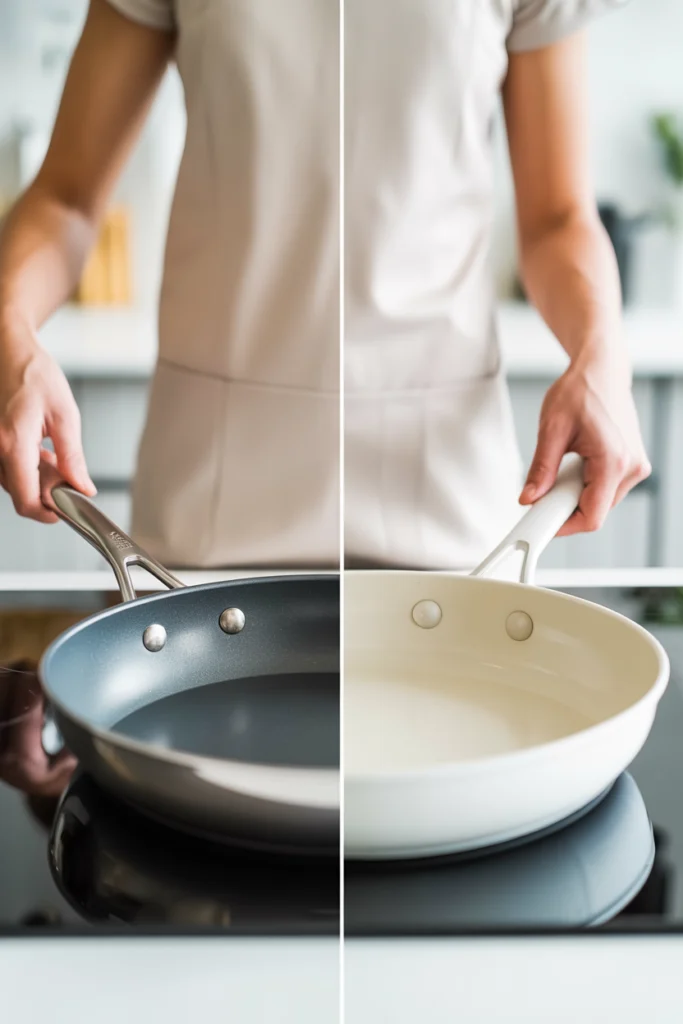
If you are trying to decide what’s better titanium or ceramic cookware. The answer usually comes down to your priorities: longevity or chemical purity. Generally, titanium-reinforced cookware is better for durability and long-term nonstick performance. Ceramic cookware is better for those strictly avoiding PTFE (Teflon) chemicals.
In my experience testing pans, I’ve found that “titanium” cookware is usually a workhorse that lasts for years. Ceramic pans, but, offer a slick, eco-friendly surface that works beautifully but tends to wear out faster. To make the right choice, you have to look past the marketing labels.
Let’s dig into the science, the materials, and real-world performance to see which pan deserves a spot on your stove.
Key takeaways :
- Titanium-Reinforced: Uses PTFE infused with titanium particles for superior durability; typically lasts 3–5 years and resists scratches well.
- Ceramic: Features a sand-based Sol-gel coating that is 100% PTFE/PFOA-free; offers incredible initial slickness but often wears out within a year.
- Heat Safety: Ceramic is safer if accidentally overheated, while titanium coatings can degrade above 500°F.
- Best Use: Choose titanium for a rugged, low-maintenance daily workhorse. Choose ceramic if you prioritize a strictly chemical-free cooking surface for low-heat tasks like eggs.
Here is the best titanium cooking pan I’ve ever had. Non-stick, durable, and oven safe.
If you are looking for a set. These pans make cooking a breeze. Perfect for all your meals!
Titanium vs Ceramic Cookware: What are They Actually
Before we compare performance, we need to clear up some major confusion on the material type used in these products. Marketing teams love to throw around buzzwords that make these materials sound like space-age armor. The reality of what is inside these pans is quite different.
Is Titanium Cookware Solid Titanium or a Coating?
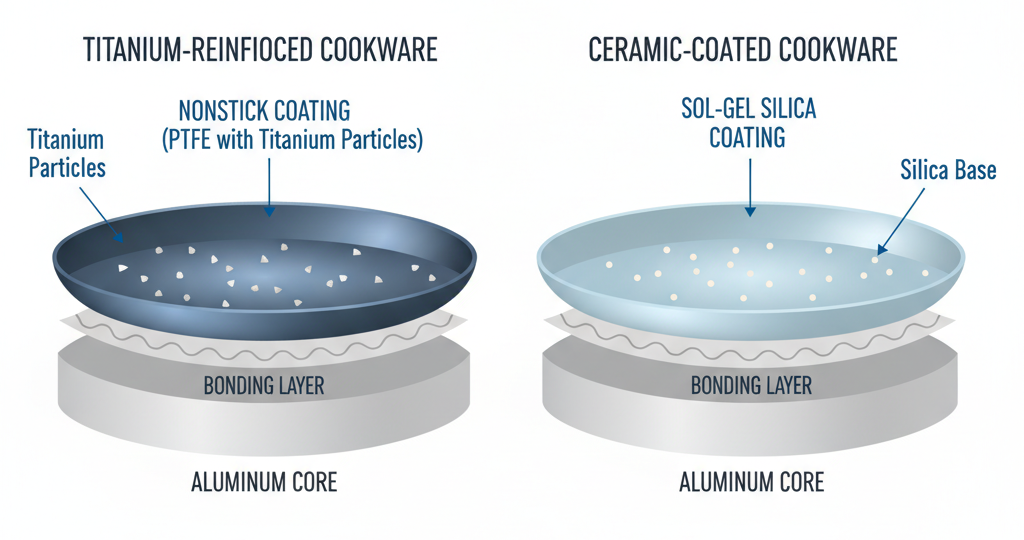
True, solid titanium pans exist, but they are mostly used for camping because they are incredibly light. These are often referred to as uncoated titanium cookware. But, for home kitchens, “titanium cookware” almost always refers to an aluminum base with a nonstick coating. T-fal Ultimate Hard Anodized Titanium set is a real-world example of an “aluminum base with titanium-infused coating. Manufacturers infuse this coating with titanium particles to make it harder. You aren’t cooking on metal; you are cooking on a reinforced synthetic surface.
What “Titanium-Reinforced” Nonstick Really Means
When you see a label boasting “Titanium Nonstick,” it is usually a PTFE (polytetrafluoroethylene) coating. The titanium is added to prevent the coating from scratching or peeling away from the aluminum core. Think of the titanium as the rebar in concrete; it adds structural integrity to the nonstick layer. This is distinct from a coating-free interior you might find on a raw steel pan.
Is Ceramic Cookware Solid Ceramic or Ceramic-Coated Metal?
Just like titanium pans, most “ceramic” skillets are not solid clay or pottery. Distinguish between ceramic-coated cookware vs 100% ceramic options to understand performance expectations. Most of what you see on shelves are metal pans (usually aluminum or stainless steel) finished with a Sol-gel coating.
This coating is derived from inorganic minerals, primarily silica (sand). It mimics the glossy, smooth texture of ceramic but handles heat like metal.
How Ceramic Coatings Differ From PTFE Nonstick
This is the biggest chemical difference between the many cookware types available. Traditional nonstick cookware (including titanium-reinforced) relies on PTFE for that slick surface. Ceramic coatings are silicone-based and do not contain synthetic polymers. This makes ceramic a popular choice for green living, but the ceramic-like layer is brittle compared to synthetic options.
Why Material Definitions Matter for Safety and Durability
Understanding these definitions protects your wallet. If you buy a “titanium” pan thinking it is indestructible metal, you might ruin the coating with high heat. If you buy ceramic thinking it will last forever, you might be disappointed when the Sol-gel wears down. Knowing the core materials helps you predict how the pan will age.
Titanium vs Ceramic Cookware: Safer One for Everyday Cooking?
Safety is the number one reason people search for what’s better titanium or ceramic cookware. We all want to avoid toxins leaching into our food. Both options are generally safe, but they have different safety profiles depending on how you cook.
If you want a detailed chemical breakdown, you can read more about Teflon vs ceramic nonstick: which is safer to help make your decision.
Are Titanium Pans Non-Toxic at High Heat?
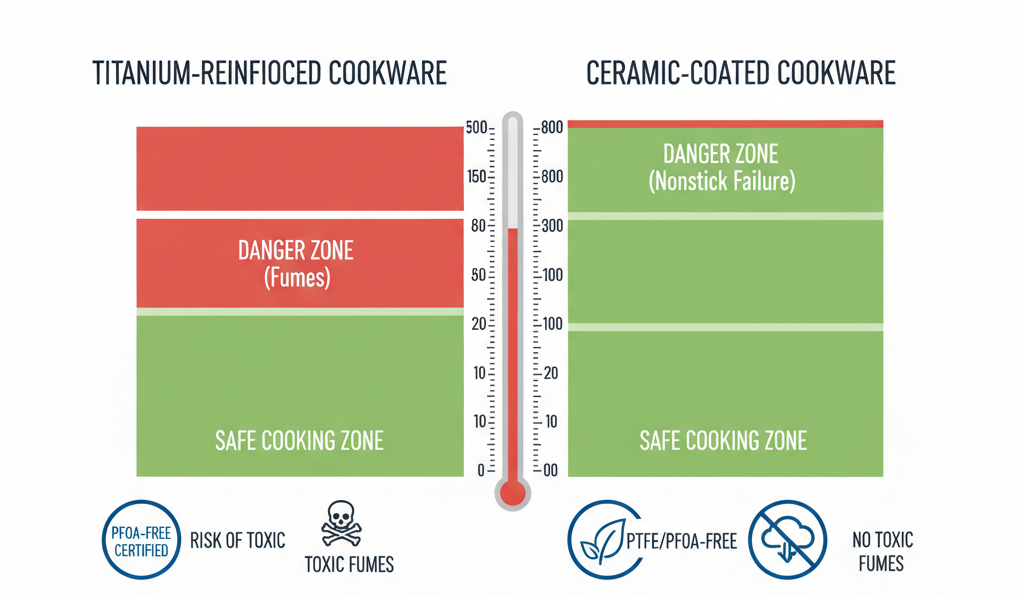
Titanium-reinforced pans use PTFE. This material is inert and safe up to about 500°F (260°C). If you accidentally overheat the pan, PTFE can begin to degrade and release fumes. Modern pans are PFOA-free, the risk of overheating remains a concern for some home cooks concerned about chemical coatings.
Many health-conscious cooks frequently ask, is titanium cookware toxin-free? The answer is generally yes, provided the surface is not compromised by excessive heat.
Are Ceramic Pans Truly PFAS- and PFOA-Free?
Yes, this is the main selling point of ceramic cookware. Because the Sol-gel coating is made from sand derivatives, it does not contain PFAS (per- and polyfluoroalkyl substances) or PFOA. If you overheat a ceramic pan, it won’t release toxic polymer fumes, making it a favorite for non-toxic cooking enthusiasts.
Can Ceramic Cookware Contain Heavy Metals?
Legitimate brands follow FDA and strict California Prop 65 standards. Some cheap, unbranded ceramic glazes used in decorative pottery can contain lead or cadmium. For cookware, always stick to reputable brands to ensure the glaze is free of heavy metals.
What Happens When the Surface Gets Scratched?
If you scratch a titanium-reinforced pan, you might expose the aluminum underneath. While aluminum isn’t toxic in small amounts, it can react with acidic foods like tomato sauce. Scratched ceramic pans lose their nonstick ability but the underlying metal exposure risks are similar.
Which Material Is More Chemically Stable Over Time?
Ceramic is chemically inorganic, meaning it doesn’t react much with the environment. However, its physical stability is lower because it is brittle. Titanium-reinforced PTFE is chemically stable as long as you keep the heat moderate. Furthermore, a high-quality titanium surface resists corrosion better than exposed raw metal.
Safety Differences Between New vs Worn-Out Cookware
A brand-new titanium pan and a brand-new ceramic pan are both safe. The risk changes as they age. A worn-out ceramic pan is just a sticky pan. A worn-out titanium pan with peeling coating should be discarded immediately to avoid ingesting flakes of coating.
How Long Does Titanium vs Ceramic Cookware Really Last?
If you are tired of buying new kitchen equipment every year, this section is for you. Durability is the main divide between these two materials.
Scratch Resistance Compared Side by Side
Titanium is a metal with a high strength-to-weight ratio. When added to a coating, it creates a surface that resists scratches from spatulas better than standard nonstick. Ceramic coatings are hard but brittle. They resist micro-scratches initially but can develop deep gouges if you use metal utensils.
Chipping, Cracking, and Coating Failure Risks
Ceramic coatings suffer from distinct durability issues. Because the metal pan expands when hot and the ceramic coating is rigid, the coating can develop microscopic cracks. This leads to chipping, especially around the rim. Titanium coatings are more flexible and bond better to the metal, reducing chipping risks.
Heat Damage and Warping Resistance
Warping usually depends on the thickness of the aluminum base, not just the coating. Quality titanium cookware is often marketed as “premium” and tends to have thicker, forged bases that resist warping. Cheap ceramic pans with thin bodies can warp easily, which ruins their performance on glass-top stoves.
What Daily Use Does to Each Material
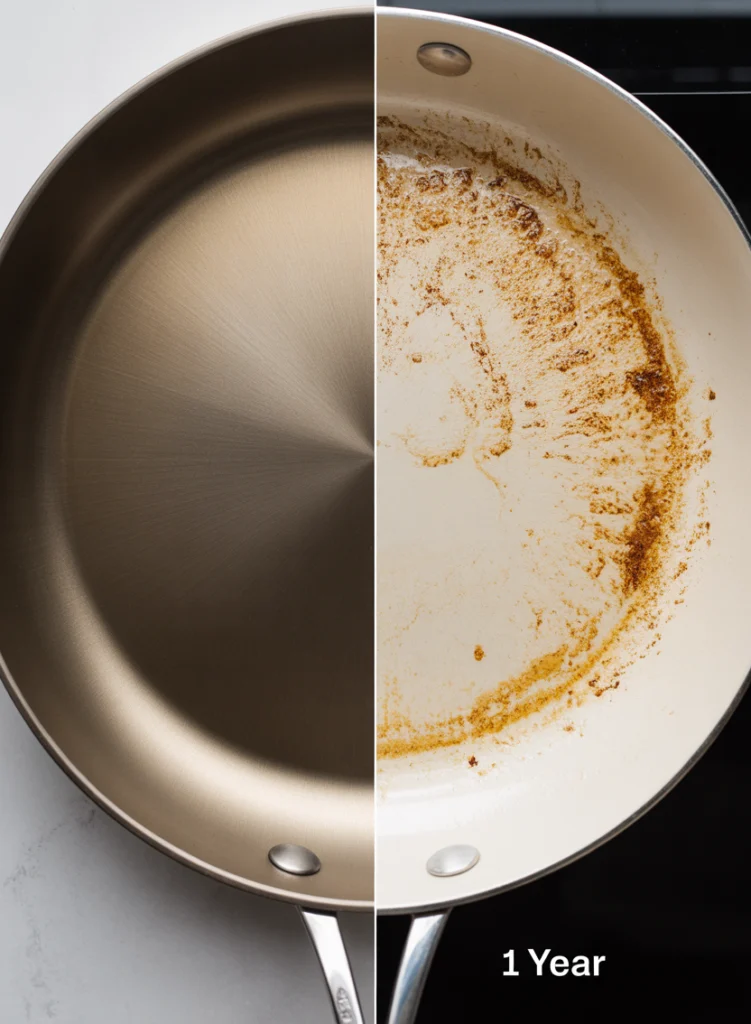
Daily cooking with oils eventually builds up a residue. On ceramic pans, this residue (carbonization) creates a barrier that destroys the nonstick effect. Titanium pans are more forgiving and can be scrubbed a bit harder to remove residue without destroying the surface.
Average Lifespan Under Normal Home Cooking
Cookware TypeEstimated LifespanTitanium-Reinforced3 to 5 YearsCeramic Nonstick6 Months to 2 Years
Signs It’s Time to Replace Titanium or Ceramic Pans
Replace your ceramic pan when everything starts sticking, even with oil. Replace your titanium pan if you see deep scratches revealing silver metal, or if the coating starts to blister or peel.
Which Cooks Better: Titanium vs Ceramic cookware?
Performance matters. You want your food to brown evenly without burning.
Heat Conductivity and Hot Spot Formation
Since both types usually use an aluminum core, they conduct heat very well. Aluminum is an excellent thermal conductor. The difference lies in the thickness. Higher-end titanium pans often have better heat distribution, preventing hot spots where food burns.
Heat Retention vs Responsiveness
Responsiveness is how fast the pan cools down when you turn off the burner. Both materials are responsive. But, ceramic coatings are naturally insulating. This means they might take a few seconds longer to heat up compared to the thinner layer on a titanium pan.
Searing, Browning, and Fond Development
Neither pan is ideal for a high-heat sear (use cast iron for that). However, titanium pans can handle slightly higher heat without destroying the coating immediately. Ceramic pans can brown meat, but you risk carbonizing oil onto the surface, which ruins the pan.
Low-Oil and Egg Cooking Performance
In the first few months, ceramic is unbeatable for eggs. You can blow an egg off the surface. Titanium is also excellent but has a slightly more “textured” grip. Over time, titanium maintains its egg-sliding ability longer than ceramic.
Performance Degradation Over Time
This is the “ceramic drop-off.” A ceramic pan works like magic for three months, then slowly becomes sticky. Titanium degradation is a slow, linear curve. It starts great and slowly becomes “just okay” over several years.
Can Either Replace Cast Iron or Stainless Steel?
No. Neither titanium nor ceramic can replace the high-heat durability of raw cast iron or the browning power of stainless steel pots. They are tools for delicate proteins, eggs, and pancakes.
Titanium Cookware vs Ceramic Nonstick Performance
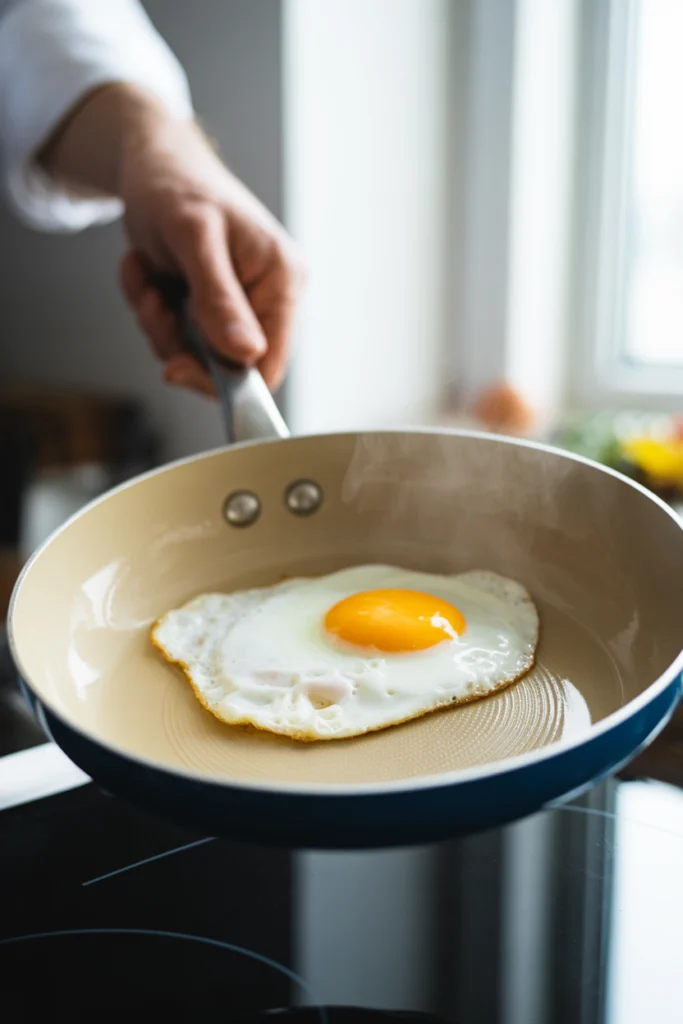
When asking what’s better titanium or ceramic cookware, you are really asking: “Which one will stay nonstick?”
Initial Nonstick Performance Compared
Out of the box, ceramic is slicker. It has a glossy finish that repels water and oil incredibly well. Titanium feels smooth, but ceramic feels like ice.
How Long Ceramic Nonstick Typically Last
Most users report a significant drop in performance after 6 to 12 months of daily use. The “lotus effect” (hydrophobicity) wears off as the silica layer degrades from heat and cleaning.
Does Titanium Lose Nonstick Properties?
Yes, but much slower. The PTFE reinforced with titanium particles resists abrasion. Even after two years, a good titanium pan will usually release food with a little bit of butter or oil.
Impact of Utensils (Metal vs Silicone vs Wood)
Always use silicone or wood. Even if a titanium pan claims to be “metal utensil safe,” don’t do it. Try AOTHOD Silicone Utensil Set. These silicone cooking tools are heat resistant and perfect for nonstick cookware. Safe for dishwashers too! Metal forks and spatulas will micro-scratch the surface, reducing the lifespan of both materials. Correct care avoiding metal is essential for any coated pan.
Why Nonstick Failure Happens
Failure happens due to two things: overheating and abrasive cleaning. Overheating breaks down the chemical bonds. Abrasive cleaning scrubs away the nonstick layer.
Can Nonstick Performance Be Restored?
You can deep clean a ceramic pan with baking soda to remove carbon buildup, which might restore some slickness. Once the coating is physically worn on a titanium pan, however, it cannot be restored.
Titanium Cookware vs Ceramic: Cleaning and Maintenance
How you clean your pan determines how long it lives.
Day-to-Day Cleaning Requirements
Both pans should be hand-washed with a soft sponge and mild dish soap. Never use steel wool. Ceramic pans often need a little more attention to ensure no oil residue is left behind, as that residue becomes sticky glue next time you cook.
Dishwasher Safety and Long-Term Effects
Dishwasher detergent is extremely harsh and abrasive. It will eat away the coating of both ceramic and titanium pans. Manufacturers say “dishwasher safe,” but I say “dishwasher deadly” if you want longevity.
Stain Resistance and Discoloration Issues
Ceramic pans, especially white ones, stain easily. Curry, tomato sauce, and turmeric can leave permanent yellow or red marks. Titanium pans are usually black or dark grey, hiding stains much better.
What Cleaning Products Damage Each Surface
Avoid bleach and citrus-based cleaners for both. The acid can pit the aluminum if there are any scratches. For ceramic, avoid cooking sprays (like Pam) as they contain additives that gum up the surface.
Maintenance Mistakes That Shorten Lifespan
The biggest mistake is thermal shock. Never take a hot pan and put it under cold water. This can warp the metal and crack the ceramic coating. Learning how to extend the life of your nonstick pans is essential if you want your cookware investment to last more than a few months.
Which Is Lower Maintenance Over Time?
Titanium is generally considered low-maintenance cookware. It hides stains, resists scratches better, and doesn’t need as much babying with temperature control as ceramic does.
Titanium vs Ceramic Cookware: Heat Limits, Stove Types and Cooking Environments
Your stove type plays a big role in what’s better titanium or ceramic cookware for your home.
Maximum Safe Cooking Temperatures
- Ceramic: Safe up to 800°F (425°C), but cooking this hot ruins the nonstick property.
- Titanium (PTFE): Safe up to 500°F (260°C). Above this, the coating degrades.
Gas vs Electric vs Induction Compatibility
This depends on the magnetic base, not the coating. Look for “Induction Ready” on the package. Both titanium and ceramic pans work on gas and electric stoves. Gas flames can discolor the sides of ceramic pans more noticeably.
Oven Safety Differences
Ceramic pans usually handle higher oven temperatures, often up to 600°F, depending on the handle material. Titanium pans are usually limited to 350°F-500°F because of the synthetic coating limits.
Campfire and Open-Flame Suitability
Use solid cast iron or pure titanium (uncoated) for campfires. Never use coated nonstick (ceramic or titanium-reinforced) on an open fire. The heat is uncontrolled and will destroy the pan.
Thermal Shock Risks
Ceramic coatings are more prone to failure from thermal shock. If you rinse a hot ceramic pan, the coating can craze (develop fine cracks) instantly.
Which Material Handles High-Heat Better Long Term?
Neither is good for high heat. But chemically, ceramic can “survive” accidental high heat without releasing toxins, even if the nonstick ability dies.
Ceramic vs Titanium Cookware: Weight, Handling, and Cooking Comfort
Weight Comparison in Real Use
Ceramic pans often have a slightly heavier body to prevent the brittle coating from cracking. Titanium-reinforced aluminum pans can be incredibly lightweight and easy to flip.
Strength-to-Weight Ratio Explained
Titanium has the highest strength-to-weight ratio of almost any metal. This allows manufacturers to make durable pans that don’t strain your wrist.
Pan Balance and Handle Comfort
This varies by brand. Because titanium-coated pans are often marketed as “chef grade,” they feature ergonomic, stainless steel handles that stay cool.
Fatigue During Extended Cooking
If you cook large meals. A lightweight titanium pan reduces wrist fatigue compared to a heavy ceramic-coated iron pan or copper cookware.
Storage and Stackability Concerns
You cannot stack either type without protection. Placing a heavy pot on top of a ceramic or titanium pan will scratch the coating. Always use pan protectors or a towel in between.
Best Choice for Small Kitchens or RVs
Titanium is better for RVs and small kitchens because it is durable and light. The vibration of an RV on the road can chip ceramic cookware if it rattles against other pots.
Ceramic or Titanium Cookware: Cost vs Value
Typical Price Ranges for Titanium and Ceramic
- Ceramic: $20 – $100 per pan.
- Titanium: $30 – $150 per pan.
Cost Per Year of Use
If you buy a $40 ceramic pan and replace it every year, that is $200 over 5 years. If you buy one $80 titanium pan that lasts 4 years, your cost per year is $20. Titanium is usually cheaper in the long run.
Replacement Frequency Comparison
Expect to replace ceramic 2-3 times as often as titanium-reinforced cookware.
Warranty and Brand Quality Variability
Many brands offer “Lifetime Warranties,” but they exclude “normal wear and tear.” Loss of nonstick ability is considered wear and tear. Don’t rely on warranties for nonstick pans.
When Paying More Makes Sense
Paying more for a thicker base (anodized aluminum) is worth it for even heating. Paying more for a “diamond-infused” or “titanium” coating is worth it for the extended lifespan.
Budget Traps to Avoid
Avoid “As Seen on TV” ceramic pans selling for $19.99. They usually have extremely thin coatings that fail within weeks. T-fal titanium pans and Redchef ceramic cookware are legit alternative at a reasonable price.
Best Use Cases for Titanium vs Ceramic Cookware
Best for Everyday Home Cooking
Winner: Titanium Our Place Titanium Always Pan Pro. It is reliable, durable, and handles the rigors of breakfast, lunch, and dinner. It adapts well to most cooking styles.
Best for Health-Focused, Low-Oil Cooking
Winner: Ceramic. Redchef Ceramic Nonstick Set a must-have for any kitchen!. If your priority is avoiding all synthetic chemicals (PTFE) and cooking with minimal oil (initially), ceramic is the choice.
Best for High-Heat and Protein Searing
Winner: Neither. Use Stainless Steel or Cast Iron. If you must choose, titanium handles heat fluctuation better.
Best for Beginners
Winner: Titanium. It is more forgiving of mistakes like overheating or scrubbing too hard. It makes simpler cooking tasks easier.
Best for Outdoor, Camping, and Travel
Winner: Pure Titanium (Uncoated). For coated pans, titanium-reinforced is better because it won’t chip during transport.
Best Long-Term Investment for Most Kitchens
Winner: Titanium. It stays in the cabinet longer before hitting the landfill.
Titanium vs Ceramic: Pros & Cons
Let’s compare Strengths and limitations.
Titanium Cookware Strengths
- Long-lasting nonstick.
- Durable and scratch-resistant.
- Lightweight.
- Consistent performance.
Titanium Cookware Limitations
- Contains PTFE (concern for some).
- Cannot use high heat.
Ceramic Cookware Strengths
- Free of PTFE, PFOA, and PFAS.
- Heat resistant (won’t release fumes).
- Incredible initial nonstick release.
- Comes in beautiful colors.
Ceramic Cookware Limitations
- Short lifespan.
- Brittle (prone to chipping).
- Stains easily.
Which Trade-Offs Matter Most by Cooking Style
If you cook eggs every morning, the short lifespan of ceramic might be annoying. If you have pet birds (sensitive to fumes), ceramic is the only safe choice.
Interactive Cookware Comparison Tool
Find the perfect cookware based on your cooking priorities
Key Strengths:
- Long-lasting nonstick performance
- Scratch-resistant coating
- Lightweight and durable
- Consistent over time
Limitations:
- Contains PTFE coating
- Limited to 500°F max heat
Key Strengths:
- 100% PTFE/PFOA/PFAS-free
- No toxic fumes when overheated
- Amazing initial nonstick
- Heat resistant to 800°F
Limitations:
- Short lifespan (6-24 months)
- Brittle, prone to chipping
- Stains easily
Recommended for You:
For long-term durability and value, titanium-reinforced cookware is your best choice. It maintains nonstick performance for 3-5 years and withstands daily use better than ceramic alternatives.
Mistakes People Make When Choosing Between Ceramic or Titanium Cookware
Confusing Coatings With Core Materials
Remember, you are likely buying aluminum. Don’t pay $200 for a pan just because it says “Titanium” if the base is thin stamped aluminum.
Prioritizing Nonstick Over Longevity
Buying the slickest pan often means buying the most fragile one. Balance your need for slickness with the need for durability.
Ignoring Heat Limits
Cranking the stove to “High” to boil water in a nonstick pan is the fastest way to kill it.
Choosing Based on Marketing Terms
“Diamond,” “Granite,” and “Stone” are often just variations of PTFE or Ceramic coatings. Look at the specs: Is it PTFE-free? If yes, it’s ceramic. If not, it’s synthetic.
Not Matching Cookware to Cooking Habits
If you are rough with pans (tossing them in the sink, stacking them), ceramic will break your heart. Even beyond simple selection, there are top 10 cookware mistakes beginners make and how to avoid them that can apply to any material you choose.
Frequently Asked Questions About Titanium and Ceramic Cookware
Is Titanium Cookware Safe for Daily Use?
Yes. Regulatory agencies like the FDA and EFSA generally consider titanium-reinforced PTFE coatings safe for contact with food, provided they are not overheated.
Why Does Titanium Discolor or Turn Rainbow?
Pure titanium pans can develop a “rainbow” effect due to oxidation when heated. This is harmless. Coated pans usually don’t do this unless the underlying steel/aluminum is exposed. Some titanium pans keep a distinctive titanium shine on the handle.
Does Ceramic Lose Its Nonstick Coating?
It doesn’t “lose” the coating, but the surface properties change. The silica layer develops microscopic imperfections that food clings to.
Is Ceramic Better Than Traditional Nonstick?
“Better” is subjective. It is eco-friendlier and chemically simpler. But it performs worse over time compared to high-quality traditional nonstick.
Can You Mix Titanium and Ceramic in One Kitchen?
Absolutely. I recommend a small ceramic pan for eggs (replace it often) and a large titanium skillet for meats and vegetables.
Which Is Better for Families and Kids?
Titanium is better for families because it withstands the abuse of teenagers or spouses who might use the wrong utensils.
Which Is Better for Induction Cooktops?
Both work equally well on induction if they have a steel plate bonded to the bottom. Check the manufacturer’s label.
Final Verdict: Titanium vs Ceramic Cookware Which Is Right for You?
We have covered the science, the safety, and the durability. So, what’s better titanium or ceramic cookware for your kitchen?
If You Want Maximum Safety and Longevity
If safety means “no synthetic chemicals,” choose Ceramic. Just accept that you will buy a new pan every year.
If You Want Easy Nonstick Cooking on a Budget
Choose Titanium-Reinforced. It lasts longer, saving you money, and performs consistently well.
If You Cook at High Heat Often
Skip both. Buy Stainless Steel or Cast Iron.
If You Hate Replacing Pans
Choose Titanium. It is the endurance runner of the nonstick world.
Simple Recommendation Based on Cooking Style
For my kitchen, I use titanium-reinforced pans for dinner (chicken, stir-fry, pasta sauces) because they are tough. I keep one cheap ceramic pan strictly for delicate breakfast eggs. This hybrid approach gives you the best of both worlds.
For more tips on organizing your kitchen and choosing the best tools, visit MyKitchenHints.com.
External Links:
https://www.seriouseats.com/nonstick-vs-ceramic-skillets-7110252