
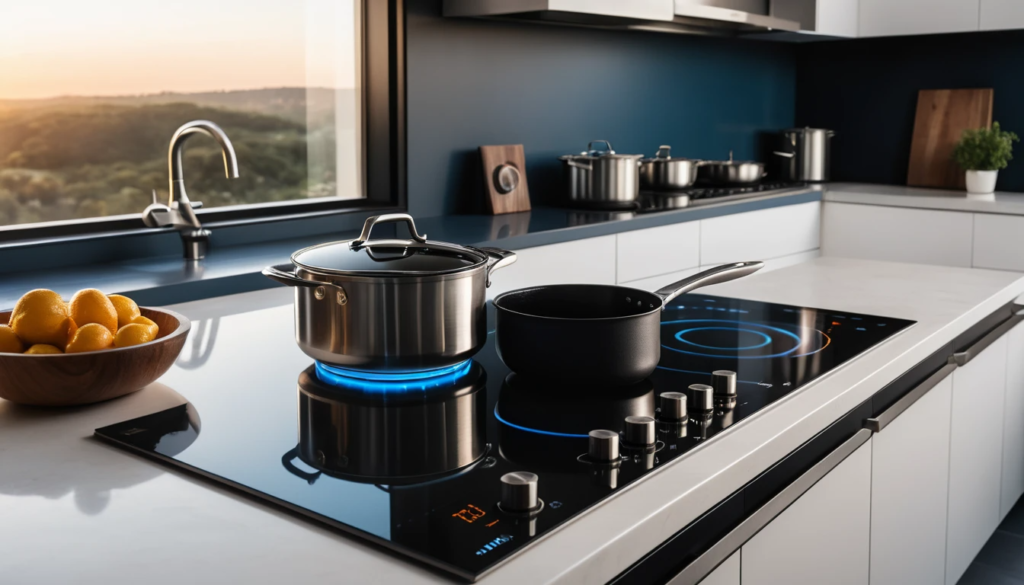
Have you ever wondered exactly how induction cooking works? To put it simply, induction uses invisible magnetic fields to turn your pots and pans into their own heat source. People no longer have to rely on open heating elements or a traditional gas flame. An induction stove generates heat directly inside your cookware.
I will show you exactly how induction cooking works, why it saves energy, and how it can transform your home kitchen appliance setup.
Key Takeaways
- Direct Heating: Induction uses magnetic fields to heat your pans directly, making it incredibly fast.
- Energy Efficient: It transfers up to 90% of energy straight to your food, wasting almost no ambient heat.
- High Safety: The glass surface stays relatively cool, and there are no open flames or toxic fumes.
- Cookware Rules: Your pots and pans must be magnetic (like cast iron or carbon steel) to complete the heating circuit.
- Easy Cleanup: The perfectly flat glass surface makes wiping up grease and spills completely effortless.
{ez-toc]
What Is Induction Cooking and Why Is Everyone Talking About It?
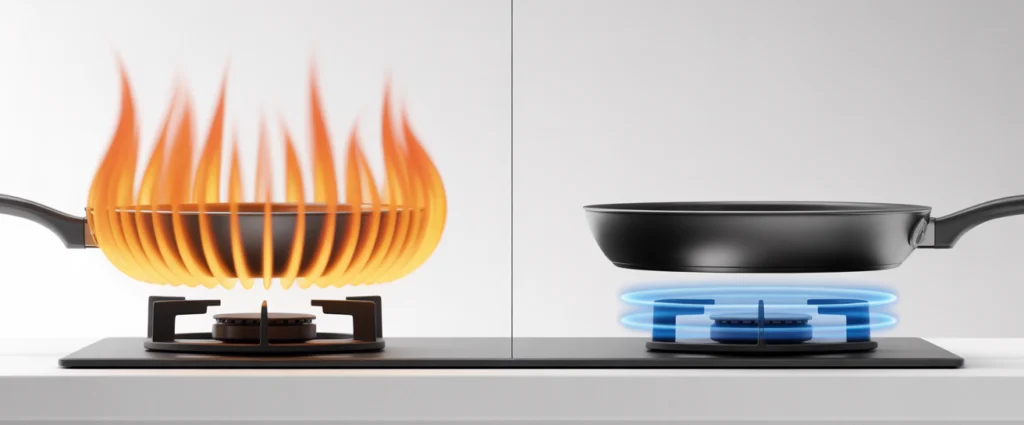
Induction cooking is currently taking the culinary world by storm. Homeowners, professional chefs in restaurant, and environmental groups are all making the switch. Let’s look at why this specific cooking method is getting so much attention and why it outshines older methods.
What Makes Induction Different from Gas and Electric?
Standard gas cooktops use an open flame to heat the bottom of a pan. Traditional cooktops like electric coil cooktops use electrical resistance to heat a solid heating element which then transfers heat. How induction cooking works is completely different. It relies on electromagnetic induction to heat the cooking vessel itself, leaving the glass cooktop mostly cool.
Why Is Induction Considered More Modern?
Induction cooktops feature sleek ceramic cooking surfaces that look incredible in modern homes. There are no heavy iron grates or a messy electric plate to scrub after dinner.
It has precise digital controls and a solid-state kitchen timer. This makes induction units feel much more like high-tech gadgets than traditional appliances. Built-in cooktop designs seamlessly blend into your kitchen counters for a highly upgraded look.
Is Induction Cooking Really New Technology?
You might be surprised to learn that electrical induction heating is not actually new. The first patents for an induction cooker date back to the early 1900s. Brands like Frigidaire even showcased early induction stoves at the 1933 Chicago World’s Fair. Yet, induction equipment only became affordable for residential electric cooking over the last couple of decades.
Why Are Cities and Builders Promoting Induction?
Many cities across California and New York have started banning gas hookups in new home builds. Builders are promoting built-in cooktop appliances because they help meet urgent climate goals. Electric heat powered by solar and wind makes this one of the most efficient cooking options available today. Eliminating fossil fuels from the cooking process is a massive win for indoor air quality.
How Does an Induction Cooktop Actually Create Heat?
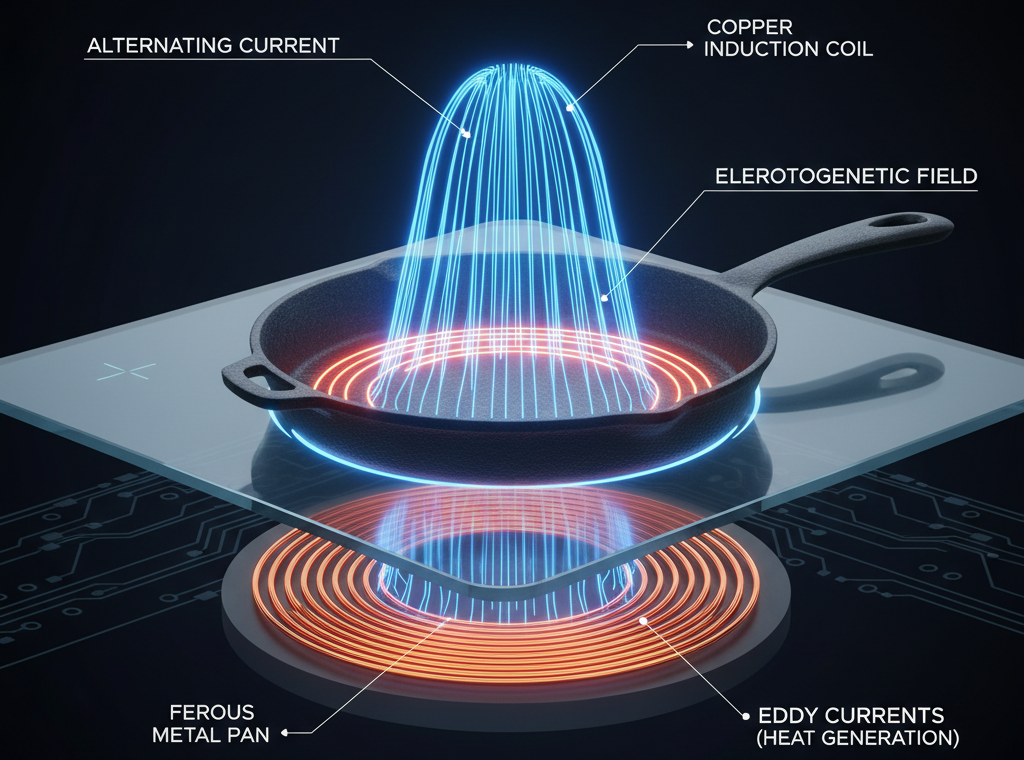
To truly grasp how induction cooking works, we need to step into a quick science lesson. Do not worry, I will keep the explanation of the cooking process very simple!
What Role Do Electromagnetic Fields Play?
At the heart of the machine is a powerful, invisible electromagnetic field. When you turn the stove on, electricity flows through the induction top. This creates a rapid, fluctuating magnetic field directly over the cooking surface. This field acts as the engine for the entire cooking process.
How Copper Coils Generate a Magnetic Field
Hidden beneath the smooth Schott Ceran glass are tightly wound induction coils. When alternating current runs through an induction-heating coil, it generates the magnetic energy needed for induction heating. The many induction coils themselves never get hot, making them incredibly safe. This protects the internal components of your induction hob from melting.
What Are Eddy Currents and Why Do They Matter?
When you place metal cookware on the cooktop, the magnetic field penetrates the metal. This creates tiny swirling rings of electricity inside the pan called eddy currents. Because the pan has magnetic resistance, this creates intense friction to heat cookware rapidly. Your conductive pot essentially becomes its own burner.
Why the Pan Gets Hot but the Glass Surface Doesn’t
It is because the magnetic field only reacts with metal cookware. Standard cooking surfaces are completely ignored. The electric heat is created directly inside the conductive pot. Any ambient cookware heat you feel on the glass afterward is just leftover warmth radiating backward from the hot pan. You can boil water while keeping the surrounding glass cool to the touch.
Does Induction Work Without Direct Contact?
Technically, yes, the magnetic field extends slightly above the induction cook zones. But, energy transfer drops dramatically the further the pan gets from the induction stove. Your cooking vessels need to stay in flat, direct contact with the induction zone for the best results.
Why Does Induction Cooking Heat So Fast?
If you have ever boiled water on an induction range, you know fast cooking is its biggest selling point.
Direct Energy Transfer vs Heat Transfer
With traditional electric stoves, heat must travel from the burner through the air. This indirect transfer is slow and inefficient. It’s because of how induction cooking works. This involves direct heat transfer, the cooking pot heats almost instantly. There is virtually zero waiting time.
How Induction Reduces Energy Loss
When you use gas cookers, you can feel the heat warming your entire room. That is wasted energy escaping into hot kitchens, causing your AC to work harder. Induction cooking sends nearly 90% of its energy directly into the food, leaving very little wasted heat. This makes commercial kitchens much more comfortable for the staff.
Boiling Time Comparison: Induction vs Gas vs Electric
To show you how an induction cooktop works to save you time, here is a quick look at average water-boiling capabilities.
| Stove Type | Time to Boil 6 Quarts of Water |
|---|---|
| Induction | 4 to 5 minutes |
| Electric Coil | 9 to 10 minutes |
| Gas Flame | 12 to 14 minutes |
Induction Cooking: By the Numbers
Tap each tab to explore speed, efficiency, cookware compatibility & safety at a glance.
Does Faster Heating Affect Food Quality?
Heating food faster does not hurt its quality, but it does need your complete attention. Because water boils in minutes, you need to prep your ingredients beforehand. You will quickly appreciate this commercial cooking performance on busy weeknights when you are short on time.
What Cookware Works on Induction and Why?
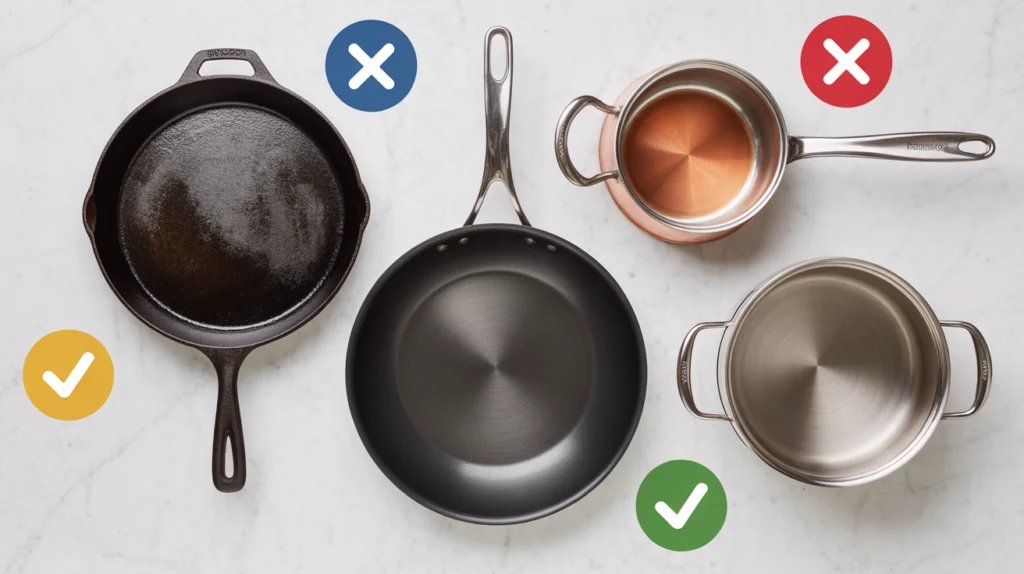
A common question people have when learning how induction cooking works is about pots and pans. You cannot use just any non-inductive pan. If you want a deep dive on finding the right tools, check out this comprehensive induction cookware guide for helpful insights.
What Makes a Pan Magnetic?
For the magnetic field to create heat, your pan must contain ferrous metal. The metal needs high magnetic permeability to trap the energy from the induction heating system. If you use non-ferrous cookware, the stove simply will not recognize it and won’t turn on.
Do Stainless Steel Pans Always Work?
Not all stainless steel cookware is created equal. High-quality ferritic stainless steel pans work beautifully for induction cooking. However, some cheap stainless-steel pans contain too much nickel. This ruins the magnetic properties.
If you are unsure about your current collection. You can easily verify can you use stainless steel cookware on induction stoves before buying a new set.
Can You Use Cast Iron on Induction?
Absolutely! Classic iron pans and dutch ovens are perfect for induction cooking. Because cast iron is extremely dense, it absorbs induction heating flawlessly. It is highly recommended to read up oncooking with cast iron on an induction stove to avoid scratching your glass surface.
Why Pure Aluminum and Copper Don’t Work Alone
Metals like pure aluminum and pure copper are excellent choices for a good heat conductor, but they are not magnetic. The magnetic field passes right through non-ferrous metal cookware without creating any heat. To use a copper pot or aluminum cookware on an induction top, it must have a magnetic steel plate bonded to its base.
Do Nonstick Pans Work on Induction?
Yes, but only if they are clearly marked as induction compatible. The nonstick coating itself does not matter for the heating process. Look for large pans or a frying pan that explicitly advertises a stainless steel induction base.
How to Test Your Cookware with a Magnet
You do not need to guess if your conventional pans will work on an induction cooker. Just grab a common refrigerator magnet from your fridge. If the magnet sticks firmly to the flat bottom, the cooking vessel is induction-compatible cookware.
What Does the Induction Symbol Mean?
Cookware manufacturers use a standard symbol to show a pan is ready for an induction stove. Look at the bottom of the frying pans for a symbol that looks like a coiled spring. If you see that zig-zag coil logo, your pan is ready to go.
Do You Need Special Induction Cookware?
Many buyers worry that switching to induction means throwing out all their high-quality cookware. Luckily, that is not always true.
When You Can Keep Your Existing Pans
If you already use heavy cookware like an iron pot or high-end carbon steel, you are in luck. As long as your favorite pans pass the magnet test, they will work perfectly on built-in cooktops. You do not always need to buy brand new cookware.
When You’ll Need to Replace Cookware
You will need to go shopping if your cabinets are full of pure copper or basic aluminum pans. Pans with warped or rounded bottoms will also cause trouble on modern induction ranges. Equal heating requires flat, direct contact to work properly.
Are Induction Converter Discs Worth It?
Induction disks are flat magnetic steel plates placed between the stove and a non-magnetic pan. The stove heats the disk, which then heats your pan. I rarely recommend them because they make the cooking time slow and highly inefficient.
Does Cookware Thickness Affect Performance?
Yes, the thickness of your metal pot matters a lot for consistent heating. Thin pans heat up so rapidly on an induction burner that they can warp easily. Thicker pans with heavy bottoms give you better cookware results and prevent frustrating hot spots.
Is Induction Cooking Safe?
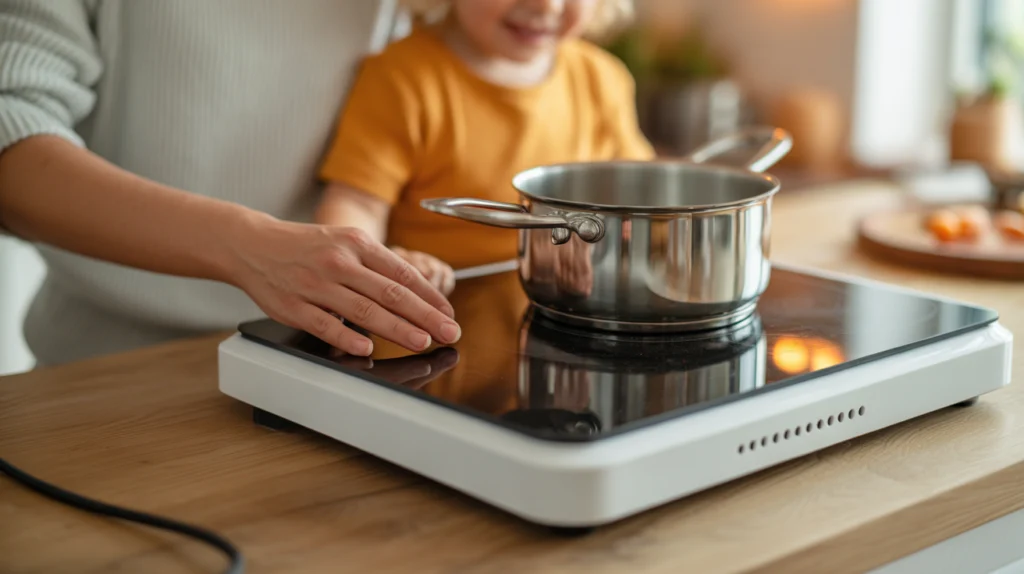
Understanding how induction cooking works usually brings up a lot of safety questions. Fortunately, it is one of the safest efficient cooking methods available for the home.
Are Electromagnetic Fields Harmful?
Induction stoves emit very low-frequency electromagnetic fields. The World Health Organization has stated these low-level fields do not pose a threat to human health. You are exposed to similar fields from your automatic food mixer, microwave, and smartphone every day.
Is Induction Safe for Pacemakers?
If you have a cardiac pacemaker, you should consult your doctor before using an induction cooker. Most modern pacemakers are well-shielded against everyday appliances. But, safety guidelines usually suggest keeping your chest a safe distance from the active induction zones.
Why Induction Reduces Burn Risk
The reason is the cooktop itself does not generate heat. The glass stays cool compared to conventional ovens or an electric plate cooktop. If you accidentally touch the glass near the pan, you are much less likely to get a severe burn. This makes induction cookers fantastic for families with young children or curious pets.
Does Induction Produce Radiation?
No, built-in induction cooktops do not produce harmful, ionizing radiation. Unlike microwaves, electrical induction heating just uses a simple magnetic field to cook your food. There is no radioactive danger to you, your family, or your meals.
What Happens If You Turn It On Without a Pan?
If you turn on an induction range without a pot, absolutely nothing happens. The stove will usually flash an error code or beep at you to signal a mistake. If there is no magnetic metal present, the appliance will not generate electric heat and will automatically turn itself off.
Why Does My Induction Cooktop Make Noise?
If you are new to using an induction top, the sounds it makes can be a little surprising. Let’s break down what you are actually hearing during your cooking style.
What Causes Buzzing or Humming Sounds?
When the alternating current forces the magnetic field back and forth, it causes the metal molecules in your pan to vibrate. This high-frequency vibration often sounds like a low buzz or a gentle hum. It is completely normal and is just the sound of the magnetic physics at work.
Does Pan Quality Affect Noise?
Yes, cheaper, lighter pans tend to buzz much louder on induction cooking surfaces. Multi-clad pans can also vibrate noisily if the metallic layers aren’t perfectly bonded during production. Heavy cast iron pots usually run totally silent because they are too dense to vibrate easily.
Why Clicking Sounds Are Normal
You might hear a distinct clicking noise when cooking on low heat settings. This is the sound of the stove’s internal relays cycling power to maintain consistent heating without burning your food. It is like how conventional ovens click to maintain a steady temperature.
When Noise Indicates a Problem
A cooling fan runs inside the stove to protect the electronic computer boards from overheating. A gentle fan hum is normal for commercial kitchens and home units alike. But, if you hear violent grinding noises, the internal cooling fan might be broken and requires a prompt service call.
Is Induction More Energy Efficient?
Energy efficiency is a massive part of how induction cooking works in the modern home. Let’s look at the actual numbers to see the savings.
Energy Transfer Efficiency Explained
The U.S. Department of Energy has thoroughly tested production efficiency for different stoves. They measure how much of the energy consumed actually makes it into the food instead of the air.
| Cooking Method | Energy Efficiency |
|---|---|
| Induction Cooktops | 85% to 90% |
| Electric Resistance Coils | 70% to 75% |
| Gas Stoves | 35% to 40% |
Does Induction Lower Electricity Bills?
Because an induction stove is highly efficient. It uses less raw electricity than a free-standing oven/stove combination. However, cooking only makes up a small fraction of your total home energy bill. You probably won’t see a massive drop in your monthly electricity costs, but every bit helps the environment!
Induction vs Gas: Which Costs Less Long-Term?
Electric cooking is generally more expensive than natural gas in many areas. Even though gas cooking efficiencies are terribly low, gas can sometimes be cheaper to operate month-to-month. Once you factor in the money saved from not having to cool hot kitchens, induction easily evens the score.
Environmental Impact Comparison
Gas stoves burn fossil fuels directly inside your home, releasing carbon dioxide. An induction unit runs entirely on clean electricity. If your local power grid uses clean energy, your cooking method leaves a virtually zero-carbon footprint.
Does Induction Reduce Indoor Air Pollution?
Recent studies highlight this fact. A gas stove releases nitrogen dioxide and harmful particulate matter into your kitchen air. Because there is no combustion with an induction cooktop, your indoor air quality remains clean and safe. This is a massive health benefit for people with asthma or respiratory issues.
Induction vs Gas vs Electric: Which Is Better?
Let’s do a direct comparison of these popular cooking methods to see why induction is winning.
Heating Speed Comparison
We already know that induction crushes the competition when boiling water. Gas takes a long time because the flame licks up the sides of the pan, wasting heat. Traditional cooktops are slow because you have to wait for the solid heating element to warm up first.
Temperature Control Precision
Professional chefs love gas because you can make immediate heat adjustments. Induction matches this responsive temperature control perfectly. When you lower the heat on an induction stove, the magnetic field stops immediately, dropping the temperature just as fast as gas cooktops.
Safety Differences
Gas cooking comes with the risk of open flames, gas leaks, and carbon monoxide. Electric stoves stay dangerously hot long after you turn them off. An induction cooker wins the safety category easily because there are no fumes and no lingering open heating elements.
Maintenance and Cleaning
Cleaning regular cooking tops involves removing heavy grates and scrubbing baked-on food from burners. Because the glass cooktop of an induction range rarely gets hot enough to bake food onto it, spills wipe away effortlessly. A quick swipe with a damp cloth is usually all it takes to clean your electric cooktop.
Installation Requirements
Gas cooktops need a dedicated natural gas line piped into your kitchen. Electric cooktops and built-in induction cooktops both need a heavy-duty 240-volt electrical outlet. If you are switching from gas to an electric cooktop, you will likely need to hire an electrician to install the proper wiring.
Power Outage Considerations
The one area where gas cookers hold an advantage is during a blackout. You can often still light a burner with a match during a storm. An induction oven/stove is a highly advanced machine; if the power goes down, you cannot cook unless you have a home generator.
Portable Induction Burners vs Built-In Induction Cooktops
You do not need to renovate your entire kitchen to experience how induction cooking works. Portable cooktop units are incredibly popular.
How Portable Induction Burners Work
Portable induction units operate using the exact same copper coil and magnetic physics as a full-sized stove. Single-burner countertop models plug right into a standard wall outlet. These stand-alone induction modules are lightweight and easy to store in a cabinet when not in use.
Are Portable Models as Powerful?
A standard U.S. wall outlet can only provide about 1800 watts of power. A built-in cooktop runs on a 240-volt line, allowing individual cook zones to hit 3000 watts or more. While portable induction units are great, they will not boil water quite as fast as a large, built-in induction machine.
Best Use Cases for Portable Units
I highly recommend a portable cooktop for college dorms, RVs, and tiny homes. They are also fantastic as an extra burner for holiday cooking when your main stove is full. Many people buy a single-burner countertop unit just to test out induction cooking before committing to a full-sized stove.
Can Portable Induction Replace a Full Stove?
If you have a very small kitchen or rarely cook large meals, a portable induction unit can absolutely serve as your main stove. Many apartment dwellers use a two-burner stand-alone induction module alongside rice cookers and a toaster oven. It is a highly efficient, space-saving setup for daily use.
Ideal Wattage for Portable Cooking
When shopping for portable induction cookers, look for one rated at 1800 watts. This is the most safe limit for a standard household plug. Cheaper 1300-watt electric cookers simply will not give you the searing power you need for a good steak.
What Are the Downsides of Induction Cooking?
While I believe induction stoves are amazing, I want to be completely honest about their drawbacks. They are not the perfect fit for everyone.
Higher Upfront Appliance Cost
Historically, induction ranges have been much more expensive than basic electric or gas models. While prices are dropping, high-quality induction cooktops will still set you back a fair amount. This is a significant upfront investment for major kitchen appliances.
Electrical Upgrade Requirements
As mentioned earlier, if your home only has a gas hookup, you will need an electrician. Running a new 240-volt circuit to your oven can be costly depending on your home’s age. This hidden cost catches a lot of homeowners by surprise.
Cookware Compatibility Issues
Having to replace your favorite pure copper or aluminum pans can be incredibly frustrating. Buying completely new cookware from premium brands is not cheap. You must factor the cost of induction-compatible cookware into your renovation budget.
Learning Curve for Temperature Control
Because how induction cooking works is so intensely fast, there is a distinct learning curve. Your old habits of turning the dial to high to preheat a pan will quickly result in over-heated pans and smoking kitchens. You have to relearn your heat adjustments and prep your ingredients faster.
Repair and Replacement Costs
Underneath the glass, an induction hob is essentially a complex computer circuit board. If a component fails after the warranty expires, repairing the internal motherboards can be very expensive. Sometimes, replacing a broken ceramic cooking surface costs almost as much as buying a completely new stove.
Can You Use Cast Iron, Carbon Steel, and Specialty Pans on Induction?
Enthusiast cooks often have very specific pans like heavy woks or large skillets. Let’s look at how specialty cooking vessels handle induction heating.
Will Cast Iron Scratch the Glass Surface?
Cast iron is perfectly magnetic, but its rough, bumpy exterior can easily scratch delicate glass cooktops. To prevent scratches on your cooking surface, never slide your cast iron pan; always pick it up to move it. You can even place parchment paper between the pan and the stove while cooking!
Does Carbon Steel Warp on Induction?
Carbon steel pans are fantastic for an induction cooktop because they are highly magnetic. But, thin carbon steel can warp permanently if exposed to intense, sudden heat. Always heat your pans slowly on low heat settings to prevent the metal from buckling.
Using Woks on Induction Cooktops
Traditional round-bottom woks do not work well on standard cooking surfaces. It’s because they cannot make proper flat contact. You need wok-shaped cooktops designed for round pans, or you must buy a flat-bottomed wok. You can still find high-end manufacturers who sell dedicated wok bowls that cradle the round pan perfectly.
Can You Use Pressure Cookers on Induction?
Yes, as long as the base of the pressure cooker is made of magnetic stainless steel. Modern stovetop pressure cookers work incredibly well on induction zones. The fast cooking style brings the cooker up to pressure much faster than a standard gas flame ever could.
How to Maximize Performance on an Induction Cooktop
Once you understand the science of how induction cooking works, you can use it to cook better food.
Choosing the Right Pan Size for Burner Zones
Cookware sizing is critical for equivalent heating. If your pan is much smaller than the induction-heating coil beneath the glass, the stove might not detect it. If the pan is too large for the induction cook zones, the edges will remain cold because the magnetic field only heats the metal directly above the multiple induction coils.
Avoiding Heat Cycling Issues
Sometimes, pans will rapidly boil, stop, and boil again. This heat cycling usually happens with thin pans that cannot hold onto heat. Upgrading to heavy cookware with high thermal mass will absorb the energy smoothly and stop the annoying cycling.
Best Practices for Searing
To get a restaurant-quality sear on a steak, use a heavy cast iron or carbon steel skillet. Preheat the pan on medium heat for about three minutes so the good heat conductor absorbs the heat evenly. Avoid the power boost setting for searing, as it can easily ruin over-heated pans.
How to Prevent Overheating Oils
Induction units transfer energy so fast that cooking oils can reach their smoke point in a matter of seconds. Never walk away from a preheating pan with oil in it. Keep a close eye on the pan until you learn your new stove’s true power and heat settings.
Cleaning and Maintenance Tips
The best way to maintain your electric cooktop is to wipe up spills immediately after cooking. Use a dedicated ceramic cleaner and a non-abrasive scrubbing pad for stubborn grease. Never use harsh chemicals or steel wool, as they will permanently dull the beautiful glass finish.
Is Induction Cooking the Future of Home Kitchens?
When you look at the big picture of how induction cooking works, it is hard to deny its immense momentum. It represents a major shift in modern home design and energy efficiency.
Trends Toward Electrified Homes
We are moving rapidly toward total home electrification. From electric vehicles in the garage to heat pumps in the HVAC system, burning fossil fuels at home is phasing out. Induction stoves are the natural next step for creating an all-electric, energy-efficient household.
Government Incentives and Regulations
The government is actively encouraging this shift to cleaner induction equipment. The recent Inflation Reduction Act includes massive rebates for households to switch from gas to induction ranges. Check your local state programs, as they often offer additional rebates for upgrading your electrical panel.
Smart Cooktop Technology Integration
Induction technology plays nicely with the smart home revolution. Modern built-in cooktop units feature Bluetooth connectivity to communicate with your overhead vent hood automatically. Some even come with smart probes that tell the machine to turn off exactly when your meat reaches the perfect temperature.
When Induction Makes the Most Sense
If you are building a new home, remodeling an old kitchen, or care deeply about indoor air quality, induction cooktops are a no-brainer. They give you the speed of a microwave, the responsive temperature control of gas, and the sleek look of modern tech. Now that you know exactly how induction cooking works, you are ready to cook faster, cleaner, and smarter.
FAQs How Induction Cooking Works
Do I need to buy all new pans for an induction stove?
Not necessarily! If your current pots and pans are made of cast iron or magnetic stainless steel, they will work perfectly. Just test them with a standard refrigerator magnet. If the magnet sticks strongly to the flat bottom, your cookware is ready to go.
Is induction cooking faster than gas or electric?
Yes, it is significantly faster. Because induction uses magnetic fields to heat the pan directly, it wastes almost no time or energy. You can boil a large pot of water in nearly half the time it takes on a traditional gas or electric stove.
Are induction cooktops safe for families with young children?
Absolutely. Since the glass cooktop does not generate its own heat, the surface stays much cooler than a traditional electric or gas stove. Plus, there are no open flames, and the burner automatically turns off if there is no magnetic pan present.
Do induction stoves use a lot of electricity?
No, they are actually incredibly energy efficient. Induction transfers up to 90% of its energy directly to your food. This means it uses less raw electricity than a traditional electric coil stove to do the exact same job, keeping your kitchen cooler in the process.
Can an induction cooktop scratch easily?
The ceramic glass surface is highly durable, but it can scratch if you drag heavy, rough pots across it. To keep your cooktop looking brand new, always lift your cast iron pans instead of sliding them, and wipe up sugary spills right away.
Conclusion
I have shown you exactly how induction cooking works, the decision should be much easier. This modern technology is not just a passing trend; it is a major lifestyle upgrade for any home. Induction offers unbeatable speed, precise temperature control, and top-tier energy efficiency.
Best of all, it keeps your kitchen cooler and completely eliminates harmful indoor gas emissions. There is a slight learning curve and a firm need for magnetic pots and pans. But the safety and performance benefits are absolutely worth the investment. If you start small with a portable burner or go all-in with a sleek built-in cooktop. You will see why so many cooks are embracing this incredible cooking revolution.
External Sources
https://homes.rewiringamerica.org/articles/induction/how-induction-stoves-work