
Key Takeaways
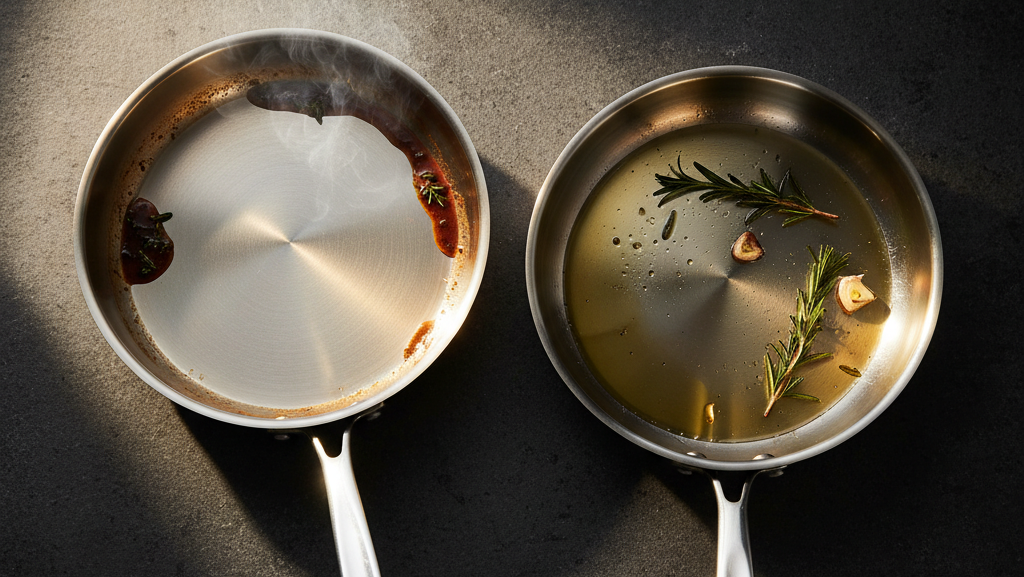
- Pure titanium cookware is marginally safer and more inert than stainless steel. Most “titanium” pans on the market are actually aluminum or stainless steel with a titanium coating. It’s a critical distinction that changes the health equation entirely.
- Stainless steel does leach small amounts of nickel and chromium into food, especially when cooking acidic dishes in new pans. For most people, this falls well within safe limits. For those with nickel allergies, it matters significantly.
- For the least toxic stainless steel, choose 18/0 (400-series) or medical-grade 316 stainless steel. Both contain little to no nickel, the primary leaching concern.
- Performance-wise, stainless steel wins for most home cooks: better heat distribution (especially tri-ply or multi-clad), broader oven compatibility and a far wider price range.
- Neither material is dangerous for the average person. The health differences are real but modest. Your cooking habits (high heat, acidic foods, scratched surfaces) matter more than the material itself.
Introduction
A 2021 survey by the American Chemical Society found this. Over 60% of home cooks worry about chemicals leaching from their cookware into food. Yet most buying guides still lead with price and aesthetics, not the chemistry. That gap is exactly why I created this post.
The titanium vs. stainless steel debate sounds simple on the surface. In practice, it has layers that most comparison articles skip. The first is the difference between pure titanium and titanium-coated pans. The second is the specific stainless steel grades that contain zero nickel. Third is the real-world conditions under which leaching actually becomes a problem.
By the end of this post, you’ll know which material is healthier, and safer for specific risk groups. Also exactly what to look for on a product label before you buy.
Is Titanium Cookware Better Than Stainless Steel?
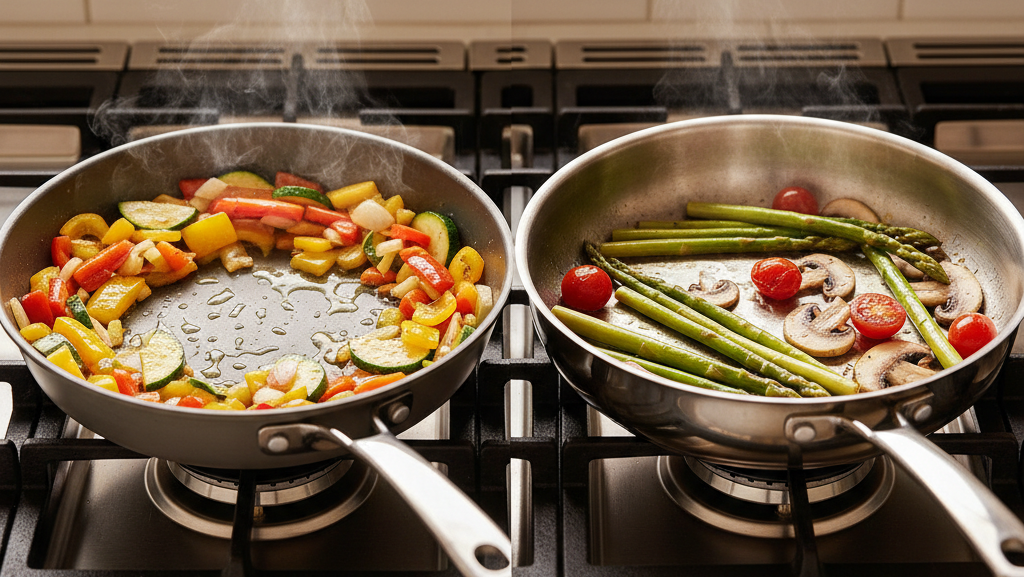
Neither material is universally better, it depends on what you’re optimizing for. Titanium wins on inertness and weight. Stainless steel wins on heat performance, versatility and value.
I mostly cook with stainless steel because it is strong, heats up fast and evenly. Two features important to me at my job as a chef. Great for sauteing, simmering sauces or searing fish, burgers, even making creep. Because of my experience, I can adapt to using a Stainless steel pan in so many cooking situations. It shines in high heat situations and can go in the oven without collecting damage.
Where Titanium Wins
Titanium’s strongest argument is its near-zero chemical reactivity. According to a review published in the International Journal of Environmental Research and Public Health. Titanium is so biocompatible that it’s the material of choice for surgical implants, bone screws and dental fixtures. It does not react with body tissue or food acids under normal conditions.
Beyond chemistry, titanium is 45% lighter than stainless steel at the same volume. This matters for large stockpots or woks you’re lifting repeatedly. It’s also corrosion-resistant, it won’t rust, pit, or stain even with heavy use.
Where Stainless Steel Wins
Stainless steel is a significantly better conductor of heat than pure titanium. Thermal conductivity for titanium sits around 22 W/m·K, compared to roughly 16 W/m·K for 316-grade stainless. But that gap closes alot when stainless steel is bonded with aluminum or copper cores in tri-ply or multi-clad constructions. They reach effective conductivity values above 150 W/m·K. [Read more at: Materials Science Review]
In plain terms: a quality tri-ply stainless steel pan will heat more evenly than a pure titanium pan. Stainless steel also handles higher oven temperatures without concern. It works on all stovetop types including induction, and offers a vastly wider price range.
The Honest Verdict for Most Home Cooks
If your priority is pure inertness and you want the lightest possible pan, pure titanium is the better choice. If you cook a wide variety of dishes, want reliable browning and heat control, and don’t have a nickel sensitivity. Then a quality tri-ply stainless steel pan outperforms titanium at most price points.
| Feature | Pure Titanium | Stainless Steel (Tri-Ply) |
|---|---|---|
| Chemical reactivity | Near zero | Low (some nickel/chromium leaching) |
| Heat distribution | Poor without coating | Excellent |
| Weight | Very light | Moderate |
| Induction compatible | No (unless bonded) | Yes |
| Oven safe temp | ~500°F+ | ~500°F+ |
| Price range | High | Wide ($30–$300+) |
| Durability | Excellent | Excellent |
Which Is Healthier to Cook With: Titanium or Stainless Steel?
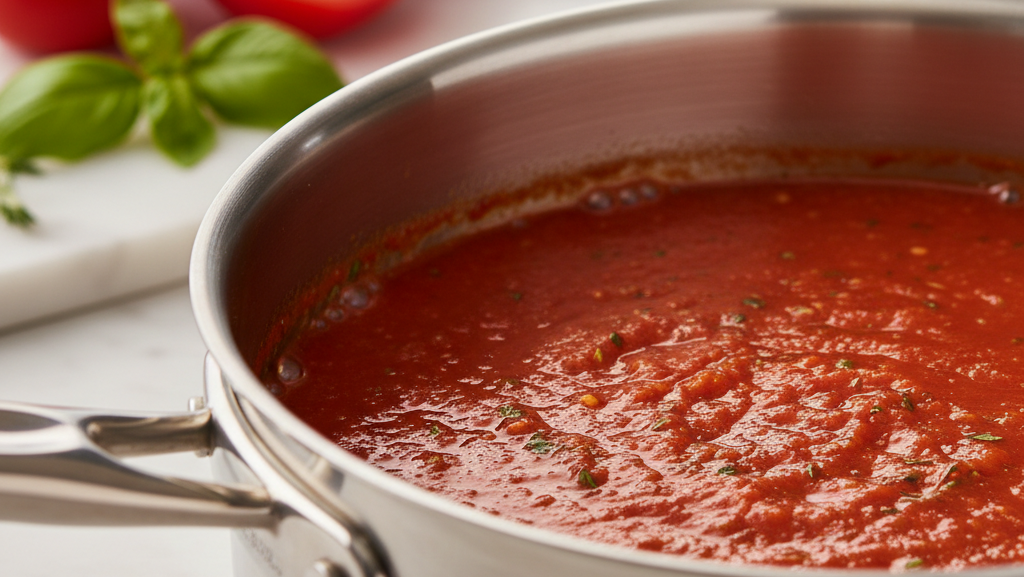
Titanium is the healthier option on a purely chemical basis. It releases no detectable metals into food under normal cooking conditions. Stainless steel releases trace amounts of nickel and chromium. This accurs when cooking acidic foods in new, unscratched pans.
How Metal Leaching Actually Works
Metal leaching happens when acidic compounds in food (tomatoes, citrus, vinegar, wine) react with the surface of a pan. The reaction causes microscopic amounts of metal to dissolve into the food. The key variables are: acidity of the food, heat level, cooking duration, and the age/condition of the pan.
A peer-reviewed study in the Journal of Agricultural and Food Chemistry tested nickel and chromium leaching from stainless steel pans by cooking tomato sauce. New pans leached significantly more metal than pans that had been used for several months. After five uses, leaching rates dropped by over 80%.
This is important context. A well-seasoned stainless steel pan leaches far less than a brand-new one. The surface oxidizes over time and becomes more stable.
Titanium’s Reactivity Profile
Pure titanium is essentially non-reactive with food. It doesn’t leach measurable metals into acidic or alkaline foods at any cooking temperature you’d use at home. National Institute of Health confirmed biocompatibility review confirms this. Titanium’s oxide layer is self-healing and chemically stable across a wide pH range.
The significant caveat: most pans sold as “titanium” are not pure titanium. They’re aluminum or stainless steel pans with a titanium-reinforced non-stick coating (often titanium dioxide particles embedded in PTFE). The health profile of these pans depends on the base material and the integrity of the coating, not the titanium content.
Stainless Steel’s Reactivity Profile
The EFSA’s 2020 metal migration study found out this. Stainless steel cookware can leach between 0.13 and 0.16 mg/kg of nickel into acidic foods cooked for extended periods. That figure sounds alarming until you compare it to the tolerable daily intake. The EFSA sets the safe nickel threshold at 13 micrograms per kilogram of body weight per day.
For most adults, the nickel from stainless steel cookware represents a small fraction of total daily nickel exposure, most of which already comes from nuts, legumes, grains, and chocolate. The American Institute for Cancer Research confirms there is no established link between cooking in stainless steel and cancer risk for the general population. [Source: AICR]
The real health risk from stainless steel cookware is narrow. It affects people with diagnosed nickel allergies or sensitivities, not the general population.
Which Is Safer: Titanium or Stainless Steel?
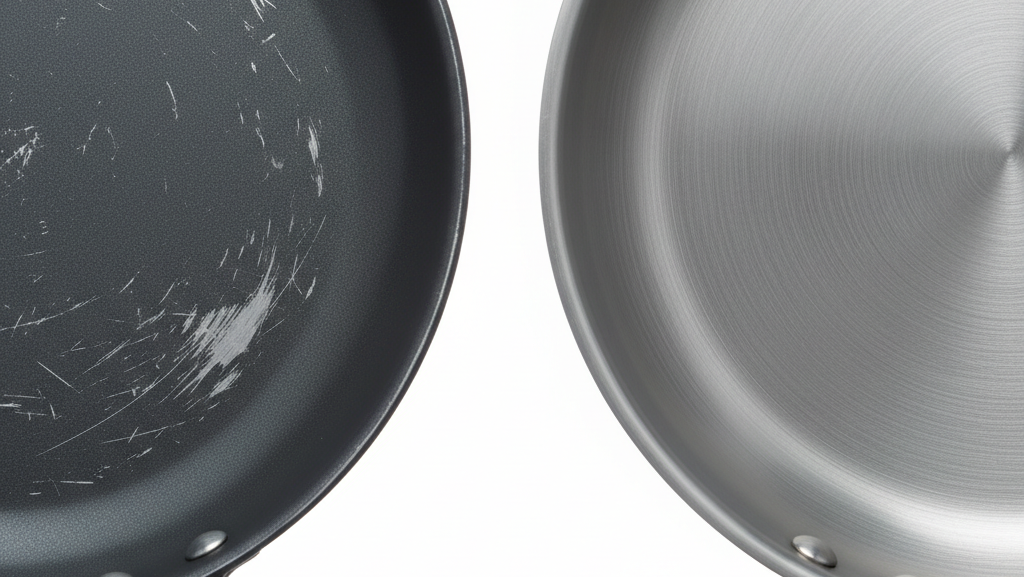
Both materials are safe for the vast majority of people under normal cooking conditions. The safety question gets more nuanced when you factor in the type of “titanium” pan you’re actually buying. Also the specific conditions that increase metal migration from stainless steel.
The Coating Problem: Pure Titanium vs. Titanium-Coated Pans
This is the distinction that almost every comparison article misses. It changes the safety calculus.
Pure titanium pans (such as those made by Snow Peak or Toaks, primarily marketed to backpackers) are made from solid titanium. They’re safe, inert, and durable.
Titanium-coated pans: the vast majority of what’s sold in home goods stores under the “titanium” labeldo this . They use titanium as a marketing term for a scratch-resistant reinforcement in a non-stick coating. These pans are aluminum-bodied with a PTFE-based coating that contains titanium particles.
When that coating is intact, the pan is safe. When the coating is scratched, chipped, or overheated above 500°F (260°C). The safety profile shifts to that of the underlying aluminum and PTFE, not titanium. Learn more from: Consumer Reports
When Stainless Steel Becomes a Concern
Stainless steel cookware raises legitimate (if modest) concerns in three specific scenarios:
- Cooking highly acidic foods for long periods in new pans: tomato-based sauces, wine reductions, citrus-heavy dishes.
- Using damaged or heavily scratched pans: surface damage increases leaching surface area.
- Cooking for people with nickel allergies or sensitivities: even low-level nickel exposure can trigger reactions in sensitive individuals.
Outside these scenarios, the risk is negligible for most adults.
Risk Context: Who Should Actually Be Cautious
Nickel allergy is more common than most people realize. According to the Nickel Institute, approximately 10-15% of the population has some degree of nickel sensitivity. The rates are higher in women due to prolonged exposure through jewelry. For this group, switching to 18/0 stainless steel or 316-grade stainless (both low-nickel) is a meaningful upgrade. It’s not just a marketing preference.
People managing inflammatory bowel conditions or compromised gut barriers may also absorb metals at higher rates. This makes lower-leaching cookware a reasonable precaution. tAlthough consulting a physician is the right first step.
Which Type of Stainless Steel Is the Least Toxic?
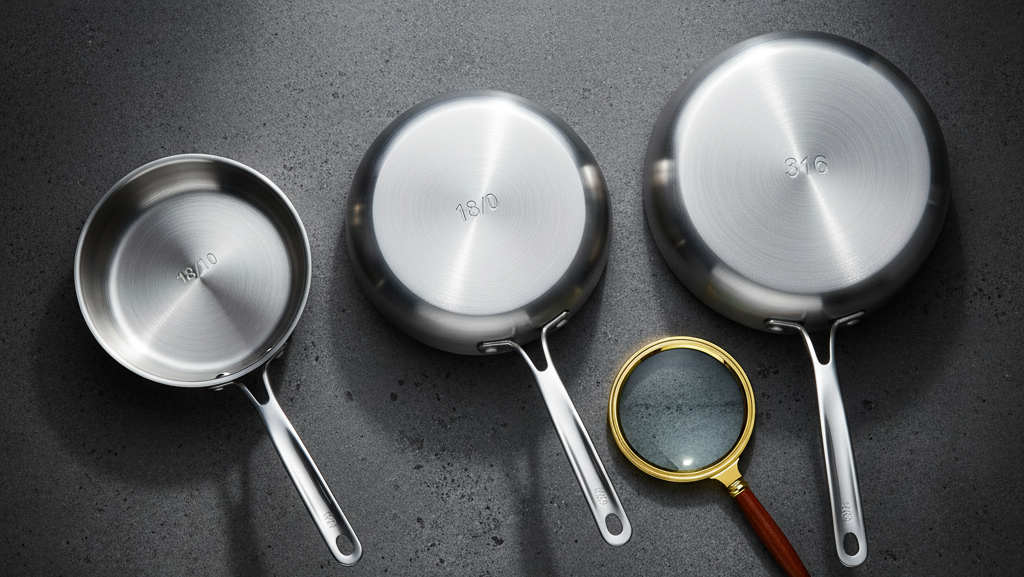
18/0 stainless steel (also called 400-series) and 316 medical-grade stainless steel are the least toxic options. They contain the lowest nickel content of any culinary-grade stainless steel.
Understanding Stainless Steel Grades (18/10, 18/8, 18/0, 316)
The numbers on stainless steel refer to the ratio of chromium to nickel by percentage. Here’s what each grade means in practice:
| Grade | Chromium | Nickel | Common Use | Nickel Risk |
|---|---|---|---|---|
| 18/10 (304) | 18% | 10% | Premium cookware, flatware | Higher leaching potential |
| 18/8 (304) | 18% | 8% | Standard cookware | Moderate |
| 18/0 (430) | 18% | 0% | Budget cookware, some bakeware | Minimal |
| 316 (Marine) | 16% | 10–14% | Medical/surgical grade | Low leaching due to molybdenum |
The counterintuitive entry here is 316 stainless steel. It contains nickel, but the addition of 2-3% molybdenum creates a more stable, denser oxide layer that reduces metal migration into food. It’s the grade used in pharmaceutical manufacturing and surgical tools for exactly this reason. [To learn more go to EFSA, 2020]
The Nickel Allergy Factor
If you or someone you cook for has a confirmed nickel allergy, 18/0 stainless steel is your safest stainless option. It contains no intentional nickel and leaches the least of any standard stainless grade. The tradeoff is that 18/0 is less corrosion-resistant than 300-series grades. It may show surface rust over time if not properly dried and maintained.
For nickel-sensitive individuals who want both safety and durability. 316-grade stainless steel is worth the premium. Its molybdenum content actively suppresses leaching even in acidic environments. That’s why it’s the choice for health-conscious cookware brands.
What to Look for When Buying
When shopping for stainless steel cookware, here’s what to check:
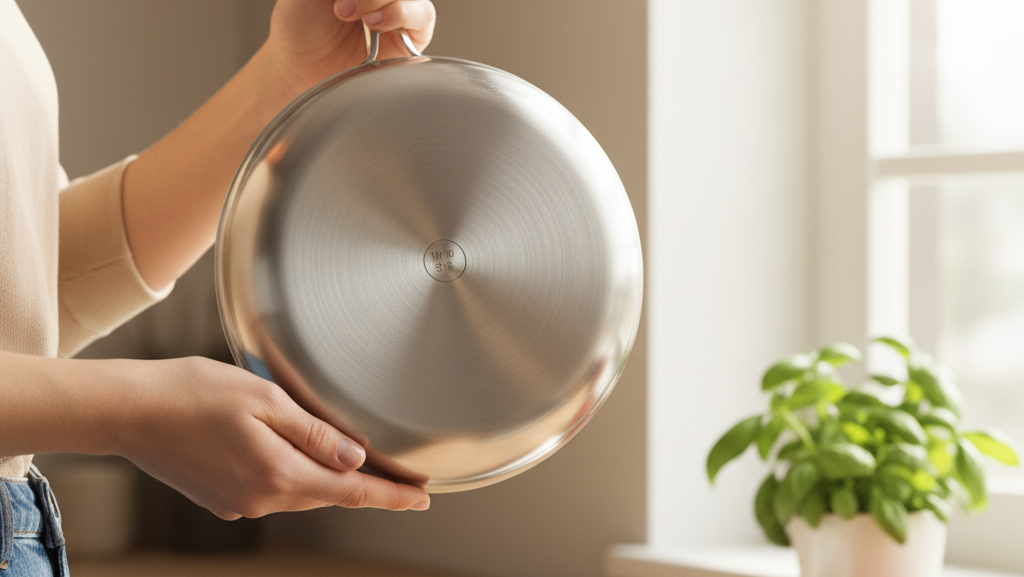
- Look for “18/0” or “430” on the label if nickel avoidance is the priority.
- Look for “316” or “surgical-grade stainless” if you want the best combination of durability and low leaching.
- Avoid pans that list “titanium” without specifying pure titanium: this is almost always a coating claim, not a material claim.
- Choose tri-ply or multi-clad construction (stainless/aluminum/stainless sandwich) for better heat distribution regardless of grade.
- Season new pans before first use: cook a fat in the pan several times before using it for acidic foods. This builds the protective oxide layer faster.
FAQ Is Titanium or Stainless Steel Better
Does titanium cookware scratch easily?
Pure titanium is highly scratch-resistant and one of the harder metals used in cookware. Titanium-coated non-stick pans, however, scratch similarly to any coated pan. Metal utensils will damage the surface over time. Always check whether your pan is pure titanium or titanium-coated before assuming durability.
Can you use metal utensils on titanium pans?
On pure titanium pans, yes. On titanium-coated non-stick pans, no. The coating will degrade with metal utensils like any non-stick surface. It’s why the distinction between pure and coated titanium matters so much in practice.
Is titanium cookware worth the higher price?
For most home cooks, no. Pure titanium’s performance advantages (light weight, inertness) are real. But don’t outweigh the heat distribution limitations and high cost. The exception is outdoor or camping cooking, where weight and durability are priorities over even browning.
Can stainless steel cookware cause nickel poisoning?
For the general population, no. Nickel migration from stainless steel cookware falls well below the EFSA’s tolerable daily intake threshold. Nickel poisoning from cookware alone would need an extreme volume of food cooked in new, damaged pans daily. The concern is real but context-dependent, primarily relevant to people with nickel allergies.
What cookware is safest for people with metal allergies?
For nickel-allergic individuals, the safest metallic options are 18/0 stainless steel, 316 stainless steel or pure titanium. Ceramic and enameled cast iron are also excellent alternatives, as they create a complete barrier between food and the base metal. Avoid 18/8 and 18/10 stainless steel.
Conclusion
Here’s the decision framework in plain terms. If you’re a generally healthy adult without a nickel sensitivity. A high-quality tri-ply stainless steel pan in 18/10 or 316 grade is the smarter buy. It has better heat performance, more versatile, and well within safe leaching thresholds. Season new pans before cooking acidic foods and replace any pan with significant surface damage.
If you have a nickel allergy, cook a lot of long-simmered acidic dishes, or want the most chemically inert option available. 18/0 or 316 stainless steel gives you the lowest leaching profile within stainless. Pure titanium (not coated) gives you zero reactivity at a significant price premium.
The most important takeaway: the label “titanium” on a pan tells you almost nothing about its actual safety profile. Read past it. Check the base material, the grade, and whether the titanium claim refers to the pan’s construction or a coating.
Your next step: before buying your next cookware. Check the product page for a stainless steel grade designation (18/0, 18/10, or 316). If the brand can’t tell you the grade, that’s information too.