
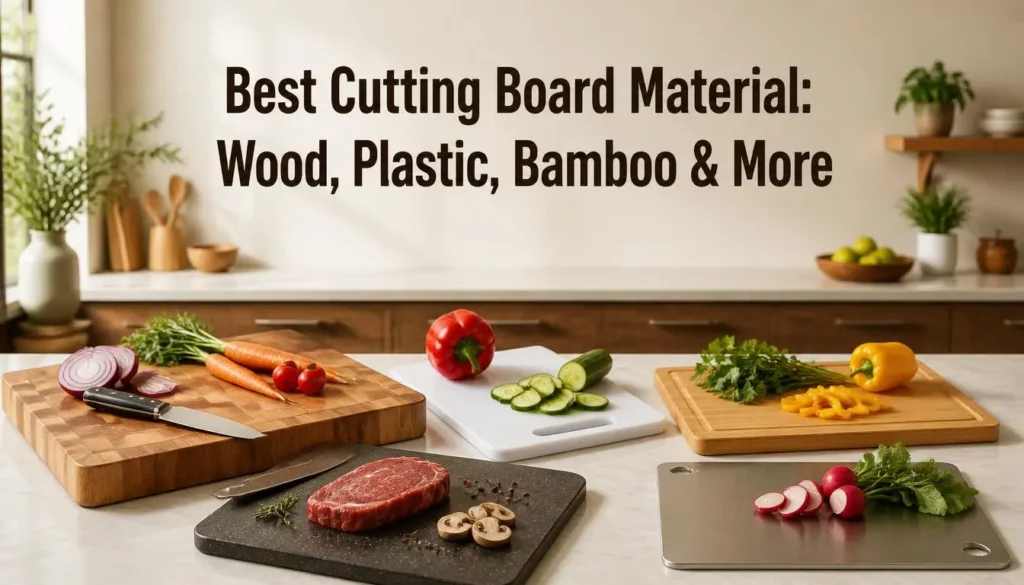
There’s no single best cutting board material for every kitchen. The right choice depends on what you’re cutting, how you clean up, and whether you’re protecting your knives or your countertop budget. For most home cooks, a hardwood board like maple handles everyday chopping best. But a dishwasher-safe plastic or composite board is the smarter pick for raw meat and poultry.
That’s the short answer. The longer one depends on which of those trade-offs actually matters to you. So here’s how to think through it material by material.
Key Takeaways
- Maple and other hardwoods are excellent all-purpose cutting boards.
- Wood and food-grade plastic are both considered safe when properly maintained.
- Use a dedicated board for raw meat and poultry to prevent cross-contamination.
- Plastic boards are convenient and dishwasher-safe but can shed microplastics.
- End-grain wood is especially gentle on knife edges.
- Titanium and metal boards can dull knives quickly.
- Wash boards after every use and oil wooden boards regularly.
- Replace any board with deep cracks or severe knife scars.
What’s the Healthiest Cutting Board Material?
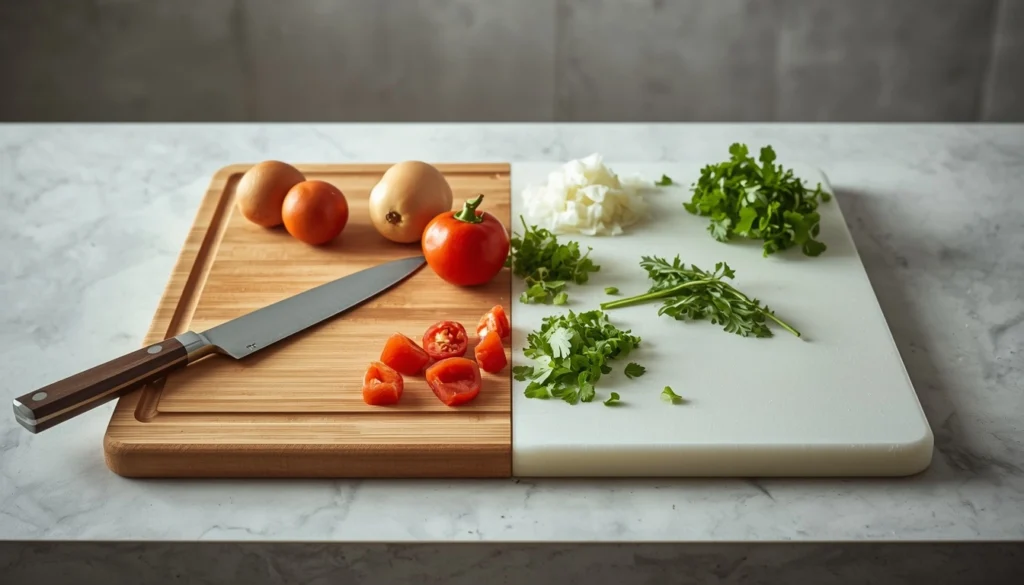
Solid hardwood and food-grade plastic are both considered safe by U.S. food safety authorities, as long as the surface isn’t cracked or heavily scarred. The bigger health question right now isn’t wood versus plastic. It’s what plastic boards shed into your food over time.
A 2023 study in Environmental Science & Technology found this. Normal chopping on polyethylene and polypropylene boards sheds enough plastic to add up to an estimated 7.4–50.7 grams of microplastic exposure per person, per year.
The same study found polypropylene boards shed more than polyethylene ones under identical cutting conditions. Long-term health effects from that exposure are still being studied, so it’s not a reason to panic. Yet it’s a real point in wood’s favor if avoiding microplastics matters to you.
During my years working as a chef, I came up with simular reasults myself. Whenever using polyethylene and polypropylene boards for light work like chopping seasonings. I dont worry about pieces of plastic contaminating my food. But if I am doing heavy chopping like butchering, it’s a concern.
This is because the strenght I use to get through the bones can damage the boaord and send pieces flying. I find wooden boards tend to absorb the impact of kife better than polyethylene and polypropylene. If You use a proper wooden gain it works even better.
What’s the Most Hygienic Cutting Board for Raw Meat?
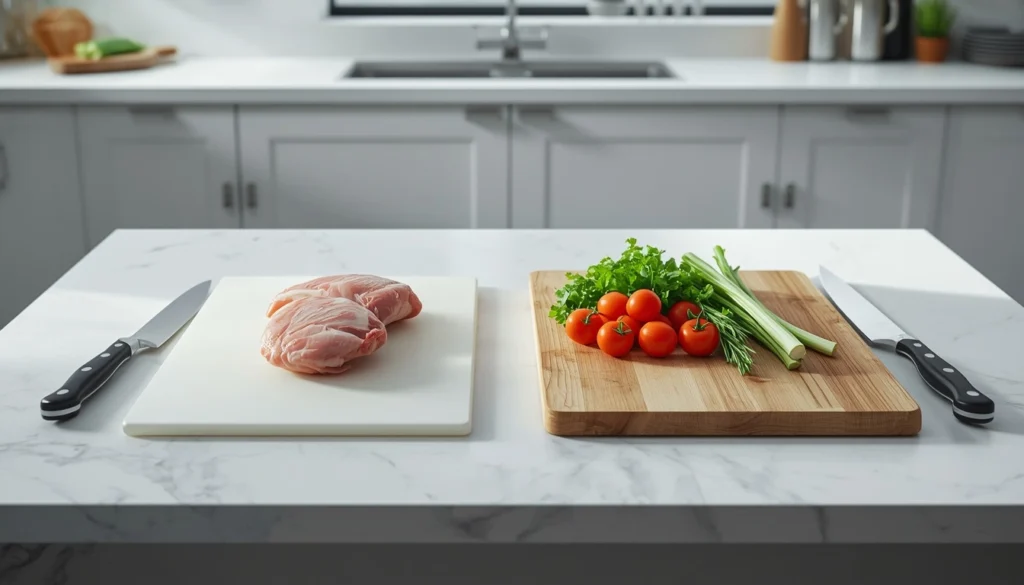
For raw meat and poultry specifically, either a solid wood board or a nonporous surface like plastic works. The key is using a separate board for meat and washing it properly after every use, not the material itself.
USDA’s Food Safety and Inspection Service says consumers may use either wood or a nonporous surface such as plastic, marble, or glass for raw meat and poultry. But it recommends a dedicated board for raw proteins so bacteria doesn’t transfer to foods that won’t be cooked.
That guidance holds up against older lab research, too. A well-known UC Davis line of studies on cutting board hygiene found that certified wooden surfaces made from hard maple or similar close-grained hardwoods are permitted under the FDA Food Code for exactly this reason. The tight wood grain doesn’t give bacteria much to hold onto once it dries.
The one wrinkle: a board only stays hygienic if it isn’t deeply scarred. Once knife grooves run deep, on wood or plastic, both are harder to clean. Also the surface stops being a reliable food-safe cutting surface, no matter what USDA says about the material itself.
What’s the Best Wood for a Cutting Board?
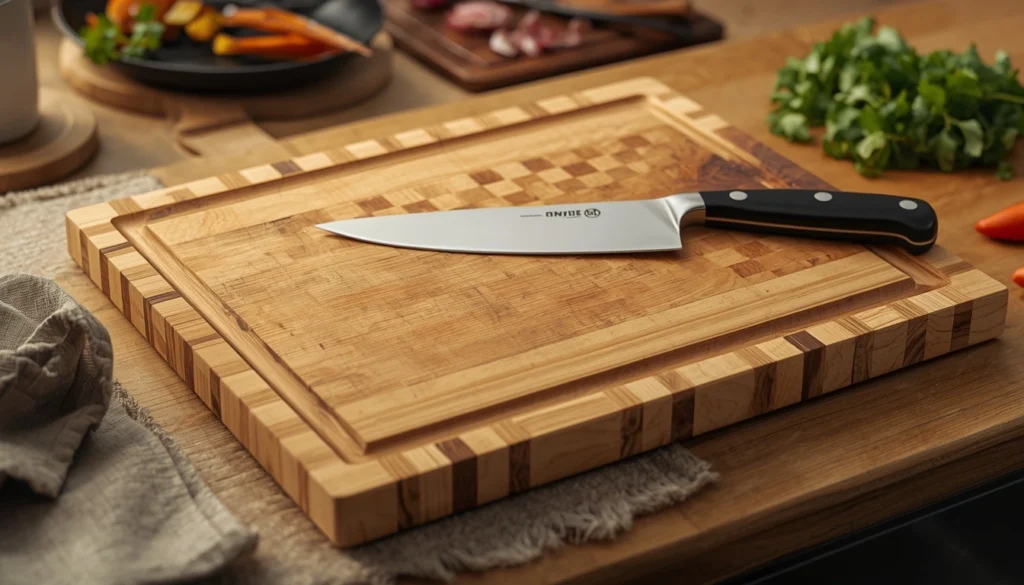
Hard, closed-grain woods like maple, walnut, and cherry make the best cutting boards. The reason is they’re dense enough to resist deep knife scarring without being so hard that they dull your blade. Among these, maple is the most common choice in professional kitchens for a reason. It’s affordable, durable, and named in the FDA Food Code as an approved wood for cutting boards.
End-grain construction (where you’re cutting into the end of the wood fibers, not across them) is gentler on knife edges than edge-grain boards. It tends to “self-heal” small knife marks over time, though it costs more and needs more frequent oiling. If you want one board that balances price, durability, and knife-friendliness, edge-grain maple is the safest default. If you’re willing to spend more and maintain it, end-grain walnut or maple is the upgrade.
Is a Titanium Cutting Board Worth It?
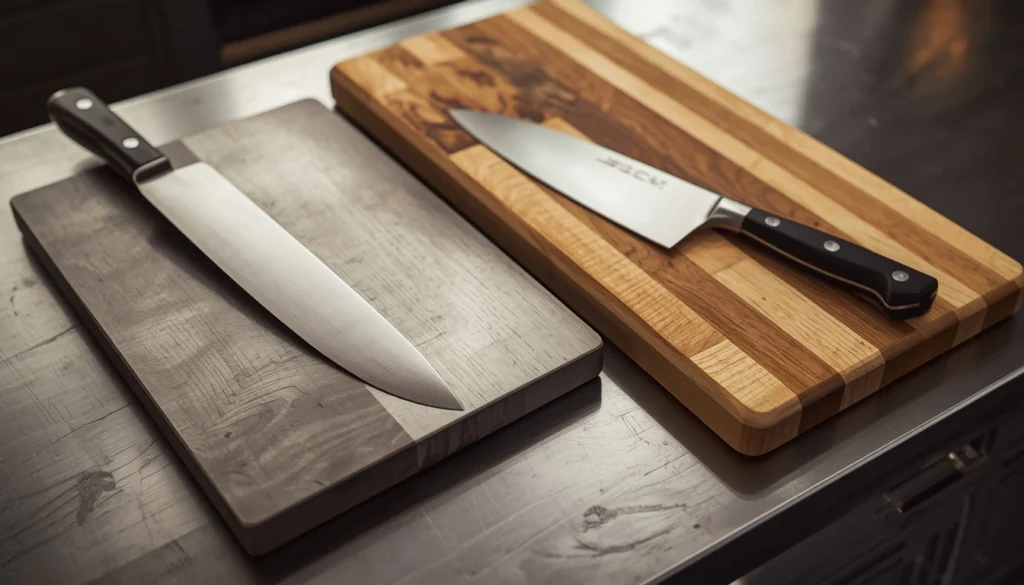
For most home cooks, no. Titanium and other metal cutting boards are harder on your knives than wood or plastic. Some marketers claim they “won’t dull your blade” but it doesn’t hold up in independent testing. America’s Test Kitchen tested hundreds of cutting boards and warns against metal and glass boards. They say these boards will roll the edge of a blade within just a few cuts.
That’s worth knowing if you’ve seen titanium boards marketed as scratch-proof and knife-safe. Those two claims are usually true only in the sense that the board won’t show marks. It’s because the hardness that resists scarring is the same hardness that wears down your knife edge instead.
Where a titanium or metal board can make sense is as a secondary board for a specific job. Cutting particularly messy or acidic foods you don’t want soaking into wood. Another is for travel and camping where durability matters more than knife care. It’s a niche pick, not an everyday one.
How Do You Clean and Maintain a Cutting Board?
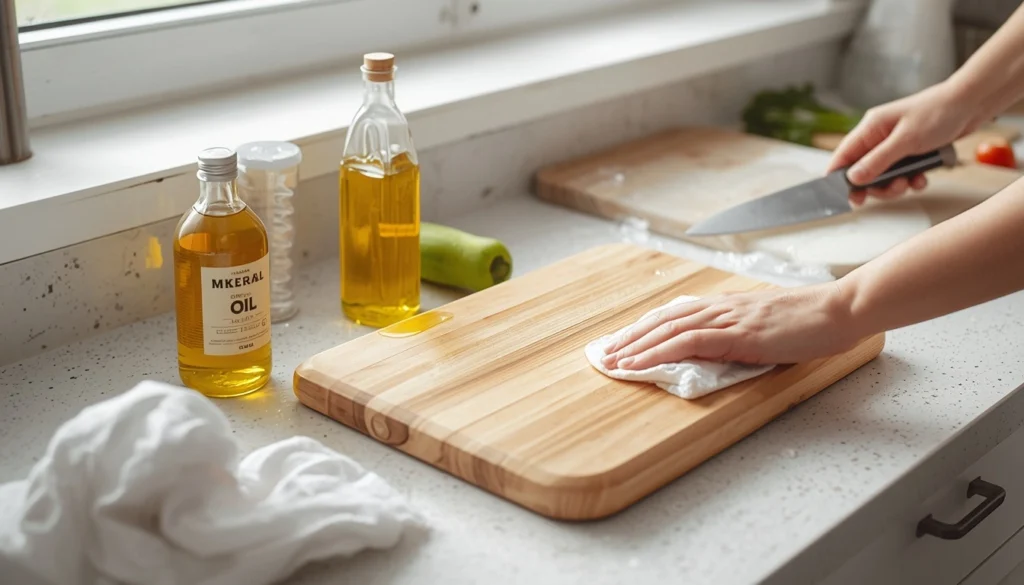
Wash any cutting board with hot, soapy water after each use, dry it right away. For wood boards oil it regularly so the surface doesn’t dry out and crack. Plastic and solid wood boards without cracks can generally go in the dishwasher. But laminated wood boards may split under the heat, so hand-washing is safer for those.
For oiling, food-grade mineral oil is the standard choice. It’s inexpensive, flavorless, and won’t turn rancid the way cooking oils like olive or vegetable oil will over time. Apply a thin, even coat, let it soak in fully (overnight is easiest), then wipe off anything the wood didn’t absorb. Most boards need reoiling every few weeks with regular use; you’ll know it’s time when the wood starts to look pale or feel dry to the touch.
Which Material Should You Actually Buy?
| Material | Best for | Watch out for |
|---|---|---|
| Maple / hardwood | Everyday chopping, knife care | Needs regular oiling, not dishwasher-safe |
| Plastic (HDPE) | Raw meat, dishwasher convenience | Sheds microplastics over time |
| Bamboo | Budget-friendly, moisture-resistant | Harder than hardwood, can dull knives faster |
| Composite | Raw meat, commercial-style durability | Less natural feel, can be pricier |
| Titanium / metal | Niche/travel use, scratch resistance | Dulls knives fastest of any material |
If you only own one board, a mid-size maple hardwood board covers the widest range of everyday tasks without compromising your knives. Add a dedicated plastic or composite board once you’re regularly working with raw meat or poultry, so you’re not relying on one surface for both jobs.
Frequently Asked Questions
What do professional chefs use for cutting boards?
Most professional kitchens use a mix, wood or composite boards for produce and general prep, and color-coded plastic boards for raw proteins. This is because plastic is easier to sanitize consistently at scale.
What is the safest cutting board material for raw meat?
Both wood and nonporous plastic are considered safe by USDA for raw meat and poultry. This is allowed only if you use a dedicated board for raw proteins and wash it thoroughly after each use.
Can you put a wood cutting board in the dishwasher?
Solid wood boards without cracks can survive a dishwasher cycle. Laminated or glued wood boards are prone to splitting from the heat and prolonged moisture, so hand-washing is the safer habit.
Conclusion
There isn’t one perfect cutting board material for every kitchen. For most everyday cooking, a quality maple or other hardwood board offers the best balance of durability, hygiene, and knife protection. If you frequently prepare raw meat or poultry, adding a dishwasher-safe plastic or composite board gives you an easier surface to clean and sanitize.
Titanium and other metal boards may resist scratches, but that durability comes at the expense of your knife’s edge. This makes them better suited to specialized uses rather than everyday chopping.
The best setup for most home cooks is simple: use hardwood for everyday prep and a separate plastic or composite board for raw proteins. Keep both clean, dry, and in good condition, and they’ll serve you well for years.
David Miller is a professional chef with 20+ years of experience cooking in hotels and restaurants. Read more of his cutting board guides on MyKitchenHints.