
TL;DR
- For most home cooks, a 10 to 12 inch bare cast iron skillet is the best first buy. America’s Test Kitchen calls 12 inches the best size for most cooks.
- Buy bare cast iron for everyday searing and frying. Buy enameled if you often cook acidic dishes and don’t want to season a pan.
- Seasoning is oil baked onto the iron. Cooking in the pan regularly keeps it going, and acidic foods can wear it down.
- Wash by hand and don’t leave the pan soaking, which invites rust.
- Cast iron can add iron to food, more so with acidic, moist, long-cooked dishes in newer pans.
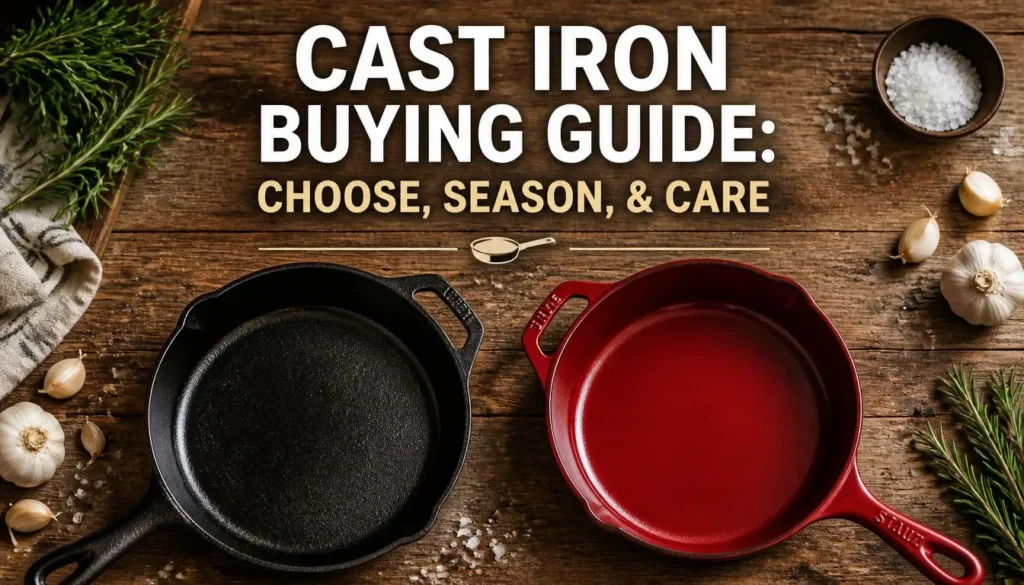
Choosing a first pan is the heart of any cast iron buying guide. The short answer is this: for most home cooks, a 10 to 12 inch bare skillet is the place to start. Size, bare versus enameled, and how you care for the pan matter more than the brand on the handle. Here’s how to think it through.
My First Cast Iron Pan
I always remember the first time I used a cast iron pan. The weight was the surprise. It was the heaviest pan I had ever held for its size.
Cooking with it felt new, a bit like cooking on a grill. Once I got it hot enough, it seared meat beautifully, and food didn’t stick. That mattered to me because food sticking and burning was one of my biggest fears when I started cooking.
That’s why I think cast iron suits new cooks who are nervous at the stove. It isn’t a non-stick pan, though. Food releases well when the pan is hot and seasoned, and getting there takes a little patience.
Cast Iron Buying Guide: What Size Skillet Should You Buy First?
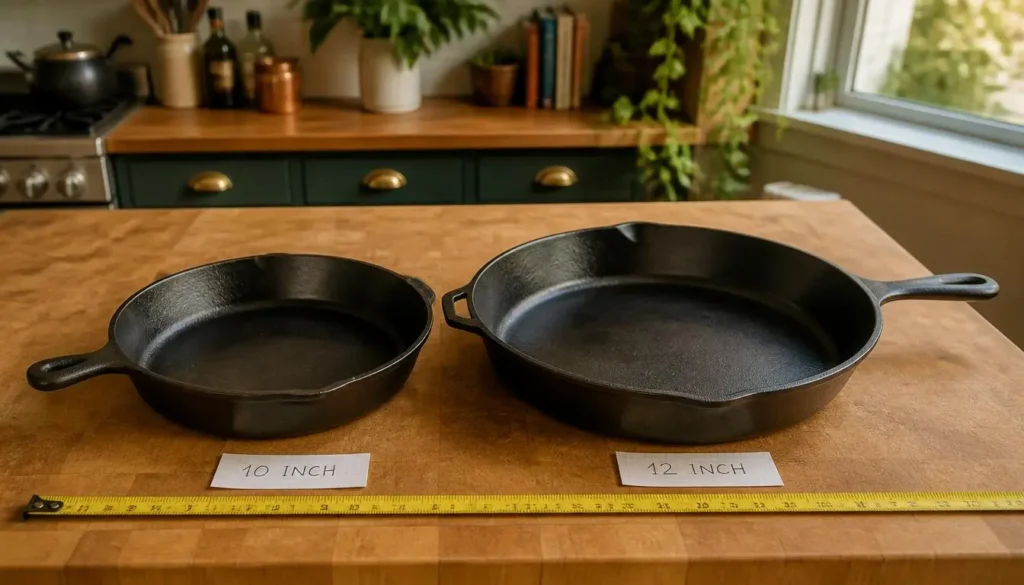
For most home cooks, buy a 10 to 12 inch skillet first. America’s Test Kitchen says a 12-inch skillet is the best size for most cooks, with room to cook for up to six people. A 10 inch pan still handles most daily jobs and is easier to pick up.
Size matters more with cast iron than with most pans because of the weight. A pan you dread lifting is a pan you won’t use. If you’re torn between two sizes, pick the one you can comfortably lift and move around the stove.
When a Smaller Pan Makes Sense
If you cook for one or two people, or storage space is tight, a 10 inch skillet is easier to handle. If you cook for a bigger household or like to batch cook, the 12 inch earns its weight. For a wider view of what else belongs in your kitchen, see my versatile cookware collection guide.
Cast Iron Buying Guide: Bare or Enameled Cast Iron?
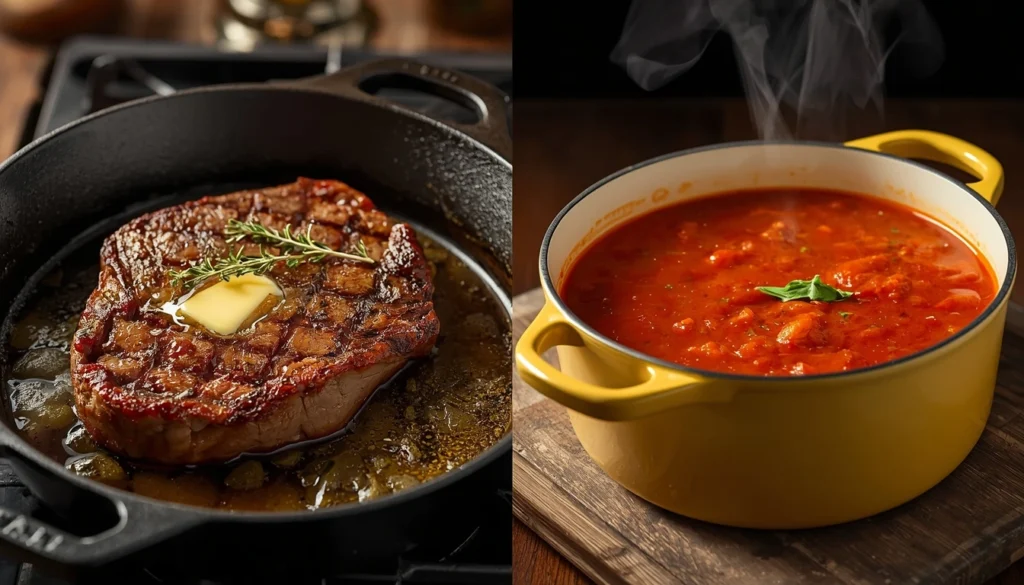
Choose bare cast iron if you mainly want a skillet for searing and everyday frying. You can choose enameled if you often cook acidic dishes like tomato sauces. Both can work well. The right one depends on how you cook.
Bare cast iron has slightly better nonstick properties and is generally the more affordable route. The trade-off is upkeep. It needs seasoning, and acidic ingredients can ruin that seasoning.
Where Enameled Cast Iron Wins
Enameled cast iron needs no seasoning and handles highly acidic foods better. It also doesn’t add iron to your food, which some cooks want and others don’t.
The Chipping Trade-Off
The main drawback is chipping and cracking. With proper care, both types are durable, but bare cast iron has the longer lifespan.
| Feature | Bare Cast Iron | Enameled Cast Iron |
|---|---|---|
| Seasoning needed | Yes | No |
| Acidic foods | Can wear down the seasoning | Handles them well |
| Nonstick behavior | Slightly better | Slightly less |
| Adds iron to food | Can add small amounts | No |
| Main weakness | Rust if neglected | Chipping and cracking |
What to Check Before You Buy
Before you buy, run through a short checklist:
- Seasoning: Lodge pieces come seasoned and ready to use. On other brands, check the label.
- Weight: Pick up the pan in the store if you can, or check the listed weight online.
- Your stove: Look for a flat base and make sure the pan fits your burner. Induction cooktops need magnetic cookware, so see my guide on how to tell if your cookware is induction compatible. If you have a glass-top stove, check your manual before buying.
- Chips on enameled pieces: Inspect the rim and cooking surface before you pay.
- Where it’s made: Lodge has made cast iron in Tennessee since 1896, and ATK notes that most other skillets today are imports.
One misconception is worth knowing. Many people think heavy cookware always distributes heat evenly, and it doesn’t. Poor thermal conductivity can cause hotspots regardless of how heavy a pan is. So weight alone isn’t a guarantee, and a patient preheat helps. My guide to heat conductivity explains why.
How Do You Season Cast Iron?
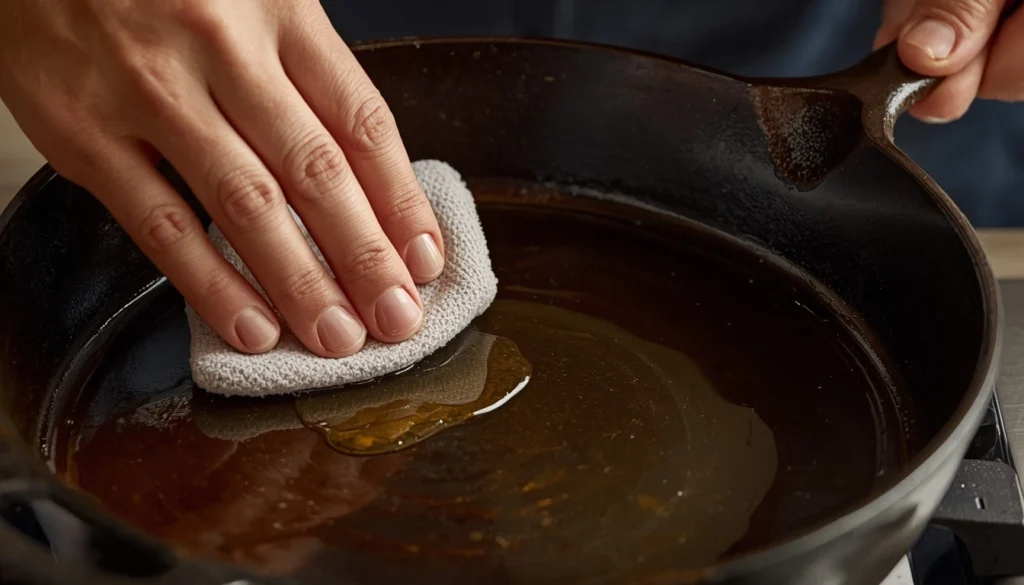
You season cast iron by baking a thin layer of oil onto it, and regular cooking keeps that layer going. Lodge describes seasoning as oil baked on through a process called polymerization. The easiest way to maintain it is simply to use the pan.
A few things can wear it down. Highly acidic foods like tomatoes can break down the seasoning, and layers may sometimes flake off. If a pan gets rusty, Lodge recommends oven seasoning to restore it.
How Do You Clean and Care for Cast Iron?
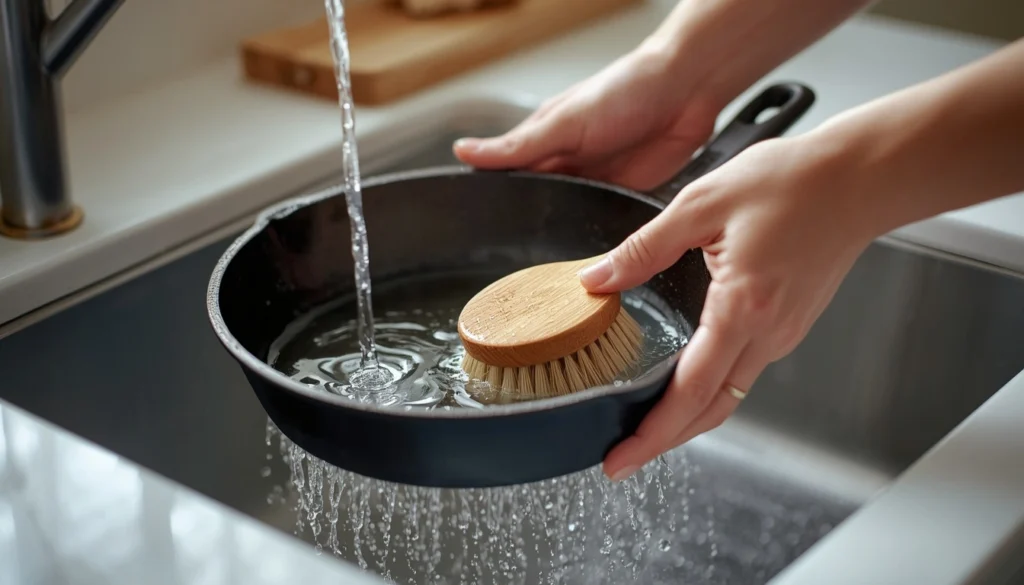
Wash it by hand, dry it fully, and rub on a thin coat of oil after each use. Lodge says its cast iron should be washed by hand. Leaving it to soak is a recipe for rust.
If rust does show up, don’t panic. With a little extra care, you can remove the rust and keep using the pan.
Let the pan cool before you wash it. My guide on how to avoid warping explains why sudden temperature changes are hard on cookware. For care across other materials, see my cookware care guide.
How Long Does Cast Iron Last?
With proper care, cast iron can last for decades. Lodge calls its cast iron durable but says it will break before bending, so it still needs gentle handling. Treat it well, and it can outlast most other pans in your kitchen.
Does Cast Iron Add Iron to Your Food?
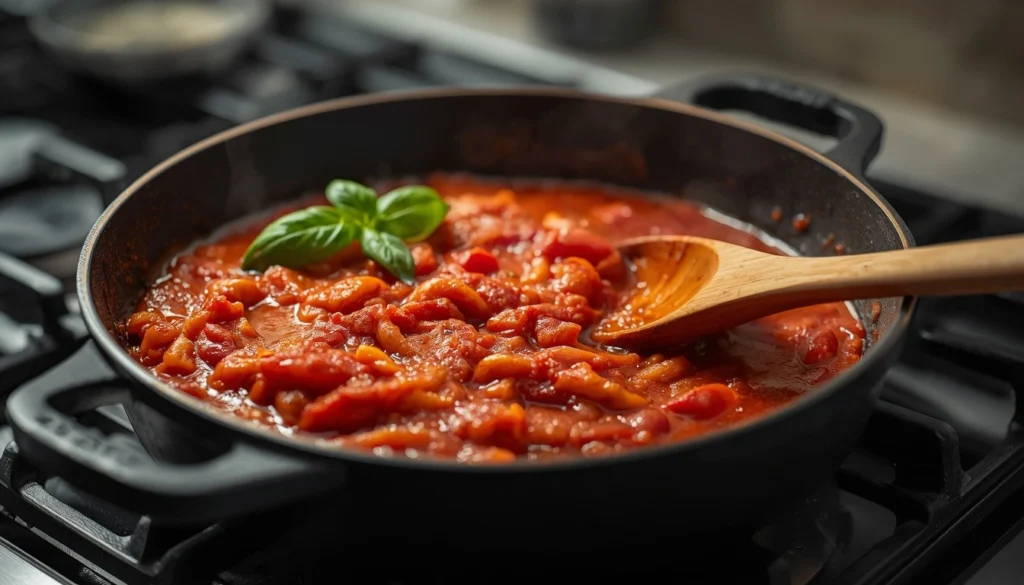
Yes, cast iron can add iron to your food, especially when you cook moist, acidic dishes for a long time. In a study of 20 foods, 90% of foods had more iron when cooked in iron pans than in glassware. Spaghetti sauce gained roughly 2 mg to 5 mg.
The amount depends on the pan and the food. Newer pans transferred more iron than older, seasoned ones, and very acidic dishes can taste metallic. Enameled pieces don’t add iron. If you’re thinking about iron for health reasons, talk with your doctor rather than relying on a pan.
FAQs
What Size Cast Iron Skillet Should I Buy First?
For most home cooks, a 10 to 12 inch skillet is the best first buy. America’s Test Kitchen says a 12-inch skillet suits most cooks and has room for up to six people. If you cook for one or two, or you find heavy pans tiring, a 10 inch pan is easier to lift and still handles most daily jobs.
Is Bare or Enameled Cast Iron Better for Beginners?
It depends on how you cook. Bare cast iron suits everyday searing and frying, and it has slightly better nonstick properties, but it needs seasoning. Enameled cast iron needs no seasoning and handles acidic food better, though it can chip. If you want a skillet for steaks and eggs, start with bare. If you simmer a lot of tomato-based dishes, enameled may suit you better.
Does Cast Iron Come Pre-Seasoned?
Lodge cast iron does. Lodge says its pieces come seasoned and ready to use right out of the box. For other brands, check the label before you buy. Enameled cast iron doesn’t need seasoning at all.
Can You Cook Tomato Sauce in Cast Iron?
You can, but bare cast iron isn’t the best match for it. Lodge says highly acidic foods like tomatoes can break down the seasoning. Very acidic dishes can also taste metallic. If you cook acidic food often, enameled cast iron is the more practical choice.
Can You Put Cast Iron in the Dishwasher or Let It Soak?
No. Lodge says its cast iron should be washed by hand, and soaking is a recipe for rust. Wash it, dry it completely, and rub on a thin coat of oil. For more on keeping other pans in good shape, see my cookware care guide.
How Long Does Cast Iron Last?
With proper care, cast iron can last for decades. Lodge describes its cast iron as durable but says it will break before bending. So it still needs gentle handling. Rust, harsh temperature changes, and neglect are what shorten a pan’s life, not normal cooking.
Does Cooking in Cast Iron Add Iron to Food?
It can. In a study of 20 foods, most foods had more iron after cooking in iron pans than in glassware. Moist, acidic, long-cooked dishes in newer pans picked up the most. Enameled cast iron doesn’t add iron. If you’re thinking about iron for health reasons, talk with your doctor rather than relying on a pan.
Who Should Buy Cast Iron, and Who Might Not?
For most home cooks, cast iron is a good first heavy pan, especially if you want a skillet that sears well and rewards patience. The real takeaway: pick a 10 to 12 inch bare skillet you can lift comfortably, then care for it consistently.
It’s a poorer fit if you dislike the weight or know you won’t dry and oil the pan. In that case, enameled cast iron may suit you better. The fear that pushed me toward this pan, food sticking and burning, is exactly what a hot, seasoned skillet helps with. A good pan won’t fix every cooking error, since technique still matters. But it gives a new cook a forgiving place to practice.
Step 5 Review
| Check | Result |
|---|---|
| TL;DR with 3 to 5 takeaways | Pass (five bullets) |
| Claims supported by approved sources | Pass, with three flags below |
| External citations as 1 to 3 word markdown links, no bottom reference list | Pass |
| Internal links in the same format | Pass (five: versatile cookware collection, induction compatible, heat conductivity, avoid warping, cookware care guide) |
| Personal experience from you | Pass (first-pan story in the opener and the closing section) |
| Business facts match Service Details | Pass (heavy-cookware misconception and induction-compatibility point, applied to cast iron as you approved) |
| Banned words, competitor names, regulated claims | Pass (I checked headings and body, and used conditional durability wording) |
| Capsule ratio | Pass (5 of 8 H2s, 62.5%) |
| Voice match | Pass (answer first, conditional phrasing, “For most home cooks,” “The real takeaway”) |
| Keyword in title, first paragraph, two H2s | Pass (both “Cast Iron Buying Guide” H2s) |
| No em dashes | Pass |
| Prices left out | Pass |