
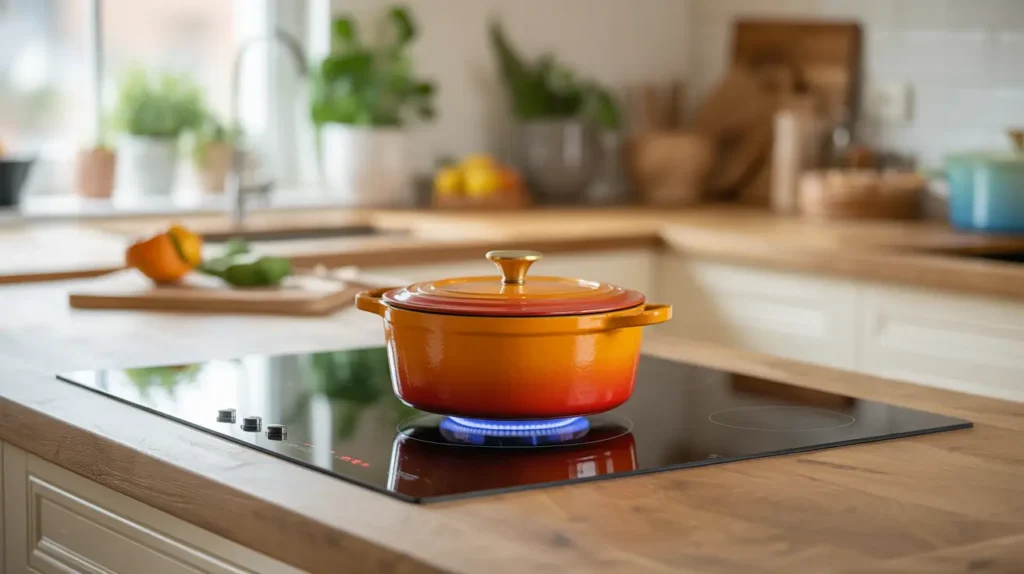
You are wondering exactly how to tell if your cookware is induction compatible. The easiest way for home cooks to know is to hold a magnet to the bottom of the pan. If it sticks strongly, your cookware will work perfectly on this innovative cooking method.
Induction relies on magnetic fields rather than a direct heat source. This means your pots and pans must contain specific magnetic metals to function. I will show you how to choose cookware, test your pots, and explain why this specific induction technology is so unique.
Key Takeaways
- The Magnet Test: If a heavy magnet strongly sticks to the flat bottom of your pan, it is ready for induction cooking.
- Best Materials: Cast iron, carbon steel, and fully clad stainless steel provide the most optimal cooking performance.
- Materials to Avoid: Pure aluminum, solid copper, glass, and ceramic are non-compatible without an added magnetic base.
- Look for Symbols: Always check the bottom of new cookware for the universal looping coil icon.
- Size and Shape Matter: Cookware must have a perfectly flat bottom and properly match the burner size to activate the stove.
What Makes Induction Cooking Different From Gas or Electric?
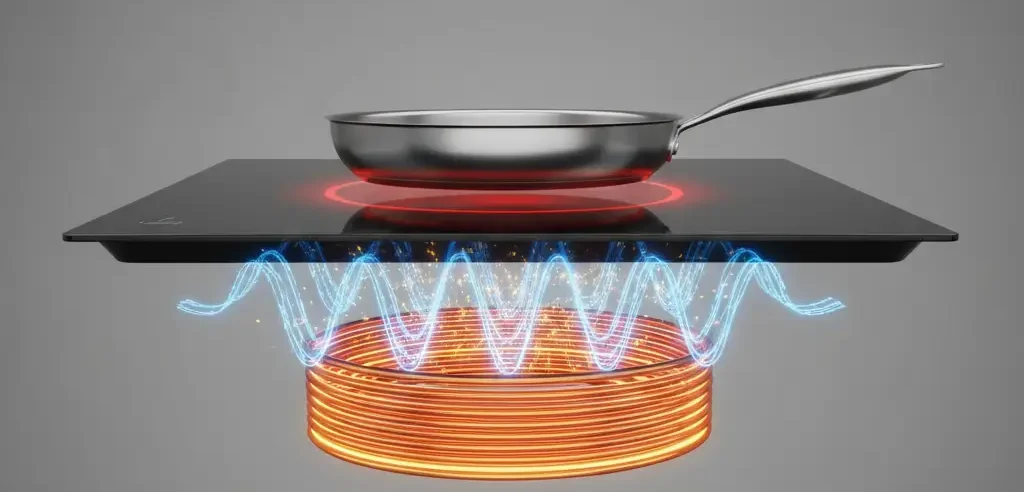
Before you can test your cookware. It helps to understand exactly how induction cooking works in comparison to traditional electric cooking or gas methods. Induction cooking is a completely different technology. It transforms your kitchen appliance into a magnetic powerhouse.
How Electromagnetic Induction Generates Heat
Beneath the smooth glass of your induction stove sits a tightly wound copper wire coil. When you turn the induction burner on, an alternating electrical current flows through this coil. This creates a powerful electromagnetic field directly above the cooking surface. When compatible cookware enters this field, the magnetic friction causes the metal itself to heat up rapidly.
Why the Cooktop Surface Does Not Directly Heat Up
Unlike older electric cooktops that turn bright red, an induction cooktop does not produce its own heat. The cooktop surface only gets warm because the hot pan transfers heat back down to the glass. If you turn on an induction hob without a pan, it stays completely cool to the touch. This makes it a highly safe kitchen appliance for homes with curious children or pets.
Why Cookware Material Matters More on Induction
Because the heat is created by a magnetic reaction, the physical makeup of your pots and pans is the most important factor. If a pan is considered non-ferromagnetic cookware. Then the electromagnetic field passes through it without creating any heat. This is why you cannot just use any old pot you find in your kitchen. The metal itself is actually acting as the heating element for the stove.
Is Induction Faster Than Gas or Radiant Electric?
Yes, induction cooking is significantly faster than both gas stoves and standard electric stoves. Because the pan itself becomes the heat source, there is almost zero heat transfer time cooking your meals. I can usually boil a large pot of water on my induction stovetops in less than half the time it takes on my old gas burner.
Is Induction More Energy Efficient?
This induction appliance is widely considered the most energy-efficient cooking technology available today. Gas stoves lose a lot of heat to the air surrounding the pot, making your kitchen hot and wasting energy. Induction delivers roughly 90% of its energy directly to the food, giving you an incredible cooking experience.
| Cooking Method | Energy Efficiency Rating | Time to Boil 6 Quarts of Water |
|---|---|---|
| Induction | ~90% | ~5-6 minutes |
| Electric (Radiant) | ~65-70% | ~9-10 minutes |
| Gas Range | ~40% | ~12-14 minutes |
Why won’t my old pans heat up?
If your old pans do not heat up, they simply lack the magnetic metals required to interact with the stove’s copper coil.
Why does induction need special cookware?
It needs special induction cookware because it relies on physics and magnetic friction. Rather than a glowing flame or hot metal burner, to cook your food.
Why Some Cookware Works on Induction and Some Doesn’t
The secret to testing induction compatibility all comes down to the science of metals. You need the right kind of metal to capture the magnetic waves and ensure optimal cooking performance.
The Role of Ferromagnetic Metals
For a pan to work, it must be considered ferromagnetic cookware. Ferromagnetic metals are materials that are highly attracted to magnets, such as iron and certain types of steel. When the stove’s magnetic field hits these ferromagnetic metals, microscopic electric currents swirl inside the pan to create intense heat.
What “Magnetic Base” Actually Means
When you shop for pots, you will often see the term “magnetic base” used on the packaging for induction-ready cookware. This simply means the very bottom layer of the pan is made from an iron-rich metal. The rest of the pan might be made of lightweight aluminum, but as long as that bottom plate is magnetic, the induction burners will work.
Conductive vs Magnetic: Why Aluminum Alone Fails
Aluminum is a fantastic conductor of heat, which is why it is so popular for everyday cookware. But, aluminum has zero magnetic properties, placing it firmly in the category of non-magnetic cookware. Without an added steel base, the stove’s magnetic field cannot grip the aluminum to generate friction. Thus, pure aluminum pans will stay completely cold on an induction range.
How Induction Detects a Pan
Modern induction cooktops feature smart pan detection sensors built into the glass. When you place a pot on the cooking surface, the stove sends out a small test pulse to check for magnetic resistance. If the sensor detects a solid ferromagnetic presence, it activates the full power of the coil. If nothing is detected, the burner simply shuts off or flashes an error code.
Minimum Pan Size Required for Burner Activation
Even if your pan is made of the right metal, it might not turn the appliance on if it is too small. Most burners require the pot’s base to cover at least 70% of the cooking zone’s diameter. If you put a tiny butter warmer on a massive 11-inch induction burner, the sensor will likely fail to read it.
Complete List of Cookware Materials That Work on Induction
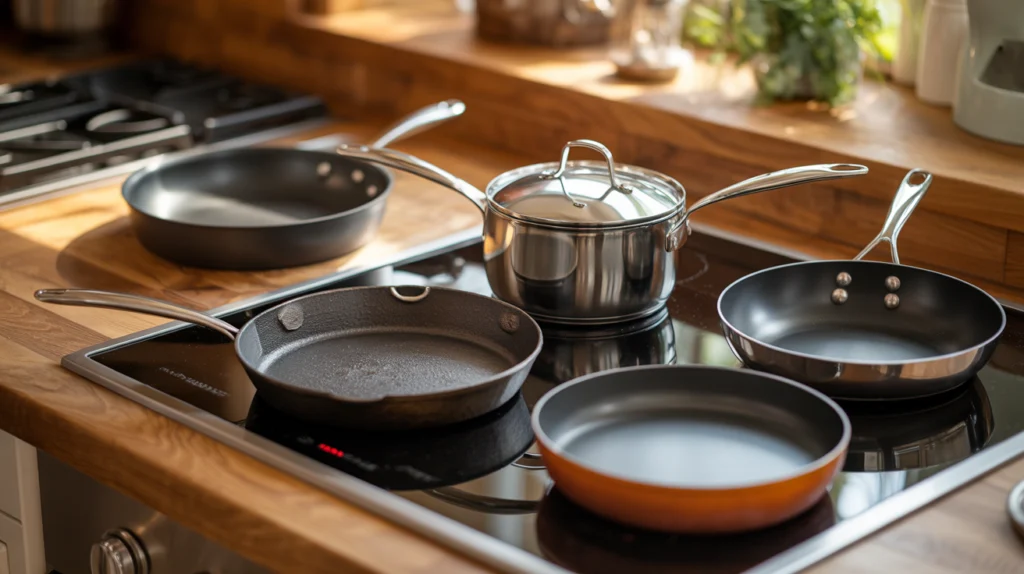
If you are trying to figure out how to tell if your cookware is induction compatible, knowing the base materials is half the battle. Here is exactly what counts as induction-compatible cookware.
Is Your Cookware Induction Compatible?
Explore materials, test your pans, and compare cooking efficiency
Click any material to explore
Energy Efficiency & Speed Comparison
Heat Delivery Breakdown (per 100 units of energy)
Induction
Electric
Gas
Step 1 — What material is your pan?
Cast Iron (Raw and Enameled)
Cast iron is the undisputed king of induction compatibility because it is almost entirely made of iron. Both rugged, raw skillets and beautiful enameled pieces work flawlessly as compatible pans. They hold heat incredibly well and provide a deeply even sear on modern induction surfaces.
Carbon Steel
Carbon steel cookware is closely related to cast iron but is pressed much thinner and lighter. Because it shares a high iron content, it responds beautifully to magnetic cooking. Professional cooks love carbon steel on an induction stove. This is because it heats up fast and handles temperature changes quickly.
Magnetic Stainless Steel
Not all stainless steel cookware is created equal, but ferritic stainless steel works perfectly. This specific grade of steel contains high levels of iron and no nickel. If steel cookware claims to be induction-ready, it is almost certainly made with a ferritic stainless base.
Fully Clad Stainless Steel Cookware
High-end compatible sets are often “fully clad,”. This means they feature many layers of metal pressed together. A premium brand will sandwich a highly conductive aluminum core between layers of durable, magnetic stainless steel. This multi-layered cookware gives you the fast heating of aluminum combined with the magnetic compatibility your stove requires.
Multi-Layer Bonded Base Cookware
Many modern pots use a bonded base rather than full cladding to achieve proper induction compatibility. This means the body of the pan is a cheap, lightweight material, but a thick magnetic steel disk is welded to the bottom. These bonded bases are an affordable way to get the right induction pots without buying expensive fully clad sets.
Does enameled cast iron work differently?
No, the glass enamel coating on a Dutch oven does not stop the magnetic field from reaching the iron underneath. It works exactly like a raw cast iron skillet.
Are lightweight pans less effective?
Sometimes. Extremely lightweight pans with thin bonded bases can heat up too fast and warp under intense induction heat.
Cookware Materials That Do NOT Work on Induction
It is just as important to know what belongs nowhere near your new glass stovetop. These materials are considered non-compatible cookware and will cause your burner to flash an error code.
Aluminum Without Magnetic Core
Standard aluminum baking sheets, cheap nonstick skillets, and traditional restaurant supply pans will not work. Unless they have a heavy steel plate welded to the bottom, the cooktops will simply ignore them. If you love aluminum for its weight, you must buy versions specifically labeled as induction-ready cookware.
Copper Without Bonded Magnetic Layer
Traditional French copper cookware is beautiful and highly conductive. But it is entirely non-magnetic. Unless you buy a modern copper pan that features a stainless steel induction base, it is useless on these stoves. True, 100% solid copper pans are non-compatible pans and should be reserved for gas ranges.
Glass and Ceramic Cookware
Materials like Pyrex, pure glass cookware, terracotta, and ceramic stone are insulators. They are not magnetic conductors. They contain absolutely no iron and represent classic non-ferromagnetic cookware. Even if you place them directly on the burner on the highest setting, they will remain completely cold.
100% Non-Magnetic Stainless Steel
Standard austenitic stainless steel contains high amounts of nickel. The nickel cancels out the iron’s magnetic properties. If a pan is made entirely of this specific steel without a magnetic base layer, it will fail to work. This is why some cheap stainless steel pots randomly won’t work on your new induction appliance.
Why some aluminum pans claim to be induction-ready
They can make this claim because cookware manufacturers weld a magnetic steel plate to the exterior bottom of the aluminum pan.
Why some pans heat unevenly
If that welded steel plate does not stretch all the way to the edges of the pan, only the very center will heat up.
Does Stainless Steel Work on Induction? (Not Always)
Stainless steel causes the most confusion when testing induction compatibility. It looks like it should work perfectly, but the results from different cookware ratings are highly mixed. Because of these mixed results, home cooks frequently wonder, can you use stainless steel cookware on induction stoves? Ultimately, it all boils down to the specific metallic makeup of the pot.
Difference Between 300-Series and Magnetic Stainless Steel
Steel alloys are mixed with other metals to prevent rust, but these mixtures change their physical properties. 300-series stainless steel uses nickel, which makes it highly rust-resistant but completely non-magnetic. 400-series stainless steel, leaves out the nickel, making it magnetic but more prone to corrosion.
Why Some Stainless Pans Work and Others Don’t
If you buy a cheap, single-layer stainless steel pot at a discount store, it is likely made of non-magnetic 300-series steel. Premium pans solve this by using the rust-proof 300-series on the inside where the food goes, and the magnetic 400-series on the outside bottom. This clever multi-layered cookware design gives you the best of both worlds for your cooking experience.
How to Check Stainless Steel Grade
You usually cannot tell the grade of steel by looking at it. Yes this can be frustrating before buying your next appliance. The best method is to refer to the manufacturer’s appliance guides or simply perform the magnet test. If a strong magnet slides right off the bottom, the steel grade is wrong for your induction cooktop.
Why Clad Stainless Pans Are Usually Compatible
High-quality brands know that consumers want versatile and safe cookware for any kitchen. Most modern 3-ply or 5-ply clad cookware is intentionally designed with an outer layer of magnetic steel. Because of this, almost all mid-to-high-tier clad stainless sets sold today are compatible cookware.
Does Nonstick Cookware Work on Induction?
Many home cooks panic when they upgrade their stove, thinking they have to throw away their favorite egg pan. Thankfully, you can still use nonstick pans if you select the right cookware.
Nonstick Coating vs Pan Base
The slick surface on the inside of your pan has absolutely nothing to do with induction compatibility. PTFE coatings and ceramic coatings are simply sprayed onto the metal shell of the pan. The induction stove only cares about the metal shell hidden beneath that coating.
How Induction-Compatible Nonstick Pans Are Constructed
Most nonstick pans are made of lightweight aluminum. To make them work on your stove, manufacturers press a perforated stainless steel disk into the aluminum base. When you flip an induction-compatible nonstick pan over, you can usually see this thick steel disk glued to the bottom.
Can Induction Damage Nonstick Coatings?
Yes, induction can easily destroy nonstick coatings if health-conscious cooks are not careful. Induction burners can heat a pan to 500°F in just a few seconds on high power. Traditional nonstick coatings start to break down and release toxic fumes around 500°F, so you must watch your heat settings closely.
Best Heat Practices for Nonstick on Induction
Never use the greatest high setting when using a nonstick skillet on induction stovetops. I recommend always preheating your nonstick pans on a low-to-medium setting to check your cooking progress safely. Let the metal warm up slowly to protect the delicate slick coating from thermal shock and ensure optimal cooking performance.
How to Test If Your Existing Cookware Is Induction Compatible
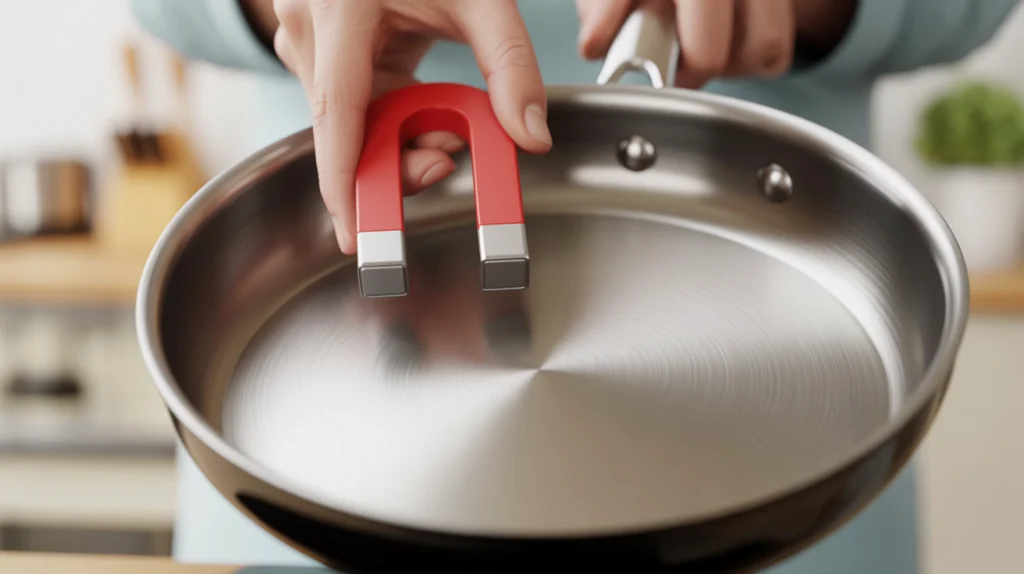
You don’t need fancy equipment to figure out how to tell if your cookware is induction compatible. You can easily sort through your entire kitchen cabinet in about five minutes to find your compatible pans.
The Magnet Test (And Its Limitations)
The easiest method is the magnet test, which is highly recommended in most appliance guides. Take a heavy refrigerator magnet and hold it to the flat bottom of your pot. If it snaps tightly to the metal, the pan is safe cookware and will work perfectly. If the magnet feels weak or easily slides off, the pan will likely heat very poorly or not at all.
Checking Manufacturer Symbols
If you flip your pan upside down, you might see small icons stamped into the metal by the cookware manufacturers. Brands use these common cookware symbols to tell you exactly what heat sources the pan can handle. Look closely at the bottom of your favorite pots to see if they are already approved for induction cooking.
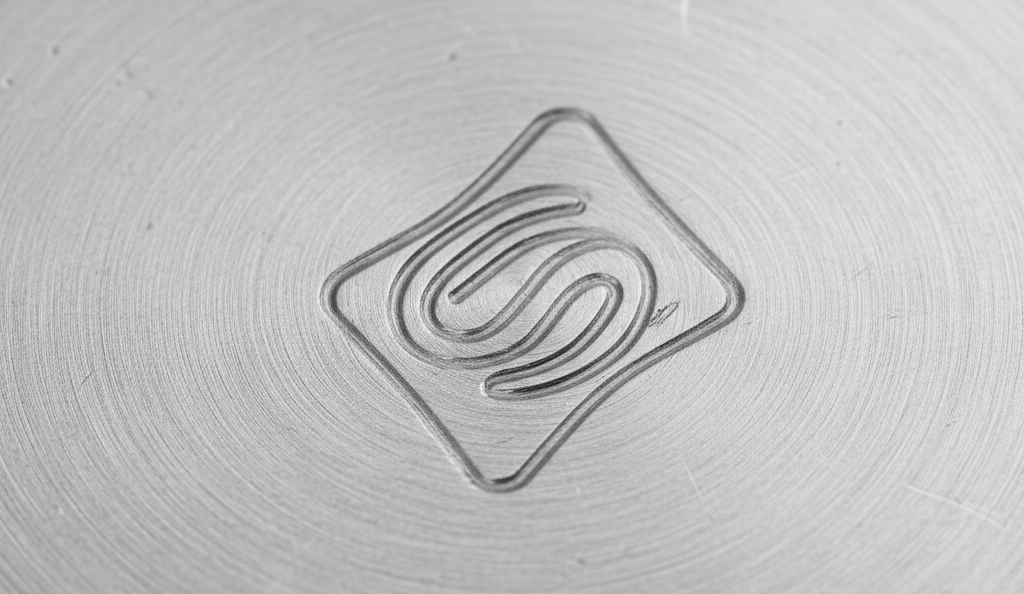
What the Induction Coil Symbol Looks Like
The universal symbol for induction compatibility looks like a series of looping copper coils or a jagged zigzag line. It usually features three or four horizontal loops side-by-side. If you see this little coil icon stamped on the base, you know you have the right cookware.
Testing Safely on Your Cooktop
If you are still unsure, simply test it on the stove itself. Put a small splash of water into the pan and place it on an active induction burner. If the water starts to steam and boil within a minute, the pan is compatible.
What to Do If the Pan Flickers or Loses Detection
Sometimes a burner will click, flicker, or repeatedly turn on and off during cooking. This usually means the pan has a weak magnetic pull or is slightly too small for that specific burner. Try moving the pan to a portable induction burner or the smallest zone on your stove to see if the pan detection sensor reads it better.
What Happens If You Use the Wrong Pan on Induction?
If you accidentally place an incompatible aluminum or glass pan on your new stove, do not panic. The induction technology is designed to handle this gracefully without causing a disaster in your kitchen.
Will It Damage the Cooktop?
Using non-compatible cookware will not break, scratch, or permanently damage your cooktop surface. The electromagnetic field simply won’t have any ferromagnetic metal to interact with. The energy passes harmlessly into the air, leaving the glass completely safe.
Will the Pan Heat at All?
No, an incompatible pan will not get warm in the slightest. You could leave pure non-magnetic cookware on an induction burner set to “High” for an hour, and it would remain room temperature. Without magnetic friction, zero heat is generated for cooking.
Can It Cause Overheating or Shutdown?
The stove will actually shut itself down to save power and stay safe. Most modern cooktops have an automatic shutoff feature triggered by the pan detection sensor. If it doesn’t sense a solid magnetic connection within 30 to 60 seconds, the appliance turns off.
Error Codes and What They Mean
When you try to use the wrong pan, your stove will usually complain. You might see an error code flash on the digital display, such as an “E” or a “U” symbol with a line through it. This is just the stove’s way of telling you that no compatible cookware was found.
Can You Use an Induction Interface Disk?
If you have an expensive copper pan or a glass kettle you refuse to part with, you might be looking for a workaround. This is where an induction interface disk comes in for those who want to use non-compatible pans.
How Induction Interface Disks Work
An induction converter plate is a heavy, flat piece of magnetic steel with a handle. You place the steel disk directly on the glass burner, and then place your non-magnetic cookware on top of the disk. The stove heats the steel disk, and the disk then transfers that heat to your pot like a traditional electric burner.
Performance Trade-Offs
While these disks technically work, they completely defeat the purpose of buying an induction cooktop. You lose the incredible speed and instant temperature control. The exact thing that makes this innovative cooking method so great. The cooking experience feels very sluggish, drastically slowing down your cooking progress.
Heat Efficiency Loss
Using a converter plate creates a massive drop in cooking performance and energy efficiency. Studies show that using an interface disk results in a 20% to 30% loss of heat. The energy is wasted heating the thick steel plate instead of directly heating your food.
When They Make Sense (and When They Don’t)
I only recommend using an interface disk for special, slow-cooking tasks, like using a traditional clay tagine. For everyday frying, boiling, and sautéing, they are incredibly frustrating. You are much better off choosing to buy cheap, induction-ready cookware instead.
Size, Shape, and Thickness: Hidden Compatibility Factors
Sometimes a pan passes the magnet test with flying colors but still performs terribly. The physical shape and size of the cookware play a massive role in actual cooking performance.
Why Flat Bottoms Matter
Because the magnetic field gets alot weaker the further you move from the glass. Your pans must have perfectly flat bottoms. Even a gap of just one or two millimeters can cause a massive drop in cooking power on induction surfaces. Traditional round cookware like classic woks will not work unless you have a designed concave induction hob.
Minimum and Maximum Pan Size Limits
Your pan needs to closely match the drawn circle on the stove’s cooktop surface. If a skillet hangs over the edge of the burner by several inches, the outer edges of the food will remain cold. Conversely, if the pan is way too small, the stove’s sensors will refuse to activate.
Thick vs Thin Base Performance
Heavy, thick-based pans are highly recommended for this electric cooking style. A thick layer of cast iron or multi-layered cookware absorbs the aggressive magnetic heat and distributes it evenly. Paper-thin carbon steel pans can develop severe hot spots right above the copper coil.
Why Warped Pans Stop Working
If you accidentally overheat a thin pan, the bottom can warp and bow outwards. Once a pan is warped, the center lifts away from the glass surface, breaking contact with the magnetic field. A severely warped pan will trigger an error code and become non-compatible cookware on your stove.
Why Some Pans Make Buzzing Noises
When you cook on high heat, you might hear a strange buzzing, humming, or high-pitched squealing sound. This is caused by magnetostriction. It’s a process where the layers of metal vibrate microscopically against each other due to the magnetic waves. Thicker, heavier, fully clad pans vibrate much less and provide a quieter cooking experience.
Common Induction Cookware Problems and How to Fix Them
Even with the right induction pots, things can occasionally act up during meal prep. Here is how to troubleshoot common issues I hear about from new stove owners.
Cooktop Not Detecting Pan
If your induction range won’t recognize a pan you know is magnetic, check your alignment. Make sure the pot is centered perfectly over the crosshairs or circle on the induction surfaces. If it still fails, try moving the pan to a smaller burner zone that matches its base diameter better.
Pan Heats Unevenly
Uneven heating usually happens when you use a pan with a cheap bonded base. If the magnetic steel disk on the bottom doesn’t reach the edges of the pan, only the center will cook. Upgrade to a fully clad skillet to ensure the heat travels all the way up the sides for optimal cooking performance.
Buzzing or Humming Sounds
As mentioned earlier, buzzing is caused by metal vibration within the cookware. To fix this, simply turn the induction burners down a few notches; the sound usually disappears on medium heat. Also, make sure the bottom of the pan and the glass surface are completely dry, as trapped moisture can cause a crackling noise.
Cooktop Turns Off Unexpectedly
If your induction appliance shuts off in the middle of boiling pasta, it might be an overheating safety feature. If a lightweight pan gets too hot too fast, the stove’s internal thermometer shuts the system down to prevent a fire. Let the cooktops cool down, and use a lower power setting next time.
Scratches on Glass Surface
Rough cast iron skillets can easily scratch the smooth ceramic glass surface if you drag them across the stove. Always lift your pots straight up when moving them to protect your appliance. You can also place a thin silicone baking mat underneath the pan while cooking, as magnetic fields pass right through silicone.
Does Induction Cookware Need to Be Labeled “Induction Ready”?
When you are shopping for new gear, the marketing labels within the kitchen appliance industry can be highly confusing. Don’t let clever packaging trick you into spending more than you need to on your next appliance purchase.
Understanding Induction Symbols
Cookware manufacturers love to plaster their boxes with icons and cookware ratings. If you see the coiled wire symbol, you have a 100% guarantee that the brand tested the item for induction compatibility. These common cookware symbols are a great confidence booster when buying expensive sets.
Is Labeling Required by Law?
No, there is no legal need for brands to label their pots as induction-compatible cookware. Many older or traditional cookware lines work perfectly well but have absolutely no modern symbols stamped on them. This is why learning how to tell if your cookware is induction compatible yourself is so valuable.
Can Unlabeled Pans Still Work?
Absolutely. Most vintage cast iron skillets and carbon steel woks have zero markings but will perform flawlessly as compatible pans. As long as the base passes the magnet test, you can ignore the lack of official packaging.
Marketing Terms vs Actual Compatibility
Beware of terms like “Stovetop Safe” or “Multi-Range Ready,” as these do not always include magnetic ranges. If a box simply says “Stainless Steel,” you must verify whether it is magnetic 400-series or non-magnetic 300-series. Always carry a small magnet in your pocket when you go out to choose cookware!
Is Induction Cookware More Expensive?
A major fear cooks have when switching to this technology is the hidden cost of replacing all their pots. The truth about buying the right cookware is much more nuanced.
Why Some Induction Pans Cost More
Pans engineered for these stoves often cost more because of the extra manufacturing steps required. Welding a heavy ferromagnetic base to an aluminum body takes time and extra materials. Fully clad sets, which perform the best, are naturally premium products with higher price tags.
When Standard Cookware Already Works
You might not need to spend a dime if you already own standard cast iron or heavy-duty steel cookware. I found that almost half of my existing pots worked perfectly when I upgraded my kitchen. Check what you already own before rushing out to buy a dedicated compatible set.
Cost Comparison vs Replacing Entire Sets
If only two of your pots fail the magnet test, just replace those two specific pieces. You do not need to buy a massive matching set right away. Buy a single high-quality nonstick skillet and one good boiling pot to get started on your induction cooktops.
Long-Term Efficiency Savings
While the initial induction cookware might cost a bit more, the long-term energy savings are fantastic. Because the electromagnetic field heats your food so much faster, your electric cooktops use less electricity over time. Plus, your kitchen stays cooler in the summer, saving money on air conditioning.
Best Types of Cookware for Different Cooking Styles on Induction
Because magnetic stoves are incredibly powerful, matching the right pot to the right recipe makes a huge difference. Here is what I reach for to get optimal cooking performance in different scenarios.
Best for High-Heat Searing
For searing steaks or getting crispy skin on chicken, nothing beats thick cast iron or heavy carbon steel. These metals absorb the intense magnetic waves and hold onto the heat, giving you a restaurant-quality crust. Just be sure to preheat them slowly on your induction burner to prevent warping.
Best for Simmering and Sauces
When making delicate tomato sauces or melting chocolate, you want fully clad stainless steel. The aluminum core sandwiched inside the multi-layered cookware reacts instantly when you turn the stove down to a simmer. It stops boiling the very second you lower the dial on the stove.
Best for Boiling Water Quickly
If you just want to boil pasta water as fast as humanly possible, use a thin, cheap pot with a bonded magnetic base. Because the metal is thin, the water absorbs the heat almost instantly, drastically reducing your time cooking. A thin bonded pot can boil water incredibly fast on the cooktop’s “Power Boost” setting.
Best for Delicate Foods
For eggs, pancakes, and flaky fish, you want an induction-compatible nonstick pan made of thick cast aluminum. The thick aluminum distributes the heat perfectly evenly, so your pancakes don’t burn in the center. Health-conscious cooks should remember to keep the stove on medium heat to protect the PTFE coating.
Best Lightweight Option
If heavy cast iron hurts your wrists, look into hard-anodized aluminum pans with bonded steel bases. They give you the lightweight convenience of aluminum with the induction compatibility you need. They are safe cookware options that are easy to toss, flip, and clean.
Induction Cookware Care and Maintenance
Once you have the right pots, you need to treat both the cookware and the glass stovetop with care. A little maintenance goes a long way for your induction appliance.
Preventing Scratches on Glass Surfaces
The smooth ceramic glass on your stove is tough, but it can be scratched by rough iron pans or salt crystals trapped under a pot. Always lift pots to move them; never slide them across the cooking surface. Clean the bottom of your pans thoroughly to ensure no hard grit is stuck to the metal.
Avoiding Thermal Shock
Because these ranges heat up so violently fast, your pans are at high risk of thermal shock. If you blast a cold steel pan on maximum heat, the metal can warp or pop in seconds. Always start your induction stove on a lower setting and walk the heat up gradually over a minute.
Cleaning Burnt Residue
If food boils over onto the glass, it usually won’t bake on as severely as it does on a traditional electric stove. But, if sugar or sauces do burn onto the glass, wait for it to cool entirely. Use a specialized glass stovetop cleaner and a razor blade scraper held at a 45-degree angle to gently lift the mess.
Preventing Warping
Never take a blazing hot frying pan off the stovetops and immediately throw it into a sink full of cold water. The rapid temperature change will permanently warp the magnetic base. Let your induction cookware cool naturally on a cold burner before you attempt to wash it.
Storing Cookware Safely
If you invest in premium multi-layered cookware or expensive nonstick skillets, don’t just throw them in a drawer. Stack them carefully with felt pan protectors or paper towels between each pan. This prevents the heavy magnetic bases from scratching the delicate nonstick interiors of the pots below them.
Induction Cookware Buying Checklist
If you are heading out to buy new gear and want a reliable induction cookware guide to remind you how to tell if your cookware is induction compatible, save this quick and easy checklist before your next appliance purchase.
- Confirm magnetic base: Always bring a heavy magnet to the store; if it sticks strongly to the bottom, the pan works.
- Ensure flat bottom: Check that the pan sits perfectly flat with absolutely no wobbling or curved edges to ensure a proper cooking surface.
- Match pan size to burner: Measure your stove’s burners at home to ensure you buy skillets that match the diameter zones.
- Check thickness and construction: Opt for heavier cast iron or fully clad 3-ply stainless steel cookware to prevent warping and buzzing.
- Verify labeling: Look for the looping copper coil symbol stamped on the box or the bottom of the pan.
- Consider cooking habits: Buy cast iron for searing, clad stainless for sauces, and bonded nonstick for delicate cooking.
FAQs Is Your Cookware Induction Compatible
Why does a magnet stick to my pan, but the induction stove won’t turn on?
Even if your pan passes the magnet test, your induction appliance might still reject it. This happens if the pan is too small for the burner or if the bottom is warped. The pan must have a flat bottom that covers at least 70% of the cooking zone for the stove’s pan detection sensors to activate the magnetic field.
Are all stainless steel pans induction compatible?
No, not all stainless steel cookware will work. Premium fully clad pans or pots made with 400-series ferritic stainless steel work well. It’s because they contain high amounts of magnetic iron. The cheaper 300-series stainless steel contains nickel. It completely cancels out the magnetic properties and renders the pan useless on an induction hob.
Will heavy cast iron scratch my induction glass cooktop?
Cast iron is the ultimate induction-ready cookware, but its rough exterior can scratch the smooth ceramic glass if you drag it. To protect your cooktop surface, always lift your heavy pans straight up when moving them. You can also cook with a thin silicone baking mat placed directly underneath the pan. The reason is magnetic fields safely pass right through silicone.
Can you use glass or ceramic cookware on an induction cooktop?
No, pure glass, Pyrex, and 100% ceramic pots are insulators. This makes them entirely non-ferromagnetic cookware. Since they do not contain any iron or magnetic metals. The electromagnetic field will pass right through them without generating a single degree of heat.
Do I need to throw away my old aluminum and copper pans?
You do not have to throw them away. But traditional aluminum and solid copper pans are non-compatible cookware for induction. Unless they feature a specialized bonded magnetic steel base, they will not heat up. If you refuse to part with them, you can buy an induction converter plate. Remember though this reduces your cooking performance and energy efficiency.
Conclusion
Switching to an induction stove is an exciting upgrade. It will completely transforms your daily cooking experience. It might seem daunting to check your entire kitchen cabinet. Meaning learning how to tell if your cookware is induction compatible is actually quite simple.
Rely on the trusty magnet test, check for flat bottoms, and understand the differences between ferromagnetic metals and non-magnetic materials. You can confidently choose the right pots and pans. You do not always need to buy an expensive new set right away.
Many of your favorite cast iron skillets and heavy steel pots will likely work flawlessly. You are now ready to unlock the incredible speed, precision, and energy efficiency of your new kitchen appliance.
External Sources:
https://producthelp.jennair.com/FAQ/Induction_Compatible_Cookware%3A_How_to_Tell
https://www.scanpan.eu/scanpan-guide/good-to-know-about-induction