

Combining a copper pan with the modern induction stovetop is life changing for many. You are searching for the best copper cookware for induction stoves. You have likely realized that traditional copper pots and pans don’t work on magnets.
But, thanks to modern engineering, you can now enjoy the rapid heat conduction of copper on your induction range. The secret lies in adding a stainless steel base or using a sophisticated copper core.
Let me show you exactly how to choose the right pieces, review top brands, and teach you the science behind this hybrid cookware.
Key Takeaways
- Traditional copper cookware doesn’t work on induction stoves without a magnetic base layer
- Look for copper cookware with steel or iron cores specifically designed for induction compatibility
- Copper-core and copper-clad options provide excellent heat distribution while working on induction
- Quality induction-compatible copper cookware ranges from $100-$500+ per piece
- Proper maintenance includes hand washing, avoiding abrasive cleaners, and regular polishing
- Top brands include Matfer Bourgeat, Duparquet, and All-Clad with copper construction
Understanding Copper Cookware and Induction Compatibility
Why Pure Copper Doesn’t Work on Induction Cooktops
If you place a vintage French copper pot on a modern induction hob, nothing will happen. This is because induction cooking relies on electromagnetism. Under the glass surface of your stovetop, a coil generates a magnetic field.
For heat to be generated, the cookware must be made of a ferromagnetic metal (like iron or magnetic stainless steel). Pure copper, aluminum, and glass are non-magnetic. Consulting an induction cookware guide can help you understand which metals react best to this technology. Without that magnetic interaction, there is no resistance, and thus, no heat is created.
How Copper Cookware Can Be Made Induction-Compatible

Manufacturers have solved this problem by creating modern copper cookware designs. To make a ready copper pan for induction, engineers bond different metals together.
- Steel Base Layers: Manufacturers attach a magnetic stainless steel plate to the bottom of the copper pans.
- Copper-Core: The pan is made of magnetic stainless steel on the outside, with a thick copper core buried inside to conduct the heat.
- Copper-Clad: A magnetic interior or exterior layer is fused to the copper body, often creating a thermo-clad copper effect.
Benefits of Copper Cookware for Cooking
Why go through all this trouble? Because copper is the king of the kitchen. There are specific copper cookware benefits that other materials simply cannot match.
- Superior Conductivity: Copper has high heat conduction, vastly superior to plain steel.
- Precise Control: When you turn the heat down, copper cools instantly. This rapid heating and cooling prevents delicate sauces from breaking.
- Even Heating: It eliminates hot spots that burn food on the cooking surface.
- Aesthetic: The gorgeous coppery finish looks stunning on any pot rack.
Types of Copper Cookware for Induction Stoves

Copper-Core Induction Cookware
This is a popular option for induction users. These pans feature an exterior of magnetic stainless steel, an interior of food-grade 18/10 stainless steel and a thick layer of copper inside.
You get the durability of stainless steel cookware with the performance engine of copper inside. They are generally easier to maintain than exposed copper and don’t need polishing with copper cream.
Copper-Clad Induction Cookware
For those who want the visible copper look, this is the way to go. Brands like Mauviel or Hestan use this method. They keep the copper exterior but add a thin ferromagnetic steel layer to the bottom or fuse the copper to a magnetic steel body. This provides that classic copper aesthetic.
It is important to understand the difference between lined vs unlined copper cookware when selecting these pans. Induction-ready copper is almost always lined with stainless steel for safety and durability.
Copper-Bottom Induction Pans
These are less common in high-end markets but exist. The pan is mostly stainless steel, but a copper disc is attached to the bottom. These offer some copper benefits but often lack the heat distribution of fully clad pans.
Tri-Ply and Multi-Ply Options
“Ply” refers to layers. A 5-ply pan might have steel, aluminum, copper, aluminum, and steel. These layers work together to balance durability, heat retention, and speed. Leading well-known cooking equipment manufacturers use this to ensure the pan stays flat on induction glass.
Top 8 Best Copper Cookware Sets for Induction Stoves
When looking for the best copper cookware brands, you will find that only a select few offer true induction compatibility.
Best : Hestan CopperBond Induction Set
The Hestan CopperBond collection is my top pick for the best copper cookware for induction stoves. Hestan CopperBond delivers a 5-layer bonded construction with a heavy copper core and a true copper exterior.
- Pros: Stunning copper look, induction compatibility, durable stainless steel rim.
- Cons: Expensive, heavy.
- Verdict: It offers the visual appeal of coppery metal with perfect induction performance.
Premium: Mauviel M’6s Induction Copper Cookware
Mauviel is a legendary French brand. The M’6s collection is specifically engineered for induction. It features a 6-layer construction that combines stainless steel, aluminum, and copper.
- Performance: Incredible responsiveness for sauce work.
- Style: Classic French aesthetic.
- Note: While traditional Mauviel is pure, the Prima Matera is 90% copper and 10% steel to ensure induction capability.
Budget-Friendly: Viking Culinary Copper 3-Ply
Finding budget copper for induction is hard, but Viking offers a 3-ply line. It features a copper exterior and an induction-capable base. It is more affordable than French imports.
- Value: Good heat distribution for the price.
- Note: The copper layer is thinner than premium brands.
Individual Piece: Hestan CopperBond Skillet
If you only buy one piece, make it the 11-inch Skillet or one of their 12-inch fry pans. It is perfect for searing steaks or sautéing vegetables. The flush stainless steel rivets make cleaning easy, and the heat control is unmatched.
For Even Heating: All-Clad Copper Core
All-Clad Copper Core is the industry standard for performance. While it looks like a stainless steel version on the outside, the internal pure copper core is large.
- Why it wins: It never warps and heats perfectly evenly.
- Maintenance: No polishing required.
Aesthetic: Ruffoni Symphonia Prima
If you want your kitchen to look like a palace, Ruffoni is the answer. These are hand-hammered in Italy. The Symphonia Prima line has a stainless steel core but is finished to look incredibly elegant and works on induction.
Best Warranty: All-Clad Lifetime Copper Induction Set
All-Clad is famous for its warranty. If you treat these pots and pans right, they will last forever. Their bonding process is patented and extremely reliable against delamination.
Multi-Piece Set: Lagostina Martellata Hammered Copper
This is a great mid-range option. It features a hammered copper exterior and a tri-ply construction. It adds a rustic charm to the kitchen and includes the necessary magnetic steel interior for induction use.
How to Choose the Best Copper Cookware for Your Induction Stove
Testing for Induction Compatibility
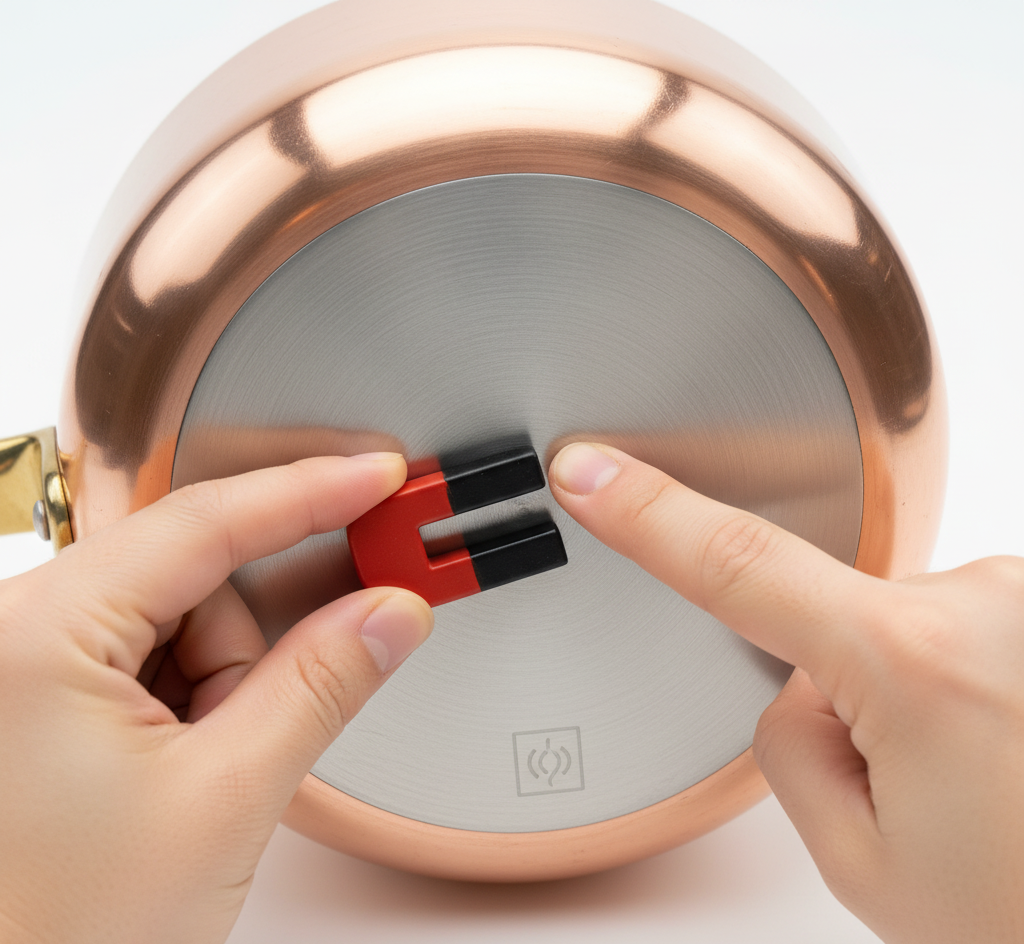
The magnet test is your best friend. Take a fridge magnet to the store. If it sticks firmly to the bottom of the copper pan, it is induction compatible. If the magnet slides off, it will not work on your stove.
Construction Quality Indicators
Look for full-cladding. This means the layers go all the way up the sides, not just on the bottom. Check the weight; heavier pans generally resist warping. A meaningful copper layer is essential for that rapid response.
Handle Design and Comfort
Since copper pans can be heavy, ergonomic handles are crucial. I prefer riveted stainless handles. They stay cooler than cast iron handles and are more secure than welded ones. Ensure the handle is “V-shaped” where it meets the pan to disperse heat.
Budget Considerations
The best copper cookware for induction stoves is an investment.
- Entry Level: $300 – $500 for a set (Usually copper-colored or thin copper).
- Mid-Range: $600 – $1,000 (Good copper core options).
- High-End: $1,500+ (Thick copper with premium induction engineering). I suggest buying one high-quality skillet or 3.4-qt saucepan first to test if you like the maintenance before buying a full 10-piece cookware set.
Copper Induction Cookware Investment Calculator
Calculate your total investment and cost per piece
💡 Investment Insight
Mid-range copper induction cookware offers excellent value for home chefs who cook regularly and want professional-quality results without breaking the bank.
Using Copper Cookware on Induction Stoves: Best Practices
Proper Placement and Sizing
Induction works via a magnetic coil. You must match the pan size to the burner ring. If your copper pan is too small for the ring, the stove might not detect it. If it is too large, the edges won’t heat up as fast as the center.
Heat Settings and Temperature Control
Copper heats up fast. On induction, it heats up instantly.
- Start Low: Never blast a cold copper pan on “Boost” or “High.” You risk warping the hot metal due to thermal shock.
- Medium is High: With copper’s efficiency, medium heat often performs like high heat on other pans.
Cooking Techniques Specific to Copper on Induction
When searing, add your oil and let it shimmy. Because the heat transfer is so efficient, you can get a perfect sear at lower energy settings. For delicate sauces like Hollandaise, the combination of copper and induction gives you laboratory-level precision.
What Not to Do
- Never put an empty copper pan on a hot induction burner.
- Avoid abrasive scrubbers on the polished exterior.
- Don’t use the dishwasher if the pan has an exposed copper exterior.
Maintenance and Care for Copper Induction Cookware

Daily Cleaning Best Practices
I recommend hand washing all copper cookware. Use warm soapy water and a soft sponge with mild dish soap. If food is stuck, fill the pan with water and a little soap, then bring it to a simmer on the stove. The food will lift right off.
Polishing and Maintaining the Copper Finish
Real copper will develop a patina over time. Some chefs love this look, but others prefer to polish and maintain copper pans to keep them shiny. If you want it bright:
- Use a commercial polish like Wright’s Copper Cream.
- Use a DIY paste of flour, salt, and vinegar.
- Polish only the exterior; the stainless interior just needs soap.
Protecting the Induction-Compatible Base
The steel base is tough, but scratches can trap grease. Keep the bottom clean to ensure the magnetic connection remains strong. Use felt pan protectors when stacking them to avoid scratching the copper exterior of the pan below.
Comparing Copper Induction Cookware to Other Materials
| Feature | Copper (Induction Ready) | Stainless Steel | Cast Iron |
|---|---|---|---|
| Responsiveness | Excellent (10/10) | Good (6/10) | Slow (3/10) |
| Heat Retention | Low | Medium | High |
| Weight | Heavy | Moderate | Very Heavy |
| Maintenance | High (Polishing) | Low | Medium (Seasoning) |
| Price | $$$$ | $$ | $ |
Copper vs. Stainless Steel on Induction
Stainless steel is the workhorse, but it has poor conductivity on its own. Copper-core cookware for induction cooking solves this by putting copper inside the steel. Copper is faster; steel is easier to clean.
Copper vs. Cast Iron on Induction
Cast iron skillets take a long time to heat up but stay hot forever. Cooking with cast iron on an induction stove requires patience, whereas copper is agile. Copper changes temperature immediately. For searing a steak, cast iron is great; for sautéing garlic, copper is superior.
Copper vs. Carbon Steel and Aluminum
Great carbon steel pans are lighter than cast iron but still need seasoning. Aluminum core pans are common and cheap but lack the durability of copper. Copper cookware beats them all in precision.
Shopping Guide: Where to Buy
Online Retailers
Williams Sonoma and Sur La Table are the gold standards for buying premium cookware. They carry exclusive lines like Hestan and Mauviel copper pans. Amazon is great for reading user reviews and finding deals on brands like Berghoff vintage copper or Cuisinart.
Warranty and Return Considerations
Always check the warranty. Premium brands usually offer Limited Lifetime Warranties. Ensure the warranty covers “induction use,”. Some older copper warranties do not cover warping caused by high-powered induction units.
Frequently Asked Questions
Does all copper cookware work on induction stoves?
No. Traditional solid copper pans are non-magnetic. You must buy induction-compatible copper cookware that has a specialized steel base or core.
How can I tell if my copper cookware is induction-compatible?
Perform the heat-up test or magnet test. If a magnet sticks to the bottom, it works. Also, look for the coil symbol stamped on the base of the pan.
Is copper induction cookware worth the higher price?
For serious cooks, yes. The control you gain over temperature is noticeable. Plus, these pans are built to last a lifetime.
Can I convert regular copper cookware to work on induction?
Yes, you can use an induction interface disk. This is a steel plate that sits on the burner. But, this is inefficient and slows down the heating process.
Can copper induction cookware go in the oven?
Generally, yes. Most high-quality copper pans with stainless handles are oven-safe up to 500°F (260°C). Always check the max oven temp in the manual.
Expert Tips for Maximizing Your Copper Induction Cookware
Seasoning and Initial Use
Wash your new pan to remove manufacturing oils. You do not need to season copper cookware with a stainless interior like you would with iron skillets. Just heat it gently with oil before adding food.
Professional Chef Recommendations
Pros love copper for sauces and reduction. Use your copper saucepan for tasks that need specific temperatures, like melting chocolate. The induction stove allows you to hold these precise temps without a water bath.
The Science Behind Copper Cookware on Induction Cooktops
How Induction Technology Works
Induction uses electromagnetic fields to excite the electrons in the base of the pan. This resistance creates heat directly in the pan, not on the stovetop. It is highly efficient compared to gas.
The Role of Copper in Heat Distribution
Even though the steel base generates the heat, the copper layer spreads it. Copper has high thermal diffusivity. It pulls the heat from the base and races it up the sidewalls of the pan, enveloping your food in surround-sound heat.
Conclusion
Finding the best copper cookware for induction stoves is about finding the right balance between performance, aesthetics, and budget. If you want the absolute best performance and low maintenance, I recommend the All-Clad Copper Core. If you want the stunning beauty of exposed copper with induction tech. The Hestan CopperBond or Mauviel M’6s are unbeatable choices.
Investing in these pieces will change how you cook. After you understand why choose copper cookware over other materials, the investment makes perfect sense. You will burn less food, see braggy boil times, and enjoy the process more. Start with one high-quality skillet or 3-quart saucepan, and experience the difference yourself.
For more information on the science of cooking materials, you can visit
https://www.goodhousekeeping.com/appliances/cookware-reviews
https://www.cooksillustrated.com/equipment_reviews/1748-induction-compatible-cookware