
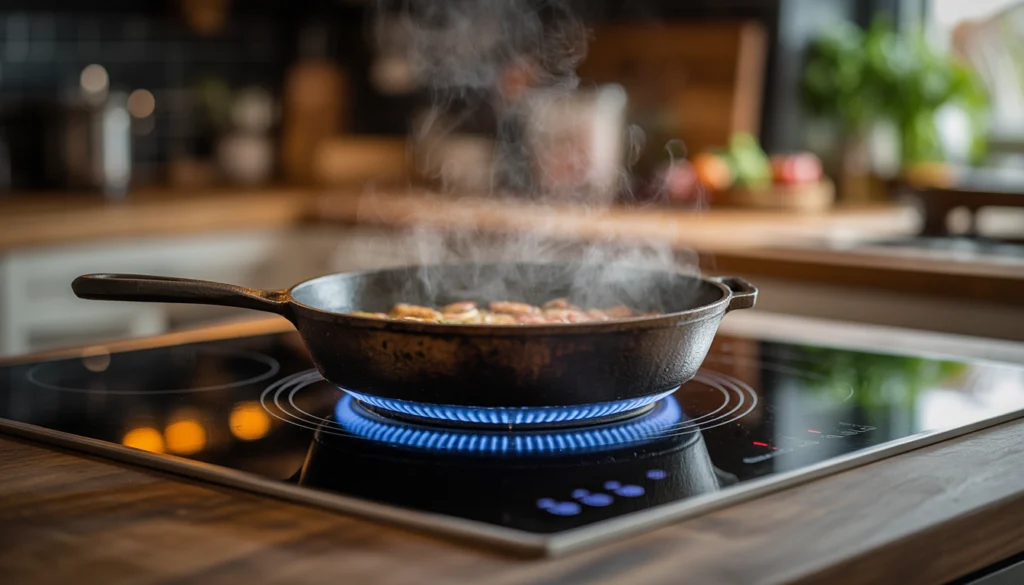
Welcome to a fusion of tradition and technology. The marriage of rugged cast iron cookware with the sleek, modern power of an induction stove is truly remarkable. Many people wonder if this combination is safe or effective, cooking with cast iron on an induction stove. I’m here to tell you yes, it’s one of the best ways to cook. This pairing brings the best of old-world cooking to modern stovetops.
This guide is your key to mastering cooking with cast iron on an induction stove. We’ll explore why this method works so well, from the magnetic heating process to practical daily use. You will learn everything needed to make your cast iron cookware perform flawlessly on your induction cooktop. Let’s get started and unlock the potential of your kitchen cooking appliances.
Key Takeaways
- Cast iron is perfectly compatible with induction stoves due to its magnetic properties
- Induction cooking with cast iron offers faster, more energy-efficient heating
- Proper preheating techniques prevent hot spots and ensure even cooking
- Flat-bottomed cast iron cookware works best on induction cooktops
- Lower heat settings are recommended compared to gas or electric stoves
- Regular seasoning and maintenance protect both your cast iron and induction surface
- Avoid sliding cast iron to prevent scratching the glass cooktop
- Cast iron retains heat exceptionally well on induction, requiring temperature adjustments
Understanding Induction Cooking and Cast Iron Compatibility
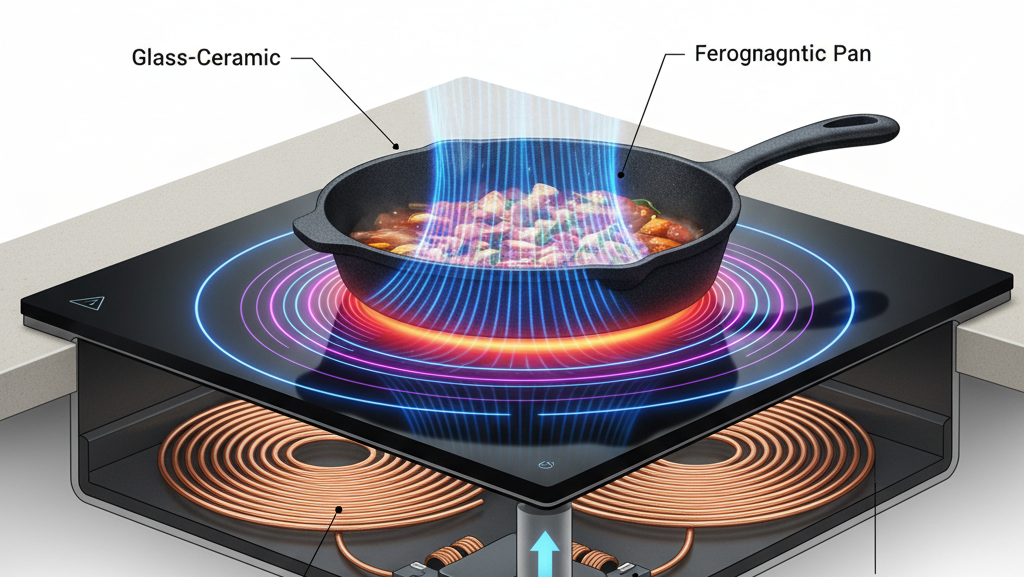
To get the best results, it’s important to understand why this combination is so effective. It’s simple science. This knowledge will make you a more confident and skilled cook on your stove.
How Induction Stoves Work
An induction stove uses a powerful copper coil to create an electromagnetic field. When you place a compatible cooking vessel on the stove top, this field generates heat directly in the metal of the pot or pan. This is the core of induction heating.
This means your cookware itself becomes the heat source. The glass cooktop remains much cooler than on electric cooktops. It’s a feature that makes the appliance very efficient. This is why induction cooktops work only with magnetic cookware. Meaning items made from a ferrous metal like cast or iron and steel. This is covered in any good induction cookware guide.
Why Cast Iron is Perfect for Induction Cooking
This is where your trusty iron skillet shines. Cast iron is naturally magnetic, and there are many benefits of cooking with cast iron on any heat source, especially induction.
- Natural Magnetic Properties: The iron content in a cast iron skillet makes it perfectly reactive to the magnetic field. You don’t need special pans; nearly every cast iron pan will work.
- Superior Heat Retention: While induction is fast, cast iron holds that heat incredibly well. This provides a stable, even cast iron surface for searing meats or slow cooking.
- Durability: A cast iron pan is tough. It can easily handle the rapid heating of an induction burner without warping like some thinner steel pans might.
- Cost-Effectiveness: Quality cast iron pots and pans are affordable and will last for generations. They offer more value than many types of specialty induction-compatible cookware.
Types of Cast Iron That Work on Induction Stoves
The good news is that most cast iron cookware is ready for your induction stovetop. The main need is a flat bottom for good contact.
- Traditional Cast Iron Skillets: Your classic skillet is a workhorse on any stove. You can explore a variety of skillets, when to use them, and the best brands to find the perfect one for you.
- Enameled Cast Iron Cookware: This includes enamel cast iron from many brands, which is easy to clean.
- Cast Iron Griddles and Grill Pans: Perfect for browning or pan frying, as long as they have a flat base.
- Dutch Ovens: Your pot is perfect for soups, braises, and even baking bread on the stovetop. There are many fantastic Dutch ovens, their uses, and top brands available.
- What to Avoid: A pan with a warped bottom won’t make proper contact with the induction surface, leading to poor heating.
Testing Your Cast Iron for Induction Compatibility
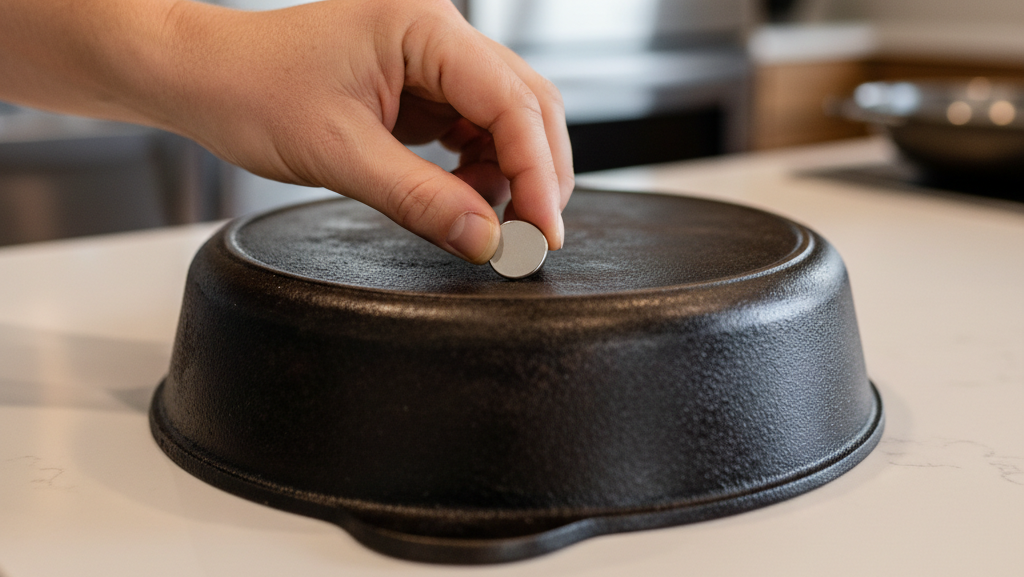
While most cast iron works, a quick check ensures your pan is ready for your induction stove top. It only takes a minute.
The Magnet Test
This is the easiest way to test any cookware.
- Find a Magnet: A simple refrigerator magnet is perfect.
- Touch the Bottom: Place the magnet on the underside of your cast iron pan.
- Check the Stick: If the magnet holds tight, your pan is a ferrous metal and will work perfectly with induction cooking.
Visual Inspection Checklist
Next, check the flatness of your pan. Proper contact is essential for fast cooking and the greatest heat delivery from the induction burner.
- Examine the Cooking Surface: Look for any major damage inside the pan.
- Check for Warping: Place the cookware on a flat countertop. If it rocks, it won’t heat evenly on the glass cooktop.
- Ensure Proper Contact: The bottom of the skillet should be smooth to connect with the heat ring of the burner.
Set Up Tips for Cooking with Cast Iron on Induction Stoves
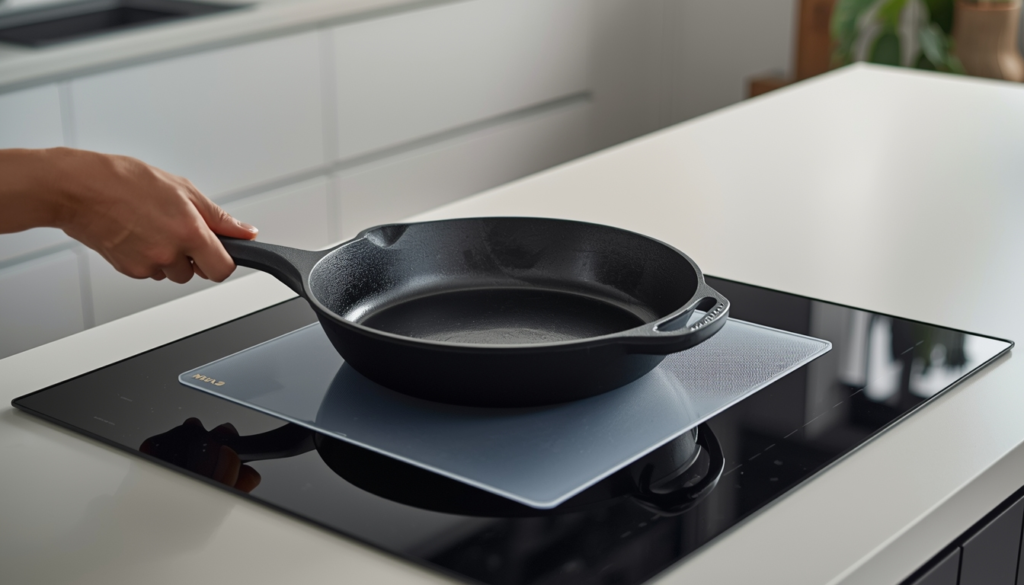
A little preparation protects your cooktop surface and improves efficiency.
Protecting Your Induction Cooktop Surface
Many people worry that rough cast iron will scratch the glass. This is a valid concern, but easy to prevent on all glass cooktops.
- Use a Protective Layer: A thin silicone mat or parchment paper can be placed between the cooktop and the pan.
- Lift, Don’t Slide: This is the most important rule. Never slide your cast iron pan across the glass-topped stove. Always lift it straight up to move it.
- Clean Before You Cook: Make sure the bottom of your pan and the induction surface are clean before you begin heating.
Optimal Cookware Size Selection
Matching your pot or pan to the burner size is crucial.
- Match Pan to Burner: Use a pan with a base that fits inside the marked heat rings on your cooktop.
- Size Recommendations: Many induction cooktops have pan detection sensors. A pan that is too small won’t be detected, and one that is too large will only heat in the center.
- Impact on Efficiency: A properly sized flat pan ensures the magnetic field is fully engaged for the most efficient heat.
Initial Preparation Steps
A few final steps before you turn on the heat.
- Clean Your Pan: Wipe it down to remove any dust.
- Check Your Seasoning: Good seasoning is key for a non-stick surface. We will cover seasoning cast iron for induction cooking later.
- Start Cool: Always place cookware on a cool cooktop before turning the power on. This prevents thermal shock.
Mastering Heat Settings and Temperature Control
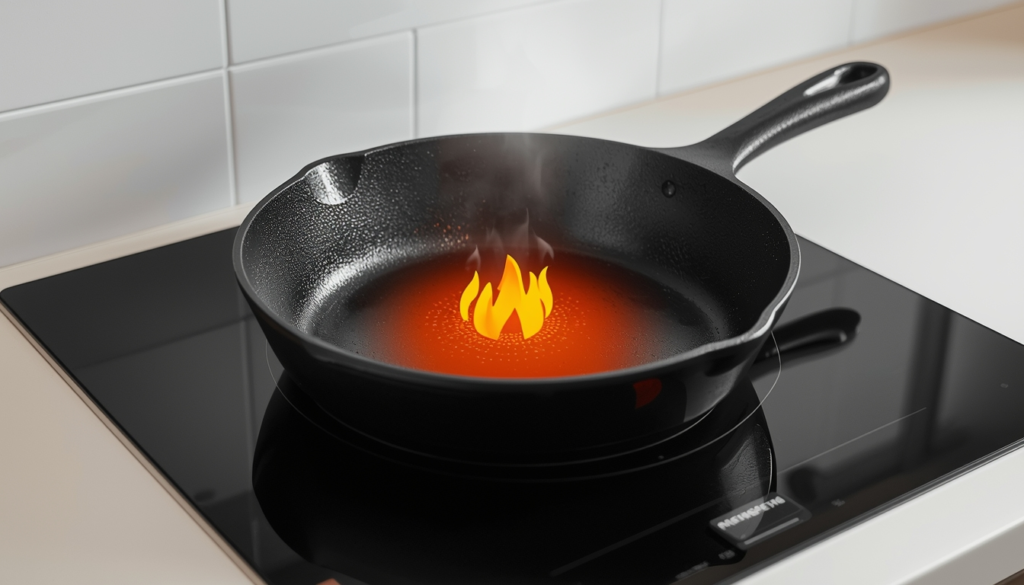
This is where the magic of cooking with cast iron on an induction stove truly happens. This combination gives you incredible control over your cooking.
How Induction Heating Differs with Cast Iron
If you’re used to a gas cooktop or electric heat, you’ll notice a big difference.
- Faster Heat-Up: Induction is incredibly fast. Your iron skillet will get hot much quicker than on other stoves.
- More Responsive: When you lower the power, the heating stops almost instantly, giving you precise control.
- Lower Settings Work Better: You will rarely need to use the highest power settings. Most of my cooking is done between low and medium-high heat.
Recommended Heat Settings for Different Cooking Methods
Every single induction cooker is a bit different, but this chart is a great starting point. Your cooking preferences may need small adjustments.
| Cooking Method | Power Level | Temperature Range (if applicable) | Examples |
|---|---|---|---|
| Simmering | Low | 180-220°F (82-104°C) | Sauces, soups, slow cooking |
| Sautéing | Medium | 300-350°F (149-177°C) | Vegetables, onions, stir fry |
| Searing / Frying | Medium-High | 400-450°F (204-232°C) | Steaks, burgers, pan frying |
| High-Heat | High | 450°F+ (232°C+) | Boiling water, high-heat browning |
Find Your Perfect Heat Setting
If you’re not sure which power level to use? Use our interactive calculator below to get personalized recommendations based on your cooking method and induction cooktop’s specifications.
Cast Iron Induction Heat Settings Calculator
Find the perfect power level for your cooking method
Temperature Range Indicator
Preventing Hot Spots and Uneven Heating
The biggest mistake is turning the heat up too fast. Cast iron needs time to heat evenly across its entire surface. It’s one of the best materials for high-heat cooking because of its retention, but that requires patience.
- Preheat Low and Slow: Start on a low setting for 3-5 minutes. Then, gradually increase the heat. This allows the heat to spread from the center to the edges of the pan.
- How Long to Preheat: Plan for 5-10 minutes of gradual preheating.
- The Water Droplet Test: Flick a drop of water onto the skillet. If it forms a single ball that glides across the surface, your pan is ready for cooking.
Understanding Power Levels vs. Temperature Settings
Your induction cooktop may offer both power levels and temperature settings.
- Power Levels: This controls the raw power (wattage) going to the induction burner. It’s best for when you want to boil water or get a hard sear.
- Temperature Settings: The cooker cycles power to maintain a target temperature. This is great for simmering or deep frying.
- Adjustment Period: It takes time to learn what settings on your new appliance correspond to low, medium, and high heat.
Cooking Techniques for Cast Iron on Induction Stoves
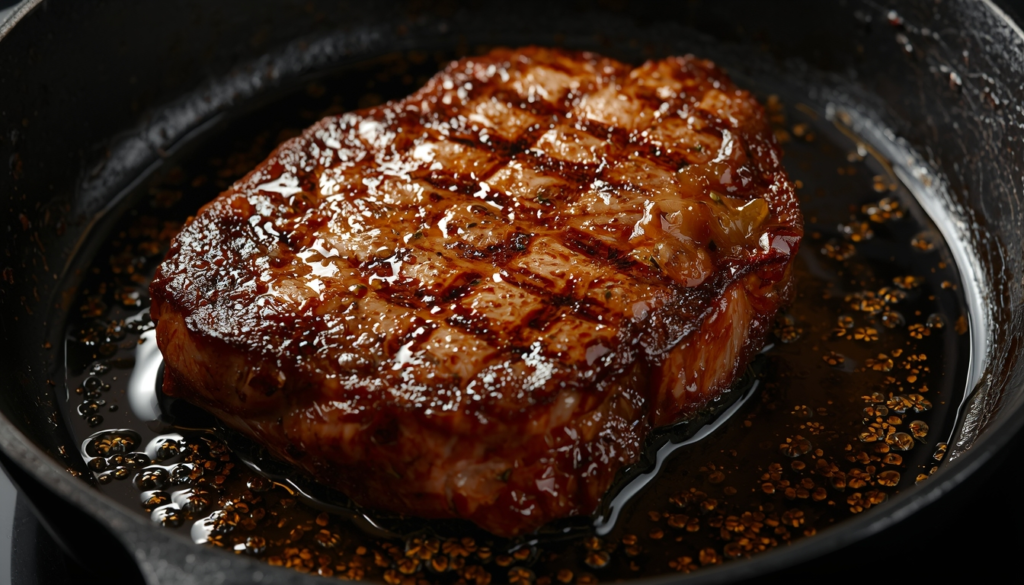
Let’s apply these principles to your daily cooking.
Preheating Best Practices
Proper preheating is the single most important step for success. Rushing it will cause food to stick.
- Place the cold, dry cast iron pan on the cool burner.
- Turn the burner to a low setting. Let it heat for 3-5 minutes.
- Increase the heat to a medium setting. Let it heat for another 3-5 minutes.
- Add your oil or butter just before you add your food.
Searing Meats and Proteins
This is where your cast iron skillet and induction cooktop excel, and it answers the common question of what kind of pan is best for searing meat.
- Achieve the Perfect Crust: The steady, high heat held by the iron plate creates amazing browning on meats.
- Use High Smoke Point Oils: Choose an oil that can handle the heat without smoking.
- Don’t Crowd the Pan: Cook in batches. This ensures the pan temperature stays high and the meat sears instead of steams.
Sautéing Vegetables and Stir-Frying
The responsiveness of induction is perfect for this. When it comes to pan frying, this setup gives you great control.
- Heat Control is Key: If your garlic is browning too fast, you can instantly lower the heat.
- Keep Things Moving: Use a spatula to stir frequently, ensuring everything cooks evenly.
Baking and Braising
Your Dutch oven is perfect for these methods.
- Stovetop to Oven: You can easily start a recipe on the induction stovetop and then transfer the entire pot to your oven to finish.
- Stovetop Baking: Recipes like cornbread can be baked right on the cooktop using low and steady heat.
Deep Frying and Oil Temperature Management
Induction provides amazing precision for deep frying.
- Precise Temperature: You can set a specific temperature to hold your oil perfectly. This feature helps to fry easy. Whirlpool brand and other cooktops often have these features.
- Safety First: Use a deep pot and never fill it more than halfway with oil.
Simmering Sauces and Soups
The low-temperature stability of the induction surface is ideal for long cooking times.
- No Scorching: The even heat from the burner reduces the risk of hot spots.
- Set and Forget: Once you find the perfect low setting, your sauce can simmer for hours.
Challenges and Solutions When Using Cast Iron on Induction
Even experts run into quirks. Here’s how to solve them.
Addressing Uneven Heating Issues
If your food cooks faster in the center, the cause is usually one of two things:
- Improper Preheating: You heated the pan too quickly. The solution is to always preheat slowly.
- Burner Size: The induction coil is smaller than your pan. Using a pan that matches the heat ring size is important.
Managing Excessive Heat Retention
Cast iron stays hot for a long time. This is great for searing but can lead to overcooking.
- Cool-Down Strategy: When your food is almost done, turn off the burner. The residual heat in the metal will finish the cooking.
- Remove Food Promptly: Don’t let delicate food sit in the hot pan after you’re done.
Dealing with Noise and Vibration
A faint humming or buzzing sound is normal.
- What it is: This sound is the magnetic field vibrating the metal of your pots and pans.
- When to Worry: A loud noise could mean your pan isn’t flat. If you worry your pan isn’t compatible, this could be a sign.
- How to Minimize It: Ensure the pan is centered on the burner. A heavier pan sometimes vibrates less.
Preventing Sticking and Food Burning
Sticking usually means there’s an issue with seasoning or temperature.
- Maintain Your Seasoning: A slick, seasoned surface is your best defense.
- Use Enough Fat: A little oil goes a long way.
- Preheat Properly: Never add food to a cold cast iron skillet.
Maintenance and Care for Cast Iron Used on Induction Stoves
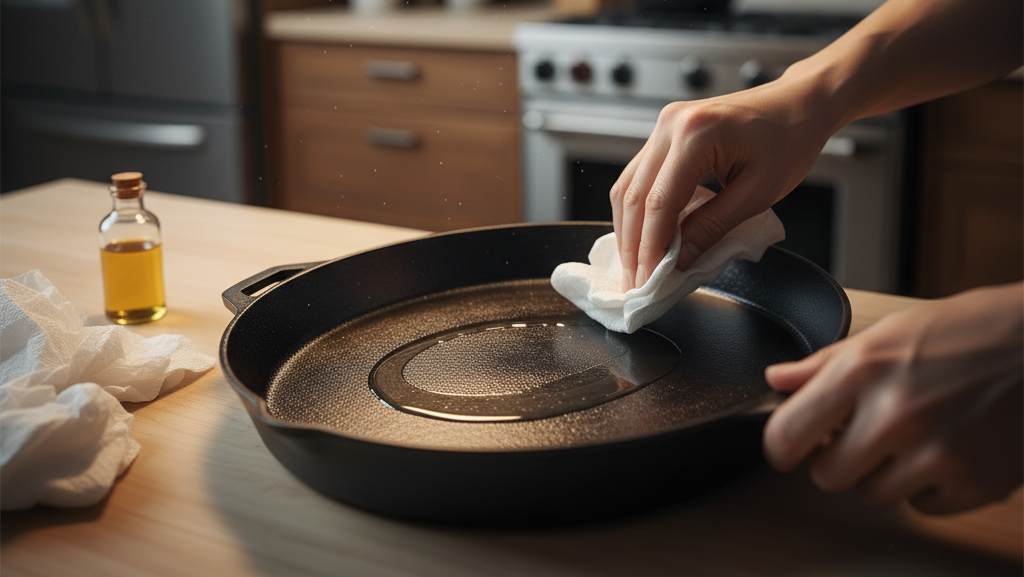
Proper care keeps your cookware and cooktop in perfect condition. This is essential for any material for cookware you choose.
Cleaning Cast Iron After Induction Cooking
The process is simple, but one warning is critical. Learning how to clean and maintain cast iron cookware will make it last a lifetime.
- Avoid Thermal Shock: Never put a hot iron skillet in cold water. Let it cool down first to prevent warping or cracking.
- Gentle Cleaning: Use a brush for stuck-on food. A little soap is fine.
- Dry Thoroughly: Dry the pan with a towel, then warm it on the stove for a minute to evaporate all moisture.
Seasoning and Re-Seasoning Your Cast Iron
A good seasoning is a non-stick surface made of baked-on oil. It’s important to understand how to season a cast iron pan properly for the best results.
- How Induction Affects Seasoning: The direct heat can sometimes wear down the seasoning in the center of the pan. You may need to re-season it once in a while.
- Step-by-Step Seasoning: Apply a very thin layer of oil to the entire pan, wipe it nearly dry, and bake it in the oven at a high temperature for one hour.
Best Cast Iron Cookware for Induction Cooking
Certain features make some pieces better for an ideal induction cooktop experience. Many types of modern cast iron are excellent, and it helps to know the best cast iron brands for home cooks.
Top Features to Look For
- Flat, Smooth Bottom: This is the most critical feature.
- Appropriate Weight: A heavier pan retains heat better.
- Quality Seasoning: A good factory seasoning from a trusted pan manufacturer saves you work.
- Size Versatility: A 10-inch or 12-inch skillet is a great starting point.
Premium Cast Iron Choices
For those looking to buy. Enameled cast iron from brands like Le Creuset and Staub are top-tier options for any glass-top cooking surface, induction included. Proper enamel-coated cookware care and maintenance will keep these pieces beautiful for years. The choice between enamel or traditional really comes down to cooking preferences.
Specialty Cast Iron Pieces for Induction
- Griddles: Look for a grill/griddle piece that is flat on the bottom.
- Reversible Pieces: A reversible grill/griddle is generally not recommended for induction. The side touching the cooktop is not flat and won’t make good contact.
Comparing Cast Iron to Other Induction-Compatible Cookware
How does cast iron compare to other cookware? Learning the cast iron vs. stainless steel pros and cons can help you decide which to use.
| Feature | Cast Iron | Stainless Steel | Induction Nonstick |
|---|---|---|---|
| Heat Retention | Excellent | Poor | Poor |
| Durability | Generational | Very Durable | Limited Lifespan |
| Searing Ability | Unmatched | Good | Poor |
| Maintenance | Requires Seasoning | Easy to Clean | Hand-wash Only |
When to Choose Cast Iron for Induction Cooking
Cast iron excels at tasks that require stable, high heat. It’s perfect for everything from searing to slow cooking. For boiling water quickly, stainless steel cookware has its own pros and cons and can be faster.
FAQs About Cooking with Cast Iron on Induction Stoves
Here are answers to the most common questions.
Will cast iron scratch my induction cooktop?
It can if you slide it. Always lift your pots and pans. This is true for any heavy cookware on glass cooktops, including radiant cooktops.
Why does my cast iron make noise on the induction stove?
A low humming is normal. It’s the magnetic field working on the metal. Whether you have Whirlpool® cooktops or another brand, this sound is common.
Can I use a cast iron wok on an induction stove?
Only a flat-bottomed wok will work effectively. A traditional round-bottom wok won’t make enough contact with the induction burner. If you’re considering one, it’s a good idea to research woks and how to choose the right one for your stove.
Does enameled cast iron work better than traditional cast iron on induction?
They work equally well. The choice depends on if you prefer the non-stick patina of seasoned iron or the easy cleanup of an enamel surface.
Conclusion: Mastering Cast Iron Cooking on Your Induction Stove
You are now ready to master cooking with cast iron on an induction stove. We’ve covered everything from the science of induction to the practical steps for getting a perfect sear. This timeless cookware and modern appliance are a perfect match. From old wood-fired stoves to the latest Electrolux/Foss induction cooktop, cast iron has always been a kitchen staple.
Remember to preheat slowly, lift instead of slide, and keep your seasoning in top shape. With a little practice, your skillet will become your favorite tool on your cooktop. Now it’s time to start cooking and experience the amazing results for yourself.