
Key Takeaways
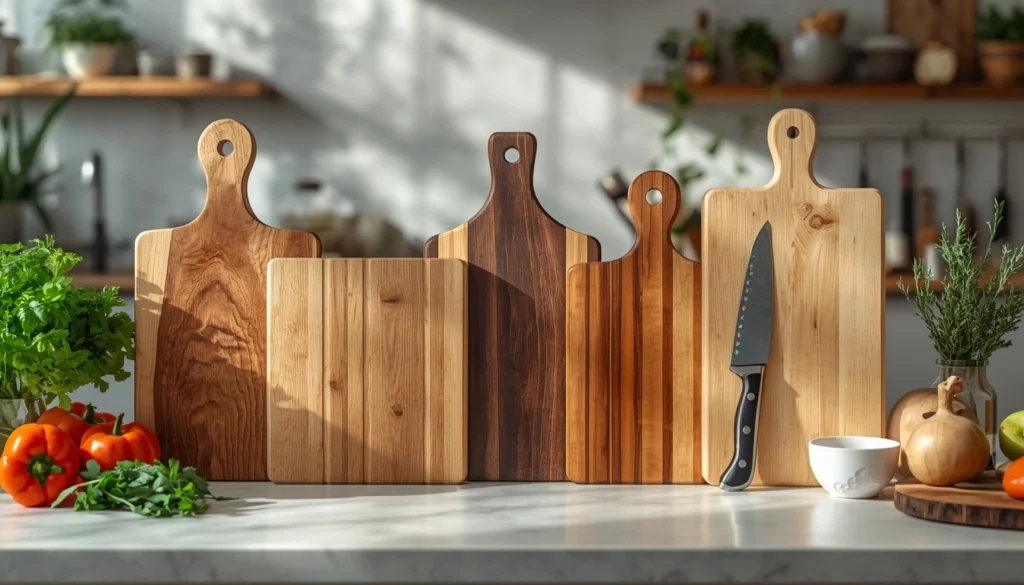
- Solid hardwood (maple, walnut, cherry, teak) is the healthiest cutting board material. It has natural antibacterial properties and does not shed microplastics into your food.
- Plastic cutting boards release up to 50.7 grams of microplastics per person per year, according to a 2023 study published in Environmental Science & Technology.
- Wood is more hygienic than plastic, research from UC Davis shows bacteria drawn into wood fibers die off. Meanwhile bacteria in plastic knife grooves survive and multiply even after washing.
- Natural rubber is a strong runner-up for people who want a non-porous surface without plastic. NSF-certified rubber boards are used widely in professional kitchens.
- Bamboo can be a concern if the board uses formaldehyde-based adhesives to bond the strips together. Always check the manufacturer’s adhesive before buying.
Introduction
Here is a number that might change how you think about your kitchen. People who use plastic cutting boards daily could be eating up to 50.7 grams of microplastics per year from chopping food on them. That finding comes from a 2023 peer-reviewed study published in Environmental Science & Technology by researchers at North Dakota State University. Source: Environmental Science & Technology, ACS, 2023
Most people think about cutting boards size, price, or how good they look on a countertop. Very few think about what the board is actually putting into their food. That is the real question, and it matters more than most people realize.
In this article, you will learn which cutting board materials are the safest and healthiest. You’ll see why plastic boards have a serious problem that most people do not know about. Also what the science actually says about wood versus plastic hygiene.
What Is the Healthiest Cutting Board Material?
The healthiest cutting board material is solid hardwood. Specifically close-grained woods like maple, walnut, cherry, and teak. These woods are antimicrobial, do not shed microplastics into food, and are food-safe when properly maintained with mineral oil or beeswax.
This is not just a matter of personal preference. Many peer-reviewed studies and food safety experts point to hardwood as the gold standard for both safety and hygiene. The closest runners-up are natural rubber (for those who want a non-porous surface) and certified composite boards.
Why Material Choice Matters More Than You Think
Your cutting board touches almost every meal you prepare. Raw meat, vegetables, bread, fruit, all it makes contact with the board surface. That surface can either stay neutral and clean, or it can actively add things to your food. For example bacteria, microplastic particles, or chemicals from adhesives and coatings.
Most people were taught that plastic boards are more sanitary than wood. That turns out to be wrong. The short version is thatscience flipped that assumption on its head. Now plastic’s reputation for cleanliness has not held up under scrutiny.
Wood Cutting Boards: The Gold Standard for Health
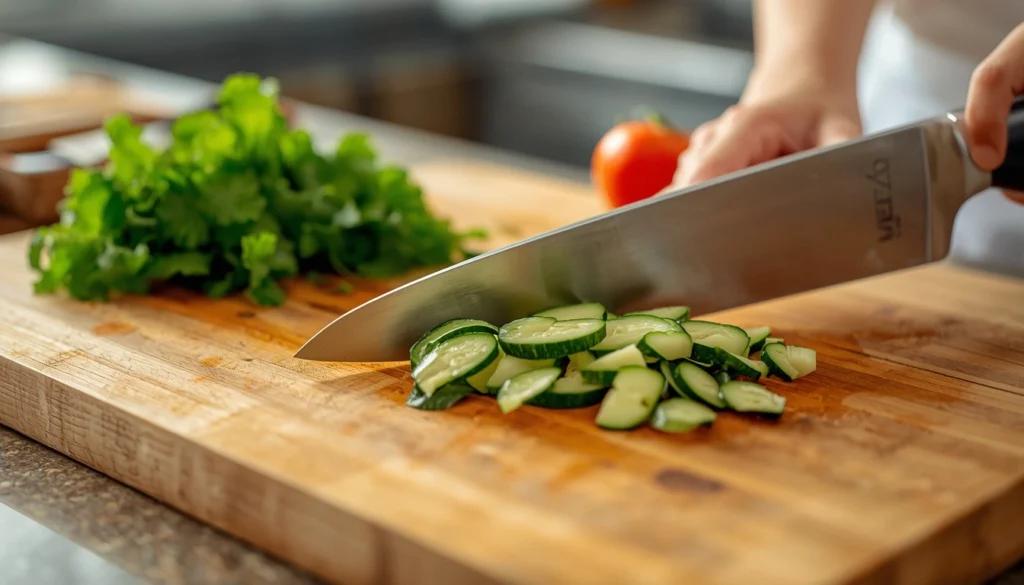
Solid hardwood cutting boards are the healthiest option. It is because they combine natural antibacterial properties with zero microplastic shedding. Unlike plastic, hardwood does not add harmful particles to your food, and unlike what most people assume. Wood actually handles bacteria more safely than plastic does.
Research from UC Davis, led by food safety expert Dean O. Cliver, found that wood cutting boards are more hygienic than plastic in a surprising way. When bacteria land on a wood surface and the board is washed, the moisture pulls the bacteria down into the wood fibers. Once inside, the bacteria dry out and die. Cliver’s lab repeatedly confirmed this across many studies throughout the 1990s. The bacteria could not be recovered from wood surfaces after this process. Source: UC Davis / Dean O. Cliver research, via NonToxicLab, 2026
Plastic tells a different story. Knife scars in plastic boards create tiny grooves where bacteria collect and stay. Even after washing, those bacteria can survive and multiply in the grooves, especially if the board stays damp overnight. Source: NonToxicLab, 2026
A 2023 study in the journal Coatings (MDPI) confirmed that uncoated wood had less recoverable bacteria on its surface than coated samples. That wood’s behavior of pulling moisture (and bacteria) below the surface is consistent across board types.
For more on the best wood options and how they compare, check out our guide to what is the best wood for cutting boards.
Which Wood Types Are Safest?
Not all wood is equal. Close-grained hardwoods are the safest because they have tighter wood fibers. Thjese fibres are less likely to crack, harbor bacteria, or absorb excessive moisture.
The top choices recommended by food safety experts and chefs include:
- Hard maple — dense, tight grain, one of the most recommended by professional chefs
- Walnut — slightly softer than maple, gentle on knife edges, naturally antimicrobial compounds
- Cherry — antimicrobial tannins and lignins, popular in professional kitchens
- Teak — naturally oily, resists moisture well, durable for heavy use
- Acacia — affordable and widely available, performs well with proper care
Source: Institute of Culinary Education / Mamavation, 2025
Open-grained woods like pine and red oak are generally not recommended for cutting boards. Their larger pores make them harder to clean properly.
For a detailed comparison of hardwood options, see our article on the best hardwoods for cutting boards.
End Grain vs. Edge Grain: Does It Matter?
Yes, it matters for both hygiene and knife care. End grain boards are the healthiest option within the wood category. Because knife cuts close back up as the wood dries, which means grooves do not build up over time. This is the “self-healing” property that makes end grain boards popular with professional chefs.
Edge grain boards (where you see the long side of the wood strips) are more affordable and still very safe. They develop surface grooves faster with heavy use. Either is a solid healthy choice compared to plastic.
The Problem With Plastic Cutting Boards
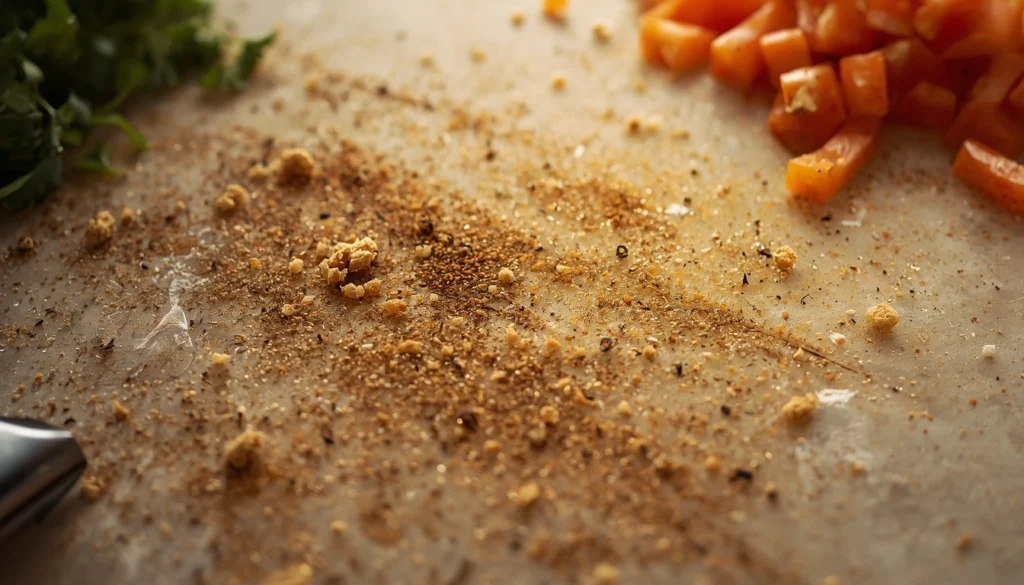
Plastic cutting boards are the most common board type in American kitchens. They are also the most problematic from a health standpoint.
Two separate issues make them a concern: microplastic contamination and bacteria behavior in knife grooves.
Microplastics: How Much Are You Actually Eating?
The 2023 study in Environmental Science & Technology is the clearest look yet at what plastic boards are doing to your food. Researchers at North Dakota State University tested polyethylene and polypropylene cutting boards. The tests were conducted under realistic chopping conditions, including chopping vegetables, and measured the microplastic particles released.
The results were striking:
- A polyethylene board was estimated to expose a person to 7.4 to 50.7 grams of microplastics per year through normal use.
- A polypropylene board was estimated at 49.5 grams per year.
- Polypropylene released 5 to 60% more microplastic mass than polyethylene, and 14 to 71% more particles.
Source: Environmental Science & Technology, ACS, 2023
The Environmental Working Group has noted that annual microplastic exposure from plastic cutting boards alone can reach up to 50 grams. That is roughly the weight of ten plastic credit cards. Source: EWG, via theroundup.org
To be fair: the same study tested microparticles from wood boards too. It found that polyethylene and wood microparticles did not affect mouse cell survival in lab tests. The long-term health effects of ingesting microplastics in humans are still being studied. But many health-conscious cooks and researchers prefer not to wait for that answer. Source: ScienceDaily / American Chemical Society, 2023
[A 2023 peer-reviewed study found plastic cutting boards can expose you to up to 50.7 grams of microplastics per year — just from chopping food. Source: Environmental Science & Technology, ACS.]
Bacteria in Knife Grooves: The Hidden Risk
The second problem with plastic boards is the knife groove issue. Once a plastic board gets scored with knife marks — which happens quickly with daily use — those grooves become traps for bacteria. Research shows that bacteria in these grooves cannot be removed by washing, even with thorough scrubbing. Source: NonToxicLab, 2026
This is the opposite of what most people were taught. For years, plastic was considered the “safe” choice for cutting raw meat. The UC Davis research showed that is not accurate. A plastic board that has been used for a while is actually a more hospitable environment for bacteria than a well-maintained wood board.
The practical takeaway: plastic boards need to be replaced every 2 to 3 years once scoring becomes deep. The bacteria problem gets worse over time. Source: Healthier Homes, 2026
For a deeper look at the pros, cons, and replacement timing of plastic boards, see our full breakdown of the pros and cons of plastic cutting boards.
Natural Rubber Cutting Boards
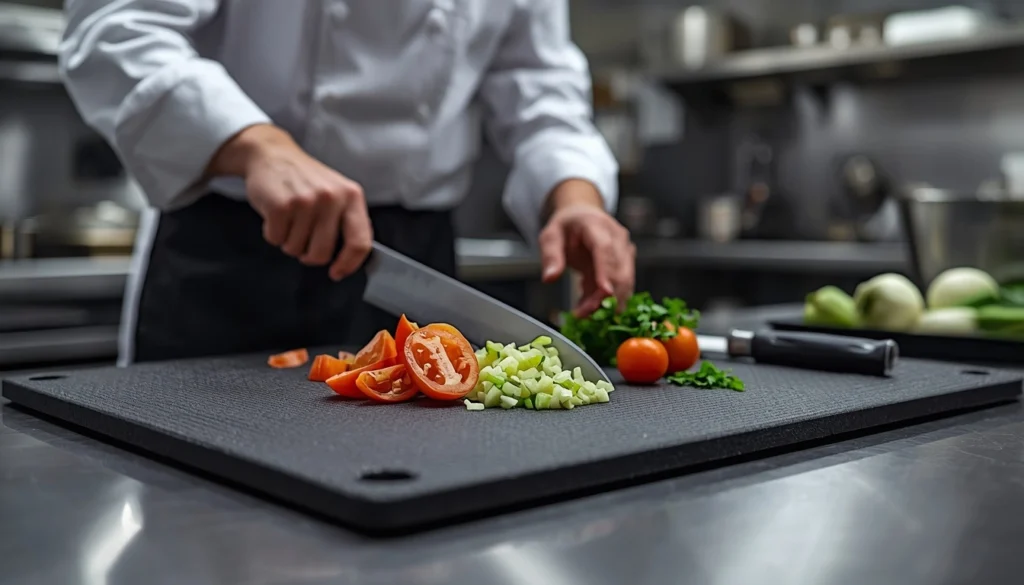
Natural rubber cutting boards are one of the healthiest non-wood options. They are non-porous, do not shed microplastics, and meet NSF International and FDA food safety standards.
These are not the same as cheap synthetic rubber mats. High-quality natural rubber boards, like the NSF-certified options used in professional restaurant kitchens. They’re made from food-grade rubber that resists bacteria, does not absorb liquids, and does not need oiling. Source: NoTrax / NSF International
Rubber boards also happen to be very gentle on knife edges, which is a bonus if you have invested in quality knives. They can be resurfaced by sanding if they develop deep grooves, which extends their lifespan.
The main things to watch for with rubber boards:
- Make sure they are natural rubber, not synthetic rubber (which may contain phthalates or other additives)
- Look for NSF certification to confirm they meet food safety standards
- They can develop an odor when new, this fades with use
Rubber boards are less common in home kitchens. But they are worth considering if you want a low-maintenance, non-porous alternative to both wood and plastic.
Bamboo Cutting Boards: Eco-Friendly but With a Catch
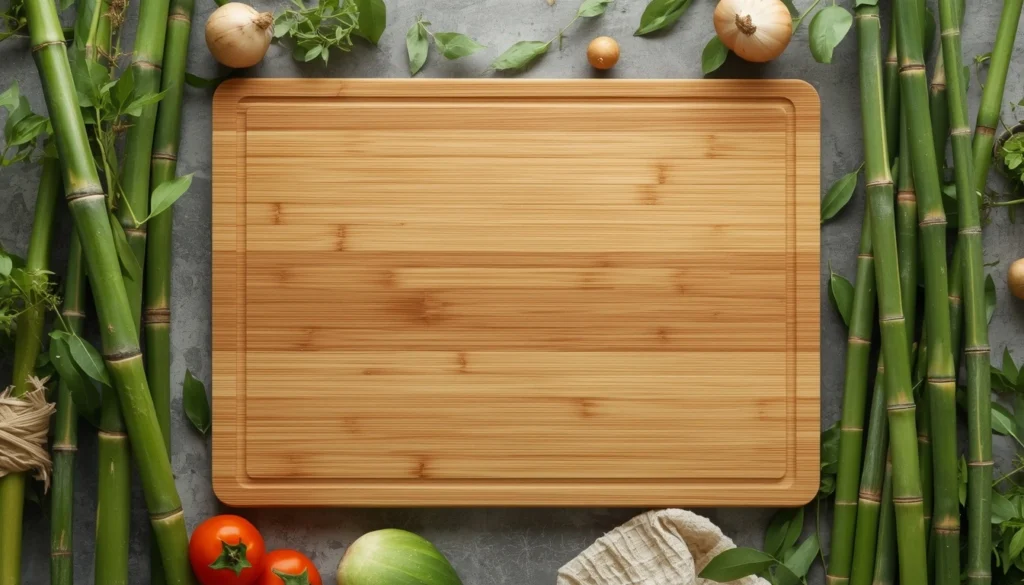
Bamboo cutting boards can be a healthy choice, but only if the board uses formaldehyde-free adhesives. This is the key detail that bamboo’s eco-friendly marketing often leaves out.
Bamboo is technically a grass, not a wood. Because it grows in narrow stalks, bamboo boards are made by gluing strips together under pressure. Some manufacturers use phenol-formaldehyde resin as the bonding agent. It’s a chemical linked to health concerns that you do not want anywhere near your food. Source: Mamavation, 2025
Bamboo boards made with water-based, formaldehyde-free adhesives are safer. But these are not always easy to identify. Look for:
- A label confirming formaldehyde-free or non-toxic adhesive
- NSF certification or equal food-safety certification
- Avoid “MDF” or fiberboard bamboo composites entirely, these are not food-safe for regular use
The other practical downside of bamboo: it is harder than most hardwoods. This means it is rougher on knife edges and can dull blades faster than maple or walnut. For a detailed breakdown of bamboo performance, see our guide on are bamboo cutting boards good for your kitchen.
Materials to Avoid
Some cutting board materials sound appealing but are worth skipping. The reason is either for health reasons or because they damage your knives enough to create safety problems of their own.
Glass cutting boards are non-porous and easy to sanitize, but they are one of the worst surfaces for knife edges. The hardness destroys blade sharpness fast. A dull knife is actually more dangerous than a sharp one because it requires more force and is more likely to slip.
Marble and stone boards have the same problem, beautiful to look at, but they will ruin the edge of any good knife.
Cheap composite boards with unknown adhesives can release of gas from formaldehyde or other chemicals. Especially when new or when heated. If you go the composite route, look specifically for NSF-certified, BPA-free, formaldehyde-free options.
How to Keep Any Cutting Board Healthier
Choosing the right material is only half the job. How you care for a board affects how healthy and hygienic it actually is in practice.
Wood boards:
- Wash by hand with hot water and mild dish soap after every use — never the dishwasher
- Dry immediately and store upright so air can circulate on both sides
- Oil with food-grade mineral oil every 3 to 6 months to prevent cracking
- Replace when deep grooves or cracks appear (over 1mm deep) that you cannot sand out
Rubber boards:
- Hand wash only, no dishwasher, as heat can warp the rubber
- No oiling needed, which makes maintenance easier
- Sand and resurface when groove buildup becomes significant
For any cutting board:
- Use separate boards for raw meat and produce to prevent cross-contamination. This matters regardless of material
- Replace boards showing heavy scoring, warping, or persistent odors
- Sanitize monthly with a diluted hydrogen peroxide solution or white vinegar
I remember a mistake I kept making early on that taught you something about board care. After hand washing my wood cutting board. I use put it to dry off without completely wiping the excess water off the board. Over time I noticed this action was slowly warping my cutting board. I noticed the warp when tried mincing oinions. Only a small part of the knife’s blade was making contact with the surface of the board. This made it difficut to get a clean cut with on pass of the knife. I learned a key lesson that day about wood cutting board maintenance.
For a full step-by-step guide, see our article on how to safely use cutting boards.
FAQs About the Healthiest Cutting Board Material
What is the healthiest cutting board to use?
Solid hardwood (maple, walnut, cherry, or teak) is the healthiest cutting board material. These woods are naturally antimicrobial, do not shed microplastics into your food, and last for many years with proper care.
Is wood or plastic better for food safety?
Wood is better for food safety, despite what older guidelines suggested. Research from UC Davis found that bacteria drawn into wood fibers die off. Meanwhile bacteria in plastic knife grooves survive and multiply even after washing.
What is the safest cutting board for raw meat?
A well-maintained hardwood board or an NSF-certified natural rubber board are both safe for raw meat. The key is using a dedicated board for raw meat and washing it thoroughly after each use. Plastic boards become more problematic over time as knife grooves accumulate and harbor bacteria.
Do plastic cutting boards really release microplastics?
Yes. A 2023 study in Environmental Science & Technology confirmed that plastic cutting boards release microplastics into food during normal chopping. A polyethylene board can expose a person to up to 50.7 grams of microplastics per year.
Are bamboo cutting boards healthy?
Bamboo can be safe if the board uses formaldehyde-free adhesives. Many bamboo boards are bonded with phenol-formaldehyde resin, which is a health concern. Always check the adhesive before buying, and look for certified non-toxic options.
What cutting board does not dull knives?
End grain hardwood and natural rubber are the most knife-friendly options. Glass, marble, and ceramic are the worst, they destroy knife edges quickly.
How often should you replace a cutting board?
Plastic boards should be replaced every 2 to 3 years with daily use, sooner if deep grooves develop. Wood boards can last 10 or more years with proper oiling and maintenance. Replace any board that shows deep cracks, warping, or persistent odors that washing cannot remove.
Conclusion
The answer to the healthiest cutting board question is clear: solid hardwood wins. It is antimicrobial, it does not add microplastics to your food, and it actually handles bacteria more safely than plastic. That is the opposite of what most people were taught.
If you want a non-porous option, NSF-certified natural rubber is the next best choice. Bamboo can work if you verify the adhesive is formaldehyde-free. Avoid glass, marble, and cheap composites.
The one thing that matters almost as much as material is maintenance. The healthiest board in the world becomes a problem if it is not washed, dried, and replaced at the right time.
Your next step: take a look at your current cutting board. If it is plastic and heavily scored with knife marks, it may be time to make the switch. Start with a mid-size end grain maple or walnut board, it is one of the simplest upgrades you can make to your kitchen’s everyday health.