
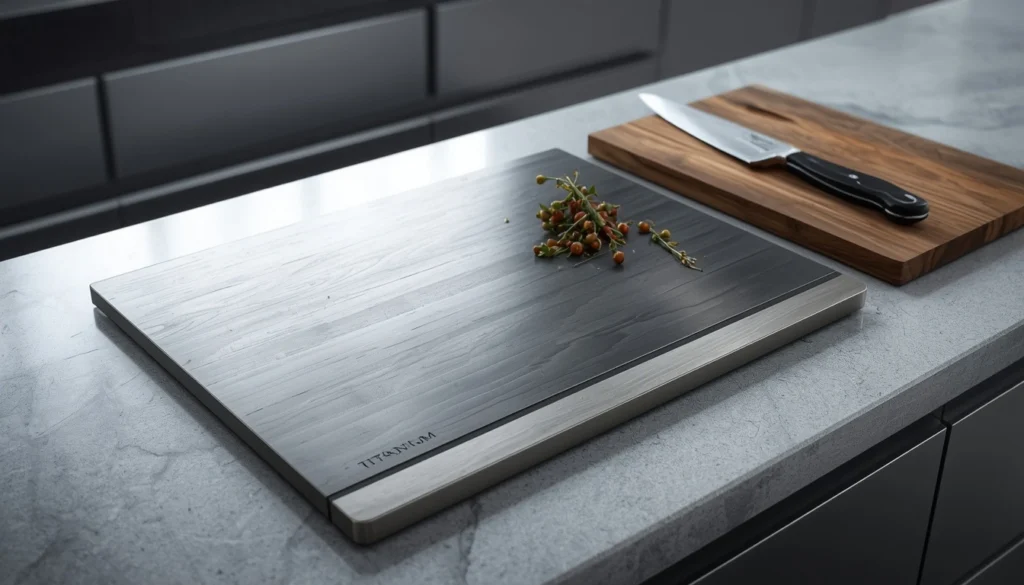
Key Takeaways
- Hardwood cutting boards (maple, walnut, teak) are among the most hygienic options. Because wood naturally pulls bacteria below the surface, where the bacteria die off within hours.
- Plastic boards are a microplastics risk: a 2023 study published in Environmental Science & Technology found this. Chopping vegetables on a polyethylene cutting board releases between 1,536 and 7,680 microplastic particles per use.
- Plastic boards that are scratched or grooved harbor more bacteria than wood. The grooves are too narrow to clean thoroughly, even in a dishwasher.
- Glass and stone are technically the most non-porous surfaces, but they will wreck your knife edge fast, making them a poor all-around choice.
- The single best practice for any material: use separate boards for raw meat and produce. That matters more than the material itself.
Introduction
About 48 million Americans get sick from foodborne illness every year, according to the CDC. A big chunk of those cases trace back to cross-contamination during food prep, and your cutting board sits right at the center of that problem. Most of us grab whatever board is closest without thinking much about what it is made of or what it is leaving behind in our food.
Here is the problem: the conventional wisdom, the “plastic is more hygienic than wood” rule that many of us learned, turns out to be pretty wrong. And a newer concern, microplastics shedding off plastic boards and into your food, makes the material choice matter even more than it used to.
In this post, I’ll break down which cutting board materials are actually the most hygienic, what the science says about bacteria and microplastics. I will also show which boards are safest for raw meat, and what you should avoid.
What Is the Most Hygienic Cutting Board Material?
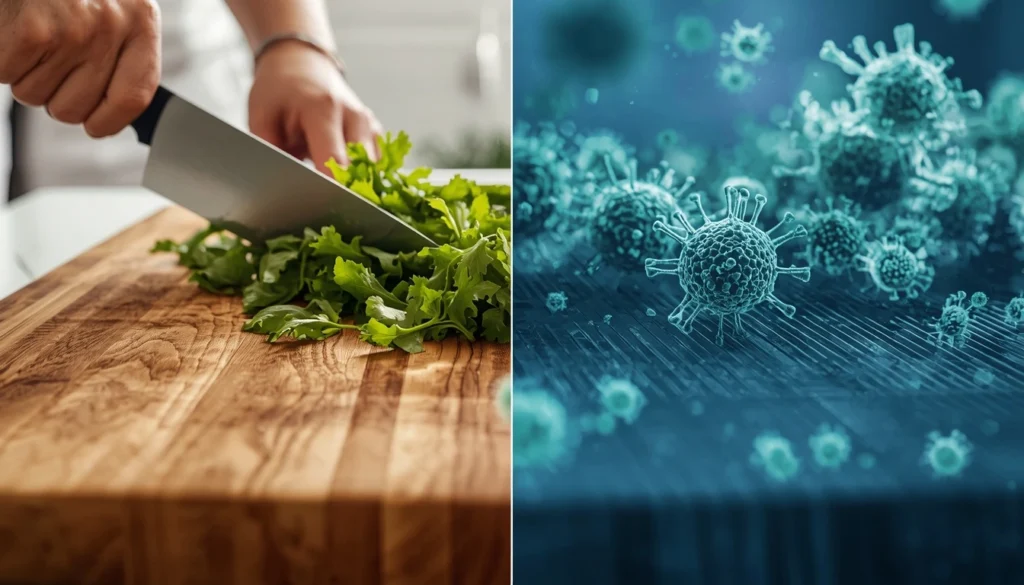
The most hygienic cutting board material for everyday home use is hardwood. I mean tight-grained hardwoods like maple, walnut, or teak. Many studies show wood handles bacteria better than plastic in real-world kitchen conditions.
Here is what the research actually says. Research from the University of California, Davis, led by food safety expert Dr. Dean Cliver, found this. Bacteria applied to wood cutting boards were pulled down into the wood fibers, where they could not be recovered and did not multiply. On plastic boards, those same bacteria sat in knife grooves near the surface and continued to multiply, even after washing. [Source: Bacteria and Various Cutting Board Materials, Dr. Dean Cliver, UC Davis]
A 2025 study from Freie Universität Berlin comparing sugar maple and high-density polyethylene (HDPE) boards reached similar conclusions. They noted that wood can have bactericidal properties that lead to reduced microbial loads compared to plastic cutting boards. [Source: Hygienic Evaluation of Wooden Cutting Boards, Journal of Food Protection, 2025]
There was a separate 2025 study published in ScienceDirect. They found that plastic cutting boards had higher counts of aerobic mesophilic bacteria and Enterobacteriaceae compared to wooden boards tested in domestic kitchens. [Source: Handling practices and microbiological assessment of cutting boards, ScienceDirect, 2025]
Som years ago I switched to using wood cutting boards more often than plastic. In my earlier years preparing meals, there were a few occassion where a pieces of plastic from the cutting board was found in our meats. That when I noticed pieces of platic were being chipped off the boards because of the force applied when chopping certain meats. This made me more aware of how important it is to choose right cutting board, depending on the task.
Why Wood Works Better Than Most People Expect
Wood’s advantage comes down to two things: capillary action and natural antimicrobial compounds. Hardwoods draw bacteria downward into the wood grain, away from the food contact surface. Wood also contains tannins and other natural extractives that actively inhibit bacterial survival.
A study on pine and oak sawdust found that these species showed better hygienic performance than plastic. Researchers attributed it to the combination of wood’s hygroscopic properties and its natural extractives. [Source: Wooden Cutting Boards and Bacteria, Common Sense Home]
The key word here is hardwood. Softwoods like pine are more porous and absorb moisture differently. For the best results, stick with:
- Maple (the classic choice, very tight grain)
- Walnut (naturally antimicrobial, gentler on knife edges)
- Teak (naturally oily, highly moisture-resistant)
- Acacia (durable and dense)
You can read more about the specific properties of each wood in our guide to what is the best wood for cutting boards.
What Is the Most Sanitary Cutting Board for Meat?
For raw meat, both hardwood and non-porous plastic boards are considered safe. That’s provided you follow proper cleaning procedures and use separate boards for raw meat and produce.
The USDA states directly: “Consumers may choose either wood or a nonporous surface cutting board such as plastic, marble, glass, or pyroceramic.” The key word is “may.” Neither material has a hard disqualification for meat, but how you use and clean the board matters enormously. [Source: USDA FSIS Cutting Boards]
The FDA is equally clear: use one cutting board for fresh produce and a separate one for raw meat, poultry, and seafood. That separation does more for food safety than any material choice.
[The most important food safety rule: use separate cutting boards for raw meat and produce. This matters more than what your board is made of.]
Dedicated Boards vs. Color-Coded Systems
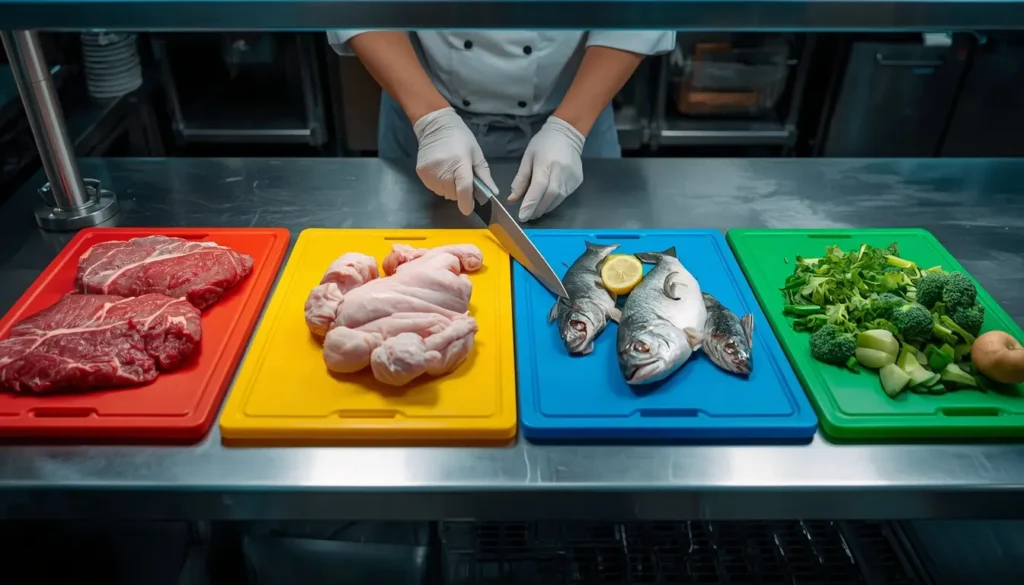
If you want a simple system that prevents cross-contamination, color-coded boards are the way to go. Commercial kitchens have used this system for years under HACCP food safety guidelines:
- Red for raw red meat
- Yellow for raw poultry
- Blue for seafood
- Green for fruits and vegetables
- White for dairy and bread
You do not need to follow this exact system at home. But having at least two dedicated boards (one for meat, one for everything else) is the smellest best practice.
Our article on what cutting board do professional chefs use goes deeper into how pros handle this in real kitchen environments.
What Kind of Cutting Board Won’t Hold Bacteria?
Non-porous materials like glass and high-quality stone hold the least bacteria. Bacteria cannot penetrate a non-porous surface. However, they come with a serious trade-off: they will dull your knives very fast. Most kitchen knife experts recommend avoiding them for regular chopping for exactly this reason.
For practical everyday use, the ranking looks like this:
| Material | Bacteria Resistance | Knife-Friendly | Microplastics Risk | Best For |
|---|---|---|---|---|
| Hardwood (maple, walnut, teak) | High (antimicrobial properties) | Yes | None | General use, vegetables, meat |
| HDPE plastic (food-grade) | Medium (if grooves develop, lower) | Yes | High | Dishwasher-safe portability |
| Bamboo | Medium | Moderate (harder than wood) | None | Light prep work |
| Glass / stone | Very high (non-porous) | No (dulls knives fast) | None | Avoid for regular cutting |
| Composite / resin boards | Medium-high | Moderate | Possible (check materials) | Light to moderate use |
Well-maintained hardwood boards hit the sweet spot: lower bacteria retention than plastic in real-world use, zero microplastics risk, and gentle on knives.
If you are dealing with deep knife grooves or visible cracks in any board, it is time to replace it regardless of what it is made of. Those grooves trap bacteria beyond what any cleaning routine can reliably remove. See our guide on when to replace a cutting board for more on this.
What Is the Best Cutting Board to Avoid Microplastics?
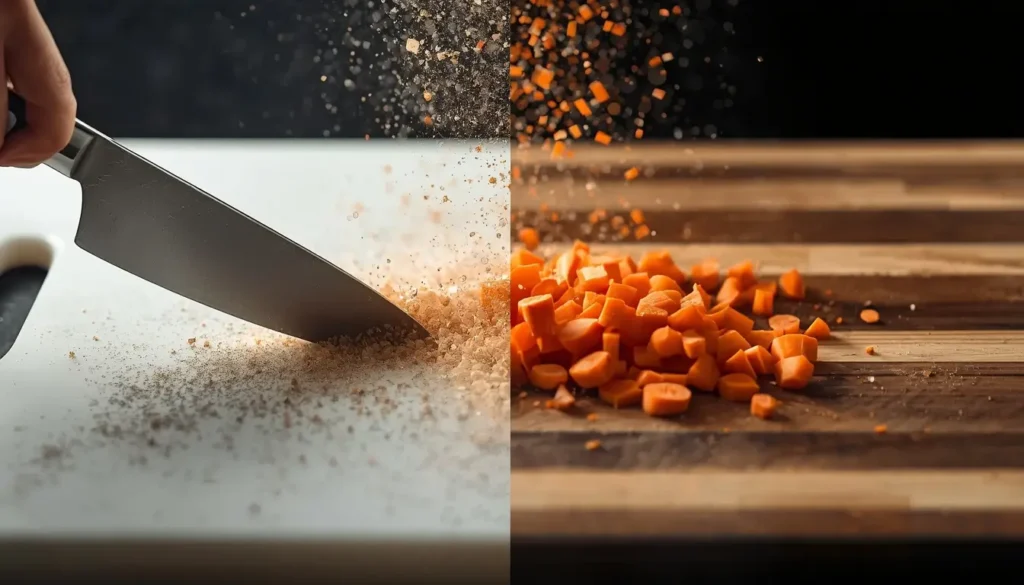
The best cutting boards to avoid microplastics are hardwood, bamboo, glass, stone, and rubber boards. The only materials that shed microplastics are plastic boards, full stop.
A 2023 study published in Environmental Science & Technology foundout this. Chopping on a polyethylene cutting board produced between 1,536 and 7,680 microplastic particles per use. Most of them smaller than 100 micrometers. At that size, they are easily ingested without any awareness. [Source: Cutting Boards: An Overlooked Source of Microplastics in Human Food, Environmental Science & Technology, 2023]
To put it in annual terms: research estimates suggest regular use of plastic cutting boards could expose a person to between 14.5 and 71.9 million microplastic particles per year. This was based on carrot-chopping tests on polyethylene boards. [Source: ResearchGate, Cutting Boards: An Overlooked Source of Microplastics]
A 2022 study published in Food Additives & Contaminants also confirmed microplastic contamination in chicken meat and fish prepared on plastic cutting boards. [Source: Microplastic Contamination of Chicken Meat and Fish through Plastic Cutting Boards, IJERPH, 2022]
The health implications of microplastics ingestion are still being studied. But the precautionary principle makes a good case for switching away from plastic boards, especially if you do a lot of chopping. Research published in 2025 by PMC is examining long-term microplastic exposure from cutting boards on intestinal inflammation and gut microbiota in animal models. The results are pending. [Source: Simulated Microplastic Release from Cutting Boards, PMC, 2025]
Best Non-Plastic Alternatives
- End-grain hardwood boards (maple, walnut): No plastic, naturally antimicrobial, gentle on knives, long-lasting.
- Bamboo boards: Naturally harder and less porous than most wood, no microplastics. The one watch-out is that some bamboo boards use adhesives that contain formaldehyde. Look for boards that specify formaldehyde-free glue. Check out our benefits of bamboo cutting boards article for a closer look.
- Rubber cutting boards: Non-porous, knife-friendly, and no microplastics risk. Popular in professional kitchens.
- Composite boards: Depends on the material. Some are made from wood fiber and food-safe resin, which is fine. Check the materials before buying.
What Type of Cutting Board Should Be Avoided?
Avoid plastic cutting boards that show visible knife grooves, cuts, or discoloration. A brand-new plastic board is relatively easy to clean and sanitize, but as soon as grooves appear, you have a problem that is difficult to fix.
Why cutting board grooves are a problem:
Bacteria lodge inside those grooves, and a home dishwasher will not reliably reach them. Research using scanning electron microscopy found that deep surface cracks on cutting boards are favorable niches for bacterial survival and biofilm formation. Plastic boards show groove depths roughly 50% deeper than equal scratches on wood surfaces. [Source: Handling practices and microbiological assessment of cutting boards, ScienceDirect, 2025]
Beyond that, scratched plastic boards are also where microplastic shedding accelerates. More knife marks mean more surface area for plastic particles to break off during cutting.
Specific types of cuting boards to avoid or use with extra caution:
- Old, heavily grooved plastic boards: Replace them regularly. A scratched plastic board is worse on bacteria than a properly maintained wood board.
- Bamboo boards made with formaldehyde adhesives: Some engineered bamboo strand boards use phenol-formaldehyde glue. It is a known carcinogen. Check the product details before you buy.
- Glass cutting boards for regular chopping: They are technically hygienic but will destroy your knife edge. Our post on glass cutting boards bad for knives explains exactly why.
- Any board with visible cracks: Cracks are bacteria traps that no amount of washing will fix.
There was a time I did not like getting rid of my warn out tools, even when I got a replacement. I replaced my plastic cutting board for meats. But I left the old one below the kitchen sink incase it might be needed someday. I reached for the old one, after ignoring it for about two months. The bad smell was instantly noticeable. Also I noticed some stains and funji on the board that were not there before. Those were classic signs it’s time for this board to go.
The University of Maine Extension program recommends checking boards regularly. Replace plastic boards that show severe nicks and cracks where bacteria can accumulate. [Source: Safe Cutting Boards: Materials, Usage, and Cleaning Tips, University of Maine Cooperative Extension]
How to Keep Any Cutting Board More Hygienic
The board material matters, but maintenance is what determines how safe your board actually is in daily use. Here are the basics:
After every use:
- Wash with hot soapy water immediately
- Rinse and air dry standing upright (flat drying traps moisture underneath)
- Never let a board sit wet
For deeper sanitation:
- Mix one tablespoon of unscented liquid bleach per gallon of water and apply it after washing, especially after raw meat
- Let it sit for a few minutes, then rinse and dry
- For wood boards, a salt and lemon scrub works well for deodorizing
Oil your wood board regularly: Unfinished wood boards need food-safe oil to stay in good condition. Mineral oil is the standard choice. A well-oiled board is less likely to crack, and cracks are where bacteria live. See our full guide on how to oil a cutting board for step-by-step instructions.
When to replace cutting board:
- Any board with deep, uncleanable grooves
- Plastic boards that are visibly stained or warped
- Wood boards with cracks that you cannot sand out
FAQs About Most Hygienic Cutting Board
What is the most hygienic chopping board overall?
For most home kitchens, a well-maintained hardwood board (maple, walnut, or teak) is the most hygienic option. Wood pulls bacteria below the food contact surface, where they die, and it does not shed microplastics. Proper cleaning after every use is still essential.
Is wood or plastic more hygienic for raw chicken?
Both are acceptable per USDA guidelines, as long as you use a dedicated board for raw poultry and clean it properly. However, newer research shows that plastic boards with knife grooves harbor more bacteria than wood boards. This means well-maintained wood a defensible choice even for raw chicken.
Are bamboo cutting boards hygienic?
Yes, bamboo is harder and less porous than most wood, which limits moisture absorption and bacterial buildup. The main concern is adhesive quality. Choose bamboo boards that specify formaldehyde-free glue.
How often should I replace my cutting board?
Replace plastic boards when knife grooves become deep or the surface is stained and cannot be sanitized. For wood boards, you can sand and resurface them to extend their life significantly. A well-maintained hardwood board can last decades.
Are composite cutting boards hygienic?
Most composite boards made from wood fiber and food-safe resin are hygienic and durable. Check the materials list to confirm there are no concerning additives. Our article on composite cutting boards breaks this down further.
Do plastic cutting boards really release microplastics into food?
Yes, this is confirmed by many peer-reviewed studies. A 2023 study in Environmental Science & Technology found that plastic boards shed thousands of microplastic particles per use. With exposure potentially reaching millions of particles per year with regular use.
Conclusion
The old rule that plastic is more hygienic than wood does not hold up to the science. Hardwood cutting boards, properly maintained, actually outperform plastic in real-world bacteria tests. They carry zero microplastics risk. For everyday use, a hardwood board is the strongest choice. For a dishwasher-safe option, HDPE plastic works, but replace it as soon as the surface starts to show deep knife grooves.
The single most important thing you can do regardless of material is to use separate boards for raw meat and produce. That one habit does more for food safety in your kitchen than anything else.
If you are ready to make a switch, start with a solid end-grain maple or walnut board, keep it oiled, and hand wash it after every use. It will last longer than any plastic board, and you will not be grinding microplastics into your carrots.