
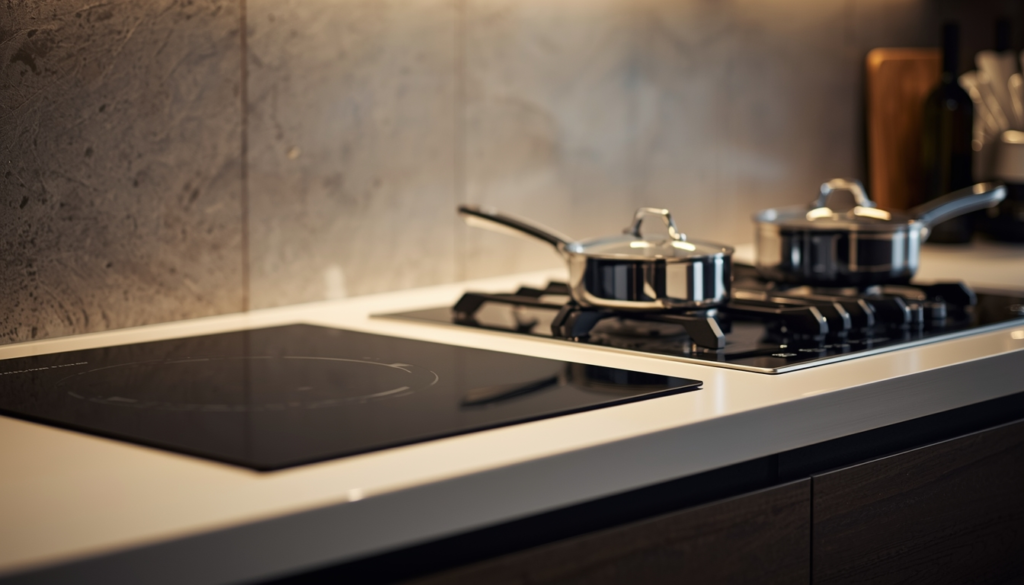
Here is why you must understand Induction vs. Gas: Cookware Performance Differences. Does pan material actually matter for your daily cooking? The short answer is absolutely yes. Cookware performs differently on these two stoves based on your cooking habits. Gas uses an open flame to heat the pan’s bottom and surrounding air. Induction uses magnetic fields to turn the pan itself into the heater.
I’ve seen how the wrong pan can ruin a great meal. If your pan isn’t magnetic cookware, an induction stove won’t turn on. On the flip side, gas stoves will heat any pot, but they waste a lot of energy doing it. When you nderstand this induction cookware vs gas cookware difference. It will save you time, money, and frustration.
Let’s look at how different cookware performs on induction vs gas stoves. I will help you figure out if your current pots and pans are up to the task of an induction upgrade. We will look at how food cooks on each appliance so you can make the best choice.
Key Takeaways
- Induction requires magnetic cookware: Your pots must contain iron (like cast iron, carbon steel, or magnetic stainless steel) to interact with the magnetic field.
- Gas is universally compatible: Open flames will heat almost any material, including pure copper and aluminum.
- Heating methods differ: Induction heats the pan directly via electromagnetism. Gas indirectly heats the pan and surrounding air.
- Speed vs. Visual Control: Induction offers rapid boiling and superior efficiency. Gas provides intuitive, visual flame adjustments.
- Do the magnet test: If a fridge magnet sticks to your pan’s base, it’s induction-ready!
How Induction and Gas Cooking Work
To understand how cookware performs, you first need to know how these stovetops generate heat. The underlying physics completely change how your pots and pans react. Stovetop heat works very differently depending on the appliance you choose.
How Gas Stoves Produce Heat
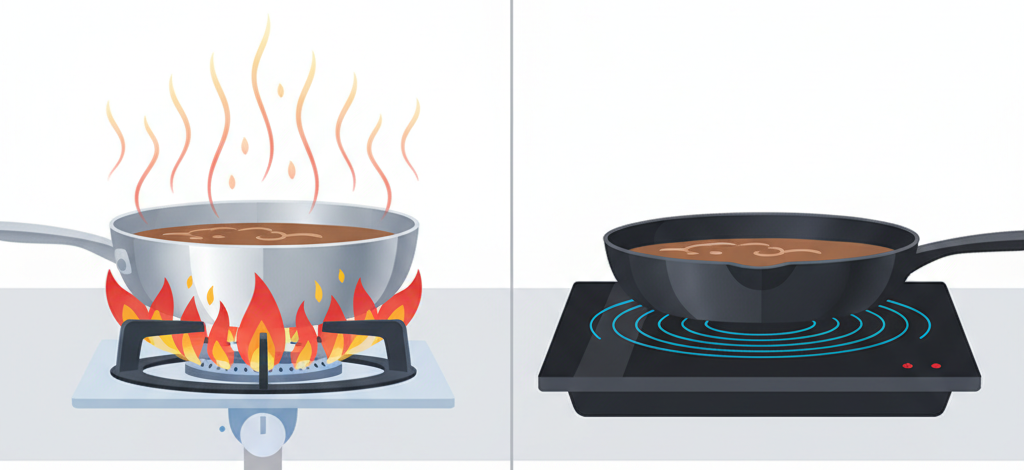
Gas stoves rely on a simple combustion process. Burning gas like natural gas or liquid propane flows through a burner and ignites. This creates an open flame that directly strikes the bottom of your cookware.
The heat transfer relies on thermal contact from the open flame burners. The flames heat the metal pan, and the hot air around the flame travels up the sides of the pot. Because heat escapes into the surrounding air, your kitchen gets warmer while you cook.
How Induction Cooktops Generate Heat
Induction cooking feels like magic, but induction technology is just basic electromagnetism. If you ever wonder exactly how induction cooking works, it starts with copper coils hidden under a smooth glass surface. Unlike an electric cooktop that gets red hot, induction appliances stay relatively cool. When you turn it on, an alternating electrical current flows through the coil.
This magnetic field interacts directly with the iron inside your cookware. It creates electrical currents inside the metal pan called eddy currents. These currents create friction, which results in the direct heating of the pan rather than heating the entire cooktop surface.
Key Differences in Heat Transfer
The main difference is direct vs indirect heating. Traditional gas uses indirect heat because the flame must first heat the air and the bottom of the pan. Induction uses direct heat because the pan itself becomes the heat source.
This causes massive energy loss during heating on gas cooktops. Induction, offers incredible heat concentration and improved efficiency performance. All the energy goes straight into the metal of your skillet.
Why Cookware Performance Depends on the Heat Source
Because gas relies on an open flame, heat conduction is critical. You need pans that move heat evenly across the bottom to avoid hot spots. The science behind heat conductivity in cookware helps explain why powerful burners demand sturdy cookware. Cookware that will not warp under intense heat.
Induction relies entirely on magnetic compatibility. If there is no iron in the base, the magnetic field has nothing to react with. Base thickness and material also matter more on induction to prevent warping under quick heating.
Core Cookware Performance Differences Between Induction and Gas
When we look at Induction vs. Gas: Cookware Performance Differences. Everyday cooking tasks reveal clear winners. Your specific cooking preferences will dictate which stove feels better to use.
Heating Speed
Induction offers an incredibly rapid heat response. Because the pan heats instantly from the inside out, water hits a rapid boiling state in half the time. The old saying that a watched pot never boils simply is not true on an induction appliance.
Gas has a longer heat-up time. The heavy metal grates and the pan must absorb the flame’s heat slowly. This drastically changes your total cook time and affects how quickly you can start searing or boiling.
Temperature Control and Responsiveness
Chefs have long loved gas for immediate visual flame control. You can see the flame shrink, so you know the heat is dropping. Responsive flame adjustments make it easy to dial in the exact temperature you need.
Induction uses digital control and power levels for optimal heat control. The response is actually much faster than instant flame adjustments on gas. When you lower the heat on induction, the magnetic field drops instantly, and the heating stops faster than a physical flame.
Heat Distribution Across the Pan
Gas burners create a flame ring heating pattern. This means the outer edges of your pan get hotter than the dead center. If you are using many pans, you must match the pan size to the specific gas burners.
Induction creates a magnetic coil heating zone, usually a solid circle of heat. Advanced induction cooktops even offer flexible cooking zones that adapt to the shape of your pan. The impact of cookware base design is huge here for even heat distribution.
Cooking Consistency
Gas stoves are notorious for hot spots. Drafts in your kitchen or uneven burner caps can blow the flame to one side. This can make specific cooking needs, like making delicate sauces, more difficult.
You get perfectly even heating on induction with compatible cookware. The magnetic field pushes consistent energy into the base of the pan every single time.
Heat Retention During Cooking
The role of pan material is crucial for keeping food hot. A heavy cast iron skillet holds heat beautifully on traditional cooktops and induction alike.
But, gas is prone to flame fluctuations. Induction provides constant, steady power. If you are deep-frying, induction keeps the oil temperature much more stable than gas.
Cookware Compatibility Requirements
Does cookware cook differently on induction vs gas? Yes, but first, you must know if your cookware will even work.
What Makes Cookware Induction Compatible
Select a material to see how it performs on each stove type.
Energy transferred to your food vs. lost to the surrounding kitchen.
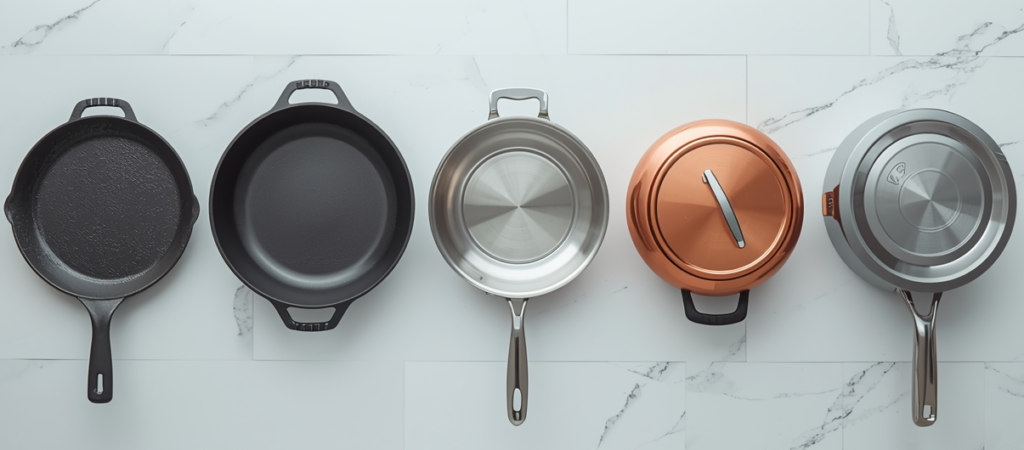
Induction requires magnetic materials to function. The metal must contain enough iron to react to the magnetic field. Ferrous metal bases, like cast iron or magnetic stainless steel, are needed for induction-ready cookware.
Cookware That Works Best on Gas Stoves
Gas stoves are incredibly forgiving. Virtually all materials are compatible with a gas flame.
As long as the cookware has a flame-safe cookware design, you can use it. You can easily use copper, pure aluminum, glass, and clay pots on gas ranges.
How to Test if a Pan Works on Induction
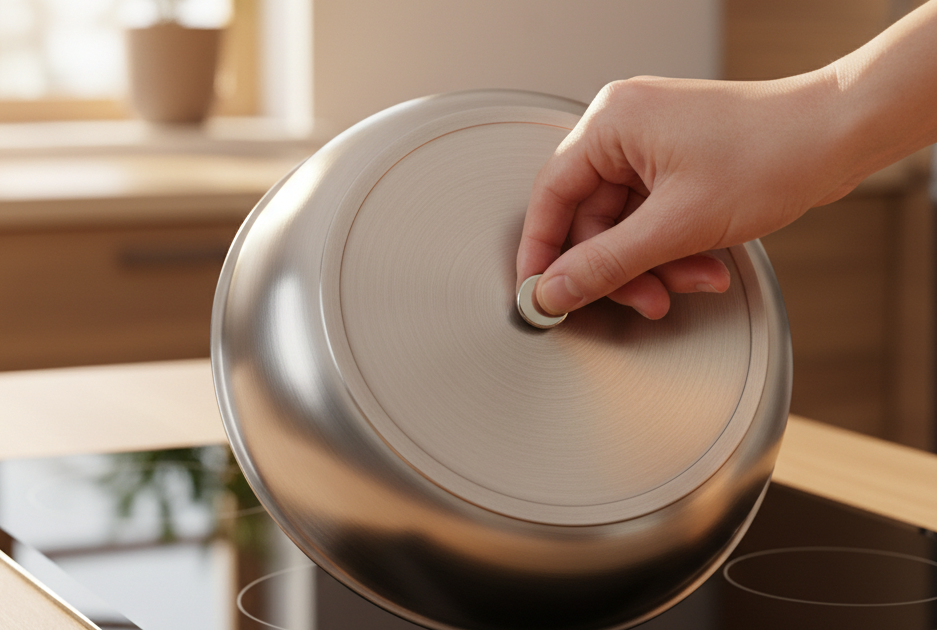
The easiest way to check your current pans is the magnet test. Grab a fridge magnet and hold it to the bottom of your pan. If it sticks strongly, the pan will work as induction-compatible cookware.
When learning how to tell if your cookware is induction compatible, you can also look for manufacturer markings. Most modern pots have an induction symbol on the bottom. If you see it, you do not have non-compatible cookware.
Common Cookware Materials and Compatibility
Here is a quick look at how common materials line up across different cooktop appliances.
Stainless Steel: Most high-quality stainless steel works on induction, but only if it has a magnetic core or base. It works perfectly on gas.
Cast Iron: Cast iron is highly magnetic and works beautifully on both induction and gas. Be careful not to scratch your glass stovetop!
Carbon Steel: Like cast iron, carbon steel is highly magnetic. It works exceptionally well on select cooktops and open flames alike.
Aluminum: Standard aluminum does not work on induction because it is not magnetic. It works great on gas stoves.
Copper: Pure copper will not work on induction. However, it is one of the absolute best materials for gas stoves due to its high heat conductivity.
Ceramic-coated cookware: Compatibility depends entirely on the metal hidden underneath the ceramic. If it has an iron core, it works on induction stoves.
Cookware Compatibility Table
| Cookware Material | Works on Gas? | Works on Induction? |
|---|---|---|
| Cast Iron | Yes | Yes |
| Carbon Steel | Yes | Yes |
| Pure Aluminum | Yes | No |
| Pure Copper | Yes | No |
| Magnetic Stainless Steel | Yes | Yes |
How Different Cookware Materials Perform on Induction vs Gas
To understand induction cookware vs gas cookware differences, let’s look at how specific metals perform.
Stainless Steel Performance
Stainless steel is durable but a poor conductor of heat on its own. Multi-ply construction benefits are obvious here. Brands press an aluminum or copper core between stainless steel layers to spread heat evenly. If you ever ask yourself, can you use stainless steel cookware on induction stoves, the answer depends on the base. On induction, magnetic core requirements mean you must buy fully clad or induction-ready bases for good performance.
Cast Iron Performance
Cast iron has massive heat retention advantages. Once it gets hot, it stays hot, making it perfect for searing steaks. Yet, there is a risk of scratching induction glass. I always recommend placing cast iron down gently and never sliding it across an induction surface.
Carbon Steel Performance
Carbon steel offers rapid heating properties like cast iron but is much lighter. Its magnetic compatibility makes it a favorite for induction users who want a wok or skillet. On gas, carbon steel responds beautifully to flame adjustments.
Aluminum Cookware Performance
Aluminum works wonderfully on gas but not always on induction. It is lightweight and conducts heat rapidly. To fix the compatibility issue, manufacturers now make induction-compatible aluminum designs. They do this by bonding a steel plate to the bottom of the pan.
Copper Cookware Performance
Chefs love copper for its superior heat conductivity on gas stoves. It reacts instantly to changes in the flame. But, you face limited induction compatibility without a magnetic base. If you want to use copper on induction, you must buy specially designed pans.
Cooking Performance in Real Kitchen Scenarios
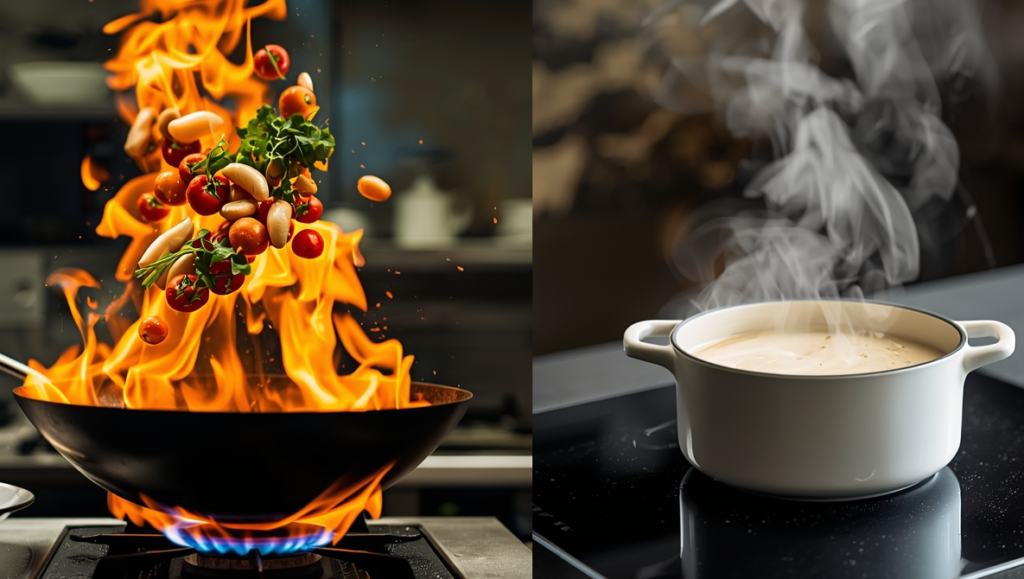
Let’s look at real-world cooking tasks to highlight induction vs. gas cookware performance differences. Different cooking styles need different equipment.
Boiling Water
Induction wins the speed comparison effortlessly. A pot of water can reach a rolling boil on induction in about three minutes. Gas usually takes twice as long due to heat escaping around the pot.
Searing Meat
For the perfect crispy brown crust on meat, you need maximum heat output. Induction delivers intense heat directly into the pan instantly. Gas requires longer pan contact and heat intensity to get a heavy skillet hot enough for roasting or a good sear.
Simmering Sauces
Simmering sauces requires the stability of low heat. Gas burners sometimes struggle to hold a very low flame without blowing out. Induction excels at precision cooking. It allows you to hold delicate liquids at perfect temperatures without a double boiler.
Stir-Frying and High Heat Cooking
Specialty cooking styles like wok cooking highlight the flame control advantages of gas. The flames wrap around the curved sides of stir-fry pans, cooking food evenly as you toss it. Stir-frying on induction is harder because its magnetic field only heats the flat bottom.
Cooking with Large or Oddly Shaped Pans
Gas offers great flame flexibility. If you place a massive pan across two burners for grilling indoors, the flames naturally spread out. Induction has strict burner size limitations. If your pan is much wider than the cooking zones, the outer edges of the pan simply won’t heat up.
Efficiency and Energy Use
If you care about utility bills, you need to understand how these stoves use energy.
Energy Transfer Efficiency
Induction efficiency rates are staggering. Induction cooktops transfer up to 90% of their energy directly into the food. Gas heat loss to air is huge; gas stoves only transfer about 40% of their energy to the pot.
Cooking Time Differences
Because of this efficiency, you get much faster heat-up times on induction. This drastically impacts daily cooking. Boiling pasta or heating soup takes a fraction of the time compared to gas.
Cost of Energy Use
Comparing electricity vs natural gas costs depends on where you live. Gas is generally cheaper in many regions. But, because induction is so efficient, the long-term operating expenses often balance out over the years.
Cookware Wear and Durability Differences
How you heat your cookware affects how long your pots and pans last.
Flame Damage on Gas Stoves
Gas flames are harsh on cookware exteriors. Open flames cause discoloration and scorch marks on the sides of stainless steel and enamel pans. There are also warping risks if you blast a thin pan with a high flame while it is empty.
Induction Cooktop Surface Concerns
Induction stoves are gentle on the cookware, but the cookware can be harsh on the stove. There are real risks of scratches from heavy cookware, especially rough cast iron. You must be mindful to keep your expensive glass stovetop looking pristine.
Warping and Base Flatness
This is a major induction cookware vs gas cookware difference. Induction requires perfectly flat cookware to make full contact with the glass. If your pan warps, it will spin on the glass and lose magnetic connection, destroying its heating performance. Gas grates will hold a warped pan without much issue.
Ease of Use and Cooking Experience
Transitioning between these stoves changes your daily kitchen habits.
Learning Curve for Induction Cooking
I always warn people about the learning curve for induction cooking. Because pans heat up so incredibly fast, it is very easy to burn your food on the first few tries. You have to prep all your ingredients before turning the stove on!
Visual Flame Control on Gas
Many home cooks rely on visual flame control on gas. Seeing the size of the fire tells your brain exactly how much heat you are applying. Induction only offers digital numbers, which takes time to memorize.
Noise and Vibration on Induction
Induction stoves can be noisy. The magnetic frequencies often cause a high-pitched buzzing or clicking noise. Especially with lighter stainless pans. Gas provides a familiar, quiet hiss while you cook.
Cookware Stability on the Cooking Surface
Heavy cast-iron grates lock pots into place on a gas cooktop. On induction, smooth glass means lightweight pans can slide around easily when you stir. You have to hold the handle firmly while whisking.
Safety Differences When Using Cookware
Safety is a big reason many families switch to induction.
Open Flame Risks on Gas
Gas comes with undeniable open flame risks. Kitchen towels, loose sleeves, or grease can easily catch fire. Gas stoves also release combustion byproducts into your home air.
Residual Heat on Induction Cooktops
Induction cooktops don’t generate their own heat. The glass only gets hot because of the residual heat left behind by the hot pan. It cools down much faster than heavy gas grates or electric cooktops.
Overheating Protection Features
Modern induction stoves have smart overheating protection features. If a pan boils dry or gets dangerously hot, the stove senses it and shuts off automatically. Gas stoves will happily melt a forgotten pot into a puddle.
Safer Cookware Handling Practices
Because induction handles don’t sit over an open flame, they usually stay much cooler. With gas, flames often lick up the sides of the pan. This makes metal handles dangerously hot to grab.
Best Cookware Types for Each Cooking System
Choosing the best cookware for your stove makes all the difference.
Best Cookware Materials for Induction Cooktops
If you have induction, invest in heavy, flat-bottomed pans. Magnetic stainless steel is perfect for your cooking needs. Many people wonder is stainless steel or cast iron better for induction, but both are excellent. Cast iron and carbon steel are also top-tier choices for high-heat searing on magnetic surfaces.
Best Cookware Materials for Gas Stoves
Gas stoves reward highly conductive metals. Pure copper pots are the absolute gold standard for gas due to their rapid response to flame changes. Aluminum and standard stainless steel are also excellent, affordable choices.
Universal Cookware That Works Well on Both
If you want universal pans, buy enameled cast iron or fully clad stainless steel. These materials are highly magnetic, very durable, and perform brilliantly no matter what stove you use.
Pros and Cons of Induction vs Gas for Cookware Performance
Here is a quick breakdown to help you compare the two.
Induction Cooking Advantages
The biggest pros are energy efficiency and precision. The incredibly fast heating saves you valuable time every evening. Cleaning is also a breeze since food rarely bakes onto the cool glass surface.
Induction Cooking Limitations
The main drawback is cookware compatibility. Replacing all your non-compatible cookware adds a higher initial cost to your kitchen remodel. You also have to deal with the buzzing noise and the learning curve.
Gas Cooking Advantages
Gas allows you to use your favorite pans, as it works with any cookware material. The visual flame control is intuitive and comforting to most home cooks. It also excels at wok cooking and charring vegetables directly on the flame.
Gas Cooking Limitations
Gas has massive heat loss, meaning your kitchen gets hot and sweaty while you cook. It also has slower heating times, meaning you stand around waiting for water to boil. Finally, cleaning greasy cast-iron grates is a major chore.
How to Choose Between Induction and Gas Based on Your Cookware
Your current kitchen setup might make the decision for you. You need to consider what appliances and ovens you currently use.
If You Already Own Magnetic Cookware
If your cabinets are full of cast iron, carbon steel, and magnetic stainless steel, making the switch to induction is a no-brainer. Your cookware will perform even better than before. You will immediately notice the speed and efficiency upgrades.
If Your Cookware Is Aluminum or Copper
If you have heavily invested in pure copper or expensive hard-anodized aluminum, stick with gas. Moving to induction would need replacing your entire cookware collection. The cost of replacing high-end copper pans can easily rival the cost of the stove itself!
Budget Considerations When Switching Cooktops
Gas stoves are generally cheaper to buy upfront, while induction carries a premium price tag. If you choose a dual fuel range, you will pay even more for the combination of a gas stovetop and an electric oven. When budgeting, always remember to add the cost of a new induction-ready cookware set if needed.
Kitchen Setup and Installation Factors
Gas stoves need a dedicated gas line, which can be expensive to install if you don’t have one. Gas hookups are not available in every modern home. If you lack a gas hookup, you might consider a single-burner induction appliance. You can test the waters before buying a full four-burner induction cooktop.
If you plan to buy dual-fuel ranges, you will need both a gas line and a 240-volt electrical circuit. An electric oven combined with gas ranges requires careful planning. Always check your home’s infrastructure before falling for brands like Maytag gas cooktops or high-end electric ovens.
FAQs Induction vs Gas Cookware Performance
Does food taste different on induction vs gas?
No, the heat source itself does not change the flavor of your food. But, because induction offers more precise temperature control. You might find it easier to avoid burning delicate sauces. Gas, allows you to char peppers directly over the flame for a smoky flavor.
Is induction cookware different from regular cookware?
Yes, induction cookware must contain ferrous metal to react with the stove’s magnetic field. Regular cookware might be made of pure aluminum or copper, which will not heat up on an induction stove.
Can you damage cookware on an induction cooktop?
Yes. Because induction heats metal so rapidly, turning an empty pan on high power can cause thermal shock. This can severely warp a thin pan or even ruin the nonstick coating. Always heat your pans gradually!
Why does induction heat cookware faster?
Induction is faster because it eliminates the middleman. Instead of a flame heating the air, which then heats the pan, induction uses electromagnetism. It generates heat directly inside the metal of the pan itself.
Do chefs prefer gas or induction?
Historically, professional cooks preferred gas for its visual flames, durability, and wok compatibility. Yet, many modern commercial kitchens are switching to induction. Chefs love induction for its rapid heating, precision, and ability to keep the kitchen environment much cooler during a busy shift.
Conclusion
Choosing between induction and gas comes down to your personal cooking habits and current cookware collection. If you crave rapid heating, unmatched energy efficiency, and a safer, cooler kitchen. An induction cooktop is an incredible upgrade—provided your favorite pans are magnetic. If you rely on pure copper or aluminum cookware, love traditional wok stir-frying, and prefer intuitive visual flame control. A traditional gas stove remains a highly reliable, universally compatible workhorse.
I always tell home cooks to grab a simple fridge magnet before making a final decision on a new stovetop. Take inventory of your kitchen cabinets first. Knowing these cookware performance differences guarantees you will build a kitchen that serves your daily needs.