
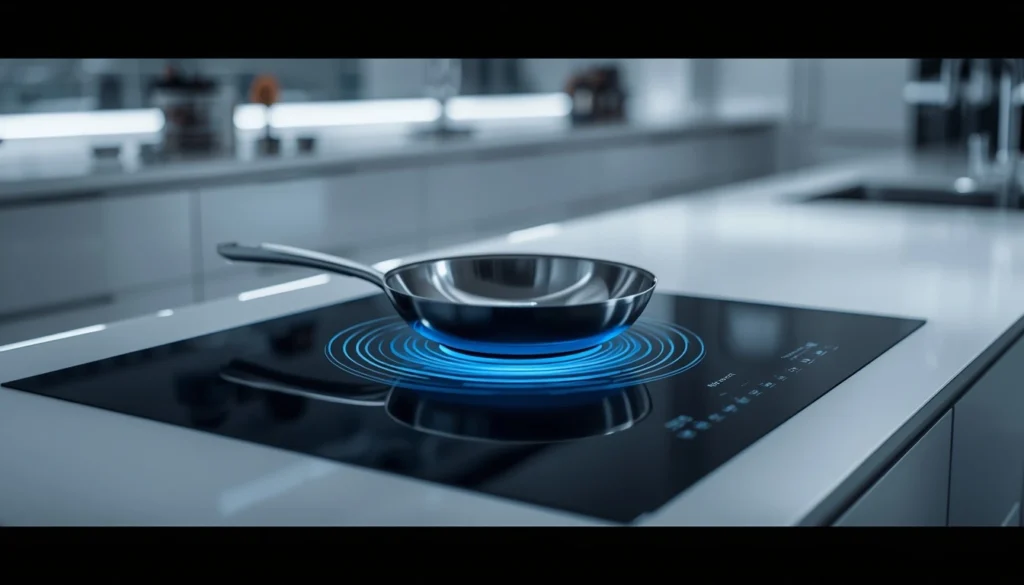
Key Takeaways
- Buzzing and humming on an induction cooktop is usually normal.
- Most of the noise comes from the pan vibrating, not from a fault in the cooktop.
- Lowering the power, using a flat pan that fits the burner, and switching to a heavier pan are the quickest fixes.
- A very loud or unusual sound is the signal to have the cooktop checked.
The first time I heard induction cookware making noise, my first thought was that water or bits of food were getting between the pan and the cooktop and stopping proper contact. To be on the safe side, I asked a fellow chef who used the induction cooktop on most days. They assured me it was nothing to worry about. The noise was triggered by the type of pan I was using.
That was the moment I realized how much cookware material matters on induction. So why does induction cookware make noise, and what can you do about it? The short answer is that the pan is usually vibrating, and that’s normal. Below are the common causes, the sounds worth paying attention to, and the fixes that work. If you want the background first, here’s how induction works.
Why Does Induction Cookware Make Noise?
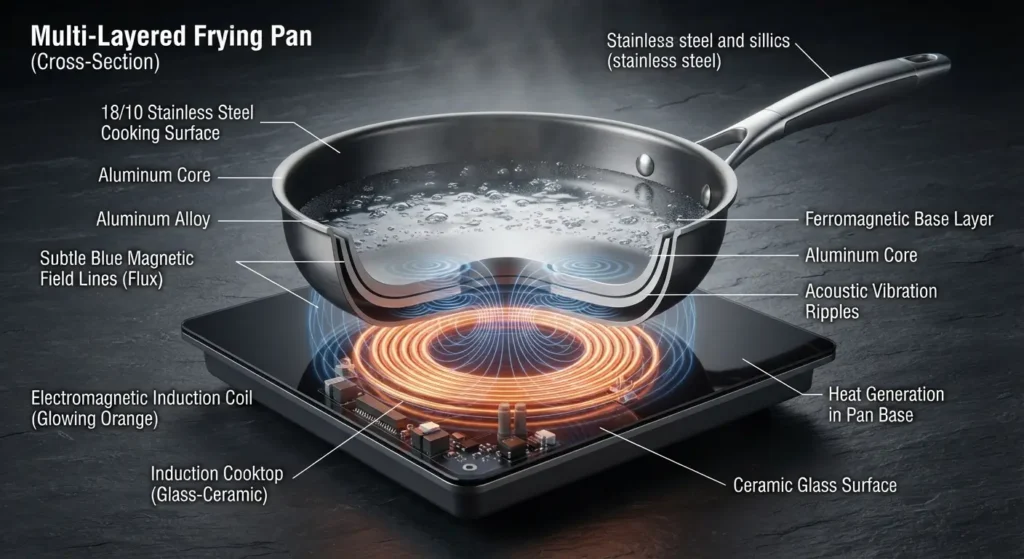
Induction cookware makes noise because the magnetic field that heats the pan can also make it vibrate slightly. That vibration is the buzz or hum you hear. It tends to be louder at higher heat and with thinner cookware, according to a Hisense expert.
This is why two pans on the same burner can sound very different. The cooktop supplies the energy, but the pan decides how much of it turns into sound.
Which Induction Noises Are Normal?
Most induction noises are normal. A low hum, a gentle buzz, light clicking, and a fan whoosh all fall into that group. Here’s how the common sounds break down:
| Sound | Likely Cause | Normal? |
|---|---|---|
| Low hum or buzz | Pan vibrating in the magnetic field, often at higher power | Usually |
| Pulsing or buzzing at low power | Magnetic fields at work on certain models | Usually |
| Crackling | Layered base, damp pan base, or a metal utensil left in the pan | Usually |
| High-pitched whistle | Some clad pans, or a pan that doesn’t suit the cooking zone | Check the pan |
| Clicking | Cooktop controls adjusting the heat | Usually |
| Whoosh or whirr | Internal cooling fan | Yes |
| Faint hum with no pan | Cooktop Lock feature on some models | Yes, on those models |
Exact sounds vary by brand and model, so your manual is the final word. Wolf says a pulsing or buzzing sound at low power is normal.
What Causes Induction Cookware to Make Noise?
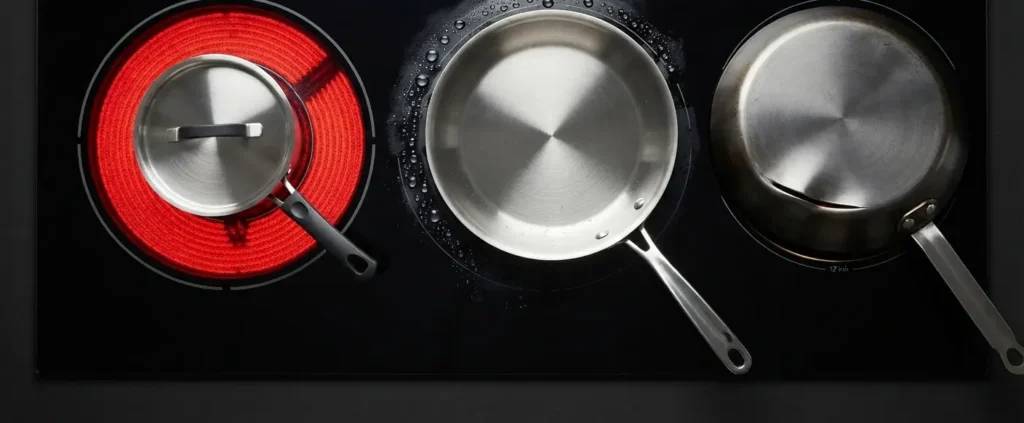
Five things cause most pan noise: the pan’s construction, the power level, the condition of the base, the pan’s size, and moisture. The cooling fan is a sixth, and it isn’t the pan at all.
Layered or Bonded Bases
Pans made from several bonded metal layers can buzz or crackle, because the layers respond to the magnetic field differently. Thin ones are the usual culprits. Quality varies a lot, so a layered pan isn’t automatically noisy.
High Power Settings
The higher the heat, the louder the pan tends to get. Miele says the buzzing can fade or stop when you reduce the power.
Warped or Uneven Bases
A base that isn’t flat vibrates less predictably and can rattle against the glass. Logos or ridges on the bottom of a pan can add noise too. If a pan has started to buzz when it didn’t before, check the base first. For prevention, read how to avoid warping your pans.
Pan Size and Burner Mismatch
A pan that is too small or too large for the cooking zone can add humming or whistling. Some manufacturers also say the cooktop may make noise while it searches for a pan that doesn’t meet its minimum size. Center the pan on the zone and match its base to the burner.
Moisture or Debris Under the Pan
This was my first guess when I heard the noise, and it’s a fair one. Trapped water between the pan and the glass can cause crackling as it boils, and Wolf recommends keeping both the pan bottom and the burner dry. In my case, though, my fellow chef said the pan itself was the cause.
The Cooling Fan
Many cooktops have an internal fan that makes a soft whoosh or whirr. It’s easy to blame the pan for a sound that’s coming from the cooktop. The fan may keep running for a while after you switch the cooktop off.
Does Cookware Material Change Induction Noise?
Yes. Material and thickness change the noise a lot, and heavier, thicker pans tend to be quieter.
Appliance guides often note that heavy single-piece cast iron is less prone to noise than thin multi-ply pans. Consumer Reports says heavy flat-bottomed pots can help reduce the vibration.
That matches what I learned that day: the type of pan was the trigger, not the cooktop. Not every heavy pan is silent, and not every thin pan buzzes. For most home cooks, though, weight and thickness are the best place to start.
How Can You Make Induction Cookware Quieter?
Lower the power, match the pan to the burner, and use a flat, heavier pan. Work through these in order:
- Lower the heat. Drop the power a notch or two and listen. Here’s how to control temperature on an induction cooker.
- Match the pan to the zone. Center it, and choose a base that suits the burner size.
- Check the base. It should be flat, clean, and dry on the outside.
- Remove metal utensils. Don’t leave a metal spoon or spatula resting in the pan while it heats.
- Try a heavier pan. If the noise follows one pan from burner to burner, that pan is the problem.
When you replace cookware, a flat magnetic base is a good target.
When Is Induction Noise a Problem?
Induction noise is a problem when it is very loud, unusual, or keeps going when it shouldn’t. A gentle buzz or hum is not usually a fault.
Hisense describes unusual noise as rattling, high-pitched whining, or a sound that continues on low heat, and says the cooktop should be checked in those cases. Try a different pan first. If the sound stays the same with every pan, that points toward the cooktop. Those are jobs for the manufacturer or a service technician, not a pan swap. For other problems, see these common induction issues.
What I Took Away From the Noise
I went in thinking something was wrong with the contact between the pan and the cooktop. I came out knowing that cookware material matters on induction, and that a noise isn’t always a fault.
If you’re choosing pans for an induction cooktop, check the material, weight, and base before anything else. The induction cookware guide covers what to look for.
FAQs Why Induction Cookware Make Noise
Is Induction Buzzing a Sign of a Fault?
Usually not. A gentle buzz or hum is normal. If the noise is very loud or unusual, have the cooktop checked.
Can a Pan Be Too Small for Induction?
Yes. If a pan doesn’t meet the minimum size for the zone, the cooktop may make noise while it tries to detect the pan. Check your manual for the minimum size.
Why Does My Induction Cooktop Click at Low Power?
Clicking or pulsing at low power is usually normal. Frigidaire says the controls click as they work to keep heat even.