
Key Takeaways
- Three pieces cover most beginner cooking: a frying pan, a saucepan, and a stockpot.
- Test every pan with a magnet. If it sticks firmly to the bottom, it works on induction.
- Start with one flat-bottomed stainless steel pan. If the cooktop acts up, you’ll know the pan isn’t the cause.
- Pan size matters more on induction than on gas. A pan that’s too small may not turn the burner on.
- Pans that all work on induction can still heat at different speeds. A medium-to-heavy base is the safer pick.
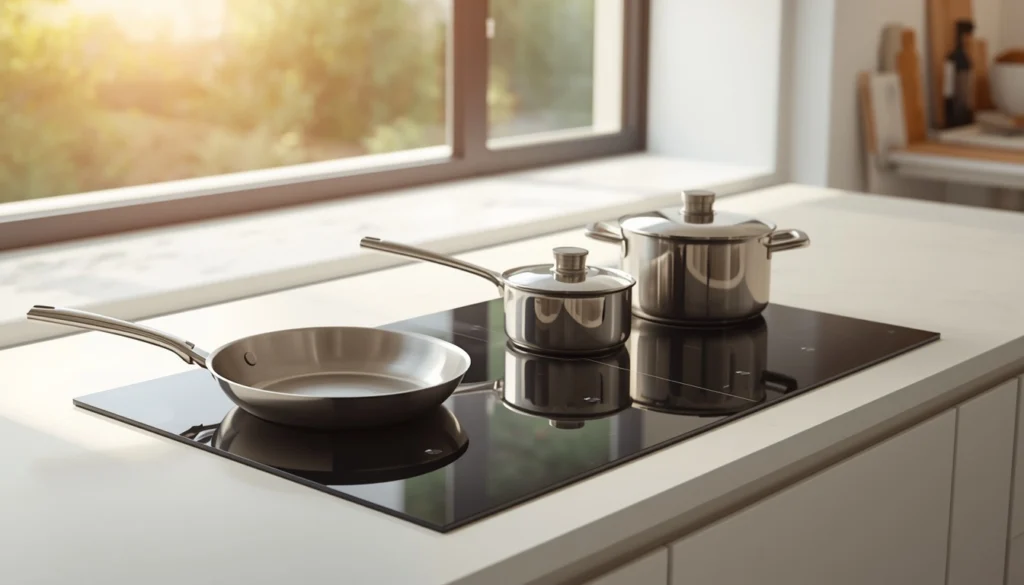
If you’re shopping for induction cookware for beginners, start with three pieces: a frying pan, a saucepan, and a stockpot. Check each one for a magnetic, flat base before you buy. That’s the short answer.
When I was learning induction, my main rule was to always use a stainless steel pan with a flat bottom. It kept the guesswork out of the process. This guide covers what to buy first, how to test pans you already own, and what to expect from different materials. For the full overview, our induction cookware guide goes deeper.
Which Induction Cookware for Beginners Should You Buy First?
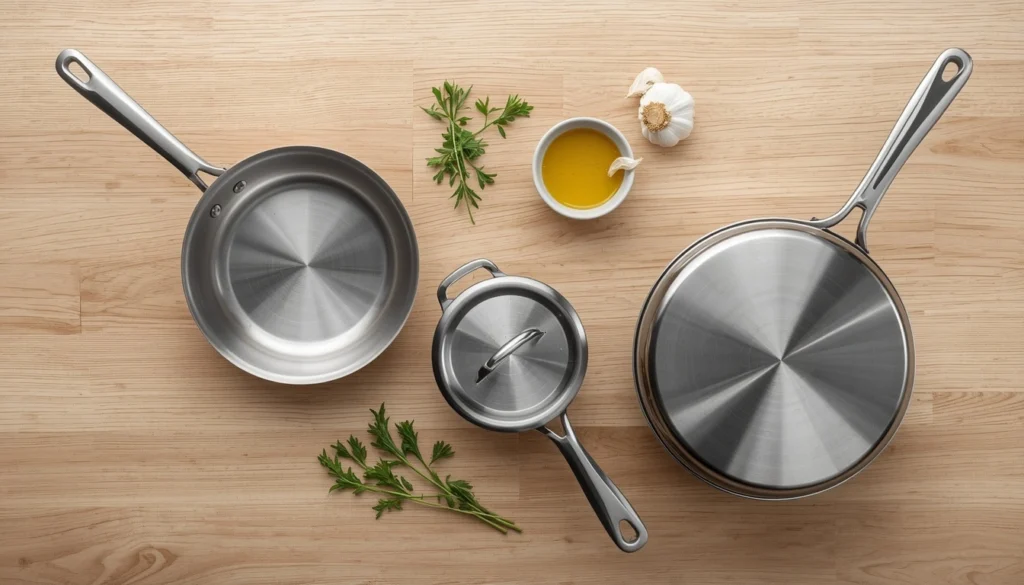
Buy three pieces first: a frying pan, a saucepan, and a stockpot. Together they cover searing, eggs, sauces, pasta, soups, and boiling, which is most of what a beginner cooks in a week. You can add specialty pieces later, once you know what you actually reach for.
Each piece needs the same two things: a magnetic base and a flat bottom. After that, pick sizes that match your burners. If you want help choosing materials for a first kitchen, our cookware for beginners page walks through it.
How Do You Know If a Pan Will Work on Induction?
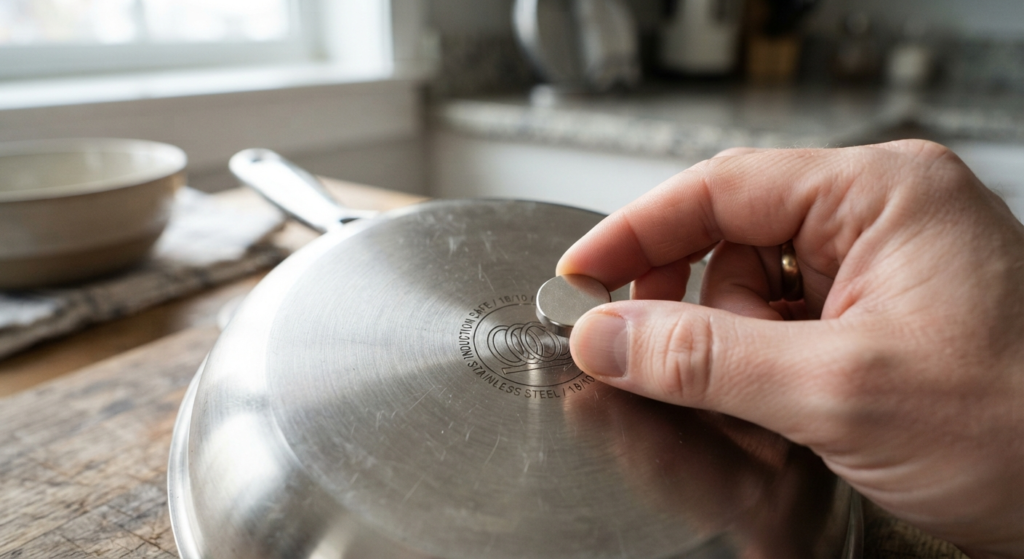
Hold a magnet to the bottom of the pan. If it sticks firmly, the pan will work on induction. If it doesn’t, the pan won’t heat at all, though it also won’t damage the cooktop.
Many induction-ready pans also have a coil symbol stamped on the bottom, but the magnet test is the quickest way to confirm it.
Stainless steel needs extra care here. Some stainless is non-magnetic, so a stainless pan isn’t automatically a safe pick. Our page on how to tell if your cookware is induction compatible covers more cases.
Why I Always Start With a Flat Stainless Steel Pan
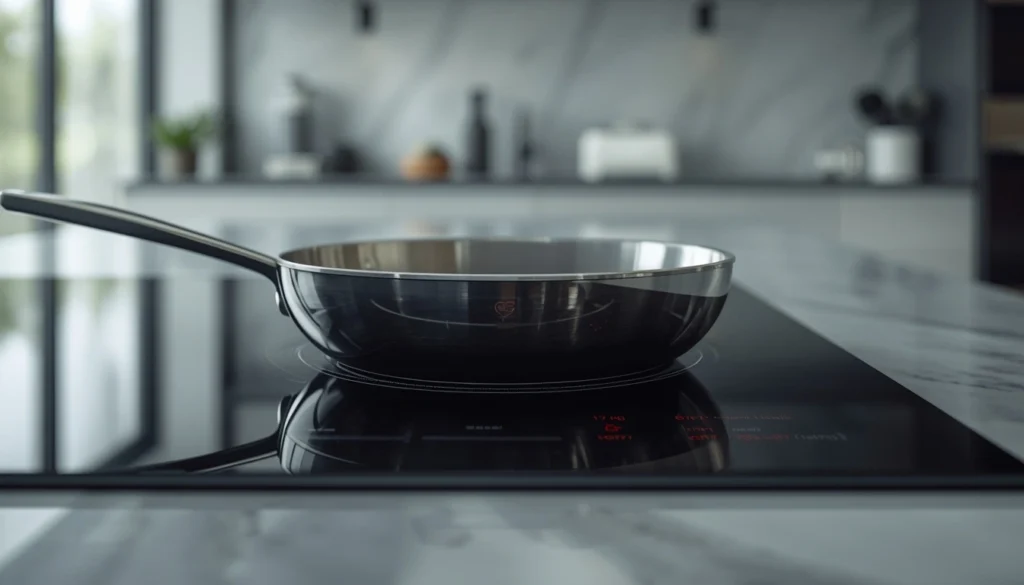
When I was learning induction, my main rule was simple: always use a stainless steel pan with a flat bottom. That pan was my control. If the cooktop didn’t heat the way it should, I knew the pan wasn’t the problem. Then I could look at the cooktop itself, such as the power supply or faulty buttons.
Without a control pan, troubleshooting turns into guesswork. You end up wondering whether the pan, the burner, or the cooktop is at fault. One reliable pan shortens that list fast. Just make sure it passes the magnet test first.
Induction is simple to use once the cooktop is working properly. Our page on common induction cooking issues covers the problems you may run into next.
Does Pan Size Matter on Induction?
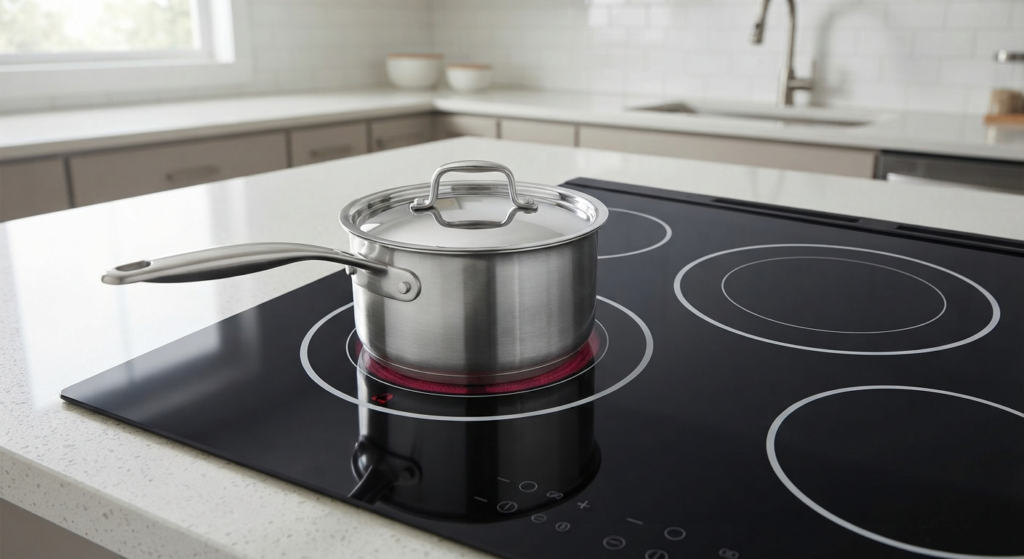
Yes. Induction cooktops need a minimum pan size to turn on, and heat is created only above the burner ring. A pan that’s too small may not be detected, and a small pan on a large burner delivers less power.
For example, an 8-inch pan on an 11-inch burner won’t reach full power and will take longer to boil water. Some pans also have a smaller magnetic area than their size suggests. An 11-inch frying pan may have only 7.25 inches of magnetic material in the base, which can be too small to detect. Larger pans work too, but the further a pan extends past the ring, the less the burner performs. GE Appliances lists the minimum size rules for its induction cooktops.
Here’s what to check: match the pan base to the burner, and make sure the base sits flat and makes full contact with the glass. The real takeaway is that size is a buying decision on induction, not an afterthought.
Do All Induction Compatible Materials Heat Equally Well?
No. A pan can pass the magnet test and still heat more slowly or less evenly than another one. The difference comes down to the base material, how thick it is, and how much of the base is magnetic.
In my experience, some pan materials work on induction but take longer to reach temperature than the cooktop’s heat-up time suggests. If your cooktop works properly with your control pan, that slow pan is a cookware issue, not a cooktop fault.
Weight alone doesn’t fix it. Heavy cookware does not always spread heat evenly. Poor thermal conductivity causes severe hotspots regardless of cookware weight. For most home cooks, a base of medium-to-heavy thickness is the safer choice, because very thin pans are less likely to hold up.
My rule for any tool is to match it to the cook and the task, not to brand marketing. Look at how the pan heats, how much care it needs, and whether you’ll keep up with that care.
What Changes in Your Cooking When You Switch to Induction?
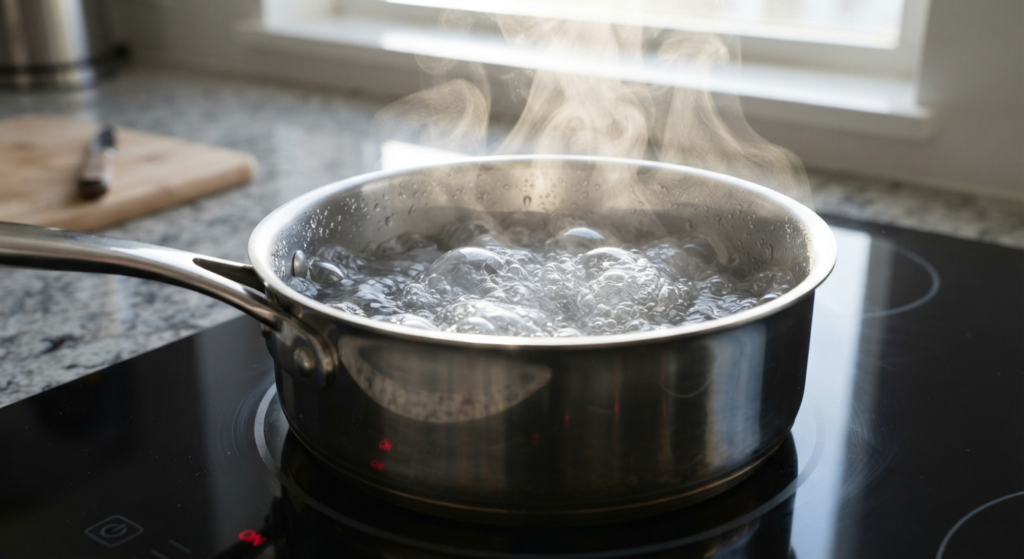
Mostly speed and control. Induction heats the pan directly, so food starts cooking sooner and less heat is wasted. About 85% of heating energy reaches the cookware on induction, compared with only about a third on gas.
In an independent boil test, induction came first, ahead of gas and ceramic. Heavy-based pans such as cast iron and stainless steel also need less preheating time because they hold heat well.
In practice, expect water to boil sooner and pans to heat faster than on gas. Watch the pan closely for the first few meals while you learn the timing.
Should You Buy a Set or Individual Pieces?
For most home cooks just starting out, individual pieces make more sense. You only pay for what you use, and you can check each piece for a magnetic base before it goes in the cart. A set may include pieces you’ll rarely use, and not every piece in a set is guaranteed to be induction-compatible, so check each one.
Buying with induction in mind is also a form of future-proofing. Even if you cook on gas today, a magnetic base keeps your pans usable if you move to induction later. If you’d rather buy a set, see our pick of the best induction cookware sets.
Induction Cookware for Beginners: A Buying Checklist
- Magnetic base: a magnet should stick firmly to the bottom of every pan.
- Flat bottom: the base should sit fully on the glass with no rocking.
- Burner match: pick a base size close to the burner you’ll use most.
- Base thickness: look for a medium-to-heavy base, not a thin one.
- Stainless steel check: confirm the pan is magnetic, since some stainless isn’t.
- A control pan: keep one flat stainless pan to test the cooktop when something seems off.
Induction Cookware for Beginners: Frequently Asked Questions
Can I Use My Existing Pans on an Induction Cooktop?
Maybe. Hold a magnet to the bottom of each pan. If it sticks firmly, the pan will work. Check your stainless steel pans in particular, since some stainless is non-magnetic.
What Happens If I Use a Pan That Isn’t Induction Compatible?
The pan won’t heat. It also won’t damage the cooktop, so the only cost is a wasted minute at the stove. Switch to a pan that passes the magnet test and try again.
Do I Need to Buy a Whole New Set for Induction?
No. For most home cooks, testing what you already own and filling the gaps with individual pieces makes more sense. Start with a frying pan, a saucepan, and a stockpot if you’re missing any of them.
What Size Pan Do I Need for My Burner?
Match the base of the pan to the burner as closely as you can. Induction burners need a minimum pan size to turn on, and a pan that’s too small may not be detected. Larger pans work, but heat forms only above the burner ring.
Does the Pan Really Need a Flat Bottom?
Yes. A flat base makes full contact with the glass, which is how the cooktop heats the pan. A rocking or warped base heats less well. That’s also why I use a flat-bottomed stainless steel pan as my control pan.
Why Won’t My Induction Cooktop Heat?
Check the pan first. Use a flat-bottomed magnetic stainless steel pan and see whether the cooktop heats it properly. If it doesn’t, look at the cooktop itself, such as the power supply or faulty buttons. Our page on common induction cooking issues goes through the next steps.
The Short Version
Buy a frying pan, a saucepan, and a stockpot. Test each with a magnet, match each to your burner, and lean toward heavier bases. Keep one flat stainless steel pan as your control, so you can tell whether a problem is the pan or the cooktop.