
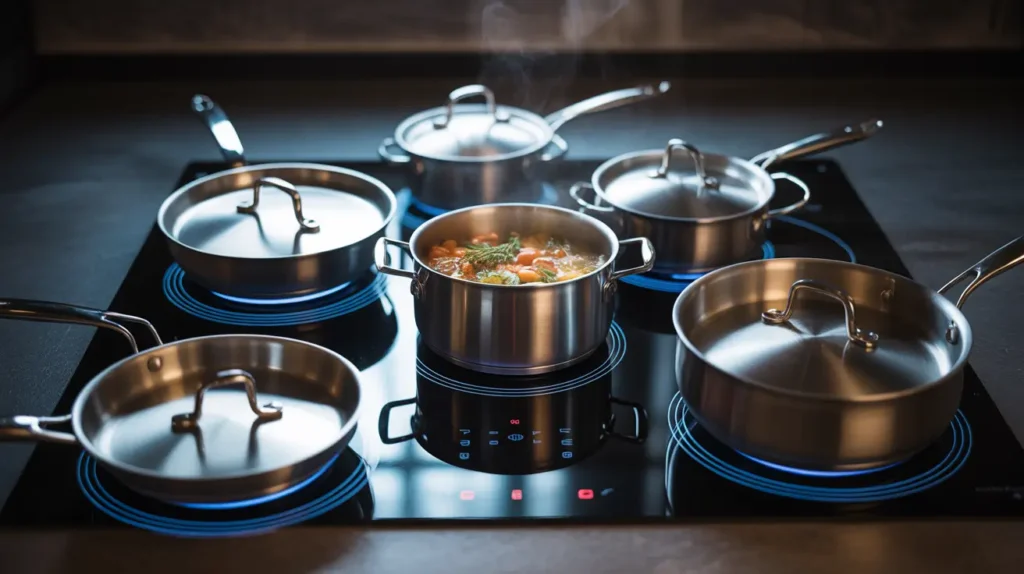
If you are asking what is the best induction cookware sets, you are in the exact right place. As a resident cookware expert, I will help you navigate the science of magnetic materials, compatibility tests, and top brands. By the end of this guide, you will know exactly how to choose, use, and maintain your perfect pots and pans.
I remember when I first upgraded my kitchen appliances to an advanced induction cooktop. I quickly realized that my old aluminum pans were completely useless for this innovative cooking method. Finding what is the best induction cookware sets became my top priority to ensure a smooth transition. Let’s go deeper into induction cooking so you can buy the right cookware for your home.
Key Takeaways
- Magnetism is mandatory: Cookware must contain magnetic materials like cast iron or magnetic stainless steel to work on induction stoves.
- Test before you buy: Use a simple refrigerator magnet on the base of your current pans to check for instant compatibility.
- Construction matters: Fully clad pans offer superior, even heat distribution compared to cheaper disc-bottom options.
- Avoid thermal shock: Never preheat an empty pan on high heat, as induction transfers energy instantly and can permanently warp the metal.
- Aluminum and copper need help: Unless they feature a specially bonded magnetic steel base, plain aluminum, copper, and glass will not work.
What Induction Cookware Is
Induction cookware is specially designed to work with the magnetic fields created by an induction stove. Unlike a standard gas stove, an induction burner does not use an open flame. It uses magnetic energy to turn your actual cooking vessel into the heat source. Choosing compatible cookware is essential for any place home cook looking to upgrade.
What makes cookware “induction compatible”
For a pan to work on induction, it must contain ferromagnetic materials. This simply means the metal must be magnetic. Iron and magnetic grades of stainless steel are the most common induction-compatible materials. If your pan lacks these metals, the induction stovetop simply will not turn on.
Why induction cooktops need magnetic cookware
Underneath the glass surface of an induction appliance sits a copper heating coil. When you turn the stove on, electricity flows through this coil and creates a magnetic field. This field needs magnetic cookware to connect with to function. Without a magnetic pan, the energy has nowhere to go, and no heat is made.
How induction cookware differs from regular cookware
Regular pots and pans are often made of pure aluminum or copper because they are cheap and conduct heat well. But, induction-friendly cookware has a heavy, magnetic induction base. Some modern pans use an aluminum core but wrap it in a magnetic stainless steel outer layer. This gives you particular cookware that offers the best of both worlds.
Why induction cooking is becoming more popular
Induction cooking is incredibly fast and highly energy-efficient. I love that an induction range can boil a pot of water in half the time of an electric stovetop. It is also much safer because the flat induction cooktop stays relatively cool to the touch. This makes it a top choice for home cooks and busy families who want a safer kitchen.
Can regular cookware work on an induction cooktop?
If your similar cookware is made of cast iron or magnetic stainless steel, it will work perfectly. However, non-magnetic cookware like pure copper, glass cookware, ceramic, and plain aluminum pans will not work. You can buy an induction disc to place under non-induction pans, but it slows down the cooking process. It is always better to just buy the right cookware from the start.
How Induction Cooking Works
Knowing the science behind your top-performing kitchen appliances helps you become a better cook. It relies on a scientific concept called electromagnetism. If you want a deeper dive into the exact science, you can read my full guide on how induction cooking works.
The electromagnetic principle behind induction cooking
As I mentioned, a copper wire coil sits under the ceramic glass cooktop. Alternating electric currents flow through this coil when the stove is turned on. This creates a changing magnetic field that passes through the glass directly into your induction-safe pans. It is a brilliant display of modern technology right in your kitchen.
How heat is generated directly inside the pan
When the magnetic field hits your pan, it creates tiny electric currents inside the metal. The metal of your pan resists these currents, and this resistance creates instant, intense heat. This means the pan itself cooks the food, not the cooking surface below it. It is a highly efficient way to handle any cooking situation.
Why induction cooking heats faster than gas or electric
With gas or electric stoves, the burner must heat up first, then transfer heat to the pan. This indirect method loses a lot of heat to the kitchen air. Induction creates heat directly inside the pan’s metal instantly. This direct energy transfer is why high end induction boils water shockingly fast.
How induction improves energy efficiency
Induction is the most eco-friendly way to cook meals at home. Let’s look at a quick data comparison of cooking efficiencies:
| Cooking Method | Energy Efficiency (Heat reaching the food) |
|---|---|
| Induction | 85% – 90% |
| Electric Coil | 65% – 70% |
| Gas Flame | 35% – 40% |
Because almost no heat escapes, you get a truly energy-efficient cooktop. You use less electricity , lowering your monthly utility bills.
Why induction cooktops stay cooler than other stoves
The glass stoves of an induction appliance do not generate their own heat. The surface only gets warm because the hot pan transfers some heat back down into the glass. Once you remove the pan, the still-hot stovetop cools down very quickly. This makes accidental burns much less likely during your everyday cooking routines.
How to Check if Your Cookware Works on Induction
Before you buy new cookware, you should test the cookware pieces you already own. It is easier than you might think to find out if you have induction-ready pieces. For a complete breakdown of testing methods, check out my post on how to tell if your cookware is induction compatible.
The magnet test for induction compatibility
The best tool for testing induction compatibility is a simple refrigerator magnet. Hold the magnet to the bottom of your pan to see if it grabs the metal. If it sticks strongly, the pan will work perfectly on induction cooktops. If it pulls weakly or doesn’t stick at all, you are dealing with a non-induction-compatible material.
Checking manufacturer labels and induction symbols
When shopping for what is the best induction cookware sets, look at the cookware specifications on the packaging. Most cookware manufacturers print a small coil-like induction symbol on the bottom of the pan to show it is induction ready. If you see this symbol, you are good to go. It takes the guesswork completely out of your shopping trip.
Why some stainless steel pans work and others don’t
Not all stainless steel cookware is created equal. Ferritic stainless steel contains a lot of iron and is highly magnetic. Austenitic stainless steel contains more nickel and is completely non-magnetic. If your stainless steel pan fails the magnet test, it will not work on an induction hob.
How to test cookware directly on an induction cooktop
Place your pan onto an induction burner and turn it on. Add a little bit of water to the pan to see what happens. If the stove’s digital display stays solid and the water starts warming, your cookware induction cooking setup is working. If the display flashes, the stove cannot detect the pan.
What to do if your cookware is not induction compatible
If your favorite non-induction pans do not work, you have two choices. You can buy an induction disc, which acts as a magnetic hot plate. However, I highly recommend simply upgrading your pots and pans. Investing in what is the best induction cookware sets provides a much better cooking situation.
Cookware Materials That Work Best on Induction
Knowing your materials is the key to finding what is the best induction cookware sets. Here is a breakdown of how different induction-compatible versions perform.
Stainless steel cookware for induction cooking
High-quality stainless steel cookware is the gold standard for induction stoves. Many readers ask, can you use stainless steel cookware on induction stoves? Yes, as long as brands use a magnetic stainless steel exterior to capture the induction energy. They then use an inner core of aluminum to spread the heat evenly for flawless temperature controls.
Cast iron cookware and its induction performance
Cast iron cookware is naturally ferromagnetic, making it an absolute powerhouse on an induction stove. Cast-iron frying pans are incredibly cheap and work flawlessly. Because cast iron holds heat so well, it is perfect for searing steaks. Just be careful not to drop these heavy pans on your delicate glass stovetops.
Carbon steel cookware and its responsiveness
Carbon steel cookware is like the lighter, smoother cousin of cast iron. It is highly magnetic and heats up incredibly fast on portable induction cooktops. A professional line cook loves carbon steel because it reacts instantly when you adjust the stove’s heat. Once seasoned, it becomes naturally nonstick.
Induction-compatible nonstick cookware
Traditional aluminum nonstick cookware will not work on induction ranges. The top brands now fuse a magnetic steel plate to the bottom of their nonstick pans. When choosing what is the best induction cookware sets, look for heavy-duty nonstick cookware sets with a thick steel base.
Ceramic coated cookware for induction
Ceramic cookware is technically just metal coated in a natural silica-based gel. Like PTFE nonstick cookware set options, the core metal must be magnetic. Many modern ceramic cookware sets include a steel base specifically for induction users. They are great for non-toxic cookware sets and easy cleanup.
Copper cookware with induction bases
Pure copper pans are useless on induction appliances. High-end brands now make copper pans with a thin magnetic steel base. You get the stunning beauty and heat control of copper, plus induction compatibility. Be prepared to pay a premium price for these luxurious pans.
Aluminum cookware and why it usually doesn’t work alone
Plain hard-anodized aluminum cookware does not contain iron, so magnets ignore it entirely. Without a bonded steel plate on the bottom, an induction stovetop cannot heat an aluminum pan. Titanium cookware often faces similar issues unless it is specifically forged with an induction base.
Induction Cookware Construction and Design
The way a pan is built drastically changes how it cooks. When hunting for what is the best induction cookware sets, pay attention to the construction of the entire cookware sets.
Fully clad cookware vs disc-bottom cookware
Fully clad cookware features layers of metal bonded together all the way up the sides of the pan. Disc-bottom cookware only has a thick metal plate glued to the base. Fully clad pans heat your food evenly from all sides during everyday cooking routines. Disc-bottom pans only heat from the bottom, which can scorch a pan sauce around the edges.
Multi-ply cookware and heat distribution
You will often see terms like “3-ply” or “5-ply” when shopping for comprehensive cookware. This refers to the number of metal layers inside the pan walls. A 3-ply pan usually has an aluminum core sandwiched between two layers of stainless steel. More layers generally mean better, more even heat distribution for any recipe.
The role of magnetic stainless steel layers
In any clad pan, the outermost layer must be magnetic stainless steel. This layer acts as the antenna that catches the induction waves from the heating coil. The inner cooking surface is usually a different grade of steel that resists rust and food stains.
Base thickness and induction efficiency
Induction energy is powerful and can heat a pan very quickly. If a pan has a very thin base, it can heat unevenly or even warp under the intense energy. A thick base ensures your food cooks evenly without hot spots. This is why heirloom-quality cookware is so highly recommended for serious kitchens.
Why flat cookware bases matter for induction
Induction requires close contact between the pan and the glass cooktop. If your pan is warped, the magnetic field cannot engage properly. The stove might vibrate, buzz loudly, or fail to turn on at all. Always choose pans with a perfectly flat bottom for your flat induction cooktop.
Advantages of Using Induction Cookware
Why go through the trouble of buying an entire new cookware set? Because the benefits of advanced stoves are truly game-changing.
Faster heating and precise temperature control
Induction pans react to temperature changes instantly. If a pot is boiling over, turning the dial down stops the boil the very second you move your hand. This careful temperature control is just as responsive as a professional gas flame.
Improved cooking efficiency
Because the cooking vessel itself is the heat source, no energy is wasted heating the air around it. This means your kitchen stays cooler during hot summer months. It also means you spend less time standing over different cooking surfaces.
Energy savings compared with traditional stoves
The U.S. Department of Energy found that induction cooktops are up to 85% efficient at transferring energy to food. Electric stoves sit around 70%, and gas sits around 32%. Over a year of daily cooking, switching to an induction set can noticeably reduce your household energy consumption.
Safer cooking due to reduced surface heat
There is no open flame to catch a kitchen towel on fire. The glass only gets warm from the residual heat of the preheated pan. If you turn an induction burner on without a pan, nothing happens at all. It is incredibly safe for curious toddlers or pets roaming the kitchen.
Better responsiveness when adjusting temperature
I love cooking delicate recipes like hollandaise on my induction stove. With the right stainless steel cookware, the heat is flawlessly consistent. You do not get the annoying hot and cold spots that electric cooktops create when the sauce simmers.
Potential Drawbacks of Induction Cookware
It is important to be realistic about the downsides before deciding to buy.
Higher upfront cost of quality cookware
Finding what is the best induction cookware sets often means spending a bit more money. High-quality pro cookware is expensive to manufacture. Upgrading your kitchen appliances and your pots and pans at the same time can be a big investment.
Compatibility limitations with certain materials
Saying goodbye to your favorite pure copper or aluminum pans can be tough. You are restricted to induction-compatible pieces when you switch to this cooking method. This limits your choices when browsing kitchen gadgets and different-sized sauce pans.
Noise or vibration during cooking
A common complaint with induction is the noise. When you use high heat, the electromagnetic currents can cause the layers of metal in the pan to vibrate rapidly. This creates a high-pitched humming or buzzing sound on your stovetop.
Weight of some induction cookware types
Because induction cooking requires heavy magnetic bases, induction pans are rarely lightweight. Cast iron cookware and full-size cookware made of 5-ply stainless steel can be quite heavy to lift. This is something to consider if you have wrist pain or mobility issues.
Learning curve when switching from gas or electric
Induction is so fast that it catches many new users off guard. If you leave a dry pan on high-heat cooking, it can permanently damage the pan in less than a minute. You have to learn to prep all your ingredients before you turn the stove on.
Key Features to Look for When Buying Induction Cookware
Here is your checklist for narrowing down what is the best induction cookware sets on the market.
Magnetic base strength
When testing a pan in a store, use a strong neodymium magnet. If the magnet violently snaps to the bottom of the pan, buy it. A strong magnetic pull means the pan will heat up rapidly and efficiently on any induction burner.
Even heat distribution
Look for fully clad pans with aluminum or copper cores. The magnetic steel gets the heat, but the inner core spreads it around the cooking surface. This prevents your onions from burning in the center while staying raw on the edges.
Durable nonstick or cooking surface
If you prefer non-toxic cookware, ensure the coating is reinforced. Induction heat can degrade cheap coatings quickly if you accidentally overheat the warm pan. Look for hard-anodized or ceramic surfaces, and some brands even offer thermospot technology. When a pan has a thermospot, it tells you exactly when it is preheated.
Comfortable and heat-resistant handles
Because the pan body gets hot so fast, you need handles that stay cool. Look for hollow stainless steel handles or silicone-wrapped grips. Riveted handles are generally more durable than welded handles for a heavy covered dutch oven.
Oven and dishwasher safety
Always check the manufacturer’s maximum oven temperature limits, as a great pan should easily survive baking in the oven. While many brands say they are dishwasher safe, I highly recommend hand-washing. Using harsh dish soap in a dishwasher can degrade your great cookware options over time.
Lid quality and fit
Tight-fitting lids lock in moisture and heat during steaming. Tempered glass lids are great because you can see your food cooking without lifting the cover. Just ensure the lid rims are wrapped in stainless steel to prevent chipping.
Types of Induction Cookware Sets
To find what is the best induction cookware sets, you need to decide which material matches your daily routine.
Stainless steel cookware sets
This is the most durable and versatile option available today. The all-clad cookware line or the tramontina cookware line offer incredible induction sets. They handle high heat, never chip, and can last a lifetime. They do need a little fat or oil to prevent sticking.
Nonstick cookware sets
Perfect for eggs, pancakes, and delicate fish. Modern 10-piece nonstick cookware sets feature thick steel bases to prevent warping. They are the easiest to pan clean but generally only last 3 to 5 years before the coating wears out.
Cast iron cookware sets
Cast iron sets are heavy, cheap, and virtually indestructible. They are the undisputed kings of pan-frying meat perfectly. But, they need regular oiling to maintain their natural nonstick surface.
Hybrid cookware sets
Some brands offer hybrid pans that combine a stainless steel lattice with nonstick valleys. They work wonderfully on induction stovetops. You get the searing power of steel frying pans with the easy cleanup of nonstick.
Starter cookware sets
If you are on a budget, look for 10-piece cookware or 12-piece cookware starter sets. These usually include a fry pan, a saucepan, and a stockpot. It is a great way to transition to an induction range without spending a fortune.
Professional-grade cookware collections
For serious cooks, professional 13-piece cookware sets offer 5-ply or 7-ply construction. These sets are incredibly heavy and deliver flawless heat control. If you have the budget, this is the ultimate answer to what is the best induction cookware sets.
What Pieces Should Be in an Induction Cookware Set
Do not buy a massive cookware set if you only use three pans. Let’s look at the essential cookware pieces.
Essential pans for everyday cooking
A functional kitchen really only needs a few high-quality individual cookware pieces. Quality always beats quantity, especially with induction appliances. Focus on getting a good skillet, a versatile saucepan, and a large pot for boiling.
Frying pans and skillets
You need at least one 12-inch fry pan or a 10-inch frying pan for daily use. If you cook eggs, get one 8-inch fry pan with a nonstick surface. For searing steaks, a 10.5-inch frying pan or a frying pan made of stainless steel is perfect. Even a 10.25-inch skillet cooks beautifully on induction.
Saucepan sizes and uses
Different-sized sauce pans are vital for making rice, heating soup, or boiling sauces. Look for one with a thick base so thick liquids do not scorch on the bottom. A tight-fitting lid is a must here to trap steam.
Stockpots and large cooking vessels
An 8-quart stockpot or a large covered dutch oven is perfect for boiling pasta or cooking chili. Because induction boils water so fast, a heavy-duty dutch oven will become your best friend. Make sure it has sturdy handles, as water gets very heavy.
Specialty pans like sauté pans and griddles
A straight-sided saute pan with a lid is amazing for braising meats. Sauté pans are perfect for making one-pan pasta dishes with minimal cleanup. If you love pancakes, a grill pan or cast iron griddle that spans across two burners is a great addition.
Choosing the Right Induction Cookware for Your Cooking Style
Your cooking styles determine what is the best induction cookware sets for your home.
Best cookware for everyday home cooking
If an everyday cook just wants to get dinner on the table quickly and cleanly, nonstick or hybrid sets are best. They need very little maintenance . You will spend less time scrubbing pots and more time relaxing.
Best cookware for high-heat searing
If you love cooking thick steaks or smash burgers, cast iron or carbon steel is mandatory. A professional cook knows these materials absorb induction energy beautifully and hold onto the heat. They give meat a gorgeous, crispy crust.
Best cookware for delicate foods
For fish, eggs, and crepes, a home cook needs a highly responsive pan. A 3-ply stainless steel pan or caraway cookware is ideal. Induction allows for precise low-heat control. So these pans will prevent delicate foods from burning.
Best cookware for large family meals
Cooking for a crowd means you need larger vessels. Focus on featured cookware sets that include a 12-inch fry pan and a large 5-quart saute pan. Heavy-duty clad stainless steel ensures even cooking, even when the pan is fully loaded.
Best cookware for small kitchens
If a home chef has limited cabinet space, consider a set with detachable handles. You can also look for nesting cookware sets that stack neatly on pan racks. A great 10-inch frying pan can also replace half a dozen specialty pans.
How Induction Cookware Is Tested for Performance
When experienced cooks review what is the best induction cookware sets, they put the pans through rigorous tests.
Heat distribution tests
Testers coat the pans in an even layer of flour and turn the induction stove on. By watching how the flour browns, they can see exactly where the hot spots are. Thermal imaging cameras are also used to measure edge-to-edge heat consistency.
Responsiveness and temperature control
A good induction pan should react immediately to the dial. Testers boil water, then drop the heat to a simmer to see how fast the water stops bubbling. Heavy cast iron takes longer to cool down, while copper-core clad pans cool instantly.
Durability and wear testing
Pans are repeatedly heated and plunged into cold water during stress tests. Websites like madeincookware.com run intense thermal shock tests to ensure the pan will not warp. The madeincookware.com pros also stress-test the handles by lifting heavy weights to ensure the rivets hold tight.
Nonstick performance testing
A cookbook author might test pans by cooking notoriously sticky foods, like eggs without butter. They track how many times a pan can be used before the food starts sticking. High-quality induction nonstick pans usually pass these tests with flying colors.
Cleaning and maintenance evaluation
Nobody wants a pan that is impossible to clean. Testers check how easily burnt-on oil and food residue wash off with just dish soap and a sponge. Pans with flush rivets score higher because food cannot get stuck in the joints.
How to Cook with Induction Cookware Effectively
Now that you know what is the best induction cookware sets, you need to know how to use them safely.
Choosing the right pan size for the burner
Induction burners have rings printed on the glass. You must match the size of your pan’s base to the size of the ring. If you put an 8-inch frying pan on a massive burner, the sensor might not detect the pan at all.
Properly preheating induction cookware
Never place an empty pan on maximum heat. Because induction transfers heat so fast, an empty pan can reach 600°F in less than a minute. This will warp the pan and destroy nonstick coatings. Always preheat slowly on medium-low heat.
Adjusting heat levels for induction cooking
You rarely need to use the high setting on an induction stove unless you are boiling water. Medium heat on induction acts like high heat on gas stoves. Trust the efficiency of the magnetic field and keep your heat settings lower than you are used to.
Preventing overheating and scorching
Always have your oil and ingredients ready before you turn the stove on. The heat is immediate and unforgiving. If you turn the burner on and then start chopping onions, your pan will overheat and smoke before you finish chopping.
Best oils and cooking techniques for induction
Because induction gets very hot, use oils with a high smoke point for stir-frying or pan-frying. Avocado oil, grapeseed oil, and ghee are excellent choices. Butter and extra virgin olive oil will burn very quickly if you are not careful with your temperature dials.
Cleaning and Maintaining Induction Cookware
Taking care of your new investment will help it last a lifetime.
Daily cleaning methods
Always let your top-rated pans cool down completely before washing them. Plunging a hot pan into cold water can permanently warp the metal. Use warm water, mild dish soap, and a soft sponge to wipe away daily grease.
Removing stuck food and burnt residue
If food gets burnt onto your stainless steel pan, do not panic. Fill the pan with a little water and bring it to a simmer on the stove. Use a wooden spoon to gently scrape the stuck food away.
Protecting nonstick coatings
Never use metal spatulas or forks on nonstick induction pans. Always use silicone, wood, or plastic utensils to protect the surface. Furthermore, avoid using aerosol cooking sprays. They leave a sticky chemical residue that ruins the nonstick surface.
Preventing discoloration on stainless steel
Stainless steel can sometimes develop a funky rainbow tint from high-heat cooking. This is harmless, but ugly. A quick scrub with a specialized stainless steel cleaner and a soft sponge will remove this rainbow stain instantly.
Proper cookware storage
If you stack your pans in a cabinet or on pan racks, place a paper towel between them. This prevents the heavy metal bottoms from scratching the cooking surface of the pan below it. Proper storage dramatically extends the life of your bakeware and pots and pans.
Troubleshooting Common Induction Cookware Problems
Even tech-savvy cooks might run into a few hiccups with their kitchen gadgets. Here is how to fix them.
Why the cooktop is not detecting the pan
If your stove flashes or beeps, the pan is either not magnetic, too small for the burner ring, or improperly placed. Ensure the pan is perfectly centered over the coil. If the base of the pan is warped, the stove will not detect it.
Why cookware makes noise on induction
As mentioned earlier, buzzing or whining is caused by magnetic vibrations. It is perfectly normal. You can reduce this noise by using heavier pans or turning the heat down slightly. Also, make sure the bottom of the pan is completely dry.
Why food is cooking unevenly
If food is browning in the center but not the edges, your pan is too thin. Thin disc-bottom pans cannot spread the intense induction heat out to the sides. Upgrading to fully clad stainless steel pans will fix this immediately.
Why pans warp on induction cooktops
Thermal shock is the enemy of all cookware pieces. Warping happens when you heat an empty pan too fast on high or run a hot pan under cold water. Once a pan is warped, it will never sit flat on the glass again, and you must replace it.
How to prevent scratches on induction cooktops
The glass surface is tough, but heavy cast iron can scratch it if dragged. Always lift your pans straight up when moving them. For messy cooking, you can actually place a silicone baking mat directly between the pan and the glass! The magnetic field passes right through it without catching fire.
Frequently Asked Questions About Induction Cookware
What cookware materials work on induction cooktops?
Cast iron, carbon steel, and magnetic stainless steel are the best materials. Any pan that strongly holds a refrigerator magnet on its base will work on your induction stoves.
Can you use aluminum cookware on induction?
Plain aluminum will not work at all. You can only use aluminum pans if the manufacturer has bonded a magnetic stainless steel plate to the very bottom of the pan.
Do induction cooktops damage cookware?
Induction cooktops do not inherently damage cookware. But, user error, like preheating on maximum heat. This can permanently warp pans or burn off nonstick coatings within seconds.
Can induction cookware be used on gas or electric stoves?
Yes! Induction-compatible pans are incredibly versatile. You can safely use them on gas flames, electric cooktops, and ceramic glass cooktops without any issues.
How long does induction cookware last?
High-quality, fully clad stainless steel or cast iron can last for generations. Nonstick induction pans will generally need to be replaced every 3 to 5 years as the coating degrades.
Is expensive induction cookware worth it?
Yes, absolutely. When figuring out what is the best induction cookware sets. Investing in thick, fully clad brands ensures even cooking and zero warping. Cheap pans vibrate loudly, heat unevenly, and rarely last more than a year under intense magnetic power.
Conclusion
Transitioning to an induction stove is an exciting kitchen upgrade. It offers unmatched speed, safety, and energy efficiency. But, unlocking its full potential requires the right tools. When deciding exactly what is the best induction cookware sets for your home. Remember that magnetic compatibility, thick bases, and fully clad construction are your best friends.
If you opt for an heirloom-quality stainless steel collection, heavy-duty cast iron, or a modern hybrid nonstick set. Investing in high-quality pots and pans will completely transform your daily cooking routine. Take the time to test your current pans with a magnet. Test your favorite cooking styles, and choose materials that match your everyday needs.
Put the right induction-compatible cookware in your cabinets. You will be searing, simmering, and sautéing like a professional chef in no time.
External Sources:
https://www.thespruceeats.com/best-cookware-for-induction-cooktops-4781905
https://www.theguardian.com/thefilter-us/2026/jan/09/best-induction-cookware