
Key Takeaways
- Titanium cutting boards are non-porous and non-toxic. This means they won’t leach chemicals or harbor bacteria in deep grooves the way plastic or wood can.
- They are the most durable cutting board material available, built to last a lifetime with almost zero maintenance.
- The biggest downside is knife damage: titanium is so hard it will dull your knives much faster than wood or plastic.
- From a health standpoint, titanium outperforms plastic. Plastic sheds millions of microplastic particles into food during normal use. [Source: International Journal of Environmental Research and Public Health, 2023]
- They are not the right choice for everyone: the high cost and knife-dulling effect make them a niche product. They are best suited for specific kitchens and use cases.
Introduction
A 2023 study out of Dongguk University in South Korea revealed this. Plastic cutting boards can shed between 14.1 million and 71.9 million microplastic particles into your food each year during normal chopping. That number stops a lot of people mid-scroll and sends them searching for something better.
Titanium cutting boards have become the answer many people land on. They look sleek, they sound indestructible, and they come with big health claims. But are they actually worth it?
In this post, you’ll get a straight answer to every major question about titanium cutting boards. You will see how good they are, how they compare to wood and plastic, why people buy them, and whether they live up to the health hype. You’ll also find out the one serious downside that most sellers don’t mention upfront.
Are Titanium Cutting Boards Actually Good?
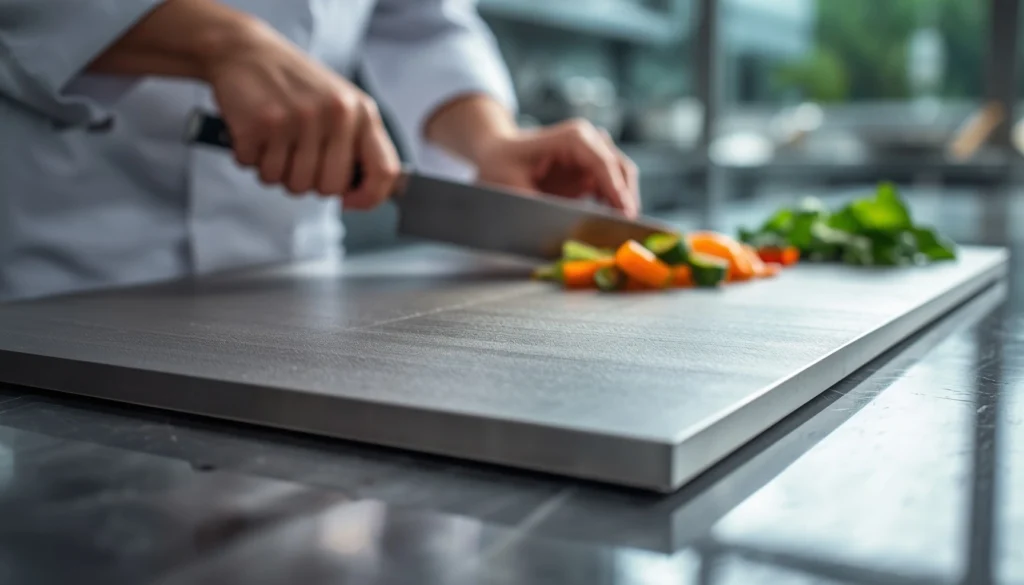
Yes, titanium cutting boards are good, but only if you understand what they are and aren’t built for. They excel at durability, hygiene, and longevity. Where they fall short is knife friendliness, and that matters a lot in a kitchen.
What Makes a Cutting Board “Good”?
A good cutting board needs to check several boxes.
- It should be safe for food contact,
- easy to clean,
- resistant to bacteria
- durable enough to last
- gentle enough on your knives that you’re not sharpening them every other week.
The material that scores highest across all five categories depends on what you focus on most.
How Titanium Performs on the Basics
Titanium is biocompatible, meaning it does not react with food, acids, or moisture. The FDA classifies titanium as safe for food contact surfaces. It has been used in medical implants for decades precisely because the body does not reject it. [Source: FDA Food Contact Materials Guidance]
On the surface hygiene side, titanium is non-porous. There are no tiny cracks or grooves for bacteria to hide in, which gives it a real advantage over wood boards that develop deep knife scars over time. [Source: Journal of Food Protection]
Durability is where titanium really shines. It rates approximately 36 on the Rockwell Hardness Scale (HRC), compared to wood at roughly 2-4 HRC and plastic at under 10 HRC. [Source: NIST / Rockwell Hardness Scale] That hardness is what makes it last so long. It is also what makes it hard on your knives.
Are Titanium Cutting Boards Better Than Wood, Plastic, or Bamboo?
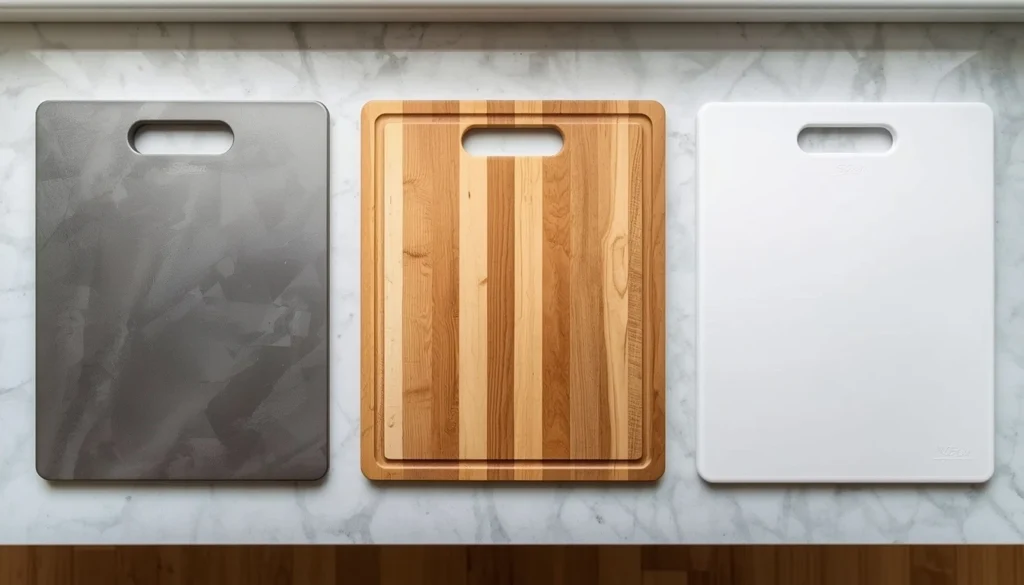
Titanium beats most materials on durability and hygiene, but it is not better than wood when it comes to protecting your knife’s edge. Whether it is “better” depends on which factor matters most to you.
Titanium vs. Plastic Cutting Boards
This is where titanium makes the strongest case for itself. The microplastic research referenced above is a serious concern for anyone using standard polyethylene or polypropylene plastic boards. Titanium produces zero microplastic particles. It also doesn’t stain, warp, or absorb odors the way plastic does after heavy use.
That said, plastic cutting boards are much easier on knives and cost a fraction of the price. For most home kitchens, a high-quality plastic board that gets replaced every few years is still a practical choice. But if avoiding microplastic contamination is a priority, titanium has a clear edge.
Titanium vs. Wood Cutting Boards
Wood boards, especially end-grain hardwood like maple or walnut, are widely considered the gold standard for knife care. The wood fibers naturally open and close around the blade, which cushions the edge and keeps it sharper for longer. Titanium offers none of that. If you have invested in quality chef’s knives, a wood cutting board will treat them far better.
Wood does need more maintenance (oiling, hand-washing, drying flat). Plus it can develop grooves where bacteria can linger if not properly cared for. Titanium requires almost no maintenance at all. If you want zero upkeep and greatest lifespan, titanium wins. If you want the best knife protection, wood wins.
Quick Comparison Table
| Feature | Titanium | Wood (Hardwood) | Plastic |
|---|---|---|---|
| Knife Friendliness | Poor | Excellent | Good |
| Hygiene (Non-Porous) | Excellent | Fair | Good |
| Microplastic Risk | None | None | High |
| Durability | Lifetime | 5-15 years | 1-3 years |
| Maintenance Required | Very Low | High | Low |
| Dishwasher Safe | Yes | No | Yes |
| Cost | High ($80-$200+) | Medium ($40-$150) | Low ($10-$40) |
Why Would Anyone Want a Titanium Cutting Board?
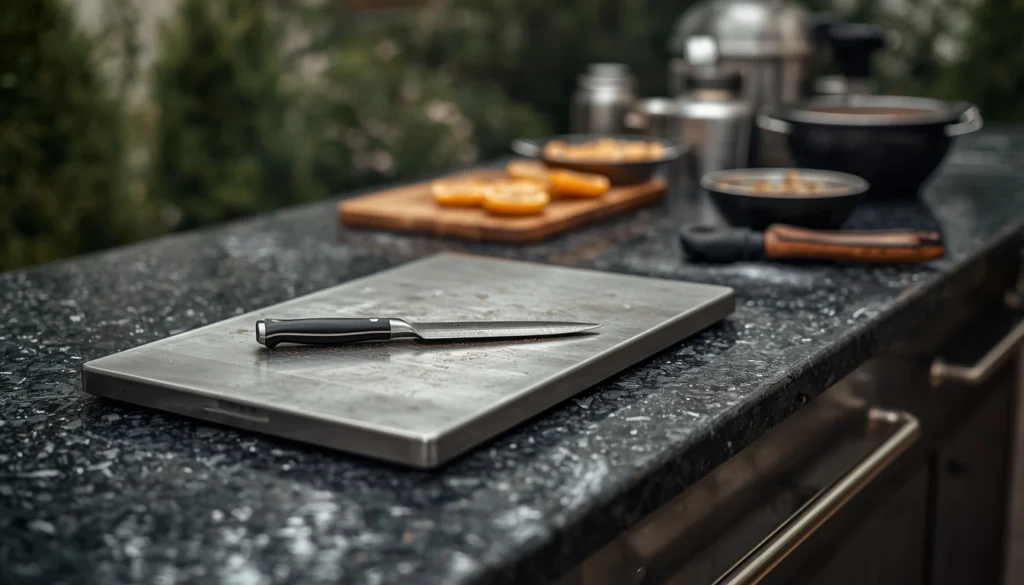
People want titanium cutting boards because they want something that lasts forever, looks great, and never needs oiling, resurfacing, or replacing. There is a specific type of kitchen user for whom this board makes a lot of sense.
Durability That Outlasts Every Other Material
A well-made titanium board will not warp, crack, splinter, stain, or wear down over years of use. Wood boards need to be oiled regularly and eventually need resurfacing or replacement when they get too many deep grooves. Plastic boards need to be replaced once they get badly scored. Titanium just keeps going.
For a commercial kitchen, a boat galley, an outdoor kitchen, or someone who simply never wants to think about their cutting board again. The durability argument is genuinely compelling.
Titanium cutting boards are not for knife lovers, they are for people who want a board that will outlast every knife they ever own.
Easy to Clean and Sanitize
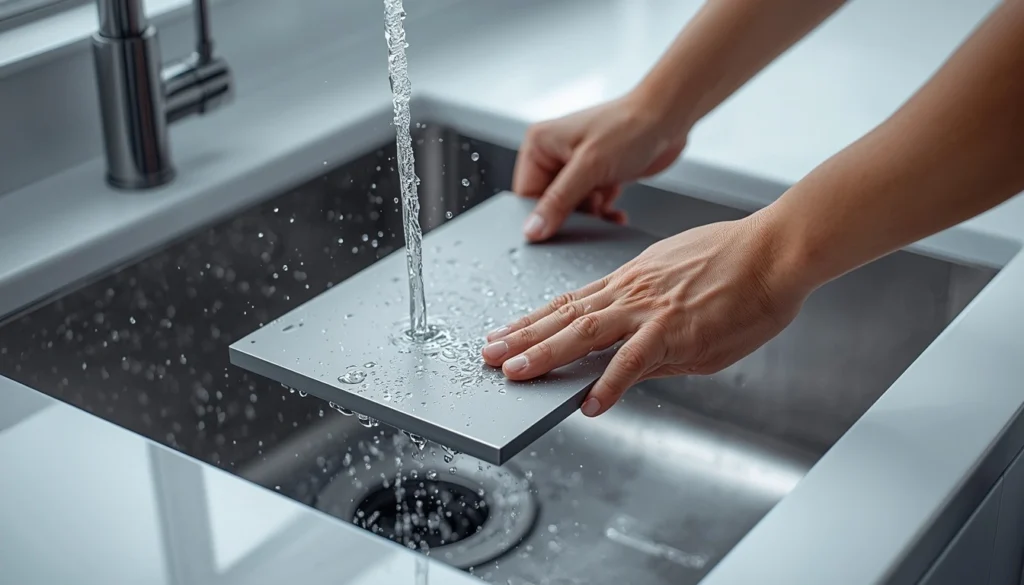
Because titanium is non-porous, cleaning it is simple. A quick rinse and wipe removes food residue. Most titanium boards are also dishwasher safe, which is something you can’t say about wood or bamboo. There is no risk of the board absorbing smells from raw garlic or raw fish the way a wood or bamboo cutting board might over time.
For someone who cuts raw meat regularly and wants the easiest possible sanitizing routine. AShow this. non-porous surface like titanium (or glass) provides genuine peace of mind. [Source: NSF Cutting Board Certification Standards]
Is a Titanium Cutting Board Healthy to Use?
Yes, titanium cutting boards are healthy to use. Titanium is one of the most inert materials used in food-contact applications. It does not corrode, does not leach chemicals into food, and does not react with acidic ingredients like lemon juice or vinegar.
No Microplastics, No Chemical Leaching
The biggest health argument in favor of titanium comes back to the microplastic issue. The 2023 study from Dongguk University found this. Plastic boards shed microplastics at a rate that adds up to tens of millions of particles per year. The health effects of ingesting microplastics are still being studied, but the early research is not encouraging. [Source: International Journal of Environmental Research and Public Health, 2023]
Titanium produces none of that. It also does not contain PFOA, PTFE, BPA, or any other chemical coating that can wear off into food. What you cut on is exactly what you get: pure metal, nothing else.
I switched from plastic to wooden cutting boards because bacteria can linger in plastic boards. This can cause health problems and even slightly change the flavor of your food. Some wood have natural antibacterial properties, plus being easy on the pocket. I learned how deep grooves caused by knives can hold bacteria and residue even after washing. That is a mojor concern in my work which is cooking healthy and delicious food for paying customers.
Are Titanium Cutting Boards the Healthiest Option Available?
From a materials safety standpoint, titanium is among the healthiest cutting board options available. It shares that top position with high-quality hardwood boards like maple or walnut. These two are also non-toxic and have been shown in some research to have natural antibacterial properties. [Source: Journal of Food Protection]
The edge titanium has over wood, from a pure hygiene standpoint, is its non-porous surface. A wood board that hasn’t been maintained well and has deep grooves can harbor bacteria more easily than a smooth titanium surface. However, a well-maintained wood board is perfectly safe and used in professional kitchens around the world.
If avoiding synthetic materials and chemical coatings is your goal. Titanium and solid hardwood are the two materials to focus on. Titanium requires less work to stay clean.
The Real Downsides of Titanium Cutting Boards
No honest review skips this part. Titanium cutting boards have two significant problems. They matter enough to change most people’s final decision.
They Are Hard on Knives
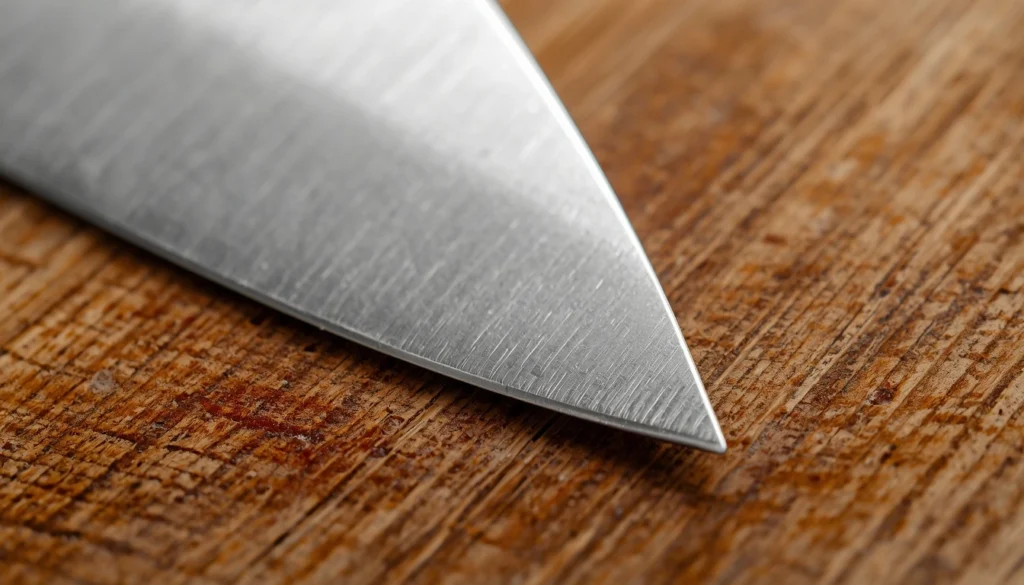
This is the biggest issue. Titanium is so much harder than the steel used in kitchen knives. Cutting on a titanium board dulls your blade at a much faster rate than wood or even plastic. The knife edge meets a surface that does not give, and the metal-on-metal effect wears the edge down.
If you own high-quality chef’s knives, Japanese knives in particular. Those sharpened to a finer angle and are more vulnerable to hard surfaces. Cutting on titanium regularly will cause damage that requires frequent sharpening. This is the same reason glass cutting boards get such a bad reputation among serious cooks: the hard surface destroys edges fast.
If your knives are inexpensive and you sharpen them often anyway, this matters less. But for most home cooks who have put money into decent knives, this is a dealbreaker.
Cost and Availability
Titanium cutting boards are more expensive than wood, plastic, or bamboo options. Entry-level titanium boards start around $80 and go well above $200 for larger or premium versions. They are also harder to find in local stores, most purchases happen online, and quality varies between brands.
For most home cooks, a $40-$60 end-grain hardwood board or a rotating set of quality plastic boards delivers better practical value. Titanium makes the most financial sense when you factor in lifetime ownership and zero replacement costs.
FAQs About Are Titanium Cutting Boards Good
Are titanium cutting boards better for health?
Yes, titanium is one of the healthiest cutting board materials available. It is non-toxic, non-porous, and produces zero microplastics. This is unlike plastic boards which shed millions of particles into food annually. It does not leach any chemicals into food, even when cutting acidic ingredients.
Do titanium cutting boards dull knives?
Yes, this is the biggest downside of titanium boards. Titanium is way harder than kitchen knife steel, which means the blade edge wears down faster with regular use. If you own quality knives, especially Japanese-style blades, a wood board is a much better choice for preserving your edge.
Can you put a titanium cutting board in the dishwasher?
Most titanium cutting boards are dishwasher safe. Unlike wood boards that warp and crack with repeated water exposure. Titanium is unaffected by moisture or high heat, making cleanup very straightforward.
How long does a titanium cutting board last?
With normal use, a titanium cutting board should last a lifetime. It won’t warp, crack, splinter, or stain. This makes the higher upfront cost easier to justify compared to boards that need replacing every few years.
Are titanium cutting boards worth it?
It depends on your priorities. It’s for if you value low maintenance, extreme durability, and health safety over everything else. Also if you’re okay with sharpening your knives more often, titanium is worth it. If knife care and budget are bigger concerns, a quality hardwood board is the better choice for most home cooks.
Conclusion
Titanium cutting boards are genuinely good at what they do: they are durable, hygienic, non-toxic, and built to last. If avoiding microplastics is a priority for you, they offer a real advantage over plastic boards. And if you never want to oil, resurface, or replace a cutting board again, titanium is the logical endpoint.
The trade-off is real though. These boards are hard on knives, and that cost adds up over time if you own quality blades.
For most home cooks, the best approach is this:
- use a quality hardwood board for everyday knife work
- consider titanium only if you have a specific reason, health concerns
- a desire for zero-maintenance equipment
- a kitchen environment where wood isn’t practical.
Your next step is simple:
- take stock of how much knife work you actually do
- what knives you own
- how much maintenance you are realistically willing to do.
That answer will tell you exactly which board belongs in your kitchen.