
Key Takeaways
- For most home cooks, a 10 to 12 inch skillet covers everyday cooking.
- A 10 inch skillet weighs about 5 lb and suits one to three people. A 12 inch weighs about 8 lb and suits three or more.
- If you can’t lift it with one hand while it holds food, size down.
- A smooth surface helps with eggs and fish. A pebbled surface works fine once it’s seasoned.
- Preheat on medium heat first. Cast iron holds heat well, but it doesn’t spread heat evenly right away.
The best cast iron skillet for everyday cooking is a 10 to 12 inch pan with a comfortable handle and a weight you can lift one-handed. The short answer is that size and weight matter more than brand or price. Here’s how to pick the right one for the way you actually cook.
What Is the Best Cast Iron Skillet for Everyday Cooking?
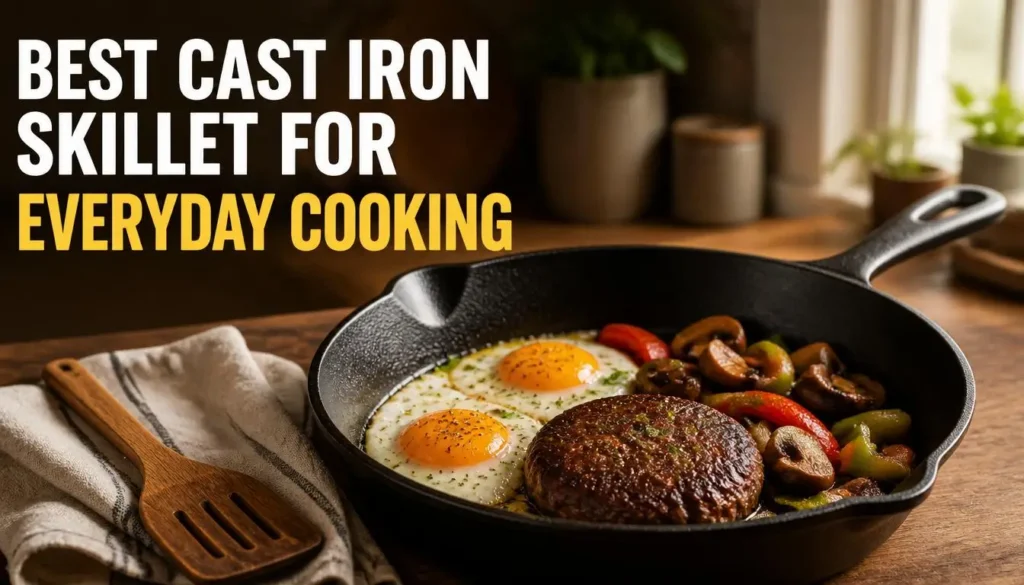
The best cast iron skillet for everyday cooking is a 10 or 12 inch pan that you can lift easily. It has a secure handle and a base that sits flat on your burner. For most home cooks, that one skillet handles eggs, vegetables, burgers, and cornbread without needing a second pan.
Three things decide whether a skillet earns a permanent spot on your stove: size, weight, and cooking surface. Brand and price matter, but they matter less than getting those three right. The sections below take them one at a time.
Which Size Is Better, 10 Inch or 12 Inch?
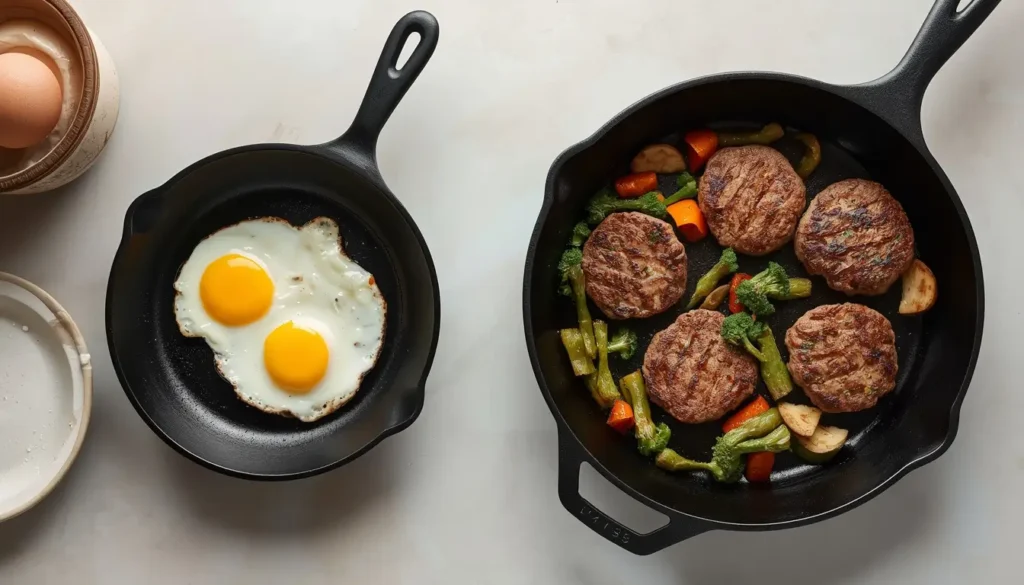
For most home cooks, a 10 inch skillet is the better pick if you cook for one to three people. A 12 inch is better if you regularly cook for three or more. The right choice depends on how many portions you cook at once and how much weight you’re comfortable handling.
When a 10 Inch Skillet Makes Sense
In a restaurant kitchen, a 10 inch skillet was the pan I used day to day, mostly for burgers, steaks, and fried eggs. It’s big enough for a couple of portions and small enough to move around a busy station. At home, the same size suits small households, roughly one to three people.
When a 12 Inch Skillet Makes Sense
A 12 inch skillet gives you room for bigger batches and family meals. Cook’s Illustrated testers call it the best size for most cooks, with room for up to six servings. I’d still point most home cooks to the 10 inch unless you often cook for three or more, because the extra weight adds up.
| Size | Typical Weight | Cooks For | Best For |
|---|---|---|---|
| 10 inch | About 5 lb | One to three people | Daily meals, eggs, burgers, quick sears |
| 12 inch | About 8 lb | Three or more people | Bigger batches and family meals |
Those weights line up with measured weights for Lodge skillets, roughly 5.35 lb for the 10.25 inch and 7.89 lb for the 12 inch. Rim size and flat cooking area can differ on the same pan, so check the product listing.
How Heavy Is Too Heavy for Everyday Use?
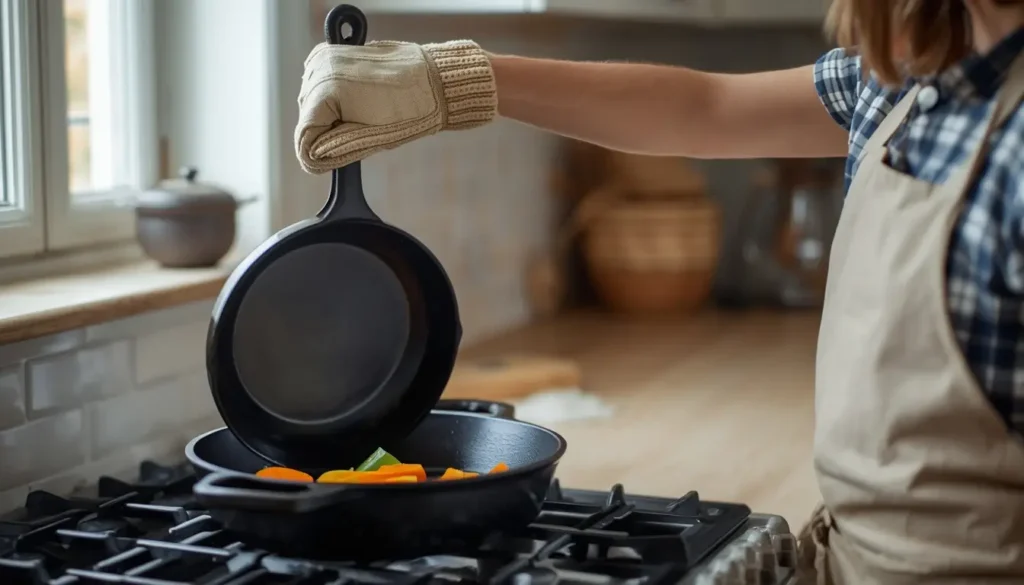
If you can’t lift the skillet with one hand while it has food in it, it’s too heavy for everyday use. A 12 inch pan weighs about 8 lb empty, and the food adds to that. That test matters more than any number on a spec sheet.
I adjusted to the weight of my skillet without even realizing it. That was a working kitchen where I handled pans all day, so your experience may differ. If you cook a few times a week, lift the pan in a store before you buy, or lean toward the 10 inch.
Heavier, thicker metal holds heat longer, so there’s a trade-off between comfort and performance. The real goal is the heaviest pan you can handle without dreading it.
Is a Smooth or Pebbled Cooking Surface Better?
A smooth cooking surface is better if you cook eggs or fish often, because food is less likely to stick. A pebbled surface still works well once it’s seasoned, and it’s the traditional budget option.
Machined smooth surfaces give a near-nonstick feel from the start, and delicate foods like eggs and fish release more easily. If your main jobs are burgers, vegetables, and cornbread, the surface matters less. Food release on a pebbled pan gets better as seasoning builds with use.
If you want to compare specific names, our guide to cast iron brands covers them so you don’t have to repeat that research here.
What to Check Before You Buy
Here’s what to check before you add a skillet to your cart:
- Handle: It should feel secure with a pot holder on. A helper handle on the opposite side makes a 12 inch pan easier to move.
- Base: It should sit flat on your burner without rocking.
- Surface: Choose smooth or pebbled based on how often you cook eggs and fish.
- Seasoning: Pre-seasoned saves a step, but the pan still builds seasoning with use.
- Stove type: If you plan to switch to an induction cooktop, check compatibility before you buy, because induction needs a magnetic base. Our page on cast iron on an induction stove covers what to expect.
How Do You Use a Cast Iron Skillet for Everyday Cooking?
Preheat the skillet over medium heat for a few minutes before adding food, using a burner close to the pan’s size. Cast iron is a poor conductor of heat but holds it well, so a rushed preheat leaves a hot center and a cooler rim.
Why Preheating Matters
A common misconception is that heavy cookware always distributes heat evenly. Poor thermal conductivity causes hotspots regardless of weight, and cast iron is a good example. Once it’s hot, it stays hot, and our explanation of why cast iron retains heat covers the science. The catch is that it needs a little time to even out first.
Everyday Jobs It Handles
In the restaurant, the 10 inch skillet earned its place on busy shifts. When the flat top hadn’t reached cooking temperature yet, I used the skillet for burgers, steaks, and fried eggs. It heated up fast enough that I could complete orders without a long delay, and it gave me that flat top flavor in less time than waiting on a cold flat top. That was a time saver in cooking emergencies. It’s speed compared with a cold flat top, not instant heat, so still give the pan its preheat.
At home, the same skillet handles eggs, burgers, sauteed vegetables, quick pan sears, and skillet cornbread. If steak is your main goal, see our picks for searing meat.
How Do You Care for an Everyday Cast Iron Skillet?
Wash it while it’s still warm, dry it fully right away, and rub a thin film of oil over the surface to help protect it. Skip long soaks in the sink.
For seasoning, rust removal, and deeper cleaning, our buying guide walks through each step.
FAQs About Cast Iron Skillet for Everyday Cooking
What Size Cast Iron Skillet Is Best for Everyday Cooking?
A 10 inch skillet is best for one to three people, and a 12 inch is best for three or more. For most home cooks, the 10 inch is easier to lift and store, while the 12 inch gives you room for bigger batches.
How Heavy Is a Cast Iron Skillet?
A 10 inch skillet weighs about 5 lb and a 12 inch weighs about 8 lb, based on Lodge examples. Food adds to that, so the practical test is whether you can lift the pan one-handed when it’s full.
Do You Need to Preheat a Cast Iron Skillet?
Yes. Preheat it over medium heat for a few minutes, using a burner close to the pan’s size. Cast iron holds heat well but spreads it unevenly at first, so rushing leaves a hot center and a cooler rim.
Is a Smooth Cast Iron Skillet Better for Eggs?
Yes, a smooth surface releases eggs more easily, especially when the pan is new. A pebbled skillet can still cook eggs well once it’s seasoned, preheated, and given enough oil or butter. Our guide on how to cook eggs without sticking covers the technique.
Do Pre-Seasoned Skillets Need More Seasoning?
A pre-seasoned skillet is ready to cook in, but the seasoning keeps building with regular use and proper care. If the surface turns dull or patchy, our seasoning steps show how to restore it.
Can You Use a Cast Iron Skillet on an Induction Cooktop?
Induction needs a magnetic base, and cast iron is magnetic, so many skillets work. Still, check the manufacturer’s details before you buy, especially if you plan to switch cooktops later.
Can One Cast Iron Skillet Handle Most Everyday Cooking?
For most home cooks, yes. A single 10 or 12 inch skillet covers eggs, burgers, vegetables, quick sears, and cornbread. If you often cook for a crowd, a second pan or the 12 inch size may suit you better.
Matching the Skillet to Your Cooking
The real takeaway is that the best skillet is the one that fits how you cook. In my experience, equipment should match the cook and the task, not the marketing.
If you cook for one to three people and want a pan that’s easy to handle, choose a 10 inch skillet. If you regularly cook for three or more and you’re comfortable lifting about 8 lb, a 12 inch makes sense. Pick the one you’ll actually reach for on a weeknight.