
Key Takeaways
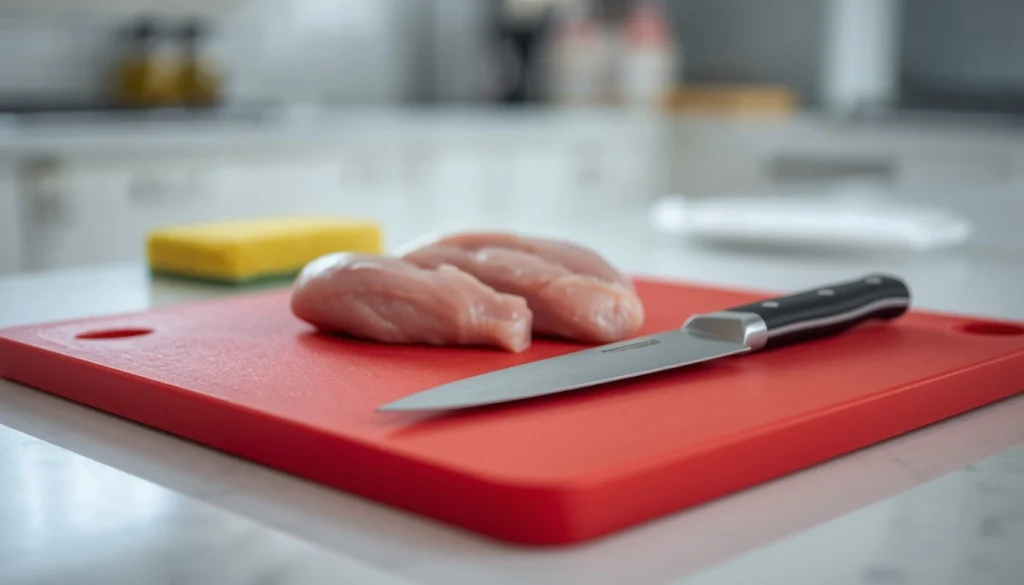
- For most home cooks, the best cutting board for raw meat is a dedicated plastic or composite board that’s easy to sanitize. A well-kept hardwood board also works.
- Use that board for raw meat and poultry only. Keep fish and produce on their own boards.
- Wash it with hot, soapy water after every use, sanitize it, and let it dry completely.
- Replace it when it has deep grooves, cracks, warping, dark spots, or a smell that survives a proper wash.
The best cutting board for raw meat is one that only ever touches raw meat. Material matters, but habits matter more. After more than 20 years in professional kitchens, including time as a butcher. I’ve seen what goes wrong when one board does every job, and I’ve made some of those mistakes myself.
Here’s what to buy, how to keep it clean, and when to replace it.
What Is the Best Cutting Board for Raw Meat?
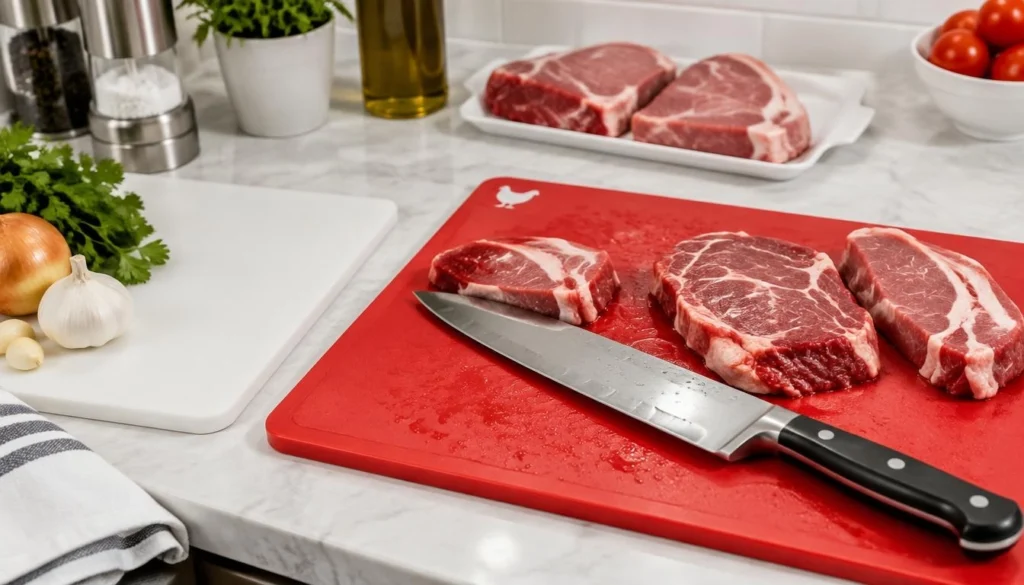
For most home cooks, the best cutting board for raw meat is a dedicated plastic or composite board that you can run through the dishwasher. It’s easy to sanitize, and you can keep it for raw meat only.
The material is the second decision. The first is that the board is dedicated to raw meat and poultry. A well-kept hardwood board also works if you’re willing to hand wash it and look after it. Ben Chapman, a food safety researcher at NC State, also recommends plastic for meat.
My Biggest Cutting Board Mistakes With Raw Meat
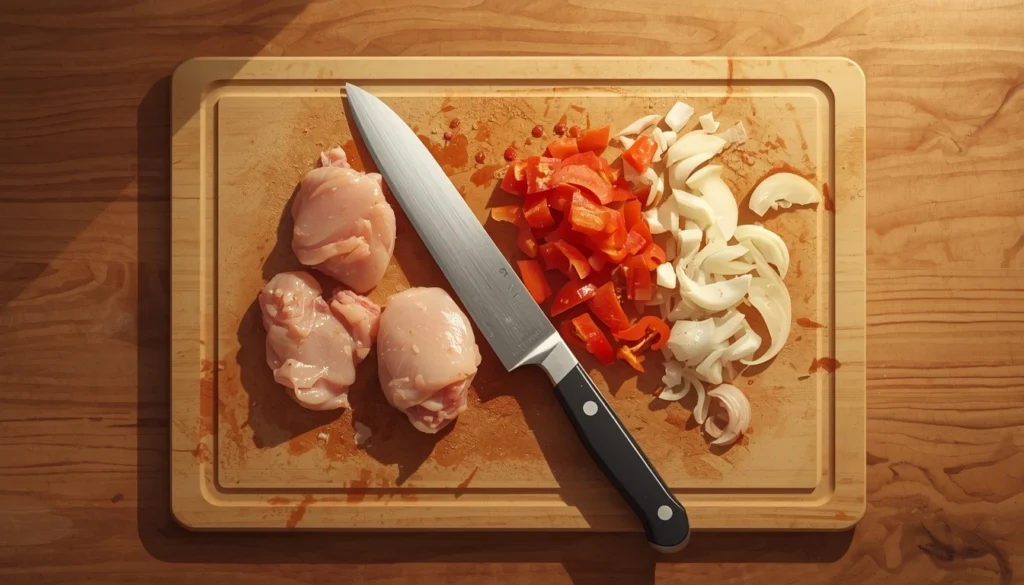
In the past, I knew little about cross-contamination. I’d use one board for different meats, and sometimes for meat and fish. When I moved from one to the other, I’d flip the board over and carry on. It felt like a fix, but I was still taking a risk with bacteria.
The second mistake was ignoring a smell. One of my boards had been washed and stored badly, and it gave off a mild but noticeable odor. I let it slide.
I treat that smell as a warning sign now. A smell can’t tell you exactly what’s on a board, and a board with no smell isn’t automatically clean. But it’s a reason to stop, wash the board properly, and decide whether it’s time to replace it.
Why Shouldn’t You Use One Board for Meat, Fish, and Vegetables?
Because raw meat and fish can carry bacteria, and a shared board moves those bacteria onto food you won’t cook. Vegetables, bread, and cheese go straight to the plate, so nothing downstream deals with what the board passed along.
Flipping the board doesn’t solve it. Juices don’t stay on the board. They end up on the knife, your hands, and whatever you reach for next. The cleaner approach is one board for raw meat and poultry, one for fish, and one for produce and ready-to-eat foods.
USDA recommends one board for raw meat and poultry and another for fruits and vegetables. This was after finding that 32% of participants contaminated their plates and cutting boards while preparing food in its home-kitchen study.
If you’re setting up the produce side, my guide to choosing a vegetable board covers it.
Which Is the Best Cutting Board for Raw Meat: Wood, Plastic, or Composite?
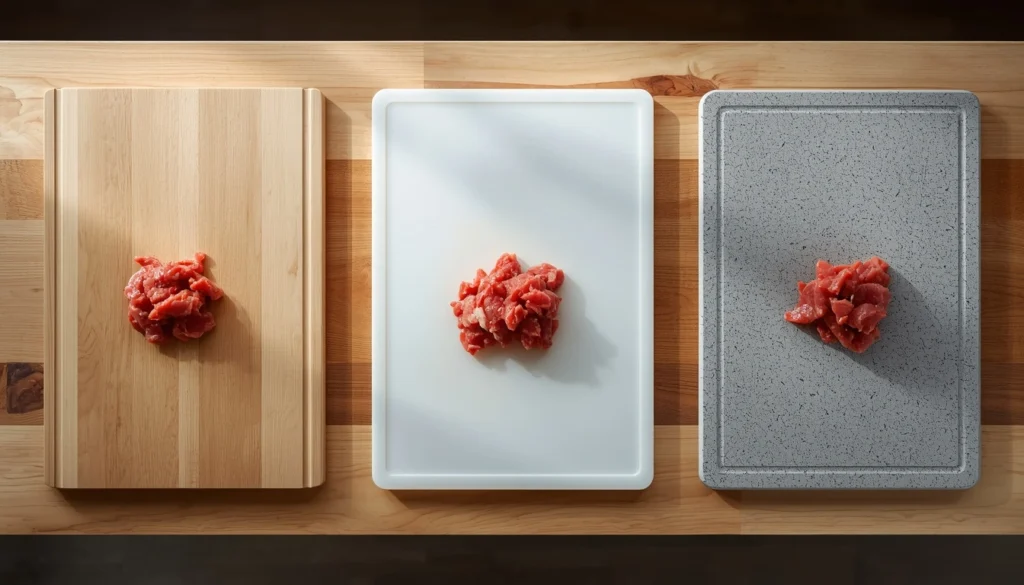
For most home cooks, plastic or composite is the easier choice for raw meat. Hardwood is a reasonable pick if you’ll hand wash it and keep it in good shape. Experts disagree on which material is cleaner, so your habits matter more than the material.
| Material | What It Does Well | What to Watch |
|---|---|---|
| Plastic | Easy to sanitize, dishwasher-safe | Deep knife grooves can trap residue |
| Composite | Light, holds up, dishwasher-safe | Little independent research so far |
| Solid hardwood | Harder, so it scars less | Hand wash only, needs oiling and care |
Plastic is easier to sanitize, but chicken fat and other residue can settle into deep knife grooves and be hard to scrub out. Wood has the opposite profile. A common belief is that wood harbors bacteria forever, and the research doesn’t support that. In early tests, wood boards held fewer bacteria than plastic under the same conditions, according to Cliver’s tests.
The type of wood matters too. Chapman explains that fine-grained hardwoods like maple pull fluid down into the wood, and the trapped bacteria die off as the board dries. Softer woods with larger grain split more easily, and those splits become grooves where bacteria can thrive.
Rutgers food scientist Donald Schaffner puts the debate well: the real question is whether both are safe to use. He keeps plastic boards for raw meat and poultry because they can go in the dishwasher. Wood needs hand washing, since the dishwasher can warp or crack it. Composite boards, made from wood or paper fibers bonded with resin, are light, hold up, and can also go in the dishwasher. Although Schaffner notes there’s little independent research yet on composite boards.
For daily use, my picks are wood, composite, or plastic, with separate boards for raw meat, fish, vegetables, and dairy. Titanium boards are non-porous and durable, but they tend to dull knives faster. If you want a closer look at one material, I’ve covered plastic boards for meat in detail.
Do Plastic Boards Shed Microplastics?
Yes, they can. One 2023 study estimated that chopping could expose a person to 14.5 to 71.9 million polyethylene microplastics a year. 79.4 million came from polypropylene boards, based on its microplastic estimates.
The study estimated exposure, not health harm, and researchers say more work is needed before anyone knows what that exposure means. If it bothers you, solid hardwood is one option. Just be ready for the hand-wash routine.
What to Look For Before You Buy
Use this checklist when you’re comparing boards:
- Dedicated use: buy it for raw meat and poultry only, and label it or pick a distinct color.
- Surface: plastic, composite, or fine-grained hardwood like maple.
- Dishwasher-safe: plastic and composite can go in, which makes sanitizing easier. Wood can’t.
- Size and stability: big enough for the cut you’re making, and steady on the counter so it doesn’t slip.
- Knife-friendly: skip very hard surfaces like glass or marble, which can damage your blade.
On price, budget to mid-range boards run $5 to $80, depending heavily on board size. Premium hardwood boards run $100 to $300. For a dedicated raw meat board, you don’t need to spend in the premium range.
How Do You Clean a Cutting Board After Raw Meat?
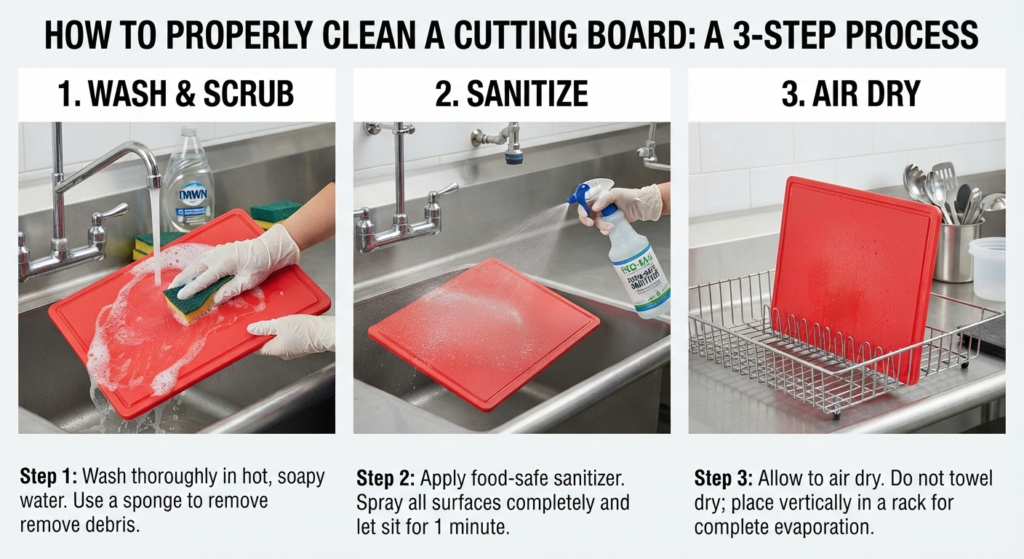
Scrub it with hot, soapy water right after use, sanitize it, then let it dry completely. Hot tap water alone won’t sanitize a board, so the sanitizing step matters.
- Wash: rinse off debris, then scrub with hot, soapy water and rinse. Plastic and composite boards can go in the dishwasher. Wash wood by hand.
- Sanitize plastic: flood the surface with 1 tablespoon of unscented, regular 6% bleach per gallon of water. Let it sit for at least one minute, then rinse. Concentrated bleach needs less, so check the label.
- Sanitize wood: Chapman notes that chlorine binds to organic material like wood, which weakens its effect. He recommends a quaternary ammonium sanitizer instead, mixed to the label directions.
- Dry fully: stand the board where air can reach it. Bacteria need moisture to grow.
- Clean your sponge: a dirty sponge or brush can contaminate the next thing you wash.
That bleach ratio comes from Wisconsin Extension’s bleach solution guidance.
When Should You Replace a Raw Meat Cutting Board?

Replace it when you can’t get it visibly clean, or when it has deep grooves, cracks, warping, or dark spots. Chapman points out that the more grooves a board has, the more room there is to trap moisture and give bacteria a place to grow.
Schaffner retires a board when it gets harder and harder to clean. The Good Housekeeping lab he’s quoted alongside tosses warped boards, plastic boards with deep grooves or little curls, and wood boards that crack or show dark spots that could be mold. Odors trapped in deep plastic knife cuts are especially hard to sanitize.
This is where my smell mistake fits. A board that still smells after a proper wash is telling you something. I’d stop using it for raw meat and check it for grooves. If you’re unsure, my guide to when to replace a board walks through the signs.
Setting Up a Cross-Contamination Board System at Home
Color coding makes the rule automatic. I’ve completed HACCP food safety training more than five times, and separate color-coded boards are a habit I keep coming back to.
At a resort kitchen, a guest once brought in four freshly caught red snappers and wanted them prepared right away. I grabbed the blue board, the one set aside for raw seafood, and a 12-inch chef’s knife, and filleted all four. That’s the point of a designated board: when you’re in a hurry, the right one is already decided.
At home, you don’t need a full rainbow. A simple setup works: one board for raw meat and poultry, one for fish, and one for produce and ready-to-eat foods. It’s a one-to-two-day job for most kitchens, since you’re mostly buying, labeling, and sorting. My guide to color codes shows how I’d assign them, and the most hygienic board comparison goes deeper on the evidence.
Start with the raw meat board. Label it, wash it after every use, and retire it before you get to the point of ignoring a smell.
Frequently Asked Questions
Can I Use the Same Cutting Board for Raw Meat and Vegetables?
It’s better not to. USDA recommends one board for raw meat and poultry and another for fruits and vegetables. Some food scientists call separate boards a reasonable precaution rather than a strict rule. With raw meat, I keep them separate, because vegetables go to the plate without being cooked.
Is Wood or Plastic Better for Raw Meat?
For most home cooks, plastic or composite is the easier choice, because both can go in the dishwasher. Hardwood is a reasonable pick if you’ll hand wash it and keep it in good condition. Experts disagree on which material is cleaner, so how you wash and replace the board matters more than what it’s made of.
Do I Need a Separate Board for Fish?
I keep fish on its own board. Some food safety guidance groups raw meat, poultry, and seafood on one board. But in professional kitchens I used separate color-coded boards for meat, fish, vegetables, and dairy. At home, three boards are enough: raw meat and poultry, fish, and produce and ready-to-eat foods.
How Often Should I Sanitize a Raw Meat Cutting Board?
After every use with raw meat or poultry. Wash the board with hot, soapy water first, then sanitize it. For everyday chopping of other foods, washing with soap and water is usually enough. Hot tap water alone won’t sanitize a board.
Does a Smell Mean a Cutting Board Needs Replacing?
Not by itself, but treat it as a warning sign. A smell can’t tell you exactly what’s on a board, and a board with no smell isn’t automatically clean. Wash and sanitize it properly, dry it fully, and check it for deep grooves. If the smell survives a proper wash, I’d stop using it for raw meat.
Are Glass Cutting Boards Good for Raw Meat?
I wouldn’t choose one. Glass is non-porous, but it slides, it can break, and it dulls knives. A plastic or composite board gives you an easy-to-sanitize surface without those problems.