
Here’s why you should know: how to clean and polish stainless steel cookware. You buy beautiful, shiny stainless steel cookware, but after a few meals, it’s covered in stains, burnt food, or odd rainbow colors. This can be frustrating, especially when you’ve invested in high-quality cookware. Your stainless steel pan loses its luster from high heat, food residue, and minerals in your water.
But you can get that shine back. With the right know-how, you can easily restore your pots and pans. This guide will show you how to clean and polish stainless steel cookware using simple, effective methods.
I’ll cover daily cleaning and deep restoration. This information will make your kitchen gear, often the best cookware for beginners, look brand-new again.
Key Takeaways
- Clean daily with dish soap and a soft sponge, always dry immediately to prevent water spots
- Remove burnt food using the baking soda paste or boiling water method
- Eliminate discoloration with vinegar, Bar Keeper’s Friend, or cream of tartar
- Polish for shine by buffing with the grain using vinegar or olive oil
- Avoid damage by never using steel wool, bleach, or cleaning hot pans
- Prevent stains through proper preheating, adequate oil, and immediate rinsing after use
- Deep clean monthly to maintain restaurant-quality appearance and performance
Stainless Steel Cleaning Guide
Select your cookware problem to see the best cleaning method
- Baking soda (1/2 cup)
- Water (2-3 tablespoons)
- Soft sponge or cloth
- Bar Keeper’s Friend powder or soft cleanser
- Water
- Soft sponge
- Microfiber cloth
- White vinegar (1 part)
- Water (3 parts)
- Soft cloth or sponge
- Microfiber towel for drying
- White vinegar (undiluted)
- Soft cloth or sponge
- Microfiber towel
- Dish soap (degreasing formula works best)
- Hot water
- Baking soda (for stubborn grease)
- Soft sponge
- Microfiber cloth
- Mild dish soap
- Warm water
- Soft sponge or cloth
- Microfiber towel for drying
Why Your Stainless Steel Cookware Gets Dirty and Discolored
Before you start scrubbing, it helps to know why these problems happen. Stainless steel is strong, but daily cooking takes a toll. Understanding the cause makes the solution much clearer.
Common Problems with Stainless Steel Cookware
- Heat Discoloration (Rainbow Stains): High heat can cause blue or rainbow-like stains on your pan. This happens when the protective layer on the steel thickens from the heat, a common issue on induction cookware which heats up fast.
- Burnt-on Food: If you get distracted while cooking, you might end up with blackened food that seems impossible to remove. Learning how to cook without food sticking in stainless steel pans can help prevent this.
- White Calcium Deposits: These chalky white spots come from hard water. They are mineral deposits left behind when water evaporates from the pan.
- Grease Buildup: Thin layers of cooking oil can bake onto the steel, creating a sticky, brown film.
- Loss of Shine: Small scratches from metal utensils and improper cleaning can make your cookware look dull.
- Pitting and Corrosion: Small pits can form if you let salty or acidic food sit in the pan for too long.
Understanding Stainless Steel Composition
Stainless steel is an alloy that gets its “stainless” name from chromium. During the fabrication process, chromium is added to the steel. It reacts with oxygen to form a thin, protective layer that prevents rust. This is one of the many stainless steel cookware pros and cons.
This layer can repair itself, but harsh cleaners can strip it away. Proper cleaning works with this layer, not against it. This is why knowing how to clean and polish stainless steel cookware is key to its long life. This applies especially for quality pieces where you must decide is tri-ply or 5-ply stainless steel better.
Essential Supplies for Cleaning Stainless Steel Cookware
You probably already have what you need to make your cookware sparkle. The best tools for this job are often found right in your kitchen.
Household Items That Work Wonders
- Baking soda: A gentle powder that scrubs away stains without scratching the metal.
- White vinegar: The acid in vinegar is great for breaking down mineral stains and discoloration.
- Dish soap: Your everyday go-to for cutting through grease.
- Bar Keepers Friend: This powdered cleaner contains oxalic acid, a powerful ingredient for tough jobs.
- Cream of tartar: Another mild acid that works well as a gentle cleanser.
- Lemon juice: Similar to vinegar, its citric acid helps dissolve stubborn spots.
- Soft sponges and microfiber cloths: Essential for gentle washing and a streak-free polish.
Tools You’ll Need
Using the right tool is just as important as the cleaner itself.
| What to Use | What to Avoid |
|---|---|
| Non-abrasive scrubbers | Steel wool or a steel wool pad |
| Soft-bristled brushes | Metal scrapers or a cheap paring knife |
| Microfiber towel | Harsh cleaning materials |
| Silicone scrapers | Chlorine bleach-based cleaners |
Using a harsh scouring pad or plain steel wool will cause permanent scratches. It will ruin the finish of your stainless steel cookware.
How to Clean Stainless Steel Cookware Daily: Step by Step
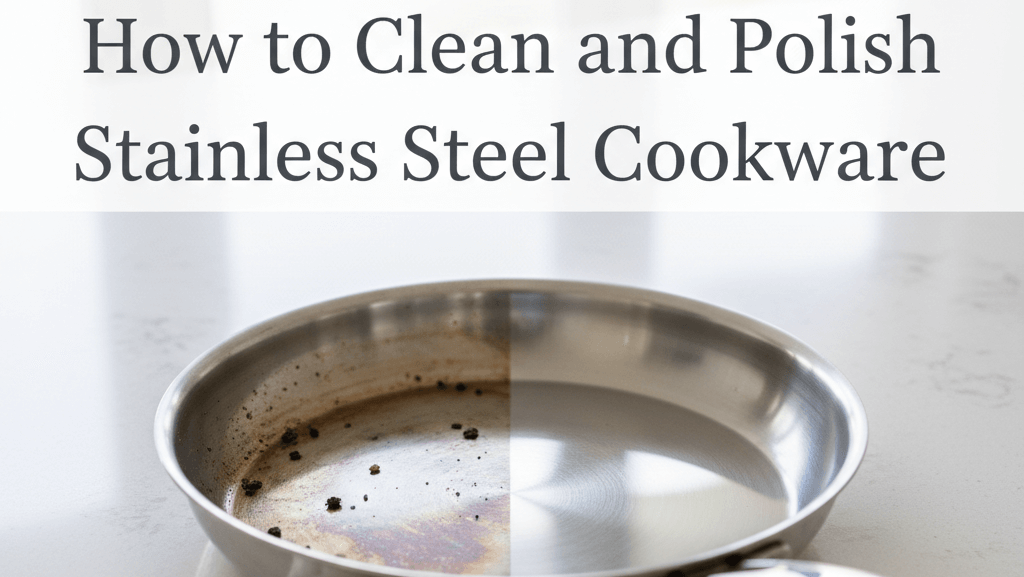
A solid daily cleaning routine is the best way to prevent big messes. This keeps your pots and pans looking great and reduces the need for heavy scouring. Following good cookware care and maintenance habits is key.
Basic Cleaning After Each Use
- Let the pan cool down. Putting a hot pan in cold water can cause warping.
- Rinse the pan with warm water to remove loose food bits.
- Use warm water with a gentle dish soap and a soft sponge for washing.
- Dry the pan completely with a towel to stop water spots from forming.
Pro Tips for Preventing Buildup
You should never let your cookware air dry. This is what causes those white mineral spots. Wiping it dry right away keeps the silver shine.
For small stuck-on bits, clean the still-hot pan. The warmth helps release the food, making cleanup much easier. Use an oven mitt to handle the pan safely.
How to Remove Stubborn Stains from Stainless Steel Pans
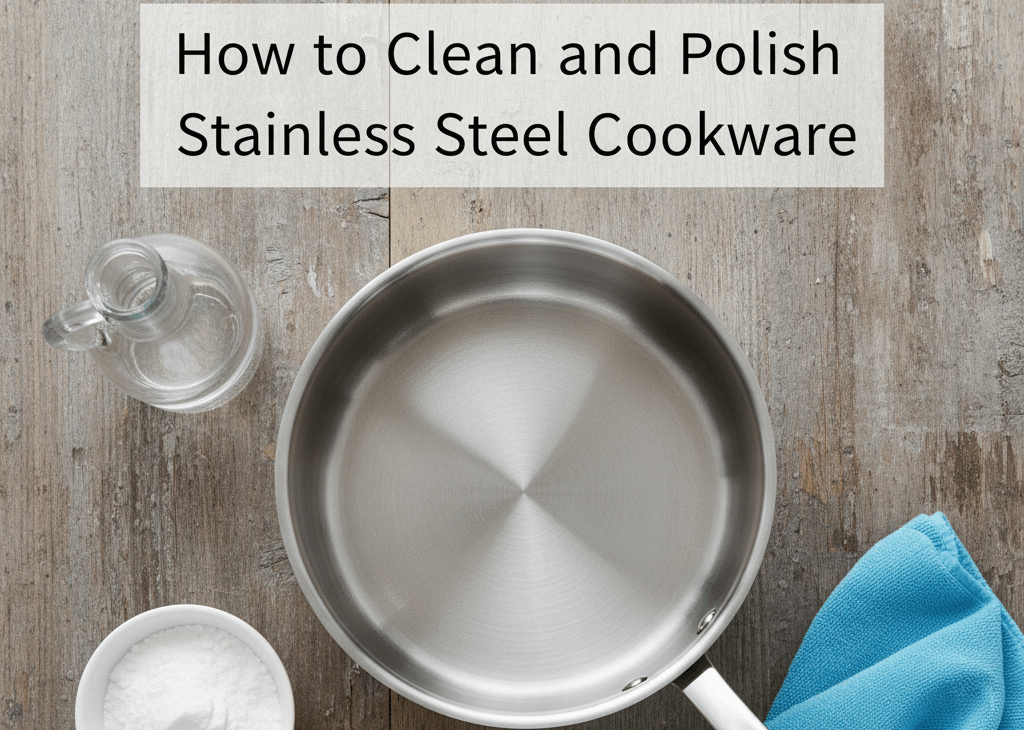
When your daily cleaning isn’t cutting it, it’s time for a deeper clean. These methods tackle everything from discoloration to tough, cooked-on oil.
1: The Baking Soda Paste Technique
This baking-soda slurry is perfect for general stains and discoloration.
- Mix baking soda with a little water to form a thick cleaning paste.
- Spread the paste over the stained areas of your pan.
- Let it sit for about 20 minutes.
- Scrub gently with a soft sponge, then rinse and dry.
2: Vinegar and Water Boiling Method
This is the best way to remove white water spots and mineral buildup.
- Fill the pan with one part white vinegar and three parts water.
- Bring the mixture to a gentle boil.
- Let it boil for a few minutes. You’ll see the stains start to lift.
- Turn off the burner, let it cool, and wash as usual.
3: Bar Keeper’s Friend Deep Clean
For the toughest stains, Bar Keeper’s Friend is a reliable classic cleanser.
- Wet the pan’s surface.
- Sprinkle a small amount of the powder onto the pan.
- Use a wet sponge to create a paste and scrub gently, following the grain of the steel.
- Rinse it off within one minute and dry the pan immediately.
Note: Always wear gloves when using this premium cleaner and work in a well-ventilated area.
4: The Cream of Tartar Solution
This is a great natural alternative for a powerful cleanup. If you prefer eco-friendly, non-toxic cookware, you’ll appreciate this gentle method.
- Make a paste with cream of tartar and water.
- Apply it to stains and scrub with a soft sponge.
- For an all-over clean, add 2 tablespoons of the powder to boiling water in the pot and let it soak.
How to Remove Burnt Food from Stainless Steel Pots and Pans

A badly burnt pan can feel like a total loss, but it’s often fixable. Here is how to handle scorched pans without a lot of elbow grease.
The Deglazing Technique
This method is best for food that sticks during cooking. A good quality pan is often the best pan for searing meat and is perfect for this technique.
- Remove your food from the hot pan.
- Pour a little water or broth into the pan while it’s still on the stovetop.
- As the liquid sizzles, use a wooden spoon to scrape up the burnt bits. These flavorful pieces can even be used to make a delicate sauce!
The Boiling Water and Baking Soda Method
For severely burnt food, this is a lifesaver. This works well for both frying pans and sauté pans.
- Fill the pan with enough boiling water to cover the burnt area.
- Add a few tablespoons of baking soda.
- Bring the water back to a boil, then simmer for 15 minutes.
- Use a wooden spoon to gently scrape the softened food away. After it cools, the rest should wash off easily.
The Overnight Soak Strategy
For extreme messes, patience is your best tool.
- Fill the pan with hot water and a good amount of dish liquid.
- Let it soak overnight.
- The next day, the burnt food should be soft enough to scrub off.
- Follow up with a baking soda paste for any remaining spots.
How to Polish Stainless Steel Cookware for a Mirror Finish
After a deep cleaning, polishing is the final step. This will restore that beautiful, like-new silver color, making even older pieces from the best cookware brands shine.
Restoring the Shine: Polishing Techniques
Always polish with the grain of the metal. If you look closely at your pan, you’ll see fine lines. Rubbing in the same direction as these lines will give you the best shine.
For a quick polish, put a few drops of olive oil on a microfiber cloth and buff the surface. This creates a brilliant luster and helps your stainless steel surfaces look their best.
The Vinegar Polish Method
White vinegar is a great, streak-free polish.
- After cleaning and drying, lightly spray the pan with vinegar.
- Buff it dry with a clean microfiber cloth, moving with the grain.
- The vinegar removes any leftover soap or mineral residue for a perfect shine.
Removing Rainbow Heat Stains
Those heat tints are easy to remove.
- Wipe the discolored area with a cloth dampened with white vinegar. The acid in the vinegar will make the stain disappear.
- You can also use a bit of ketchup. The vinegar in it works the same way. Let it sit for a minute, then wipe clean.
Natural vs. Chemical Cleaners for Stainless Steel Cookware
Choosing between DIY solutions and commercial cleaners depends on the stain. This choice is part of the classic nonstick vs. stainless steel debate. It’s where stainless requires more cleaning effort but avoids chemical coatings.
DIY Natural Cleaning Solutions
Natural methods like the baking-soda-and-lemon remedy are great for daily cleaning. They are cheap, safe, and effective for most jobs. You can handle a lot of difficult cleaning with just baking soda and vinegar.
When to Use Commercial Cleaners
For heavy-duty jobs, a commercial cookware cleanser like Bar Keeper’s Friend is more effective. Conventional cleaners are powerful, so always read the label and follow safety instructions. According to a study from the University of Massachusetts Amherst. Choosing plant-based cleaners can be a safer choice for your home.
Mistakes to Avoid When Cleaning Stainless Steel Cookware
Knowing what not to do is just as important as knowing what to do. Avoiding these common mistakes will protect your cookware and keep it beautiful for years. Whether you prefer it over other materials like in the cast iron vs. stainless steel matchup, proper care is essential.
- Using Abrasive Materials: Never use steel wool, scouring powders, or harsh scrubbers. These will leave deep scratches on the surface. Stick to soft sponges and cloths.
- Applying Extreme Temperature Changes: Do not plunge a hot pan into cold water. This can cause thermal shock, which will warp the pan and create an uneven cooking surface.
- Using Bleach or Oven Cleaner: Harsh chemicals containing chlorine will damage the protective layer of stainless steel. This can lead to stains and corrosion.
- Letting Food Sit: Don’t let salty or acidic foods like tomato sauce sit in your pan for long periods. This can cause pitting, which creates tiny holes in the metal.
- Scrubbing Against the Grain: When scrubbing or polishing, always follow the direction of the fine lines in the steel. This prevents tiny scratches and enhances the shine.
- Air-Drying Your Cookware: Letting pans air dry leads to chalky white water spots from mineral deposits. Always dry them immediately with a towel.