
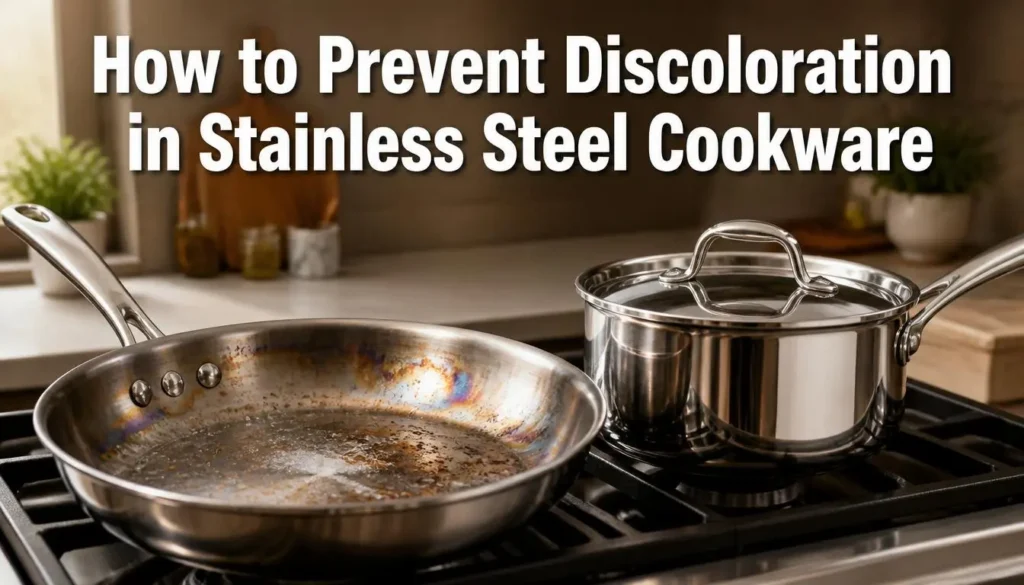
You finally bought a nice set of stainless steel pans. You cooked one meal, washed them, and now they look like a mess. It is frustrating to see your unmarred stainless steel turn brown or spotty so fast. Your next thought is how to prevent discoloration in stainless steel cookware?
Don’t worry, you haven’t ruined your new kitchen gear. This happens to almost everyone, even with expensive 5-ply stainless clad products. It doesn’t mean you have unreliable stainless steel.
Discoloration is usually just a reaction to heat or minerals in water. In this post, I will explain why this happens and how to prevent discoloration in stainless steel cookware. We will also cover how to fix the stains you already have.
Key Takeaways
- Discoloration is usually cosmetic: Rainbow stains (heat tint) and white spots do not affect the safety or performance of your pans.
- Control the heat: Overheating is the primary cause of brown and rainbow stains; stick to low-to-medium heat.
- Salt correctly: Only add salt to boiling water to prevent permanent pitting marks.
- Vinegar is magic: A simple diluted vinegar wash easily removes rainbow stains and calcium buildup.
- Cleaning matters: Avoid abrasive steel wool and dry pans thoroughly to maintain their shine.
Understanding the “Why”: What Causes Stainless Steel to Change Color?
To keep your pans looking new, it helps to know what they are made of. Stainless steel is a rust-proof metal alloy that contains chromium. This metal reacts with air to create a shield that stops rust.
When we heat the pan or let water sit on it, that shield changes. This leads to odd discoloration that looks ugly but is usually harmless.
What Causes Rainbow Stains (Heat Tint)?
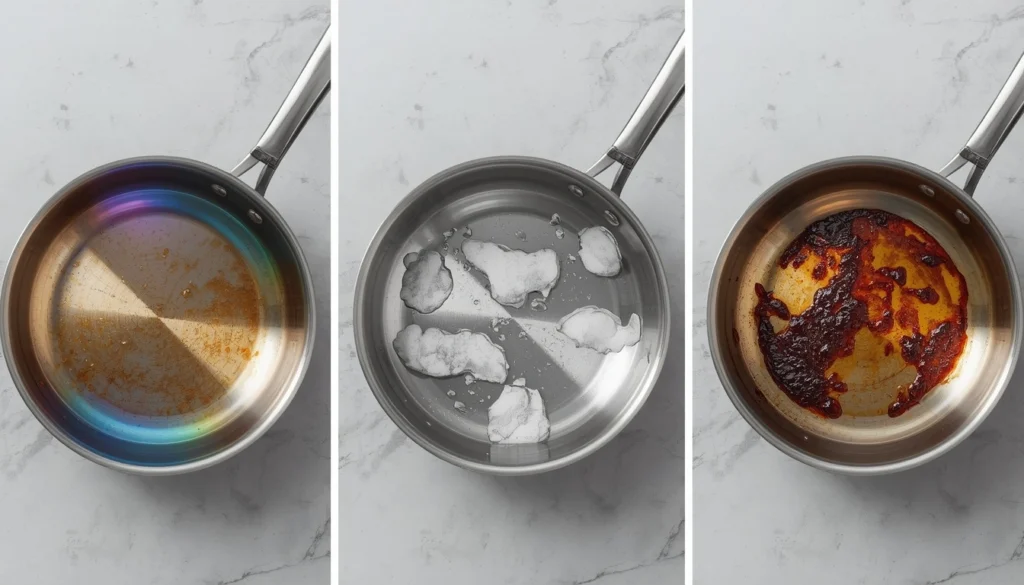
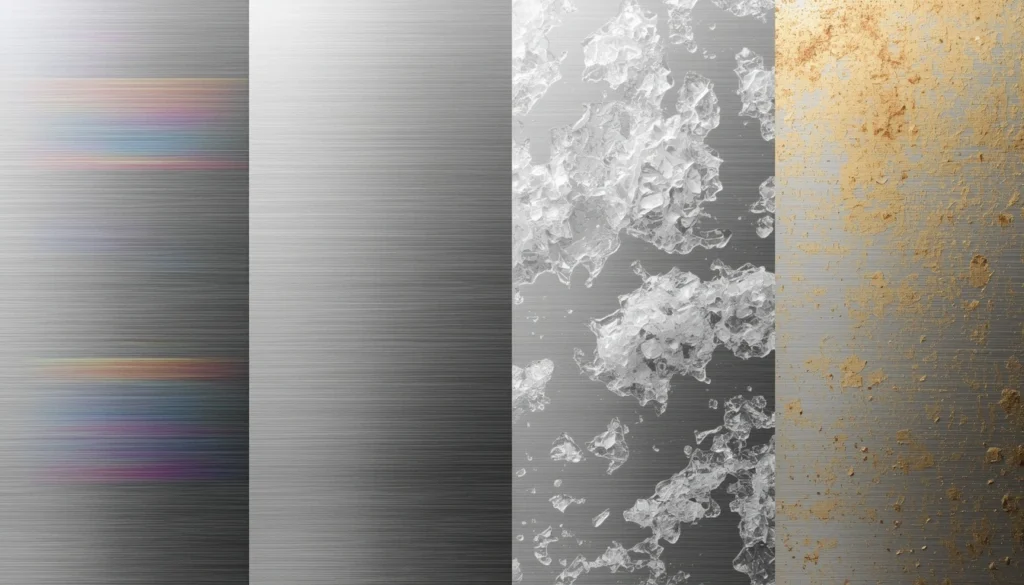
If your pan looks like a rainbow, you have “heat tint.” When you heat the steel, the protective layer gets thicker. This makes light reflect differently, showing blue and gold colors.
The higher your heat settings, the darker the colors get. This is very common with stainless steel cookware.
Why Do White Spots Appear on Stainless Steel?
Cloudy white spots come from your water, not the metal. If you have hard water, it leaves calcium behind when it dries. This is basically limescale.
When you boil water for pasta, this residue sticks to the cooking surface. It looks dirty, but it is just mineral dust.
What Causes Brown or Burnt Residue?
Brown stains usually happen when cooking oil gets too hot. If oil burns, it turns into a sticky, dark glaze on the steel. It looks a lot like the seasoning on well-seasoned carbon steel.
But, on a stainless steel pan, this brown layer is not good. It makes food stick and makes the pan look old.
Is Discolored Stainless Steel Safe to Use?
Many people ask if these stains are dangerous. The answer is no. Rainbow tints and calcium spots are safe and won’t ruin your clean kitchen taste.
Is discolored stainless steel safe? Yes. You can keep cooking with it. It won’t hurt you or your food.
Table: Common Stainless Steel Stains
| Stain Color | Cause | Is it Permanent? | Prevention |
|---|---|---|---|
| Rainbow / Blue | High Heat (Heat Tint) | No | Lower heat settings |
| White / Cloudy | Calcium / Hard Water | No | Dry with a towel |
| Brown / Gold | Burnt Oil / Food | No | Better cleaning |
| Small Pits | Salt Damage | Yes | Salt only boiling water |
Interactive Stainless Steel Trouble-Shooter
Click on your pan’s symptom below to find the cureThe Cause
Heat Tint. This occurs when the chromium in the steel oxidizes due to high heat. It is purely cosmetic.
The Fix
Wash with diluted white vinegar or rub with a lemon wedge. The acidity strips the oxidized layer instantly.
Prevention
Avoid overheating an empty pan. Stick to medium heat settings and never use “High” unless boiling water.
The Cause
Calcium Buildup. Hard water leaves behind limescale or calcium deposits when the water evaporates.
The Fix
Boil a mixture of 1 part vinegar to 3 parts water in the pan, then let it cool and wash normally.
Prevention
Do not let pans air dry. Hand dry immediately after washing with a soft microfiber cloth.
The Cause
Polymerized Oil. Cooking oils heated past their smoke point create a sticky varnish on the steel.
The Fix
Make a paste of baking soda and water. Scrub gently. For tough cases, use Bar Keepers Friend.
Prevention
Wash the pan thoroughly (including the bottom) after every use to stop oil buildup over time.
The Cause
Chloride Attack. Adding salt to cold water allows undissolved crystals to attack the passive chromium layer.
The Fix
Unfortunately, pitting is permanent. The pan is safe to use, but the tiny divots cannot be buffed out.
Prevention
The Golden Rule: Only add salt to water once it has reached a rolling boil.
Top Tips on How to Prevent Discoloration in Stainless Steel Cookware
Now let’s talk about how to stop these stains before they start. Learning how to prevent discoloration in stainless steel cookware is easy with a few habit changes. Here is what works for me.
Master Temperature Control (Avoid High Heat)
The biggest cause of discoloration is using too much heat. Common stainless steel usually has an aluminum or copper core. This conducts heat very fast.
You don't need high heat like you do with cheap nonstick cookware. Keep your stove on medium or low. This helps prevent heat tint and keeps your pans shiny.
The "Mercury Ball" Test and Preheating
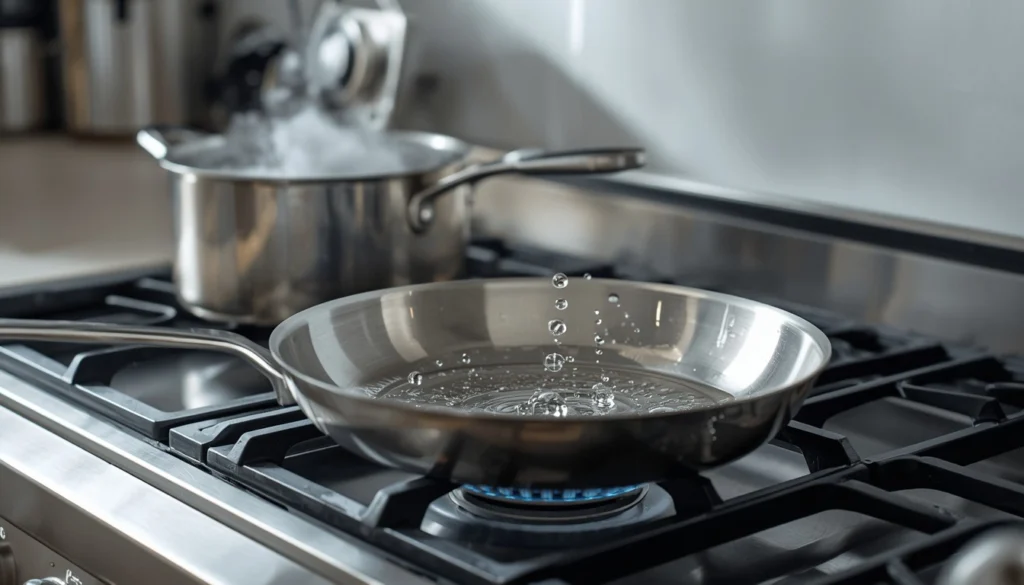
You must preheat your pan to stop food from burning and causing brown stains. To test it, put the pan on medium heat. Flick a little water on it.
If the water turns into a bead and slides around, the pan is ready. This creates a nonstick effect on the cooking surface. Do not throw food into a cold pan, or it will stick and burn.
How to Prevent Pitting: The Right Way to Salt Water
Rainbow stains can be cleaned, but pitting is permanent damage. Pitting happens when salt sits on the bottom of your stainless steel pots. It eats tiny holes in the metal.
To fix this, only add salt to boiling water. The bubbles will dissolve the salt instantly. This protects your cookware in prime condition.
Drying Habits to Stop Water Spots
To avoid white spots, you need to dry your gear right away. The dishwasher is easy, but it often leaves water drops behind.
To prevent discoloration in stainless steel cookware, try handwashing. Dry the pan immediately with a soft dish towel. This stops the calcium from settling.
Cleaning and Maintenance: The Secret to Longevity
Keeping stainless steel pans clean prevents buildup. If you don't clean them well, layers of oil will bake on over time.
Cleaning Routine to Avoid Buildup
You should wash your pans with warm water and dish soap after every use. Make sure you scrub the bottom of the pan too. A dirty bottom can scorch and leave dark marks.
Don't let burnt food sit on the metal for days. Wash it promptly to keep the finish bright.
Avoiding Abrasive Cleaners
Be careful with what scrubbers you use. You want to avoid scratching the unmarred stainless steel. Do not use:
- Plain steel wool: It leaves rust spots.
- Easy-off oven cleaner: It is too harsh for cookware.
- Bleach: It damages the steel.
How to Remove Existing Stains (Restoring the Shine)
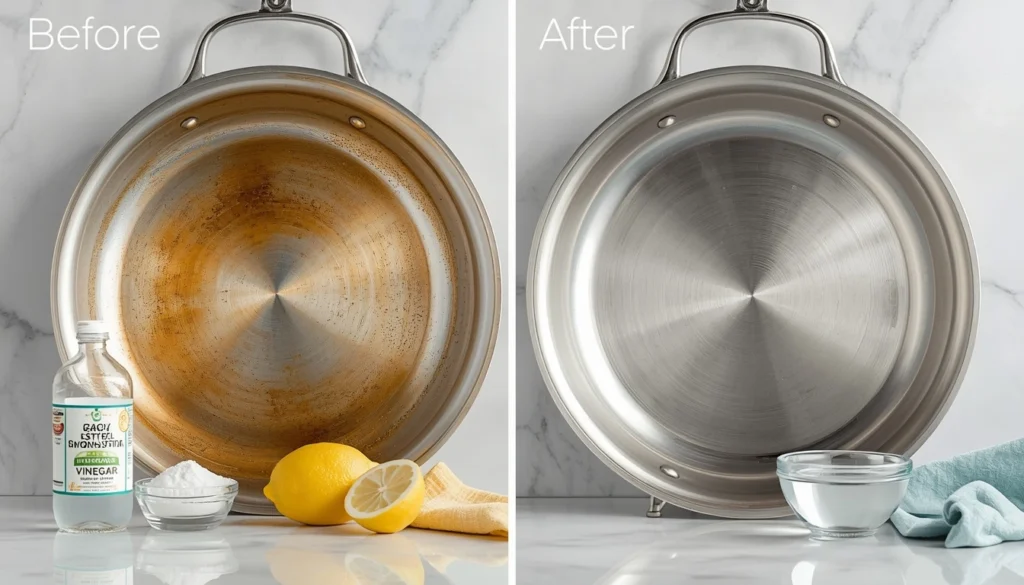
If your pans are already stained, don't worry. You can use simple cleaning methods to fix them. Even if you didn't know how to prevent discoloration in stainless steel cookware before, you can fix it now.
How to Remove Rainbow Stains from Stainless Steel
If you have rainbow stains, the fix is in your pantry. You need an acid to remove the oxidized layer. The answer is…vinegar.
Splash some white vinegar or distilled vinegar into the pan. Swirl it around for a minute. Wash it out, and the rainbow will be gone.
Removing Burnt-On Food and Brown Stains
For stuck-on food, boiling water is your friend. Fill the pan with water and put it on the stove. Let it boil for a few minutes to loosen the burnt-on food.
You can also use baking soda. Make a paste with water and scrub gently. For extra power, try the baking-soda-and-lemon remedy by scrubbing the paste with a cut lemon.
When to Use Commercial Cleaners
Sometimes you need a stronger cleaner. A powdered kitchen cleaner like Bar Keepers Friend is the classic cleanser for this job. It works much better than baking soda alone.
Make a paste with the powder and water. Rub it on the stains. It works like magic on heat tint and stuck-on messes.
Frequently Asked Questions (FAQ)
Why did my stainless steel pan turn gold/brown?
Your pan likely turned brown because of overheated oil. If you cook with high heat, oil can burn onto the surface. This creates a brown layer that looks like rust but is actually grease.
Can I use a dishwasher for stainless steel?
Yes, but handwashing is safer for the finish. Detergents can be harsh. Also, the drying cycle might leave water spots on your stainless steel pan.
Is…vinegar good for cleaning?
Yes, vinegar is excellent. It removes calcium spots and heat tint easily. It is a cheap and effective stainless steel cleaner.
Does oven cleaner work on pans?
No, do not use oven cleaner on your cookware. It is too strong and can damage the surface. Stick to a dedicated cookware cleanser.
Conclusion
Stainless steel is a heat-resistant and durable choice for any kitchen. It might seem high-maintenance once you see the stains, but it is actually easy to care for.
Remember to keep your heat low and clean your pans well. Now that you know how to prevent discoloration in stainless steel cookware, your pots will shine for years. Go grab a towel and some vinegar, and get those pans looking new again.