
By David Miller | mykitchenhints.com
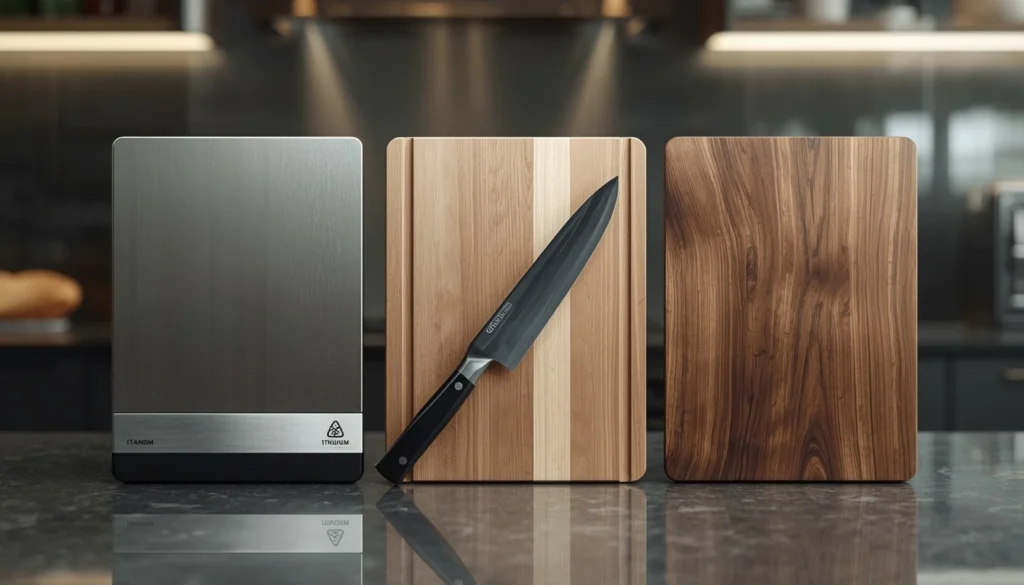
KEY TAKEAWAYS
- Wood cutting boards win for knife protection: it’s the softest surface and most forgiving on blade edges, backed by 30+ years of research.
- Titanium cutting boards win for hygiene: its non-porous TiO2 oxide layer resists bacteria without absorbing odors, stains, or moisture.
- Stainless steel cutting boards are the hardest on knives of all three, causing edge rolling and chipping especially on Japanese blades. It’s the one option experts always caution against for daily use.
- Wood cutting boards have natural antibacterial properties. University of Wisconsin research found that 99.9% of bacteria applied to wood surfaces died within minutes.
- The smart move: use titanium for raw meat prep and wood for everyday chopping. You don’t have to pick just one.
Introduction
There was research comparing oak, beech, and plastic cutting boards. It found that bacteria survived longest on plastic, followed by stainless steel. Oak showed the highest rate of bacterial die-off. If you assumed the metal board on your countertop was the safe, professional choice, that finding might surprise you.
Most people pick a cutting board based on price, looks, or what came with their kitchen set. But the surface you chop on every day affects two things that actually matter. These are how long your knives stay sharp and how much bacterial risk you carry from raw ingredients to finished meals. Those two factors don’t always point to the same board.
I break down how titanium, stainless steel, and wood. They will be compared across knife safety, hygiene, durability, and everyday maintenance. so you can make a decision based on data, not marketing.
Titanium vs. Stainless Steel: What’s the Real Difference?
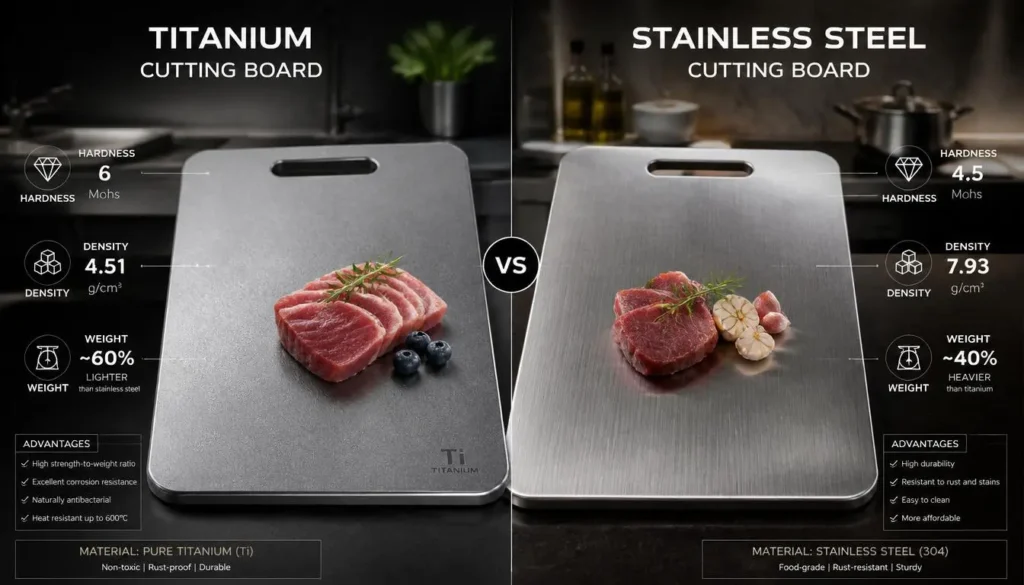
Titanium and stainless steel are both metals, but they behave very differently on a cutting surface. Titanium is softer and lighter than stainless steel. Stainless steel is denser, harder, and significantly heavier. That difference in hardness is the core reason one damages knives and the other doesn’t.
How Titanium and Stainless Steel Behave Differently on a Cutting Surface
Stainless steel cutting boards are made from food-grade 304 or 316L stainless steel. This material is harder than the steel used in most kitchen knife blades. That means every chop is a hard-on-hard collision with no give. The surface doesn’t compress or flex, so the impact transfers directly to your knife edge.
Titanium, has a lower molecular density than the steel in your knife. According to manufacturers of food-grade titanium boards. It means the titanium surface can flex microscopically around the edge of your knife instead of grinding against it. It’s a small difference at the atomic level, but the real-world result on knife wear is measurable.
The other key difference is the surface chemistry. Pure titanium naturally forms a titanium dioxide (TiO₂) oxide layer on its surface. This layer gives titanium boards their antibacterial properties. It physically prevents bacteria from sticking to the surface. This is the same reason titanium is used in medical implants. Stainless steel has no equal self-protecting layer.
Why ‘Metal Board’ Isn’t One Category
Lumping titanium and stainless steel together as “metal cutting boards” is a mistake I see in a lot of buying guides. The two materials have different hardness ratings, different surface chemistry, different weights, and different interactions with food and knives. A stainless steel board and a titanium board are not interchangeable choices. Also the gap between them on knife safety is significant, as the next section shows.
One important caution: many boards sold as “titanium” online are actually stainless steel with a titanium nitride (TiN) coating or they’re mislabeled. If you’re buying a titanium board. Look for third-party certifications and stated purity levels. Genuine food-grade titanium boards usually specify 99.89–99.91% titanium purity.
Which Is Better for Your Knives — Titanium, Stainless Steel, or Wood?
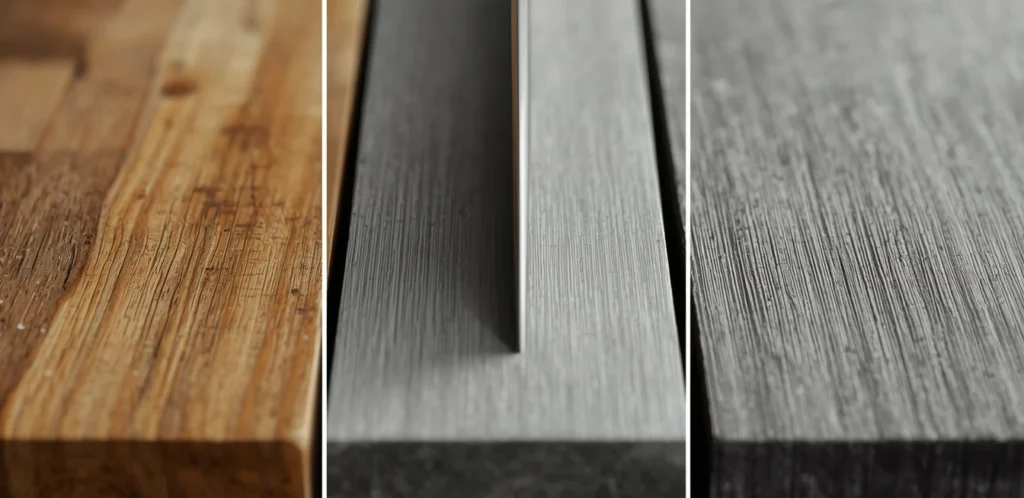
Wood is the best cutting board material for knife protection, followed by titanium, with stainless steel coming in last. The difference isn’t minor. Stainless steel can cause three distinct types of knife damage that wood and even titanium avoid.
How Stainless Steel Damages Knife Edges
When a knife blade meets stainless steel, there’s no cushion, no give, and no recovery. Knife experts at LeeKnives identify three types of damage this causes over time:
- Edge rolling: the thin tip of the blade bends a little on impact, especially on harder Japanese knives with acute edge angles.
- Micro-chipping: brittle high-carbon blades can chip at the edge rather than roll. This leaves tiny serrations that are hard to sharpen out.
- Accelerated dulling: every stroke across a steel surface removes microscopic metal from the edge. This will compress what would be months of normal wear into weeks.
The cutting surface of a stainless steel board is described as “louder and firmer” than wood or plastic, with almost no shock absorption. For casual cooks with inexpensive knives, this might not matter much. For anyone using quality German or Japanese steel, a stainless steel board is a genuinely bad idea for daily use.
If you care about your knives, you might want to read our guide on how to choose the right knife for the task. Pairing a great knife with the wrong board undoes a lot of the benefit.
How Titanium Compares to Stainless Steel for Knife Wear
Independent edge retention testing using a Catra-style edge tester. This is the industry standard for measuring sharpness decline. They found that titanium boards caused “very slight edge rounding, far less severe than glass or hard plastics.” [Source: CalmChop, 2025] That’s better than stainless steel, which causes harder, more consistent wear.
Some users report noticing slight edge wear after two weeks of daily use on titanium, nothing catastrophic, but real. The metal surface also gives a different tactile feel: a sharper “click” on contact rather than the muffled thud of wood. For most cooks, this is an adjustment. But if you use fine Japanese blades or Damascus steel, you’ll want to hone more frequently when titanium is your main board.
After using titanium and stainless steel cutting boards. I noticed my knives lost their sharp edge much faster than when I used wood or plastic boards. I found myself sharpening most of my kitchen knives every few weeks instead of every few months. My knives were losing mass, getting smaller every time i sharpened them. My chef’s knife and santoku showed the most wear because they saw the most daily use. The boards themselves stayed looking brand new. But the constant edge maintenance was annoying. It is why I went back to a wooden cutting board to help preserve my knives.
Why Wood Is Still the Gold Standard for Knife Protection
Wood is the most forgiving cutting surface because the grain compresses a little under blade pressure. It absorbs shock and reducing micro-damage to the edge. Both new and used wooden boards maintain their knife-friendly properties equally well. The wear on the board doesn’t change its effect on your blades the way it does with plastic or metal.
The right wood species matters. End-grain hardwoods like maple and walnut are particularly gentle on edges. The reason is the knife falls between the wood fibers rather than across them. For a deeper look at wood choices, our article on the best wood for cutting boards covers the top species and their trade-offs.
Titanium vs. Stainless Steel vs. Wood: Which Is Safest for Food?
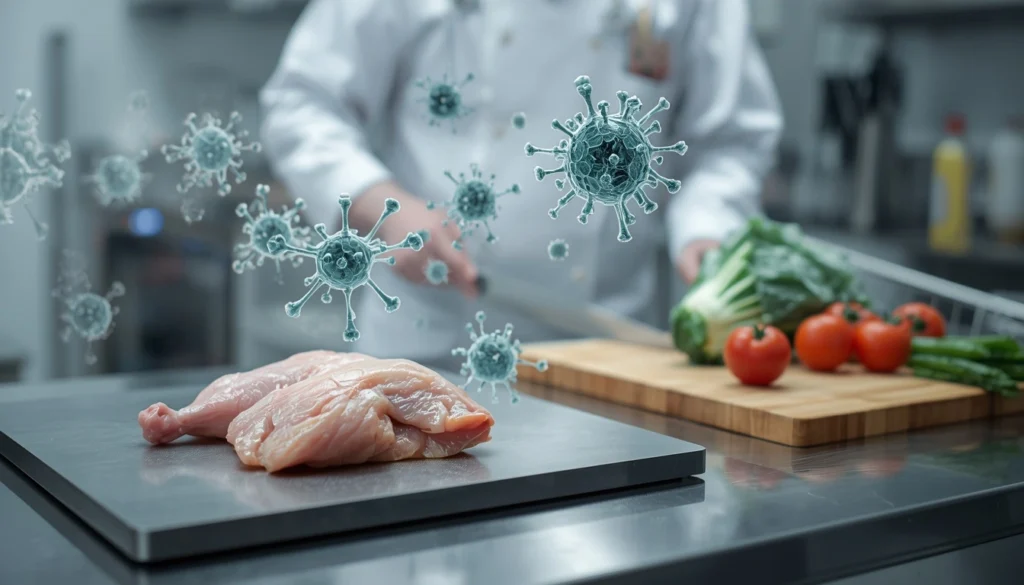
Titanium is the safest cutting board material for food hygiene, especially for raw meat prep. But the research on wood is more favorable than most people expect. Also stainless steel offers less bacterial protection than its clean, clinical look suggests.
The Bacteria Problem with Porous Surfaces
Bacteria need two things to thrive: moisture and surface to cling to. Plastic boards look smooth when new. But knife scars create grooves that trap food residue and moisture, forming ideal bacterial habitats. Research from the University of Wisconsin found this. Scarred plastic boards were almost impossible to sanitize manually, even with bleach.
Wood is porous, which sounds like it would be worse. But the story is more nuanced, and that’s where the science gets interesting.
What the Research Says About Stainless Steel and Bacteria
Stainless steel is non-porous, so bacteria cannot penetrate the surface. But non-porous doesn’t mean self-sterilizing. A comparison study testing wood, plastic, glass, and stainless steel boards with minced meat, raw chicken, and vegetables found this. Stainless steel showed “the same degree of contamination” as other board types. [Source: ResearchGate, 2018]
A separate Campylobacter survival study found that bacteria survived on stainless steel for approximately 3 hours. It was the same as wood, and less than the 4.5 hours on plastic. [The Source: NCBI PMC10486554]. In other words, stainless steel is easy to clean, but it offers no special antibacterial advantage over proper washing. The shiny surface doesn’t do extra work for you.
Titanium’s Non-Porous Advantage
Food-grade titanium boards, usually 99.89–99.91% pure, form a TiO₂ (titanium dioxide) oxide layer on the surface. This layer physically prevents bacteria from adhering, rather than just resisting penetration. It’s the same mechanism used in medical-grade implants and surgical tools.
Unlike stainless steel, which can be sanitized but is not antibacterial. Titanium can withstand high-heat dishwashing (up to 200°C), bleach cleaning, and strong sanitizers without degrading. The TiN (titanium nitride) coating found on some premium boards is molecularly bonded to the surface. This means there’s no particle shedding even after years of use. [Source: KitchePicks, 2025]
KEY INSIGHT: For raw meat preparation titanium is the strongest choice. It’s non-porous, non-reactive, dishwasher-safe, and actively resistant to bacterial adhesion. If cross-contamination is your biggest concern, titanium wins this category.
For more on safe food prep surfaces, see our article on are antibacterial cutting boards safe.
Wood’s Surprising Antibacterial Properties
Here’s what most cutting board guides miss: wood has natural antibacterial properties, and the science behind this is solid. Microbiologist Dr. Dean Cliver at the University of Wisconsin tested Salmonella, Listeria, and E. coli on seven wood species and four types of plastic. The results were striking:
- Bacteria placed on wood cutting boards died and often became undetectable within a short period.
- On plastic boards, bacteria remained on the surface and survived much longer.
- Wood absorbed moisture from the bacterial cells, making it harder for pathogens to multiply.
- Several wood species demonstrated natural antimicrobial effects against common foodborne pathogens.
- Deep knife grooves in plastic boards were more likely to keep bacteria if not properly cleaned.
- Properly maintained hardwood boards performed as well as plastic. In some cases better than, plastic boards in reducing bacterial survival.
The antibacterial effect comes from two mechanisms:
- Wood binds water, depriving bacteria of the moisture they need to survive.
- Wood also contains polyphenols, a natural antimicrobial plant compounds. The polyphenols in wood acts against bacteria at the cell membrane level. [Source: ScienceDirect, 2025]
That said, wood’s protection depends heavily on how you maintain it. Cracked, unwashed, or un-oiled boards lose these properties and become genuine hygiene risks. Our guide on how to safely use cutting boards covers the practices that keep wood boards genuinely safe.
Durability and Maintenance: Which Board Lasts Longest?
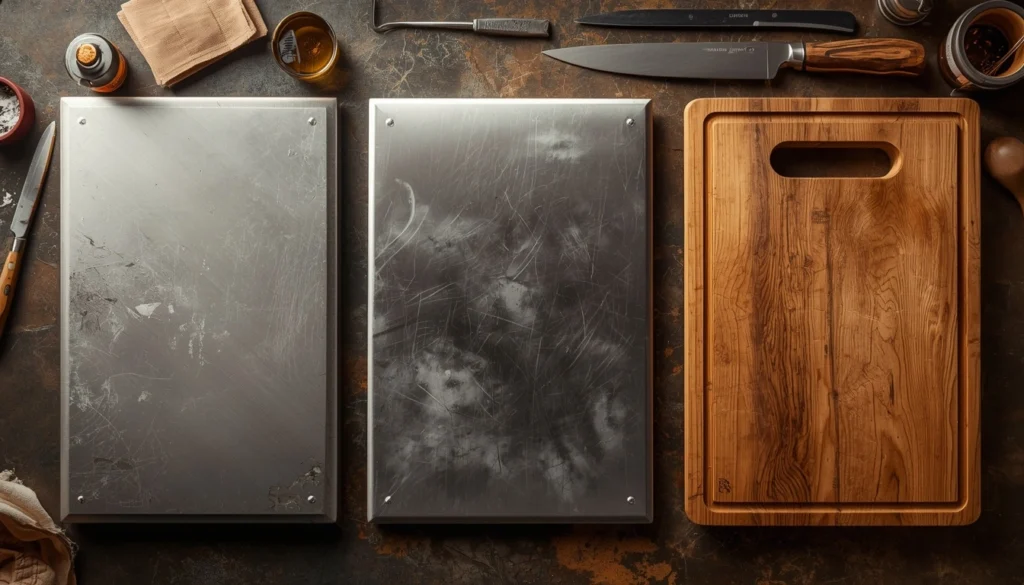
If you’re deciding on long-term value. Titanium and stainless steel both outlast wood when looking at physical durability. But maintenance requirements are very different across all three, and the daily effort matters.
Stainless Steel Boards Over Time
Stainless steel boards won’t warp, crack, or absorb moisture. A quality 316L stainless board resists acidic foods, salt, and high heat. The catch: unlike wood, stainless steel doesn’t self-heal. Every knife stroke leaves a small, permanent mark. Over time the surface develops a web of shallow scratches that don’t affect function but do affect appearance. Cleaning is simple, dishwasher safe, no oiling required, quick to sanitize.
The other downside is the user experience: stainless steel is loud and rigid under the knife. Some people find it slippery, particularly when working with wet ingredients. If you don’t add a non-slip mat underneath, the board can slide on a smooth counter, a real safety issue.
Titanium Boards Over Time
Pure titanium boards are effectively indestructible under normal kitchen use. They won’t warp, chip, stain, or absorb odors. They’re dishwasher safe and handle strong sanitizers without degrading. At roughly 45% lighter than steel despite similar strength, they’re easier to handle and store than equal steel boards.
The main concern over time is surface scratching. Titanium does show knife marks, though they’re shallower and less many than on plastic. Premium titanium boards with a TiN surface coating scratch less than bare titanium. The bigger long-term consideration is price: genuine titanium boards start at $60 and run to $200+. You’re making a significant investment, so verify purity claims before you buy.
Wood Boards Maintenance Requirements
Wood is the highest-maintenance option of the three by a significant margin. A quality hardwood board needs to be hand washed only (never the dishwasher). Dry immediately after use, and oil to prevent cracking, warping, and moisture absorption. Skip the maintenance and even an expensive walnut board can develop cracks within months.
That maintenance investment pays off, though. A well-cared-for hardwood board can last decades and actually improves with age as the grain tightens. Our detailed guide on how to oil a cutting board walks through the right products and frequency to extend the life of any wood board.
Which Cutting Board Should You Actually Use?
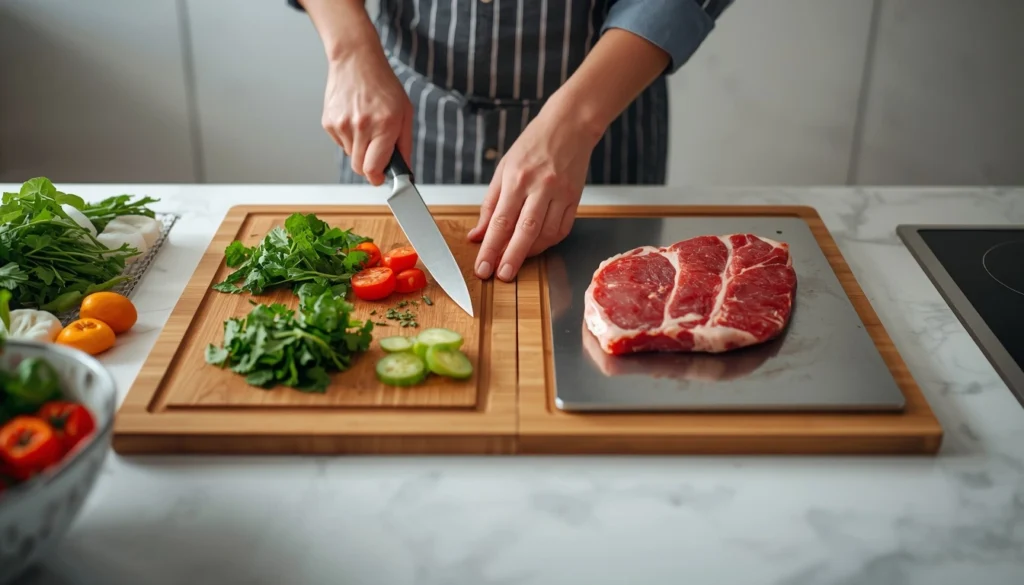
The “best” cutting board depends on what you’re cutting, how much you care about your knives, and how much time you want to spend on maintenance. Here’s my breakdown by use case:
Best for Knife Protection: Wood
If you own quality knives and want to protect them, a hardwood end-grain board is the right call. Maple, walnut, and cherry are all excellent choices. You’ll pay for them in maintenance time, but the knife-edge savings over years of cooking are real.
My favorite wood cutting board to use at home is cherry. I do like maple as well, but I grew up using my grandmothers cherry wood cutting. Even today I still like pulling it out when visiting. It just feels comfortable and it has stood the test of time for the abuse it has taken over the years. After years of butchering different farm animals, big and small, this cutting board still survivies in her kitchen.
Best for Hygiene and Raw Meat: Titanium
For raw chicken, fish, or meat prep, titanium is the most defensible choice from a food-safety standpoint. Its non-porous surface, TiO₂ antibacterial layer, and dishwasher compatibility give you the cleanest possible reset between uses. It’s a good idea to keep a dedicated titanium board for protein prep and a wood board for everything else.
For more on titanium in the kitchen. Our complete titanium cookware guide covers how the material performs across cookware applications as well.
When Stainless Steel Makes Sense
Stainless steel boards make the most sense for specific, non-knife tasks. This includes kneading dough, rolling pastry, portioning cooked foods, or outdoor/camping prep. These are sitations where durability and easy sanitizing matter more than blade care. For high-volume commercial prep where boards need to survive constant industrial dishwashing, stainless steel is a practical choice. For everyday home cooking with quality knives, it’s the weakest option of the three.
Quick Comparison: Titanium vs. Stainless Steel vs. Wood Cutting Boards
| Criteria | Titanium | Stainless Steel | Wood |
|---|---|---|---|
| Knife Safety | Good (slight edge rounding over time) | Poor (hard-on-hard wear) | Excellent (most forgiving on edges) |
| Hygiene | Excellent (non-porous, protective TiO₂ layer) | Good (non-porous, but not self-sanitizing) | Very Good (natural antibacterial properties) |
| Durability | Excellent (nearly indestructible) | Excellent (resists warping and cracking) | Good (requires regular maintenance) |
| Maintenance | Very easy (dishwasher safe) | Easy (dishwasher safe) | High (hand wash and periodic oiling) |
| Price | High ($60–$200+) | Medium ($20–$80) | Medium ($30–$150) |
Material Comparison: Titanium vs. Stainless Steel vs. Wood
Frequently Asked Questions
Is titanium safer than stainless steel for cutting boards?
Yes, for most kitchen uses. Titanium’s TiO₂ oxide layer resists bacterial adhesion. Stainless steel is non-porous but not antibacterial. Studies show stainless steel exhibits the same contamination levels as other board materials under comparable conditions. Titanium also handles stronger sanitizers and higher dishwasher temperatures without degrading.
Do titanium cutting boards dull knives?
Less than stainless steel, but more than wood. Independent edge testing found titanium causes “very slight edge rounding” that is far less severe than glass or hard plastics. If you use titanium daily, plan to hone your knives more often. Especially Japanese or high-carbon blades.
Are stainless steel cutting boards dishwasher safe?
Yes, stainless steel boards are fully dishwasher safe and handle high heat and strong detergents without damage. This is one of their main practical advantages over wood. However, the surface will develop scratch marks over time from knife contact, which is normal and doesn’t affect food safety.
Can I use a wood cutting board for raw meat?
Yes, with proper care, and the research is more supportive than most people expect. Dr. Dean Cliver’s landmark University of Wisconsin studies showed that 99.9% of bacteria applied to wood died within minutes.
The key requirements: wash immediately after use with hot soapy water. Then dry completely, and oil to prevent cracking. Have a dedicated wood board for raw meat, used and cleaned properly, is a defensible choice.
Which cutting board do professional chefs prefer?
Most professional kitchens use plastic or composite boards. This is for food-safety compliance reasons, though regulations vary. At home, many professional chefs prefer hardwood boards for their knife-friendliness. But they prefer to keep a separate board (wood or titanium) specifically for raw protein. Stainless steel is rarely the first choice for knife-intensive daily prep work.
Conclusion
No single board wins every category, and that’s actually good news. It means the best setup for most kitchens isn’t a compromise. It’s two boards doing two different jobs.
Use a hardwood board for everyday chopping. It’s the most forgiving surface for your knife edges. It also has natural antibacterial properties that hold up better than most people realize.
Use a titanium board for raw meat. Its non-porous, antibacterial surface gives you the cleanest reset between proteins and other ingredients. Leave the stainless steel board for non-knife tasks or skip it entirely if knife protection is a priority.
The cutting board you use every day has a real impact on your knife sharpness, your food safety, and your kitchen hygiene. Choosing based on the data, not just the look, is worth the five minutes it takes.