
Key Takeaways
- Traditional PTFE (Teflon) coatings start releasing toxic gases at 500°F (260°C). A temperature you can hit by preheating an empty pan on high for a few minutes.
- “PFOA-free” does not mean PFAS-free. After PFOA was banned in 2013, manufacturers replaced it with other fluorinated chemicals. These chemicals carry nearly identical health risks.
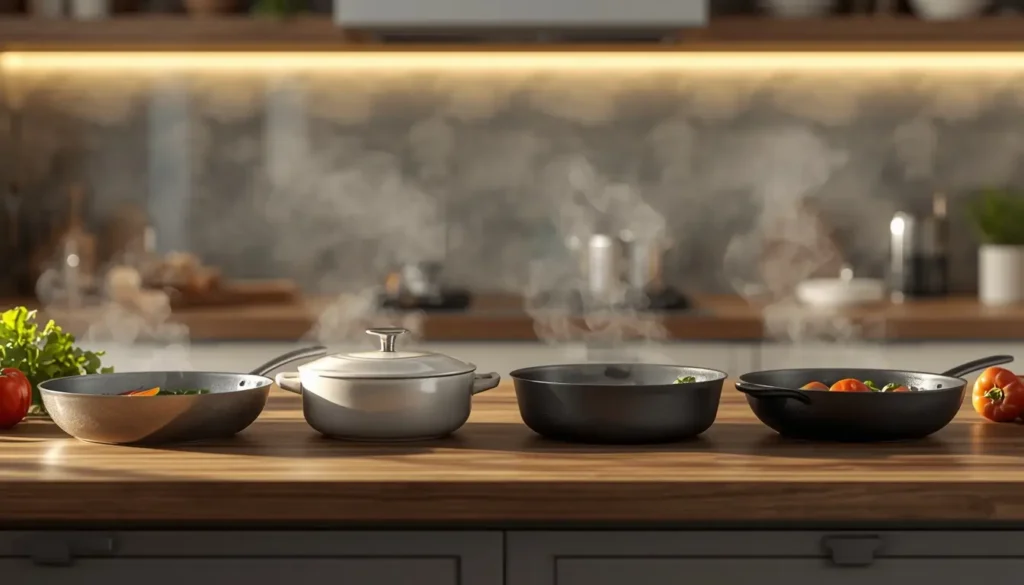
- 100% pure ceramic cookware (like Xtrema) is the lowest-toxin option available. It contains zero synthetic coatings and zero PFAS compounds.
- Seasoned cast iron and carbon steel are the safest choice for high-heat cooking because they have no coating to break down at all.
- When buying any non-stick pan, look for labels that say both “PTFE-free” AND “PFAS-free.” One without the other is not enough.
Introduction
Here’s a number worth knowing before you buy your next pan. There are over 9,000 different PFAS chemicals currently in use across industries. This includes the cookware sitting in your kitchen right now. [Source: San Francisco Environment Department]
Most people think the non-stick safety problem was solved when PFOA was banned over a decade ago. It wasn’t. Manufacturers swapped one fluorinated chemical for others, printed “PFOA-free” on the label and kept selling. The result is a cookware market full of products that sound safe but aren’t necessarily clean.
In this guide, I’ll show you which coatings are safe. Well look at ones you should stop using today. Also whether 100% ceramic lives up to its reputation, and which brands are worth your money in 2026.
Why Your Non-Stick Pan Coating Actually Matters
Most kitchen safety content focuses on food prep and hygiene. Cookware chemistry gets ignored. That’s a problem, because what your pan is made of can directly affect what ends up in your body, especially once heat enters the picture.
What Happens When PTFE Gets Too Hot
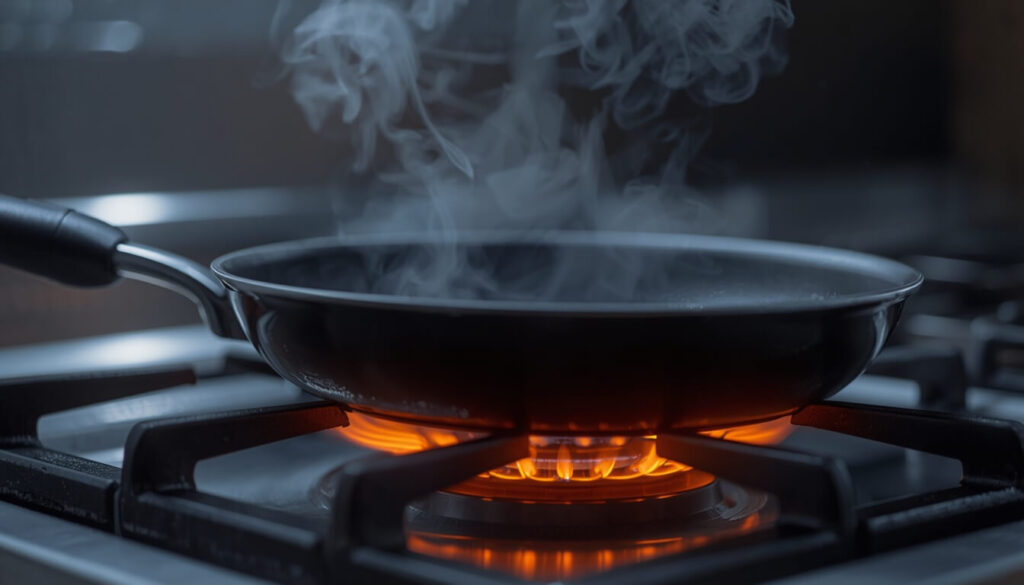
PTFE (polytetrafluoroethylene), the compound behind the Teflon brand, begins breaking down at 500°F (260°C). When it does, it releases a mix of toxic gases and ultrafine particles. According to a study published via PubMed. These pyrolytic byproducts include compounds linked to respiratory illness and at higher temperatures, more severe toxic effects.
The scariest part is how easy it is to hit 500°F by accident. Preheating an empty non-stick pan on high heat for two to three minutes can reach or exceed that limit. The condition caused by inhaling these fumes is called polymer fume fever. It’s rarely life-threatening for adults, but it has as fatal for pet birds, whose respiratory systems are far more sensitive.
The “PFOA-Free” Label Is Not the Whole Story
PFOA (perfluorooctanoic acid) was phased out of U.S. cookware manufacturing by 2013. That part is accurate. The issue is that it was replaced, not eliminated.
According to the San Francisco Environment Department, “PFOA-free” only tells you that one specific chemical is absent. It says nothing about the dozens of other PFAS compounds that may still coat the surface of your pan. Newer chemicals like GenX are now used as substitutes.
The same government advisory notes they carry structural toxicity risks identical to the PFOA they replaced. These are often called “forever chemicals” because they don’t break down in the human body or the environment.
Before you buy any non-stick pan. It’s worth understanding what “PFOA-free” actually means on a label so you know what questions to ask the manufacturer.
What Is the Safest Non-Stick Coating?
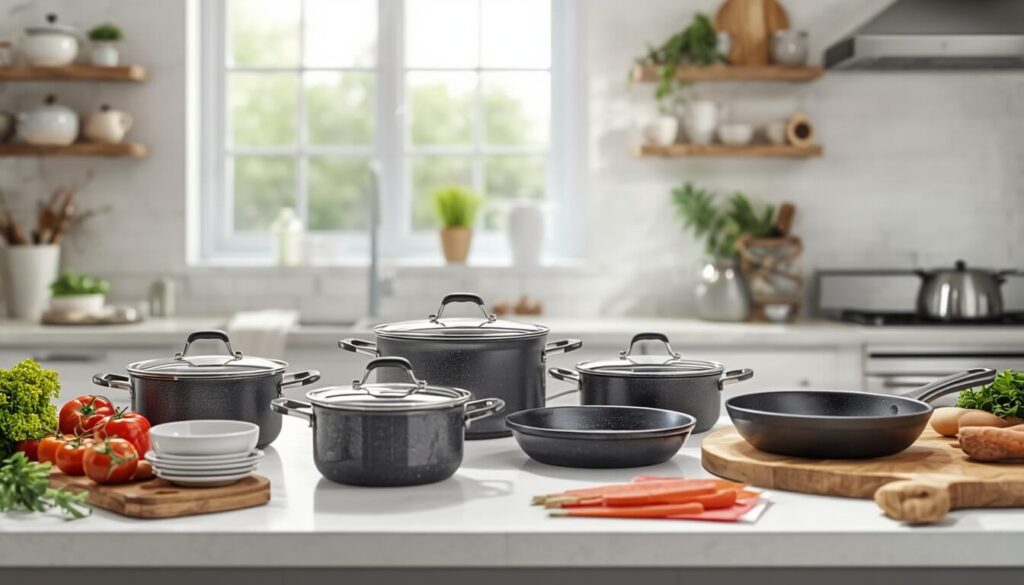
Here are the safest non-stick coatings, ranked from lowest to higher toxin risk. 100% pure ceramic, PFAS-free ceramic-coated metal, and seasoned natural surfaces like cast iron or carbon steel. Each works best in a specific cooking situation. Understanding the differences will help you pick the right tool for the right job.
Ceramic Coatings (Ceramic-Clad Metal Pans)
Ceramic-coated pans are the most practical everyday option for the average home cook. The coating is made from a silica-based (sand-derived) material that contains no PTFE and no PFAS. Brands like Caraway, GreenPan and Our Place have grown popular. It’s because they perform like traditional non-stick without the fluorinated chemistry.
The trade-off is durability. According to Heal Nourish Grow’s 2026 kitchen testing report, ceramic coatings wear down faster than PTFE. Particularly when exposed to high heat or metal utensils. Most quality ceramic-coated pans last 3 to 5 years with proper care, compared to 1 to 3 years for budget options.
Where they shine: delicate foods at medium heat, including eggs, fish, pancakes, and crepes.
100% Pure Ceramic (Solid Ceramic Cookware)
Pure ceramic cookware, like the pans made by Xtrema, contains zero metal and zero synthetic coating. The entire pan is formed from natural clay and minerals fired at extremely high temperatures. There is nothing to chip, nothing to flake, and no PFAS anywhere in the construction.
This makes it the lowest-toxin option on the market. The downsides are real though. Solid ceramic is more fragile than metal, and heats unevenly on some stovetop types. It is usually not induction-compatible unless specifically engineered for it. It also takes longer to reach cooking temperature than a metal pan.
Seasoned Surfaces: Cast Iron and Carbon Steel
Cast iron and carbon steel are coating-free by design. The non-stick surface on a well-seasoned cast iron pan comes from layers of polymerized oil baked into the metal over time. It is not any chemical compound. According to Heal Nourish Grow, these are the safest materials for high-heat cooking. It’s because there is no coating to degrade.
The learning curve is real. You need to season them, dry them thoroughly after every wash, and avoid prolonged soaking. But once the routine clicks, a good cast iron pan lasts decades and only gets better with use.
[CALLOUT]: The single safest choice for high-heat cooking (searing, frying, broiling, anything above 400°F) is a well-seasoned cast iron or carbon steel pan. No coating means no coating breakdown, ever.
Which Non-Stick Coatings Should You Avoid?
Traditional PTFE (Teflon-Based Coatings)
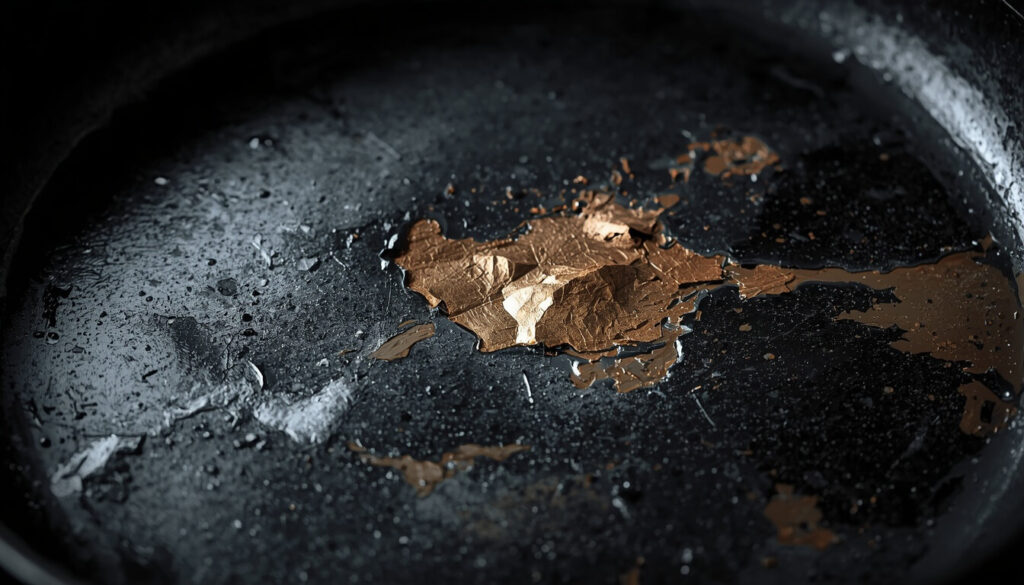
Avoid PTFE-coated pans if you cook at high heat, use metal utensils, or own any pan where the surface is already scratched. Traditional Teflon remains the most common non-stick coating in mass-market cookware. While the removal of PFOA reduced one specific risk, the base compound (PTFE) still breaks down above 500°F.
According to Healthline’s medically reviewed safety guide. The risk is low if you always cook at low to medium heat and never preheat an empty pan on high. That’s a fair caveat, but it’s also a lot to remember and enforce every single day in a busy kitchen.
PFAS Replacements Hiding Behind Vague Labels
This is where most cookware guides drop the ball, and where manufacturers do the most damage.
After PFOA was phased out. Companies developed replacement fluorinated chemicals with names like GenX, PFBS, and PFBA. These compounds are structurally like PFOA. According to the San Francisco Environment Department. They bioaccumulate in human tissue in comparable ways and are not considered safe alternatives by environmental health scientists.
A pan labeled “PFOA-free” with no mention of PTFE-free or PFAS-free is a red flag. The pan may still be coated with fluorinated chemistry, just a newer, less-regulated version of it.
For a head-to-head breakdown of what you’re actually choosing between when you pick up a ceramic vs. Teflon-style pan. This comparison of Teflon vs. ceramic non-stick is worth a read before you buy.
Scratched or Damaged Non-Stick Pans
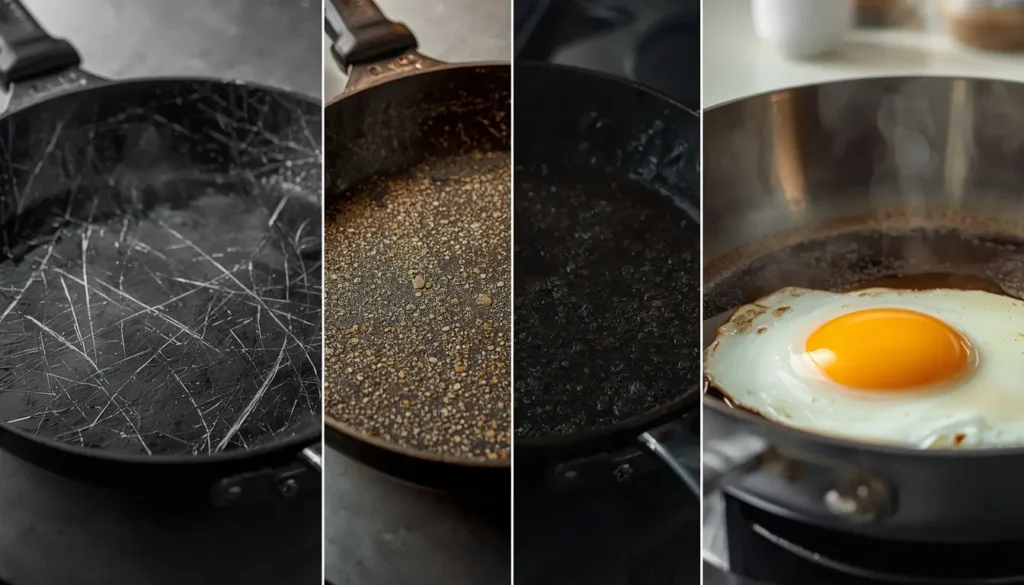
A scratched non-stick pan accelerates the release of coating particles directly into your food. This applies to both PTFE and ceramic-coated pans. Once the surface is compromised, you’re no longer cooking on an intact barrier. Whether those particles are harmful is debated. But the risk-to-reward ratio of keeping a scratched non-stick pan is poor.
The rule I follow: if you can see the base metal through a scratch, the pan is done. Are scratched non-stick pans safe to use? has a full breakdown of when to replace vs. when to keep using.
Is 100% Ceramic Cookware Truly the Safest Option?
Yes, 100% pure ceramic cookware is the safest choice from a toxin standpoint. It contains no PTFE, no PFAS, no synthetic binders, and no metal alloys that can leach into food. But there is one distinction most buyers miss, and getting it wrong is an expensive mistake.
Pure Ceramic vs. Ceramic-Coated: A Critical Difference
These are two completely different products that share one word on the label.
Ceramic-coated pans are metal pans (usually aluminum) with a thin silica-based non-stick layer applied to the surface. They are far safer than PTFE pans, but they still have a coating that wears away over time.
100% pure ceramic pans are made entirely from natural minerals and fired solid. There is no base metal underneath, no synthetic layer on top. The pan itself is the cooking surface.
The majority of pans marketed as “ceramic” in mainstream retail stores are ceramic-coated, not pure ceramic. Xtrema is one of the only widely available brands producing true 100% ceramic cookware. The price gap between the two reflects this difference clearly.
For a full look at how these two types compare in practice, is ceramic cookware actually safe? walks through the real-world performance differences.
What 100% Ceramic Does Well (and Where It Falls Short)
Pure ceramic is excellent for: slow cooking, simmering soups and stews, oven baking. They’re great for anything acidic (tomatoes, citrus-based sauces) that might react with metal.
Where it struggles: fragility is the main issue. Thermal shock, meaning going from cold storage directly to high heat, can crack a pure ceramic pan. It’s also slower to heat than metal and incompatible with most induction cooktops unless specifically designed for it.
My honest take: pure ceramic is the ideal material for pots, slow cookers, and casserole dishes. For everyday frying and fast sauteing, a high-quality ceramic-coated pan from a verified brand is the more practical daily driver.
The Healthiest Non-Toxic Cookware Brands
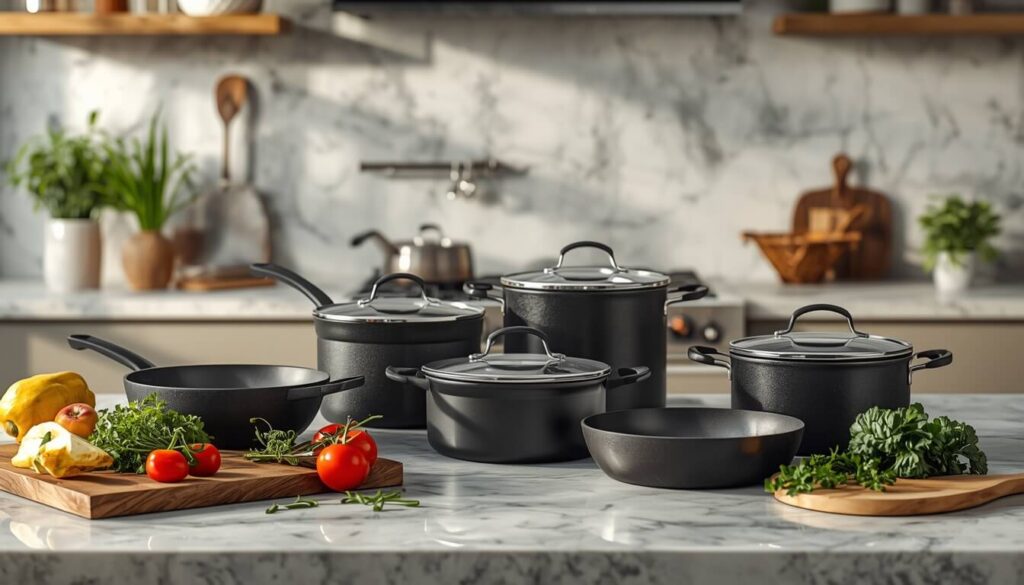
According to the 2026 Organic Authority Chef-Reviewed Industry Report and LeafScore’s Environmental Product Assessment. The following brands deliver on their non-toxic claims with third-party testing and transparent ingredient disclosure.
| Coating Type | Top Brand(s) | Best For | Price Range | Toxin Risk |
|---|---|---|---|---|
| 100% Pure Ceramic | Xtrema | Soups, slow cooking, oven use | $80 to $200+ | Lowest |
| Ceramic-Coated Metal | Caraway, GreenPan, Our Place | Eggs, fish, everyday cooking | $40 to $180 | Very Low |
| Seasoned Cast Iron | Lodge, Solidteknics | Searing, frying, high heat | $20 to $100 | None |
| Carbon Steel | Matfer Bourgeat, Made In | High heat, stovetop to oven | $50 to $150 | None |
| PTFE-Based (Teflon) | Most mass-market brands | Not recommended | $10 to $80 | Moderate to High |
Top Picks for Ceramic-Coated Pans
Caraway is one of the cleanest options available. Its ceramic coating is free of PTFE, PFOA, PFAS, lead, and cadmium. Caraway uses a sol-gel ceramic coating applied without fluorinated chemistry. The brand publishes third-party test results to back it up.
GreenPan offers solid safety credentials at a lower price point. Their Thermolon coating is PFAS-free. Although their mid-range product lines vary in durability and longevity compared to their premium offerings.
Our Place (particularly the Always Pan Pro with titanium reinforcement in the ceramic surface) is one of the stronger newer entrants. The titanium particle infusion adds durability without introducing any fluorinated chemistry.
For a deeper performance comparison, ceramic vs. non-stick: which is better? covers the day-to-day cooking differences in detail.
Top Pick for 100% Pure Ceramic
Xtrema remains the gold standard for pure ceramic cookware. Every piece is third-party tested for heavy metals and certified free from synthetic coatings, lead, and cadmium. It costs more than ceramic-coated alternatives. But it’s the only coating-free, non-metal option with broad availability.
Best Cast Iron and Carbon Steel Options
Lodge is the most accessible cast iron brand. Made in the USA, widely available, pre-seasoned, and reasonably priced. It’s the right starting point for anyone who wants to cook without any coating risk.
Solidteknics is worth considering for cooks who want the performance of cast iron in a lighter format. Their wrought iron and carbon steel pans are seamless (no rivets, no welds) and built to last a lifetime.
FAQ
What is the least toxic cookware?
100% pure ceramic (like Xtrema) and seasoned cast iron are the least toxic cookware options you can buy. Neither contains synthetic coatings or PFAS compounds. Most cooks, need a combination of ceramic-coated pans for everyday medium-heat cooking. Also acast iron for anything high-heat covers every situation cleanly and safely.
Which is the healthiest non-stick cookware for everyday use?
For everyday non-stick cooking, a PFAS-free ceramic-coated pan from Caraway, GreenPan, or Our Place is the healthiest practical choice. These pans use silica-based coatings instead of fluorinated chemistry. They perform well at medium heat for eggs, fish, and vegetables. Look for brands that publish third-party lab results to confirm their non-toxic claims.
Can ceramic pans go in the dishwasher safely?
Most ceramic-coated pans can technically go in the dishwasher, but the heat and harsh detergents shorten the coating’s life significantly. Hand washing with warm water and a soft sponge extends the lifespan of the non-stick surface by years. 100% pure ceramic (like Xtrema) is more dishwasher-tolerant, but hand washing is still the safer long-term habit.
How long do non-toxic ceramic coatings last?
According to Heal Nourish Grow’s 2026 kitchen testing, a quality ceramic-coated pan lasts roughly 3 to 5 years with proper care. That means cooking at medium heat or lower, using silicone or wooden utensils only, and hand washing after each use. Budget ceramic pans often degrade within 12 to 18 months.
Is stainless steel a safe non-stick alternative?
Yes. Stainless steel contains no synthetic coating and is considered safe for everyday cooking. It’s not naturally non-stick, but with proper technique it handles most cooking tasks well. Preheating the pan first, using enough fat, and letting food release naturally. It’s one of the main reasons professional chefs favor it. If you have a nickel sensitivity, look for 18/0 stainless steel rather than the more common 18/10 grade.
What pans should I throw out right now?
Replace any pan that is scratched through to the base metal and is older than 5 years with a non-stick coating. Also relpace any pan labeled only “PFOA-free” without a clear PTFE-free or PFAS-free claim. These are the most likely to be releasing coating particles or unlisted fluorinated chemicals into your cooking.
Conclusion
The cookware decision is simpler than the marketing makes it seem. Here’s the practical framework:
- For everyday cooking at medium heat: use a PFAS-free ceramic-coated pan from a verified brand (Caraway, GreenPan, Our Place).
- For the absolute lowest toxin exposure: use 100% pure ceramic (Xtrema) for soups, slow cooking, and oven use.
- For high-heat cooking: use a seasoned cast iron skillet or carbon steel pan. No coating, no risk.
The one action worth taking today: check the labels on your current non-stick pans. If they’re scratched, if they only say “PFOA-free” without mentioning PTFE or PFAS, or if they’re more than a few years old, it’s time to replace them.
Every meal passes through your cookware. It’s worth knowing exactly what that surface is made of.