
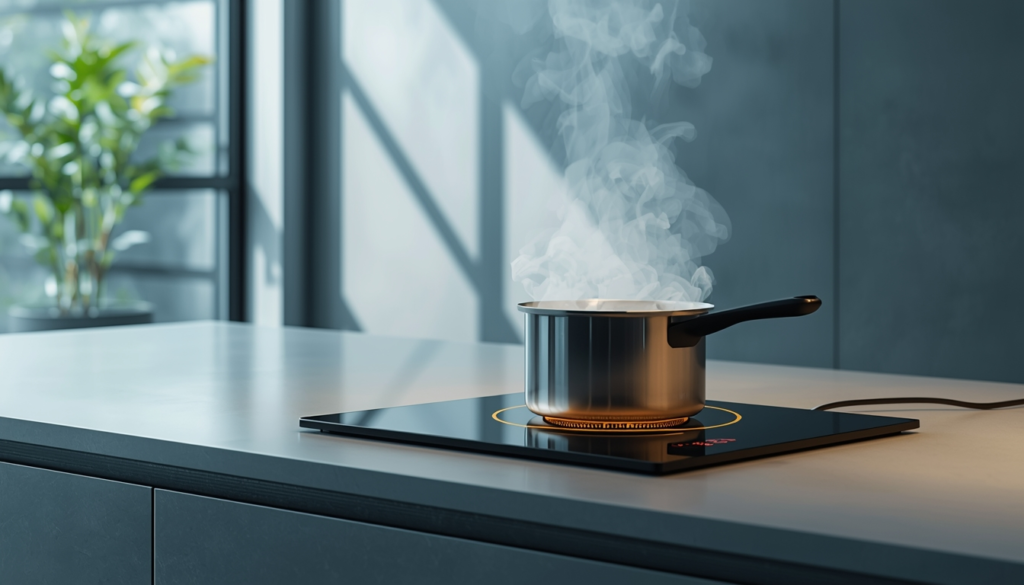
If you’re searching for the best portable induction cooktops, you’ve come to the right place. If your living area is small or you’re looking for a backup burner, a portable induction cooktop can change the way you cook.
I’ve broken down everything you need to know. See how the technology works to which brands are worth your money, so you can make a smart, confident decision today.
Key Takeaways
- Portable induction cooktops heat faster and more efficiently than gas or electric stoves.
- They use electromagnetic energy, so only the pan heats, not the surface.
- You need induction-compatible (magnetic) cookware to use them.
- Most models run on standard outlets and offer precise temperature control.
- They’re safer, easier to clean, and ideal for small kitchens, renters, and RV use.
- Top picks like Duxtop, iSiLER, and Breville cover all budgets and needs.
What Is a Portable Induction Cooktop and How Is It Different?
What a Portable Induction Cooktop Actually Does
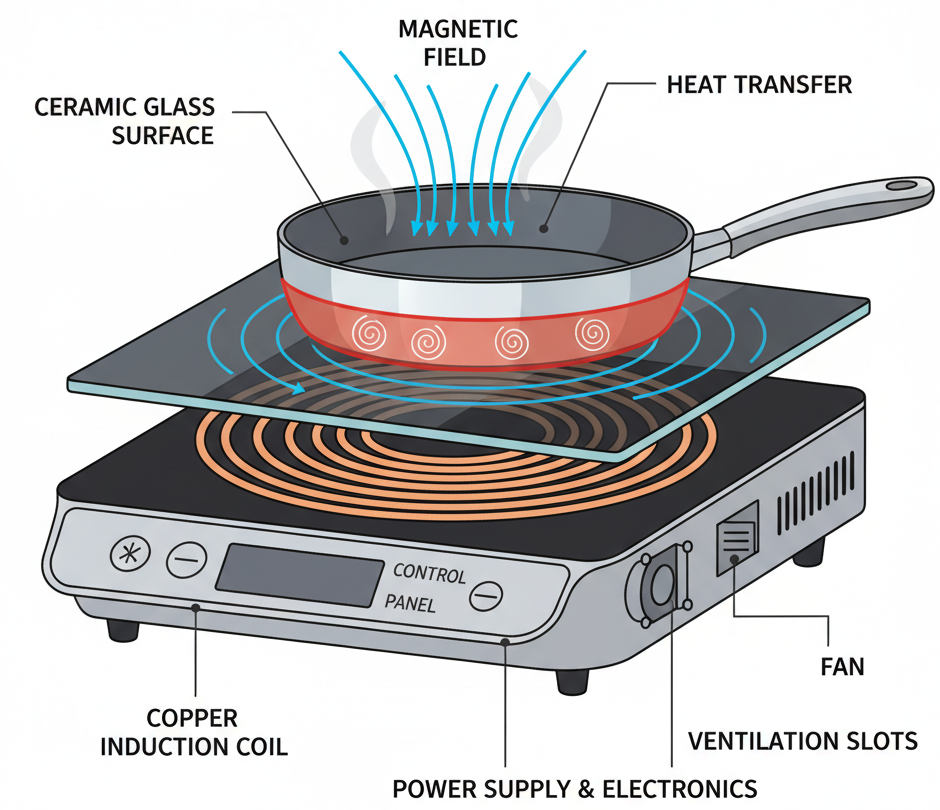
A portable induction cooktop is a compact. It is a countertop appliance that uses electromagnetic energy to heat your pots and pans. Unlike a gas stove or an electric stove, it doesn’t use an open flame or a glowing heating element. Instead, a copper induction coil beneath the ceramic-glass cooking surface creates a magnetic field. This field generates heat inside the cookware itself.
The result? Your pan gets hot almost instantly. The cooktop surface stays cool to the touch. That makes induction one of the safest and most efficient cooking technologies available in modern kitchen appliances.
How It Differs from Gas, Electric, and Ceramic Cooktops
Here’s a quick comparison to show you what makes induction stand out from other stovetops:
| Feature | Gas Stove | Electric Stove | Ceramic Cooktop | Induction Cooktop |
|---|---|---|---|---|
| Heat Source | Open flame | Heating element | Radiant heat | Electromagnetic field |
| Surface Temperature | Hot | Hot | Very hot | Stays cool |
| Speed | Moderate | Slow | Moderate | Very fast |
| Energy Efficiency | ~40% | ~70% | ~74% | ~84–90% |
| Safety | Lower | Moderate | Moderate | High |
| Requires Special Cookware | No | No | No | Yes |
Gas stoves offer visible flame control, but they waste a lot of heat into the air. Electric cooktops are slow to heat and slow to cool. Ceramic cooktops look sleek but retain surface heat long after cooking. Induction cooking wins on speed, precision, and safety.
Portable vs. Built-In Induction: Which One Fits Your Setup?
A full-size induction cooktop or full induction range is built into your kitchen counter. A portable induction cooktop sits on your countertop and plugs into a standard outlet. Portable options are perfect if you rent, if you’re in an RV, or if you want a countertop appliance without a full kitchen remodel.
Brands like Duxtop, Breville, NuWave Pro Chef, iSiLER, and Cooktron have made portable units that rival stovelike performance without the installation costs.
Why Portable Induction Cooktops Are Gaining Popularity
Home cooking surged in popularity in recent years, and with it, so did the demand for efficient home appliances. Portable cooktops fit into modern small kitchens, studio apartments, and minimalist kitchen designs. They’re also popular in commercial kitchens for finishing stations and in professional kitchens. They’re great for precision tasks like sous vide cooking and low-and-slow cooking projects.
How Does a Portable Induction Cooktop Work?
Simple Explanation of Electromagnetic Heating
Inside every induction burner is a copper induction coil. When you turn the unit on, alternating electrical current flows through that coil. This creates a rapidly changing magnetic field. When you place a magnetic pan on the cooking surface. That field induces an electric current inside the pan’s base, and that current generates heat.
Think of it like a wireless charger for your phone, but instead of charging a battery, it’s heating your cooking vessel from the inside out.
Why Only the Pan Heats (and Not the Surface)
The ceramic-glass cooking surface on an induction unit is not a heating element. It doesn’t get hot on its own. Heat only appears on the surface when a hot pan transfers warmth to it, which means burns from accidental contact are much less likely.
This is a huge safety advantage over gas stoves and electric stoves, where the surface itself stays dangerously hot. Many induction cooktops include a residual heat indicator light to warn you when the glass is still warm from your pan.
How Temperature Control Works on Induction
Most portable induction cooktops let you control heat settings in two ways. By power levels (measured in watts) or by precise cooking temperatures (measured in degrees). A well-calibrated induction cooktop can hold a pot at exactly 140°F for sous-vide style cooking or blast it to a full boil in under three minutes.
This level of control is what makes induction so popular in professional kitchens. It’s also why precision cooktop is a term you’ll see used in high-end models from brands like Breville.
Why Induction Cooks Faster Than Other Methods
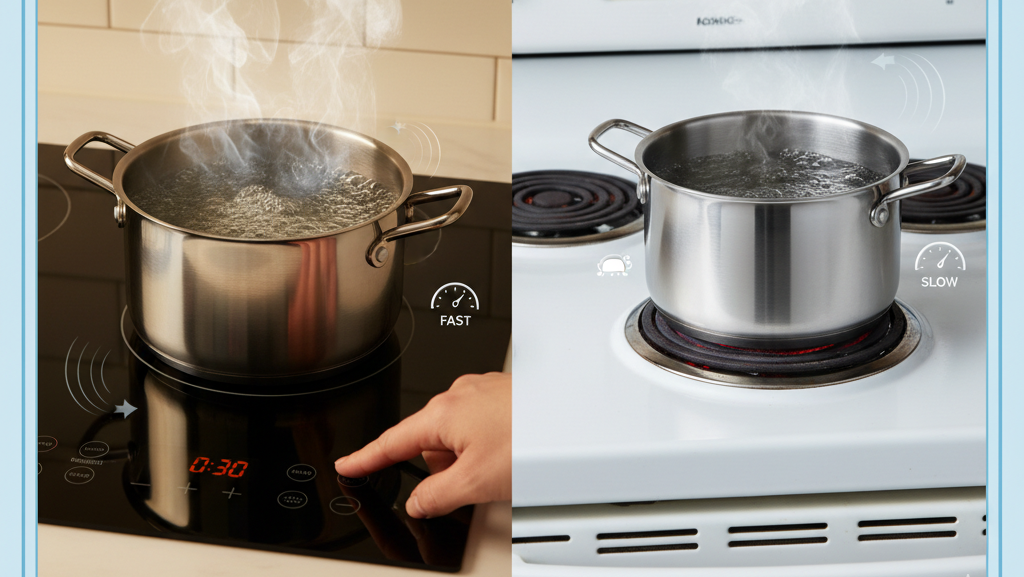
Induction cooking is faster because energy goes directly into the pan, not into the air around it. A 1,800-watt induction cooktop can bring water to a boil in roughly 2–3 minutes. A comparable gas burner takes 4–5 minutes. An electric stovetop can take 6–8 minutes.
That’s not just a convenience. It means less time standing at the stove and lower energy bills over time.
What Cookware Works with Induction (and What Doesn’t)?
How to Tell If Your Cookware Is Induction-Compatible
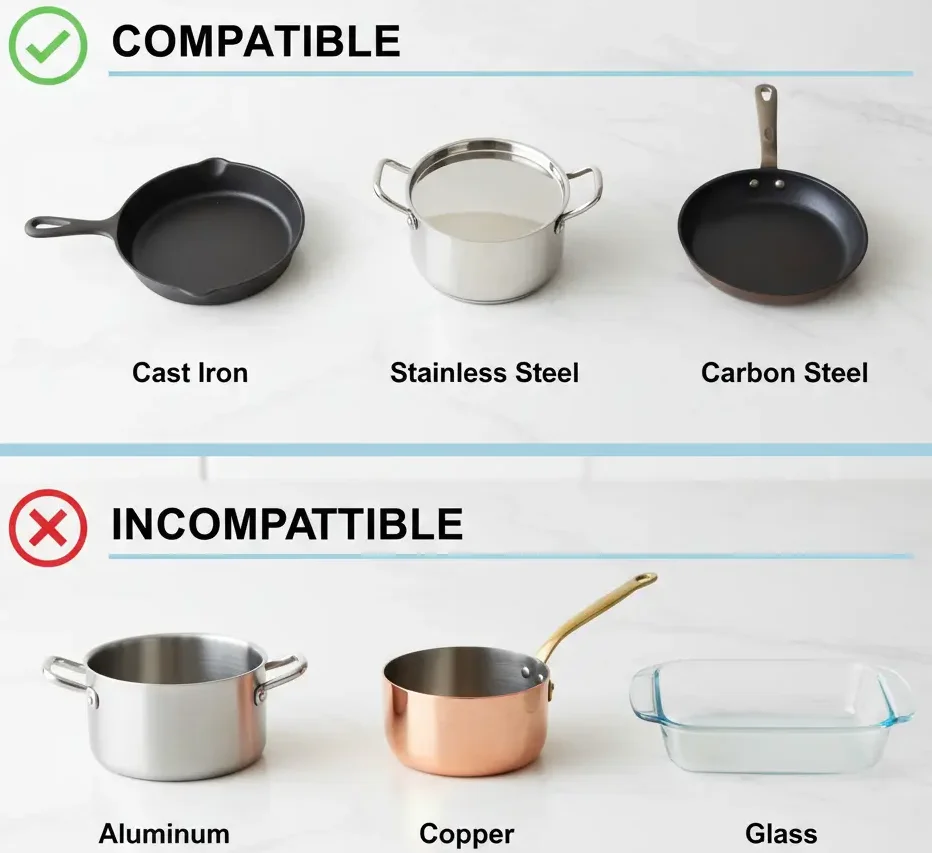
The simplest test: hold a magnet to the bottom of your pan. If it sticks firmly, your cookware is induction-compatible. If it doesn’t stick at all, the pan won’t work on an induction burner.
You can also look for the induction symbol on the packaging, it looks like a horizontal coil. Most induction cookware sold today is clearly labeled. You can learn more in our detailed guide on how to tell if your cookware is induction compatible.
Best Materials for Induction Cooking
Not all metals respond equally to magnetic fields. Here are the best choices:
- Cast iron — Excellent heat retention, works great on induction
- Stainless steel cookware (magnetic grade) — Durable and reliable
- Carbon steel cookware — Lightweight, heats evenly, great for high-heat cooking
- Clad cookware (stainless with aluminum core) — Superior heat distribution
- Enameled cast iron — Works perfectly, including dutch ovens
Cookware That Will NOT Work (and Why)
Some materials don’t have the magnetic properties needed for induction:
- Pure aluminum — Not magnetic (unless it has a magnetic base)
- Copper — Not magnetic on its own
- Glass cookware — Won’t work
- Most ceramic cookware — Not magnetic
If your current pans don’t work, you don’t necessarily need a full set of special induction cookware. An induction interface disk is a flat magnetic plate you place on the burner. It can make non-magnetic pans work, though with reduced efficiency.
Do You Need to Buy New Cookware?
Many home cooks already own stainless steel cookware or cast iron pans that are induction-ready. Check what you have first. If you need to upgrade. Check out brands like All-Clad, Cuisinart, and Lodge offer excellent induction-compatible cookware at a range of price points. For a deep dive into the best picks, check out our guide to the best induction cookware sets.
Best Pan Shapes and Sizes for Portable Units
Most portable induction cooktops have a detection zone between 4 and 10 inches. For a single-burner induction cooktop, a pan that’s too small (under 4 inches) or too large won’t be detected properly. Stick to pan sizes between 5 and 10 inches for best results.
Flat-bottomed pans work best. A warped or curved-bottom pan reduces contact with the induction coil and leads to uneven heating. A cast-iron griddle pan is a solid choice for larger surfaces.
What Features Actually Matter When Choosing a Portable Induction Cooktop?
Power Levels vs. Temperature Settings (What’s the Difference?)
Power levels control how much wattage the induction element delivers. Temperature settings control the target temperature at the cooking surface. Both are useful, but for different tasks.
Use power levels for boiling water or high-heat cooking. Use temperature settings for precise cooking tasks like melting chocolate or making sauces. The best portable units give you both options through a well-designed control panel.
Ideal Wattage for Different Cooking Needs
| Task | Recommended Wattage |
|---|---|
| Warming food / slow cooking | 200–600W |
| Simmering sauces | 600–1,000W |
| Sautéing vegetables | 1,000–1,400W |
| Boiling water | 1,400–1,800W |
| Searing meat | 1,600–1,800W+ |
Most portable induction burners range from 1,000W to 1,800W. A 1,800-watt induction cooktop is the most powerful option you’ll find in a single-burner unit that runs on a standard 15-amp household outlet.
Single vs. Double Burners: Which Should You Choose?
A single-burner induction cooktop is compact, and lightweight. It is ideal for occasional cooking, travel, or as a secondary burner. A double induction cooktop (two-burner induction cooktop) lets you cook a full meal at the same time. It’s more like having a proper stovetop.
If you’re replacing a full-sized gas stove entirely, go with a double-burner induction cooktop. If you just need a portable burner for a small space or backup cooking, the single-burner cooktop is enough.
Size, Weight, and Portability Factors
Most single induction cooktops weigh between 3 and 6 pounds and measure roughly 11 x 14 inches. Double induction burner units are heavier, typically 6 to 12 pounds. If you’re using yours in an RV or for high-heat cooking outdoors, weight and cord length matter.
Look for a unit with non-slip feet, a short profile, and a handle or built-in carrying design. Storage and portability are advantages that make these better than large kitchen appliances for certain lifestyles.
Control Types: Digital vs. Manual
Most modern units use digital controls with a touchscreen interface or push-button panel. A few budget models use an easy-to-use knob for analog heat settings. Digital models tend to offer quick temperature settings and recipe-specific presets. For example like a handy boil button or warm buttons.
The NuWave Pro Chef, offers different heat settings and cooking programs through a digital display that’s intuitive even for beginners. Duxtop models are known for their simple, no-frills control knob. It’s design that’s great for straightforward daily cooking tasks.
Built-In Safety Features Worth Having
The best portable induction cooktops include:
- Auto shut-off — Turns off when no pan is detected or after a set time
- Child lock — Prevents accidental activation
- Overheat protection — Shuts down if the unit gets too hot
- Residual heat warning — Alerts you when the surface is still warm
- Pan size detection — Only activates when a compatible pan is placed correctly
These safety features make induction safer than gas or electric alternatives. Especially around children and pets.
Noise Levels: What’s Normal and What’s Not
Most induction cooktops have a small internal fan to cool the electronics, this creates a low hum. Some nonstick pans or carbon steel cookware may produce a slight buzzing or clicking sound at certain power levels. This is completely normal.
If you hear a loud rattling or grinding sound, check that your pan is sitting flat and fully centered on the cooking surface. A pan that’s slightly warped can amplify vibration.
How Much Power Does a Portable Induction Cooktop Use?
Typical Wattage Range Explained
Portable induction cooktops typically range from 1,000W to 1,800W. Budget models start around 1,000–1,300W, which is plenty for routine home cooking. Mid-range and premium models like the Breville induction cooktop or Duxtop induction cooktop top out at 1,800W for full power.
The average induction cooktop for home use runs at around 1,400–1,800W under full load.
How Many Amps Do You Need?
At 1,800W and 120 volts, an induction unit draws about 15 amps. Most standard kitchen circuits in U.S. homes are 15- or 20-amp circuits. That means a 1,800-watt induction cooktop runs right at the limit of a 15-amp circuit.
If you’re running other kitchen appliances on the same circuit like a microwave or personal blender. Consider plugging your induction unit into a dedicated outlet.
Can You Use It on a Standard Outlet?
Yes, every portable induction cooktop is designed to plug into a standard 120V household outlet. No special wiring, no electrician, no countertop cutout. This is one of the biggest advantages over a full induction range or built-in cooking setup.
What Affects Power Consumption in Real Use?
You won’t always run the unit at full power. Slow cooking projects and simmering pot tasks use far less wattage. Real-world energy use depends on your cooking style, the heat setting, and the induction-compatible cookware you use.
Flat-bottomed stainless steel cookware and cast iron transfer heat most efficiently. This means the unit doesn’t have to work as hard.
Can It Trip Breakers or Overload Circuits?
If your kitchen circuit is already close to its amperage limit, adding a 1,800-watt induction cooktop could trip the breaker. Always check what else is running on that circuit before using the unit at full power. A single-burner cooktop at 1,200–1,300W is less likely to cause issues than the maximum-wattage models.
Are Portable Induction Cooktops Energy Efficient and Cheap to Run?
Why Induction Is More Efficient Than Gas and Electric
Induction transfers roughly 84–90% of its energy directly into the pan. Gas stoves transfer only about 40%, the rest heats the air around the burner. Electric stovetops are better at 70–74%, but still lose energy through radiant heat.
This efficiency gap is significant over time, especially for a daily cooking setup. You cook faster, use less energy, and pay less per meal.
Real-World Energy Savings Explained
Let’s say you boil water twice a day. On a gas stove, that might cost $0.12/day in gas. With an electric stove, about $0.09/day. With an induction cooktop, closer to $0.06/day. Over a year, that’s a noticeable difference, and the savings grow with heavier use.
Cost Per Hour of Use (Typical Scenarios)
At an average electricity rate of $0.13/kWh in the U.S.:
| Scenario | Wattage | Cost per Hour |
|---|---|---|
| Warming / Food warmer mode | 300W | ~$0.04 |
| Simmering | 800W | ~$0.10 |
| Boiling / High heat | 1,800W | ~$0.23 |
These numbers are very affordable compared to running a regular oven or countertop oven for similar tasks.
Does Efficiency Translate to Faster Cooking?
Absolutely. Because so much energy goes directly into the pan, water boils faster, oil heats faster, and your cook times drop significantly. That’s not just an efficiency win, it’s also a convenience win that makes induction ideal for busy home cooks.
Pros and Cons of Portable Induction Cooktops
Key Advantages (Speed, Precision, Safety, Efficiency)
- ✅ Fast heating — Boils water in 2–3 minutes
- ✅ Precise temperature control — Ideal for delicate sauces, sous-vide style cooking, and candy-making
- ✅ Safe surface — The glass stays cool; no open flame
- ✅ Energy efficient — 84–90% energy transfer rate
- ✅ Easy to clean — Flat ceramic-glass cooking surface wipes clean in seconds
- ✅ Portable — No installation, plugs into any outlet
- ✅ Compact — Ideal for small kitchens, dorms, RVs
Common Disadvantages (Cookware Limits, Noise, Learning Curve)
- ❌ Requires induction-compatible cookware — Your old aluminum pans won’t work
- ❌ Fan noise — The cooling fan creates a constant low hum
- ❌ Learning curve — Power levels feel different from gas flame control
- ❌ Single burner limitation — You can only cook one thing at a time on most portable units
- ❌ Circuit load — High-wattage units can strain older electrical circuits
When Induction Is NOT the Best Choice
Induction isn’t ideal if you have mostly non-magnetic cookware you don’t want to replace. It also doesn’t work well for wok cooking that requires a curved, round-bottom vessel, though flat-bottomed woks solve this. And if you live off-grid or have unreliable electricity, gas stoves remain the more practical option.
How It Compares to Gas and Electric Cooktops
For everyday cooking tasks, boiling pasta, frying eggs, sautéing vegetables. Induction outperforms both gas and electric on speed and efficiency. For high-heat cooking outdoors or camping, a portable gas burner may be more practical. For baking or slow roasting, your regular oven still wins.
Are Portable Induction Cooktops Safe to Use?
Built-In Safety Features Explained
Modern portable induction cooktops are packed with safety features. Auto shut-off is standard on almost every model. the unit turns off if no cookware is detected after 60 seconds, or after a preset cooking time expires. Overheat protection cuts power if the unit’s internal temperature gets too high.
These features make induction one of the safest options in home appliances for daily cooking tasks.
Does the Surface Get Hot?
The ceramic-glass cooking surface doesn’t heat up by itself, only the pan does. After cooking, the area directly under the pan may be warm from residual heat transferred from the pan. Most units display a residual heat indicator to warn you.
Compared to gas stoves or electric stoves, where the entire grate or coil stays dangerously hot. Induction is dramatically safer for families with children.
EMF and Radiation Concerns (Myths vs. Facts)
Some people worry about electromagnetic fields (EMF) from induction cooktops. The levels produced are low-frequency, non-ionizing EMFs. It’s like what’s emitted by other common home appliances like microwaves and electric blankets.
There has been research done by organizations like the World Health Organization (WHO). They found evidence that these low-level EMFs cause harm. Standing back slightly while the unit runs (which most people naturally do) further reduces exposure.
Safety Around Children and Pets
Because the cooking surface stays cool, there’s no burn risk from a child touching the glass (as long as there’s no hot pan sitting on it). The child lock feature on most models prevents accidental activation. There’s no open flame, no hot grate, and no exposed heating element.
This makes portable induction cookers one of the safest options for families with young children or curious pets.
What Happens If You Leave It On?
If you walk away and forget the unit, it will detect the absence of a simmering pot or active cooking and automatically shut off after a set time. On most models, this timer ranges from 30 minutes to 3 hours. This makes induction far safer than leaving a gas stove unattended.
How to Use a Portable Induction Cooktop (Step-by-Step)
Setting Up Your Cooktop Correctly
- Place the unit on a flat, stable countertop away from the sink and other appliances.
- Make sure the vents on the sides or back are clear, blocked ventilation fans can cause the unit to overheat.
- Plug into a grounded 120V outlet, ideally on a dedicated circuit.
- Allow 2–3 inches of clearance around all sides.
Choosing the Right Pan and Position
Center your pan directly over the induction element marked on the surface. The pan’s base should be flat and make full contact. A sensor-enabled pan detection system will confirm compatibility, most units beep or light up when a valid pan is placed.
For best results, match pan size to the cooking zone. Most single-burner induction cooktops work best with pans between 6 and 10 inches.
Using Power Levels vs. Temperature Modes
Start with power levels to get a feel for the unit. High power (1,400–1,800W) is great for boiling. Medium power (800–1,200W) works for sautéing. Low power (200–600W) is ideal for simmering or slow cooking projects.
Switch to temperature mode when you need more precision. Like cooking sous-vide style cooking, melting butter at exactly 120°F, or deep-frying potato chips at 375°F.
Adjusting Heat While Cooking
Unlike a gas burner where flame response is instant, induction adjusts within 1–2 seconds. Use the digital panel or control knob to change heat settings mid-cook. The pan will respond almost immediately, much faster than electric stovetops.
Shutting Down Safely
Press the power button or allow the auto-timer to turn the unit off. Wait for the residual heat indicator to clear before wiping the surface. Unplug the unit if you’re storing it or won’t use it for an extended time.
Common Mistakes to Avoid with Induction Cooking
Using Incompatible Cookware
Placing a non-magnetic pan on an induction cooktop simply won’t work, the unit won’t activate. Always test your current cookware with a magnet before you start cooking. This is the number one mistake new users make.
Overheating Empty Pans
Never place an empty pan or dry pan on an active induction burner. Without liquid or food to absorb the energy, the pan heats rapidly and can warp, discolor, or release fumes from nonstick pans. Most units have detection to catch this, but don’t rely on it.
Misunderstanding Power vs. Temperature
Power levels and temperature settings are not the same thing. A powerful induction burner at Level 8 doesn’t always equal 400°F. Learn how your specific unit translates power to heat. This changes the way you follow specific recipes.
Blocking Ventilation Fans
Placing the unit against a wall or under a cabinet blocks the ventilation fans and causes overheating. Always give the unit breathing room. If the fan sounds labored or the unit shuts off unexpectedly, check for blocked vents immediately.
Using the Wrong Pan Size
A pan that’s too small won’t be detected on many portable induction burners. A pan that’s much larger than the induction zone heats unevenly at the edges. Match your pan sizes to the unit’s detection zone for the best results.
What Can You Cook on a Portable Induction Cooktop?
Everyday Cooking (Boiling, Frying, Simmering)
A portable induction cooktop handles all the basics beautifully. Boiling pasta, frying eggs, making soups, slow cooking beans, all done with ease. The speed and precision make routine home cooking faster and less frustrating.
For complete guidance on matching your cookware to cooking tasks. See our guide on how to choose the best cookware based on your cooking style.
Can You Sear Steak Properly on Induction?
Yes, and it works brilliantly. A cast iron skillet on a 1,800-watt induction cooktop gets screaming hot in minutes. You’ll get a restaurant-quality crust on steak, pork chops, or chicken thighs.
The key is preheating the pan for 3–5 minutes before adding the protein. Carbon steel cookware and cast iron are the top choices for high-heat cooking tasks like this.
Cooking Delicate Foods (Sauces, Eggs)
This is where induction really shines. The low-end temperature settings on a precision induction cooktop are stable and responsive. Hollandaise sauce, custard, tempering chocolate, all need gentle, steady heat that induction delivers.
Nonstick pans work well for eggs and precise cooking tasks like crepes or omelets at low temperatures.
What Induction Struggles With (If Anything)
Traditional wok cooking with a round-bottom wok is tricky, you need a flat-bottomed version. Some cooking techniques that rely on charring or smoke from an open flame (like high-heat charring for peppers) can be done on induction.
Otherwise, the list of what induction can’t do is very short.
Best Cooking Techniques for Consistent Results
- Preheat your pan before adding oil or food
- Use a lid to trap steam and cut cook times
- Don’t overcrowd the pan, this drops temperature fast
- Adjust incrementally, small changes in power level make a big difference
- Use thick-bottomed pans for even heat distribution
How to Clean and Maintain a Portable Induction Cooktop
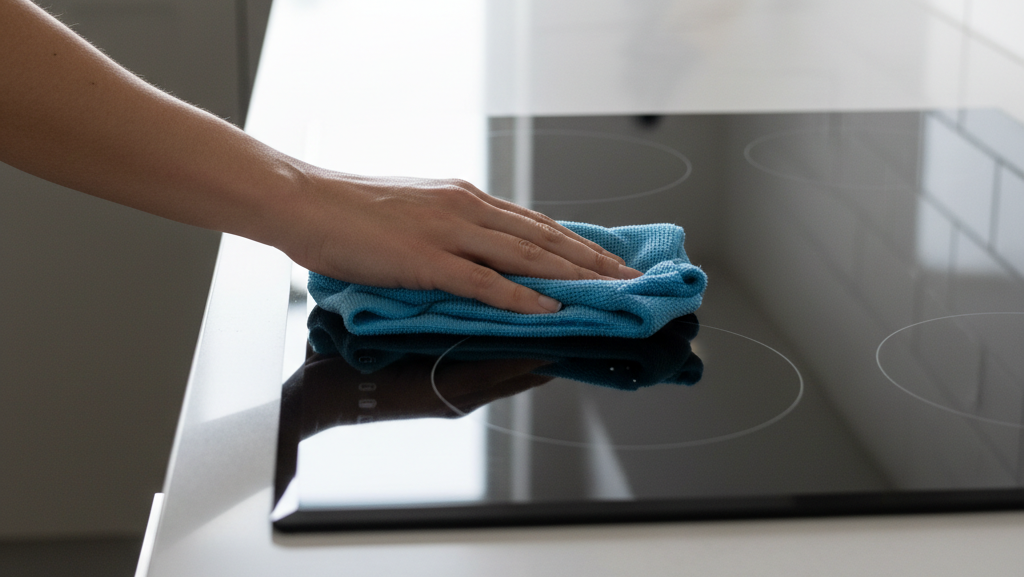
Daily Cleaning Routine
After every use, wipe the ceramic-glass cooking surface with a damp cloth once it’s cool. For most spills, warm water and a few drops of dish soap is all you need. The flat surface has no crevices where food can hide, unlike gas burners with grates.
This is one of the most underrated advantages of induction: it’s incredibly easy to keep clean.
How to Remove Burnt-On Residue Safely
For stuck-on food or boiled-over liquids, use a ceramic glass cooktop scraper (a flat razor blade held at a 30-degree angle). Never use abrasive scrub pads, they scratch the surface. A paste of baking soda and water can also lift stubborn spots.
For stubborn stains, a product like Cerama Bryte or a similar ceramic glass cleaner works well.
Preventing Scratches and Surface Damage
Don’t drag cast-iron or stainless steel cookware across the surface, lift it. Avoid placing heavy cookware pieces down hard. Sand or grit trapped under pans is a common cause of scratches. Keep the surface clean so debris doesn’t get caught between the pan and the glass.
Do’s and Don’ts for Long-Term Care
| Do | Don’t |
|---|---|
| Use flat-bottomed cookware | Drag pots and pans across the surface |
| Clean after each use | Use abrasive cleaners |
| Check vents regularly | Block ventilation fans |
| Store in a dry place | Stack heavy items on top of the unit |
| Use the auto-timer | Leave the unit unattended on high heat |
How to Store It Properly
If you’re using the unit as a secondary burner rather than your main cooktop, store it in a clean, dry place. A soft cloth or the original box keeps the glass surface protected. Don’t stack hot cookware or heavy items on top of it during storage.
Troubleshooting Common Portable Induction Cooktop Problems
Cooktop Not Detecting Cookware
If the unit beeps but doesn’t activate, your pan likely isn’t induction-compatible. Test with a magnet. If the pan is magnetic but still not detected. Make sure the pan is centered on the induction zone and that the bottom is flat and making full contact with the surface.
Unit Turning Off Unexpectedly
Most shutoffs are safety-triggered: overheating, auto-timer end, or ventilation blockage. Check the vents, clear any obstruction, and let the unit cool before restarting. If it keeps happening, you may have an electrical issue, try a different outlet or circuit.
Error Codes and What They Mean
Most brands publish their error codes in the manual. Common codes include:
- E0 — Incorrect or incompatible cookware
- E1/E2 — Temperature sensor error
- E3 — Overheating
- E4 — Internal fan failure
If you see a persistent error code that doesn’t resolve after basic troubleshooting. Then contact the manufacturer. Duxtop and Breville both offer solid customer support and warranty coverage.
Strange Noises or Fan Issues
A soft hum or click is normal. Loud buzzing could mean your pan isn’t seated flat. If the cooling fan is making unusual sounds, the unit may need to be serviced. Check that nothing is blocking the vents underneath or on the sides.
Power or Heating Inconsistencies
If the unit heats unevenly, your pan may have a warped base. On a double-burner induction cooktop, both zones draw from the same power supply. Running both at maximum simultaneously may cause reduced output on each side. Use power-sharing mode if your unit has it.
For more guidance on resolving cooking issues, see our article on common induction cooking issues and how to fix them.
Who Should Buy a Portable Induction Cooktop?
Best for Small Kitchens and Apartments
If your kitchen is small, a portable induction cooktop gives you a full cooking setup without taking up permanent counter space. Slide it under the counter when you’re done. It’s the perfect countertop appliance for apartments, studio kitchens, and minimalist kitchen designs.
Ideal for Students, Renters, and RV Users
Students living in dorms can use a portable unit where gas stoves and electric stoves aren’t allowed. Renters don’t have to live with a subpar landlord stove. RV travelers get stovelike performance without propane tanks or fire risk.
These groups benefit most from the combination of portability, safety, and low setup costs.
Great as a Backup Cooking Solution
Even if you already have a full-sized gas stove or standard range cooktop, a portable induction burner is a brilliant backup. During holidays or big dinner parties, a second burner makes all the difference. It’s also invaluable during kitchen renovations.
Who Should Avoid Buying One
If you own a large collection of non-magnetic cookware and don’t want to replace it. The upfront cost of new induction-compatible cookware may not be worth it. If you frequently cook with a round-bottom wok or need flame-charring for your cooking technique, gas remains the better tool.
How to Choose the Best Portable Induction Cooktop for Your Needs
Matching Features to Your Cooking Style
If you do precise cooking tasks like tempering chocolate or making hollandaise. Focus on temperature mode accuracy. If you mostly boil, fry, or sauté, focus on the most wattage. For slow cooking projects, look for a unit with stable low-watt settings.
Budget vs. Performance Trade-Offs
| Budget Range | What You Get |
|---|---|
| Under $40 | Basic single burner, limited settings, no presets |
| $40–$80 | Reliable 1,800W units with digital controls (Duxtop, iSiLER) |
| $80–$150 | Double burners, more cooking programs, better build quality |
| $150–$300 | Premium precision, Breville-level accuracy, smart features |
A mid-range single-burner induction cooktop from Duxtop or iSiLER hits the sweet spot for most home cooks.
Reliability and Durability Factors
Look for models with a ceramic-glass cooking surface from reputable manufacturers. Brands that have been in the market for years, like Duxtop, Breville, and NuWave, tend to have better quality control and customer service. Read verified buyer reviews focusing on long-term use, not just first impressions.
What to Focus on vs. Ignore
Focus on:
- Wattage (1,800W is the sweet spot)
- Safety auto shut-off
- Clear well-designed control panel
- Pan compatibility warning system
Ignore:
- Flashy cooking programs you’ll never use
- Extremely low-watt models marketed as “energy saving”
- Units without auto shut-off
Best Portable Induction Cooktops (Picks by Use Case)
Best : Duxtop 9600LS
The Duxtop induction cooktop 9600LS is the top pick for most home cooks. It delivers 1,800W of power, has 20 power levels, and includes a digital timer and child safety lock. The build is solid, the control panel is easy, and it’s compatible with all standard induction-compatible cookware.
Key specs: 1,800W | 20 power levels | 10 temperature settings | Auto shut-off | ~$55
Best Budget Option: iSiLER Induction Cooktop
The iSiLER induction cooktop offers 1,800W performance at under $40. It has 8 power levels, a digital timer, and a simple interface. It’s not as refined as premium models, but for occasional cooking or a dorm setup, it’s outstanding value.
Key specs: 1,800W | 8 power levels | Digital display | ~$35–40
Best for Heavy Cooking: Breville Control Freak
The Breville induction cooktop like the Control Freak, is the gold standard for precision cooking. It maintains temperatures within 1°F accuracy. It’s great for sous-vide style cooking, candy-making, and any precise cooking task. This is the unit used in professional kitchens and by serious pro chefs at home.
Key specs: 1,800W | 1°F precision | Probe thermometer included | ~$500+
Best Compact/Travel Option: Cooktron Single Burner
The Cooktron single-burner unit is one of the most compact portable induction burners available. It weighs under 4 pounds, has a slim profile, and is easy to pack. Performance is solid for its size, covering all routine home cooking needs with 1,300W of power.
Key specs: 1,300W | Ultra-compact | 8 power levels | ~$45
What to Avoid When Buying
- Units under 1,000W, too weak for daily cooking tasks
- Models with no auto shut-off or safety features
- Brands with no U.S. customer service or warranty support
- Very cheap glass surfaces that scratch easily
Frequently Asked Questions About Portable Induction Cooktops
Do Portable Induction Cooktops Work with All Pans?
No. They only work with induction-compatible cookware, pans with a magnetic base. Cast iron, magnetic stainless steel cookware, and carbon steel cookware all work. Aluminum, copper, and most glass or ceramic pans do not. Always test with a magnet.
Are They Safe for Everyday Use?
Yes. Portable induction cooktops are among the safest home appliances available. The cool surface, auto shut-off, and child lock make them appropriate for daily use in households of all kinds. For a deeper understanding of induction technology and safety. Our article on how induction cooking works covers the science in plain language.
Do Chefs Prefer Induction Cooking?
Many chefs do prefer induction for precise cooking tasks that need temperature control. The Breville Control Freak is popular in upscale restaurant settings. Gas is still preferred for high-heat wok cooking and charring. But induction dominates for sauces, tempering, and reductions.
Are They Noisy?
There’s a low-level fan hum during operation, which is normal. Some nonstick pans or carbon steel cookware create a faint buzzing at high power levels. This is a minor trade-off for the convenience and performance induction offers.
How Long Do They Last?
A quality portable induction cooktop from a reputable brand lasts 3–5 years with regular use, and often much longer. Models from Duxtop and Breville have strong track records for durability. Proper care, cleaning the surface, keeping vents clear, avoiding pan dragging, extends lifespan.
Can They Replace a Full Stove?
A double induction cooktop can handle most of what a full-sized gas stove does for everyday cooking. Combined with a countertop oven or regular oven, a two-burner induction cooktop can replace a traditional stove in a small kitchen. For complete guidance on building a versatile cooking setup, see our guide on how to build a versatile cookware collection.
Final Thoughts
The best portable induction cooktops combine speed, safety, precision, and convenience in a compact package that fits almost any lifestyle. If you’re a student, a renter, an RV traveler, or an avid home cook who needs a second burner. There’s a unit out there that matches your needs and your budget.
For most people, the Duxtop 9600LS hits the sweet spot of performance and price. If precision is your priority, the Breville Control Freak is in a class of its own. And if you’re just getting started, the iSiLER or Cooktron will serve you well without breaking the bank.
Induction cooking isn’t the future, it’s the present. Once you try it, you won’t go back.