
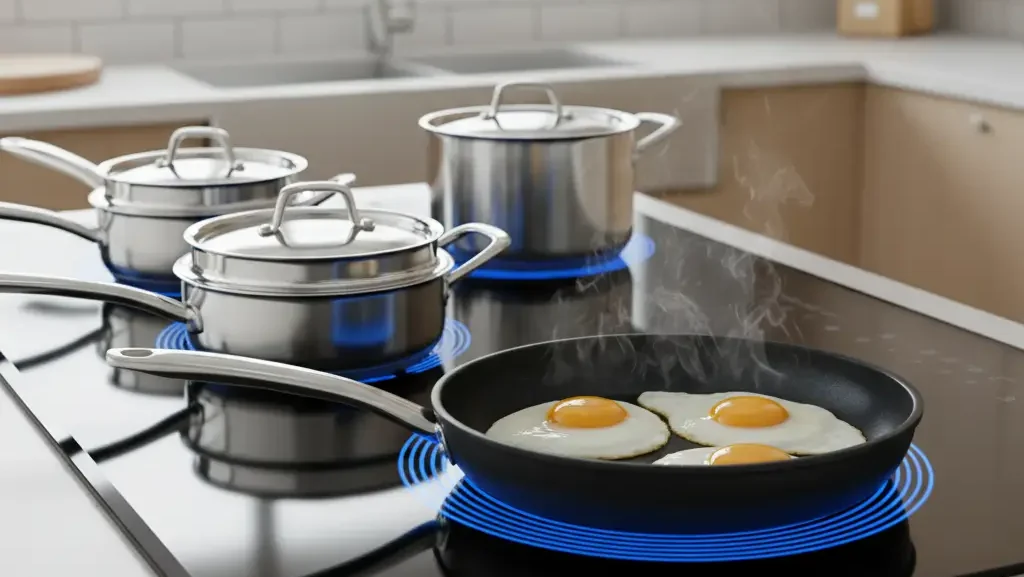
Here’s your guide to finding the best nonstick cookware for induction stovetops. Induction cooking has exploded in popularity, and for good reason. Modern induction cooktops are incredibly fast, precise, and energy-efficient. Especially compared to traditional electric stoves or even a gas stove. If you’ve recently upgraded your stove, you’ve realized that not all cookware plays nicely with this futuristic technology.
Combining the convenience of a nonstick surface with the power of an induction stove is a match made in heaven. But it requires choosing the right cookware for the job. A great nonstick pan makes cooking foods like eggs or fish a breeze and simplifies cleanup. Meanwhile, induction stovetops give you unparalleled control over temperature.
The key is finding cookware built with a special magnetic base that allows it to work with your cooktop’s electromagnetic field. In this nonstick cookware guide, you’ll get everything you need to know about induction stoves.
Let’s see how induction works, what makes a pan “induction-ready,” and the different types of nonstick surfaces available. Also see my top picks for every budget, essential features, and crucial tips on care and maintenance.
Key Takeaways
- Induction-compatible nonstick cookware must have magnetic bases (stainless steel or cast iron)
- PFOA-free ceramic and hard-anodized aluminum options are safest for health
- Flat bottoms and proper diameter ensure efficient heat distribution
- Top brands offer warranties ranging from 1-10 years
- Budget options start at $30; premium sets reach $400+
- Proper care extends nonstick coating lifespan significantly
Understanding Induction Cookware Compatibility
Before we can find the best nonstick pan for your kitchen, it’s essential to understand why particular cookware is needed. It all comes down to the science behind your stovetop.
How Induction Stovetops Work
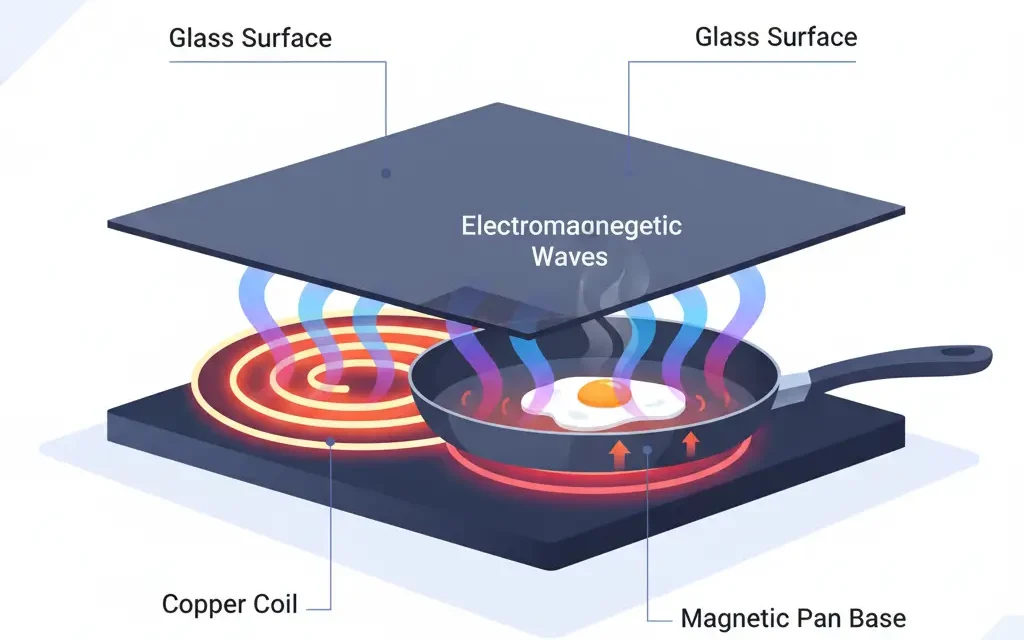
An induction cooktop doesn’t use flames or a heated heating element like traditional stoves. Instead, it uses an electromagnetic field to heat the pan directly. Beneath the glass-ceramic surface of your flat induction cooktop, there’s a heating coil made of copper wire. When you turn on an induction burner, an electric current flows through this coil. This creates a rapidly alternating magnetic field.
For this heating process, known as Joule heating, to work, you need a pan made of a magnetic material. When you place induction-compatible cookware on the burner, the magnetic field passes through it. This induces powerful electrical currents—called “eddy currents”—within the metal of the pan. These currents create resistance, which generates heat instantly and directly in the base of the cooking vessel.
In essence, the pan itself becomes the source of heat, not the cooktop. This is why induction cooking is so remarkably efficient. Very little energy is wasted heating the surrounding air or the stovetop surface, unlike a still-hot stovetop on an electric range. For a deeper dive, check out our complete induction cookware guide.
What Makes Cookware Induction-Ready?
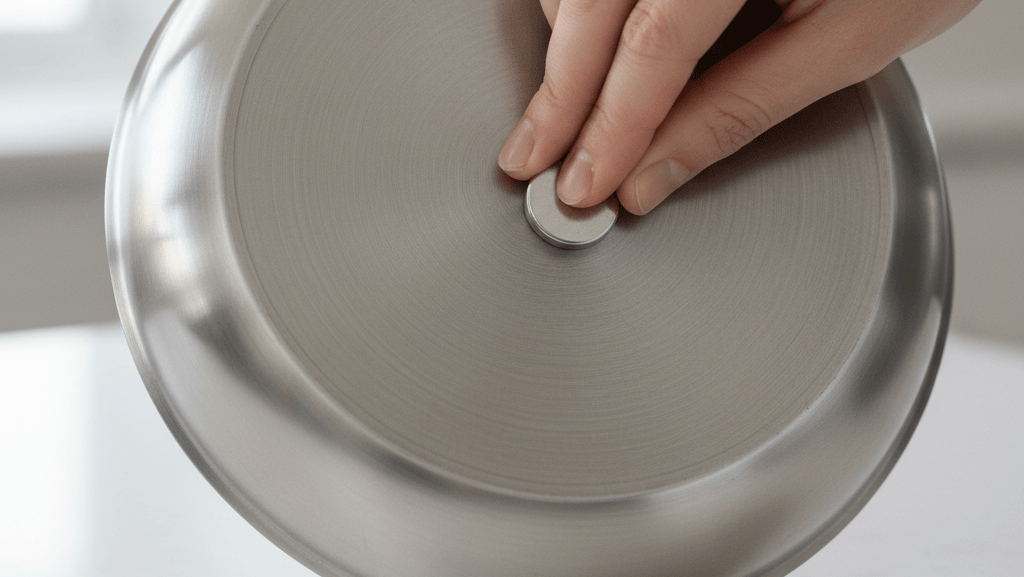
For a pot or pan to be induction-ready, its base must be made of a ferromagnetic material—a fancy term for any metal that a magnet will stick to. This is the single most important need for your pots and pans.
- The Magnet Test: The easiest way to check if your current cookware (or a new piece in a store) is compatible is with a simple refrigerator magnet. If the magnet sticks firmly to the bottom of the pan, it will work on your induction stove. If it doesn’t stick or the pull is very weak, it won’t work. This simple test ensures your cookware is ready.
- Induction-Compatible Materials that Work:
- Cast Iron Cookware: Naturally magnetic and a fantastic choice for induction.
- Carbon Steel Cookware: Like cast iron, it is magnetic and works perfectly.
- Magnetic Stainless Steel Cookware: Not all stainless steel is magnetic. Look for series like 18/0 or cookware that specifies it has a magnetic base, often as part of a multi-layer clad cookware construction.
- Materials That Don’t Work (On Their Own):
- Pure Aluminum: Not magnetic, so it is one of the non-induction pans.
- Copper Cookware: Not magnetic.
- Glass Cookware, Ceramic, or Stone: Not magnetic.
Many modern nonstick pans made from aluminum are designed for induction cooking. They have a bonded magnetic steel plate attached to their base. This gives you the best of both worlds. You get the lightweight and excellent heat conductivity of aluminum with the induction compatibility of steel, creating ideal cookware. The right material for cookware is the foundation of a great cooking experience.
Why Combine Nonstick with Induction?
Pairing a nonstick surface with an induction stovetop creates a powerful and convenient cooking duo for any home cook.
- Health Benefits: Nonstick surfaces allow you to cook with less oil or butter, reducing the fat and calorie content of your meals.
- Ease of Cooking and Cleanup: Food releases effortlessly, preventing sticking and burning. This makes flipping homemade pancakes or sliding an omelet onto a plate incredibly simple. A quick wipe is often all it takes to get the pan clean.
- Lower Fat Cooking Options: Many different cooking methods are made easier.
- Delicate Food Preparation Advantages: The precise temperature control of induction combined with a slick nonstick surface is perfect. It great for delicate items like fish fillets, scallops, and eggs, which can easily stick to other surfaces.
Types of Nonstick Cookware for Induction Cooking
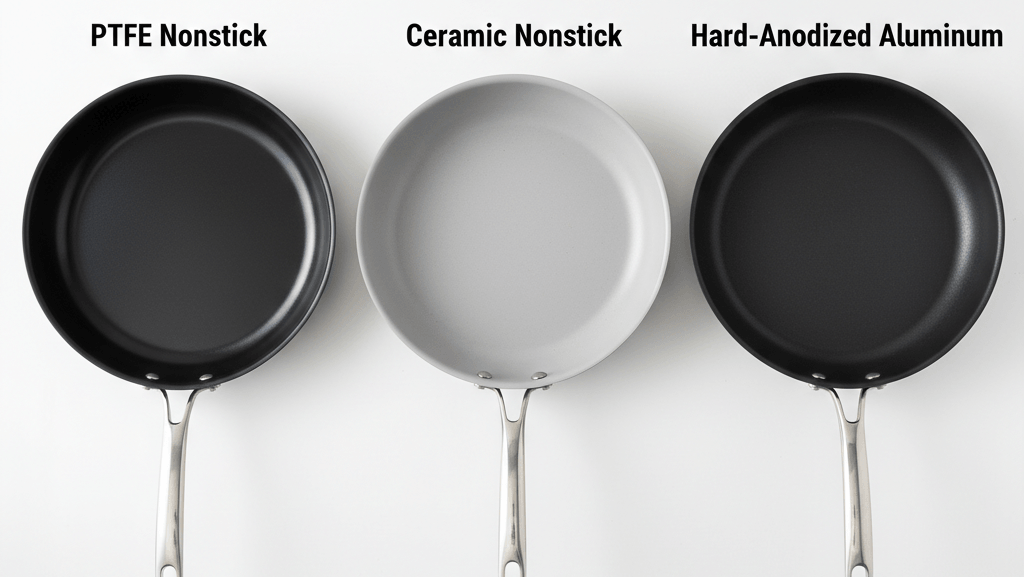
When you’re shopping for the best nonstick cookware for induction stovetops, you’ll encounter a few different types of nonstick coatings and constructions. Each has its own set of advantages and disadvantages.
Traditional PTFE/Teflon Nonstick Induction Pans
PTFE, or polytetrafluoroethylene, is the chemical compound widely known by the brand name Teflon. This is the classic nonstick coating that has been used for decades. This impressive nonstick coating works by creating a smooth, non-porous surface that food struggles to adhere to.
A major concern in the past was PFOA (perfluorooctanoic acid), a chemical once used in the manufacturing process. But, reputable manufacturers phased out PFOA years ago. Today, all modern PTFE nonstick cookware from major brands is PFOA-free. For more information on this, you can refer to the U.S. Environmental Protection Agency (EPA) and learn what to look for in PFOA-free nonstick cookware.
- Pros: Excellent food release, widely available, generally affordable.
- Cons: Can be damaged by high-heat cooking (over 500°F or 260°C) and metal utensils. Not as durable as other options.
- Best Uses: Low-to-medium heat cooking, such as eggs, pancakes, crepes, and delicate fish. Perfect for the everyday cook.
Ceramic Nonstick Induction Cookware
Ceramic nonstick cookware isn’t made from traditional pottery ceramic. The ceramic nonstick coating is a silica-based gel derived from sand that is applied to the pan’s interior and cured with heat. It’s often marketed as a “green” or “natural” alternative to PTFE, raising the common question of ceramic vs. nonstick: which is better?
- Pros: This non-toxic cookware is free of PTFE, PFOA, lead, and cadmium. Can often withstand slightly higher temperatures than traditional nonstick.
- Cons: The nonstick capabilities tend to degrade faster than PTFE, sometimes within a year of heavy use. It can be more prone to staining and chipping.
- Best Uses: Great for those seeking an alternative to traditional nonstick for everyday cooking tasks and one-pot meals.
Hard-Anodized Aluminum with Magnetic Base
This is one of the most popular and durable options for induction-compatible cookware. The process starts with a sturdy aluminum body. The aluminum is then put through an electrochemical process that hardens the surface. This makes hard-anodized aluminum cookware stronger than stainless steel and resistant to scratches. A nonstick coating is applied to the interior, and a magnetic steel plate is bonded to the bottom for induction compatibility. You can explore all the hard-anodized aluminum advantages and disadvantages to see if it’s right for you.
- Pros: Durable and scratch-resistant core, excellent heat distribution, often has a more robust feel.
- Cons: Can be heavier and more expensive than basic nonstick pans.
- Best Uses: A fantastic all-around option for everyday cooking, from searing to simmering.
Stainless Steel with Nonstick Interior
This represents a premium category. These pans feature a multi-clad stainless steel body, often with an aluminum core for superior heat conduction. It’s combined with a high-quality nonstick coating on the cooking surface. Understanding the stainless steel cookware pros and cons can help you decide if this hybrid option is your best choice. This construction offers professional-grade performance and incredible durability.
- Pros: Unmatched durability and longevity, professional-level heat control and distribution, often oven-safe to high temperatures.
- Cons: Typically the most expensive option.
- Best Uses: For serious home cooks who want the performance of stainless steel with the convenience of nonstick.
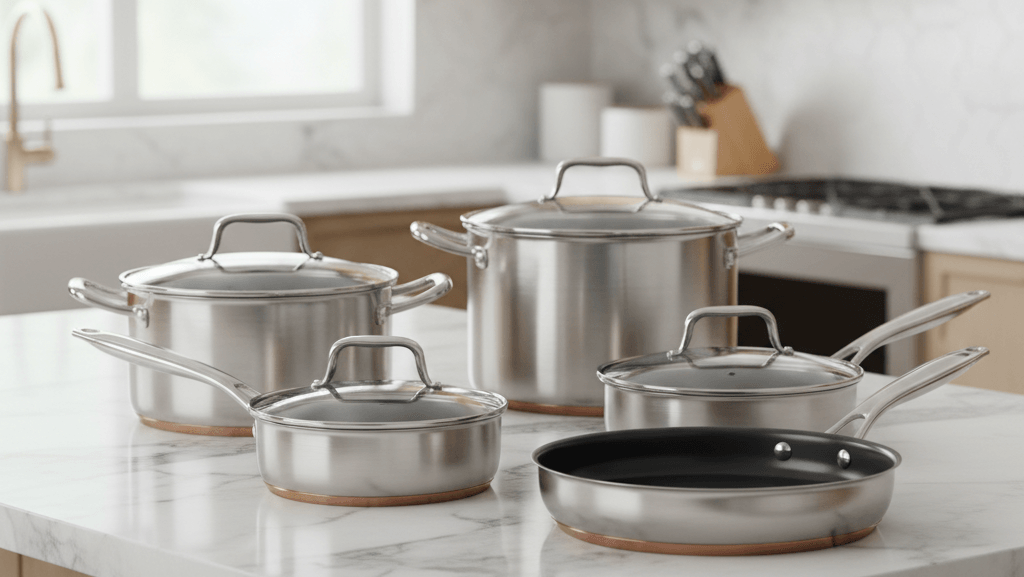
Top 10 Best Nonstick Cookware Sets for Induction Stovetops
Find Your Perfect Nonstick Induction Cookware
Compare features, prices, and materials to make the best choice
Here’s a rundown of some of the top-rated nonstick cookware sets designed for induction cooking. It caters to different cookware needs and budgets.
(Note: Brand names below are representative examples of products in each category.)
#1 [Premium Pick]: All-Clad HA1 Hard-Anodized Nonstick Set
- Key Features: This set features a heavy-gauge, hard-anodized construction with a bonded stainless steel base for optimal induction performance. The interior is coated with three layers of PFOA-free nonstick coating. The riveted stainless steel handles are contoured for a comfortable grip.
- Piece Count: It comes as a 10-piece nonstick cookware set or a 13-piece nonstick cookware set. It includes frying pans, saucepans, a sauté pan, and a stockpot with tempered glass lids.
- Price Range: $400 – $600+
- Best for Whom: Serious home cooks and those looking for a long-term investment in high-performance kitchen appliances.
- Pros and Cons: | Exceptional heat distribution | High price point | | Extremely durable construction | Can be heavy | | Oven safe up to 500°F | Handles can get warm |
#2 [Best Value]: T-fal Professional Nonstick Induction Set
- Features Overview: T-fal is known for its Thermo-Spot™ heat indicator, which turns solid red to show when the pan is perfectly preheated. This hard-anodized cookware set has a durable nonstick interior, and the induction base provides even heating.
- Affordability Factor: Offers excellent performance for a much lower price than premium brands.
- Price Range: $100 – $200
- Ideal Users: Beginners, students, and anyone needing a reliable, budget-friendly set of pots and pans.
#3 [Best Ceramic]: GreenPan Valencia Pro Ceramic Nonstick Set
- Eco-Friendly Credentials: GreenPan’s Thermolon™ ceramic nonstick is free of PFAS, PFOA, lead, and cadmium, creating an eco-friendly cooking surface. The pans are made from recycled aluminum.
- Performance Details: This is one of the top featured cookware sets. It featuring a hard-anodized body and a magneto induction base for superior performance on all stovetops. It’s metal utensil safe and oven safe to high temperatures.
- Warranty: Often comes with a limited lifetime warranty on the body and a shorter warranty on the nonstick coating.
#4-#10: Additional Top Picks
- Calphalon Premier Hard-Anodized Nonstick Set: A fantastic mid-range option known for its durability and stackable, space-saving designs. Often comes as an 11-piece nonstick cookware set.
- Cuisinart Chef’s Classic Nonstick Hard-Anodized Set: A reliable workhorse with great heat distribution and a classic design.
- Ninja Foodi NeverStick Premium Set: Features a unique coating that claims to be metal utensil safe and is oven safe to 500°F.
- Scanpan Classic Induction Fry Pan: (Individual Pan) A Danish brand known for its patented Stratanium nonstick surface. A top-tier choice for a single frying pan investment.
- Le Creuset Toughened Nonstick PRO: A luxury option with incredible performance and a trusted brand name, including a durable Dutch oven. Exploring the different Dutch ovens uses and brands shows why they are such a kitchen staple.
- Circulon Symmetry Hard-Anodized Nonstick Set: Features a unique raised circle design on the surface to reduce abrasion and improve food release.
- Tramontina Professional Restaurant Fry Pans: Often sold as individual cookware pieces. These are NSF-certified, affordable, and beloved by many home and professional cooks for their durability.
Essential Features to Look for in Induction Nonstick Cookware
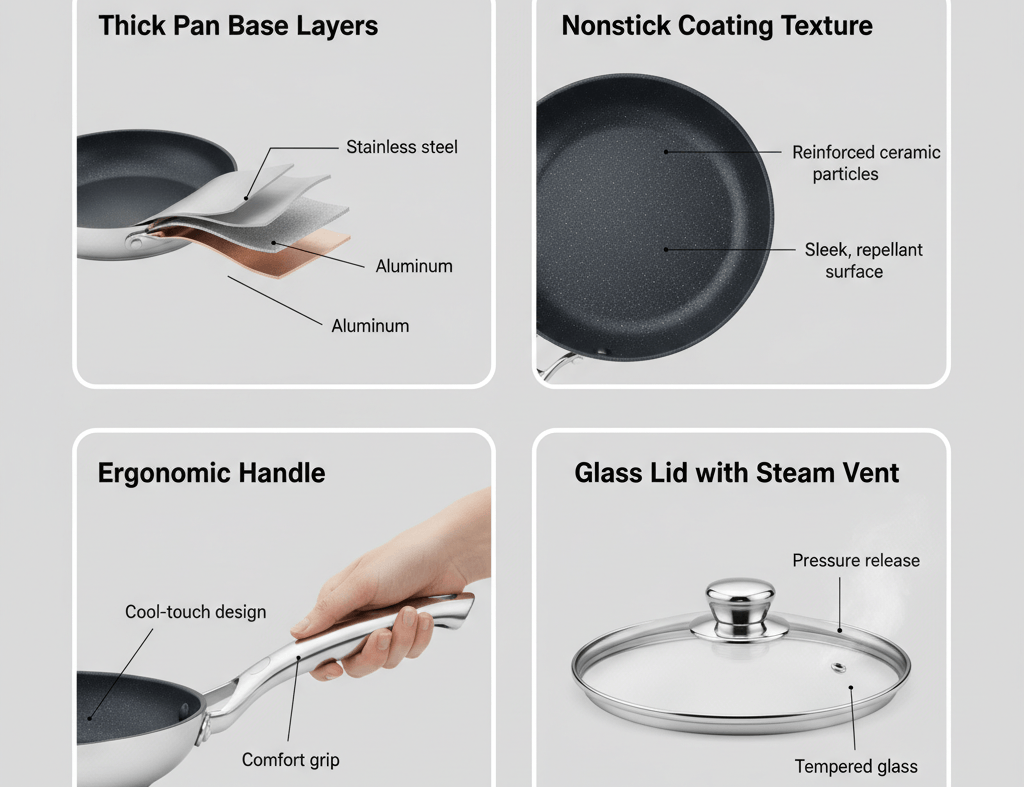
When comparing different options, keep these key features in mind to find the best nonstick cookware for induction stovetops that fits your cooking style.
Base Construction and Thickness
The base is the most critical part of an induction pan. A thick, heavy base resists warping and distributes heat more evenly. Look for pans with a multi-layer or “clad” construction. They have an aluminum core sandwiched between stainless steel layers or a thick aluminum body with a bonded steel plate. Ensure the flat bottom of the pan makes full contact with the induction burner for the greatest efficiency on the cooking surface.
Nonstick Coating Quality
Not all nonstick is created equal. Multi-layer coatings are significantly more durable than single-layer ones. Always look for certifications that the coating is PFOA, PFOS, lead, and cadmium-free. Some brands even provide scratch-resistance ratings. Expect a good quality PTFE or ceramic coating to last between 2-5 years with proper care. These nonstick coatings make for effortless cooking.
Handle Design and Heat Resistance
A comfortable, sturdy handle is a must for safety and ease of use. Look for stay-cool handle technology. It often involves heat-resistant handles with a V-shaped design to dissipate heat. Riveted handles are generally more secure and durable than welded ones. Also, check the oven-safe temperature rating of the handles if you plan to move pans from the stovetop to the oven, and always keep your oven mitts handy.
Lid Compatibility and Quality
Most cookware sets come with lids, but if you’re buying individual pieces, consider compatibility. Tempered glass lids are great because they let you check your food without lifting the lid and releasing heat. A steam vent is a useful feature to prevent boil-overs. Stainless steel lids are more durable and can often handle higher oven temperatures.
Size and Weight Considerations
Make sure the pan’s base diameter is a good match for your induction burner sizes. A pan that is too small or too large for a burner can heat inefficiently. Consider the weight as well. While a heavy-duty pan feels large, it can be difficult to maneuver. Lightweight pans are easier to handle but may be more prone to warping.
Best Individual Induction Nonstick Pans
Sometimes, you don’t need entire cookware sets. Here are my top recommendations for a single pan.
Best Nonstick Induction Frying Pan (8-12 inch)
- All-Clad HA1 10-Inch Fry Pan: A top-tier performer with excellent heat distribution and durability. A true workhorse for any cooking situation.
- Tramontina Professional 10-Inch Frying Pan: Offers incredible value and is lauded for its long-lasting nonstick surface. A great nonstick skillet.
- GreenPan Valencia Pro 11-Inch Fry Pan: The best ceramic nonstick pan, offering great performance and peace of mind for those avoiding PTFE.
Best Nonstick Induction Saucepan
For sauces, oatmeal, and reheating liquids, a 2-3 quart saucepan is indispensable. The Cuisinart Chef’s Classic 2-Quart Saucepan offers great performance with measurement markings inside. This feature makes it a highly practical choice for your kitchen.
Best Nonstick Induction Stockpot
For soups, stews, and boiling pasta, a large nonstick stockpot makes cleanup much easier. The T-fal Precision Hard Anodized 6-Quart Stockpot is an affordable and reliable option with a durable build. You can also find great options like a 5-quart Dutch oven or a 6.5-quart Dutch oven from other brands.
Best Nonstick Induction Wok
A good wok for induction needs a wide, flat bottom to ensure the most contact with the burner. The Calphalon Signature 12-Inch Flat-Bottom Wok is an excellent choice, with a hard-anodized body that heats evenly for a proper stir-fry. If you’re serious about stir-frying, it’s worth learning about woks and how to choose the right one.
Price Ranges and Budget Considerations
You can find induction-friendly cookware at nearly every price point.
Budget Induction Nonstick Cookware (Under $100 for a set)
At this price point, you can find functional sets from brands like AmazonBasics and Farberware. Expect thinner construction and a nonstick finish that may need replacing sooner. They are a great entry point but may not offer long-term durability.
Mid-Range Options ($100-$250 for a set)
This is the sweet spot for most home cooks. Brands like T-fal, Cuisinart, and Calphalon offer excellent sets with hard-anodized construction and durable multi-layer nonstick coatings. You get a great balance of performance, durability, and value in these cookware pieces.
Premium Induction Nonstick Sets ($250+)
Here you’ll find investment-grade, heirloom-quality cookware from brands like All-Clad, Scanpan, and Le Creuset. These extensive cookware sets feature the best materials, multi-clad construction and superior nonstick coating. Deciding between cookware sets vs. individual pieces often comes down to your budget and specific cooking needs. They often come with lifetime warranties and are built to last for many years.
Health and Safety Considerations
Safety is paramount in the kitchen. Here’s what you need to know about using nonstick cookware on an induction stove.
Are Nonstick Coatings Safe for Induction Cooking?
Yes, they are very safe when used correctly. One of the biggest advantages of induction is its precise temperature control. It helps prevent the accidental overheating that can damage nonstick coatings. As mentioned, modern PTFE coatings from reputable brands are PFOA-free. The coating itself is inert and non-toxic below its greatest temperature threshold (usually around 500°F / 260°C).
Toxin-Free Nonstick Options
If you prefer to avoid PTFE altogether, ceramic cookware is your best bet. Look for brands like GreenPan that openly advertise their products as being free from PFAS, PFOA, lead, and cadmium. They often have third-party certifications to back up their claims. These great eco-friendly, non-toxic cookware options provide peace of mind.
Proper Temperature Guidelines
Never preheat a dry pan on high heat. The efficiency of induction can cause temperatures to skyrocket in seconds, damaging the coating and releasing fumes.
- Recommendation: Always start on a medium power level (e.g., 5 or 6 out of 10) and add oil or food to the warm pan within a minute.
- Maximum Temperature: Avoid using the highest “boost” settings for prolonged periods with nonstick pans. Stick to gentler heat settings for most tasks.
Care and Maintenance of Nonstick Induction Cookware
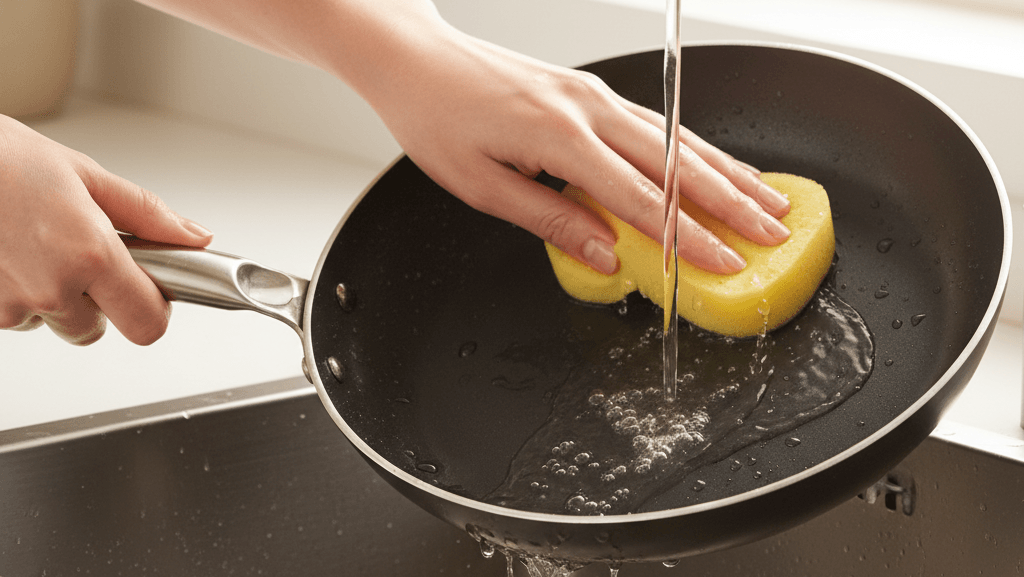
To get the most out of your investment, proper cookware care and maintenance is crucial. A well-maintained nonstick pan can last for years.
Cleaning Best Practices
Even if a pan is labeled dishwasher safe, hand washing is always recommended. The high heat and harsh detergents in a dishwasher can degrade the nonstick coating over time.
- Use a soft sponge or cloth with warm, soapy water.
- Avoid abrasive scrubbers like steel wool or harsh cleaning agents like oven cleaner.
- For stubborn residue, simmer a mixture of water and a tablespoon of baking soda in the pan for a few minutes to loosen it. A good nonstick surface cleans easily.
Utensil Selection
Never use metal utensils on a nonstick surface. They can easily scratch and ruin the coating.
- Best Options: Silicone, wood, bamboo, or nylon kitchen tools.
- There are many great spatulas and spoons designed specifically for nonstick cookware. It’s important to know the best utensils to use with nonstick pans.
Storage Tips
Scratches often happen during storage.
- Pan Protectors: Use felt or silicone pan protectors when stacking pans.
- Hanging: Using pan racks is an excellent way to store pans without them touching.
- Nesting: If you must stack, nest smaller pans inside larger ones with a protector or a simple dish towel in between.
Extending Coating Lifespan
- Seasoning: Some ceramic pans benefit from occasional seasoning. Wipe a very thin layer of neutral oil on the cooking surface after cleaning.
- Heat Management: The number one rule is to avoid extreme high heat.
- When to Replace: If the surface is heavily scratched, flaking, or food consistently sticks, it’s time to replace the pan.
Common Problems and Solutions
Why Won’t My Nonstick Pan Work on Induction?
- Failed Magnet Test: The base is not ferromagnetic. There is no fix for this; the pan is simply not compatible.
- Insufficient Magnetic Base: Some pans have a very small magnetic plate that doesn’t cover enough of the actual cooking area.
- Size Mismatch: The pan’s base is too small for the induction burner’s sensor to detect. Most burners have a small diameter need.
- Solution: Always perform the magnet test before buying. If a pan isn’t working, try it on a different-sized burner.
Warping and Uneven Heating Issues
Warping is caused by thermal shock, plunging a hot pan into cold water or heating a pan too quickly. A warped pan won’t sit flat on the glass cooktop, leading to poor heating, uneven cooking, and a rattling sound. To prevent this, always let pans cool down before washing and avoid using extreme high heat settings.
Food Sticking Despite Nonstick Coating
This usually happens for one of three reasons:
- Built-up Residue: Invisible layers of cooking spray or oil can polymerize on the surface, creating a sticky film. Clean thoroughly with a baking soda paste.
- High Heat Damage: The coating has been compromised by overheating.
- Scratches: The nonstick layer has been physically damaged.
Brand Comparisons for Induction Nonstick Cookware
Premium Brands
- All-Clad: The benchmark for performance and durability. Made in the USA.
- Le Creuset: Known for its iconic enameled cast iron cookware, but its toughened nonstick line is also exceptional.
- Scanpan: A Danish company famous for its sustainable manufacturing and patented ceramic-titanium nonstick coatings.
- Zwilling: A German brand offering high-quality, engineered kitchen gear with excellent performance.
Mid-Tier Reliable Brands
- Cuisinart: A household name offering a wide range of reliable and well-made cookware.
- Calphalon: A leader in hard-anodized cookware, known for innovation and durability.
- T-fal: A fantastic value brand, famous for its Thermo-Spot™ technology.
- GreenPan: The pioneer and leader in the ceramic cookware category.
Budget-Friendly Options
- AmazonBasics: Offers simple, no-frills cookware that gets the job done.
- Rachael Ray: Features colorful and functional sets aimed at everyday home cooks.
- Farberware: A long-standing brand with a reputation for affordable and dependable bakeware and cookware.
Induction Cookware FAQs
Can I use regular nonstick pans on induction stovetops?
Only if they have a ferromagnetic (magnetic) base. A standard aluminum nonstick pan will not work unless it has a bonded steel plate on the bottom. Always use the magnet test to be sure you have compatible pans.
What’s better for induction: ceramic or Teflon nonstick?
It depends on your priorities. PTFE (Teflon) offers superior and longer-lasting nonstick performance. Ceramic is a great choice for those who want to avoid PTFE, but its nonstick properties may fade more quickly.
How long does nonstick induction cookware last?
With proper care (no metal utensils, no high heat, hand washing), a good quality nonstick pan should last 3 to 5 years. Budget pans may last 1-2 years, while premium pans might last longer.
Do I need special cleaners for nonstick induction pans?
No, just standard dish soap and a soft sponge. Avoid abrasive cleaners, steel wool, and harsh detergents.
Can nonstick induction cookware go in the oven?
Most can, but always check the manufacturer’s instructions for your specific ovens. The oven-safe temperature is usually limited by the handles and lids. It typically ranges from 350°F to 500°F (175°C to 260°C).
What size pans work best with induction burners?
For best results, the pan’s base diameter should closely match the diameter of the cooking zone ring marked on your stovetop. This ensures the most efficient energy transfer and consistent cooking results.
Expert Tips for Cooking with Nonstick Induction Cookware
Optimal Heat Settings
Because induction is so powerful, you rarely need the highest settings. A medium setting on induction is often equal to a high setting on gas or electric stoves. Start low and gradually increase the power as needed for even-keeled heating ability.
Best Foods to Cook in Nonstick Induction Pans
Nonstick pans excel at cooking delicate foods that are prone to sticking:
- Eggs: Scrambled, fried, or in an omelet. Discover what type of pan is the best for cooking eggs to perfect your breakfast routine.
- Fish: Delicate fillets like tilapia or sole.
- Pancakes, Crepes, and French Toast.
- Cheese: Grilled cheese sandwiches or quesadillas.
Foods to Avoid
While versatile, nonstick isn’t ideal for everything. Avoid using it for tasks that need a deep, hard sear at very high temperatures, like for a thick steak. A cast iron skillet or carbon steel pan is better suited for that task.
Environmental and Sustainability Factors
Eco-Friendly Nonstick Options
Look for brands that focus on sustainability. Ceramic nonstick is often marketed as a greener choice. Brands like Scanpan and GreenPan use recycled aluminum and focus on sustainable manufacturing processes to reduce their carbon footprint.
Disposing of Old Nonstick Cookware
Nonstick cookware cannot typically be recycled through municipal programs due to the coating. Check with your local waste management facility for instructions. Some companies may offer take-back or recycling programs. Never donate heavily scratched or flaking nonstick pans, as they are no longer safe to use.
Final Recommendations
Choosing the right cookware is a personal decision based on your cooking habits, budget, and values.
Best Overall Nonstick Induction Cookware Set
The All-Clad HA1 Hard-Anodized Nonstick Set stands out for its superior construction, even heating, and long-lasting durability. This makes it the best cookware investment for serious cooks.
Best for Beginners
The T-fal Professional Nonstick Induction Set is perfect for those new to induction cooking. It’s affordable, reliable, and the Thermo-Spot™ heat indicator on the preheated pan is a genuinely helpful feature.
Best for Professional Cooks
For those who demand professional-level performance at home. A set from the Le Creuset Toughened Nonstick PRO line or individual induction-ready pieces from Scanpan will deliver exceptional results.
Best Value for Money
The Calphalon Premier Hard-Anodized Nonstick Set hits the perfect balance of price, performance, and durability. They’re offering features found in more expensive sets at a more accessible price point.
Conclusion
Finding the best nonstick cookware for induction stovetops is all about matching the right materials and features to your needs. The speed and precision of induction cooking, combined with the ease of a nonstick surface, can transform your experience in the kitchen. It makes everyday meals faster, healthier, and more enjoyable. Remember the golden rule: if a magnet sticks to the bottom, it will work.
From there, consider the type of nonstick coating, the quality of the construction, and the design of the handles and lids. So if you’re investing in a premium set that will last for a decade or picking up a budget-friendly frying pan for your morning eggs. There is a perfect option out there for you in the world of quality kitchenware.
I encourage you to consider your primary cooking needs. Always test for compatibility before you buy, and read recent reviews to ensure you’re getting a quality product.