
Key Takeaways:
- Use cast iron for searing and high heat, and nonstick for eggs and delicate foods.
- Nonstick coatings are fine for normal cooking, but long, high heat or a scratched surface is where problems start.
- Cast iron has no coating to wear out, but it needs seasoning and some care with long-simmered acidic foods.
- For most home cooks, owning one of each beats picking a single winner.
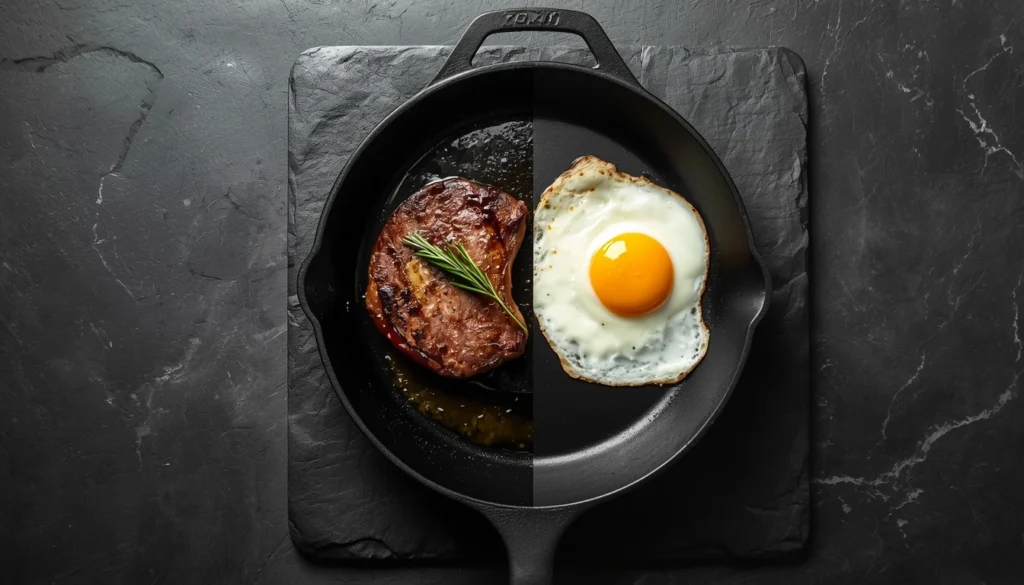
Cast iron vs nonstick is not a contest with one winner. The short answer is that each pan does a different job well, and the right choice depends on what you’re cooking and how hot it needs to get. I use both, and which one I reach for depends on the food.
Here’s how to think it through, task by task.
How Is Cast Iron vs Nonstick Different in Practice?
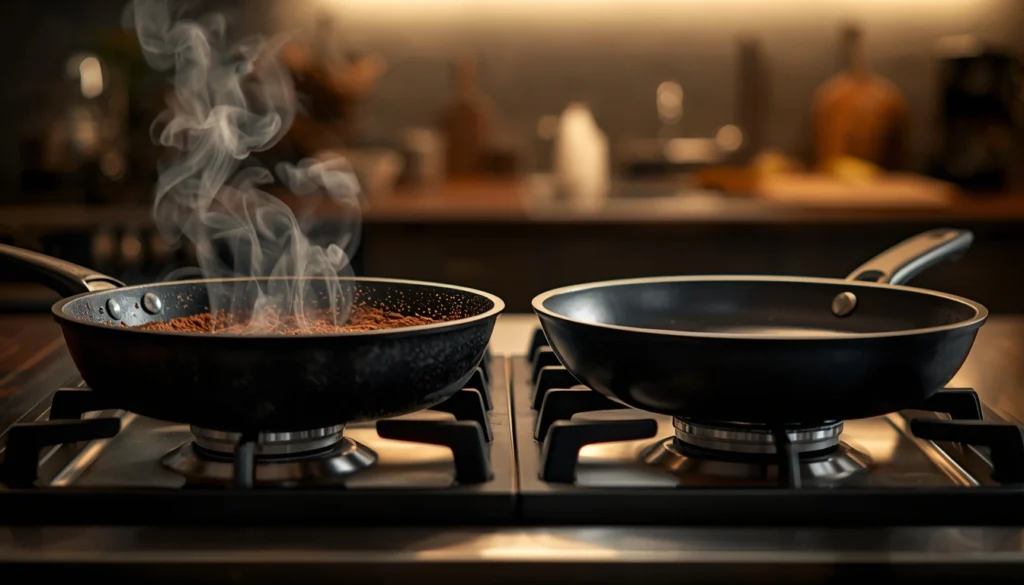
Cast iron holds heat and handles high temperatures, while nonstick releases food easily at moderate heat. That one difference explains most of what follows.
| Cast Iron | Nonstick | |
|---|---|---|
| Best at | Searing, browning, crusts | Eggs, delicate fish, light cooking |
| Heat handling | Holds heat well, suits high heat | Best at low to medium heat |
| Food release | Improves as seasoning builds | Easy while the coating is intact |
| Upkeep | Seasoning, careful with acidic foods | Gentle utensils, replace when damaged |
| Lifespan | No coating to wear out | Typically about two to five years |
Heavy Doesn’t Always Mean Even
A heavy pan is not automatically an evenly heating pan. Weight alone doesn’t tell you how well a material spreads heat, and poor conductivity can cause hotspots whatever the pan weighs. Cast iron is excellent at holding heat once it’s hot, so give it time to preheat before the food goes in.
Which Pan Is Better for Steaks, Burgers, and Fish?
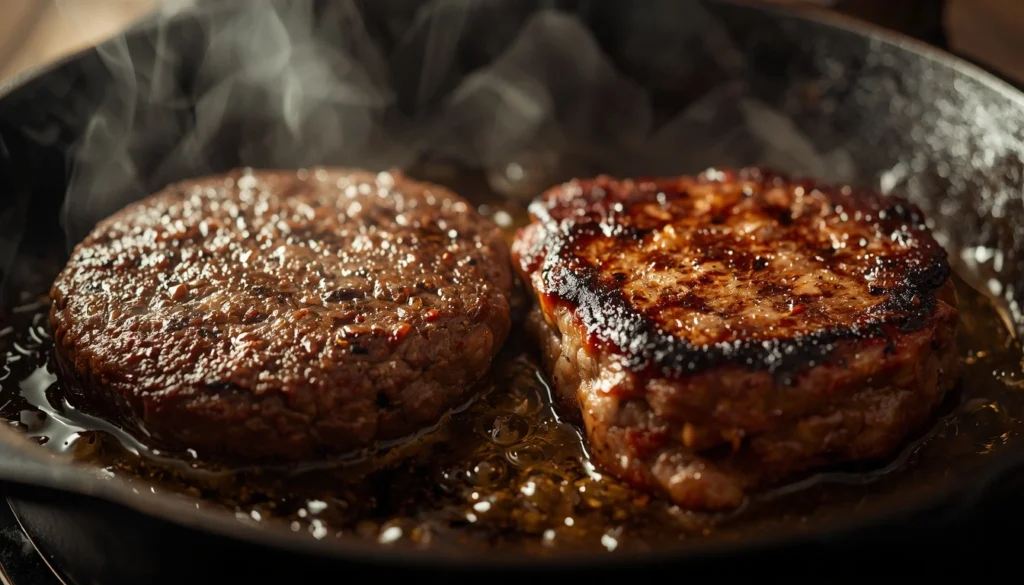
Cast iron is the better pick for steaks, burgers, and sometimes fish, because it handles the high heat that builds a crust. You can cook these in a regular nonstick pan, but cast iron does the job with less worry.
When I need a crust or a seal on meat, I want it to release from the pan without sticking and breaking apart. High heat for a long stretch is exactly where I trust cast iron over a coated pan.
One service night makes the point. Orders for jerked Cornish hens were backing up on a commercial grill that was under-heating. The low heat wasn’t sealing the skin, so the meat stuck and tore apart when we turned it, which ruined the plate. I set a heavy cast iron skillet directly on top of the hens to concentrate the heat around them. The skin seared without sticking, cook times dropped, and the kitchen cleared the queue.
If steak is your main use, my guide to cast iron steak walks through the technique. For pan picks, see my searing skillets.
When Is a Nonstick Pan the Better Choice?
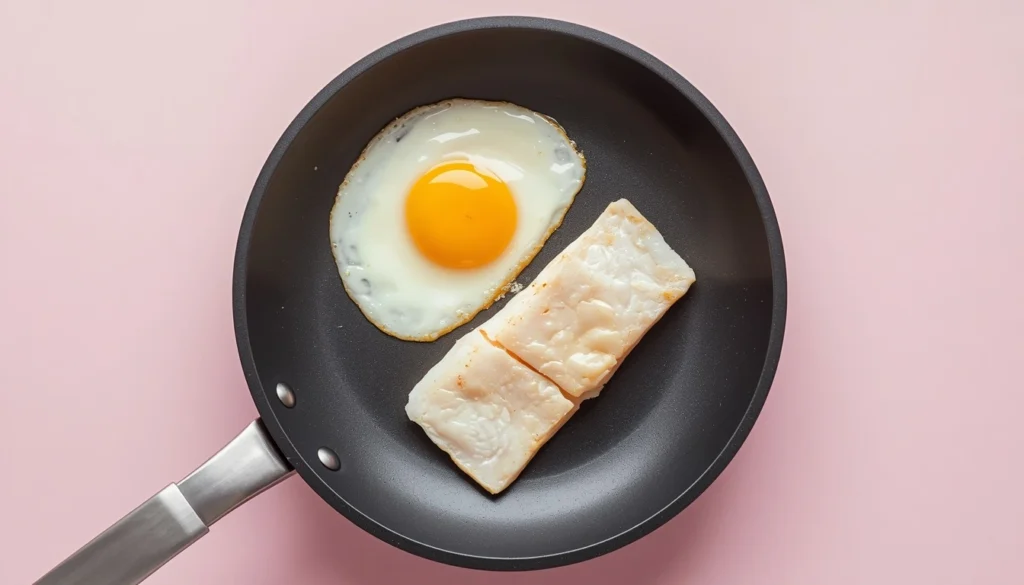
Nonstick is the better choice for eggs, delicate fish, and lighter cooking that doesn’t need long, high heat. For those jobs, easy release matters more than a hard sear.
I use a regular nonstick for eggs, pasta, and fish. None of those need high heat for long stretches, so the coating isn’t pushed anywhere it shouldn’t go.
Fish is a good example. A guest once brought four freshly caught whole red snappers to the resort kitchen where I worked and wanted them prepared right away. I filleted all four, then pan-fried three of the fillets in a non-stick pan so the delicate flesh stayed in one piece. The fourth went into a local traditional sauce. The guests came back that evening asking for more seafood.
If you’re shopping for one, my list of nonstick frying pans covers everyday options.
Is Nonstick Safe at High Heat?
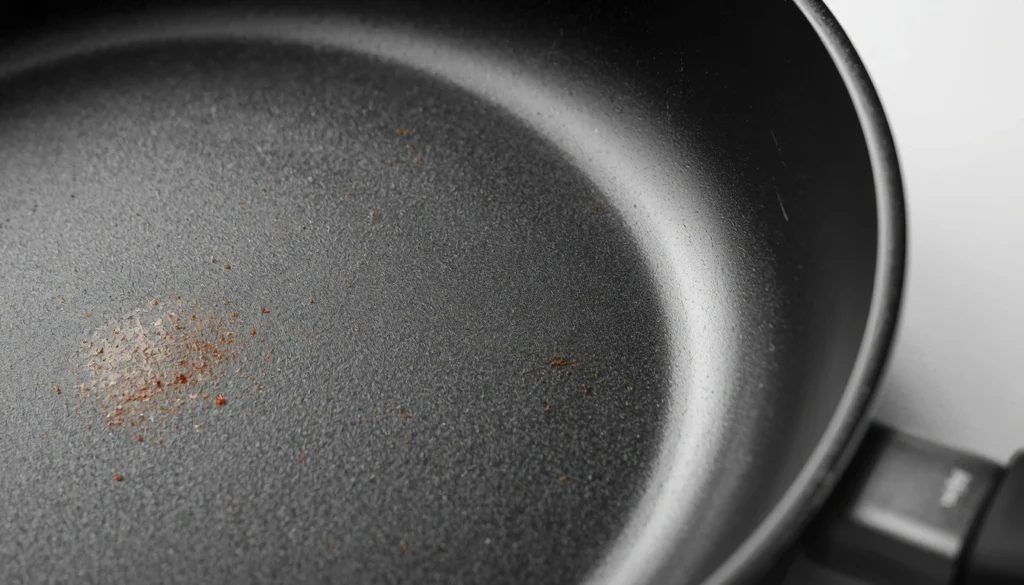
Modern nonstick pans are viewed as safe for normal cooking. But high heat and a damaged coating are where the concerns start. How you use the pan matters more than the label on it.
Teflon-branded products have been PFOA-free since 2013. The American Cancer Society has said there are no proven risks from new PFOA-free nonstick cookware. The same source says everyday use is fine as long as temperatures stay under 500°F (260°C).
That ceiling is easier to pass than you’d think. An empty pan left on high heat, or a long sear, can get there fast. Cancer education researchers list overheating and damage as the conditions that raise the chance of a coating breaking down and releasing byproducts along with scratched or worn pans and poor ventilation. Their practical advice: stick to low or medium heat and don’t preheat an empty pan.
Condition counts too. Consumer Reports’ cookware testing lead says a pan that is chipped or scratched should be thrown out. It’s because the coating could flake into your food. A damaged pan also slowly loses its nonstick performance, so you lose the reason you bought it.
Not all nonstick coatings are the same, and some may carry more risk than others. I explain the differences in my guide to the safest nonstick coating, and in nonstick heat limits.
My own rule is simple. I avoid cooking steps that could harm the people eating the food. Food is meant to refuel the body, so I don’t push a nonstick pan past what it’s built for, and I retire it once the coating is damaged.
What Upkeep and Lifespan Should You Expect?
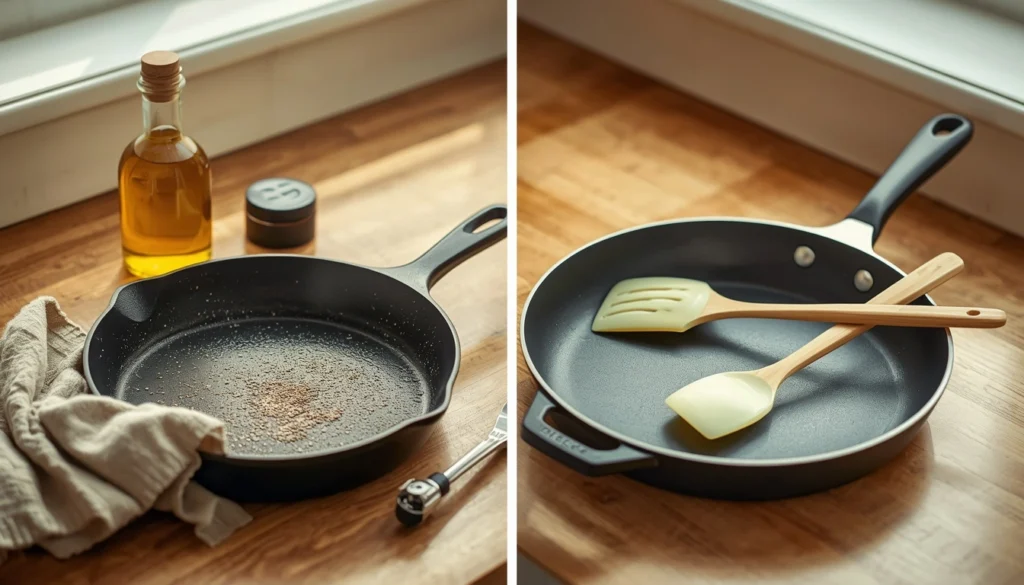
Cast iron asks for seasoning and a little care, while a nonstick coating wears out over time and the pan has to be replaced. Neither is hard, but they ask for different habits.
With cast iron, the main job is keeping the seasoning in good shape. If you’re starting out, my guide to how to season cast iron covers it step by step. Cast iron has no coating to wear out, so with care it can stay in use for many years.
Acidic foods are the one thing to watch. In America’s Test Kitchen’s tomato sauce test, tasters couldn’t detect any metallic flavor after 15 minutes. After 30 minutes, both cast iron pans gave the sauce a metallic taste, with far more from the unseasoned pan. The trace metal isn’t harmful, but acid can also wear down the seasoning. For long-simmered tomato or wine sauces, stainless steel or enameled cast iron is the easier choice.
Nonstick has the opposite problem. Overheating is the most common mistake, and even with good care, a coating has a typical lifespan of about two to five years. Skip metal utensils and keep the heat moderate to get the most from it.
Cast Iron vs Nonstick: Which Should You Buy First?
Buy the pan that matches what you cook most. For most home cooks, the best answer is one of each, because they cover each other’s weak spots.
Here’s how to decide:
- If you cook steaks, burgers, and seared meats often, start with cast iron.
- If you cook mostly eggs, pasta, and delicate fish, start with nonstick.
- If you cook both, buy both. Use cast iron for the high-heat jobs and nonstick for the gentle ones.
- If you have an induction cooktop, check that the pan’s base is magnetic before you buy, whichever type you choose.
Frequently Asked Questions
Is Cast Iron or Nonstick Better for Everyday Cooking?
It depends on what you cook most. Cast iron is better for steaks, burgers, and other high-heat searing, while nonstick is better for eggs and delicate fish. For most home cooks, owning one of each covers everyday cooking best.
Is Cast Iron Healthier Than Nonstick?
Neither pan is automatically healthier. Modern nonstick is safe for normal cooking, while overheating or a scratched coating is where the concerns start. Cast iron has no coating to damage, but long-simmered acidic foods can pick up a metallic taste. How you use and care for the pan matters more than the material.
Can You Cook Eggs in Cast Iron?
Yes, once the pan is well seasoned. A seasoned cast iron surface can release delicate foods like eggs, but a nonstick pan is easier for beginners and needs less technique. If you want to avoid sticking in either pan, see my tips on cooking eggs without sticking.
How Do You Know When to Replace a Nonstick Pan?
Replace it when the coating is chipped, scratched, flaking, or no longer releasing food. A damaged coating can flake into your food, and nonstick pans typically last about two to five years even with good care. For tips on getting the most from yours, read how to extend nonstick life.
Can You Use Metal Utensils on Nonstick Pans?
It’s best to skip them. Metal utensils and steel wool scratch nonstick coatings, and a scratched pan is one you’ll need to replace sooner. Wooden or silicone tools protect the surface, and they work fine on cast iron too.
Can You Cook Tomato Sauce in Cast Iron?
Yes, but keep the cooking time short. In America’s Test Kitchen’s testing, tasters noticed a metallic flavor after 30 minutes of simmering tomato sauce in cast iron, but not after 15. For long-simmered sauces, stainless steel or enameled cast iron is the easier option.
Do Cast Iron and Nonstick Pans Work on Induction Cooktops?
Cast iron is magnetic, so it generally works on induction. With nonstick, check that the pan has a magnetic base before you buy. For more on pairing cast iron with induction, see my guide to induction cast iron.
The key is matching the tool to the task, not buying into a brand or a generic “best pan” list. A pan that suits how you cook will do more for your results than the most expensive one in the store.