
Key Takeaways
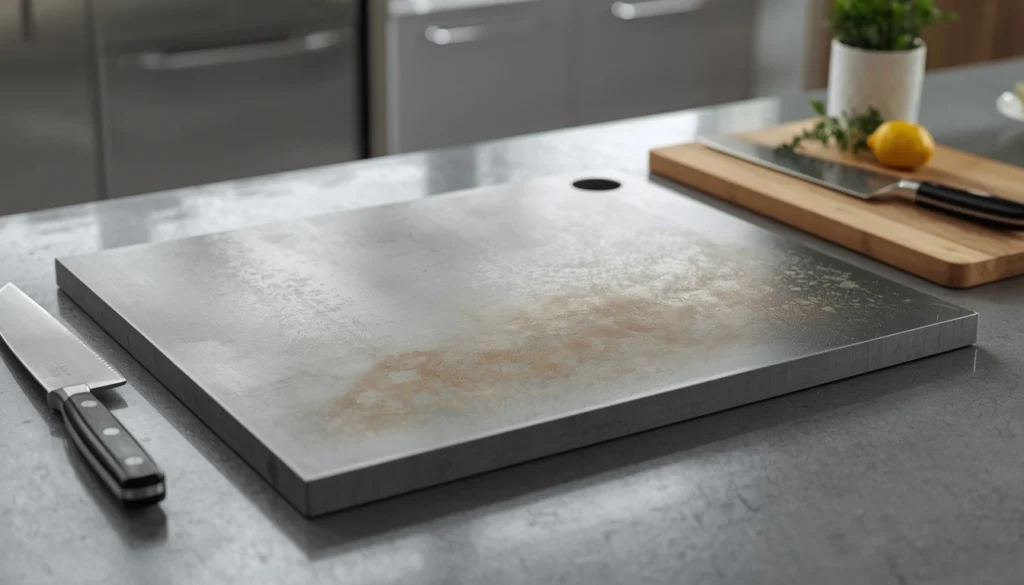
- Titanium cutting boards are scratch-resistant, not scratch-proof. Sharp knives, serrated blades, and abrasive cleaners can all leave marks over time.
- Scratch marks on a real titanium board are mostly cosmetic. The titanium oxide layer re-forms almost instantly when scratched, keeping the surface hygienic.
- Many “titanium” boards are actually stainless steel. Industry estimates suggest 80–90% of boards sold online as titanium are fakes. Stainless steel scratches far more aggressively.
- What causes most visible marks is metal transfer from your knife, not actual material loss from the board. Those gray streaks you see? Often knife steel, not board damage.
- You can reduce scratching by avoiding serrated knives, skipping abrasive scrubbers, and using proper cutting technique.
Introduction
Up to 80–90% of cutting boards sold online as “titanium” are actually stainless steel in disguise. This is according to industry estimates. [Source: Vocal Media / ChopChop USA]. That single fact explains why so many buyers end up confused, and frustrated. They were seeing their “titanium” board scratch in ways they never expected.
If you own a titanium board and you’re seeing marks. Then you’re asking one of two things: did I get ripped off, or is this how titanium behaves? The answer is almost always one of those two things.
In this post, I’ll explain exactly how titanium holds up against knives and everyday use. Also why scratches happen, what they actually mean for your food safety, and how to tell if your board is the real thing. I’ll also show you how titanium stacks up against wood, plastic, and bamboo. This will help you decide if it’s the right surface for your kitchen.
Do Titanium Cutting Boards Actually Scratch?
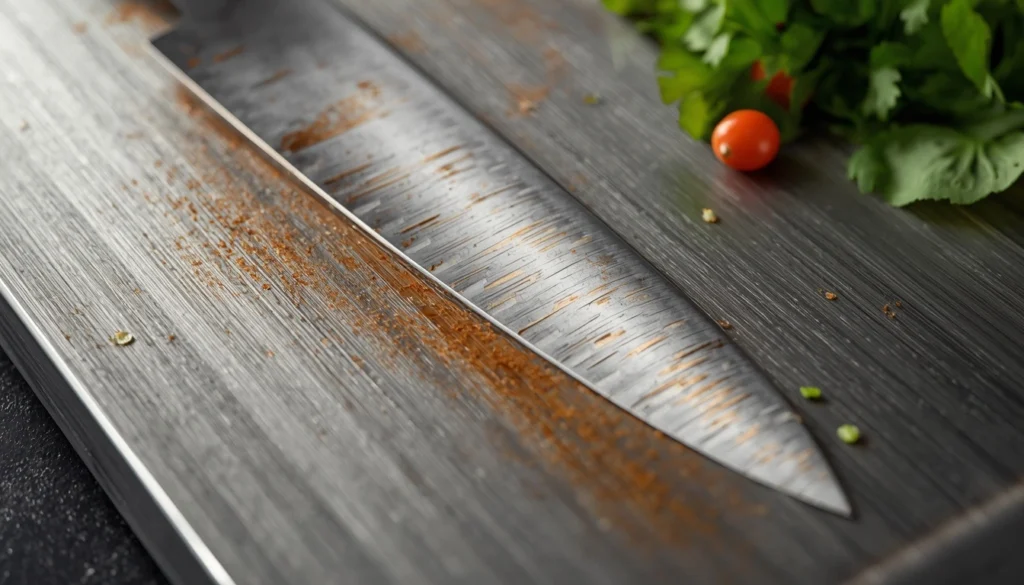
Yes, titanium cutting boards can scratch. But they resist it far better than most other materials. The surface is hard enough to handle heavy daily use without the deep gouges you’d see on plastic or wood, but it is not immune to marks entirely.
What Makes Titanium Resistant to Scratches
Titanium sits at around 6 on the Mohs hardness scale. That’s harder than most cutting board materials by a significant margin. For context, maple wood scores roughly 20–30 on the Vickers Hardness scale. HDPE plastic (the white boards you see in commercial kitchens) comes in around 60–70 HV. Titanium alloys, by comparison, land between 330–380 HV. [Source: Walker Metalsmith]
That hardness gives titanium its main advantage: deep scratches and gouges are very unlikely under normal use. Knives simply don’t have enough force behind them to cut meaningfully into a properly made titanium surface.
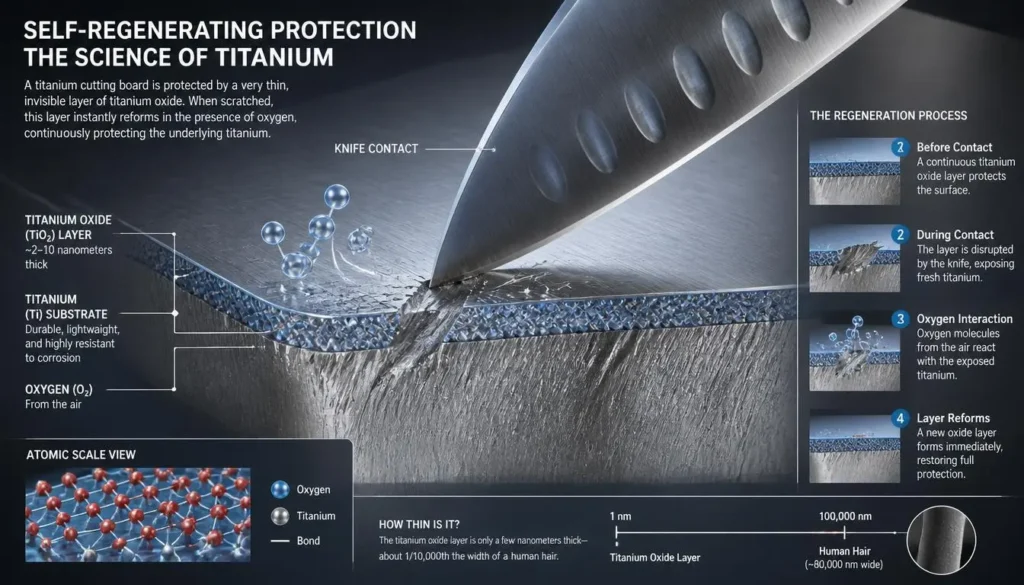
The second line of defense is titanium’s oxide layer. When titanium is exposed to air, it forms a thin protective layer of titanium dioxide on the surface. This layer is only nanometers thick. But it’s very hard and, it re-forms almost immediately when the surface is scratched. Oxygen re-oxidizes the exposed metal within seconds. [Source: Everti.com.au]
[The self-healing oxide layer is what separates titanium from stainless steel. When stainless steel scratches, it stays scratched. When titanium scratches, the protective layer rebuilds itself almost immediately.]
Are Titanium Cutting Boards Scratch-Proof?
No, titanium cutting boards are not scratch-proof. They are scratch-resistant, which is a meaningful difference. A scratch-resistant surface takes more force and sustained contact to mark. A scratch-proof surface would never mark at all. That doesn’t exist in a kitchen environment.
What Can Still Leave Marks on a Titanium Board
A few specific things will cause visible marks on a real titanium board:
- Sharp, high-carbon knives used with heavy downward pressure. The closer a knife’s hardness is to titanium is around 5.5–6.5 on the Mohs scale for most stainless steel blades. The more surface friction and micro-abrasion occur on both the knife and the board. [Source: Walker Metalsmith]
- Serrated knives are the biggest culprit. The jagged edge creates repeated drag points across the surface, which leads to linear scratch patterns over time.
- Abrasive cleaning tools like steel wool or hard-bristled scrubbers can grind fine marks into the surface. Titanium is hard, but it’s not indestructible under sustained abrasive contact.
- Dragging knives sideways across the board instead of lifting and repositioning. This action creates scratches faster than vertical chopping does.
If you use your board on cutting board material comparisons for chef knives. You’ll find titanium scores well for hygiene but still has tradeoffs depending on your knife type.
Are Scratch Marks on Titanium Boards Safe?
For a genuine titanium board, yes. Visible scratches are almost always a cosmetic issue, not a safety one. Here’s why: the titanium oxide layer that makes the surface corrosion-resistant. It rebuilds itself almost right away when damaged. What you’re seeing visually doesn’t always reflect what’s happening at a material level.
There’s also an important detail most people don’t know: a large part of what looks like scratching is actually metal transfer from the knife. When a steel knife blade contacts a hard titanium surface, the softer steel can deposit itself onto the board, leaving gray streaks. You’re often looking at knife material on the board, not board material removed. [Source: Everti.com.au]
With that said, if a titanium board develops deep, many scratches. Those grooves can trap bacteria and food particles, like any other scratched surface. Titanium’s non-porous nature reduces bacterial absorption compared to wood or plastic. But it’s not a complete free pass. Deep scratches still need thorough cleaning. [Source: Durakeep.com]
Why Is My Titanium Cutting Board Getting Scratched?
If your board is scratching more than you expected, there are two likely reasons. It’s either your cutting technique or knife choice is causing it, or your board isn’t actually titanium.
The “Fake Titanium” Problem
This is the big one. Industry insiders estimate that 80–90% of boards sold online as “titanium” are actually stainless steel. They often describe it with vague terms like “titanium finish” or “titanium-coated.” [Source: Vocal Media / ChopChop USA]
This matters for scratching because stainless steel and titanium behave very differently under a knife. Stainless steel is harder and less forgiving than pure titanium. It scratches more aggressively, dulls blades faster, and doesn’t have the self-healing oxide layer that makes genuine titanium so durable.
How to check if your board is real titanium:
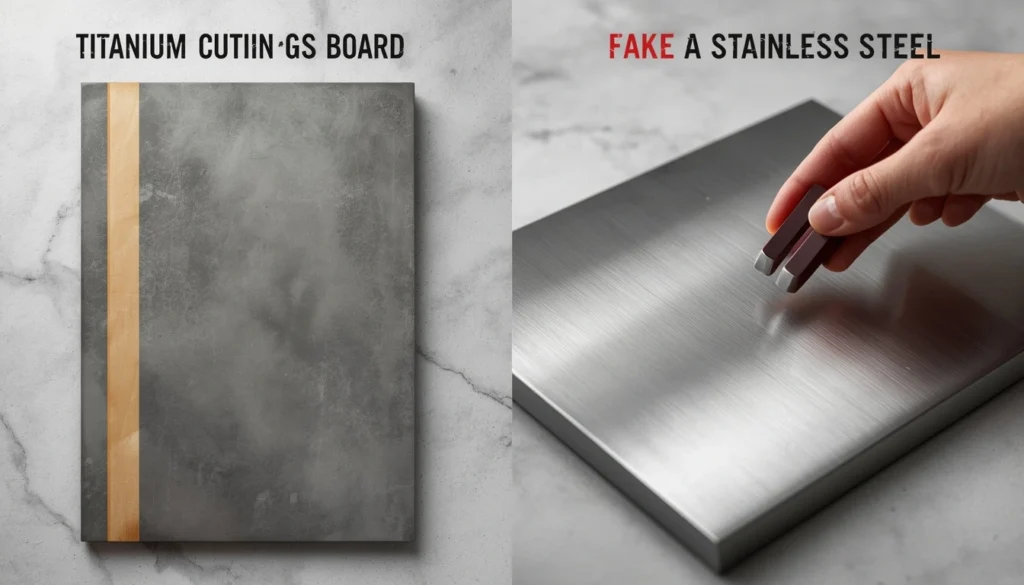
- Weight test: Real titanium is surprisingly light for its size. If your board feels dense and heavy, it’s likely stainless steel.
- Magnet test: Titanium is non-magnetic. Hold a fridge magnet to your board. If it sticks, you have a steel board. [Source: Everti.com.au]
- Price check: Genuine solid titanium cutting boards typically cost several hundred dollars. If you paid $30–$60 for a “titanium” board, it’s almost certainly not real.
- Color: Authentic titanium has a subtle, muted gray tone. Not the chrome-like brightness of polished steel.
If you’re researching what professional chefs actually use. This post on what cutting board professional chefs use covers the full picture. It includes why most pros still reach for wood or HDPE over metal boards.
Cutting Technique and Knife Type Matter
Even on a genuine titanium board, how you cut makes a real difference in how many marks accumulate. Serrated blades cause the most surface damage. The reason is the teeth drag across the board rather than making clean, vertical contact. [Source: Strabella Home]
Using excessive downward pressure also increases abrasion. The goal is clean, controlled cuts, not force. When you press hard and drag the blade, you’re creating far more contact area between the knife edge and the board surface.
How Titanium Compares to Other Materials for Scratching
It helps to see titanium in context. Here’s how it stacks up against the most common cutting board materials:
| Material | Scratch Resistance | Knife Friendliness | Hygiene | Self-Healing |
|---|---|---|---|---|
| Titanium (genuine) | Excellent | Moderate (dulls faster than wood) | Excellent (non-porous) | Yes (oxide layer) |
| Stainless Steel | Moderate | Poor (hardest on blades) | Good (non-porous) | No |
| End-Grain Wood | Moderate | Excellent (fibers close after cuts) | Good (with oiling) | Yes (wood fibers) |
| Plastic (HDPE) | Low | Moderate | Moderate (grooves trap bacteria) | No |
| Bamboo | Moderate | Moderate | Good | No |
| Glass | Excellent | Very Poor (destroys blades) | Excellent | No |
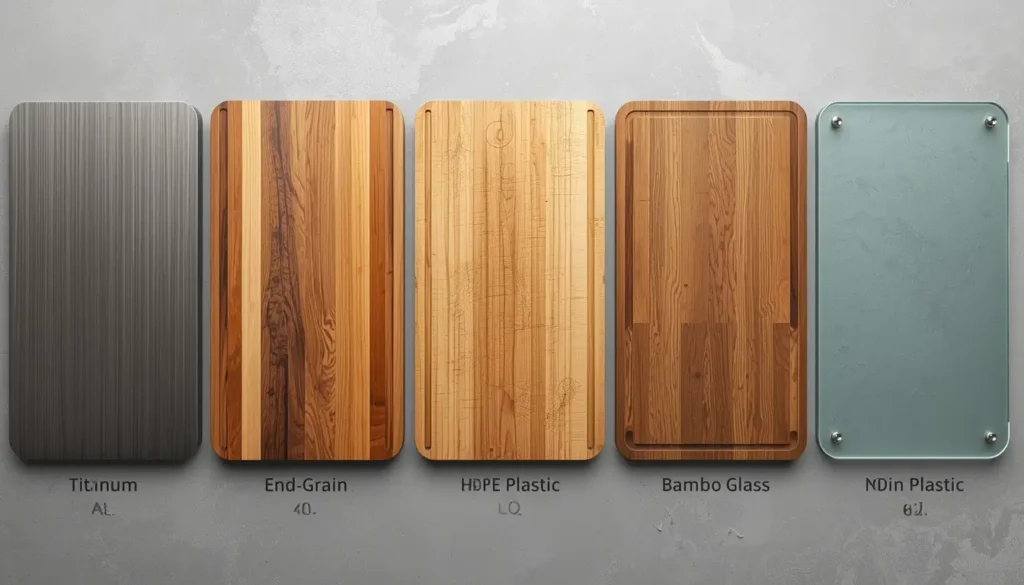
One test by Strabella Home found this after 100 cuts with identical chef’s knives. Titanium boards required resharpening 40% sooner than end-grain wood boards. But they outperformed plastic boards by 25% in the same test. [Source: Strabella Home]
For most home cooks, the tradeoff is straightforward. Titanium wins on durability and hygiene, wood wins on knife preservation. If you want the most knife-friendly surface, a quality end-grain hardwood board is hard to beat. You can read more about the best wood options in this guide on the best hardwoods for cutting boards.
The worst surface for both scratching and knife damage? Glass. Glass cutting boards are scratch-proof themselves. Just remember they will destroy your knife edges within weeks of regular use. Also they offer zero give when you’re cutting.
How to Reduce Scratches on a Titanium Cutting Board
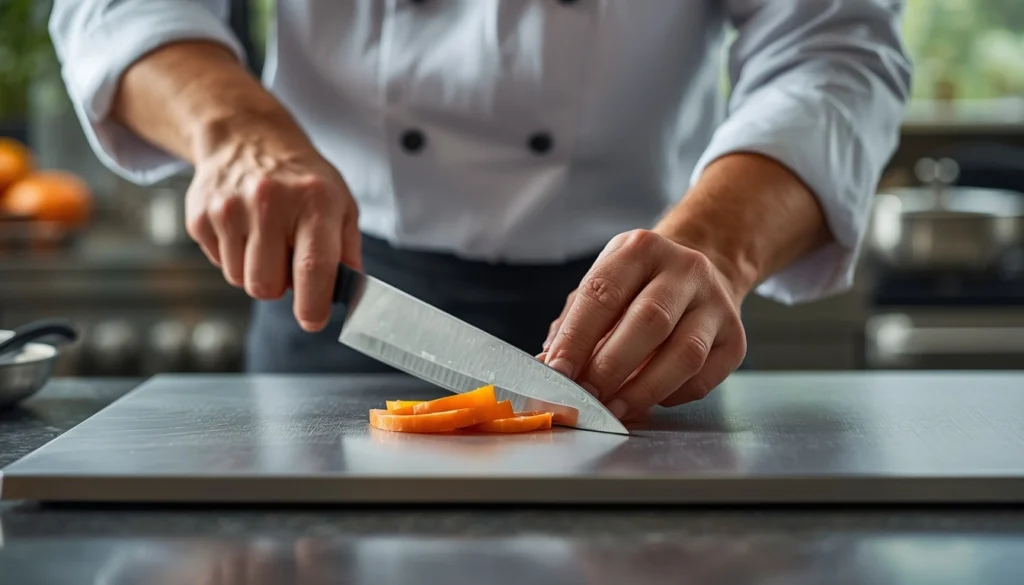
You can’t prevent all marks, but you can slow them down alot with a few habits.
Use the right knives
Stick to smooth-edged chef’s knives and avoid serrated blades on your titanium board when possible. The cleaner the knife edge, the less surface drag during each cut. [Source: Strabella Home]
Lift, don’t drag
After each cut, lift the knife fully off the board before repositioning. Lateral dragging across the surface is one of the fastest ways to accumulate fine surface scratches.
Keep your knives sharp
A sharp knife requires less pressure. This means less force grinding against the board surface. A dull knife needs you to push harder, creating more friction and more marks. Learning how to sharpen a knife with a whetstone will help your knives and your board last longer.
Avoid abrasive cleaners
Steel wool, scrubbing pads with metal fibers, and powdered abrasive cleaners will scratch any surface. That includes titanium. Use a soft cloth or non-abrasive sponge. Dish soap and warm water are all you need for daily cleaning.
Store it flat
Storing a titanium board leaning against other objects can create surface-to-surface contact. This contact causes fine scratches over time, especially if it’s resting against something metal.
FAQs About Do Titanium Cutting Boards Scratch
Are titanium cutting boards supposed to scratch?
A genuine titanium board should resist most surface marks under normal use, but it is not scratch-proof. Light marks and occasional fine lines from sharp knives are normal and expected over time. Deep gouges from regular kitchen use are not normal and may show a fake board made from stainless steel.
Why is my titanium cutting board getting scratched so easily?
The most likely explanation is that your board isn’t actually solid titanium. Up to 80–90% of boards sold online as “titanium” are stainless steel, which scratches much more easily. Test your board with a magnet because real titanium is non-magnetic. If that’s not the issue, serrated knives or heavy lateral dragging of the blade are the next most common causes.
Are titanium cutting boards scratch-proof?
No. Titanium cutting boards are scratch-resistant, not scratch-proof. The material is very hard (around 6 on the Mohs scale) and resists deep marks. However repeated contact with sharp or serrated knives will leave surface abrasions over time.
Are scratches on a titanium cutting board a health risk?
For a genuine titanium board, no. The titanium oxide layer that protects the surface re-forms almost immediately after scratching. Visible marks are usually cosmetic. However, very deep scratches on any cutting board can trap bacteria and food particles. So regular thorough cleaning is important.
Do titanium cutting boards dull knives?
Yes, more so than wood. Titanium’s hardness means knives experience more friction and resistance during cutting. One test found that knives used on titanium boards needed resharpening about 40% sooner than the same knives used on end-grain wood. Keeping your knives sharp and using proper technique reduces this effect. You can find more detail in this guide on titanium cutting boards and knife dulling.
Conclusion
Titanium cutting boards are scratch-resistant. But they are not scratch-proof, and the distinction matters. Light surface marks from knives are normal. Deep, aggressive scratching that builds up fast is usually a sign you have a fake board made from stainless steel, not solid titanium.
If your board passes the magnet test, the marks you’re seeing are almost certainly cosmetic. The self-healing oxide layer means titanium stays hygienic even when it looks worn. Pair that with good habits, smooth-edged knives, no lateral dragging, and soft cleaning tools. A genuine titanium board will outlast about anything else in your kitchen.
If you’re still deciding which cutting board material is right for you. The guide on the healthiest cutting board material covers hygiene and safety across all the main options in one place.