
Key Takeaways:
- Plain aluminum won’t heat on induction because it isn’t magnetic.
- Aluminum pans with a bonded magnetic stainless steel base usually work.
- Hard anodized aluminum usually needs a built-in magnetic disc to work.
- Before you buy, check three things: a firm magnet hold, a flat base, and a pan sized to the burner.
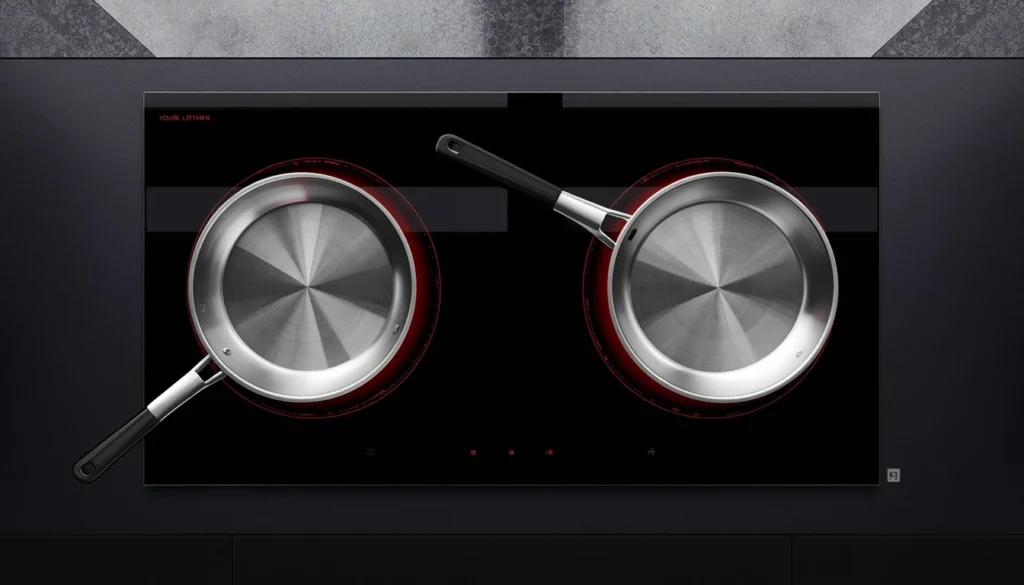
Can you use aluminum cookware on induction? Not on its own. Aluminum isn’t magnetic, so an induction cooktop can’t heat it directly. But many aluminum pans have a magnetic steel base added, and those usually work fine.
For most home cooks, the real question isn’t “aluminum or not.” It comes down to the bottom of the pan, and whether it has a magnetic layer the cooktop can use.
Can You Use Aluminum Cookware on Induction Cooktops?
Plain aluminum cookware doesn’t work on induction cooktops, but aluminum pans with a magnetic base usually do. The short answer depends on what’s on the bottom of the pan, not on the aluminum itself.
Why Plain Aluminum Won’t Heat
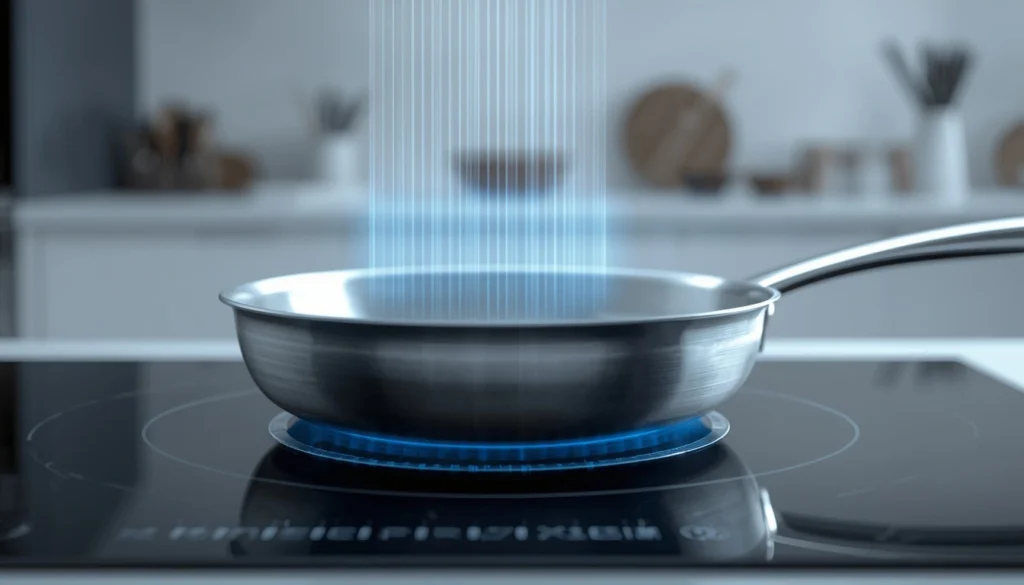
Induction cooktops create a changing magnetic field. That field heats cookware made of magnetic metals such as iron and some stainless steels. Aluminum doesn’t respond the same way, so the cooktop usually won’t detect it or heat it. The science is simple: only magnetic metals heat directly.
Placing a plain aluminum pan on an induction burner won’t damage the cooktop, but nothing useful happens either. That matters if you own aluminum pans from a gas or standard electric kitchen, because they won’t carry over on their own. Without a magnetic layer, no heat transfers.
If you want the full picture of how the cooktop works, see our explainer on how induction works.
What Makes Some Aluminum Cookware Induction-Ready?
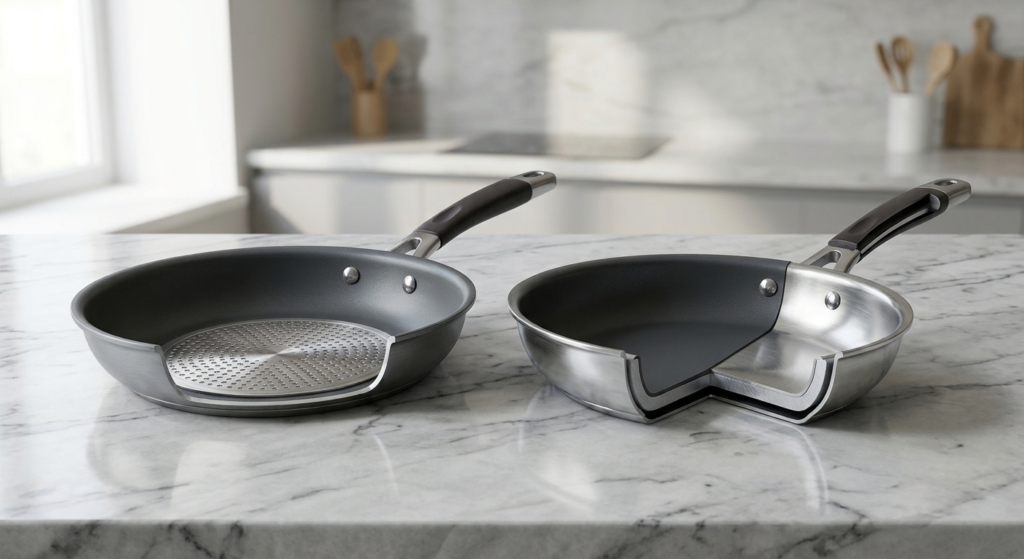
Aluminum cookware becomes induction-ready when a magnetic material, usually stainless steel or iron, is bonded to the base. Two designs are common, and they behave a little differently.
Bonded Base Plates
Some makers attach a steel or iron plate to the bottom of an aluminum pan. The aluminum still spreads the heat, and the plate is what the cooktop responds to. Manufacturers have added an iron plate to non-magnetic cookware for exactly this reason.
Clad Pans With an Aluminum Core
Clad construction sandwiches aluminum between layers of stainless steel, with a magnetic stainless layer on the outside. The steel makes the pan work on induction, and the aluminum core helps the heat spread. The key is whether the pan has a magnetic base layer, not how much aluminum sits inside.
This is also a future-proofing question. You might move to induction later. So it pays to understand magnetic base requirements versus non-compatible materials before you replace your pans.
Does Hard Anodized Aluminum Work on Induction?
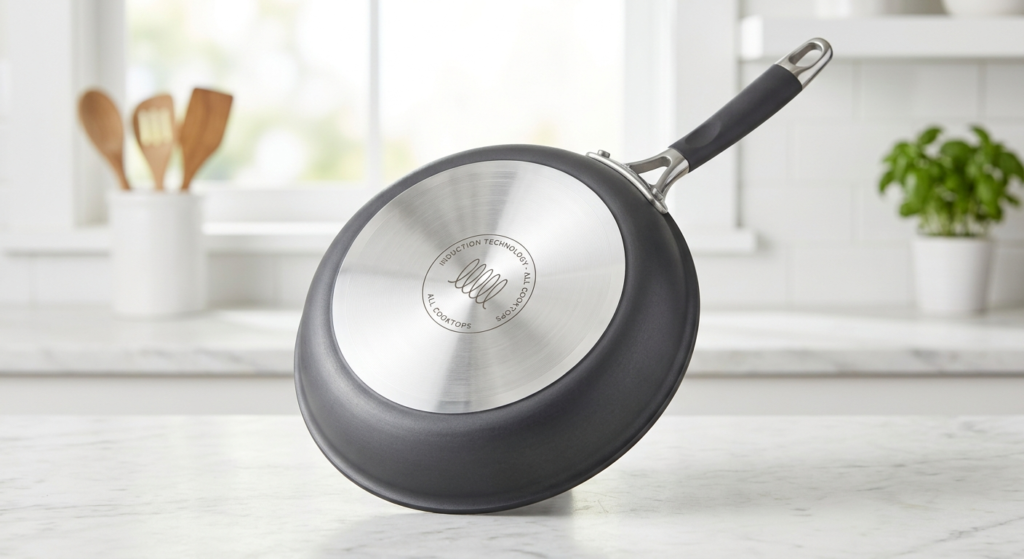
Hard anodized aluminum usually doesn’t work on induction unless it has a built-in magnetic disc in the base. The anodized finish makes the surface tougher, but it doesn’t make the metal magnetic.
That’s why the label matters more than the finish. A pan marketed as hard anodized and also designed for induction should have a built-in magnetic disc or a magnetic steel layer you can confirm with a magnet. If it doesn’t, expect it to work on gas and standard electric cooktops only.
For more on the material itself, see our guide to hard anodized aluminum.
How to Check Aluminum Cookware on Induction Before You Buy
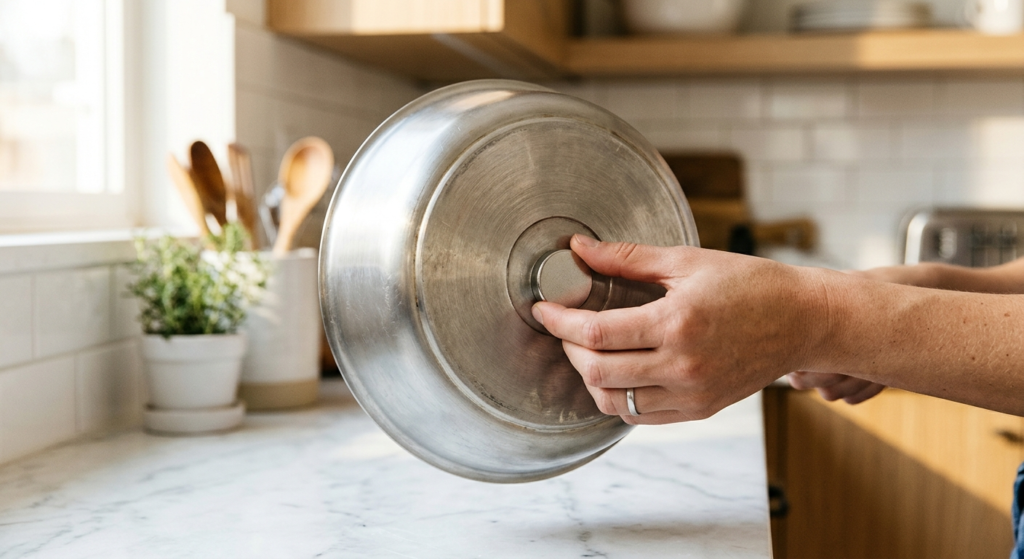
Here’s what to check, in order. It takes about a minute per pan.
- Do the magnet test. Hold a refrigerator magnet to the bottom of the pan. If it sticks firmly, the base is magnetic. If it slides or barely holds, the pan will likely struggle.
- Look for the induction label. Many pans carry an induction symbol or an “induction compatible” note. Treat it as a starting point and confirm it with the magnet.
- Check that the base is flat. Set the pan on the counter and press gently on the rim. A pan that rocks has a warped or domed base, which reduces contact with the cooktop.
- Match the pan to the burner. The magnetic area needs to cover enough of the cooking zone. A pan that looks large but has a small magnetic disc can fall short.
For a broader checklist that applies to every material, see our guide on whether your cookware is induction compatible.
Why Won’t My Induction-Ready Aluminum Pan Heat?
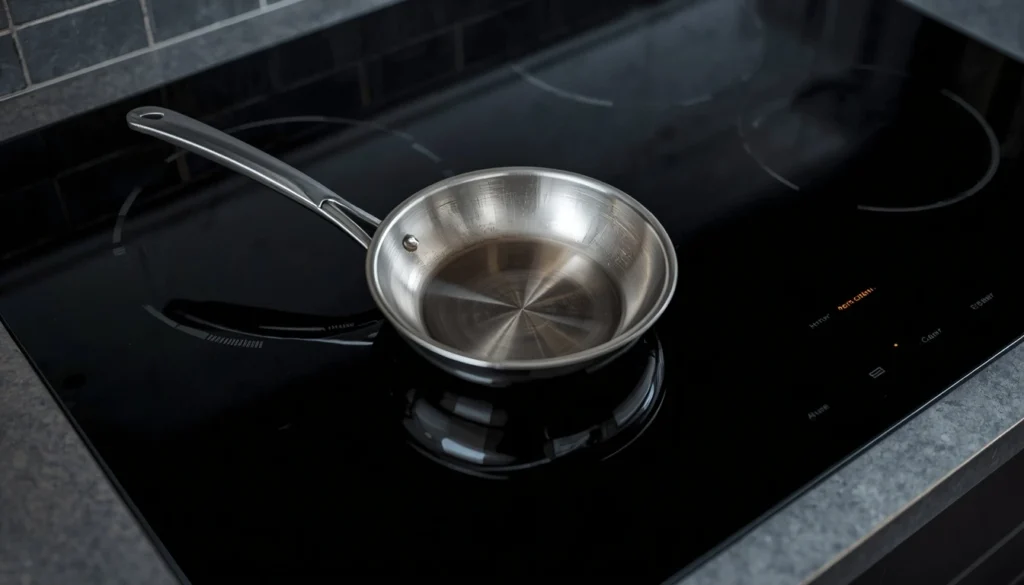
An induction-ready aluminum pan usually fails to heat for one of four reasons: a thin or partial magnetic layer, a warped base, the wrong size for the burner, or poor placement.
- Partial magnetic layer. If only part of the bottom is magnetic, the cooktop may not detect the pan or may cycle the power on and off.
- Warped base. A curved or uneven bottom reduces contact with the glass.
- Wrong size. The pan may be smaller than the minimum the cooking zone needs.
- Off-center placement. A pan sitting to one side, or tilted by a heavy handle, can also prevent detection.
Manufacturers describe the correct setup the same way: a flat bottom, a pan that meets the minimum size, centered placement, and a fully magnetic bottom. If your pan passes the magnet test and still won’t heat, try it on a different zone, or test a pan you know works to rule out the cooktop.
Is Aluminum Cookware Still Worth Using on Induction?
Aluminum can still be worth using on induction if the pan has a proper magnetic base. The trade-off is simple: aluminum spreads heat well, but it needs that extra magnetic layer to work with the cooktop.
Weight isn’t the test either. A common misconception is that heavy cookware always distributes heat evenly. Poor thermal conductivity can cause hotspots whatever the pan weighs, so a thick base on its own doesn’t prove even heating.
| Aluminum Type | Works on Induction? | What to Check |
|---|---|---|
| Plain aluminum | No | Skip it for induction |
| Aluminum with a bonded base | Usually | Firm magnet hold, flat base |
| Clad with an aluminum core | Usually | Magnetic stainless outer layer |
| Hard anodized | Only with a magnetic base | Built-in disc or steel layer |
Safety questions about aluminum are a separate topic, and our page on aluminum cookware safety covers them.
The Practical Takeaway
If you already own aluminum pans, test each one with a magnet before you assume anything. If you’re buying new, choose pans with a magnetic base you can verify, not just a label. Sorting this out usually takes between one day and one week. Whether that means adjusting your preheating habits or sourcing properly clad cookware.
For a wider look at what works on an induction cooktop, start with our induction cookware guide.
FAQs Using Aluminum Cookware on Induction
Will an Aluminum Pan Damage My Induction Cooktop?
No, a plain aluminum pan won’t harm an induction cooktop. It just won’t heat, because the cooktop can’t transfer heat to a non-magnetic metal. If a pan sits there cold, check the base before you suspect the cooktop.
How Can I Tell if My Aluminum Pan Is Induction Compatible?
Hold a refrigerator magnet to the bottom of the pan. If it sticks firmly, the base is magnetic and the pan will usually work. Then confirm the base is flat and the pan is a sensible size for the burner. A label that says “induction compatible” is a good sign, but the magnet test is the check to trust.
Does Hard Anodized Aluminum Work on Induction?
Usually not. Hard anodized aluminum needs a built-in magnetic disc or steel layer in the base to work on induction. The anodized finish makes the surface tougher, but it doesn’t make the metal magnetic. If the pan has no magnetic base, expect it to work on gas and standard electric cooktops only.
Do Stainless Steel Pans With an Aluminum Core Work on Induction?
Usually yes, as long as the outer base layer is magnetic stainless steel. The steel is what the cooktop responds to, and the aluminum core helps spread the heat. Run the magnet test anyway, because not every stainless exterior is magnetic.
Why Won’t My Induction-Ready Aluminum Pan Heat?
The most common causes are a thin or partial magnetic layer, a warped base, a pan too small for the cooking zone, or placement that’s off-center. Try the pan on a different zone, and test a pan you know works to rule out the cooktop. If the base rocks on a flat counter, the pan is likely warped.
Can I Keep Using My Old Aluminum Pans if I Switch to Induction?
Only the ones with a magnetic base. Test each pan with a magnet before you decide. Plain aluminum pans won’t work on induction, but they’ll still work on gas or a standard electric cooktop if you keep a second stove or cook elsewhere.
Does a Heavier Aluminum Pan Heat More Evenly on Induction?
Not necessarily. Weight and thickness don’t guarantee even heating. Poor thermal conductivity can cause hotspots regardless of how heavy the pan is, so look at the construction of the base, not just the heft.